
Agent Payments and Nonprofits: What AP2 and Agentic Checkout Mean for Online Giving
A new layer of infrastructure is quietly being built beneath online commerce: standards that let an AI assistant not just recommend an action but complete a payment on a person's behalf. For nonprofits, this raises a concrete question. When a donor tells their AI agent to give, what has to be true about your donation page for that gift to go through? This guide explains AP2, agentic checkout, and the practical steps to keep your giving flow ready.
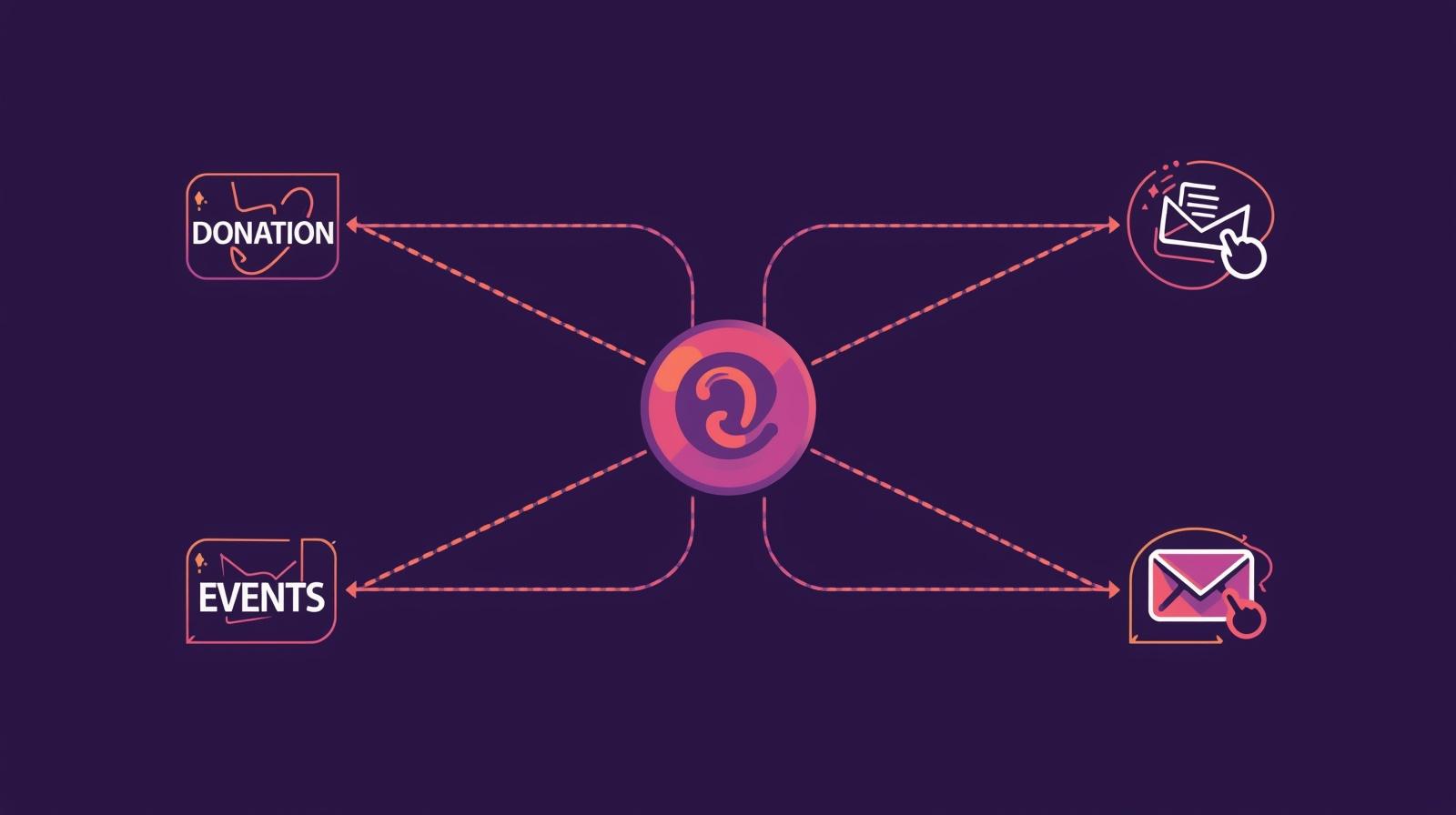
For most of the internet's history, a payment required a human at a keyboard. Someone chose a product, filled in a card number, and clicked to confirm. AI assistants have been able to recommend, compare, and draft, but the final act of paying remained firmly in human hands. That boundary is now being redrawn. In 2026, a set of open standards emerged specifically to let AI agents complete purchases on a person's behalf, within limits the person sets in advance, and the major payment networks are behind them.
The most prominent of these standards is the Agent Payments Protocol, usually shortened to AP2. Announced by Google in late 2025 with more than sixty launch partners including Mastercard, PayPal, American Express, and Coinbase, and later contributed to the FIDO Alliance alongside Mastercard's Verifiable Intent work, AP2 is designed to answer a deceptively hard question: how can an AI agent pay for something without the user manually approving every transaction, and without the agent gaining access to sensitive banking credentials? The answer has direct consequences for any organization that accepts money online, and that includes nonprofits.
It is worth being measured about the timeline. Agentic checkout is early, adoption is uneven, and the standards are still settling. No nonprofit needs to overhaul its fundraising stack this quarter to chase it. But the direction of travel is clear enough that understanding the mechanics now, and making a few low-cost preparations, is a reasonable investment. The organizations that are legible, trustworthy, and technically clean today will be the ones an agent can actually transact with when a donor decides to give this way. The ones that are confusing or broken will simply be skipped, silently, with no bounced email or abandoned cart to alert them.
This article explains what agent payments are, how AP2 structures a transaction, what agentic checkout means for a donation specifically, and the concrete steps a nonprofit can take to prepare. It builds on our broader look at agentic commerce and philanthropy, narrowing the focus to the payment layer itself: the plumbing that turns an assistant's recommendation into an actual gift.
What Agent Payments Actually Are
An agent payment is a transaction initiated and completed by an AI agent acting on a person's instructions, rather than by the person clicking a button themselves. Picture a supporter who tells their assistant, "Set up a fifty dollar monthly gift to a reputable organization working on youth homelessness in my city, and renew my existing year-end donations." For that instruction to become real money moving to real organizations, the agent needs a way to pay that is secure, auditable, and bounded, so that it cannot exceed what the person authorized or expose their financial details to every merchant it touches.
The central design problem is trust in two directions. The person must trust that the agent will only spend what they permitted, on what they intended, with whom they meant. The merchant, or in our case the nonprofit and its payment processor, must trust that the payment instruction genuinely reflects the person's authorization and is not a rogue or hallucinated action by an unsupervised model. Traditional card payments were never designed for a non-human buyer, so a new layer is needed to carry proof of intent and authorization through the transaction. That is precisely the gap AP2 and similar protocols are built to fill.
AP2 is not the only entry in this space. Other agentic commerce approaches exist, and analysts have begun comparing competing protocols much as they once compared payment gateways. The details will keep shifting, and it would be a mistake to bet your fundraising operation on any single standard this early. The durable insight is architectural: agentic payments separate the person's intent, the agent's assembled purchase, and the actual charge into distinct, verifiable steps. Understanding that structure is more useful than memorizing any one vendor's implementation, because it tells you what these systems will always need from your donation flow.
The Problem Agent Payments Solve
Why ordinary card checkout does not work for an AI buyer
- The agent must prove the person actually authorized the spend
- Spending must stay within limits the person set in advance
- Sensitive card and bank details must not be exposed to every merchant
- Every step must leave an auditable trail if a charge is disputed
How AP2 Structures a Transaction: The Three Mandates
AP2's core idea is to represent every agent purchase as a chain of signed mandates, digital records that each capture and verify one part of the transaction. There are three. The Intent Mandate records what the user wanted, the instruction they gave the agent, including any constraints such as a maximum amount, approved categories, or specific organizations. The Cart Mandate records what the agent actually assembled in response, the concrete items or, for a nonprofit, the specific gift with its amount and recipient. The Payment Mandate records what the network or processor will actually charge, tying the approved intent and the assembled cart to a real movement of funds.
The elegance of this design is that each mandate is cryptographically signed, creating a verifiable chain from the person's original instruction all the way to the charge. If a donation is ever questioned, there is a clear record showing that the person authorized a gift within certain limits, that the agent assembled a gift consistent with those limits, and that the charge matched what was assembled. This addresses the trust problem in both directions at once. It gives the person confidence that the agent cannot exceed its authority, and it gives the recipient and the payment network confidence that the charge is legitimate and traceable rather than a stray action by an unsupervised model.
AP2 also leans on tokenization, the same technique that already protects card details in mobile wallets. Rather than handing your actual card number to every merchant, the system uses tokens that stand in for it, so a compromised merchant cannot harvest usable credentials. For nonprofits, the reassuring implication is that agentic giving is being built on top of the mature, regulated card and payment-network infrastructure you already use, not as a shadow system beside it. Your existing processor, gateway, and compliance obligations remain the foundation. What changes is that the buyer initiating a transaction may increasingly be an agent presenting a verified chain of authorization rather than a human typing a card number.
Intent Mandate
Captures what the person authorized: the instruction and its limits, such as a maximum amount, approved causes, or named organizations.
Cart Mandate
Captures what the agent assembled in response: for a nonprofit, the specific gift, its amount, frequency, and the intended recipient.
Payment Mandate
Captures what actually gets charged, tying the authorized intent and assembled cart to a real, traceable movement of funds.
What Agentic Checkout Means for a Donation Specifically
A donation is not quite the same as buying a product, and the differences matter for how agentic checkout will touch nonprofits. A gift has no shipping address, no inventory, and often a recurring component. It frequently carries designations, such as a particular program or campaign, and it triggers a tax receipt that must reach the donor accurately. It may also involve options a purchase never does, like covering the processing fee or dedicating the gift in someone's honor. For an agent to complete a donation cleanly, your giving flow has to expose these choices in a way a machine can understand, or the agent will either guess, skip the nuance, or abandon the gift entirely.
Consider what an agent needs to know to make a gift on a donor's behalf. It needs to confirm that your organization is the one the donor meant, which depends on your being clearly and consistently identified across the web. It needs to determine an amount and frequency, which depends on those options being unambiguous. It needs to complete the transaction through a payment path it can actually use, which depends on your processor supporting agentic flows. And it needs to return a confirmation and receipt to the donor, which depends on your system producing machine-readable acknowledgment. A gap at any of these points is a gift that does not happen, and unlike a human donor who might email to say the form was broken, an agent simply moves on.
This is why the practical preparation for agentic giving overlaps so heavily with things you should be doing anyway. A donation page that is fast, clearly labeled, and free of confusing steps is easier for a human and easier for an agent. Being unmistakably identified across evaluators and reference sources, the same work that helps AI assistants recommend your charity, is exactly what lets an agent confirm it is paying the right organization. The trust signals that earn you a recommendation and the technical cleanliness that lets a payment complete are two halves of the same readiness.
Where an Agent Gift Can Silently Fail
Friction points that cause an agent to skip your organization
- Ambiguous organizational identity the agent cannot verify
- Confusing amount, frequency, or designation options
- A donation flow that requires steps an agent cannot complete
- No clean, machine-readable confirmation or tax receipt
How Nonprofits Can Prepare Without Overreacting
The right posture toward agent payments is neither panic nor dismissal. It is preparation proportionate to the stage of the technology. Most of what you can do today costs little, pays off regardless of how quickly agentic giving arrives, and improves the experience for the human donors who are still the overwhelming majority. The single most important step is to talk to your payment processor and donation platform. Ask directly whether they are building support for agentic checkout standards like AP2, what their roadmap is, and how they intend to handle the authorization and receipting differences a donation involves. Their answers will tell you a great deal about whether you will be ready when donors start giving this way.
Beyond the processor conversation, the preparations are familiar hygiene. Keep your organizational identity clean and consistent everywhere it appears, so an agent can confirm it is paying the right entity. Simplify your donation flow, removing unnecessary steps and ambiguity, which helps humans and machines alike. Ensure your structured data accurately describes your organization, since the same machine-readable identity that supports AI recommendations supports agentic verification. And maintain the governance basics: clear internal ownership of your donation technology, and a habit of testing your giving flow regularly so that breakages are caught before they cost you gifts, whether the giver is a person or an agent.
It is also worth thinking ahead about the questions agentic giving will raise for your team, even before it is common. How will you steward a donor whose first gift arrived through an agent and who you have never directly emailed? How will you handle designations and honor gifts that an agent may not capture perfectly? How will your acknowledgment and tax-receipting process adapt when the transaction was initiated by software? You do not need final answers now, but raising these questions positions your fundraising and finance teams to respond thoughtfully rather than scrambling. As with the rest of the AI transition, a modest amount of foresight now prevents a great deal of friction later.
Low-Cost Steps to Take This Year
Preparation that pays off whether or not agentic giving arrives soon
- Ask your processor and donation platform about AP2 and agentic checkout plans
- Simplify and regularly test your donation flow end to end
- Keep your organizational identity consistent across the web
- Maintain accurate structured data describing your organization
- Plan how to steward and receipt agent-initiated gifts
- Assign clear internal ownership of your giving technology
Trust, Oversight, and the Human in the Loop
Agentic payments raise legitimate questions that nonprofits should engage rather than wave away. Donors will reasonably worry about an assistant spending more than intended, giving to the wrong organization, or acting on a misunderstanding. The mandate structure in AP2 is designed to constrain exactly these risks by binding every charge to an explicit, signed authorization, but no protocol eliminates the need for human judgment. Sensible implementations keep the person in control of the important decisions, the limits, the approvals for larger or unfamiliar transactions, while letting the agent handle the routine mechanics within those bounds.
For nonprofits, this is an opportunity as much as a risk. The organizations that earn a place in agentic giving will be those a donor's agent can verify as legitimate and trustworthy, which rewards exactly the transparency and accountability that mission-driven organizations already value. The same corroborated identity and clean track record that make an assistant comfortable recommending you make an agent comfortable transacting with you. In that sense, agent payments extend the logic of trust that already governs AI recommendations into the moment of the gift itself. Being the kind of organization machines can trust is becoming a fundraising asset, not merely a communications one.
There is also a stewardship dimension worth naming. A gift that arrives through an agent still comes from a human being with values, motivations, and a relationship you want to build. The technology changes the mechanics of the transaction, not the fact that a person chose to support your mission. Nonprofits that treat agent-initiated donors as real relationships to cultivate, rather than as anonymous machine transactions, will retain them better. The enduring work of fundraising, gratitude, transparency, and demonstrated impact, does not change because the checkout did.
Principles for Trustworthy Agentic Giving
What to hold onto as the payment layer evolves
- Keep humans in control of limits and larger approvals
- Rely on the regulated payment infrastructure you already use
- Treat agent-initiated donors as real relationships to steward
- Earn machine trust through the same transparency donors value
Getting Ready for the Gift a Machine Completes
Agent payments will not transform nonprofit fundraising overnight, and any vendor promising that they will is overselling. The standards are young, adoption is early, and the human donor filling in a form remains the norm and will for some time. But the architecture now being built, verified intent, assembled carts, and traceable charges layered on top of the payment networks you already use, is a serious effort backed by the largest players in commerce. Treating it as science fiction would be a mistake.
The sensible response is preparation proportionate to the moment. Understand the mechanics well enough to ask your processor the right questions. Keep your organizational identity clean and consistent so an agent can confirm it is paying you. Simplify and test your donation flow so it works for humans and machines alike. And think ahead about how you will steward and receipt gifts that arrive through an agent. None of this is expensive, and all of it improves your fundraising today regardless of how quickly agentic giving matures.
This work sits inside the larger shift toward AI-mediated discovery and giving that every nonprofit leader should be planning for. Our companion pieces on agentic commerce and philanthropy and on how AI assistants recommend charities map the wider terrain, and our strategic plan for AI framework helps you place all of it inside a coherent, mission-aligned approach. When a donor one day tells their agent to give, the organizations ready for that moment will be the ones that prepared while it still felt early.
Prepare Your Giving Flow for an AI-Driven Future
We help nonprofits assess their donation technology, clean up the identity and structured data that agents rely on, and build a practical roadmap for AI-mediated giving.