
Agentic AI for Nonprofits: When AI Becomes Your Autonomous Coworker
The AI landscape is shifting from tools you use to agents that work alongside you. Agentic AI represents a fundamental evolution—autonomous systems that don't just respond to prompts but take independent action, manage complex workflows, and make decisions within defined boundaries. This guide explains what this shift means for nonprofits and how to prepare for the next generation of AI capabilities.
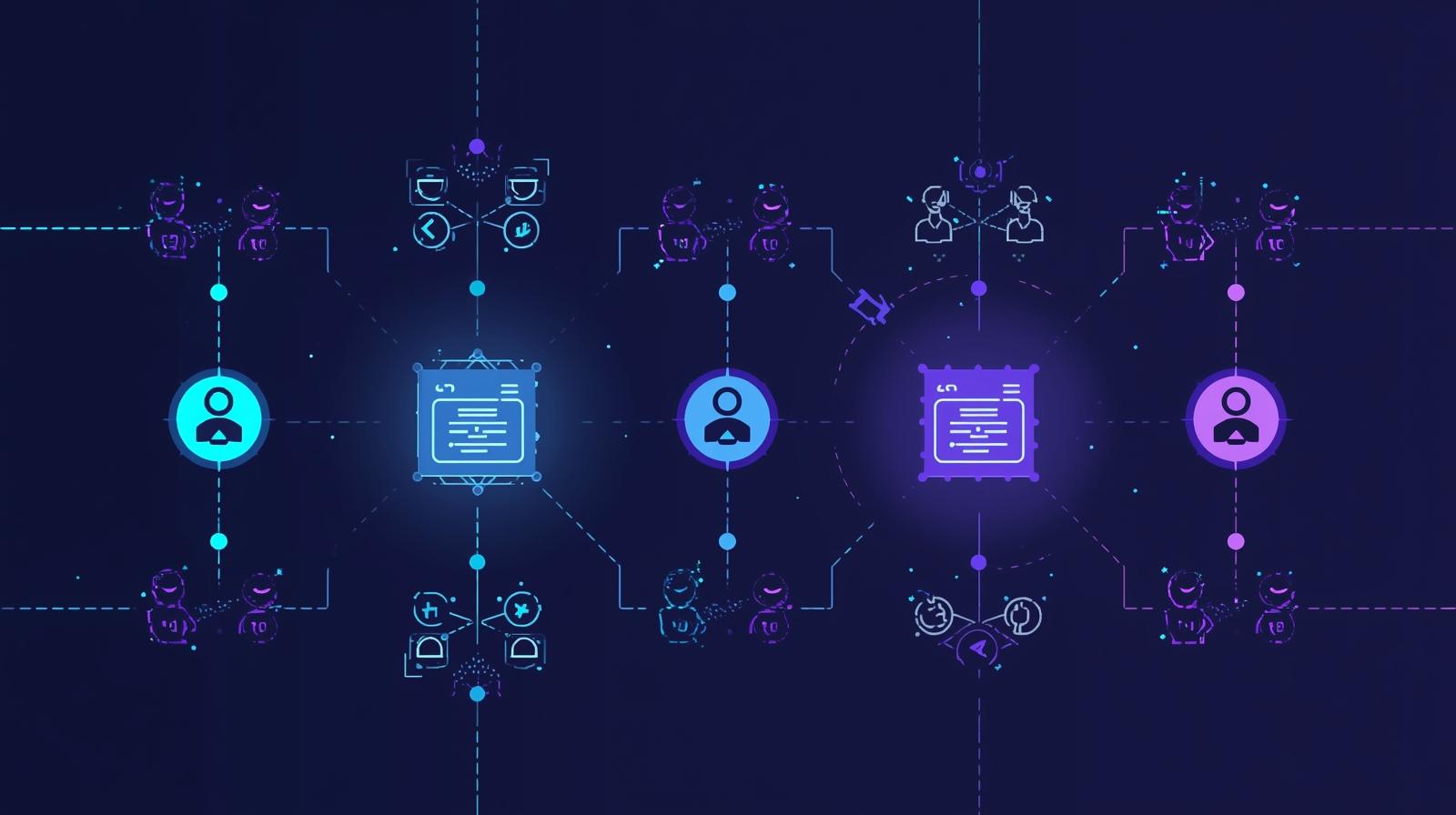
When you use ChatGPT to draft a donor email, you're using an AI tool. You provide a prompt, the AI generates a response, you review and edit the output. The interaction is transactional—question and answer, input and output. But a new category of AI is emerging that works fundamentally differently. Agentic AI doesn't wait for prompts. It takes initiative, makes decisions, executes multi-step workflows, and operates with a degree of autonomy that transforms AI from tool to teammate.
This isn't science fiction—it's happening now. Gartner predicts that 40% of enterprise applications will embed AI agents by the end of 2026, up from less than 5% in 2025. The agentic AI market is projected to grow from $7.8 billion to over $52 billion by 2030. Major platforms like Salesforce Agentforce and Microsoft Copilot Agents are already deploying autonomous AI capabilities designed to work independently within organizational workflows. By 2026, AI agents are expected to be embedded in 80% of enterprise workplace applications, handling complex tasks and making up to 15% of work decisions autonomously.
For nonprofits, this evolution represents both tremendous opportunity and significant challenge. Small teams could gain the equivalent of additional staff members through AI agents that independently manage donor communications, process applications, coordinate volunteers, and handle administrative workflows. Organizations with limited resources could achieve operational capabilities currently possible only for larger institutions. But agentic AI also raises profound questions about accountability, oversight, and the appropriate role of autonomous systems in mission-driven organizations serving vulnerable populations.
This article explains what agentic AI actually means—distinguishing it from the AI tools most nonprofits already use. We'll explore how autonomous agents differ from assistants, examine specific applications emerging for nonprofit work, discuss the governance and oversight requirements these systems demand, and provide practical guidance for organizations considering when and how to adopt agentic approaches. Whether you're just beginning to explore AI or already using advanced capabilities, understanding this shift prepares you for the technology landscape rapidly approaching.
Understanding the Shift from Tools to Agents
The term "agentic AI" describes artificial intelligence systems designed for autonomous action rather than passive response. Understanding this distinction is essential for grasping why this technology evolution matters and how it differs from the AI capabilities most organizations currently use.
What Makes AI "Agentic"
Traditional AI tools—like ChatGPT, Claude, or Midjourney—operate reactively. They wait for input, process it, and return output. Each interaction is discrete; the AI has no persistent goals, doesn't plan across multiple steps, and takes no action beyond generating responses. You remain firmly in control, deciding what to ask and what to do with answers.
Agentic AI systems operate differently across several key dimensions. They pursue goals autonomously rather than responding to individual prompts—you give them an objective, and they figure out how to achieve it. They plan and execute multi-step workflows, breaking complex tasks into subtasks and handling each in sequence. They take real-world actions, not just generating text but actually sending emails, updating databases, scheduling meetings, or making purchases. They adapt based on feedback, adjusting approaches when initial attempts don't succeed.
Unlike previous generative AI tools that created content, made predictions, or provided insights in response to human prompting, agents can go out into the world and accomplish complex tasks autonomously. This shift from reactive to proactive represents a fundamental change in how AI integrates with organizational operations—not as a tool humans use but as a worker that operates alongside them.
Think of current AI assistants as highly capable research analysts. They can analyze data, draft documents, answer questions, and provide recommendations—but they always wait for instructions and never act without explicit direction. They're brilliant resources that enhance your capabilities but remain entirely dependent on your direction and oversight.
AI agents are more like junior staff members given a project and trusted to figure out how to complete it. You assign the objective—"ensure all new donors receive personalized thank-you communications within 24 hours"—and the agent handles everything: monitoring for new donations, retrieving donor information, generating personalized messages, scheduling sends at appropriate times, and logging activities. You might review results and provide feedback, but the agent operates independently within its assigned scope.
AI Assistants
- Respond to specific prompts
- Generate content and recommendations
- Require human action on outputs
- Discrete, transactional interactions
AI Agents
- Pursue goals autonomously
- Plan and execute multi-step workflows
- Take real-world actions independently
- Continuous, goal-oriented operation
Multi-Agent Systems
Beyond individual agents, emerging systems coordinate multiple AI agents working together—each with its own role, capabilities, and domain of responsibility. These multi-agent architectures enable complex workflows that would overwhelm any single system, distributing tasks among specialized agents that cooperate, coordinate, or even compete to achieve outcomes too sophisticated for single-agent approaches.
Consider a hypothetical donor engagement system. One agent monitors interactions and flags donors showing signs of disengagement. Another agent researches those donors' histories and preferences. A third generates personalized re-engagement strategies. A fourth executes approved outreach. A coordinating agent orchestrates the overall process, ensuring agents work together coherently. Each agent specializes in its domain while contributing to a shared objective.
Multi-agent systems remain relatively early in development, with vendors still proving they can deliver genuine business value. But the trajectory is clear—from individual tools to individual agents to coordinated agent teams that function as AI-powered workforces operating alongside human staff.
Agentic AI Applications for Nonprofits
Agentic AI capabilities are beginning to emerge in platforms serving nonprofit organizations. While many applications remain early-stage, understanding the emerging landscape helps organizations prepare for capabilities that will become increasingly available over the next few years.
Donor Engagement and Fundraising
Autonomous management of donor relationships at scale
Fundraising represents one of the most promising areas for agentic AI in nonprofits. AI agents can identify potential donors, analyze previous giving patterns, and create personalized outreach strategies—all autonomously. Platforms like Salesforce Agentforce are already deploying agents that handle donor communications, process gifts, and manage stewardship sequences without constant human direction.
Organizations integrating AI agents into fundraising strategies report 20-30% increases in donations through personalized outreach and improved targeting. These agents don't just generate content—they monitor donor behavior, identify optimal contact timing, execute outreach campaigns, and adjust strategies based on response patterns. What previously required dedicated major gift officers becomes possible for organizations with limited development staff.
However, the same capabilities raise questions about authenticity and donor relationships. When donors receive communications that feel personal but were generated and sent entirely by AI agents, does that enhance or undermine trust? Finding the balance between AI capability and human connection becomes more critical as agents gain autonomy over relationship-critical communications.
Thoughtful organizations are establishing clear boundaries—agents handle routine communications while humans manage high-value donor relationships. This hybrid approach captures efficiency gains without sacrificing the authentic human connection that drives major gift philanthropy.
Case Management and Service Delivery
Supporting frontline workers with autonomous assistance
Social workers, case managers, and other frontline staff often spend 65% or more of their time on documentation rather than direct service. Agentic AI offers potential to dramatically reduce this burden—not by replacing human judgment but by handling the administrative workflows that consume time better spent with clients.
AI agents can quickly resolve cases for beneficiaries with intelligent case triaging, next-best-action recommendations, and automated knowledge retrieval. They can monitor case progress, flag overdue tasks, generate required reports, and coordinate between different service providers—all while keeping human workers informed and in control of significant decisions.
Emerging applications include agents that conduct initial client intake, gathering information through conversational interfaces while human staff handle complex assessments. Agents can manage appointment scheduling, send reminders, follow up on missed sessions, and document interactions—freeing social workers to focus on the relationship-building and clinical judgment that drive client outcomes.
The potential is significant: research suggests AI could reduce social worker paperwork burden by 48% or more. But careful implementation matters enormously. Agents handling client information must maintain strict privacy protections. Decisions affecting vulnerable populations require appropriate human oversight. The goal is augmenting human capacity, not substituting AI judgment for professional expertise in high-stakes situations.
Operations and Administration
Autonomous management of organizational workflows
Administrative workflows that currently require significant staff time—processing applications, managing compliance requirements, coordinating schedules, generating reports—represent natural candidates for agentic AI. Unlike creative or relationship-intensive work, administrative processes follow relatively predictable patterns that agents can learn and execute reliably.
Grant compliance monitoring offers a concrete example. An agent could track reporting deadlines across all active grants, monitor spending against approved budgets, flag potential compliance issues, generate draft reports, and alert staff when human attention is needed. Rather than relying on spreadsheets and calendar reminders, compliance management becomes an autonomous process that surfaces only exceptions and decisions requiring human judgment.
Volunteer coordination represents another promising application. Agents can manage volunteer schedules, match volunteers to opportunities based on skills and availability, send reminders and follow-ups, track hours for reporting purposes, and identify volunteers at risk of disengagement—enabling organizations to maintain robust volunteer programs without dedicating full-time staff to coordination.
The operational potential is substantial. Agentic AI could enable small nonprofit teams to manage large-scale operations more effectively—capabilities previously possible only for organizations with dedicated administrative infrastructure. Organizations that have integrated AI into operations report saving 15-20 hours per week on administrative tasks, translating to approximately 25% of a full-time employee's workload.
Real-Time Impact Measurement
Moving from periodic reporting to continuous insight
One of the defining nonprofit technology trends of 2026 is the move from static, backward-looking reports to real-time, AI-powered insights. Agentic AI enables this shift by continuously monitoring program data, identifying patterns, and generating actionable intelligence without waiting for quarterly reporting cycles.
Voice AI systems are emerging that can reach out to beneficiaries directly, asking questions about program effectiveness and creating real-time impact transparency. Rather than relying on occasional surveys, organizations can maintain continuous feedback loops that inform program adjustments and demonstrate outcomes to funders on demand.
Funders increasingly expect this kind of real-time visibility. As agentic systems enable continuous impact monitoring, organizations with legacy reporting approaches may find themselves at competitive disadvantage—unable to provide the immediate outcome data that technology-savvy funders now demand. Preparing for this shift means building data infrastructure that can support real-time analytics as agentic capabilities mature.
Governance and Oversight for Autonomous AI
Agentic AI dramatically raises the stakes for organizational governance. When AI systems make decisions and take actions autonomously, traditional approaches to oversight—reviewing outputs before they're sent, approving decisions before they're implemented—no longer suffice. Organizations must develop governance frameworks appropriate for systems that act independently.
The Governance Gap
The current state of AI governance in nonprofits is concerning even for traditional AI tools—while more than 80% of nonprofits use AI, only 10-24% have formal policies or governance frameworks. For agentic AI, this governance gap becomes critical. Research reveals that 72% of enterprises deploy agentic systems without any formal oversight or documented governance model, and 81% lack any documented governance for machine-to-machine interactions.
The risks of ungoverned agentic AI are substantial. An autonomous agent's ability to make independent decisions means it might take unforeseen actions. In high-stakes situations—sending communications to major donors, making decisions affecting clients, or processing financial transactions—an agent's choices can have significant consequences, yet human oversight isn't always available at the moment of action.
Gartner predicts that over 40% of agentic AI projects will fail by 2027, often because organizations haven't established appropriate governance before deployment. Moving forward responsibly requires addressing governance proactively rather than reacting to problems after they emerge.
Autonomy Levels and Decision Boundaries
Effective agent governance begins with clearly defining autonomy levels—specifying which decisions agents can make independently, which require notification to humans, and which demand explicit human approval before action. These decision boundaries should reflect organizational values, risk tolerance, and the stakes involved in different types of decisions.
Many systems operate on a continuum from "human-in-the-loop" (most oversight) to "human-out-of-the-loop" (least oversight). Human-in-the-loop systems prevent agents from completing critical tasks or making significant decisions without explicit human review and approval. Human-on-the-loop systems allow autonomous action but maintain human monitoring and ability to intervene. Human-out-of-the-loop systems operate fully autonomously within their assigned domains.
High Autonomy (Agent Acts Independently)
Routine administrative tasks, data entry, standard acknowledgments, scheduling, documentation generation
Medium Autonomy (Agent Acts, Human Reviews)
Donor communications, volunteer assignments, report generation, compliance monitoring alerts
Low Autonomy (Human Approval Required)
Major donor outreach, client-affecting decisions, financial transactions, external communications, policy changes
Document these boundaries explicitly and build them into agent configuration. Agents should understand their own limitations and escalate appropriately when encountering situations outside their authorized scope. Clear boundaries enable confident deployment while maintaining appropriate human oversight for consequential decisions.
Monitoring and Accountability
As agents execute multiple actions at machine speed, organizations face the challenge of extracting meaningful insights from voluminous activity logs. Effective monitoring requires both automated systems that flag anomalies and regular human review of agent performance and decisions.
Creating audit trails for AI decisions becomes essential with agentic systems. Every significant agent action should be logged with sufficient context to understand what the agent did, why it made that choice, and what information informed its decision. These logs enable retrospective review, support compliance requirements, and provide the foundation for improving agent performance over time.
Accountability presents particular challenges with agentic AI. It can be challenging to fulfill accountability when agent actions emerge dynamically and adaptively from interactions instead of fixed logic, and multiple stakeholders may be involved in different parts of the agent lifecycle, diffusing responsibility. Organizations need clear answers to questions like: Who is responsible when an agent makes a poor decision? How are errors corrected and prevented from recurring? How do we communicate agent mistakes to affected parties?
Establish review cadences appropriate to agent authority levels. Agents with high autonomy in low-stakes domains might be reviewed weekly or monthly. Agents operating near human decision boundaries might require daily oversight. Agents making client-affecting decisions might need real-time human monitoring during initial deployment, relaxing to periodic review as confidence builds.
Security and Data Protection
Agents' access to sensitive data and ability to make changes to systems—updating databases, sending communications, making payments—create security considerations beyond those for traditional AI tools. Agentic systems often rely on APIs to integrate with external applications and data sources, and poorly governed APIs can expose vulnerabilities that become targets for attacks.
Apply principle of least privilege rigorously. Agents should have access only to the data and systems required for their specific functions—not blanket access to organizational resources. Implement strong authentication and authorization controls. Monitor for unusual access patterns that might indicate compromised agents or misuse.
Consider the implications of agent actions for data privacy. When agents access client records, generate communications, or make decisions affecting individuals, they must operate within the same privacy frameworks that govern human staff behavior. This means updating data governance policies to explicitly address agentic AI and ensuring agents are configured to respect privacy requirements regardless of their technical capabilities.
Preparing Your Organization for Agentic AI
Most nonprofits aren't ready to deploy fully autonomous AI agents today—and that's appropriate. Agentic capabilities are still maturing, governance frameworks are evolving, and organizational readiness requires deliberate preparation. But the organizations that prepare thoughtfully will be positioned to adopt agentic AI effectively as the technology matures.
Build Foundation AI Literacy First
Agentic AI capabilities build on foundational AI literacy. Organizations that haven't yet developed comfort with basic AI tools—writing assistants, meeting transcription, data analysis—should focus there first. Understanding how AI works, how to evaluate its outputs, and how to use it responsibly provides essential context for eventually working with autonomous agents.
Staff who understand AI's capabilities and limitations through hands-on experience will be better positioned to oversee autonomous agents, identify when agents are performing well or poorly, and intervene appropriately when issues arise. Organizations without this foundation may struggle to effectively govern systems they don't understand.
The shift from viewing AI as a replacement for staff to seeing AI as an augmenting teammate requires mindset change that takes time. Developing AI champions and building broad organizational AI literacy now prepares your team for a future where AI agents become routine collaborators rather than threatening unknowns.
Document and Standardize Workflows
Agentic AI operates within workflows—sequences of tasks with defined inputs, outputs, and decision points. Organizations with well-documented, standardized processes are better positioned to deploy agents effectively because they can clearly specify what agents should do. Organizations with informal, inconsistent processes struggle to define agent behavior clearly.
Start documenting key organizational processes now, even if agentic deployment is years away. How do new donors get acknowledged and stewarded? How are volunteer applications processed? How do grant reports get compiled? How do clients move through intake and service delivery? Explicit process documentation becomes the foundation for agent configuration.
Look for opportunities to standardize variable processes. When different staff members handle the same task in different ways, agent deployment becomes complicated—which approach should the agent follow? Standardization reduces complexity and improves outcomes regardless of whether agents are eventually deployed, while creating clearer specifications for future agentic applications.
Invest in Integration and Data Infrastructure
Gartner predicts that over 40% of agentic AI projects will fail because legacy systems can't support modern AI execution demands. Agents need to access data across systems, trigger actions in multiple platforms, and maintain consistent state across complex workflows. Organizations with fragmented, disconnected technology infrastructure face fundamental barriers to agentic adoption.
Platform consolidation and integration improvement serve organizational efficiency today while preparing for agentic futures. Unified platforms that bring donor, program, volunteer, and financial data together enable sophisticated automation regardless of whether that automation is rule-based or agentic. APIs that connect systems create pathways agents can use for cross-system workflows.
Data quality matters enormously. Agents trained on poor data produce poor outcomes; agents acting on incorrect information make incorrect decisions. Investing in data infrastructure and maintaining data hygiene creates the foundation for effective agentic applications when the technology is ready for deployment.
Develop Governance Frameworks Now
Don't wait until you're deploying agents to think about governance. AI policies developed for current tools can be extended to address agentic capabilities. Existing principles for trusted AI—transparency, accountability, fairness—remain relevant but need translation for autonomous systems that act independently.
Consider what values should guide agent behavior in your organization. How much autonomy is appropriate for different types of decisions? What human oversight is required, and at what points? How will you handle agent errors? How will you communicate about AI use to donors, clients, and stakeholders? Working through these questions in advance creates governance foundations ready for agentic deployment.
Board education about agentic AI represents another preparatory step. Directors who understand the trajectory of AI—from tools to assistants to autonomous agents—can provide better oversight and strategic guidance. Communicating AI risks (not just benefits) to governance bodies builds the informed oversight essential for responsible technology adoption.
The Human Element in an Agentic Future
As AI capabilities advance from reactive tools to proactive agents, questions about the human role become more pressing. What work remains distinctly human in a world where AI agents handle increasing portions of organizational operations? How do we preserve what matters about mission-driven work while capturing efficiency gains from autonomous systems?
Relationships Remain Human
Nonprofit effectiveness ultimately depends on human relationships—with donors who trust you with their philanthropic investments, with clients who share vulnerable parts of their lives, with community partners who collaborate on shared challenges, with volunteers who donate precious time. Agents can support these relationships by handling administrative friction, but the relationships themselves remain fundamentally human.
The organizations that thrive in an agentic future will be those that use AI agents to free human capacity for relationship-building rather than substituting agents for human connection. When agents handle routine donor acknowledgments, development officers have more time for personal cultivation. When agents manage case documentation, social workers have more time with clients. The goal is augmentation that enhances human work, not automation that replaces it.
Be thoughtful about where agent-generated communications are appropriate. Routine transactional messages—appointment reminders, receipt confirmations, standard updates—may be fine for agent handling. Communications that build or depend on trust—major donor cultivation, client crisis support, partnership development—warrant human attention regardless of agent capability.
Judgment and Values Stay Central
Many AI agents, especially advanced systems powered by machine learning, perform decision-making processes that aren't easy for humans to interpret. This opacity makes it hard to audit AI-driven decisions and ensure they align with organizational values. Human judgment remains essential for decisions that involve ethical considerations, stakeholder impact, and mission alignment.
The future nonprofit workforce will likely involve humans focusing on judgment-intensive work while agents handle routine operations. Strategy, relationship cultivation, ethical oversight, and values-based decision-making become more important as operational tasks shift to autonomous systems. Workers who develop these distinctly human capabilities will remain valuable regardless of AI advancement.
Organizations should be explicit about which decisions remain human-only regardless of AI capability. Decisions affecting vulnerable clients, ethical questions about organizational direction, choices with significant stakeholder impact—these warrant human judgment even if agents could technically make them. Preserving human decision authority in mission-critical areas maintains organizational integrity and stakeholder trust.
Managing the Transition Thoughtfully
The shift toward agentic AI will affect jobs—but likely through evolution rather than elimination. Redefining roles to complement AI capabilities becomes an ongoing organizational challenge. Staff who previously spent time on administrative tasks will need to redirect toward activities where human contribution remains essential.
Communicating honestly with staff about AI's evolution helps manage anxiety and build trust. The worst approach is deploying increasingly capable AI systems while pretending nothing is changing. Better to acknowledge the evolution openly, involve staff in defining appropriate boundaries, and invest in skill development that prepares people for changing role requirements.
Consider how efficiency gains from agentic AI should be distributed. If agents reduce administrative burden by 25%, does that capacity go to serving more clients, improving work-life balance, deepening relationship cultivation, or some combination? Explicit decisions about efficiency dividends ensure agentic adoption serves organizational values rather than simply intensifying work expectations.
Conclusion: Navigating the Agentic Transition
The evolution from AI tools to AI agents represents one of the most significant technology transitions nonprofits will navigate in the coming years. Autonomous systems that pursue goals independently, execute multi-step workflows without prompting, and take real-world actions within defined boundaries will transform how organizations operate—creating opportunities for dramatic efficiency gains while raising important questions about oversight, accountability, and the appropriate role of autonomous systems in mission-driven work.
This transition won't happen overnight, and it shouldn't happen without preparation. Organizations that rush into agentic AI without adequate governance, data infrastructure, or staff readiness risk failures that undermine both immediate operations and longer-term AI adoption. The wiser path involves building foundational AI literacy now, developing governance frameworks proactively, investing in integration and data quality, and documenting workflows that can eventually support autonomous operation.
At the same time, organizations that ignore this evolution risk falling behind as peers capture efficiency gains that enable greater mission impact with limited resources. The question isn't whether to engage with agentic AI but when and how—balancing appropriate caution with strategic positioning for capabilities that will increasingly define competitive advantage in the nonprofit sector.
The organizations that navigate this transition most successfully will be those that maintain clear vision of what should remain human—relationships, judgment, values, mission—while thoughtfully adopting autonomous capabilities for operations that don't require these distinctly human contributions. They'll build governance frameworks that enable confident deployment while maintaining appropriate oversight. They'll invest in their people, developing skills that complement rather than compete with AI agents.
Agentic AI is coming. The question is whether your organization will be ready to adopt it responsibly—capturing the benefits of autonomous operation while preserving what makes nonprofit work meaningful. Start preparing now, and you'll be positioned to answer that question confidently when the time comes.
Ready to Prepare for the Agentic Future?
The shift from AI tools to AI agents will transform nonprofit operations. We help organizations build the foundations—governance frameworks, data infrastructure, staff readiness—that enable successful adoption of agentic capabilities as they mature.