
AI-Powered Cash Flow Forecasting for Nonprofits Living Grant Check to Grant Check
A nonprofit can be healthy on paper and still miss payroll. When your funding arrives in lump sums, on reimbursement, or months after you have already spent the money, the balance in your bank account tells a story your budget does not. This guide shows how AI-assisted cash flow forecasting helps organizations that live grant check to grant check see trouble coming early enough to do something about it.
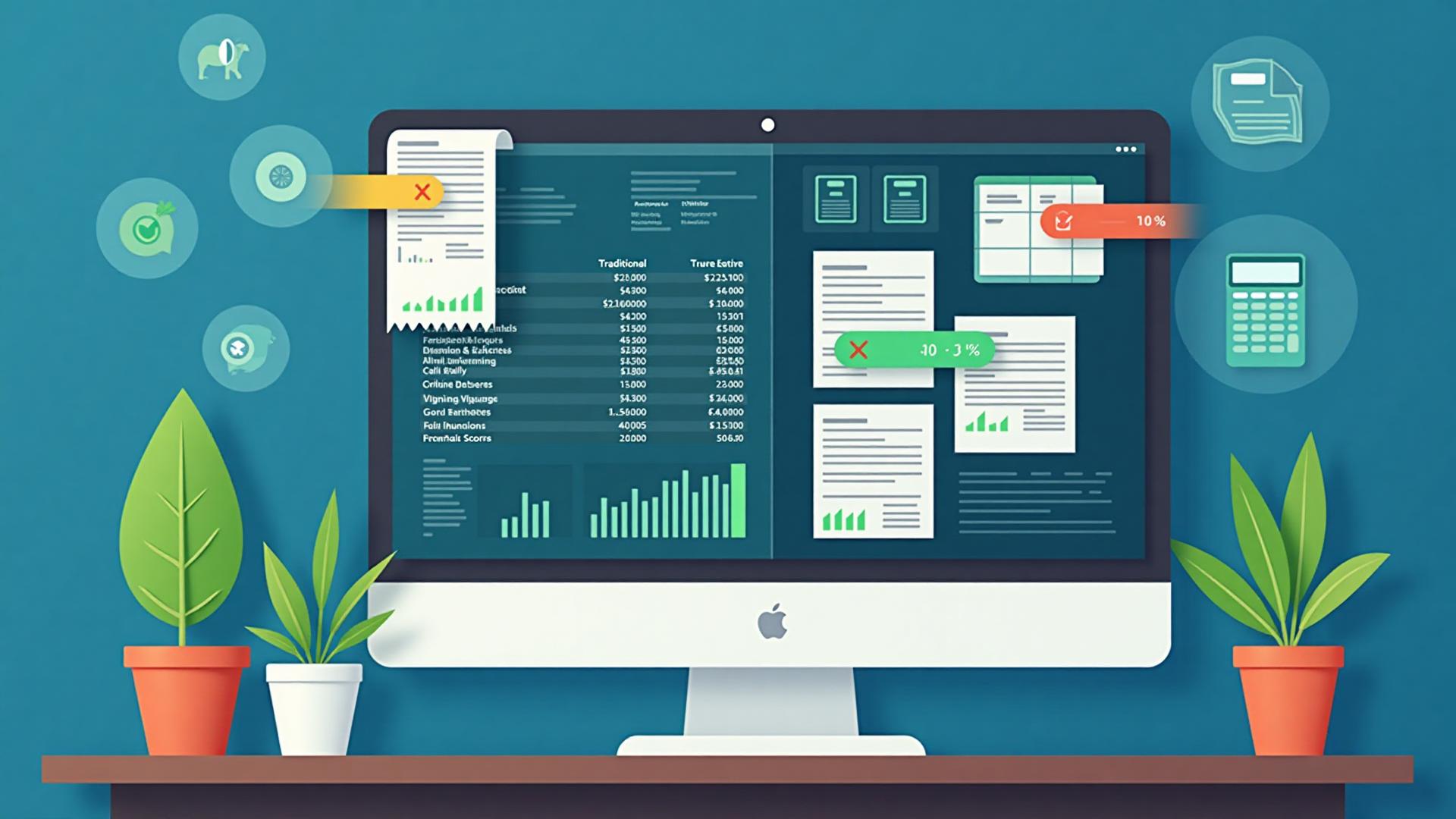
There is a particular kind of stress that finance staff at grant-funded nonprofits know well. The annual budget looks balanced. The grants are secured. The programs are running. And yet, in a given week, there may not be enough cash in the account to cover payroll, because a large reimbursement is still weeks from arriving and expenses do not wait. Nonprofits can become, as one accountant put it, rich on paper and broke in reality. The problem is almost never insolvency. It is timing.
Timing is exactly what a budget is bad at capturing. A budget tells you whether your revenue and expenses balance over a year. It says nothing about whether the money will be in the bank in the specific week you need it. For organizations funded by reimbursement-based grants, government contracts, or large periodic gifts, the gap between when you spend and when you are paid can stretch for weeks or months, and that gap is where cash crises live. Federal and foundation funding uncertainty has made this pressure sharper, leaving many organizations floating real expenses against money they are owed but have not yet received.
The tool built for this problem is the cash flow forecast, and specifically the rolling short-horizon forecast that projects your actual bank balance week by week. It is a different instrument from your budget, and it answers a different question: not whether you can afford your plan over the year, but whether you can meet your obligations in the coming weeks. Historically, building and maintaining one was tedious enough that many small nonprofits simply did not, and instead managed cash by anxiously watching the balance. AI has changed that calculus, making a genuinely useful forecast achievable even for a small finance team.
This guide explains why cash flow forecasting matters more than ever, how the widely used 13-week forecast works, where AI adds real value and where it does not, and how to build a practical forecasting habit without a treasury department. It complements our guides on AI-assisted budgeting and managing restricted funds, focusing specifically on the liquidity question that keeps grant-dependent nonprofits awake at night.
Why Cash Flow Is a Different Problem From Budgeting
A budget and a cash flow forecast are often confused, but they measure different things and solve different problems. A budget is a plan for the full fiscal year, showing expected revenue and expenses across categories and confirming that, in aggregate, the organization can fund its mission. A cash flow forecast is a projection of the actual money moving in and out of your bank account over a shorter horizon, showing whether you will have enough liquid cash on any given date to meet your obligations. You can be perfectly on budget and still run out of cash, because the budget does not know that your biggest reimbursement lands in April while your largest expenses fall in February and March.
For grant-dependent nonprofits, three features of the funding model make cash flow especially treacherous. First, reimbursement grants require you to spend first and be repaid later, so you are constantly floating expenses against money you are owed. Second, funding often arrives in large, infrequent chunks rather than a steady stream, creating peaks and troughs in your balance that a monthly average conceals. Third, restricted funding means that having cash is not the same as being able to use it, because dollars designated for one program cannot legally cover a shortfall in another. A forecast that ignores restrictions can show a comfortable balance that is largely untouchable.
This is why watching your bank balance is not a substitute for forecasting. The balance tells you where you are today; it says nothing about the trough three weeks out when a payroll run coincides with a lull between reimbursements. By the time a shortfall shows up in the account, your options have narrowed to the painful ones: delaying vendors, drawing on reserves in a hurry, or scrambling for emergency credit. A forecast moves that awareness forward in time, converting a surprise into a manageable, anticipated event. The whole value of forecasting is the runway it buys you to act calmly rather than react in crisis.
What a Budget Answers
- Do our revenues and expenses balance over the year?
- Can we afford the programs we have planned?
- How should we allocate resources across the mission?
What a Cash Flow Forecast Answers
- Will we have enough cash in the bank each week?
- When does a shortfall arrive, and how deep is it?
- How much of our cash is actually available to spend?
The 13-Week Rolling Forecast: A Practical Standard
The tool that finance professionals reach for repeatedly is the 13-week rolling cash flow forecast, and the specific horizon is not arbitrary. Thirteen weeks is one fiscal quarter, long enough to see a developing shortfall while there is still time to act, and short enough that your projections stay reasonably accurate. The near weeks can be forecast with real precision because you know your scheduled payroll, your committed expenses, and your expected receipts. The later weeks are fuzzier but still show you the shape of what is coming. That balance of accuracy and foresight is why the 13-week window has become a standard rather than a longer or shorter one.
The forecast is rolling, which is the feature that makes it genuinely useful rather than a one-time exercise. Each week you drop the week that has passed, add a new week at the far end, and update the whole projection with what actually happened. Reality is constantly reconciled against the forecast, so your estimates improve over time and you always have a fresh quarter of visibility ahead. A forecast built once and left to age is nearly worthless; a forecast refreshed weekly becomes the instrument you steer by. The discipline of the weekly update is where the value lives.
For a grant-dependent nonprofit, the forecast should be built around your actual funding mechanics. On the inflow side, that means mapping each reimbursement to its realistic arrival date, not the date you submitted the claim, and being honest about how long your funders actually take to pay. On the outflow side, it means capturing payroll dates precisely, since payroll is usually the largest and least flexible obligation, along with rent, key vendors, and other committed costs. The most important weeks to watch are the troughs, where a large outflow coincides with a gap in incoming funds. Those troughs are where cash crises happen, and identifying them weeks ahead is the entire point.
Anatomy of a 13-Week Forecast
The elements that make it accurate and actionable
- Opening bank balance, updated with real figures weekly
- Expected receipts mapped to realistic arrival dates
- Payroll dates and amounts captured precisely
- Committed expenses: rent, vendors, and recurring costs
- A running projected balance flagging each weekly trough
- Restricted versus available cash shown separately
Where AI Genuinely Helps, and Where It Does Not
The reason many small nonprofits never maintained a proper cash flow forecast was simple: it was too much manual work to keep current. Someone had to pull figures from the accounting system, estimate arrival dates, update the spreadsheet, and redo it every week, and that labor competed with everything else on a stretched finance person's plate. This is exactly the kind of repetitive, data-heavy, pattern-driven task where AI now offers real leverage. AI-assisted forecasting tools can connect to your accounting data, categorize transactions, and project recurring inflows and outflows automatically, turning hours of weekly spreadsheet maintenance into a review of a forecast the system has already drafted.
AI adds particular value in three places. It improves the accuracy of estimated timing by learning from your history, for instance recognizing that a given funder typically pays several weeks after a claim, so its projected arrival dates reflect reality rather than optimism. It handles scenario modeling quickly, letting you ask what happens to your cash position if a reimbursement slips a month, a grant is cut, or an expense rises, and seeing the effect across the whole 13 weeks in moments. And it reduces the manual burden of the weekly refresh, which is the single biggest reason forecasts get abandoned. Automating the tedious part is what makes the discipline sustainable for a small team.
It is equally important to be clear about what AI does not do. It does not replace financial judgment. An AI forecast is only as good as the assumptions behind it, and a model that has never seen an unusual event, such as a funder freezing payments, will not anticipate one on its own. AI can also project a confident-looking number that is quietly wrong if its inputs are stale or its assumptions unexamined, so its output must be reviewed by someone who understands the organization's finances. Treat AI as a fast, tireless analyst that drafts and models, while a human decides. The judgment about how much reserve to hold, when to draw on a line of credit, and how to respond to a projected shortfall remains firmly yours.
Where AI Adds Value
- Automating the weekly data pull and forecast refresh
- Learning realistic payment timing from your history
- Running best, base, and stress scenarios instantly
Where Human Judgment Stays Essential
- Setting the assumptions the forecast depends on
- Anticipating unusual events the model has never seen
- Deciding how to respond to a projected shortfall
Scenario Planning and Acting on What You See
A forecast is only useful if it changes what you do, and its highest use is turning a projected shortfall into a decision made with time to spare. When your 13-week view flags a trough five weeks out, you have a genuine choice among calm options rather than a scramble. You might accelerate a reimbursement claim, negotiate timing with a vendor, defer a discretionary expense, draw modestly on a line of credit, or make a planned, deliberate use of reserves. Each of these is a reasonable move when chosen in advance; each becomes painful when forced at the last minute. The runway the forecast provides is what preserves your options.
Scenario planning strengthens this further by preparing you for the funding uncertainty that defines the current environment. A robust approach runs at least three cases: a base case reflecting your best estimate, an optimistic case, and a stress case that models something going wrong, a delayed reimbursement, a reduced grant, or an unexpected cost. Seeing the stress case in advance tells you how much cushion you actually need and how close to the edge you would run if a funder faltered. This is where AI's ability to recompute an entire forecast instantly is especially valuable, because it makes asking these what-if questions cheap enough to do routinely rather than only in a crisis.
The forecast also informs your structural liquidity decisions, the ones that determine how resilient you are between the peaks and troughs. Sound financial planning for grant-dependent nonprofits generally layers several protections: a board-approved operating reserve, a line of credit sized to bridge predictable reimbursement gaps, and a clear policy on when each is used. A short, predictable gap between spending and reimbursement is often best bridged with a line of credit, which preserves reserves for genuine emergencies, while a longer or more uncertain gap may call for reserves and harder operational choices. Your forecast is what tells you which situation you are actually in, so these decisions rest on evidence rather than anxiety. This kind of resilience planning fits naturally alongside sound financial controls and audit readiness.
Options When the Forecast Flags a Trough
Calm moves you can choose with weeks of runway
- Accelerate an eligible reimbursement claim
- Negotiate payment timing with key vendors
- Defer discretionary and non-committed spending
- Draw a bridging amount on a line of credit
- Make a planned, deliberate use of reserves
- Brief the board early with a clear, evidenced plan
Getting Started Without a Treasury Department
You do not need sophisticated software to begin. A capable 13-week forecast can start as a well-structured spreadsheet with the weeks across the top and your inflows and outflows down the side, using AI as a thinking partner to set it up. A general-purpose assistant can help you design the template, list the categories to track, draft the formulas, and reason through your funder payment patterns, all without any financial data leaving a spreadsheet you control. Beginning this way builds your understanding of the mechanics before you consider a dedicated tool, and for many small organizations the spreadsheet remains entirely sufficient.
As your needs grow, forecasting features are increasingly built into nonprofit accounting platforms and available through dedicated cash flow tools that connect directly to your books. When evaluating these, the questions that matter are practical: does it integrate with your accounting system, can it handle the restricted-versus-available distinction that is central to nonprofit finance, is it priced sensibly for your size, and is its output transparent enough that you can see and check the assumptions rather than trusting a black box? Be mindful with data privacy too, since financial data is sensitive; understand where a tool stores your information before connecting it. The goal is a tool that reduces manual effort while keeping you in genuine control of the numbers.
Whatever tooling you choose, the habit matters more than the software. Set a fixed weekly time to update the forecast, reconcile the prior week's estimates against what actually happened, and extend the horizon by one week. Review the troughs, note anything that needs action, and keep leadership informed of the picture rather than only the crises. A modest, consistent weekly ritual delivers far more value than an elaborate model that is built once and abandoned. Over a few months, this practice transforms cash from a source of recurring anxiety into a variable you understand and manage, which is exactly the position a grant-dependent nonprofit needs to be in. For the wider financial picture, our guide on AI-assisted budgeting pairs naturally with disciplined cash forecasting.
A Starter Plan for a Small Finance Team
Begin simply, build the habit, then add tooling
- Build a 13-week spreadsheet with AI help, keeping data in your control
- Map each reimbursement to a realistic arrival date, not the claim date
- Show restricted and available cash separately
- Set a fixed weekly time to refresh and roll the forecast forward
- Run a stress scenario and keep leadership informed of the trend
Seeing the Trough Before You Reach It
For nonprofits that live grant check to grant check, cash flow is not a back-office detail. It is the difference between meeting payroll calmly and lurching from one near-miss to the next. The organizations that manage it well are not necessarily the ones with the most money; they are the ones with the clearest view of when their money arrives and when it leaves. A rolling 13-week forecast provides that view, converting the timing mismatches that cause cash crises into anticipated events you can plan around.
AI has made this discipline achievable for organizations that once found it too laborious to sustain. By automating the weekly refresh, learning realistic payment timing, and making scenario modeling effortless, AI removes the friction that caused so many small nonprofits to abandon forecasting. What it does not do, and should not, is replace the financial judgment at the center of the work. The most effective approach pairs AI's tireless drafting and modeling with a human who understands the organization and owns the decisions.
If you take one action from this guide, make it starting a simple weekly forecast, even a rough one, because the habit is what compounds. As it matures, place it inside a broader financial resilience strategy of reserves, credit, and scenario planning, and inside your overall approach to adopting AI thoughtfully across the organization. Our strategic plan for AI framework and our guide for nonprofit leaders can help you connect cash discipline to the larger picture. The next time a reimbursement runs late, you want to have seen it coming weeks ago.
Get Ahead of Your Cash Flow
We help grant-dependent nonprofits build practical, AI-assisted cash flow forecasts and financial resilience plans that turn liquidity from a worry into something you manage with confidence.