
AI for Community Land Trusts: Property Management, Resident Services, and Affordable Housing Preservation
Community land trusts carry a distinctive burden that most housing organizations never face: stewardship obligations that never end. Every home added to a CLT portfolio creates permanent administrative responsibilities around ground lease compliance, resale oversight, income eligibility, and resident support. AI offers CLTs a practical path to managing these perpetual obligations without perpetually expanding staff.
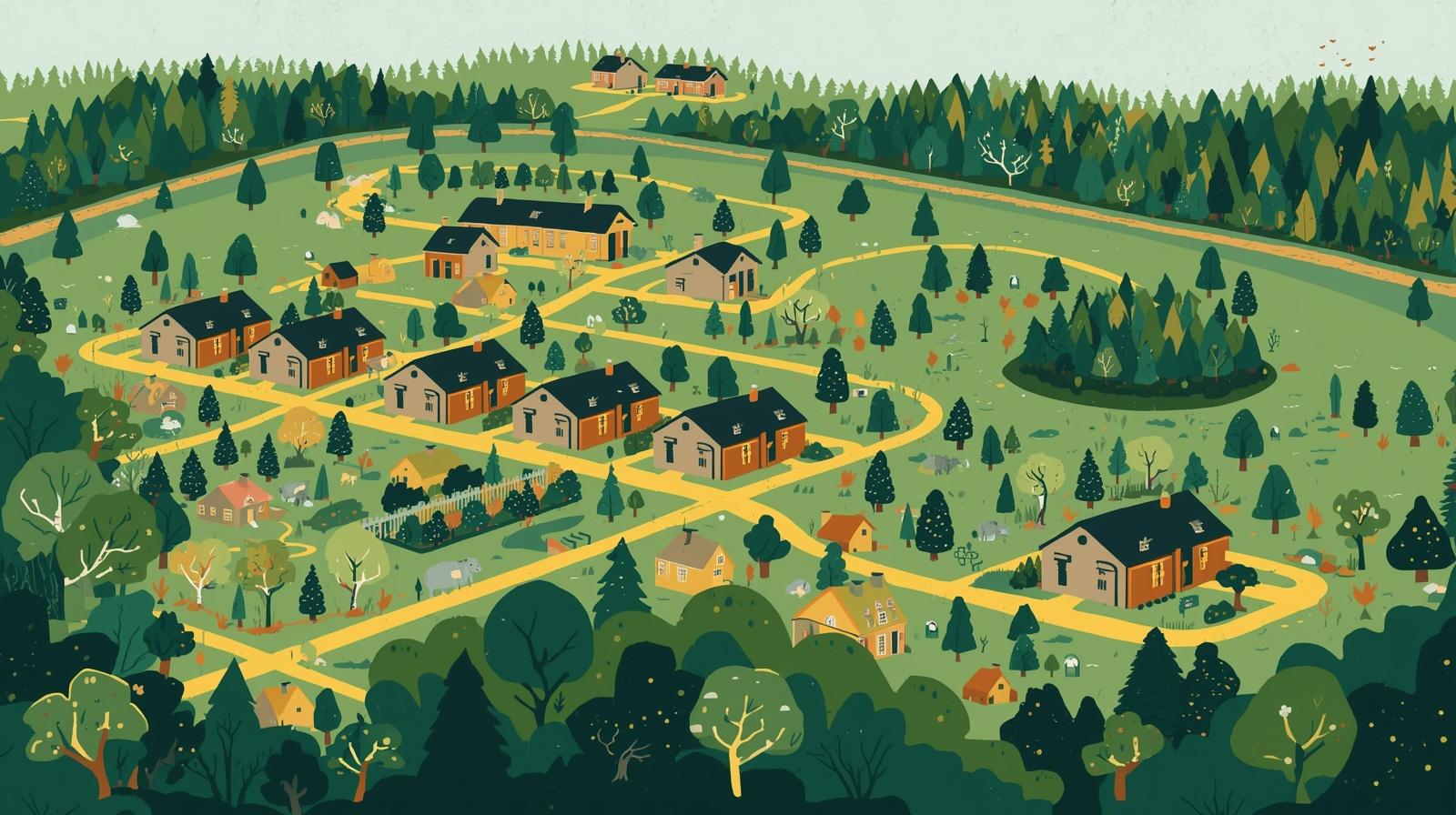
Community land trusts represent one of the most structurally sophisticated models in affordable housing. By separating land ownership from home ownership and embedding resale restrictions into 99-year ground leases, CLTs preserve affordability permanently, long after other subsidy programs have expired. The 2022 Census of Community Land Trusts found that the sector has grown substantially, now stewarding tens of thousands of homes across a few hundred organizations in the United States. Yet most CLTs remain small operations, with limited staff carrying enormous documentation, compliance, and relationship management burdens.
The CLT model creates administrative obligations that scale with every unit added to the portfolio. A CLT with 200 homes must monitor 200 ground leases, manage 200 resale restriction covenants, conduct ongoing income recertification for rental units, coordinate resale transactions, provide homeowner education and foreclosure prevention support, and maintain audit-ready records in perpetuity. With staff teams that often number in the single digits, this is precisely the kind of repetitive, rule-bound work where AI can provide the most meaningful relief.
This article examines where AI fits naturally into CLT operations, which tools are most relevant, what data governance considerations are essential given the sensitivity of resident information, and how CLTs can approach technology adoption without overwhelming their limited capacity. Whether your organization stewards 50 homes or 500, the principles that make AI useful in CLT settings apply broadly.
Understanding the CLT Administrative Burden
Before identifying where AI can help, it is worth understanding what makes CLT administration distinctively demanding. Most housing organizations develop properties, fill them, and hand off long-term management to a property management company. CLTs retain stewardship responsibility permanently. That is both the model's greatest strength, the permanence of affordability, and its greatest operational challenge.
Ground lease administration requires CLT staff to review every resale transaction to verify that the resale formula was correctly applied, that the buyer meets income eligibility requirements, and that the CLT's right of first refusal was honored. Each transaction involves substantial documentation and verification work that cannot simply be delegated to a title company or real estate attorney unfamiliar with the CLT model. Similarly, income eligibility verification at intake involves reviewing pay stubs, tax returns, employment documentation, and household composition information, then recertifying that information annually for rental households. These tasks are thoroughly rule-governed, highly repetitive, and time-intensive, exactly the profile of work that AI tools handle well.
Waitlist management adds another layer of complexity. CLTs maintain lists of income-eligible households that must be kept current, notified appropriately, and matched fairly to available homes as they come through the resale process. Without a systematic approach, this becomes both time-consuming and vulnerable to inconsistency. Records management, too, carries an unusual burden in CLT settings: because the organizations operate in perpetuity, they must maintain complete documentation of all real property transactions indefinitely. The Land Trust Alliance's recordkeeping standards require specific policies covering organizational, transaction, and stewardship records, and an ever-expanding archive presents ongoing management challenges.
Documentation-Heavy Workflows
- Resale formula verification for every transaction
- Annual income recertification for rental households
- Buyer eligibility verification at each resale
- Perpetual ground lease monitoring and compliance
Ongoing Resident Services
- Homebuyer education and post-purchase counseling
- Financial distress monitoring and foreclosure prevention
- Maintenance coordination and capital improvement approval
- Waitlist management and household matching
AI Applications for Property Management and Compliance
The most immediately valuable AI applications for CLTs address the high-volume, rule-governed workflows that consume disproportionate staff time. Affordable housing property management platforms have moved aggressively into AI-assisted compliance automation, and several tools are now specifically designed for the income verification, recertification, and waitlist workflows that define CLT operations.
Recertification and Compliance Automation
Automating the notification and document management cycle for annual income recertifications
For CLTs with rental portfolios, annual income recertification is one of the most labor-intensive compliance tasks. Platforms like EliseAI, which is now used by significant portions of the affordable housing sector, have developed recertification automation that sends scheduled notices at 120, 90, 60, and 30-day intervals via email and SMS, tracks document submission, follows up on incomplete submissions, and logs all interactions for audit purposes. What previously required staff members to manually track every household across multiple spreadsheets can be managed by an automated system that surfaces exceptions rather than requiring staff to monitor every case.
AI-assisted document processing can also validate submitted income documentation. Rather than manually reviewing every pay stub or tax return, AI can extract key data, verify completeness, flag inconsistencies, and identify missing items, passing to staff only the cases that require human judgment or that have potential compliance concerns. This dramatically reduces the time per household while maintaining the human oversight that fair housing compliance requires.
- Automated recertification notice schedules with multi-channel delivery
- Document completeness and consistency checking at intake
- Audit-ready interaction logging without additional staff effort
- Housing voucher auto-qualification and compliance tracking
Predictive Maintenance for Aging Housing Stock
Reducing emergency repairs and maintenance costs through AI-powered scheduling
Many CLTs steward older or previously distressed properties, and deferred maintenance is a constant risk. AI systems that analyze maintenance request histories, work order patterns, and building system age data can identify when HVAC units, plumbing systems, or structural components are likely to require attention before failures occur. For CLTs with constrained maintenance budgets, shifting from reactive to predictive maintenance can meaningfully reduce both emergency repair costs and the disruption that emergency repairs cause for residents.
Property management platforms with AI capabilities, including Yardi and newer tools like Visitt, offer predictive maintenance features that are increasingly accessible to smaller housing organizations. Automated maintenance request intake, 24/7 submission capability through resident-facing apps, and automated routing to appropriate vendors can also reduce the staff time involved in routine coordination, freeing staff for the higher-value homeowner relationships that define CLT stewardship.
GIS and Spatial Analysis for Portfolio Strategy
Using geographic analysis to inform land acquisition and identify at-risk properties
Geographic Information Systems, increasingly enhanced with AI analysis layers, allow CLTs to visualize their portfolios, map community demographics, identify underutilized or at-risk parcels for potential acquisition, and analyze climate vulnerability across their holdings. Displacement risk prediction is one of the most compelling applications: machine learning models can analyze property sales data, permit activity, demographic indicators, and neighborhood change metrics to identify neighborhoods at elevated risk of displacement before the process accelerates. CLTs that can identify high-risk areas earlier can prioritize acquisition in those locations, where their intervention will have the greatest preservation impact.
The Trust for Public Land uses ArcGIS Online extensively for portfolio management and strategic analysis. Smaller CLTs can access similar capabilities through ESRI's nonprofit licensing, or through free, open-source alternatives like QGIS. The investment in learning these tools pays dividends not only in acquisition strategy but in grant applications, where funders increasingly expect data-driven evidence of geographic need and impact.
Strengthening Resident Services with AI
The CLT model is built on relationships. CLTs commit to supporting residents not just at the point of sale but through the full arc of their tenancy or homeownership, including financial distress, major repairs, family changes, and eventual resale. This commitment distinguishes CLTs from conventional affordable housing and is central to why the model produces better long-term outcomes for residents. AI cannot and should not replace these relationships, but it can help staff maintain them more consistently across a growing portfolio.
Waitlist management is an area where AI adds immediate operational value. CLTs maintain lists of income-eligible households that must be kept current, notified when homes become available, and matched to appropriate units. Automated messaging can keep waitlisted households informed of their status, collect updated contact information and documentation before it expires, and notify eligible households efficiently when units come available through the resale process. This reduces the manual outreach burden while ensuring no household falls off the list due to communication gaps.
Homebuyer Education and Support
CLT homebuyer education covers complex ground: ground lease mechanics, resale restrictions, maintenance responsibilities, financial planning, and the CLT's role as a long-term partner. AI-assisted learning platforms can guide prospective and current CLT homeowners through this material at their own pace, with multilingual support that removes language barriers for non-English-speaking households. This supplements, rather than replaces, the one-on-one counseling that defines the CLT relationship, freeing staff to focus on the cases that require individualized attention.
- Self-paced learning modules in multiple languages
- 24/7 resident portal access for lease and maintenance info
- Automated FAQ responses for common ground lease questions
Early Distress Detection and Foreclosure Prevention
CLTs have a distinctive commitment to foreclosure prevention, recognizing that foreclosure on a CLT home is a community loss as well as an individual one. AI tools can help identify residents showing signs of financial distress, such as late payment patterns, before the situation reaches a crisis point. Early identification enables proactive outreach when intervention is still most likely to be effective. This same capability applies to managing lease violations before they escalate.
- Payment pattern monitoring for early distress signals
- Automated referral to financial counseling resources
- Lease compliance monitoring and early violation alerts
AI and Affordable Housing Preservation Strategy
Beyond operational efficiency, AI opens up strategic possibilities for CLTs as affordable housing preservation organizations. The most significant is displacement prediction: using machine learning to identify neighborhoods where market pressures are building before those pressures become visible in sale prices or eviction rates. A 2024 synthesis of research on machine learning and gentrification detection identified multiple promising models, including approaches developed at Drexel University that incorporate community input alongside property data and satellite imagery to identify early-stage neighborhood change.
For CLTs, the strategic value of earlier displacement prediction is clear: land acquisition while prices are still manageable is vastly more cost-effective than intervening after a neighborhood has already gentrified. CLTs that build geographic analysis into their acquisition planning can more systematically prioritize the communities where their model will have the greatest long-term impact. This is also increasingly what funders expect to see in acquisition proposals.
At-risk affordable rental identification is another high-impact application. Grounded Solutions Network analysis has identified hundreds of thousands of affordable rental units nationally with expiring affordability restrictions. AI-enhanced data analysis helps CLTs and their regional partners identify specific properties that may be coming out of affordability programs in their target geographies, allowing organizations to pursue acquisition before those units are lost to the market permanently.
Strategic Applications for Acquisition and Preservation
AI tools that support CLT mission at the portfolio and community level
Displacement and Gentrification Risk
- Machine learning models analyzing property sales and permit data
- Neighborhood change detection from satellite and street-level imagery
- Community input integration into risk assessment models
Acquisition Decision Support
- Property record aggregation for target analysis
- Expiring affordability restriction identification
- Climate vulnerability overlay for long-term portfolio planning
Data Governance and Privacy: Non-Negotiable Foundations
Community land trusts hold some of the most sensitive data in the nonprofit sector. Resident files contain income documentation, household composition, employment history, financial records, and in some cases immigration status. CLTs operating in the current environment face heightened sensitivity around this data, as housing information held by nonprofits could potentially be sought through legal processes in ways organizations had not previously anticipated. This makes data governance not merely a best practice but a fundamental organizational responsibility.
The first and most important principle is that CLTs should never enter actual resident personally identifiable information into general-purpose AI tools. Free tiers of consumer AI products, and many business tools, use input data to improve their models. Housing professionals have been explicit about this risk: using ChatGPT or similar tools to draft responses or analyze documents that include resident income data, household information, or case histories is inappropriate. CLTs should establish clear written policies prohibiting this practice and communicate them to all staff.
AI tools used in applicant screening or eligibility determination carry documented algorithmic bias risks that are particularly important for CLTs with explicit equity missions. Research from fair housing organizations has documented instances where AI-assisted screening systems produced disparate impacts on protected classes. Any AI tool touching applicant evaluation should be reviewed by legal counsel familiar with fair housing law before deployment, and organizations should plan for periodic disparate impact audits after implementation. CLTs' income-based eligibility criteria are distinct from credit-score-based screening, but the bias risk remains relevant for any decision-support AI.
Essential Data Governance Practices for CLTs
- No resident PII in general AI tools: Establish written policy prohibiting entry of income data, household information, or case details into consumer AI platforms
- Use housing-specific platforms: Tools designed for affordable housing compliance (EliseAI, Yardi) are built with relevant regulatory requirements; general tools are not
- Vendor due diligence: Understand what data vendors retain, how they use it, their breach response protocols, and whether their data practices are appropriate for sensitive housing data
- Fair housing audit AI tools: Any AI involved in applicant evaluation requires legal review and periodic disparate impact testing before and after deployment
- Align with Land Trust Alliance standards: Digital records strategy should meet Practice 9G recordkeeping requirements and be reviewed during accreditation
A Phased Approach to AI Adoption for CLTs
Given the capacity constraints most CLTs face, a phased implementation approach is far more realistic than attempting wholesale transformation. The goal is to start where the return on investment is clearest, build staff confidence with lower-risk applications, and expand as the organization develops competency and trust in the tools.
Phase 1: Lowest Risk, Highest Return (Months 1-3)
Start with applications that carry minimal privacy risk and produce immediately visible results. AI-assisted grant writing offers the clearest entry point: tools like Instrumentl, Grantable, and Grantboost can help small CLT staffs produce higher-quality grant narratives more efficiently without requiring any resident data input. This frees up capacity for direct service while also improving grant outcomes.
Alongside grant writing, CLTs can begin using AI writing tools (in secure enterprise environments, not consumer tiers) to draft board communications, funder reports, and policy documents. These applications are low-risk and build staff familiarity with AI capabilities.
Phase 2: Operations and Communications (Months 4-9)
After establishing governance policies and staff comfort with AI tools, CLTs can move into automating waitlist communications and, for organizations with rental portfolios, recertification scheduling. These workflows benefit enormously from automation, but they involve resident data and require that data governance policies are in place first.
GIS analysis for portfolio management and acquisition planning can also begin in this phase, using property data and neighborhood indicators rather than resident information. This is an area where peer learning through Grounded Solutions Network can accelerate adoption by sharing what has worked for other CLTs.
Phase 3: Advanced Applications (Ongoing)
Organizations that have built data governance, staff training, and operational foundations can explore predictive maintenance integration with property management systems, displacement risk modeling to inform acquisition strategy, and more sophisticated compliance monitoring across multiple funding streams. Throughout this phase, all AI tools should remain under meaningful human oversight, particularly for decisions affecting residents.
Tools Most Relevant to CLT Operations
The tool landscape for CLTs spans several categories. Housing-specific property management platforms are the highest priority for organizations with rental portfolios, because they are built with the regulatory requirements already embedded. For homeownership programs, the relevant tools are more distributed across compliance tracking, GIS analysis, and grant writing categories.
Affordable Housing Platforms
- EliseAI: Affordable housing specialist with recertification automation, document validation, and 24/7 resident communication
- Yardi Systems: Widely used property management platform with AI-enhanced affordable housing compliance features
- Rent Manager: Property management platform with AI-enhanced workflow tools accessible to smaller organizations
Grant Writing and Analysis
- Grantable: Collaborative grant writing with data privacy emphasis, appropriate for organizations handling sensitive resident data
- Instrumentl: Grant prospecting and proposal drafting using a large funding database
- ArcGIS Online (ESRI): GIS analysis for portfolio management and acquisition strategy, with nonprofit licensing available
Sector Support: Grounded Solutions Network, the national CLT support organization, provides technical assistance and peer learning that can accelerate technology adoption. Their capacity-building programs and technical manual are the sector's primary resource for CLTs approaching operational challenges, including technology decisions.
Conclusion: AI in Service of Permanent Affordability
The community land trust model is extraordinary in its ambition: preserving affordable housing not for one generation but for all the generations that will follow. That ambition creates administrative obligations that ordinary organizations never face. AI does not change what CLTs are trying to accomplish, but it can meaningfully change what a small team is capable of accomplishing.
The most important principle for CLTs approaching AI adoption is to start where the return is clearest and the risk is lowest. Grant writing assistance, communications automation, and GIS analysis for acquisition strategy are all areas where AI provides genuine value without requiring resident data to be handled by tools not designed for it. For compliance-heavy workflows involving resident information, housing-specific platforms with embedded regulatory knowledge are the appropriate choice, not general-purpose AI tools.
Throughout, CLTs should remember that the trust residents place in these organizations, the sense that the CLT is a permanent community partner, not just a landlord or a lender, is the foundation of everything the model achieves. AI tools should be deployed to deepen that trust by making the organization more responsive, better organized, and better informed about what residents need. The technology exists to serve the mission. The mission does not exist to justify the technology.
For CLT leaders thinking about where to start, the most valuable first step is often not a technology decision at all. It is a workflow mapping exercise that identifies which tasks consume the most disproportionate staff time, which are most rule-governed and repeatable, and which involve the most sensitive data. That analysis creates the roadmap. The tools, increasingly sophisticated and accessible, are ready when the organization is.
Ready to Strengthen Your CLT's Capacity with AI?
We help housing nonprofits and community land trusts evaluate AI tools, develop data governance policies, and implement technology that strengthens their stewardship capacity.