
AI for Nonprofit Compensation Analysis: Ensuring Equity and Competitiveness
Nonprofits face a persistent tension between mission-driven frugality and the need to attract and retain talented staff. AI-powered compensation analysis tools are helping organizations resolve this tension by bringing data-driven precision to salary decisions, surfacing hidden pay gaps, and making competitive benchmarking accessible even for organizations without dedicated HR departments.
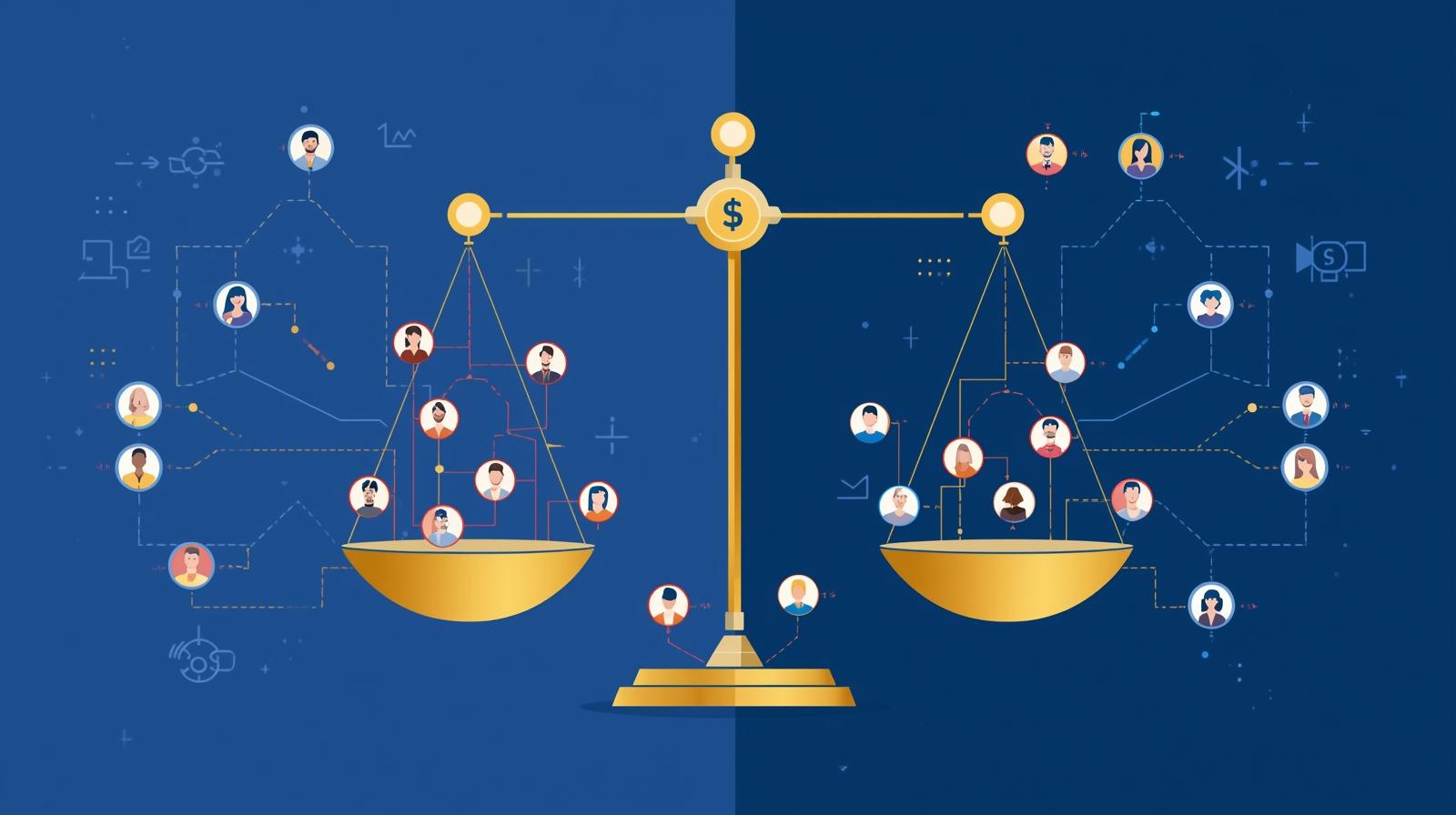
Compensation has long been one of the most uncomfortable conversations in the nonprofit sector. The sector's cultural emphasis on mission over money, combined with genuine budget constraints, has historically made rigorous pay analysis feel like a luxury. The result has been predictable: pay inequities that go undetected for years, salary ranges that drift below market rates, and the quiet departure of talented staff who simply cannot afford to stay.
The data bears this out. According to Candid's 2025 Nonprofit Compensation Report, which analyzed 217,556 compensation records from 130,794 tax-exempt organizations, the CEO gender pay gap in the sector means women earn 73 cents for every dollar their male counterparts earn, up only slightly from 69 cents in 2013. At organizations with budgets over $50 million, that gap actually widened from 82 cents to 75 cents. Women lead 58% of nonprofits with budgets under $250,000 but only 31% of those with budgets over $50 million, reflecting a structural concentration problem at the leadership level that compensation inequity compounds.
These numbers are not simply a reflection of different roles or experience levels. They represent genuine, uncorrected pay disparities that exist in organizations committed to equity as a mission value. The gap between stated values and operational reality is one that AI compensation analysis tools are particularly well-positioned to help close.
This article explains how AI-powered compensation tools work, which tools are most relevant for nonprofits, how to implement a compensation analysis process, and where the risks lie. The goal is not to advocate for expensive enterprise software, but to help nonprofit leaders understand the full landscape so they can choose approaches appropriate to their size, budget, and complexity.
Why Nonprofit Compensation Analysis Is Uniquely Difficult
Before examining what AI tools can do, it helps to understand why compensation analysis in nonprofits is harder than in the for-profit sector. The challenges are structural, cultural, and practical, and they compound each other in ways that make informal approaches persistently inadequate.
Structurally, nonprofit compensation varies enormously by mission area, geography, and organization size in ways that make cross-sector comparisons misleading. According to Candid's 2025 data, median executive compensation ranges from $68,958 at religion-related organizations to $202,490 at science and technology research organizations. Geographic variation is similarly wide, with median executive pay ranging from $73,600 in Puerto Rico to $189,088 in Washington, D.C. A nonprofit comparing its salaries to general labor market data without controlling for these factors will draw incorrect conclusions.
Culturally, many nonprofits carry an implicit belief that lower pay is part of the mission commitment, or that raising compensation questions signals misplaced priorities. This makes it difficult for HR staff and managers to advocate for proper benchmarking processes. Even when leadership is committed to pay equity in principle, turning that commitment into systematic practice requires infrastructure that many organizations have never built.
Structural Challenges
- Mission area creates wide pay variation across the sector
- Budget constraints and grant cycles limit salary flexibility
- Many organizations lack dedicated HR or compensation expertise
- Geographic salary variation within the sector is extreme
Cultural and Practical Barriers
- Implicit belief that lower pay is part of mission commitment
- Pay equity conversations perceived as lower priority than programs
- 16 states now require salary ranges in job postings, forcing formalization
- Growing staff expectations for pay transparency and equity
How AI Compensation Analysis Tools Work
Modern AI compensation tools do several things that were previously impossible without large HR teams or expensive consultants. Understanding the mechanics helps nonprofit leaders evaluate which tools are appropriate for their situation and what to expect from them.
Regression-Based Pay Equity Analysis
The statistical foundation of AI equity auditing
The core of most AI pay equity tools is statistical regression modeling. The tool ingests your internal compensation data alongside variables like job title, level, tenure, performance rating, location, and department. It then runs regression analysis to identify the portion of pay variation that is explained by these legitimate factors versus the portion that correlates with demographic characteristics like gender or race.
This unexplained gap, the pay difference that remains after controlling for all legitimate factors, is what equity audits are designed to surface. A $5,000 gap between two employees might be entirely explained by tenure and performance differences, or it might reflect implicit bias that has accumulated across years of merit decisions. Regression analysis tells you which.
- Isolates unexplained pay differences from legitimate compensation factors
- Supports intersectional analysis across multiple demographic variables
- Generates visual dashboards showing where gaps exist by department or role
Market Benchmarking and Competitive Positioning
Understanding where you stand relative to peer organizations
AI benchmarking tools cross-reference your internal pay data against external market data to flag roles where salaries fall below competitive thresholds. The better tools allow you to define your comparison group precisely: nonprofits of similar size and budget, in a specific geography, operating in a related mission area. This is critical for nonprofits because comparing against a general market dataset that includes technology and financial services will produce misleading results.
Most platforms express competitive positioning as a compa-ratio, which is the ratio of an employee's actual pay to the midpoint of the market range for their role. A compa-ratio below 0.85 typically signals a retention risk; above 1.15 may indicate the position is above market. AI tools can scan your entire organization and surface every role outside the target range, prioritized by flight risk or equity concern.
- Cross-references internal pay against nonprofit-specific benchmark data
- Identifies every role below target range across the organization simultaneously
- Supports scenario modeling to forecast remediation costs before committing
Continuous Monitoring vs. Annual Audits
Moving from point-in-time snapshots to real-time equity oversight
Traditional compensation audits are point-in-time exercises, typically conducted annually by consultants or HR staff. The problem is that pay inequities can emerge between audits, particularly during hiring surges, merit cycles, or promotional decisions made under time pressure. AI compensation platforms that integrate with your HRIS can monitor equity continuously, flagging new hires or promotion decisions that would create or widen disparities before they become embedded patterns.
This is particularly valuable for nonprofits that experience rapid growth, receive new funding, or go through leadership transitions. These are the moments when ad hoc compensation decisions are most likely to introduce inequities, and continuous monitoring is the only way to catch them in real time rather than a year later.
- Flags equity-problematic decisions during hiring and merit cycles
- Prevents inequities from compounding over multiple annual cycles
- Creates an audit trail of compensation decisions for compliance documentation
Compensation Tools Available to Nonprofits
The compensation technology landscape spans from free public resources to enterprise platforms. For most nonprofits, the right starting point depends on organization size and whether the immediate priority is basic benchmarking or a full pay equity audit. Here is a practical overview organized from lowest to highest investment.
Free and Low-Cost Resources
ProPublica Nonprofit Explorer
Free access to compensation data from over 1.8 million nonprofits
ProPublica's Nonprofit Explorer provides free access to IRS Form 990 filings for over 1.8 million nonprofits dating back to 2001, including executive compensation disclosures. This is the most accessible starting point for any nonprofit wanting to benchmark leadership compensation against comparable organizations. You can filter by geography, mission category, and budget size to build a relevant peer group. The limitation is that 990 data covers only executive positions and reflects a reporting lag of one to two years.
ERI Nonprofit Comparables Assessor and Form 990 Finder
Structured benchmarking tools drawing on 990 data
ERI's Nonprofit Comparables Assessor provides structured access to compensation data for 55 executive positions across nonprofit organizations, presented through interactive graphs and tables. The companion Form 990 Finder covers nearly 7 million 990 reports. ERI's tools are particularly useful for organizations preparing rebuttable presumption documentation, which IRS guidelines require boards to establish when approving executive compensation.
Candid Nonprofit Compensation Report
The most comprehensive benchmark dataset for U.S. nonprofits
Candid's 2025 edition analyzed 217,556 compensation records from 130,794 organizations for fiscal year 2023, covering 14 executive positions. It is available for purchase and provides the most comprehensive nonprofit-specific benchmarking data in the United States. Organizations that need to justify compensation to their boards or funders will find this report particularly valuable for its depth of segmentation by mission area, budget size, and geography.
Mid-Tier Platforms (Growing Organizations)
Payscale / MarketPay
AI-powered benchmarking with broad market coverage
Payscale is among the most widely used compensation platforms and has expanded its AI capabilities significantly. The platform uses AI to suggest salary ranges based on job titles, locations, and crowdsourced market data, and includes pay equity analysis tools that can surface demographic pay gaps across your organization. Payscale's 2026 Compensation Best Practices Report, based on over 3,400 survey responses, also provides valuable sector benchmarking context. For nonprofits with 50 to 500 employees considering their first dedicated compensation platform, Payscale is a reasonable starting point.
OpenComp
AI job matching and compensation management for scaling organizations
OpenComp provides AI-powered job matching and leveling, rich data visualization, and benchmarking tools. It is particularly useful for organizations going through rapid growth or preparing to hire across multiple new functions simultaneously. Annual pricing ranges from approximately $3,000 to $18,000 depending on organization size and features, making it accessible to mid-size nonprofits. The platform integrates with common HRIS systems and can surface competitive positioning for every role in your organization at once.
Enterprise Pay Equity Platforms (Larger Organizations)
Syndio PayEQ
Market-leading pay equity analysis with real-time monitoring
Syndio PayEQ is widely considered the leading specialized pay equity platform. It uses advanced regression modeling and real-time analytics to detect and address pay gaps across gender, race, and ethnicity, with visual dashboards, remediation planning, and compliance reporting. For larger nonprofits with complex organizational structures, especially those subject to pay transparency reporting requirements, Syndio provides the most rigorous analytical framework. Enterprise pricing makes this a tool for organizations with significant compensation infrastructure investment.
beqom PayAnalytics
Total compensation management with deep pay equity capability
beqom's PayAnalytics product combines total compensation management with pay equity analysis, including merit cycle management, bonus planning, and long-term incentive tracking alongside equity monitoring. The platform is particularly valuable for organizations that want to integrate equity analysis directly into their annual compensation planning workflow rather than treating it as a separate audit exercise. This integration means equity becomes a continuous input to decisions rather than an after-the-fact check.
Implementing AI Compensation Analysis: A Step-by-Step Approach
The technology is only as useful as the process surrounding it. Many compensation analysis projects stall not because of software limitations but because organizations lack the internal infrastructure or process discipline to act on what the analysis reveals. The following steps address both the technical and organizational dimensions of implementation.
Establish a Compensation Philosophy and AI Usage Policy
Before selecting any tools, your board and leadership team should agree on compensation philosophy: what you are trying to achieve, what data will inform decisions, and what role AI-generated recommendations will play in the process versus human judgment. Define which data can enter AI systems and which positions require additional human review. This policy prevents shadow adoption and creates accountability for how AI outputs are used.
Audit and Clean Your Internal Compensation Data
AI tools are only as good as the data fed into them. Before running any analysis, audit your internal compensation records for completeness and accuracy. Common problems include inconsistent job titles for equivalent roles, missing demographic data, incomplete tenure records, and salary data that reflects different effective dates. Normalizing this data before analysis prevents the AI from finding spurious patterns or missing real ones. Flag any roles where demographic data is incomplete, as these are your blind spots.
Define Your Peer Comparison Group
For benchmarking, the quality of your comparison group matters more than the sophistication of the tool. A food bank in rural Nebraska should not compare its salaries against environmental organizations in San Francisco. Define your peer group by mission area, budget range, geographic region, and organizational structure. Most platforms allow you to filter market data along these dimensions. For executive positions, the Candid report and ERI tools provide the most precise nonprofit-specific segmentation available.
Run the Equity Analysis Under Attorney-Client Privilege When Possible
If your organization's initial pay equity analysis reveals significant gaps, running that analysis under attorney-client privilege protects the findings from discovery in potential litigation while you develop remediation plans. This is standard practice in corporate compensation auditing and increasingly recommended for nonprofits as well. The privilege allows you to investigate honestly without creating a document that could be used against the organization if a discrimination claim is subsequently filed.
Build a Human Review Layer for Every AI Recommendation
AI-generated salary recommendations and gap analyses should be treated as inputs to human decision-making, not as decisions themselves. Establish a review process where HR staff or a compensation committee examines AI outputs, checks them against organizational context the model may not capture, and approves or adjusts before implementation. Document the rationale for every compensation decision, including when and why you departed from the AI recommendation. This documentation becomes your compliance record if pay decisions are ever challenged.
Model Remediation Costs Before Committing to Corrections
One of the most valuable features of AI compensation tools is scenario modeling: the ability to calculate the total cost of correcting identified gaps before committing budget. If your analysis reveals that 23 employees are being paid below the 25th percentile for their roles, the scenario modeling function can calculate the annual cost of bringing all 23 to the market midpoint, the 50th percentile, or any other target. This allows you to have an honest conversation with your board about remediation scope and timeline in the context of real budget constraints, rather than promising changes you cannot afford.
The Critical Risk: AI Can Perpetuate the Bias It Promises to Fix
AI compensation tools carry a significant and often underappreciated risk: if the models are trained on historical pay data that contains embedded biases, the AI will recommend pay levels that mirror and perpetuate those disparities. This is not a theoretical concern. It is the central documented failure mode of algorithmic compensation systems, and it has been studied extensively.
The mechanism is straightforward. If a platform's training data reflects a market where women have historically been paid less for equivalent roles, the AI's "market rate" recommendations will encode that inequality as the correct answer. An organization using that platform to set salaries for new hires will effectively import historical sector-wide bias into their own pay practices, dressed up as objective data analysis.
Research published in ScienceDirect in 2025 found that AI-driven HR tools may inadvertently reinforce existing biases in employee assessments, promotion decisions, and compensation. The World@Work Institute has documented specific cases where platforms marketed as pay equity tools produced recommendations that widened demographic gaps rather than closing them, precisely because the model was optimizing for "market competitiveness" in a market that was not equitable to begin with.
Questions to Ask Any Compensation AI Vendor
- What data sources train your market benchmarks, and how are demographic disparities in that data handled?
- Can your platform distinguish between "market rate" and "equitable market rate"?
- Has your platform been independently audited for algorithmic bias?
- How does your regression model handle intersectional analysis across multiple demographic variables simultaneously?
- What documentation supports compliance with Title VII, ADEA, and ADA requirements in your AI's employment decision support?
The Pay Transparency Legal Context in 2026
A significant external driver of nonprofit compensation analysis in 2026 is the wave of pay transparency legislation now in effect across the country. As of early 2026, 16 states have enacted pay transparency laws covering over 60 million workers, requiring employers to disclose salary ranges in job postings. Key recent additions include Illinois (effective January 1, 2025), Massachusetts (effective October 29, 2025), New Jersey (effective June 1, 2025), and California's reinforced requirements effective January 1, 2026.
For nonprofits operating in multiple states, compliance requires knowing your salary ranges for every role, which in turn requires you to have a defensible, systematic methodology for setting those ranges in the first place. Organizations that have been setting salaries informally, through manager discretion or ad hoc negotiation, are finding that pay transparency requirements force a level of process rigor they previously lacked.
AI compensation tools make compliance more tractable by helping organizations document the analytical basis for their salary ranges. When a hiring manager lists a salary range in a job posting, they need to be able to explain why that range was set where it was. A platform that produces benchmarking analysis with documented data sources and methodology provides that explanation. This is one area where the investment in compensation technology pays dividends beyond the equity analysis itself.
Nonprofits should also be aware that the EU Pay Transparency Directive is pushing European nonprofit operations toward standardized pay disclosures, with implications for any U.S.-based organization with international program staff. For organizations running programs or partnerships in Europe, compensation process documentation will become a compliance requirement regardless of U.S. state law applicability.
Connecting Compensation Analysis to Broader Talent Strategy
Compensation analysis does not exist in isolation from other HR and talent decisions. The most effective implementations connect compensation data to the organization's broader approach to job description design, recruiting strategy, and retention planning. When compensation analysis reveals that a category of roles is consistently below market, that insight should inform not just salary adjustments but the entire approach to hiring and retaining people in those roles.
For example, if your analysis reveals that direct service staff are compensated at the 25th percentile while administrative roles are at the 50th percentile, the compensation gap is probably also a retention gap and a recruiting challenge. Knowing this lets you make a strategic decision: either increase direct service compensation (requiring a budget reallocation or fundraising strategy) or be explicit with candidates about total compensation including non-monetary benefits, mission alignment, and career development opportunities that may not be captured in salary alone.
This kind of integrated analysis is where AI becomes genuinely strategic rather than just administratively useful. The data generated by compensation tools, when connected to turnover data, exit interview analysis, and recruiting pipeline metrics, gives leadership a complete picture of how compensation is shaping organizational capability and what the true cost of undercompensation actually is. Turnover in nonprofit roles typically costs 50% to 200% of annual salary in recruiting, onboarding, and lost institutional knowledge, making competitive compensation an investment rather than an expense even on purely financial terms.
When to Engage External Compensation Expertise
AI tools supplement but do not replace specialized expertise in certain situations
AI compensation platforms handle benchmarking and equity analysis well, but certain situations call for human expertise that software cannot provide. Consider engaging external compensation specialists when:
- Your equity analysis reveals significant gaps requiring remediation planning beyond your internal capacity
- You are preparing for a merger, acquisition, or major reorganization that affects compensation structure
- Your board needs third-party validation of executive compensation for IRS rebuttable presumption purposes
- You are subject to a pay transparency compliance requirement and need structured legal review of your processes
- A discrimination complaint has been filed and you need a legally defensible compensation analysis
Conclusion
The case for AI-powered compensation analysis in nonprofits is not primarily a technology argument. It is a mission argument. Organizations committed to equity as a value cannot afford to allow pay inequities to accumulate unchallenged in their own operations. The gap between stated values and actual practice in nonprofit compensation is documented, persistent, and addressable, and AI tools have made the analytical work required to address it more accessible than it has ever been.
The practical path forward is clearer than many organizations assume. Starting with free public resources like ProPublica Nonprofit Explorer and Candid data requires no technology investment and provides meaningful benchmarking for most executive roles. Organizations with 50 or more staff and the resources to invest in a dedicated platform should evaluate Payscale or OpenComp as accessible mid-tier options. Larger organizations with complex structures and equity commitments that extend beyond leadership roles should assess specialized platforms like Syndio or beqom PayAnalytics.
The critical discipline throughout is treating AI outputs as inputs to informed human judgment, not as decisions in themselves. The risk that AI perpetuates historical bias is real and requires active mitigation through careful vendor selection, strong human review processes, and an honest reckoning with the data sources that inform benchmark recommendations. Used thoughtfully, these tools can help nonprofits close gaps they may not even know exist and build the compensation practices that mission-driven organizations actually owe their staff.
Ready to Build More Equitable Compensation Practices?
One Hundred Nights helps nonprofit organizations design HR systems and AI workflows that reflect their values. Contact us to explore how compensation analysis fits into your organization's people strategy.