
When AI Drafts a Pleading: Supervising AI Output in Pro Bono Practice
Generative AI can draft a complaint, a motion, or an answer in minutes, a genuine gift to overstretched legal aid and pro bono programs. But the lawyer who signs that document still owns every word in it, and courts have begun sanctioning attorneys for fabricated citations they never caught. This guide explains the duties that do not change when AI drafts, and the supervision workflows that let mission-driven legal programs use these tools without putting clients or licenses at risk.
Not legal advice. This article is for general informational purposes only and does not constitute legal advice, nor does it create an attorney-client relationship. Court rules, ethics opinions, and standing orders on AI use vary by jurisdiction and change frequently. Consult a licensed attorney and the rules of your own jurisdiction before relying on AI tools in legal practice.
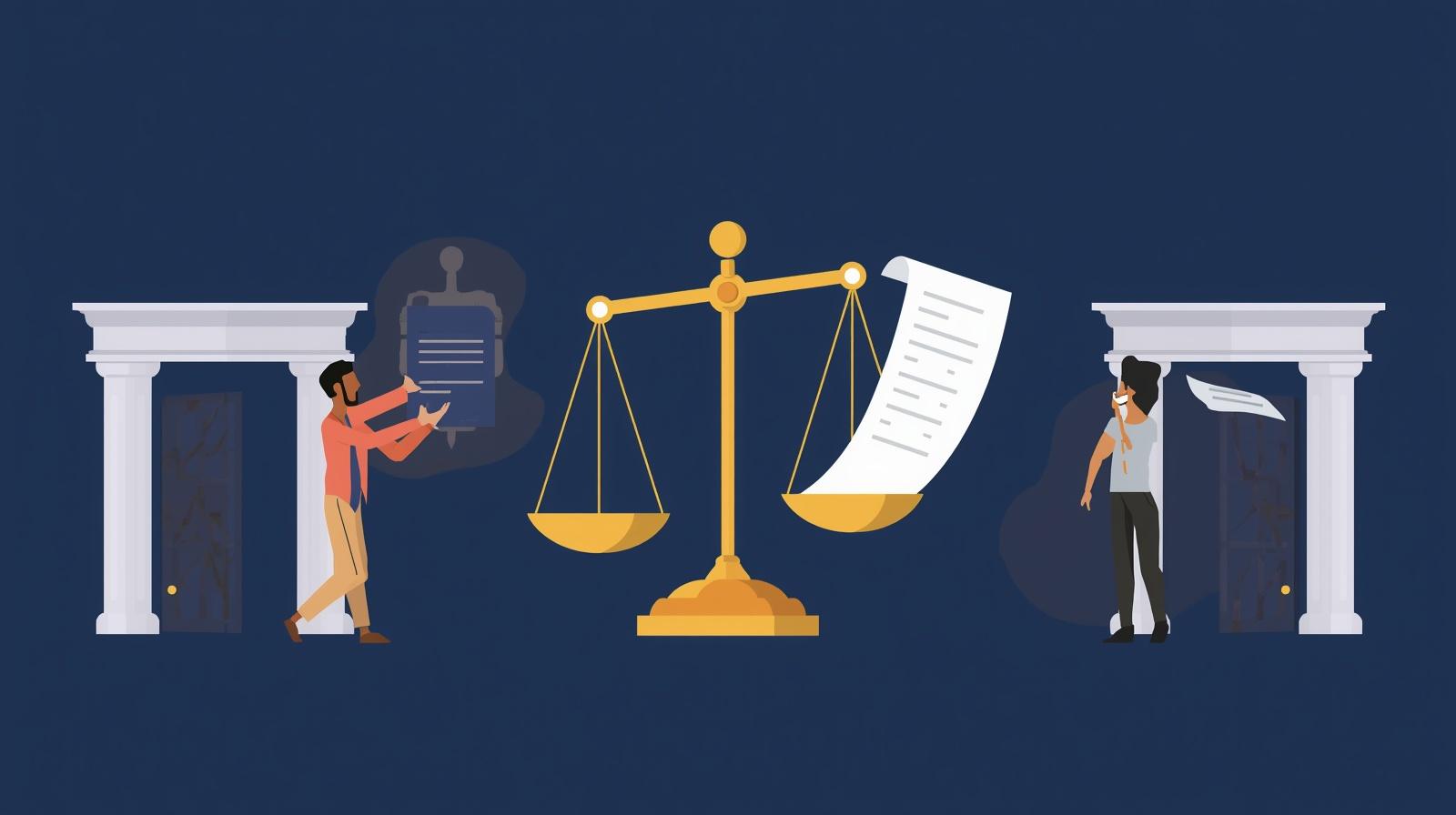
For legal aid organizations and pro bono programs, the appeal of AI drafting is obvious and acute. These are organizations defined by scarcity: too many clients, too few lawyers, and a justice gap so wide that most people who need civil legal help never get it. A tool that turns a two-hour first draft of a complaint into a ten-minute one is not a luxury. It is a way to serve more people with the same staff. It is no surprise that legal aid has adopted AI faster than many other corners of the legal world.
But the same speed that makes AI valuable is what makes it dangerous in a courtroom. Large language models generate fluent, confident text, and they will invent case citations, misstate holdings, and fabricate quotations with the same calm authority they use for accurate work. Courts across the country have now sanctioned attorneys, in some cases for tens of thousands of dollars, for filing briefs and pleadings containing AI-generated citations to cases that do not exist. The lesson from those cases is consistent and unforgiving: the technology may have drafted the document, but the lawyer is responsible for it.
None of this is a reason for a legal services program to avoid AI. It is a reason to build the right supervision around it. The professional duties that govern legal practice, competence, supervision, and candor to the court, do not bend because a machine helped with the first draft. What changes is where the risk concentrates and what a responsible verification process has to catch. This article walks through the duties that stay constant, the specific failure modes AI introduces, and a practical workflow that lets a pro bono or legal aid program capture the efficiency without inheriting the liability.
The Duties That Do Not Change
The starting point for any program using AI to draft court documents is to recognize that the rules of professional responsibility already answer most of the hard questions. They were not written with generative AI in mind, but they apply cleanly to it. A pleading drafted with AI assistance is, in the eyes of the court and the bar, simply a pleading the signing attorney is fully responsible for. Understanding which duties are in play makes the necessary supervision obvious rather than mysterious.
Competence
A lawyer must provide competent representation, which now includes understanding the benefits and risks of the technology they use. Using a tool whose tendency to fabricate you do not understand is itself a competence problem.
Candor to the Tribunal
A lawyer may not knowingly make a false statement of law or fact to a court. Filing a fabricated citation, even unknowingly, can breach this duty once a reasonable check would have caught it.
Reasonable Inquiry (Rule 11)
By signing a filing, an attorney certifies that the legal contentions are warranted by existing law after a reasonable inquiry. This duty is nondelegable. It cannot be handed to an algorithm.
Supervision
Supervising attorneys remain responsible for work produced under their direction. An AI tool functions much like a very fast, very confident junior whose output must always be reviewed before it goes out the door.
The thread connecting all of these is that responsibility sits with the human, and it is not reduced by the involvement of a machine. When courts have imposed sanctions in AI cases, they have repeatedly emphasized that the attorney could and should have caught the error with a reasonable review. The defense of "the AI made it up" has uniformly failed. For a pro bono lawyer, often working outside their usual practice area, this means the verification burden is if anything higher, because the unfamiliarity that makes AI assistance appealing also makes its errors harder to spot.
How AI-Drafted Pleadings Actually Go Wrong
Effective supervision starts with knowing exactly what to look for. AI does not fail randomly. It fails in characteristic, predictable ways, and a verification process built around those failure modes catches far more than a generic "read it over" review. The errors that have led to sanctions cluster into a handful of recognizable patterns.
Fabricated Citations
The most notorious failure. The model invents a case name, reporter citation, and court that look entirely plausible but describe a decision that never existed. These are the errors that generate headlines and sanctions, and they are invisible unless someone actually pulls the case.
Misstated Holdings and False Quotations
More insidious than invented cases are real cases described inaccurately. The model cites a genuine decision but misstates what it held, or attributes a quotation to it that does not appear in the opinion. Because the case is real, a cursory check that the citation exists will miss the error entirely.
Outdated or Jurisdictionally Wrong Law
AI may rely on superseded statutes, overruled precedent, or law from the wrong jurisdiction. For pro bono lawyers practicing outside their home area, perhaps handling a housing or family matter in an unfamiliar court, this is an especially easy error to accept without noticing.
Invented or Distorted Facts
When asked to draft from a fact summary, a model may fill gaps with plausible-sounding details the client never provided, or smooth over inconsistencies in a way that subtly changes the client's account. In a pleading, an invented fact can be as damaging as an invented case.
A final, subtler risk is confidentiality. Pasting a client's facts into a consumer AI tool may transmit privileged information to a third party and, depending on the product's settings, expose it for model training. For legal services programs handling sensitive matters, the choice of tool and its data-handling terms is itself part of competent practice. Our guidance on evaluating AI vendor security claims is a useful companion when selecting a platform for confidential legal work.
A Supervision Workflow That Works
Knowing the failure modes points directly to the cure. A reliable supervision workflow does not depend on the reviewer being suspicious in general. It depends on a defined sequence of checks that each failure mode must survive before a document is filed. The steps below describe a process a legal aid or pro bono program can adopt and document, so that verification is a standard practice rather than a matter of individual diligence.
Step 1: Verify Every Citation at the Source
Pull each cited case and statute from an authoritative database, not from the AI tool. Confirm the case exists, that the citation is correct, and that it is still good law. This single step catches the fabricated and outdated-law failures that produce the great majority of sanctions.
Step 2: Confirm Each Citation Says What the Draft Claims
For every proposition supported by a citation, read enough of the actual opinion to confirm it genuinely supports the point, and that any quotation appears verbatim. This catches the misstated-holding failures that survive a mere existence check.
Step 3: Check Every Fact Against the Client Record
Compare the factual assertions in the draft against the client file and the client's own account. Confirm that nothing was invented, smoothed over, or subtly changed, and that the client has reviewed and confirmed the facts attributed to them.
Step 4: Apply Legal and Strategic Judgment
Once the draft is verified as accurate, the supervising lawyer still has to decide whether it is right: the correct claims, the best arguments, the appropriate tone for this court and this client. AI produces a competent average. The lawyer provides the judgment that makes it a good filing.
This sequence matters because each step catches a different failure, and skipping any one leaves a known gap. A program that documents this workflow and requires sign-off at each stage turns AI supervision from an anxious individual responsibility into a dependable organizational practice. It also creates a record that the program took reasonable care, which matters both for client protection and for the lawyer's own exposure.
Building It Into the Program, Not Just the Person
Individual diligence is not enough for an organization. Pro bono programs in particular rely on volunteer attorneys who may use AI in their own practice, who rotate through matters quickly, and who often work in areas outside their daily expertise. Relying on each of them to independently arrive at sound AI practices is a recipe for the one missed verification that ends up in front of a judge. The organizations that handle this well move the safeguards from the individual to the program.
- Adopt a written AI use policy that states which tools are approved, what client data may be entered, and that all AI-assisted filings must pass the verification workflow
- Choose tools with appropriate confidentiality and data-handling terms, and prefer legal-specific platforms with citation-checking over general consumer chatbots
- Train volunteer and staff attorneys on the specific failure modes, so they review with the right suspicions rather than a general sense of caution
- Check the standing orders of every court you appear in, since many judges now have AI disclosure or certification requirements for filings
- Keep a brief record of the verification done on each AI-assisted filing, demonstrating reasonable inquiry if it is ever questioned
- Decide deliberately where AI is appropriate, leaning toward routine, high-volume documents and away from novel or high-stakes matters until trust is established
This program-level approach connects naturally to the broader shift underway in the sector. The rebrand of Pro Bono Net to Scale Justice signaled a sector-wide ambition to use technology to close the justice gap at scale, which we explore in our piece on what Scale Justice means for AI in legal aid. The same forces that make AI drafting attractive also drive its adoption in intake and triage, covered in our decision framework for AI triage in legal aid intake, and in the broader operational picture described in why legal aid adopts AI faster than other sectors. A clear drafting-supervision policy is one piece of a coherent program-wide approach to AI in legal services.
Keeping the Mission in View
It would be a mistake to read the sanctions cases as a warning to keep AI away from legal aid. The deeper risk for access to justice is not that AI drafts a flawed pleading. It is that millions of people face eviction, debt collection, and family crises with no lawyer at all. Tools that let a small legal services staff serve more of those people are aligned with the mission, not opposed to it. The cases that have gone wrong are, almost without exception, cases where verification simply did not happen, not cases where verification was tried and failed.
Used responsibly, AI drafting can let a pro bono attorney take on a matter they might otherwise have declined for lack of time, and let a legal aid program stretch limited capacity across more clients. The verification workflow is what makes that responsible use possible. It is not bureaucratic overhead. It is the discipline that converts a risky shortcut into a genuine multiplier of legal help.
The organizations that get this right will treat AI as a capable but untrustworthy assistant whose work always passes through human verification before it reaches a court. That posture protects clients, protects attorneys, and preserves the credibility that legal services programs depend on. It lets the technology do what it does well, which is produce a fast first draft, while reserving for the lawyer what only a lawyer can do.
Conclusion
When AI drafts a pleading, nothing about the lawyer's responsibility changes. The duties of competence, candor, supervision, and reasonable inquiry apply in full, and courts have made clear that they will not accept a machine as an excuse for an unverified filing. The fabricated citations, misstated holdings, and invented facts that AI produces are predictable, which means they are also catchable by a disciplined verification process.
For legal aid and pro bono programs, the path forward is to embrace the efficiency while institutionalizing the safeguards: a written policy, approved tools, trained reviewers, a step-by-step verification workflow, and a light record that reasonable care was taken. Built into the program rather than left to individual habit, these measures let an organization capture the real benefit of AI drafting without inheriting the liability that has tripped up the unprepared.
The justice gap is too wide to refuse tools that help close it. But it is also too important to be widened by careless filings that erode trust in the very programs working to narrow it. Supervised well, AI lets mission-driven legal services do more of what they exist to do, which is to put competent legal help within reach of people who would otherwise have none.
Ready to Use AI Safely in Your Legal Work?
We help legal aid and pro bono programs adopt AI responsibly, with the policies, tool choices, and verification workflows that protect clients and attorneys alike. Let us help you build a safe foundation.