
AI for Food Recovery and Gleaning Nonprofits: Logistics, Cold Chain, and Dignity-Preserving Distribution
Food recovery is a race against time. Surplus produce, prepared meals, and grocery overstock are only useful if they reach people while they are still safe and good to eat, and the window can be measured in hours. This guide explores how AI is helping food rescue and gleaning organizations win that race: smarter pickup routes, protected cold chains, better matching of surplus to need, and distribution that preserves the dignity of the people being served.
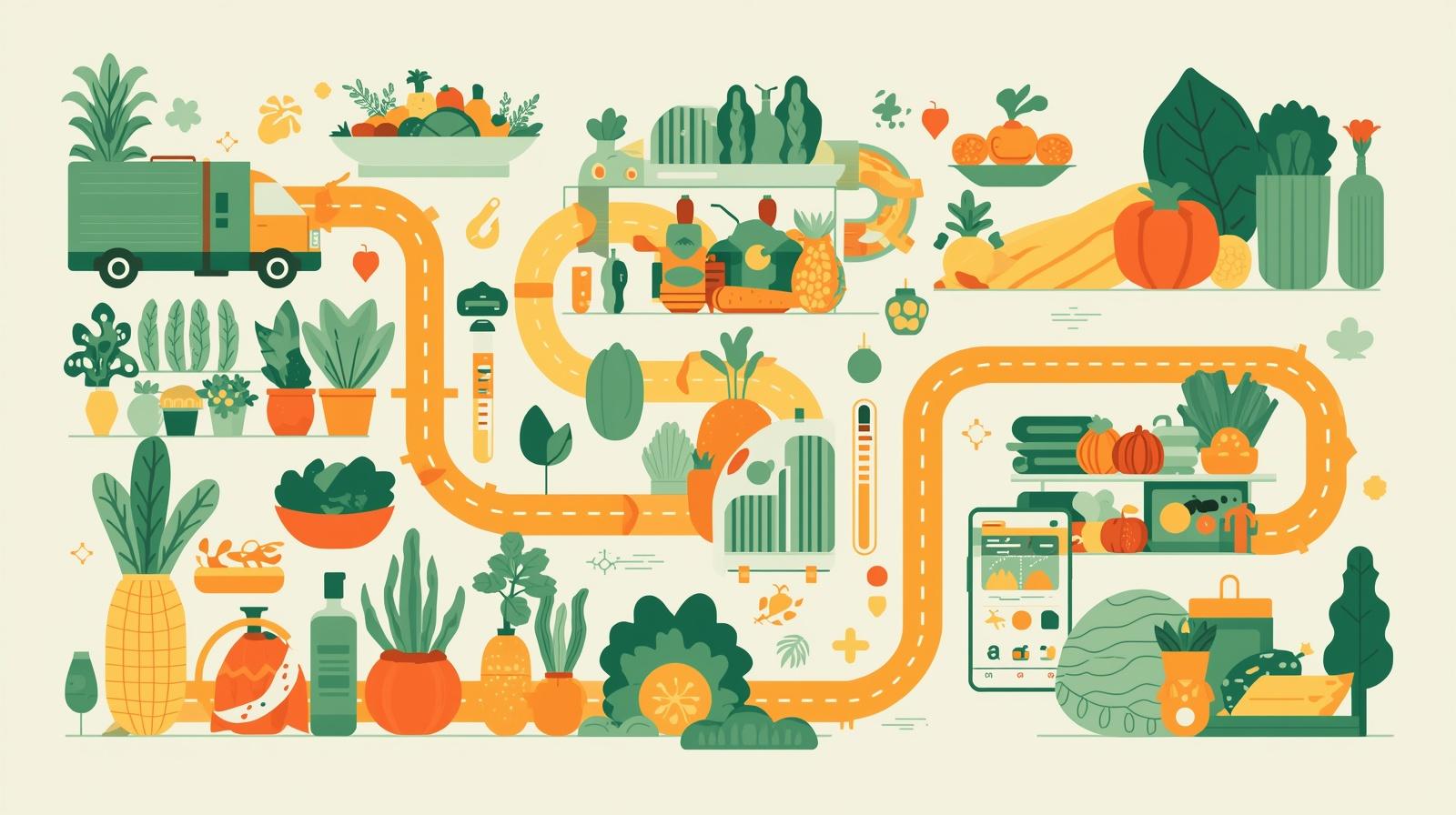
Every day, an enormous volume of perfectly good food goes to waste while millions of people face food insecurity. Food recovery nonprofits, including food rescue organizations that collect surplus from grocers, restaurants, and caterers, and gleaning groups that harvest crops left in fields after the commercial picking is done, exist to close that gap. Their challenge is rarely a shortage of available food. It is the staggering logistical complexity of getting the right food, at the right temperature, to the right place, before it spoils, with limited drivers, volunteers, and vehicles.
This is exactly the kind of problem where artificial intelligence has something real to offer. The work of food recovery is full of fast-moving variables, unpredictable supply, perishable inventory, tight time windows, scattered pickup and drop-off points, and volunteer availability that shifts by the hour. Coordinating all of that by phone, spreadsheet, and intuition is heroic but inefficient, and the inefficiency translates directly into food that rots instead of feeding someone. AI tools are increasingly able to take on the coordination load so that staff and volunteers can focus on the human work.
It is important to be clear-eyed about what AI does and does not do here. It will not load a truck, comfort a family, or build a relationship with a farmer. What it can do is make the matching, routing, forecasting, and monitoring dramatically faster and more reliable, so that the same number of volunteers can rescue more food and waste less of it. For a sector operating on thin margins and volunteer labor, that multiplier is significant.
This guide walks through the major areas where AI is making a difference for food recovery and gleaning organizations, with practical framing for leaders deciding where to start. It complements our related work on AI for food banks and on demand forecasting for food security programs, which cover adjacent parts of the hunger-relief landscape.
Smarter Routing: The Logistics Backbone
The defining operational challenge of food rescue is the multi-stop, time-sensitive pickup and delivery run. A single shift might involve collecting from several grocers and a restaurant, then delivering to multiple pantries and shelters, all within narrow windows when the food is available and the recipients are open. Planning that route by hand is slow, and the manual plan is almost never the most efficient one. When a new donation comes in mid-shift, or a volunteer cancels, the whole plan has to be redone on the fly.
AI-powered route optimization is built for exactly this. It can take all the pickups, drop-offs, time windows, vehicle capacities, and volunteer locations and calculate efficient routes in seconds, then recalculate instantly when something changes. The result is fewer miles driven, more rescues completed per shift, and less food sitting in a warm vehicle while a driver figures out where to go next. Several food rescue platforms now bundle this kind of dynamic dispatch with mobile-friendly tools that let volunteers accept a run, navigate it, and confirm proof of pickup from a phone.
What Smart Routing Actually Improves
The concrete gains behind the technology
- More pickups and deliveries completed per volunteer shift, raising the impact of the people you already have.
- Shorter time between pickup and delivery, which directly protects food quality and safety.
- Lower fuel and vehicle costs from reduced mileage, freeing budget for the mission.
- Real-time rerouting when a donation appears or a volunteer drops, with no scramble at the whiteboard.
For many organizations, routing is the single highest-return place to start, because it touches every rescue and the savings compound across every shift. The principles overlap with logistics challenges across the sector, and our piece on AI inventory management for nonprofits covers the warehouse side of the same supply chain.
Forecasting Surplus and Matching It to Need
Food recovery has a matching problem at its heart. On one side is an unpredictable, perishable supply: a bakery's unsold loaves, a distributor's mislabeled cases, a field of squash that the market did not want. On the other side is a network of partner agencies with their own capacities, schedules, refrigeration limits, and the dietary and cultural preferences of the communities they serve. Matching the two well, quickly, and without waste is hard, and a poor match means food spoils or arrives somewhere it cannot be used.
AI helps on both sides of that equation. On the supply side, forecasting models can learn the patterns of regular donors, predicting roughly when and how much surplus a given grocer or farm is likely to have, so the organization can plan capacity rather than constantly react. On the matching side, AI can pair an incoming donation with the partner agency best able to use it right now, weighing distance, refrigeration, current need, and fit, far faster than a coordinator working the phones. This kind of intelligent matching is what lets a small dispatch team manage a large and shifting flow of food.
The same forecasting discipline applies to the demand side, where understanding how need rises and falls across the year and across neighborhoods lets an organization position food where it will do the most good. We explore that demand-side modeling in depth in our guides to seasonal demand forecasting and using AI to forecast nonprofit demand, both of which translate directly to food recovery planning.
Gleaning's Particular Forecasting Need
Gleaning organizations face a sharper version of the supply problem, because a field becomes available on the grower's timeline and a ripe crop will not wait. AI can help by analyzing crop calendars, weather, and historical harvest data to anticipate when fields are likely to need gleaning, so volunteer crews can be mobilized in time rather than alerted too late. Image-recognition tools are also emerging that help assess what is in a field and estimate yield, supporting better decisions about where to send limited volunteer hours.
Protecting the Cold Chain and Food Safety
Recovered food carries a special responsibility. The people receiving it deserve the same safety as anyone buying from a store, and a single mishandled batch can cause real harm and damage the trust the organization depends on. Much of the food that flows through recovery is temperature-sensitive, and the cold chain, the unbroken span of safe refrigeration from pickup to plate, is where safety is won or lost. Maintaining it across volunteer drivers, varied vehicles, and multiple stops is genuinely difficult.
This is an area where connected sensors and AI monitoring add a meaningful margin of safety. Inexpensive temperature sensors in coolers and vehicles can feed data to software that watches for problems in real time, alerting a coordinator the moment a reading drifts out of the safe range so the food can be addressed before it becomes unsafe. Over time, the same data reveals patterns, which routes or which equipment repeatedly run warm, so the organization can fix the underlying issue rather than react to each incident.
How AI Strengthens Food Safety
From real-time alerts to documented compliance
- Real-time temperature alerts that catch a failing cooler or a too-long transit before food spoils.
- Automatic logging that creates the safety records donors and regulators increasingly expect, without manual paperwork.
- Pattern analysis that flags chronically problematic routes, vehicles, or handoffs for a real fix.
- Faster, better-informed decisions about whether a given batch is still safe to distribute.
The documentation benefit is easy to underrate. Many food donors will only give if they trust that handling meets a standard, and clean, automatic records make those partnerships easier to build and keep. Safety technology, in other words, is also relationship technology, because it gives donors confidence that their surplus is in careful hands.
Coordinating Volunteers and the Daily Operation
Food recovery runs on volunteers, and coordinating them is a constant, time-consuming job. Shifts need filling, drivers need matching to vehicles and routes, last-minute gaps need covering, and new volunteers need onboarding into safe handling practices. Done manually, this coordination can consume more staff time than the rescues themselves, and a single unfilled shift can mean a donation lost.
AI-assisted scheduling and communication tools ease that burden. They can match volunteer availability and location to the shifts that need covering, send automated reminders that reduce no-shows, and surface a backup quickly when someone drops out. AI chat assistants can answer the routine questions new and returning volunteers always ask, where to park, how to handle a cold item, what to do if a donor is not ready, freeing coordinators for the judgment calls that genuinely need a person. Our guides to AI for volunteer onboarding and AI-powered program scheduling go deeper on these workflows.
The cumulative effect is leverage. When the coordination overhead drops, the same staff can support more volunteers, more routes, and more rescued food without burning out. For a sector where staff capacity is often the true ceiling on impact, that leverage is exactly the point.
Distribution With Dignity: Keeping the Human at the Center
Efficiency is not the only value in food recovery, and it is not even the highest one. How food reaches people matters as much as whether it does. People experiencing food insecurity are not a logistics endpoint; they are neighbors navigating a hard moment, and the experience of receiving help should affirm their dignity rather than diminish it. As organizations adopt AI to streamline operations, they have to make sure the technology serves that human value instead of quietly eroding it.
Used thoughtfully, AI can actually enhance dignity. Matching distributions to the cultural and dietary preferences of a community, rather than handing out whatever happens to be available, signals respect and reduces both waste and the indignity of receiving food someone cannot use. Reducing wait times through better logistics means less standing in line. Smoother, lower-friction sign-ups can reduce the intrusive questioning that often accompanies aid. In each case, the technology works best when it is pointed at removing friction and indignity from the recipient's experience.
Guardrails to Keep Dignity Front and Center
- Collect only the data you genuinely need. More surveillance of people seeking food is rarely the answer.
- Keep a human, welcoming face on distribution. Automation belongs in the back office, not in place of warmth.
- Watch for bias in matching or eligibility tools so no community is quietly underserved by the model.
- Let recipients exercise choice where possible. Agency over what one eats is itself a form of dignity.
The guiding test is simple: would the person on the receiving end feel more respected, or more processed, because of this tool? Hold every efficiency gain to that standard, and AI becomes a way to serve people better rather than merely faster.
Where to Start: A Practical Sequence
You do not need to adopt everything at once, and you should not try. The organizations that succeed with AI start with one painful, high-volume problem, prove the value, and expand from there. Here is a sensible order for a food recovery or gleaning nonprofit weighing where to begin.
Fix the routing first
Because it touches every rescue, route optimization usually delivers the fastest, most visible return. Many food rescue platforms include it, so you may not need to build anything.
Shore up volunteer coordination
Automated scheduling, reminders, and a chatbot for routine questions reclaim staff hours quickly and reduce the no-shows that derail a shift.
Add cold-chain monitoring where risk is highest
Start with the routes and items most prone to temperature problems. Even a modest sensor deployment plus alerting meaningfully reduces safety risk and strengthens donor trust.
Layer in forecasting as your data matures
Once you are capturing clean records of donations and distributions, forecasting and smart matching become reliable. Good predictions depend on good data, so this step rewards patience.
Measure What Matters
Track impact, not just activity
As you adopt these tools, define a few honest metrics so you can tell whether they are actually helping: pounds rescued per volunteer hour, the share of recovered food that reaches people before spoiling, miles driven per rescue, and the number of cold-chain incidents. These numbers turn a vague sense of improvement into evidence you can share with funders and donors.
Our guide to AI-supported impact measurement can help you build that measurement into the work from the start rather than bolting it on later.
Throughout, keep the technology proportionate to your capacity. A small organization may get most of the benefit from an existing food rescue platform and a few inexpensive sensors, while a larger one might justify more custom forecasting. Match the ambition to the team you actually have, a theme we develop in our nonprofit leader's guide to getting started with AI.
Conclusion
Food recovery and gleaning sit at a powerful intersection: they reduce waste and feed people at the same time, turning a problem into a solution. The constraint has never been a lack of surplus food or a lack of people willing to help, but the brutal logistics of connecting the two before the food is lost. That is precisely the kind of fast, complex, variable coordination problem where AI earns its place, helping organizations route smarter, protect the cold chain, forecast supply and need, and free their people from coordination overhead.
The right way to adopt these tools is incrementally and with clear eyes. Start where the pain is greatest and the return is fastest, usually routing and volunteer coordination, prove the value, and expand as your data and confidence grow. Measure honestly, keep the technology proportionate to your team, and never let efficiency become the only thing you optimize for. The point of moving faster is to rescue more food and reach more people, not speed for its own sake.
Above all, keep the human at the center. The families and individuals who receive recovered food deserve not just a meal but the dignity of being treated as neighbors rather than logistics. Used with that commitment, AI does not replace the heart of food recovery work. It removes the friction that has always stood between a field of unpicked produce or a shelf of unsold bread and the people who need it, so the heart of the work can reach further than ever.
Ready to Rescue More Food With Less Friction?
We help food recovery and gleaning nonprofits find the right starting point for AI, from routing and cold-chain monitoring to forecasting, without overspending or overcomplicating. If you want help mapping it to your operation, we are happy to talk.