
AI for Cooperative Extension Services: Agricultural Support, Community Education, and Rural Development
Cooperative extension services sit at the intersection of public education, agricultural science, and rural community development. AI tools are reshaping how extension professionals deliver advisory services, train rural residents, and stretch limited budgets across vast geographies.
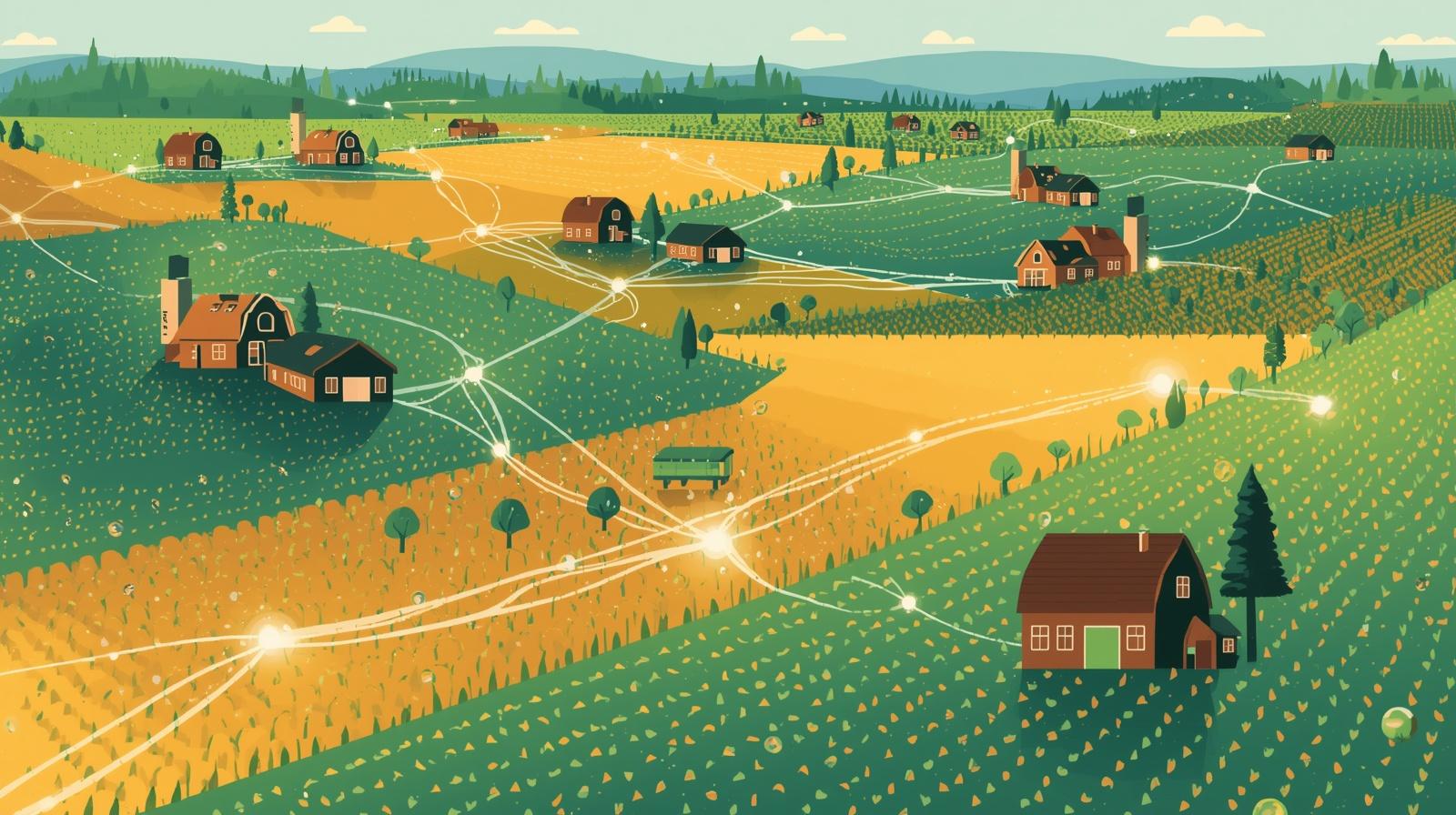
The Cooperative Extension System has served American communities for more than a century, translating university research into practical guidance for farmers, families, youth, and community leaders. Established through the Smith-Lever Act of 1914, the network now spans 112 land-grant institutions and more than 3,000 county offices, employing educators who work at the intersection of science and community need. The challenge has always been scale: too many communities, too many questions, and too few extension professionals to answer them all.
Artificial intelligence is changing that calculus. New tools built specifically for the extension context can help county educators diagnose crop diseases from smartphone photos, deliver on-demand answers to agricultural questions at any hour, and reach rural youth with AI literacy curricula that rival what urban schools offer. For extension professionals managing enormous service areas on nonprofit-scale budgets, these tools represent not a threat to their work but an amplification of it.
This article explores how AI is being deployed across the three core pillars of extension work: agricultural support and farm advisory services, community education including youth development and digital literacy, and rural development programming. It also addresses the very real challenges that make implementing AI in rural contexts more complex than in urban settings, particularly the persistent digital divide that leaves many of the communities extension serves cut off from the infrastructure AI requires.
Extension offices share many characteristics with mission-driven nonprofits. They operate on blended federal, state, and county funding supplemented by grant revenue. Many county offices work on annual budgets comparable to small nonprofits. They serve diverse and often underserved audiences, are accountable to multiple funders simultaneously, and face the same tensions around staff capacity and technology adoption that characterize the broader nonprofit sector. The AI strategies emerging from extension work are broadly applicable to any rural-serving nonprofit wrestling with how to extend its reach without proportionally increasing its costs.
ExtensionBot: What AI Built for Extension Actually Looks Like
The most significant AI tool purpose-built for cooperative extension is ExtensionBot, developed through a partnership between Oklahoma State University and the Extension Foundation. Rather than relying on a general-purpose AI system that draws from the entire internet, ExtensionBot constrains its responses to a curated knowledge base of more than 360,000 Extension publications and 400,000 articles from more than 35 state extension networks. This design choice reflects a core insight: for agricultural and educational advisory work, trusted and peer-reviewed accuracy matters more than broad coverage.
The results have been substantial. Between May 2024 and April 2025, ExtensionBot logged more than 60,000 conversations, serving farmers, homeowners, educators, and community members who needed reliable guidance on everything from cover crop selection to food safety to 4-H project ideas. In August 2025, the platform launched a multimodal version that allows users to upload photos alongside their text queries, enabling image-based identification of crop diseases and pest infestations in the field. The tool operates at a maximum budget of $180,000 per year, a figure worth emphasizing because it demonstrates what is possible at modest, nonprofit-scale investment.
Underlying ExtensionBot is MERLIN, the Machine-driven Extension Research and Learning Innovation Network, a data management platform that maintains the knowledge base through live API endpoints contributed by participating institutions. MERLIN ensures that content reflects current research rather than becoming stale. This shared infrastructure model, where multiple organizations contribute to a common resource that none could build alone, offers a template directly applicable to nonprofit coalitions working in specialized fields.
What Makes ExtensionBot Different from General AI Tools
Key design principles that make AI more useful for specialized advisory work
- Constrained to peer-reviewed Extension publications, not the open internet, increasing accuracy and trust
- Shared knowledge base across 35+ institutions reduces duplication and increases content depth
- Multimodal capability allows photo-based crop disease and pest identification in the field
- SMS-based access on the roadmap to serve low-connectivity rural populations
- Operates at $180,000/year maximum, demonstrating nonprofit-scale feasibility
AI in Agricultural Advisory Services
Beyond extensionBot, a growing ecosystem of AI agricultural tools is reshaping what county extension educators can offer farmers in their service areas. These tools increasingly complement rather than replace the human expertise of extension agents, handling the high-volume routine queries that once consumed disproportionate staff time and freeing educators to focus on complex, relationship-intensive, and locally contextual work.
Crop disease and pest identification has been transformed by computer vision AI. Farmers can now photograph an affected plant with a smartphone and receive a near-instant diagnosis, often before they could even reach an extension office during business hours. Apps like Plantix have achieved accuracy rates of 90 to 100 percent for common staple crops in field trials. This technology is particularly valuable for specialty crop and small farm operations that extension often prioritizes but large commercial agriculture platforms may overlook. When laboratory testing is unavailable or cost-prohibitive, AI-powered image diagnosis can be the difference between catching a disease outbreak early and losing a season.
Precision agriculture and weather-based decision support represent another major application area. AI-powered weather tools from platforms like Climate AI provide hyperlocal forecasts with field-level precision, incorporating satellite data, IoT ground sensors, and historical patterns into planting timing, irrigation scheduling, and pest risk assessments. Extension educators increasingly serve as interpreters and distributors of access to these tools, helping farmers without technical backgrounds understand and act on AI-generated recommendations. The USDA's FY2025-2026 AI strategy specifically focuses on AI-enhanced crop models that integrate weather, soil, and phenological data to improve yield prediction, a research priority that will flow through extension into practical farmer guidance.
Crop and Soil AI Tools
- Plantix: Photo-based crop disease and pest identification via smartphone app
- Farmonaut: Satellite crop monitoring, weather analysis, and irrigation guidance
- Jeevn AI: Farm-specific real-time advisory on planting timing and pest risk
- AI-powered irrigation systems showing significant improvements in water use efficiency
Weather and Decision Support
- Climate AI: Hyperlocal 10-15 day forecasts with field-level precision for agricultural planning
- Integrated satellite imagery, IoT sensors, and historical data for planting decisions
- Market condition analytics helping farmers time sales and input purchasing
- Disease pressure forecasting combining weather patterns with local outbreak history
The Gates Foundation and GIZ-funded CABI Generative AI for Agriculture Advisory (GAIA) project piloted LLM-based agricultural advisory tools in Kenya and India in 2024, demonstrating that generative AI can be adapted for local crop contexts in ways that genuinely supplement human extension advisory capacity. The lessons from that international work are increasingly relevant to domestic extension programs serving tribal communities, specialty crop regions, or immigrant farming populations where crop variety and cultural practice vary significantly from mainstream commercial agriculture.
Data privacy emerges as a critical concern in this space that extension services are uniquely positioned to address. A small number of commercial agricultural technology companies now have access to data from hundreds of millions of farm acres, collected through connected equipment and farm management platforms. This data fuels product development, targeted marketing, and predictive modeling that benefits the companies more directly than the farmers providing the data. Extension services, as trusted public institutions not driven by commercial interests, can serve as neutral advisors helping farmers understand what data they are sharing, what protections apply, and how to evaluate commercial AI tools critically. This role as a trusted, non-commercial intermediary is something extension shares with the broader nonprofit sector and is worth protecting deliberately as AI adoption accelerates.
AI for Community Education: Rural Youth and Adult Learners
One of the most consequential ways extension services are using AI is not in agricultural advisory but in education, specifically in closing the AI literacy gap between rural and urban communities. Research shows that only about 28 percent of rural youth report knowing a meaningful amount about artificial intelligence, far below their urban and suburban peers. In a world where AI fluency is becoming a baseline workforce competency, this gap threatens the long-term economic prospects of rural communities. Extension services, with their deep rural relationships and 4-H youth development infrastructure, are positioned to close it.
The National 4-H Council and Microsoft extended a $10 million partnership in December 2025 specifically to expand AI education for rural youth and educators. The partnership has reached more than 1.4 million youth with AI Foundations curriculum delivered through Minecraft Education, a format that meets young people where they already spend their time. The 4-H AI Challenge and AI in Ag Challenge ask participants to apply AI to solve real local problems, creating learning experiences that connect technology to familiar agricultural and community contexts rather than abstract computer science concepts. The partnership also trains Extension educators in AI basics and ethics, creating a train-the-trainer model that multiplies reach without proportionally increasing costs.
For adult learners, AI-powered educational platforms offer an important capability that traditional extension programming cannot always provide: on-demand access that persists beyond scheduled workshops. Rural audiences face real barriers to in-person programming including transportation distances, agricultural work schedules tied to weather and seasons, and the concentration of extension staff in county seats rather than dispersed agricultural communities. Asynchronous digital learning modules that farmers and families can access on their own schedule remove those barriers, and AI can personalize that content to match the learner's prior knowledge and specific context in ways that recorded presentations cannot.
4-H and AI Education: What's Working
The 4-H/Microsoft partnership demonstrates a scalable model for rural AI literacy
- 1.4 million youth reached with AI Foundations curriculum through Minecraft Education in 2024, delivered at no cost to participants
- Train-the-trainer model equips Extension educators as delivery vehicles, multiplying reach without proportionally scaling costs
- AI in Ag Challenge connects AI concepts to agricultural contexts, making content immediately relevant to rural youth experience
- Beyond Ready initiative targets 10 million youth with AI education by 2030, with rural populations as a priority demographic
- Ethics and responsibility integrated into curriculum alongside technical skills, building critical thinkers not just users
The NSF TechAccess: AI-Ready America program is providing additional funding specifically designed to expand AI literacy in underserved communities including rural populations, channeled through institutions including community colleges and extension systems. Salisbury University's NSF RAISE (Rural AI Solutions and Engagement) project, funded at $380,000 over three years, is conducting AI readiness reviews, building research capacity, and developing rural workforce development strategies that anchor AI education in academic institutions capable of providing sustained support. These federally funded initiatives signal growing recognition that rural AI literacy is a national infrastructure priority, not just a local education challenge.
For extension professionals thinking about their own organizations' AI education programming, the key insight from these initiatives is that effective rural AI education requires contextual relevance. Abstract technical curricula imported from urban settings tend to feel disconnected from farm life, community development, and family consumer science work. Programs that ground AI concepts in agricultural decision-making, food safety, natural resource management, or community health tend to achieve higher engagement and retention. Extension's greatest advantage in this space is its existing relationships and contextual credibility, not its technology resources.
AI in Rural Community Development
Community development work represents a third major application domain where AI is beginning to reshape what extension services can accomplish. County extension offices have long conducted community needs assessments, supported local economic development planning, and connected rural communities to research-based resources for workforce development and infrastructure decision-making. AI tools are amplifying this work by making complex data analysis accessible without requiring dedicated analytical staff.
AI-powered dashboards can help extension offices analyze county-level data to identify where programming gaps exist, which demographics are underserved relative to available services, and how to allocate limited staff time across competing priorities. Rather than relying on intuition and periodic needs assessments, extension educators can use continuously updated data to direct their work toward the highest-impact activities. Land-grant institutions are developing AI tools that analyze economic indicators, agricultural census data, and community health metrics to support the kind of evidence-based community planning that extension has always aspired to but lacked analytical capacity to pursue at scale.
Workforce development represents a particularly high-stakes application. The National Center for Higher Education Management Systems (NCHEMS) launched a three-year initiative in 2024 focused on unlocking the workforce development potential of extension services through data-informed strategies. For rural communities facing the combined pressures of agricultural technology transformation, manufacturing automation, and climate-related disruptions to traditional livelihoods, AI-assisted workforce planning can help extension professionals anticipate which skills rural workers will need, identify which training programs are producing employment outcomes, and direct limited programming resources toward the highest-need populations.
Rural Development AI Applications
How extension services use data and AI to strengthen community planning
Data Analysis
- Community needs assessment automation using census and local data
- Program gap identification across service areas and demographics
- Economic trend analysis for agricultural and rural business planning
Workforce Planning
- Skill gap forecasting based on regional employment trends
- Training program outcome tracking and impact measurement
- High-need population identification for targeted outreach
The shared infrastructure model proves especially compelling in the rural development context. Individual county extension offices typically lack the technical staff, budget, and data volume to build meaningful AI-powered analytical capabilities on their own. But state extension systems working collectively, sharing data standards and analytical platforms across county offices, can create resources that no individual office could sustain. Oregon State University Extension's Community Vitality program explicitly addresses AI, technology, and community development as linked issues, building the kind of integrated thinking about rural futures that residents and local governments need from their extension partners.
This pattern, where shared infrastructure multiplies the capabilities of individual organizations that cannot afford to build alone, is one that resonates throughout the nonprofit sector. The MERLIN data platform and ExtensionBot represent one successful implementation. For nonprofits working in specialized fields with limited resources, the extension system's experience offers a template: identify the most valuable shared resources, invest in common infrastructure collectively, and preserve organizational autonomy while sharing the benefits of scale. For more on how nonprofits can approach shared AI infrastructure, see our article on shared AI infrastructure for nonprofits.
The Digital Divide: AI's Biggest Challenge in Rural Settings
No discussion of AI for cooperative extension services is complete without confronting the digital divide, the gap between communities with reliable high-speed internet access and those without. According to research from Cornell University published in September 2025, approximately one-third of rural households face internet insecurity, meaning they lack consistent access to broadband adequate for modern digital participation. For cooperative extension, which serves precisely those rural communities most likely to face connectivity barriers, this creates a fundamental tension: the communities with the most to gain from AI-powered advisory tools are often the least able to access them.
The costs of rural broadband infrastructure illustrate the challenge's scale. Laying fiber in rural areas costs $40,000 to $60,000 per mile for aerial installation, with underground installation even more expensive. Federal broadband mapping data used to direct infrastructure funding has historically been inaccurate, according to Pew Research analysis from 2025, with providers sometimes claiming coverage of entire census blocks based on service to a single customer, leaving genuine rural dead zones underserved even as federal programs nominally address the problem.
Extension services developing AI tools for rural audiences are building around these constraints in several ways. The ExtensionBot roadmap specifically includes SMS-based access, allowing the tool to reach users without smartphones or reliable broadband through basic text messaging. On-device AI, which runs lightweight language models locally on a device rather than requiring a server connection, is emerging as a technical approach that can function in low-connectivity environments. Mobile-first, low-bandwidth design is increasingly a requirement rather than a preference for tools targeting rural populations.
AI also carries a risk of deepening the digital divide rather than narrowing it. Agricultural AI platforms designed primarily for large commodity operations may not serve the specialty crop, organic, and small farm producers that extension often prioritizes. Automated advisory systems that do not accommodate dialect variation, limited literacy, or non-English language use will systematically fail the diverse rural populations extension serves. Extension professionals building or procuring AI tools for rural audiences need to ask hard questions about whose contexts those tools were designed for and whether the populations they serve are represented in the tool's training data and design assumptions.
Designing AI for Low-Connectivity Rural Contexts
Technical and design strategies that make AI more accessible in rural settings
- SMS-based access: Tools that function over basic text messaging reach the 30%+ of rural households without reliable broadband
- On-device AI: Edge computing models that run locally without continuous server connection work in areas with unreliable or no connectivity
- Asynchronous design: Tools that function without real-time connectivity by caching content locally and syncing when connection is available
- Multilingual interfaces: Spanish-language support is a baseline requirement for extension tools serving many rural agricultural communities
- Low-literacy accessible design: Visual interfaces, audio output, and simplified language expand access for populations with lower text literacy
Implementing AI in Your Extension Office: Practical Starting Points
The 2025 National AI Report from the Extension Foundation identified three systemic barriers to AI adoption across the extension system: siloed knowledge, lack of shared infrastructure, and workforce readiness. These challenges mirror what many nonprofits encounter when attempting to move from individual AI experimentation to organizational capability. The extension system's recommended response, which involves coordinated national training infrastructure replacing fragmented state-by-state approaches and shared platforms replacing duplicated individual efforts, has direct applicability beyond extension.
For county or regional extension offices beginning to think seriously about AI adoption, the most valuable first step is an honest audit of staff capacity. Only about one percent of nonprofit technology budgets typically goes to training, creating a skills gap even when tools are available. Extension educators who have spent decades building expertise in crop science, family consumer science, or community development may feel uncertain about AI tools even when those tools could genuinely multiply their impact. Addressing that uncertainty proactively, through training, peer learning networks, and time to experiment, is more important than identifying the right tools.
Connecting to existing extension AI infrastructure is a logical second step. ExtensionBot is available to extension professionals across participating institutions, and the MERLIN platform continues to expand its content library. State extension systems are increasingly developing shared AI resources that county offices can access without building their own. Before investing in proprietary tools, extension offices should explore what is available through their state land-grant system and the Extension Foundation's national network.
Data governance deserves deliberate attention as AI adoption increases. Extension offices that collect data from farmers, families, and community members through AI tools need clear policies about what data is stored, how it is used, whether it can be shared with commercial partners, and how it is protected. The trust that extension has built over more than a century as a public educational institution is a competitive advantage relative to commercial agricultural technology providers, and that trust is worth protecting through explicit, transparent data governance practices. For more on developing organizational AI policies, see our guide on building AI champions in your organization.
Step 1: Assess Capacity
- Audit staff AI familiarity and identify training gaps
- Inventory connectivity infrastructure across service area
- Identify highest-volume advisory questions that AI could address
Step 2: Connect to Existing Resources
- Access ExtensionBot through your state institution if available
- Connect 4-H clubs to AI education curriculum from Microsoft partnership
- Explore state extension system AI platforms before building independently
Step 3: Build Governance
- Develop clear data governance policy for AI-collected information
- Establish vendor evaluation criteria for commercial AI tools
- Document AI usage policies so institutional knowledge doesn't walk out the door
Challenges, Ethics, and What to Watch
The promise of AI for cooperative extension comes with genuine risks worth addressing directly. The most important is the risk that AI advisory systems could displace the human relationship-based support that extension has historically provided and that rural communities genuinely depend on. At its best, extension work is relational: an educator who knows the local soils, the community's history, and the individual farmer's operation can provide contextually relevant guidance that no AI system trained on generalized national data can replicate. If AI tools are used to justify reducing extension staffing rather than to amplify what those staff can accomplish, the result could be a degradation of service to the very populations extension is designed to serve.
The appropriate framing is AI as support for human experts rather than substitution for them. ExtensionBot's designers made this explicit in their approach: the tool handles routine queries that consume disproportionate educator time, while complex, locally contextual, and relationship-intensive situations remain the province of human extension professionals. This is the right model for any AI deployment in a community-serving organization. For related thinking on how nonprofits can integrate AI without losing the human elements that define their work, see our piece on getting started with AI as a nonprofit leader.
Institutional fragmentation presents a different kind of challenge. The 112 land-grant institutions operating with significant independence have historically developed parallel and often duplicative resources, including training materials, factsheets, and now AI tools. The 2025 National AI Report identified this as a major inefficiency and recommended a coordinated national approach. The MERLIN platform and ExtensionBot represent one successful model of shared infrastructure that reduces duplication, but adoption remains uneven. State extension services that have not yet connected to shared national resources are, in effect, paying twice for capabilities they could access at fraction of the cost.
Key Risks to Monitor
Areas requiring deliberate attention as AI adoption increases in extension services
- Staff displacement risk: AI should amplify extension capacity, not justify reducing it. Advocate for technology as a support for human educators, not a replacement
- Equity gaps in tool design: Tools built for large commodity operations may systematically fail small farms, specialty crops, and non-English speaking communities extension prioritizes
- Data sovereignty concerns: Agricultural data collected through AI tools has commercial value. Extension's public-sector mandate requires explicit protections against commercial exploitation of farmer data
- Connectivity-dependent access: Tools that require reliable broadband will systematically exclude the most rural, most underserved populations unless deliberate low-connectivity alternatives are built
Looking Ahead: The Future of AI in Extension Work
The near-term trajectory for AI in cooperative extension is clearly toward greater specialization and deeper integration. ExtensionBot's roadmap includes specialized spoke models for specific crops or regions, acknowledging that a single generalist model cannot serve the full diversity of agricultural contexts extension addresses. State and regional extensions are developing their own content layers on top of shared infrastructure, combining national scale with local specificity.
The medium-term picture is one of significantly more capable AI integration across all four program areas of extension work. The 4-H Beyond Ready initiative's target of reaching 10 million youth with AI education by 2030 would position the next generation of rural residents as AI-capable workers and citizens. A nationally coordinated training infrastructure for extension professionals, replacing the current fragmented state-by-state approach recommended in the 2025 National AI Report, would raise the floor of AI capability across the entire extension system. Integration of satellite imagery, IoT sensor networks, and AI-driven decision support into standard county office tools would shift extension from periodic advisory visits to continuous data-informed engagement.
The organizations best positioned to lead in this landscape will be those that invest now in building both the technical infrastructure and the human capacity to use it effectively. For extension services and the rural-serving nonprofits working alongside them, the goal is not AI adoption for its own sake but AI that genuinely multiplies the mission-driven work that makes these organizations irreplaceable in their communities. For nonprofit leaders thinking about how to build those organizational capabilities broadly, our articles on systematizing AI knowledge in your nonprofit and incorporating AI into strategic planning offer complementary frameworks.
Conclusion
Cooperative extension services face a version of the challenge confronting nearly every mission-driven organization: serving more people with better information than their current capacity allows. AI tools built specifically for the extension context, led by ExtensionBot and the MERLIN data platform, demonstrate that purpose-built AI operating on modest budgets can generate meaningful impact at scale. The $180,000 annual budget supporting 60,000 annual conversations across 35 institutions is a compelling data point for any rural-serving nonprofit evaluating whether AI investment can genuinely move the needle on their mission.
The path forward requires honesty about constraints. The digital divide is real, and AI tools that require broadband infrastructure will systematically fail to reach a significant portion of rural America until that infrastructure is built. Building for low-connectivity contexts is not a compromise but a core design requirement for any extension-facing AI system. Similarly, the trust that extension has built with farmers, families, and communities over more than a century is a precious asset that data governance practices and transparent AI deployment must protect rather than erode.
The most important insight from the extension system's early AI experience is one that applies broadly to nonprofits across all sectors: AI amplifies existing relationships and expertise but cannot substitute for them. Extension educators who know their communities, understand local agricultural contexts, and have built trust over years of service are more valuable with AI tools than without them. They are not more valuable because of AI tools without them. The goal is augmentation of human capacity in service of community mission, and the extension system is building genuine proof of concept for what that looks like at scale.
Ready to Expand Your Organization's AI Capacity?
Whether you lead an extension office, a rural-serving nonprofit, or any mission-driven organization, we can help you develop an AI strategy that amplifies your impact without replacing the human relationships at the heart of your work.