
AI Grant Applications Are Becoming the Norm: How to Stand Out in 2026
AI grant writing tools have moved from novelty to standard practice in the nonprofit sector. With a significant portion of organizations now using AI to draft proposals, the competitive landscape has shifted. The question is no longer whether your organization should use AI for grant writing, but how to ensure your proposals stand out when AI-assisted submissions have become the baseline expectation.
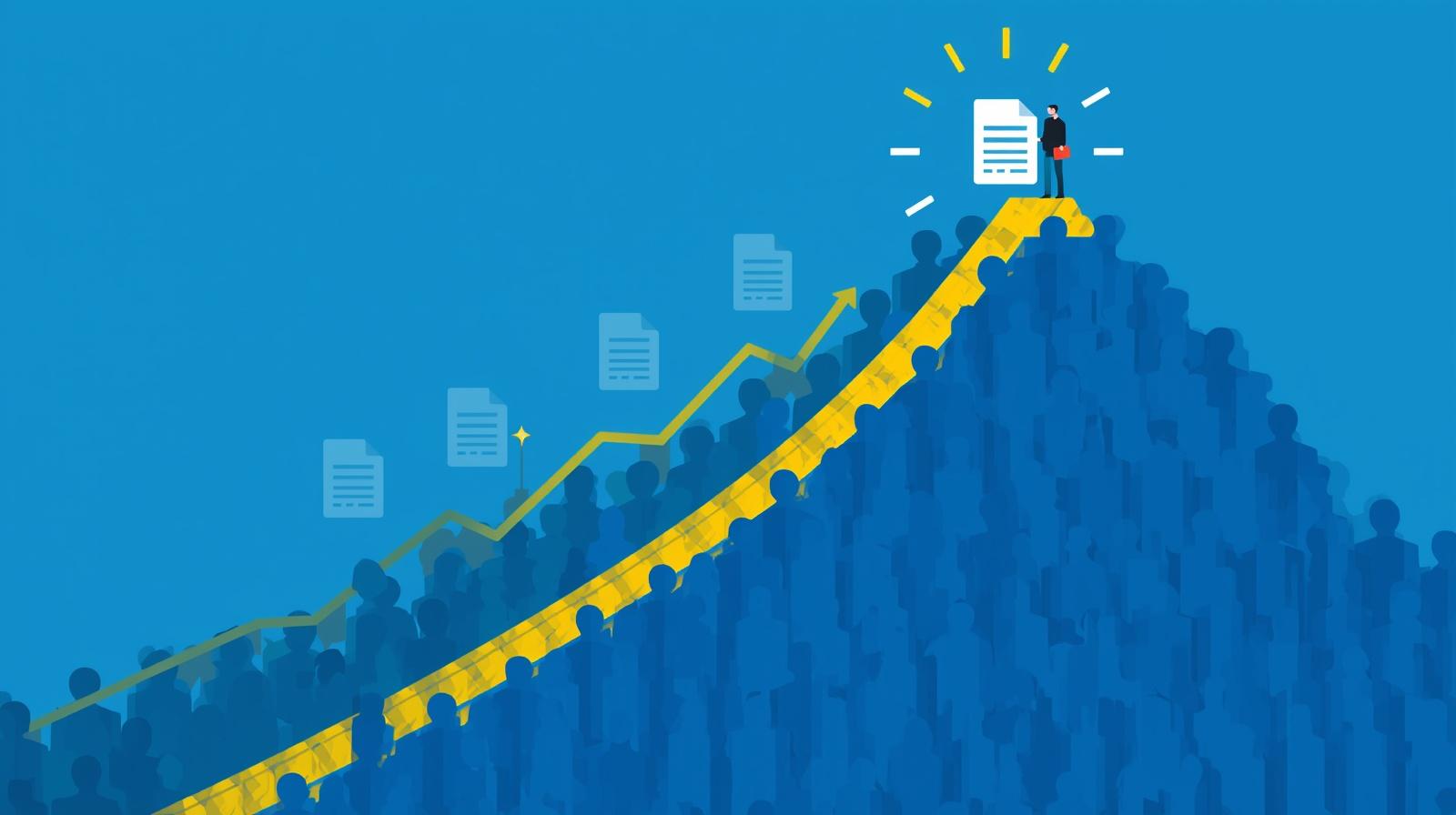
Two years ago, using AI to assist with grant writing was a competitive advantage. A small team that discovered how to use Claude or ChatGPT to draft proposals faster could dramatically expand the number of grants they pursued without increasing staff. Today, those same advantages have evaporated because nearly every organization has access to the same tools and has been using them long enough to integrate them into standard practice.
This normalization of AI grant writing has created an unexpected problem. Funders are reading an increasing number of proposals that share the same structure, the same phrasing patterns, and the same generic level of specificity. They describe programs that could belong to any nonprofit anywhere. They use the same vocabulary. They make the same kinds of claims in the same kinds of ways. When everything sounds similar, proposal reviewers are actively seeking signals that distinguish organizations doing genuinely compelling work from organizations submitting competent but undifferentiated applications.
Understanding what funders are now looking for, and how to leverage AI tools in ways that amplify rather than obscure your organization's unique qualities, is the central challenge for development teams in 2026. This article examines what the normalization of AI grant writing means for your competitive position, what program officers are now paying attention to as differentiating signals, and how to structure an AI-assisted grant writing process that produces proposals that stand out rather than blend in.
The core insight is straightforward: AI can accelerate the production of adequate grant applications. It cannot generate the authentic program evidence, deep community knowledge, and organizational personality that distinguish excellent applications. The competitive advantage now belongs to organizations that use AI for what it's genuinely good at while investing in the elements AI cannot replicate.
How AI Has Changed the Funder's Perspective
Foundations and program officers are in the unusual position of processing the downstream consequences of a technology trend they didn't choose to adopt. As applicants increasingly use AI, funders are adapting their evaluation practices and developing new sensitivities to what AI-heavy proposals look and feel like.
The Candid blog has documented that while most foundations haven't established formal written guidelines on AI use in grant applications, program officers have developed informal detection heuristics. They've learned to recognize the patterns: the particular verbal inflation that makes vague ideas sound substantial, the absence of organizational specificity that suggests a template-generated narrative, the way AI-drafted problem statements describe broad social issues without demonstrating intimate knowledge of the particular community a nonprofit serves.
What's notable is that most funders are not opposed to AI use in grant writing as a matter of principle. They understand it's a productivity tool, and they don't expect organizations to pretend they're not using it. What they're responding to negatively is the quality of proposals when AI is used as a replacement for authentic organizational knowledge rather than as an assistant that helps communicate that knowledge more effectively.
What Triggers AI Detection
Signals that program officers have learned to watch for
- Generic organizational descriptions that could apply to any similar nonprofit
- Problem statements describing national trends without local specificity
- Absence of real outcome data or specific program metrics
- Overuse of terms like "leverage," "underscore," and "delve"
- Uniform tone throughout sections that normally reflect different writing voices
- Partner descriptions without named organizations or specific relationships
What Signals Authenticity
The elements that now differentiate strong proposals
- Specific outcome numbers from documented program history
- Named partner organizations with details of actual relationships
- Community-specific context demonstrating deep local knowledge
- Evidence of program adaptation and organizational learning
- Named staff with specific relevant experience
- Organizational voice that reflects a real institutional personality
What AI Can and Cannot Do for Grant Writing
The organizations producing the strongest grant applications in this environment are those that have thought carefully about where AI creates genuine value in the grant writing process and where it creates the generic quality that undermines competitive differentiation. The distinction matters enormously.
AI is genuinely excellent at several grant writing tasks. It can synthesize research and context-setting content quickly, drawing on its broad training to describe the landscape of issues your program addresses. It can help structure a proposal outline based on the funder's stated priorities and the RFP requirements. It can generate multiple versions of boilerplate sections so your team has options to choose from. It can improve clarity and flow in sections you've already drafted with specific organizational content. It can help maintain consistency across multiple applications to different funders. These are real productivity benefits.
Where AI Adds Genuine Value
- Synthesizing background research and issue context
- Structuring proposal outlines around RFP requirements
- Generating boilerplate variations to choose from
- Editing for clarity, flow, and consistency
- Adapting existing proposals to new funders quickly
- Drafting executive summaries from detailed program descriptions
Where AI Falls Short
- Generating authentic program outcome data
- Describing the specific community your organization serves
- Documenting real partnerships and relationships
- Conveying your organization's unique approach and values
- Demonstrating how programs have adapted over time
- Expressing the institutional voice that makes your org distinctive
The organizations that lose ground in this competitive environment are those using AI for the second category: generating program descriptions, outcome claims, and community narratives. This produces the generic quality that program officers now actively identify and respond to negatively. When your proposal could describe any organization doing similar work, it gives funders no reason to choose you over alternatives.
The organizations gaining ground are those using AI for the first category while investing more time in developing the authentic program evidence that AI cannot generate. Paradoxically, the productivity gains from AI on the first category should free up more time for the work that actually makes proposals compelling: documenting real outcomes, building genuine funder relationships, and deepening the specificity of program knowledge that makes applications distinctive.
The Authenticity Advantage: Building the Assets AI Can't Generate
If authentic program evidence is the differentiating factor in the AI grant writing era, then building and maintaining that evidence becomes a strategic priority for development teams. This means treating data collection, outcomes documentation, and relationship building as the foundation of your grant writing capability, not as activities that happen separately from proposal production.
Organizations that are consistently successful in competitive grant environments tend to have strong habits around documenting their work. They track program outcomes with enough specificity to cite them confidently in proposals. They know exactly how many people they served, what the measurable changes in those people's lives were, and what specific aspects of their program produced those results. This documentation is valuable for accountability and learning regardless of grant writing, but it becomes a direct competitive advantage when every other applicant is submitting AI-generated estimates rather than documented evidence.
Building a Continuous Outcomes Documentation Practice
Strong grant writing in 2026 begins with strong program documentation practices. This means having systems in place throughout the year that capture outcome data, participant feedback, and program learning in forms that can be efficiently synthesized for grant proposals.
The most useful documentation for grant writing includes specific numbers with context. Not "we served hundreds of families" but "we provided 847 families with emergency food assistance, with average household food security scores improving by 34% over 90 days of program participation." Not "our program improves educational outcomes" but "78 of the 94 students who completed our 12-week literacy intensive advanced at least one grade level, with 23 advancing two or more grade levels."
- Track participant numbers and program completion rates consistently
- Collect pre/post data that documents measurable change
- Document program adaptations and the evidence that prompted them
- Maintain a library of anonymized participant stories with proper consent
- Record partnership activities with specific organizations and contributions
Deepening Community Knowledge Documentation
One of the clearest signals that distinguishes authentic proposals from AI-generated ones is the depth of community knowledge. Funders who specialize in specific geographies or populations have deep familiarity with the communities they serve. They can tell when a proposal demonstrates genuine understanding of local dynamics versus when it describes a generic version of a social issue.
Building and documenting community knowledge means staying current on local data, understanding the specific resources and gaps in your service area, knowing the other organizations working in your space and how your approach differs from or complements theirs, and maintaining relationships with community members that give you insight into evolving needs. This knowledge cannot be manufactured at proposal time; it's accumulated through ongoing engagement.
- Maintain awareness of local data and research specific to your service area
- Document the landscape of other providers and how your org fills gaps
- Capture community voice through surveys, focus groups, and advisory input
- Track relevant local policy changes and their implications for your work
How to Structure an AI-Assisted Grant Writing Process That Differentiates
The goal is a process that uses AI for efficiency while preserving and amplifying the authentic organizational elements that distinguish you. This requires deliberate sequencing: gathering authentic content first, then using AI to help communicate it effectively.
The most common failure pattern is the reverse of this: using AI to generate a complete draft first, then trying to insert specific organizational details afterward. This produces proposals that feel generically structured with authentic elements awkwardly grafted on. The specific details read as additions to a template rather than as the natural expression of a distinctive organization.
Phase 1: Authentic Content Gathering (Before AI)
Before opening any AI tool, gather the authentic organizational content that will anchor your proposal. Pull your actual outcome data for the period. Identify the specific community characteristics most relevant to this funder's priorities. Write down, in your own words, what makes your program's approach distinctive and how it has evolved. List the real partners you'll name and what they specifically contribute. Find two or three participant experiences that illustrate your impact.
This content gathering phase doesn't need to produce polished prose. Notes, bullet points, and raw data are all valuable. The goal is to have the authentic organizational specifics assembled before you engage AI, so that AI is helping you communicate what you've already documented rather than generating content to fill gaps in your knowledge.
Phase 2: Structure and Research (AI-Assisted)
With your authentic content assembled, use AI to help with proposal structure and background research. Have AI help you develop an outline that responds to the specific RFP requirements and the funder's stated priorities. Use AI to research current literature and data on the issue your program addresses, which you can verify and cite with proper attribution. Have AI generate a few versions of standard sections like the organizational background or the evaluation framework, using your specific details as inputs.
At this stage, AI is doing work that benefits from its breadth of knowledge and its speed: synthesizing research, structuring complex information, and generating variations you can select from. The specific organizational voice and authentic content remain with your team.
Phase 3: Human-Written Core Narratives
The core narrative sections of any grant proposal, the problem statement, the program description, the organizational capacity section, and the evaluation plan, should be written by humans using the authentic content gathered in Phase 1. These are the sections where funders most clearly distinguish authentic proposals from AI-generated ones, and they are the sections where your specific knowledge and organizational voice are most irreplaceable.
Writing these sections from scratch, using AI-generated outlines as structural guides, typically produces better results than editing AI drafts. When you start from an AI draft, there's a natural tendency to accept the framing AI has created and insert your specific details into that frame. When you start from scratch using your authentic content and an outline, the organizational voice comes through more naturally.
Phase 4: AI-Assisted Refinement
Once human-written core sections exist, AI can be genuinely valuable for editing, clarity improvement, consistency checking, and length adjustment. You can ask AI to identify places where your prose becomes unclear, to suggest more concise formulations of key points, or to check that your argument is coherent and well-structured. AI can also help adapt your human-written sections for different funders with different priorities and page limits.
This is AI as a skilled editor, not AI as an author. The distinction matters both for proposal quality and for ensuring that when a program officer reads your proposal, they're encountering a genuine expression of your organization rather than a competent but generic document.
Funder Relationships as the Ultimate Differentiator
In a world where proposals are increasingly similar in their AI-assisted polish, the human relationships between development staff and program officers have become more valuable, not less. Funders make grants to organizations they trust. That trust is built through relationship, and relationship cannot be automated.
Program officers who know your organization, who have visited your programs, who understand your theory of change from direct conversations, and who trust your team's integrity and competence approach your proposals differently than those encountering your organization for the first time through a written document. This context shapes how they read everything you submit. Vague language that might seem generic to an unfamiliar reader has different meaning when it comes from an organization the funder knows well.
This suggests that the time saved through AI-assisted grant production should be reinvested, at least partially, in relationship development. Attend the convenings your funders host. Request informational meetings before submitting proposals. Follow up on rejected applications with genuine questions about what you could have done better. Send funders updates on your programs even when you're not seeking money. These relationship-building activities produce returns that no amount of AI-assisted proposal polish can replicate.
This also connects to the broader question of how your organization uses AI across its operations. Funders who are making decisions about organizational capacity, leadership quality, and strategic clarity are increasingly sophisticated about what AI-first organizations look like. As described in the emerging AI-native nonprofit model, funders are beginning to factor AI sophistication into their assessments of organizational effectiveness. The question isn't just whether your proposals are good; it's whether your organization is using AI in ways that genuinely amplify its mission.
The Read-Aloud Test
One of the most useful quality checks for AI-assisted grant writing is the read-aloud test. Have someone who knows your organization well, but who didn't write the proposal, read the core narrative sections aloud. As they read, ask: does this sound like our organization? Would someone who knows us recognize this voice? Could this exact description apply to another organization doing similar work in a different city?
If the answers reveal that the proposal could belong to anyone, that's the signal to revise. The goal is a proposal that sounds distinctively like your organization, that carries the accumulated knowledge and character of the specific people and programs and community relationships that make you who you are. That's what AI cannot generate, and that's what funders are now actively seeking as every other dimension of proposals converges toward AI-assisted sameness.
Navigating Foundation AI Policies
The Candid research found that only a small fraction of foundations have established written AI guidelines for grant applicants, and an even smaller fraction explicitly accept AI-generated proposals. This creates an ambiguous environment that development teams need to navigate carefully.
The practical guidance is to always check whether the funder you're applying to has any stated AI policy before you begin. If they have guidelines, follow them precisely. If they prohibit AI use, that means you cannot use AI for the proposal, not just that you should use it less. Submitting an AI-generated proposal to a funder who prohibits them is both an integrity issue and a risk, since program officers are becoming increasingly capable of detecting AI use.
For funders without stated policies, the ethical approach is to use AI in ways that you would be comfortable disclosing if asked. Using AI to draft research summaries, improve clarity, or organize your thinking is defensible. Using AI to generate the core narrative of your organizational story and program description is more questionable, and it's also the use that produces the generic quality that hurts your competitive position.
The transparency question is likely to become more explicit over time. More foundations are expected to develop formal AI disclosure requirements as the prevalence of AI-assisted applications becomes impossible to ignore. Building your grant writing practice around authentic organizational content now positions you well for this evolution, since the approach that produces the most differentiated proposals today is also the approach that will most clearly comply with emerging disclosure requirements.
Conclusion
The normalization of AI in grant writing has fundamentally changed the competitive landscape for nonprofits. The organizations that will succeed in this environment are not necessarily those that use AI most extensively; they're those that use it most intelligently. That means leveraging AI where it genuinely accelerates production quality and using the time saved to invest in the authentic documentation, deep community knowledge, and genuine funder relationships that no AI tool can replicate.
There is an irony in the current moment. AI tools were adopted in part because they promised to level the playing field, giving smaller organizations access to the kind of polished proposal production that used to require expensive consultants or large development teams. And they did level that particular playing field. But in doing so, they created a new differentiation challenge. Now that everyone's proposals are polished, funders are looking for depth, specificity, and authenticity that goes beyond surface-level quality.
The organizations that understand this shift and respond by doubling down on what makes them genuinely distinctive, specifically their deep program knowledge, real outcome evidence, and authentic relationships, will find that AI tools amplify rather than diminish their competitive position. For more on how AI is changing the funder landscape, see our article on how foundations are using AI to evaluate grantees, and for broader development strategy, explore our discussion of AI-informed strategic planning for nonprofits.
Strengthen Your Grant Writing Strategy
One Hundred Nights helps nonprofits build AI-assisted development processes that amplify authentic organizational strengths rather than obscuring them.