
AI-Assisted Handwriting Transcription: Unlocking Decades of Nonprofit Records
Most nonprofits with any history sit on boxes of handwritten records: meeting minutes, ledgers, founder correspondence, intake forms, field journals, membership rolls. Until recently, reading them at scale meant hiring transcribers or accepting that the contents would stay locked away. Handwritten Text Recognition, the AI technology behind tools like Transkribus and a new wave of language-model transcribers, has changed that math. This guide explains how the technology works, which tools fit a nonprofit budget, and how to build a transcription workflow that produces accurate, searchable text without overpromising.
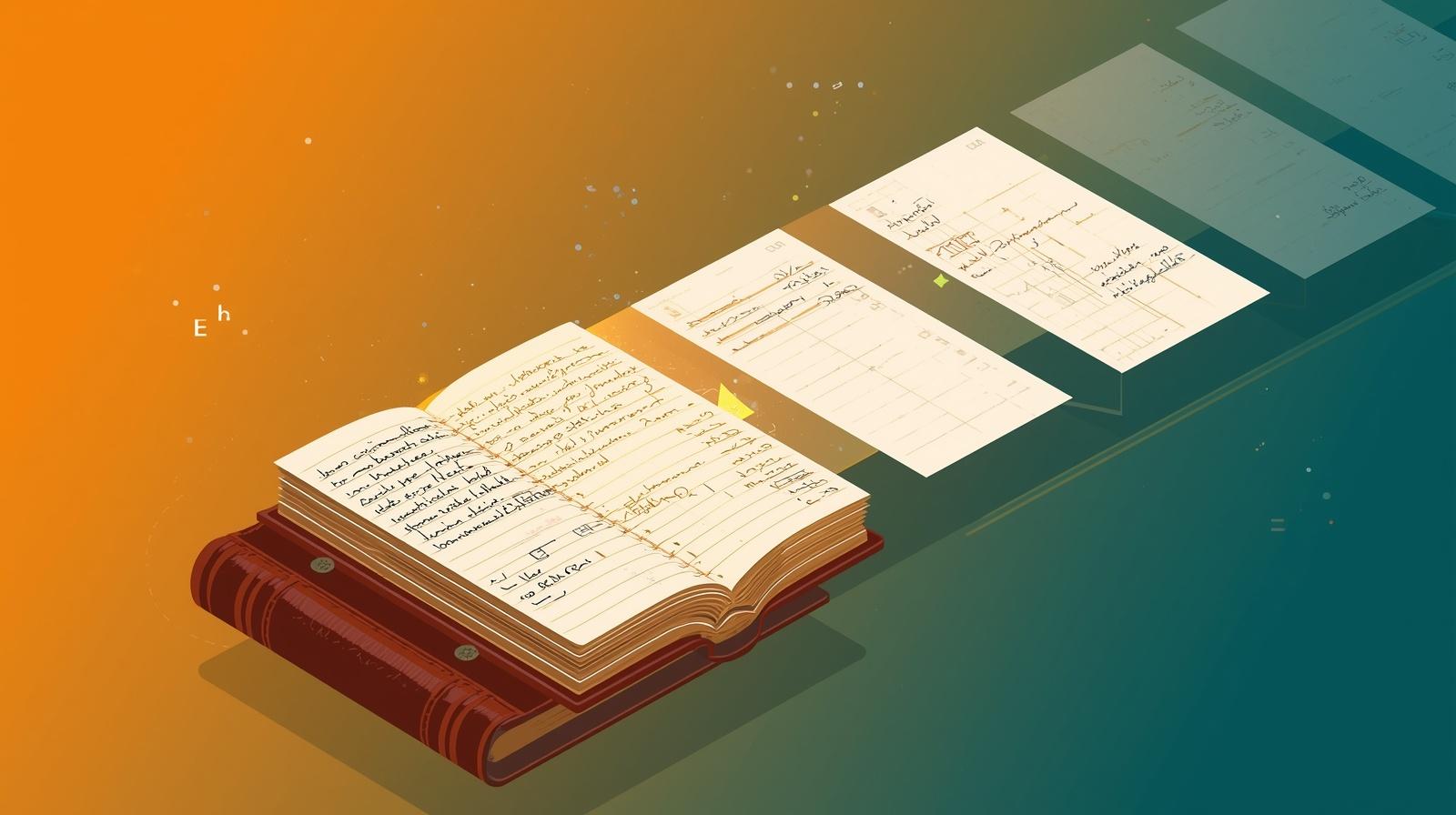
Almost every established nonprofit is also, quietly, an archive. A land trust holds decades of handwritten easement notes and stewardship logs. A community health organization keeps shelves of paper intake forms. A historical society, a religious congregation, a university alumni association, a labor union: each accumulates handwritten material that documents who they served, what they decided, and how their mission evolved. That material has real value for grant narratives, anniversary campaigns, legal defense of property rights, and institutional memory. The problem has always been access. You cannot search a box, and you cannot quote a ledger you have never read.
For most of computing history, the answer was bleak slow and expensive. Optical Character Recognition handled printed pages reasonably well but failed on handwriting. The only reliable way to turn a cursive diary into searchable text was to pay a human to type it out, line by line. At professional transcription rates, digitizing even a modest collection could cost more than a small nonprofit spends on technology in a year. So the boxes stayed in the basement.
Handwritten Text Recognition, usually shortened to HTR, is the technology that finally makes handwritten material tractable at scale. Over the past two years the field has advanced quickly, and 2026 brought a notable shift: general-purpose AI language models began matching or beating purpose-built HTR systems on many historical documents, while specialized platforms released stronger models of their own. The result is a genuinely useful set of options for organizations that could never have afforded full manual transcription.
This article walks through what HTR is and how it differs from ordinary OCR, the tools available to nonprofits in 2026, how the major approaches compare on accuracy and cost, a step-by-step workflow you can actually run, and the quality controls that keep an automated transcription project honest. The goal is not to sell you on a tool. It is to help you decide whether a transcription project is worth starting, and if so, how to do it without wasting money or producing a corpus you cannot trust.
What Handwritten Text Recognition Actually Is
Handwritten Text Recognition uses deep learning neural networks to convert images of handwritten text into machine-readable characters. The distinction from traditional OCR matters more than it sounds. Printed OCR can lean on the fact that letters are uniform: an "a" looks essentially the same across an entire book. Handwriting offers no such consistency. Letter shapes vary between writers, strokes connect in unpredictable ways, and a single person's hand changes with their mood, the pen, and the decade. HTR models are trained to read through that variation rather than around it.
A typical HTR system works in stages. First it performs layout analysis, identifying where text sits on the page, separating columns, marginalia, and tables from the body. Then it segments the text into lines. Finally it runs recognition on each line, producing characters and words. Good platforms preserve the structure, so a transcription of a ledger keeps its rows and columns rather than collapsing into a wall of text. That structural fidelity is what makes the output useful for research rather than just technically "transcribed."
Two terms come up constantly when you evaluate HTR quality, and it helps to know them. Character Error Rate, or CER, is the percentage of individual characters the system gets wrong. Word Error Rate, or WER, is the percentage of words wrong. A CER of 5 percent means roughly one character in twenty is incorrect, which on a typical line is one or two errors. Lower is better, and the gap between a 5 percent and a 15 percent CER is the difference between a transcription you can lightly proofread and one you have to substantially rewrite.
HTR vs. OCR: Why the Difference Matters for Your Records
Choosing the wrong tool for the wrong material is the most common early mistake.
- Use OCR for typed or printed material: typed meeting minutes, printed newsletters, typeset annual reports, and forms with machine-printed text.
- Use HTR for cursive correspondence, handwritten ledgers, signed intake forms, field notebooks, and any document where a person wrote by hand.
- Mixed pages (a printed form filled in by hand) need a tool that handles both, which most modern platforms now do in a single pass.
- Image quality drives everything. A clean, high-resolution scan transcribes far better than a phone photo of a faded page, regardless of which engine you use.
Why Decades of Records Sit Untouched
Before choosing a tool, it helps to be honest about why the backlog exists in the first place, because the reasons shape which records are worth transcribing. The barrier has rarely been a lack of interest. Staff and volunteers usually understand that the old material matters. The barrier is that transcription has been a fixed, high cost with diffuse, hard-to-predict benefits. Spending real money to type up a box of correspondence is difficult to justify when you cannot promise what the box contains.
There is also a capacity problem. The people who know the collection best, the long-tenured staff member or the founding volunteer, are usually the busiest, and their knowledge is exactly what disappears when they retire. Handwritten records often hold context that exists nowhere else: why a program was discontinued, who a major donor was before they were a major donor, what a property looked like before a restoration. When that material stays unread, the organization loses not just documents but the reasoning behind decades of decisions. This is the same institutional memory problem that good AI knowledge management practices try to solve for current records, applied to the past.
AI transcription changes the cost structure, but it does not eliminate the need for judgment. The right move is rarely "digitize everything." It is to identify the subset of records with the highest combination of value and risk: documents tied to active legal or property questions, material needed for an upcoming anniversary or capital campaign, collections at physical risk from age or storage conditions, and records whose knowledge is about to walk out the door. Start there, prove the workflow, and expand once you have evidence it produces something useful.
The 2026 Tool Landscape
The options fall into four broad categories, and many real projects combine more than one. Understanding the categories matters more than memorizing product names, because the products change quickly while the categories stay stable.
Dedicated HTR Platforms
Purpose-built tools designed around archival and historical material.
Transkribus is the best-known platform in this category, used by archives, libraries, universities, and genealogists worldwide, supporting over 100 languages and both handwriting and print. Its newer "supermodel," sometimes branded under the Titan line, is designed to read varied handwriting without project-specific training. The open-source alternative eScriptorium, used by institutions including Penn Libraries, lets organizations build their own recognition models and keeps data fully under their control. These platforms shine when you have a large, consistent collection and want structured output with layout preserved.
- Strong layout analysis for ledgers, tables, and multi-column pages
- Option to train custom models on your specific handwriting for higher accuracy
- Usually priced by credits or pages, which is predictable for budgeting
General-Purpose AI Language Models
Frontier multimodal models that read images, now competitive on transcription.
The most significant 2026 development is that general multimodal language models, the same systems many nonprofits already use for writing and analysis, can transcribe handwriting directly from an image and frequently match or beat dedicated HTR engines on English-language historical documents. In one widely cited study, a frontier model achieved a 7.3 percent character error rate on 18th and 19th century letters and records, compared with 8.0 percent for a leading specialized model and 10.3 percent for an older open-source HTR system.1 The appeal is flexibility: the same tool can transcribe, then summarize, translate, or extract names and dates in follow-up steps.
- No training required; competitive accuracy out of the box on many documents
- Can transcribe and analyze in one workflow, useful for indexing and summaries
- Watch for confident-but-wrong output, where the model invents plausible text it cannot read
Hybrid HTR-plus-LLM Workflows
The most accurate approach available to a careful project in 2026.
Researchers have shown that combining the two approaches beats either alone. In one method, a specialized HTR model produces a first-pass transcription, then a language model receives both that baseline and the original page image and corrects errors using context. This kind of multimodal post-correction has pushed word error rates into the 2 to 7 percent range on difficult material, well below what either tool reaches by itself.2 For nonprofits, the practical version is simpler than the research version: run your HTR tool, then pass uncertain pages through a language model with the image attached and ask it to flag and fix probable errors.
Crowdsourcing and Volunteer Platforms
Where human reviewers and community engagement enter the workflow.
Platforms like FromThePage and Zooniverse let volunteers transcribe and review documents, and both have moved toward hybrid models where AI produces a draft and volunteers correct it. FromThePage is text-centered and shows each volunteer's work immediately so others can edit it, while Zooniverse uses a multiple-keying model where several volunteers transcribe the same material and their answers are reconciled. For mission-driven organizations, these platforms do double duty: they get documents transcribed and they turn supporters into engaged participants in preserving the organization's history.
- AI draft plus volunteer correction is faster than either alone
- Builds community engagement and donor connection around your history
- Requires coordination and review capacity, so plan for staff time to manage it
How the Approaches Compare on Accuracy
Accuracy numbers can be misleading if you do not know what they were measured on, so treat published figures as directional rather than guarantees. Performance depends heavily on the script, the era, the language, and the condition of the document. A clean 20th-century hand transcribes far better than faded 18th-century cursive, and a model strong in English may stumble on the same writer's marginal notes in another language.
With that caution in place, the broad picture from 2026 research is consistent. On out-of-the-box transcription of English-language historical documents, frontier language models now produce more accurate results than state-of-the-art specialized HTR models, with reported character error rates clustering around 7 to 9 percent for the strongest systems and older open-source engines trailing closer to 10 percent.3 A separate market comparison found that many general handwriting OCR tools still hover around 64 percent accuracy, while language-model-based solutions reached roughly 90 percent in controlled benchmarks, a reminder that the category a tool belongs to matters more than its marketing.4
The practical takeaway is not that one tool wins. It is that you should run a small benchmark on your own material before committing. Pick 20 to 30 representative pages, transcribe a few of them carefully by hand to create a ground-truth reference, then run each candidate tool against the same pages and compare. The tool that performs best on your founder's particular handwriting is the one that matters, and that result rarely matches a generic leaderboard.
The Hallucination Risk That OCR Never Had
Traditional HTR fails visibly: when it cannot read a word, it produces garbled characters you can spot. Language models fail differently and more dangerously. When a model cannot read a passage, it can generate fluent, plausible text that was never on the page, inventing a name or a date that looks entirely real. For a legal record, a property description, or a genealogical document, a confidently wrong transcription is worse than an obviously broken one. This is the single strongest argument for keeping a human in the loop and for never treating a language-model transcription as final without review against the image.
A Practical Transcription Workflow
A transcription project succeeds or fails on process, not on tool selection. The following workflow is deliberately sequential, and the early steps matter most. Organizations that rush to transcription before sorting and scanning well almost always redo the work.
Step 1: Triage and Prioritize
Do not start with the biggest box. Identify the records with the highest value and risk: legally relevant documents, material for an upcoming campaign, fragile items, and collections tied to departing institutional knowledge. Define a small, finishable first phase, a few hundred pages, so you produce a complete, usable result rather than a perpetual half-finished project. Tie the phase to a concrete outcome, such as a searchable archive for your anniversary year.
Step 2: Digitize at Quality
Scan at a minimum of 300 dpi, higher for small or faded writing, in even lighting and full color. Color preserves information that grayscale loses, such as different ink used for later annotations. Name files consistently and keep the originals untouched as your master copies. Transcription accuracy is capped by image quality, so this step is not where to economize. A bad scan transcribed twice costs more than a good scan transcribed once.
Step 3: Benchmark Tools on Your Material
Run your sample pages through two or three candidate approaches: a dedicated HTR platform, a language-model transcriber, and a hybrid pass. Compare the output against your hand-transcribed ground truth. Look not only at raw accuracy but at how the errors behave, whether they are easy to spot and fix or subtle and dangerous. Choose the approach that minimizes the review burden for your specific records.
Step 4: Transcribe in Batches
Process material in manageable batches rather than all at once, so you can catch systematic problems early. If you are training a custom model on a dedicated platform, transcribe and correct an initial set, use it as training data, then let the improved model handle the rest. For language-model workflows, keep prompts consistent and attach the page image every time, never asking the model to "clean up" text it has not seen.
Step 5: Review, Correct, and Structure
Build human review into the workflow rather than treating it as optional. Decide a quality bar appropriate to the use: a searchable browsing archive can tolerate more error than a legal exhibit. Correct against the image, preserve uncertain readings with a clear marker rather than guessing, and capture structured data such as names, dates, and places as you go so the corpus becomes a usable dataset and not just a pile of text. Pairing transcription with AI-generated metadata, as covered in our guide to AI cataloging for backlogged archives, multiplies the value of the finished collection.
Quality Control and Keeping Humans in the Loop
The fastest way to lose trust in a transcription project is to publish a corpus full of confident errors. Quality control is not a final step you tack on; it is a stance you take from the beginning. The central principle is that AI produces drafts, and humans produce records. Where you place the human, and how much they do, depends on what the transcription is for.
A useful pattern is tiered review. For low-stakes, high-volume material where the goal is general searchability, a single light proofread, or even spot-checking a sample, may be enough. For documents that will be cited, used in legal contexts, or published as authoritative, every page should be reviewed against the original by someone competent to read the hand. Mark the difference explicitly so future users know which transcriptions have been verified and which are machine drafts. An unverified flag is not an admission of weakness; it is honest metadata that protects everyone who relies on the corpus.
Crowdsourcing platforms formalize this. Zooniverse's multiple-keying approach has several volunteers transcribe the same line and reconciles the answers, which surfaces disagreements exactly where the writing is hardest to read. FromThePage makes each transcription immediately visible and editable, so staff and other volunteers can refine it over time. Both now support AI-first drafts that volunteers correct, which is faster than transcribing from scratch and keeps a human judgment on every page. For organizations with engaged supporters, this approach turns a back-office task into a participatory one, and the people who help transcribe the founder's letters often become some of the most committed advocates for the mission. Building that kind of volunteer capability connects directly to the work of developing AI champions inside your organization.
Cost, Privacy, and Practical Constraints
The economics have shifted decisively in favor of doing the work. Where full manual transcription once cost dollars per page, AI-assisted transcription typically costs a small fraction of that, with the major remaining expense being human review time rather than initial transcription. Even so, build a realistic budget. Account for scanning equipment or a digitization service, platform credits or model usage fees, and, most importantly, staff or volunteer hours for review. The transcription is cheap; the trustworthy transcription requires people.
Privacy deserves explicit attention because handwritten records frequently contain sensitive personal information: medical intake notes, client case files, donor details, and information about minors. Before sending any document to a cloud-based tool, confirm what the vendor does with your data, whether it is retained, and whether it could be used to train models. For genuinely sensitive collections, prefer tools that let you keep data in your control, such as self-hosted open-source platforms, or that contractually guarantee no retention and no training use. The same data-stewardship questions that belong in any responsible AI strategy apply with extra force when the data is decades of people's private lives.
Finally, be realistic about what AI cannot fix. It cannot read what is physically illegible, recover ink that has faded to nothing, or know the local context that tells a human reader that a scrawled abbreviation refers to a specific person or place. It will struggle with unusual scripts, heavy abbreviation, and multilingual pages. These limits are not reasons to avoid the technology. They are reasons to scope the project honestly and to keep knowledgeable humans involved at the points where machine reading runs out.
Budgeting a First Transcription Phase
The line items most nonprofits underestimate.
- Digitization: scanner rental or a digitization service for fragile or oversized items
- Transcription: platform credits or per-page fees, or language-model usage costs
- Review time: the largest line item, often underestimated; budget real staff or volunteer hours
- Storage and access: where the images and transcriptions live, and how people will search them
Common Pitfalls to Avoid
Most failed transcription projects fail in predictable ways. Knowing the patterns in advance is the cheapest insurance you can buy.
- Trying to digitize everything at once. Scope a small, finishable first phase tied to a real outcome, then expand on evidence.
- Skimping on scan quality. Poor images cap accuracy no matter how good the model is, and rescanning later doubles the cost.
- Treating machine output as final. Without review, you publish confident errors, and language-model hallucinations are especially hard to catch.
- Ignoring privacy. Sending sensitive client or donor records to a retention-and-training cloud tool can create real exposure.
- Producing text but no structure. A wall of transcribed text is far less useful than a corpus with captured names, dates, and places.
- Choosing a tool on reputation alone. Benchmark candidates on your own handwriting; the generic leaderboard rarely predicts your result.
Conclusion
For decades, the handwritten material in a nonprofit's basement represented a problem with no affordable solution. Reading it at scale cost more than the access seemed worth, so it stayed unread, and the knowledge inside it slowly became unreachable. AI-assisted transcription has changed that equation in a meaningful way. The combination of mature dedicated platforms, increasingly capable language models, hybrid workflows that beat either alone, and crowdsourcing tools that pair AI drafts with human judgment means a small organization can now do what once required a research budget.
The technology has limits, and the most important ones are not technical. AI can produce a draft transcription cheaply, but it cannot decide which records matter, cannot guarantee it has not invented text, and cannot replace the human knowledge that gives old documents their meaning. The organizations that get the most from these tools are the ones that scope tightly, scan well, benchmark on their own material, and keep people in the loop where the stakes are high. Treated that way, transcription is not just a digitization task. It is a way of recovering an organization's own memory and putting it back to work.
If you have boxes you have been meaning to deal with, the right next step is small: pick one collection that matters, scan a few dozen pages well, and run a real benchmark. The results on your own records will tell you far more than any article can, and they will let you decide, with evidence rather than guesswork, whether decades of records are finally worth unlocking. For organizations earlier in their AI journey, our guide for nonprofit leaders getting started with AI is a useful companion to this work.
Sources
- 1. "Unlocking the Archives: Using Large Language Models to Transcribe Handwritten Historical Documents," arXiv. arxiv.org/pdf/2411.03340
- 2. "An HTR-LLM Workflow for High-Accuracy Transcription and Analysis of Abbreviated Latin Court Hand," arXiv. arxiv.org/abs/2507.04132
- 3. "Early evidence of how LLMs outperform traditional systems on OCR/HTR tasks for historical records," arXiv. arxiv.org/html/2501.11623v1
- 4. "Best Handwriting OCR Tools," Extend. extend.ai/resources/best-handwriting-ocr-tools-business
Ready to Unlock Your Archives?
We help nonprofits scope, benchmark, and run AI transcription projects that produce accurate, searchable, and trustworthy records. Let's turn your boxes into an asset.