
AI-Powered Inventory Management for Nonprofits: From Food Banks to Thrift Stores
How artificial intelligence is transforming the way nonprofits track, forecast, and distribute physical goods, reducing waste, cutting costs, and getting more resources to the people who need them.
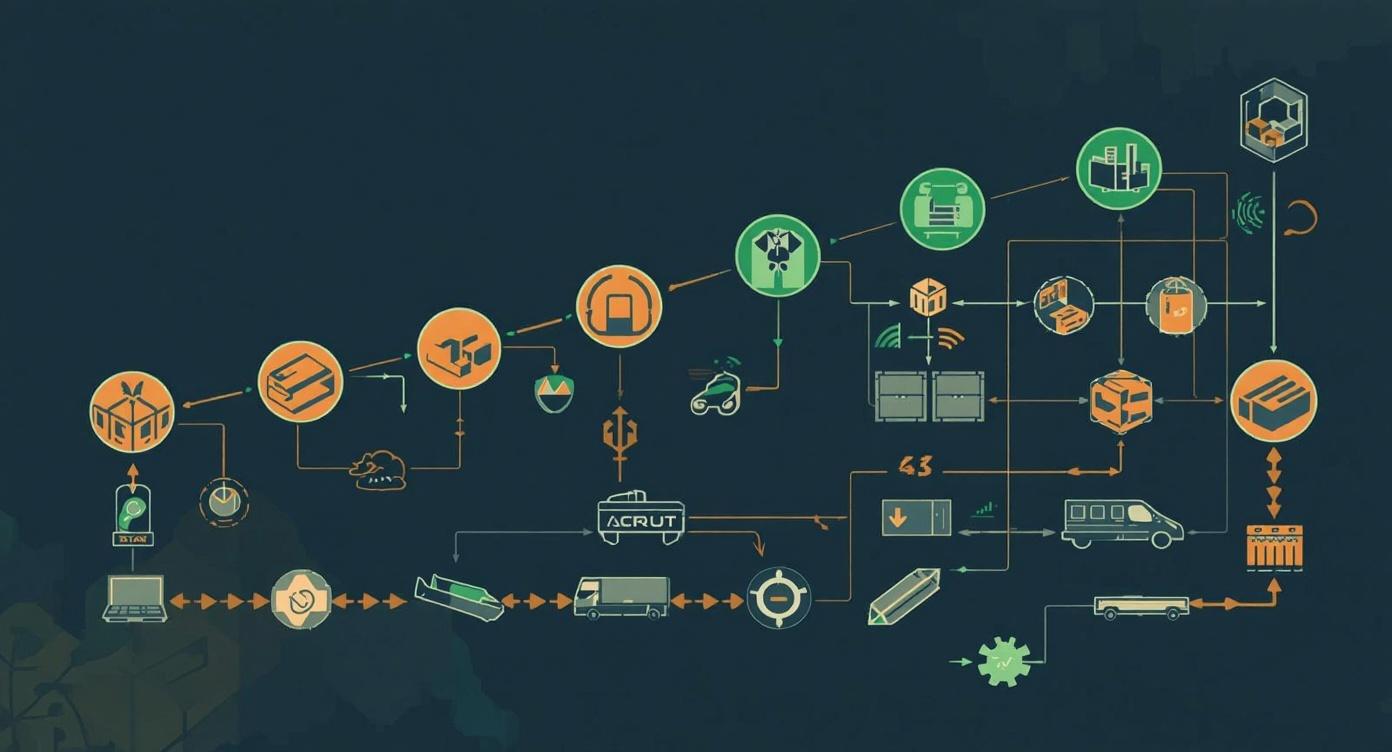
Walk into any large food bank on a busy distribution day and you'll see a logistics challenge that rivals many small businesses: pallets of donated goods arriving unpredictably, thousands of client families with varying household sizes and dietary needs, perishable items that must be distributed before spoiling, and a volunteer workforce that changes week to week. Managing all of this with spreadsheets and clipboards is not just inefficient; it costs real impact. Food that spoils, clothing that sits unsorted, supplies that run out at the worst moment -- these aren't just operational problems. They represent missed opportunities to serve the people your organization exists to help.
Artificial intelligence is changing this calculus for nonprofits of all kinds. AI-powered inventory management systems can forecast incoming donations, predict demand based on historical patterns and external factors, automatically route items to where they're needed most, and flag potential shortfalls before they become crises. What once required experienced operations staff making educated guesses can now be supported by systems that process more data points than any human could track, giving your team better information to make faster decisions.
This isn't technology reserved for large organizations with dedicated IT departments. Accessible AI tools are now available at price points that work for community food pantries, regional thrift store networks, disaster relief warehouses, and everything in between. This article will walk you through what AI-powered inventory management looks like in practice, which use cases offer the highest return, and how to approach implementation in a way that works for your team.
This article takes a cross-sector approach, covering the shared challenges and AI solutions that apply whether you're running a food pantry, a thrift store, a shelter supply closet, or a multi-category donation distribution center. If you want sector-specific depth, we have dedicated guides on AI for food banks and AI for nonprofit thrift stores. Here, the focus is on the cross-cutting inventory management principles and systems that apply across all of these contexts -- with particular attention to what makes nonprofit inventory so different from commercial inventory, and what that means for how you choose and deploy AI tools. For a broader view of how AI is reshaping nonprofit operations, see our guide on optimizing multi-site nonprofit operations with AI.
Why Inventory Management Is Uniquely Challenging for Nonprofits
Commercial retailers have complex inventory challenges, but nonprofits face a set of problems that are fundamentally different and, in many ways, harder to solve. Understanding what makes nonprofit inventory management distinctive is essential before diving into how AI can help.
The most significant difference is supply unpredictability. A grocery store knows roughly how many units it will receive from each vendor because it places orders in advance. A food bank receives donations that vary by day, week, and season in ways that are difficult to anticipate. A corporate food drive might generate 10,000 pounds of canned goods in a single day. A community drop-off site might go quiet for two weeks. Holiday seasons bring surges of certain items that don't match what clients actually need in January. This supply volatility is the root cause of many downstream inventory problems.
Demand is equally unpredictable and driven by factors outside the organization's control. Economic downturns, natural disasters, housing crises, and changes in government benefit programs can all cause rapid increases in need. Client household compositions change constantly. Dietary restrictions, cultural preferences, and health needs vary widely among the people served. A thrift store can't know exactly which sizes and styles will move quickly any given week, especially when inventory is entirely donation-dependent.
Perishability adds another layer of complexity. Food banks work with items ranging from shelf-stable canned goods with multi-year expiration dates to fresh produce that spoils within days. Getting perishables distributed before they're wasted requires sophisticated coordination. A thrift store may not deal with spoilage, but clothing trends change and items can sit unsold until they take up valuable floor and storage space.
Supply-Side Challenges
- Donation volumes that are unpredictable day to day
- Seasonal surges of items that don't match seasonal needs
- Variable quality and condition of donated goods
- Multiple donation channels with no advance notice
- Perishable items with short distribution windows
Demand-Side Challenges
- Client needs that shift with economic conditions
- Diverse dietary, cultural, and health requirements
- Household composition data that's difficult to keep current
- Demand spikes from external events outside your control
- Difficult to accurately predict which items will be in demand
How AI Transforms Demand Forecasting
Perhaps the most powerful application of AI in nonprofit inventory management is demand forecasting -- predicting how much of each item you'll need, when you'll need it, and where. Traditional forecasting relied on staff experience and historical averages, which works reasonably well in stable environments but breaks down when conditions change quickly. AI forecasting systems improve on this in several important ways.
AI forecasting models can incorporate far more variables than manual analysis allows. A food bank AI system might factor in historical distribution data, current client registration numbers, local economic indicators, seasonal patterns, upcoming community events, nearby agency capacity, and even weather forecasts that affect client turnout. By processing all these signals simultaneously, the system generates predictions that account for the complex interactions between factors that human planners might miss or underweight.
These models also improve over time through machine learning. As the system accumulates more data about your specific operation, your client base, and your local conditions, its predictions become more accurate. A model that's been running for six months will generally outperform one that's been running for six weeks, and one running for two years will be better still. This learning effect means early adoption creates a compounding advantage.
What AI Demand Forecasting Can Predict
Modern AI systems can generate actionable forecasts across multiple dimensions of your inventory needs
Short-term forecasting (1-2 weeks)
- Expected client visit volume by day
- Item category demand (protein, produce, staples)
- Perishable distribution urgency rankings
- Volunteer staffing needs by shift
Medium-term forecasting (1-3 months)
- Seasonal demand shifts by category
- Upcoming surplus items from donor patterns
- Storage capacity planning requirements
- Procurement opportunities to fill anticipated gaps
Food security organizations have additional external signals they can feed into forecasting models. SNAP enrollment trends, local unemployment claims, school meal program participation, and regional economic indicators all correlate meaningfully with food assistance demand and can make forecasts significantly more accurate than internal data alone. For a deep dive on this application specifically, see our article on AI demand forecasting for food security organizations.
For thrift stores and resale operations, demand forecasting takes a different but equally valuable form. AI systems can analyze point-of-sale data to identify which categories of clothing, housewares, or books move quickly versus which tend to sit. They can recognize seasonal patterns in buyer behavior, flag when certain item types are accumulating faster than they're selling, and help pricing teams adjust to move slow-moving inventory more effectively. Some thrift store networks are using AI to optimize pricing dynamically -- adjusting the price of items based on how long they've been on the floor, current inventory levels, and demand signals.
Smarter Donation Tracking and Receiving
Before AI can optimize distribution, it needs accurate, up-to-date information about what you have. This is where many nonprofits face their first major hurdle: donation intake processes that are inconsistent, slow, or paper-based. AI-powered receiving systems are addressing this bottleneck in several ways.
Computer vision technology has made it possible to rapidly catalog incoming donations. Systems using AI-powered image recognition can identify items from photos taken during the intake process, automatically categorize them, estimate quantities, and enter them into your inventory database -- all in seconds. A food bank volunteer can take a photo of a pallet of mixed canned goods and the system identifies the item types and approximate quantities, dramatically reducing the manual data entry burden. For thrift stores, similar technology can identify clothing items, assess condition, suggest appropriate pricing, and log items into inventory far faster than manual processes allow.
Barcode and RFID integration, paired with AI processing, allows real-time inventory updates as items move through your facility. Rather than conducting periodic counts to reconcile what's on shelves with what your records show, AI-assisted tracking systems maintain a continuously updated picture of inventory. This real-time visibility is essential for making rapid distribution decisions, especially with perishables where a few hours can make the difference between a usable and unusable item.
Some of the most innovative food banks are piloting systems that flag donation quality issues during intake. AI trained on images of fresh produce can estimate shelf life, identify items that are already too far gone to distribute, and prioritize which products need to be placed immediately versus those that can go to short-term storage. This automation removes judgment calls from volunteer staff who may be inconsistent in their assessments and helps ensure quality standards are maintained even on the busiest donation days.
Modern AI Receiving Capabilities
Technologies now available to nonprofits for faster, more accurate donation intake
- Image recognition for instant cataloging -- photograph items and AI identifies, categorizes, and counts them automatically
- Barcode scanning with AI enrichment -- scan product codes and AI populates nutritional data, expiration info, and proper storage requirements
- Condition assessment tools -- AI models trained on item images can assess quality and flag items that don't meet distribution standards
- Donor communication automation -- automatically generate acknowledgment receipts and tax documentation when donations are logged
- Integration with donor management systems -- track giving history by donor to identify patterns and acknowledge major in-kind contributors
Using AI to Dramatically Reduce Waste
Food waste is one of the most painful inefficiencies in the food banking system. Every item that spoils before it can be distributed represents both a wasted resource and a missed opportunity to help someone in need. While zero waste is an unrealistic goal, AI-assisted inventory management can significantly reduce waste through better prioritization, routing, and timing.
The core mechanism is first-expiring, first-out (FEFO) management with AI enforcement. Traditional FIFO (first in, first out) systems don't account for the fact that donated items arrive with vastly different remaining shelf lives. A donation of bread received today might need to leave tomorrow, while a pallet of canned goods that arrived last week is still perfectly fine. AI inventory systems that track expiration dates in real time and automatically prioritize distribution of soonest-to-expire items can prevent a significant portion of avoidable waste.
When surplus items can't all be distributed before expiration, AI can identify the best options for rapid redistribution. Systems can automatically generate alerts to partner agencies, community refrigerators, or last-mile distribution partners when items need immediate movement. Some networks have integrated with commercial food rescue platforms that can accept same-day pickups of surplus items, extending the life of donations that would otherwise be wasted.
For thrift stores, waste reduction through AI takes the form of smarter sorting and routing decisions. Clothing and household items that have been in inventory for a certain period without selling can be automatically flagged for clearance pricing, transfer to other locations with higher demand for that category, or donation to free clothing programs. Rather than waiting for periodic staff-driven audits, AI-driven systems create a continuous flow of aging inventory to appropriate channels.
Expiration Tracking
AI systems continuously monitor expiration dates across thousands of items and automatically prioritize distribution based on urgency, alerting staff to items approaching critical dates.
Redistribution Routing
When items face imminent expiration, AI identifies the best redistribution partners based on location, capacity, and the type of item, initiating transfer requests automatically.
Donation Acceptance Guidance
AI can help front-line staff decide whether to accept certain donations by comparing current inventory levels and projected distribution capacity against the item's remaining usable window.
Personalized Distribution and Client Matching
One of the most exciting frontiers in food bank technology is the move from standardized food boxes to personalized distributions. The traditional model -- everyone gets the same box regardless of household size, dietary needs, or cultural preferences -- is operationally simple but delivers inconsistent value. A family of two gets the same quantity as a family of six. A diabetic client receives items high in refined sugar. Someone without cooking facilities receives items that require preparation they can't do.
AI-powered client matching systems can dramatically improve the relevance of what clients receive. By maintaining profiles that include household size, dietary restrictions, health conditions, cultural preferences, and what clients have chosen or declined in the past, AI can match available inventory to individual client needs much more precisely. When a client visits for their distribution, the system generates a suggested package based on their profile and current inventory, automatically routing appropriate items from different parts of the warehouse.
This personalization has real impact. Clients are more likely to use food they receive when it aligns with their dietary needs and cooking practices, which means less waste at the client level. Families with health conditions benefit from items selected with their needs in mind. And organizations can better demonstrate impact by showing that distributions are genuinely helpful rather than just technically accomplished.
Choice-based pantry models, where clients select items rather than receiving pre-packed boxes, benefit enormously from AI support. Systems can manage real-time inventory as clients shop, ensure equitable distribution of high-demand items, and help staff understand which items clients consistently prefer or avoid -- information that feeds back into procurement and donation solicitation decisions. To learn more about personalized service delivery, see our article on using AI to analyze beneficiary feedback.
Coordinating Inventory Across Multiple Locations
Organizations that operate multiple distribution sites, partner agency networks, or regional food bank systems face a coordination challenge that AI is particularly well-suited to address. With manual systems, each location may have siloed inventory visibility: Site A doesn't know that Site B has a surplus of the exact items it's running low on. Items expire at one location while another location has clients waiting for them.
AI-powered inventory platforms create a unified view across all locations, enabling system-wide optimization. When Site A runs low on protein items, the system can automatically identify that Site C has more than projected demand and initiate a transfer request. When a large donation arrives at the central warehouse, AI can calculate optimal distribution across partner agencies based on each agency's current inventory levels, client volume, storage capacity, and upcoming distribution dates.
Route optimization is another area where AI adds significant value in multi-site operations. Determining the most efficient sequence of stops for food rescue pickups, the best routing for delivery drivers distributing to partner agencies, or how to maximize the amount of food moved given a limited number of vehicle trips is a complex optimization problem that AI handles well. By calculating optimal routes in real time, accounting for traffic, pickup windows, vehicle capacity, and priority items, AI routing tools can significantly increase the amount of food moved with the same transportation resources.
For regional food bank networks that allocate food to hundreds of partner agencies, AI allocation engines can replace the manual processes that often result in inequitable or inefficient distribution. Rather than relying on historical allocations that may no longer reflect current needs, AI can continuously recalculate allocations based on up-to-date data on agency capacity, client population, and current inventory levels. See our article on AI for multi-site nonprofit operations for a deeper look at coordination challenges and solutions.
Multi-Site Coordination Benefits
AI creates value by optimizing inventory flow across an entire network of locations
- System-wide inventory visibility -- see stock levels across all sites in real time to enable better transfer decisions
- Automated transfer recommendations -- AI identifies surpluses and shortfalls across sites and suggests transfers before problems develop
- Route optimization for deliveries -- calculate the most efficient routes for food rescue, deliveries, and inter-site transfers
- Equitable allocation algorithms -- distribute available inventory across partner agencies based on need rather than historical precedent alone
- Network-wide reporting -- understand inventory performance, waste rates, and client service metrics across all locations simultaneously
How to Get Started: A Practical Implementation Guide
Understanding what AI can do is the easy part. Knowing how to actually implement it in your organization is where most nonprofit leaders need guidance. The good news is that AI inventory management doesn't require a complete system overhaul. You can start with targeted improvements in the areas of highest impact and build from there.
The first step is an honest assessment of your current inventory processes. Where are the pain points? Where does waste occur most often? Which decisions take the most staff time? Which data are you currently collecting and which are you missing? This assessment will help you identify the highest-impact starting points rather than trying to implement everything at once.
Data quality is the foundation of effective AI. Before any AI system can provide useful forecasts or recommendations, it needs access to clean, consistent data about your inventory, your clients, and your operations. Many organizations find that implementing basic digital tracking (if they haven't already) is a necessary precursor to AI adoption. Don't try to use AI to fix data quality problems; establish good data practices first, then add AI capabilities on top of that foundation.
Phase 1: Foundation (Months 1-3)
- Audit current inventory tracking processes
- Implement or upgrade digital inventory system
- Establish data entry standards and training
- Begin collecting expiration date data consistently
- Research AI inventory vendors for your sector
Phase 2: First AI Application (Months 4-6)
- Pilot one focused AI application (e.g., expiration alerts)
- Train volunteer and staff users on new tools
- Measure baseline metrics to track improvement
- Gather staff and volunteer feedback regularly
- Document what works and what needs adjustment
When evaluating AI inventory vendors, ask specifically about experience working with nonprofits and the particular type of operation you run. A system designed for retail thrift stores may not serve a food bank's needs, and vice versa. Key platforms in the nonprofit food sector include PantrySoft (pantry management with barcode scanning, starting around $50-125/month) and Link2Feed (free for Feeding America network partner agencies, with 3,100+ organizations using it across North America). For thrift store and resale operations, Hammoq uses machine vision and generative AI to automate intake and online listing for Goodwill chapters and other large resale nonprofits, while Circular offers a free tier for smaller operations. Routific is widely used by food banks specifically for route optimization to ensure perishables reach distribution points efficiently. No single platform does everything well across all inventory types, which is why multi-category organizations often use purpose-built tools for each function.
Note: Prices may be outdated or inaccurate.
Don't underestimate the change management dimension of implementing new inventory technology. Staff and volunteers who have been doing things a certain way for years may resist new processes, especially if they feel the AI system is second-guessing their judgment. Invest time in explaining why the changes are being made, how the AI recommendations are generated, and what decisions still rest with humans. Positioning AI as a tool that gives staff better information rather than a system that tells them what to do helps adoption significantly. For more guidance on managing AI adoption, see our article on overcoming resistance to AI in your nonprofit.
Specialized AI Applications by Sector
While the core principles of AI inventory management apply broadly, each type of nonprofit operation has specific applications worth highlighting.
Food Banks and Pantries
The highest-stakes use case for AI inventory management in nonprofits. Key applications include:
- Perishable management -- tracking produce, dairy, and prepared foods against expiration dates and routing to rapid distribution channels automatically
- Nutritional balancing -- AI that helps ensure distribution boxes or choice pantry offerings meet basic nutritional standards across the range of clients served
- USDA reporting automation -- AI systems can generate required USDA reporting from inventory data, dramatically reducing administrative burden
- Corporate food rescue coordination -- automated scheduling and logistics for regular pickups from grocery stores, restaurants, and food manufacturers
Thrift Stores and Resale Operations
AI brings retail-grade inventory intelligence to mission-driven resale operations:
- Dynamic pricing algorithms -- automatically adjust prices based on days-on-floor, category demand, and current inventory levels to optimize revenue
- High-value item identification -- AI trained to recognize valuable items that should be priced higher or listed on resale platforms rather than regular sales floor
- Floor space optimization -- data on which categories move fastest helps stores allocate floor space to maximize both revenue and throughput
- Donation acceptance guidance -- help intake staff prioritize what to accept based on current inventory levels and predicted demand
Disaster Relief and Emergency Supply Organizations
AI inventory management is especially valuable in disaster contexts where speed and accuracy are critical:
- Rapid intake processing -- quickly catalog incoming donation surges that typically follow disasters using AI-assisted batch processing
- Needs matching against supply -- AI can match available supply to reported needs across affected communities faster than manual coordination
- Logistics optimization under pressure -- route and sequence deliveries to maximize the number of people reached with limited vehicle capacity
- Pre-positioning prediction -- forecast which supplies to pre-position and where before a forecasted event to reduce response time
Getting More Resources to More People
AI inventory management isn't about replacing the humans who do the essential work of operating food banks, thrift stores, and emergency relief operations. It's about giving those humans better tools so that their expertise, compassion, and judgment can be applied to the decisions that matter most, rather than spent on data entry, manual tracking, and reactive waste management.
Organizations that have adopted AI-assisted inventory management consistently report the same outcomes: less waste, better matching of resources to needs, more efficient operations, and ultimately more impact per dollar donated. These improvements compound over time as AI systems learn your specific operation and the quality of your data improves.
The organizations that wait to adopt these tools will find themselves at a growing disadvantage compared to peers that are already building AI capabilities. And more importantly, the people they serve will benefit less than they could. The technology is accessible, the implementation path is clear, and the impact potential is significant. The question for most nonprofit operations leaders isn't whether to adopt AI inventory management, but where to start.
If you're ready to take the next step, consider beginning with a focused pilot in the area where waste or inefficiency is highest in your current operation. Build from there, measuring results carefully and using what you learn to guide each subsequent implementation. And connect with peer organizations who have already made this journey -- the nonprofit sector is generally generous about sharing operational learnings, and you don't have to figure all of this out alone. For more on building organizational AI capacity, see our guide for nonprofit leaders getting started with AI.
Ready to Reduce Waste and Serve More People?
Our team helps nonprofits assess their inventory operations and identify the highest-impact AI applications for their specific context. Let's talk about what's possible for your organization.