
Client Tracking, Crisis Response, and Outcomes Measurement: AI for Mental Health Nonprofits
Mental health organizations face unprecedented demand for services, with nearly 50% of individuals who need support unable to access it due to cost and availability barriers. AI offers mental health nonprofits powerful tools to expand capacity, improve care coordination, and measure outcomes more effectively—but only when implemented thoughtfully with robust ethical safeguards and human oversight.
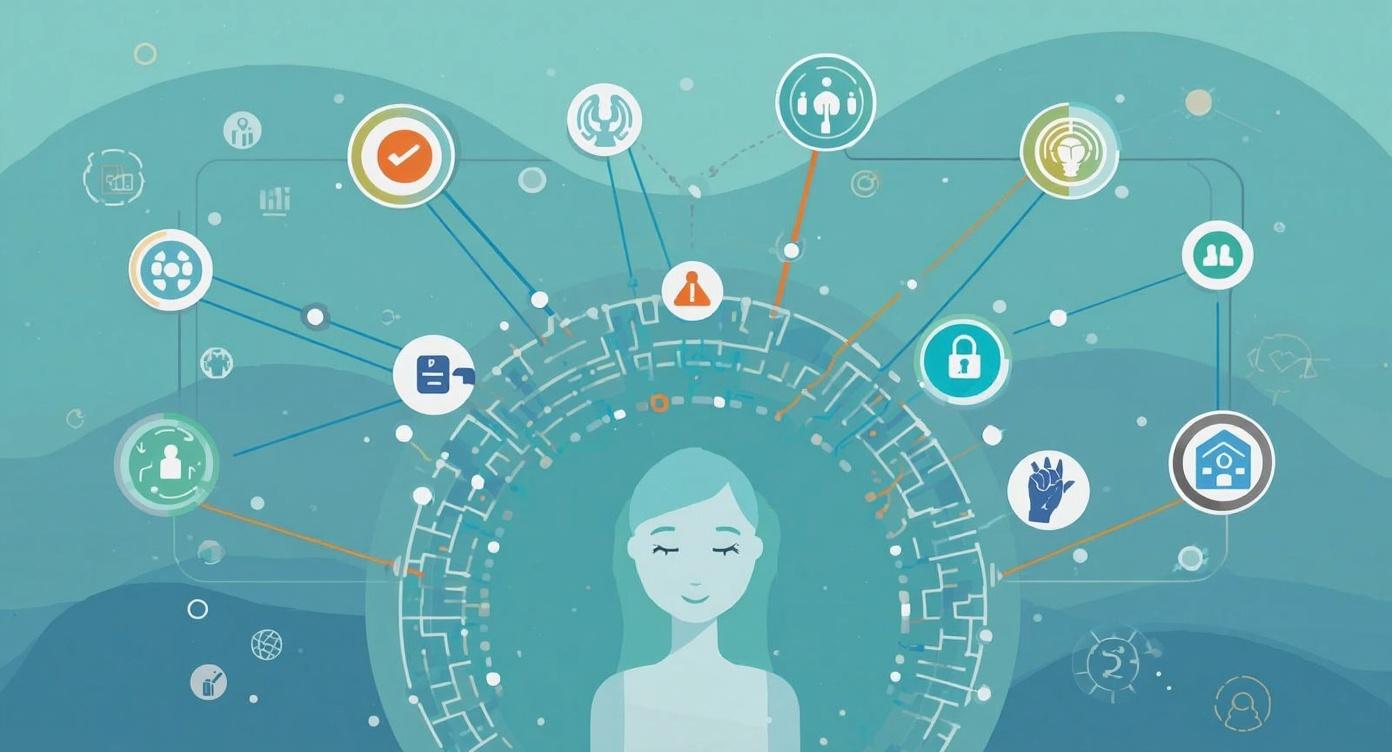
Mental health nonprofits operate in one of the most challenging sectors in human services. Caseworkers manage 24-31 families each, supervisors oversee hundreds of cases, and staff face chronic burnout from overwhelming workloads. At the same time, the demand for mental health services continues to grow faster than organizations can scale their capacity.
AI is emerging as a transformative tool for mental health organizations—not to replace therapists and counselors, but to augment their capabilities and reduce administrative burden. From automating intake documentation to tracking client progress over time, AI applications are helping behavioral health nonprofits work more efficiently while maintaining the human connection that remains essential to effective care.
However, AI in mental health also raises significant ethical concerns. Issues of data privacy, algorithmic bias, and the risk of inappropriate automated responses demand careful consideration. Some mental health chatbots have provided harmful advice in response to expressions of suicidal ideation. The rapid proliferation of AI tools is outpacing regulatory safeguards, making it critical for nonprofits to approach implementation with clear ethical guidelines and human oversight.
This guide explores how mental health nonprofits can leverage AI for client tracking, crisis response, and outcomes measurement—while navigating the ethical complexities and ensuring that technology enhances rather than undermines the quality of care. We'll examine practical applications, implementation strategies, and the guardrails necessary to use AI responsibly in behavioral health settings.
The Mental Health Landscape in 2026: Understanding the Challenge
Before exploring AI solutions, it's essential to understand the specific pressures facing mental health nonprofits today. The sector is experiencing a perfect storm of increased demand, workforce shortages, and resource constraints that makes innovation both necessary and challenging.
Access remains the most fundamental barrier. Nearly 50% of individuals who could benefit from mental health services cannot access them due to cost, lack of insurance coverage, or limited provider availability. Rural communities face particularly acute shortages, with some areas having no mental health professionals within a 50-mile radius. Nonprofits often serve as the safety net for these underserved populations, making their capacity constraints a public health issue.
At the same time, mental health workers are experiencing unprecedented burnout. High caseloads, emotional labor, and administrative burden contribute to turnover rates that exceed other human services sectors. The documentation requirements alone—progress notes, treatment plans, insurance authorizations—can consume hours each day that could otherwise be spent in direct client care. This is where AI's potential to reduce administrative burden becomes compelling, but only if implemented in ways that genuinely lighten the load rather than adding another layer of complexity.
Key Challenges Facing Mental Health Nonprofits
- Access barriers: 50% of people needing mental health support cannot access it
- High caseloads: Workers managing 24-31 clients each, supervisors overseeing hundreds
- Documentation burden: Hours daily spent on paperwork instead of client care
- Staff burnout: High turnover from emotional labor and overwhelming workloads
- Outcomes measurement challenges: Difficulty tracking progress across diverse client populations
AI-Powered Client Tracking Systems: From Intake to Discharge
Client tracking is where AI offers some of the most immediate benefits for mental health nonprofits. Traditional electronic health record (EHR) systems require extensive manual data entry, and critical information often gets buried in dense case notes that are difficult to search or analyze. AI-powered tracking systems can transform this process, making client information more accessible and actionable.
Modern AI tools can analyze years of case notes to reveal unmet needs and provide caseworkers with a clearer picture of a client's history. Natural language processing (NLP) enables systems to extract structured data from unstructured clinical notes, identifying patterns in symptoms, treatment responses, and risk factors that might otherwise be missed. This capability is particularly valuable for organizations serving clients with complex, long-term needs.
One particularly promising application is AI-assisted intake. Recent developments in 2026 specifically address how AI can streamline the front door of mental health services, gathering comprehensive information from clients while reducing the time burden on both staff and individuals seeking help. By pre-populating intake forms, flagging urgent concerns, and routing clients to appropriate services, AI intake systems can get the right person to the right care faster and with better information.
Data Management & Integration
- Automated extraction of key information from clinical notes
- Consolidation of data from multiple systems into unified view
- Pattern recognition across client histories to identify trends
- Real-time alerts for missing documentation or overdue assessments
Time-Saving Features
- Tools like Eleos Health reduce documentation time by 50%
- Automated form drafting based on audio recordings of sessions
- Auto-generation of progress notes from structured templates
- Quick access to client history without reading hundreds of pages
Privacy and Compliance in Client Tracking
Mental health data is among the most sensitive information organizations handle. AI client tracking systems must comply with HIPAA regulations, protect against unauthorized access, and ensure data isn't used in ways that could harm clients.
- Verify HIPAA compliance and Business Associate Agreement (BAA) coverage
- Ensure data encryption at rest and in transit
- Implement strict access controls and audit logging
- Understand where data is stored and whether it's used for model training
Crisis Response and Real-Time Risk Assessment
Crisis intervention represents both AI's greatest potential and its greatest risk in mental health settings. When someone is experiencing acute distress—whether from suicidal ideation, substance abuse relapse, or psychotic symptoms—the speed and quality of response can be life-saving. AI tools promise to help organizations identify at-risk individuals earlier, triage crisis situations more effectively, and coordinate rapid response. But the stakes are also extraordinarily high, and errors can be catastrophic.
AI-driven sentiment analysis can monitor social media and communication channels to assess mental health impact in real time. In humanitarian settings, these tools help organizations identify communities experiencing collective trauma and deploy targeted interventions. For individual clients, AI can flag concerning language patterns in text messages, emails, or session notes that might indicate escalating risk.
However, crisis response AI has significant limitations. Testing of large language models (LLMs) in simulated therapeutic settings revealed frequent inappropriate responses to acute clinical symptoms like suicidal ideation, psychosis, and delusions. Some mental health chatbots have provided inaccurate or even harmful advice, with documented cases of bots encouraging self-harm. This reality underscores a critical principle: AI should support human crisis responders, never replace them.
The most effective use of AI in crisis response treats it as an early warning system and coordination tool. AI can help hotline operators prioritize calls, provide caseworkers with relevant client history during emergencies, and ensure follow-up doesn't fall through the cracks. But the actual crisis intervention—listening, assessing, and responding with empathy and clinical judgment—must remain a human responsibility.
Safe AI Applications in Crisis Response
- Risk flagging: AI analyzes speech patterns, wearable data, and EHR information to flag mental health risks before they escalate
- Call routing: Intelligent triage systems prioritize high-risk calls and route to appropriate specialists
- Information aggregation: Quick access to client history, medications, previous crises during emergency situations
- Follow-up tracking: Automated reminders for post-crisis check-ins and safety planning
- Population monitoring: Identification of communities under stress in humanitarian or disaster contexts
What AI Should NEVER Do in Crisis Situations
Research has identified critical failures when AI systems attempt direct crisis intervention without adequate human oversight. Nonprofits must establish clear boundaries around AI use in emergencies.
- Never use chatbots as primary responders to expressions of suicidal ideation
- Don't rely solely on AI for clinical decisions about hospitalization or safety
- Avoid automated responses to acute psychiatric symptoms like psychosis or mania
- Don't use AI systems that haven't been validated in clinical crisis settings
Outcomes Measurement and Predictive Analytics
Measuring mental health outcomes has always been challenging. Unlike medical interventions where success is often binary (the infection cleared or it didn't), mental health progress is gradual, multifaceted, and influenced by countless factors beyond clinical treatment. Funders increasingly demand rigorous outcomes data, but traditional assessment methods are time-consuming and often capture only a narrow slice of client well-being.
AI-powered analytics platforms are transforming outcomes measurement by making it possible to track progress at scale while maintaining granularity. Tools like NeuroBlu use natural language processing to analyze clinician notes, predicting disease severity and extracting structured insights from narrative documentation. This approach unlocks information that would otherwise remain trapped in text, enabling organizations to understand patterns across hundreds or thousands of clients.
Machine learning enables predictive analytics for treatment outcomes, helping clinicians match clients with the most effective therapies and reducing the trial-and-error approach that can extend suffering and waste resources. AI analyzes data from speech patterns, wearable devices, and electronic health records to identify which interventions work best for which client profiles. Research shows these systems can improve diagnosis accuracy—tools like Limbic achieve 93% accuracy in diagnostic assessments.
Perhaps most importantly for resource-constrained nonprofits, AI enables monitoring of treatment outcomes in real time rather than waiting for periodic assessments. Systems track emotional states, behavioral patterns, and engagement levels continuously, alerting clinicians when clients show signs of deterioration. This proactive approach allows earlier intervention and more precise calibration of treatment plans, potentially preventing crises before they occur.
Predictive Capabilities
- Disease progression prediction for chronic mental health conditions
- Treatment response forecasting based on client characteristics
- Risk stratification to identify clients needing intensive support
- Relapse prediction for substance use disorders and depression
Data Analysis at Scale
- Population health insights from aggregated de-identified data
- Program effectiveness comparison across different interventions
- Cohort analysis tracking specific populations over time
- Funder reporting automation with verified outcome metrics
Real-World Impact: Evidence-Based Outcomes
AI outcomes measurement isn't just theoretical—organizations are seeing measurable improvements in care quality and operational efficiency.
- Eleos Health's technology proven to reduce documentation time by 50% while doubling client engagement
- AI-driven interventions yield 3-4x better care outcomes compared to traditional approaches
- Limbic AI achieves 93% accuracy in diagnostic assessments, matching or exceeding human clinicians
- Population health management systems enable proactive intervention before symptoms deteriorate
Ethical Considerations and Implementation Safeguards
The ethical stakes of AI in mental health cannot be overstated. Mental health data is among the most sensitive personal information, and the populations served by mental health nonprofits often include individuals experiencing vulnerability, trauma, and systemic marginalization. Getting AI implementation wrong doesn't just risk inefficiency—it risks real harm to real people.
Algorithmic bias is a particularly acute concern. AI models trained on historical data can perpetuate and even amplify existing disparities in mental health care. If past diagnostic patterns reflect racial bias—for example, overdiagnosis of schizophrenia in Black men or underdiagnosis of depression in Asian American communities—an AI system will learn and replicate those biases at scale. Nonprofits must actively work to identify and mitigate these biases through diverse training data, regular audits, and human oversight.
Data privacy extends beyond HIPAA compliance. Nonprofits need to understand exactly what happens to client data once it enters an AI system. Is it used to train commercial models? Is it stored on servers in other countries with different privacy regulations? Can clients truly provide informed consent about AI use when the technology is so complex? These questions demand clear answers before implementation.
Perhaps most fundamentally, AI should enhance the therapeutic relationship, not substitute for it. The rapid proliferation of AI mental health tools is outpacing ethical and regulatory safeguards, with experts warning that unregulated products can cause more damage than they fix. For nonprofits, this means being selective, cautious, and unwavering in the commitment that AI serves humans—not the other way around.
Essential Ethical Guardrails
- Human oversight for all AI-generated clinical recommendations
- Regular bias testing with particular attention to racial and socioeconomic disparities
- Transparent data handling with clear client consent processes
- Opt-out mechanisms for clients uncomfortable with AI use
- Continuous monitoring of AI system outputs for concerning patterns
Red Flags to Watch For
- Vendors unable or unwilling to explain how their AI works
- Systems claiming to replace rather than augment clinician judgment
- Lack of peer-reviewed validation for clinical applications
- Unclear data ownership or usage rights in vendor agreements
- AI tools marketed primarily to cut costs rather than improve care
Getting Started: A Practical Implementation Strategy
Implementing AI in mental health settings requires careful planning and stakeholder involvement. The technology is powerful, but its success depends on thoughtful integration with existing workflows, staff buy-in, and clear policies governing its use.
Start by identifying your organization's most pressing pain points. Is documentation consuming so much time that clinicians can't take on new clients? Are you struggling to demonstrate outcomes to funders? Do high-risk clients fall through the cracks during transitions? Different challenges call for different AI solutions, and trying to solve everything at once is a recipe for failure. Begin with one focused application where success can be measured clearly.
Phased Implementation Approach
Phase 1: Assessment (1-2 months)
- Conduct staff survey to identify workflow pain points
- Review current data systems and integration requirements
- Research vendors with behavioral health experience and HIPAA compliance
Phase 2: Pilot Program (3-6 months)
- Select one department or program for initial implementation
- Provide thorough training with ongoing support
- Establish clear success metrics (time saved, client outcomes, staff satisfaction)
- Create feedback mechanisms for staff and clients
Phase 3: Evaluation and Refinement (2-3 months)
- Analyze pilot results against baseline metrics
- Identify workflow adjustments needed
- Audit for bias or unintended consequences
- Decide whether to scale, adjust, or discontinue
Phase 4: Scaling (Ongoing)
- Roll out successful tools to additional programs
- Develop internal champions who can support colleagues
- Maintain continuous monitoring and improvement processes
Building Staff Buy-In
Technology adoption fails most often not because of technical problems, but because staff don't trust or understand it. Address concerns proactively.
- Involve clinicians in vendor selection and pilot design
- Be transparent about what AI can and cannot do
- Address job security concerns directly—AI augments, doesn't replace clinicians
- Celebrate early wins and share positive outcomes
- Provide adequate training time without adding to existing workload
Looking Forward: The Future of AI in Mental Health
AI's role in mental health is evolving rapidly. The developments we're seeing in 2026 represent just the beginning of what's possible. Multimodal AI that can analyze voice tone, facial expressions, and physiological data alongside text is already emerging. More sophisticated predictive models will enable earlier intervention, potentially preventing mental health crises before they occur. Integration across systems will give providers a more complete picture of each person's needs.
At the same time, the field is grappling with fundamental questions about the appropriate boundaries of AI in mental health. How do we preserve the essential humanity of therapeutic relationships while leveraging technology's power? How do we ensure that AI expands rather than constrains access to care? What regulatory frameworks are needed to prevent harm while allowing innovation?
For mental health nonprofits, these questions aren't academic—they're practical considerations that shape every implementation decision. The organizations that will use AI most effectively are those that maintain clear ethical principles, center the therapeutic relationship, and remain vigilant about unintended consequences.
The promise is real. AI can help mental health nonprofits serve more people, provide better care, and build the evidence base needed to sustain and expand services. But realizing that promise requires intention, humility, and unwavering commitment to the human beings the technology is meant to serve. Done right, AI becomes a tool that allows clinicians to be more human, not less—spending less time on paperwork and more time on the connections that heal.
Conclusion
AI represents a transformative opportunity for mental health nonprofits facing unprecedented demand and limited resources. From reducing documentation burden to enabling predictive analytics, the technology offers tangible benefits that can expand capacity and improve outcomes. Tools already in use demonstrate measurable impact—50% reductions in administrative time, doubled client engagement, and 3-4x improvements in care outcomes.
But AI also carries significant risks, particularly in crisis response settings where inappropriate automated responses can cause real harm. The ethical stakes demand careful implementation with robust safeguards: human oversight for all clinical decisions, continuous bias monitoring, transparent data handling, and unwavering commitment that AI augments rather than replaces human judgment.
Success requires more than selecting the right vendor. It demands thoughtful planning, stakeholder involvement, phased implementation with clear metrics, and willingness to adjust or discontinue tools that don't serve clients well. Mental health nonprofits must approach AI with both optimism about its potential and realism about its limitations.
The future of mental health care will increasingly involve AI—not as a replacement for therapists and caseworkers, but as a tool that helps them work more effectively and serve more people. Organizations that navigate this transition thoughtfully, centering ethics and client wellbeing, will be best positioned to meet growing demand while maintaining the quality and humanity of care that makes mental health services effective. The technology is powerful, but it's the values guiding its use that determine whether it truly serves the mission.
Ready to Explore AI for Your Mental Health Organization?
One Hundred Nights helps mental health nonprofits evaluate AI tools, develop implementation strategies, and build systems that enhance care while maintaining ethical safeguards. Let's discuss how AI can support your mission.