
AI for Nonprofit Conference and Event Programming: Sessionization, Track Building, and Speaker Matching
Building the program for an annual conference is one of the most thankless jobs in a nonprofit. Hundreds of submissions, a stubborn grid of rooms and timeslots, and a volunteer committee with strong opinions and limited hours. AI cannot make the final calls, but it can do the heavy sorting underneath them. This guide shows event teams exactly where AI helps with sessionization, track building, and speaker matching, and where it should never be left alone.
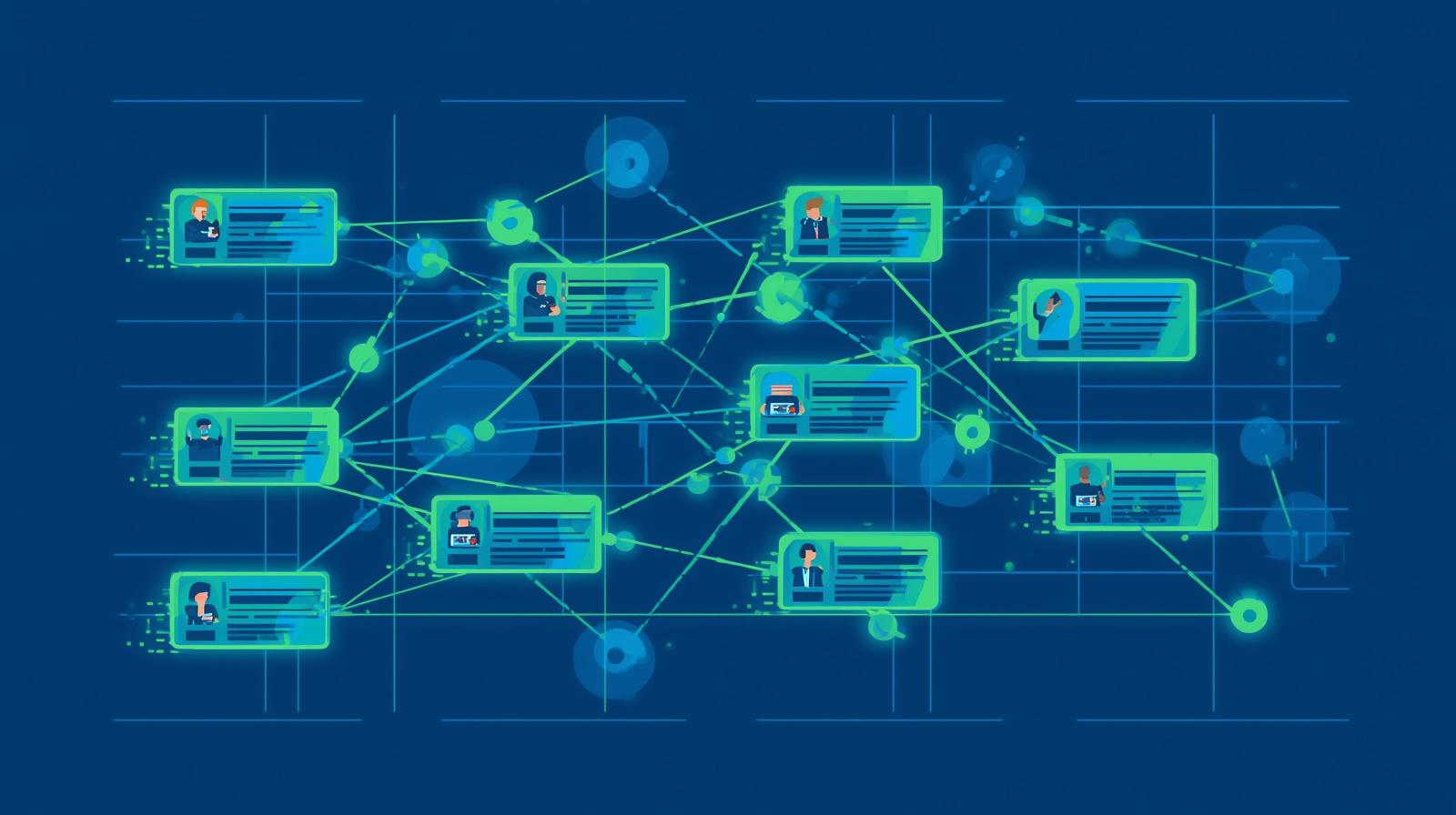
Every nonprofit that runs an annual conference, a member summit, a training institute, or a regional convening knows the same quiet dread. The call for proposals closes, the submissions land in a spreadsheet, and a small staff team plus a volunteer program committee has roughly six weeks to turn a chaotic pile of session ideas into a coherent, balanced, conflict-free program. The work is enormous, it is mostly invisible when it goes well, and it is brutally visible when it does not, when two flagship sessions are scheduled against each other, when a whole track is thin, or when a respected speaker is buried in a graveyard slot.
This is precisely the kind of work that AI is well suited to support. Conference programming is a problem of reading a large volume of text, finding patterns and themes, grouping related items, matching people to slots, and checking a complex set of constraints. None of that requires the judgment, relationships, or political awareness that make program decisions genuinely hard. It requires patient, consistent processing of a lot of information, and that is exactly what AI does well and exhausted humans do poorly at the end of a long committee call.
The events industry has already moved in this direction. Conference management platforms now build in AI-driven recommendations for reviewer allocation, automated abstract handling, and attendee-facing session and networking recommendations, and a majority of professional event planners report using AI tools to optimize event management. The nonprofit sector has been slower, partly because nonprofit event teams are small and stretched, and partly because the tooling conversation has focused on glossy attendee features rather than the unglamorous programming work that actually consumes staff time.
This article focuses on that unglamorous core. It walks through three connected jobs, sessionization, track building, and speaker matching, and explains how AI can carry the heavy lifting in each while leaving the real decisions with your committee. It also covers attendee-side personalization, a concrete starting point for a team that has never used AI this way, and the pitfalls that turn a helpful tool into an embarrassing one. The goal is a program that is better balanced, built faster, and produced by a team that arrived at the conference rested instead of depleted.
The Programming Bottleneck, and Why AI Fits It
Before reaching for tools, it helps to name exactly where conference programming gets stuck, because AI should be applied to the bottleneck rather than sprayed across the whole process. For most nonprofit event teams, the program comes together in five stages: collecting proposals, reviewing and scoring them, grouping accepted sessions into themes, assembling those themes into a timed and roomed grid, and matching speakers and moderators to the result. Each stage hands work to the next, and a delay or error early on cascades through everything downstream.
The pain concentrates in the middle three stages. Reviewing a hundred or more proposals fairly is genuinely hard when reviewers are volunteers fitting it around full-time jobs. Grouping accepted sessions into coherent themes is a reading-heavy task that one or two staff usually do alone, late, and under pressure. Assembling the grid is a constraint puzzle that humans solve slowly and imperfectly with sticky notes or a color-coded spreadsheet. These three stages are where conferences acquire their lopsided tracks, their double-booked headliners, and their staff burnout.
AI fits this bottleneck because every one of those middle stages is a text-and-pattern problem rather than a values problem. Deciding whether a session belongs to the policy track or the practice track is pattern recognition. Noticing that four accepted sessions all cover the same narrow topic is pattern recognition. Checking that no speaker is scheduled in two rooms at once is constraint checking. A language model can do all of that across the entire submission set in minutes, consistently, without fatigue. What it cannot do, and should not be asked to do, is decide which proposals deserve a place, which speakers your community needs to hear, and which themes reflect where your mission is heading. Keep that line clear and the rest of this guide becomes straightforward.
The Dividing Line
AI handles sorting, grouping, summarizing, and constraint checking across the full submission set. Humans handle selection, curation, and any decision that reflects values, relationships, or the direction of your mission. Every recommendation in this article sits on one side of that line.
Step One: AI-Assisted Proposal and Abstract Review
Sessionization starts before you have a single accepted session, because the quality of the program depends on the quality of the review. When proposals arrive in inconsistent formats, with vague titles and abstracts of wildly varying length, the review committee spends its energy decoding submissions rather than evaluating them. AI can clean up that input layer so reviewers focus on judgment.
A practical first move is to have AI produce a standardized summary of every submission: a consistent one-paragraph synopsis, a clear statement of the format being proposed, the apparent experience level of the intended audience, and a short list of the topics the session covers. Reviewers then read uniform, comparable summaries instead of raw submissions, which both speeds the work and reduces the unfairness that creeps in when a polished writer outshines a stronger idea expressed plainly. AI can also flag practical problems early: submissions that ignore the format guidelines, abstracts that are really sales pitches for a product, or proposals that duplicate one another almost word for word.
AI can support reviewer allocation as well. By reading each proposal and each reviewer's stated areas of expertise, it can suggest which reviewers are the best fit for which submissions, so a session on data governance does not land with a reviewer who knows fundraising events. Conference platforms increasingly offer this matching, and it materially improves review quality. What AI should not do is score the proposals or decide acceptances. Scoring is where your organization's values live, and an AI score carries a false precision that committees tend to defer to. Let AI prepare and route the material. Let people judge it.
Use AI To
- Standardize every abstract into a comparable summary
- Tag topics, format, and audience level consistently
- Flag duplicates, off-topic, or sales-pitch submissions
- Suggest the best-fit reviewer for each proposal
Keep With Humans
- Scoring and ranking the proposals
- Final accept and decline decisions
- Weighing first-time speakers and lived experience
- Any call that signals the mission's direction
Step Two: Sessionization, Turning Submissions Into a Program
Sessionization is the work of taking a set of accepted proposals and shaping them into actual sessions. It is rarely a one-to-one mapping. Two strong but thin proposals on the same topic may be better combined into a single panel. A popular workshop idea may need to run twice. A submission pitched as a lecture may work better as a facilitated discussion given the room and audience. This is the stage where a pile of yes decisions becomes a program with a shape, and it is one of the most cognitively demanding things a small event team does.
AI accelerates sessionization by surfacing the relationships a tired human reading the hundredth abstract will miss. Ask it to cluster the accepted proposals by topic similarity and it will return groups that reveal where your program is dense and where it is sparse. Ask it to identify near-duplicate sessions and it will hand you the candidates for merging into panels. Ask it which submissions could be reframed into a different format and it will give you options, with reasoning, for the committee to accept or reject. The committee still decides. AI just makes sure the committee is deciding with the full picture in front of it rather than the picture one exhausted staff member managed to hold in their head.
Sessionization is also where you discover the gaps. A clustering pass will frequently reveal that an important topic your members care about received few or no usable submissions. That is valuable intelligence, and it is far better to learn it during programming than at the conference. Knowing a gap exists in week two gives your team time to commission a session, invite a specific speaker, or adjust the program structure. The same analysis that organizes what you have also tells you, clearly and early, what you are missing.
One discipline matters throughout this stage. AI groupings are a draft, not a verdict. The model will sometimes place a session in the wrong cluster because it weighed a surface keyword over the real intent, and it has no knowledge of the politics, history, or relationships that make some groupings sensitive. Treat every cluster as a proposal from a fast but context-blind assistant. The value is in the speed of the first draft, which a human team can correct in an afternoon rather than build from nothing over two weeks.
Cluster by Theme
AI groups accepted proposals by genuine topic similarity, revealing where the program is crowded, where it is thin, and which sessions naturally belong near each other. The committee gets a structured starting draft instead of a blank grid.
Identify Merges and Splits
The model flags near-duplicate sessions that could become a single panel and high-demand topics that may warrant a repeat slot, giving the team concrete options to shape rather than abstract worries to debate.
Expose the Gaps
Clustering reveals topics your community expects but the call for proposals did not deliver, giving your team weeks of lead time to commission sessions or invite speakers rather than discovering the hole on site.
Step Three: Track Building and the Scheduling Grid
Once sessions exist, they have to be organized into tracks and placed on a grid of rooms and timeslots. Tracks are the labeled pathways, often something like leadership, program delivery, technology, and fundraising, that help attendees navigate and that shape how the conference is marketed. The grid is the physical reality: this many rooms, this many slots, these capacity limits, these audiovisual constraints. Track building is partly a curation decision and partly a constraint puzzle, and AI helps with both halves in different ways.
On the curation side, AI can propose a track structure based on the actual shape of your accepted sessions rather than the structure you used last year out of habit. If the clustering from the previous stage shows that a quarter of your sessions concern AI and data, that is a signal the track lineup should reflect this year's reality. AI can suggest several alternative track structures, each with the sessions sorted into it, so the committee can compare options quickly. The committee chooses the structure that fits the organization's strategy. AI just makes sure several good options are on the table.
On the constraint side, the grid is where AI earns its keep most visibly. Placing sessions into rooms and timeslots is a problem with a long list of rules, and humans break those rules constantly under time pressure. A well-instructed AI can take the session list, the room and slot inventory, and your constraints, and produce a draft grid that respects all of them at once. Just as importantly, it can check a grid your team has already built and report every violation it finds. Even teams that prefer to build the grid by hand should run an AI conflict check before publishing, because it catches the embarrassing errors that survive every human review.
Constraints AI Can Check
Rules the grid must respect
- No speaker scheduled in two places at once
- Room capacity matched to expected session demand
- Popular sessions in the same track not opposite each other
- Audiovisual and accessibility needs met by the room
- Speaker availability windows and travel limits honored
Balance AI Can Surface
Quality checks beyond hard rules
- Tracks that are thin or overloaded relative to others
- Beginner and advanced sessions spread across the day
- Heavy sessions clustered after lunch or late in the day
- First-time speakers buried in the weakest slots
- Format variety within each block of the program
The grid is also where you will iterate the most, because real conferences change constantly. A speaker cancels, a room becomes unavailable, a sponsor session is added late. Each change can ripple through the grid and reintroduce conflicts. An AI conflict check that takes thirty seconds means your team can absorb those changes confidently right up to the day the program is published, instead of fearing every late edit. That responsiveness, more than any single optimized grid, is the practical payoff.
Step Four: Speaker Matching and Moderation
Speaker matching covers two related jobs. The first is filling roles that need a person who did not submit a proposal: panel moderators, plenary speakers, workshop co-facilitators, and replacements when someone drops out. The second is making sure the people you do have are placed where they will do the most good. Both are matching problems, and matching is something AI handles well when it is given good information.
For filling roles, AI can work from your existing pool of past speakers, members, board members, and partners. Given a session that needs a moderator, it can scan that pool and suggest candidates whose expertise, background, and prior involvement fit the topic, along with the reasoning for each suggestion. This is especially powerful for diversifying a lineup. A human curator naturally reaches for the names they remember, which tend to be the same names every year. An AI scan of the full pool surfaces qualified people the team simply forgot about, including newer members and voices outside the usual circle. The committee still makes the invitations and weighs the relationships, but it does so from a wider and fairer list.
For placing existing speakers, AI can match the experience level a session is pitched at to a speaker's demonstrated strengths, flag when a single speaker has been loaded with too many sessions, and identify panels where every speaker comes from a similar organization type or perspective. These are exactly the imbalances that committees notice with regret after the program is published. Surfacing them during programming, when there is still time to adjust, is a meaningful quality improvement.
Speaker matching does carry the clearest ethical edge of any stage in this process, because it is about people and opportunity, so the guardrails matter. Never let AI issue invitations or rank speakers by perceived prestige. Be alert that a model trained on general data can quietly reproduce bias, over-suggesting the kinds of speakers who dominate published material and under-suggesting others. Use AI to widen the pool the committee considers, never to narrow it, and have a human review the suggestions specifically for representation before anything is acted on. Speaker matching done well makes a conference more inclusive. Done carelessly, it entrenches the same lineup year after year.
Watch for Bias in Speaker Suggestions
AI suggestions reflect the data they are built on, which over-represents the speakers and organizations that already get the most visibility. Use AI to expand the list of people your committee considers, not to score or shortlist them, and review every speaker suggestion for representation before issuing a single invitation.
Beyond the Program: Attendee-Side Personalization
Once the program is built, AI can help attendees get more out of it, and the same understanding of session content that powered sessionization powers this layer too. The two most useful attendee-facing capabilities are personalized agendas and networking matches. Personalized agendas use an attendee's stated interests, role, and registration choices to recommend the sessions most relevant to them, which is genuinely helpful at a multi-track conference where the full program can feel overwhelming. Event platforms report that personalized scheduling meaningfully increases attendee satisfaction.
Networking matching applies the same logic to people. By comparing attendee profiles, interests, and goals, AI can suggest a handful of high-value connections to each attendee before the event begins, turning the vague promise of networking into a concrete short list. For membership organizations, this is one of the highest-return uses of AI at an event, because the relationships formed at the conference are a major reason members renew. It connects naturally to the year-round work of keeping members engaged, which we cover in our guide to AI for nonprofit membership renewal campaigns.
After the conference, AI helps your team capture the value of everything that happened. Session recordings and transcripts can be summarized into briefs, turned into follow-up content, and folded into your organization's knowledge base so the conference informs the year rather than evaporating when the room empties. Repurposing that material into articles, social posts, and member resources extends the reach of a one-time event, a workflow we detail in our piece on repurposing content with AI. The conference becomes a content engine instead of a single weekend.
Personalized Agendas
Recommend the most relevant sessions to each attendee based on role and interests, making a dense multi-track program navigable.
Networking Matches
Suggest high-value connections before the event, turning networking into a concrete short list and strengthening member retention.
Post-Event Capture
Summarize recordings and transcripts into briefs and follow-up content so the conference feeds your knowledge base all year.
A Practical Starting Point for a Small Team
A nonprofit event team does not need to adopt all of this at once, and it should not try to. The fastest way to lose confidence in AI is to bet the whole conference program on it in the first year. The better path is to pick one stage, prove the value, and expand from there. For most teams, the right place to start is the abstract review stage, because it is low risk, the time savings are immediate, and a mistake there is easy to catch.
On your next call for proposals, take the submissions you have and run them through a single AI task: produce a standardized one-paragraph summary and a topic tag for each one. Compare a sample of those summaries against the original submissions to confirm the AI is accurate and fair. If it is, give the standardized summaries to your review committee and ask afterward whether the review felt faster and more even. That one experiment, on real submissions, will tell you more than any vendor demo, and it costs almost nothing.
The following year, add the sessionization clustering step, then the grid conflict check, then speaker pool suggestions. By the time you reach speaker matching, your team will have a clear, lived sense of where AI is reliable and where it needs a firm human hand. You can run much of this with a general-purpose AI assistant and your existing spreadsheets before you ever pay for a specialized conference platform, and that early hands-on experience makes you a far smarter buyer if you do decide to invest in dedicated event software later. Building this kind of capability deliberately, one workflow at a time, is the same disciplined approach we recommend for adopting AI across any nonprofit function, and it pairs well with naming an internal owner, an idea we explore in our guide to building AI champions.
Year one: standardize abstracts
Use AI to summarize and tag submissions. Verify accuracy, then hand clean summaries to reviewers.
Add sessionization clustering
Cluster accepted sessions by theme and surface gaps, merges, and repeat-slot candidates.
Add the grid conflict check
Run every draft grid through an AI check for double-bookings, capacity mismatches, and balance issues.
Add speaker pool suggestions
Use AI to widen the list of candidate speakers and moderators, with human review for representation.
Pitfalls That Turn a Helpful Tool Into an Embarrassing One
Used carelessly, the same tools can produce a program that is faster to build and worse to attend. A handful of pitfalls account for most of the failures, and each has a straightforward guardrail.
The first is treating AI output as final. A clustered program, a draft grid, or a list of speaker suggestions is a starting point that a human committee must review, correct, and own. The moment a team publishes an AI draft without scrutiny, it has outsourced a judgment that belongs to the organization. The second is confidentiality. Session proposals and speaker information often contain personal details and unpublished ideas, so use AI tools that do not train on your inputs and that meet your data handling standards, and tell submitters how their material will be processed. The third is over-standardization. AI is good at making a program tidy and consistent, but a great conference has texture, surprise, and the occasional unconventional session. Do not let the optimization smooth away the human spark that makes attendees want to be in the room.
The fourth pitfall is bias, which matters most in speaker matching but runs through every stage. AI reflects patterns in its training data, and those patterns favor the already-visible. Counteract this deliberately by using AI to widen consideration rather than to score or shortlist, and by having a human explicitly review for representation and inclusion at each stage. The final pitfall is forgetting the relationships. Conference programming is not only a logistics problem. It is also a set of relationships with speakers, sponsors, members, and the community, and those relationships carry history and obligation that no model can see. AI handles the grid. People handle the trust. Keep that distinction and AI becomes a genuine asset to your event team rather than a liability waiting to surface on the program page.
Conclusion
Conference and event programming has always demanded an unreasonable amount of careful, repetitive, text-heavy work from nonprofit teams that are too small for the task. That is exactly the kind of work AI was built to absorb. Used well, it standardizes the chaos of incoming proposals, reveals the real shape of your accepted sessions, builds and checks the scheduling grid in seconds, and widens the pool of speakers your committee considers. The result is a program that is better balanced, fairer, and faster to assemble, produced by a team with energy left for the parts of the conference that genuinely need a human.
The boundary is the whole discipline. AI sorts, groups, summarizes, and checks constraints. People select sessions, curate the experience, invite speakers, and hold the relationships. A team that keeps that line clear, starts small with abstract review, and expands one workflow at a time will find that AI does not replace the craft of programming. It clears away the drudgery that was burying the craft.
Your annual convening is one of the most visible things your organization does and one of the strongest reasons members stay members. It deserves a programming process that is thorough, fair, and sustainable for the people who run it. Applied with judgment, AI makes that process all three.
Related Reading
These articles go deeper on the operational and strategic work that surrounds a nonprofit conference:
- AI for Nonprofit Membership Renewal Campaigns covers the year-round engagement work that conference networking feeds into.
- AI for Nonprofit Reception and Front-Desk Operations addresses the phones, scheduling, and visitor logistics that surround any event.
- Repurposing Content With AI shows how to turn session recordings and transcripts into a year of content.
- AI for Nonprofit Knowledge Management explains how to fold what your conference produces into lasting institutional memory.
- Building AI Champions makes the case for naming an internal owner who can carry these workflows forward.
Build a Better Program in Less Time
One Hundred Nights helps nonprofit event teams put AI to work on the heavy lifting of conference programming, from abstract review to the scheduling grid, while keeping the curation and relationships firmly in human hands.