
AI-Powered Real-Time Analytics: Moving from Reactive to Proactive Nonprofit Strategy
The era of quarterly board reports and annual donor summaries is giving way to something far more powerful. AI-driven analytics platforms now connect data across fundraising, marketing, and engagement systems to deliver predictive insights that help nonprofit leaders act before problems emerge, not months after the fact.
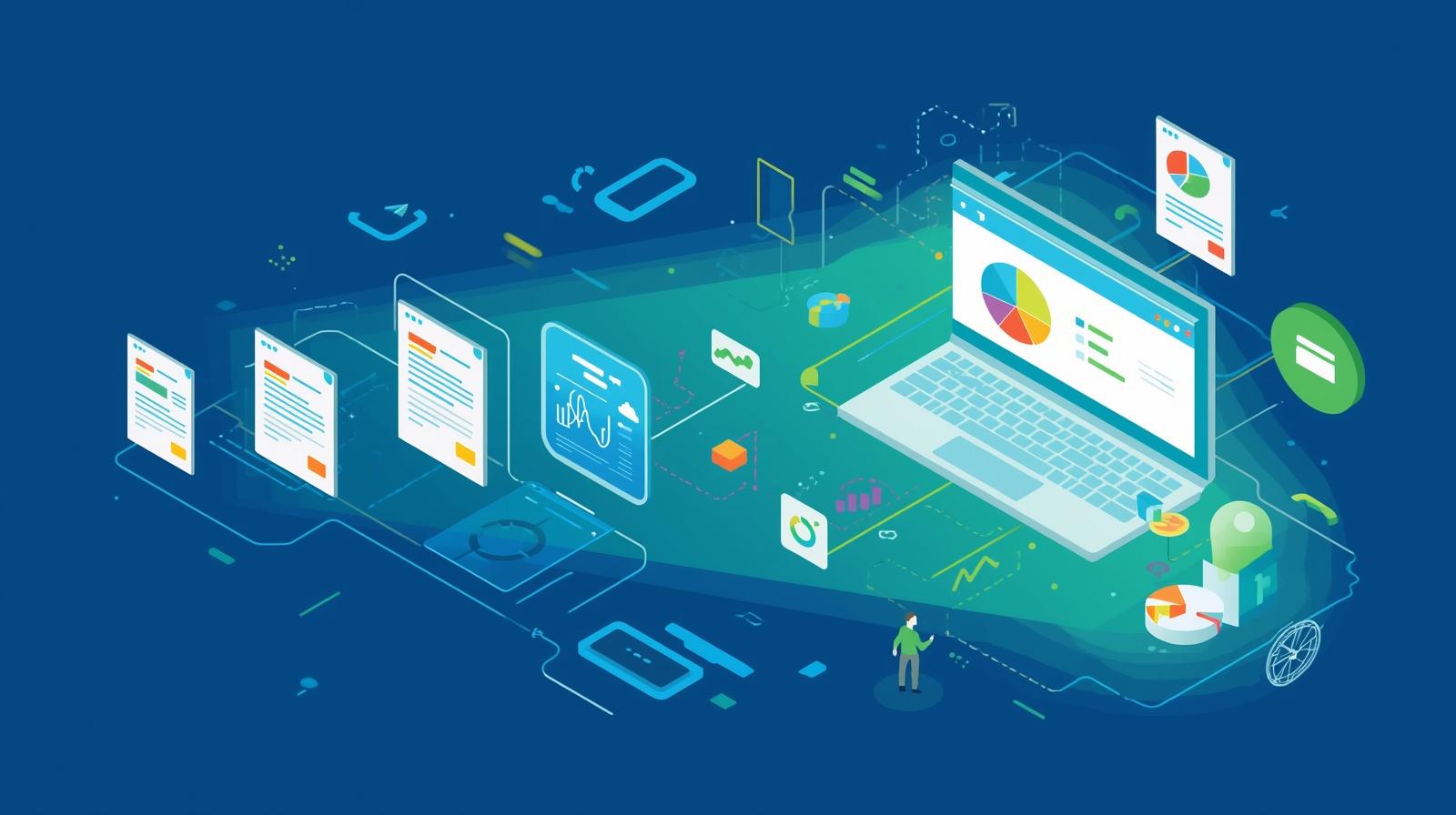
Nonprofit leaders have always understood that data matters. The challenge has never been a lack of data itself, but rather the time it takes to collect, clean, and interpret it. By the time most organizations produce a comprehensive report on fundraising performance, program outcomes, or donor retention, the window for meaningful action has already narrowed. A donor showing signs of disengagement in January should not have to wait until the annual review in June for someone to notice. A program that is consistently under-enrolled deserves attention in its second month, not at the end of the fiscal year.
The shift from reactive to proactive analytics is one of the defining nonprofit technology trends of 2026. More than 80% of nonprofits now use some form of AI in their operations, yet only 10 to 24% have established formal governance around how that AI is deployed. This gap between adoption and strategy creates both risk and opportunity. Organizations that invest in real-time analytics infrastructure, paired with clear governance frameworks, are positioning themselves to make faster, better decisions across every aspect of their work.
AI-powered analytics platforms are not simply faster versions of traditional reporting tools. They fundamentally change the relationship between data and decision-making. Instead of describing what already happened, these systems predict what is likely to happen next and recommend specific actions to improve outcomes. Predictive models can forecast fundraising results weeks before a campaign ends, identify donors at risk of lapsing before they stop giving, and flag programmatic inefficiencies before they become structural problems. The result is a shift from organizations that respond to events toward organizations that anticipate and shape them.
This article explores what real-time AI analytics looks like in practice for nonprofits, which operational areas benefit most from predictive intelligence, and how to build a phased implementation plan that matches your organization's readiness. Whether you are just beginning to explore AI tools for your nonprofit or looking to upgrade from basic dashboards to predictive systems, the path from reactive to proactive strategy is more accessible than ever.
The organizations that thrive in the coming years will not be those with the most data. They will be those that can act on their data fastest, with the greatest precision, and with the clearest connection between insight and impact.
Why Static Reports Are Holding Nonprofits Back
The traditional reporting cycle at most nonprofits follows a predictable pattern: staff spend weeks compiling data from disconnected systems, leadership reviews the results in a board meeting or planning session, and decisions are made based on information that is already weeks or months old. This cycle worked well enough when the pace of change was slow and the stakes of delayed decisions were manageable. In 2026, neither of those conditions holds true.
Quarterly reports, the gold standard for many nonprofit boards, introduce a structural delay into organizational decision-making. Consider a scenario where donor retention begins declining in the first week of a quarter. Under a quarterly reporting model, that decline may not surface until the board reviews data at the end of the period, by which point three months of potential donor re-engagement have been lost. Multiply that delay across fundraising, programs, volunteer coordination, and communications, and the cumulative cost of late information becomes staggering.
Static reports also create blind spots between reporting periods. Critical signals, such as a sudden spike in website traffic from a media mention, an unexpected drop in event registrations, or a shift in donor giving patterns, happen continuously. When organizations only check their data at fixed intervals, these signals go undetected. The opportunity to capitalize on positive momentum or address emerging problems evaporates before anyone realizes it existed.
There is also the human cost of manual reporting. Development teams that spend 15 to 20 hours per week pulling data from spreadsheets and formatting reports are not spending that time building donor relationships. Program staff who manually tally outcomes for monthly reports are not delivering services. The labor-intensive nature of traditional reporting consumes the very resources that nonprofits can least afford to waste. Real-time analytics does not eliminate the need for human judgment, but it does eliminate the need for humans to serve as data couriers between systems that should be talking to each other automatically.
Perhaps most importantly, static reports encourage backward-looking thinking. When the primary analytical question is "what happened last quarter," organizations naturally orient their planning around past performance rather than future possibilities. AI-powered real-time analytics reframes the question to "what is happening now, what is likely to happen next, and what should we do about it." That shift in perspective, from retrospective to prospective, is the foundation of proactive strategy.
What Real-Time AI Analytics Looks Like in Practice
Real-time AI analytics for nonprofits goes well beyond refreshing a dashboard more frequently. These systems combine three capabilities that traditional reporting tools lack: automated data integration across platforms, pattern recognition that surfaces insights humans would miss, and predictive modeling that forecasts outcomes before they materialize. Together, these capabilities create an intelligence layer that sits on top of your existing technology stack and transforms raw data into actionable guidance. Organizations already exploring real-time dashboards will find that adding predictive AI takes their analytical capabilities to an entirely different level.
In practice, a real-time AI analytics platform connects to your CRM, financial software, email marketing tools, website analytics, and program management systems through APIs or data connectors. Once connected, the platform continuously ingests data from these sources, normalizes it into a unified format, and applies machine learning models to identify trends, anomalies, and predictive signals. The result is not just a prettier version of the same old report. It is a fundamentally different way of understanding your organization's performance.
Live Dashboards
Continuously updated views of organizational health
- KPIs refresh automatically as source data changes
- Role-based views for board, leadership, and staff
- Cross-platform data unified in a single interface
Automated Alerts
Proactive notifications when metrics move outside expected ranges
- Anomaly detection flags unusual patterns instantly
- Threshold-based triggers for budget, enrollment, or giving
- Alerts delivered via email, Slack, or SMS to the right people
Predictive Signals
AI models that forecast outcomes and recommend actions
- Fundraising forecasts based on historical and current data
- Donor lapse risk scores updated continuously
- Next-best-action recommendations for engagement
The distinction between descriptive, diagnostic, and predictive analytics matters here. Traditional nonprofit reporting is almost entirely descriptive: it tells you what happened. Some organizations have advanced to diagnostic analytics, which explains why something happened. Real-time AI analytics adds the predictive and prescriptive layers, telling you what will likely happen and what you should do about it. Each layer builds on the ones beneath it, which is why organizations that invest in data quality foundations first see the strongest results from predictive tools.
Five Areas Where Real-Time Analytics Transforms Nonprofit Operations
While real-time analytics can improve nearly every function in a nonprofit, five operational areas see the most dramatic impact from the transition to AI-powered, continuous intelligence. Each area represents a domain where the difference between acting on current data versus outdated data has direct, measurable consequences for mission delivery.
1. Fundraising and Donor Intelligence
Predict giving behavior and optimize campaigns in real time
Predictive analytics is transforming fundraising from a calendar-driven activity into a continuously optimized process. AI models analyze historical giving patterns, engagement signals, and external factors to forecast fundraising outcomes weeks before campaigns end. Donor intent prediction identifies which supporters are most likely to give, upgrade, or lapse, allowing development teams to prioritize their outreach with surgical precision. Sentiment analysis provides real-time insight into how donors respond to campaigns, enabling mid-course corrections that would be impossible with traditional post-campaign analysis.
- Predict donor lapse risk and trigger personalized re-engagement before donors disengage
- Optimize giving pages in real time based on conversion data and donor behavior
- Forecast campaign totals and adjust strategy while there is still time to act
- Deliver personalized ask amounts and messaging at scale across donor segments
2. Program Performance and Impact Measurement
Monitor outcomes continuously and adapt programs based on live data
Program staff who wait until the end of a grant period to assess outcomes are flying blind for the duration of the program. Real-time analytics gives program directors visibility into enrollment trends, service delivery rates, and outcome indicators as they unfold. When a program begins underperforming its targets, the alert comes in weeks rather than months, giving leaders time to investigate causes and make adjustments. AI models can also identify which program components are most strongly associated with positive outcomes, helping organizations allocate resources to what works.
- Track client progress and program milestones with daily or weekly updates
- Identify underperforming programs early enough to course-correct
- Generate funder-ready outcome reports automatically from live data
3. Financial Health and Cash Flow Management
Move from historical accounting to forward-looking financial intelligence
For many nonprofits, the first sign of a cash flow problem comes when there is not enough money to make payroll. Real-time financial analytics replaces that reactive scenario with predictive cash flow modeling that projects runway weeks and months into the future. AI connects revenue data from fundraising platforms with expense data from accounting systems to generate continuously updated financial forecasts. When projected revenue falls short of planned expenses, the system alerts leadership while there is still time to adjust spending, accelerate fundraising, or draw on reserves.
- Predictive cash flow models that update with every transaction
- Budget variance alerts that trigger before overruns become critical
- Grant spending pacing to ensure compliance with funder timelines
4. Communications and Campaign Optimization
Respond to audience behavior as it happens, not after the campaign ends
Traditional campaign analysis happens after the campaign is over, which means every insight arrives too late to improve the campaign it came from. Real-time analytics changes that equation entirely. AI monitors email open rates, social media engagement, website traffic, and donation page conversions as they happen, enabling communications teams to adjust messaging, targeting, and timing while campaigns are still active. Sentiment analysis tools parse social media mentions and donor communications to gauge how audiences are responding, providing a qualitative layer that pure metrics alone cannot capture.
- A/B test results analyzed and applied automatically during campaigns
- Audience sentiment tracked across social channels and email responses
- Personalized content delivery based on individual engagement history
5. Volunteer Management and Workforce Planning
Predict staffing needs and optimize volunteer deployment proactively
Volunteer-dependent organizations know the frustration of discovering a staffing gap the day of an event. Real-time analytics applies predictive modeling to volunteer management, forecasting attendance based on historical patterns, weather, competing events, and individual engagement trends. AI can identify volunteers at risk of becoming inactive and recommend targeted re-engagement, much like donor retention models. For organizations with paid staff, workforce analytics can predict seasonal demand patterns and recommend staffing levels that balance service quality with budget constraints.
- Predict volunteer no-show rates and recruit backup coverage proactively
- Match volunteer skills and preferences to open opportunities automatically
- Forecast seasonal demand to plan recruitment campaigns in advance
Building Your Real-Time Analytics Stack
A real-time analytics stack does not require replacing your existing technology. In most cases, the goal is to add an integration and intelligence layer that connects the systems you already use. The specific tools will vary by organization size and budget, but the architecture follows a consistent pattern: data sources feed into an integration layer, which normalizes the data and passes it to an analytics engine, which powers dashboards and alerts that reach the right people at the right time. Understanding how to leverage AI-powered data visualization is a key part of making this stack work for your team.
Data Integration Layer
Connect your existing systems into a unified data flow
The integration layer is the foundation of your analytics stack. Tools like Zapier, Make, or purpose-built nonprofit data platforms connect your CRM, accounting software, email marketing tools, and program databases through automated data pipelines. The key is choosing connectors that support your specific systems and can handle the volume and frequency of data transfer your organization requires.
- API-based connectors for major nonprofit platforms (Salesforce, Bloomerang, Blackbaud)
- Data normalization to reconcile different formats across systems
- Scheduled and event-triggered data syncs for continuous freshness
Analytics and Visualization
Transform integrated data into insights your team can act on
Once data flows into a centralized location, analytics tools apply AI models and visualization techniques to surface insights. Platforms range from general-purpose tools like Microsoft Power BI and Google Looker Studio to nonprofit-specific solutions that come pre-built with sector-relevant metrics and benchmarks. The best tools for your organization will depend on your team's technical capacity and the complexity of analysis you need.
- Pre-built nonprofit dashboard templates for common KPIs
- Embedded AI models for prediction and anomaly detection
- Natural language query interfaces that let non-technical staff explore data
The most common mistake organizations make when building their analytics stack is starting with the visualization layer rather than the data integration layer. A beautiful dashboard connected to incomplete or inconsistent data will produce misleading insights. Start by mapping your data sources, identifying gaps and quality issues, and building reliable pipelines before investing in advanced visualization or predictive tools. Organizations that take the time to build a strong data culture first will find that the technology becomes far more effective when people trust and understand the data flowing through it.
From Reactive to Proactive: The Decision-Making Shift
Technology alone does not make an organization proactive. The shift from reactive to proactive strategy requires changes in how leaders consume information, how teams are structured to respond to insights, and how the organization defines success. Real-time analytics provides the raw material for proactive decision-making, but the organizational culture must be ready to use it.
In a reactive organization, the typical decision-making flow looks like this: a problem occurs, someone eventually notices it in a report, leadership discusses it at the next meeting, and a response is planned and executed. The lag between event and response can be weeks or months. In a proactive organization powered by real-time analytics, the flow is fundamentally different: the AI system detects a pattern that suggests a problem is developing, an alert notifies the relevant team, the team reviews the prediction and supporting data, and a response is initiated before the problem fully materializes.
This shift changes the role of leadership meetings. Instead of spending board and team meetings reviewing what happened, leaders can focus on evaluating predictions and making forward-looking decisions. Board meetings become strategy sessions rather than reporting sessions. Department meetings shift from status updates to collaborative problem-solving. The time saved on reporting is reinvested in the analytical thinking and creative strategy that humans do better than AI.
Proactive optimization also means that predictive systems can identify emerging risks before they escalate into crises. A predictive model might detect that a major donor's engagement pattern has shifted in ways that historically precede a reduction in giving. Rather than discovering the decline after it happens, the development team receives an early warning and can proactively strengthen the relationship. The same principle applies across the organization: declining volunteer engagement, rising program costs, shifting community needs. When you see the signal early enough, you have the luxury of thoughtful response rather than crisis management.
Organizations that are developing their strategic plans around AI capabilities should consider how real-time analytics fits into their broader decision-making frameworks. The technology investment is only part of the equation. Equally important is defining who receives which alerts, how quickly they are expected to respond, and what escalation pathways exist when predictions indicate significant risk or opportunity.
Data Governance and Quality Requirements
The power of real-time analytics is directly proportional to the quality of the data flowing through it. Predictive models trained on incomplete, inconsistent, or inaccurate data will produce unreliable predictions, and unreliable predictions can be worse than no predictions at all. Before investing in advanced analytics tools, organizations need to honestly assess their data quality and governance readiness.
The statistic that more than 80% of nonprofits use some form of AI while only 10 to 24% have formal governance frameworks reveals a significant gap. Real-time analytics amplifies both the benefits of good data practices and the consequences of poor ones. When a system updates continuously, a data entry error propagates instantly across every dashboard and predictive model rather than sitting harmlessly in a spreadsheet until someone catches it months later. This makes governance not just a best practice but a prerequisite for trustworthy real-time analytics.
Data Quality Foundations
The prerequisites for trustworthy real-time analytics
- Standardized data entry protocols across all teams and systems
- Regular data audits to identify and correct inconsistencies
- Deduplication processes for donor and constituent records
- Clear data ownership assigned to specific roles or teams
Governance Framework Elements
Policies that ensure responsible use of AI-powered analytics
- Privacy policies aligned with donor expectations and regulations
- Access controls defining who can view and modify which data
- Transparency policies on how AI predictions are used in decisions
- Bias monitoring to ensure predictive models serve all constituents equitably
Privacy considerations deserve particular attention in the context of real-time analytics. When data from multiple systems is integrated into a unified platform, the resulting profile of individual donors, volunteers, and clients can be remarkably detailed. Organizations must be intentional about what data they collect, how long they retain it, who can access it, and how they communicate their data practices to stakeholders. The fact that you can track every donor interaction in real time does not mean you should make all of that data visible to every staff member. Role-based access controls and clear policies about data use are essential safeguards.
Organizations that have not yet established formal AI governance should prioritize this alongside their analytics investments. A strong governance framework does not slow down innovation. It channels innovation in directions that are consistent with organizational values and stakeholder trust. Building data quality practices and governance frameworks simultaneously with analytics capabilities ensures that the insights you generate are both accurate and ethically sound.
Getting Started: A Phased Approach
The transition from static reporting to real-time AI analytics does not need to happen overnight. In fact, attempting to implement everything at once is the most common reason these initiatives fail. A phased approach allows organizations to build capability incrementally, demonstrate value to stakeholders at each stage, and learn from early implementation before scaling. The crawl-walk-run framework provides a practical roadmap that matches implementation pace to organizational readiness.
Phase 1: Crawl (Months 1 to 3)
Establish data foundations and build your first real-time dashboard
Start with a single, high-impact use case. For most nonprofits, fundraising performance is the natural starting point because the data is relatively clean, the stakeholders are motivated, and the impact of faster decision-making is immediately visible. Connect your CRM to a visualization tool, build a live dashboard showing key fundraising metrics, and establish a weekly rhythm of reviewing and acting on the data.
- Audit your current data sources and identify quality gaps
- Select one operational area for your first real-time dashboard
- Establish data entry standards and train staff on consistent practices
- Define the five to ten KPIs that matter most for your pilot area
Phase 2: Walk (Months 4 to 8)
Expand data integration and introduce automated alerts
With your first dashboard delivering value, expand to additional data sources and operational areas. Connect financial systems, program databases, and communications platforms to your analytics infrastructure. Introduce automated alerts that notify team members when metrics move outside expected ranges. Begin exploring basic predictive features, such as trend projections and anomaly detection, that come built into many analytics platforms.
- Connect two to three additional data sources to your analytics platform
- Configure threshold-based alerts for critical metrics
- Create role-specific dashboard views for board, leadership, and staff
- Draft initial data governance policies covering access, privacy, and quality
Phase 3: Run (Months 9 to 12 and Beyond)
Deploy predictive models and embed analytics into decision-making workflows
In the final phase, you move from monitoring current performance to predicting future outcomes and prescribing actions. Deploy predictive models for donor retention, fundraising forecasting, and program outcomes. Integrate analytics directly into decision-making workflows so that insights reach the right people at the right time without requiring them to log into a dashboard. This is also the stage where AI-driven operations analytics begins replacing traditional dashboards, offering not just what the data shows but what the organization should do about it.
- Deploy predictive models for donor behavior, revenue, and program outcomes
- Embed next-best-action recommendations into staff workflows
- Formalize governance frameworks with regular review cycles
- Measure ROI of analytics investment and refine strategy based on results
Each phase should include clear success criteria that determine when the organization is ready to advance. Rushing to Phase 3 before the data foundations of Phase 1 are solid will produce predictive models built on unreliable data, which undermines trust in the entire system. Patience in the early phases pays compound dividends later. The organizations that see the greatest returns from real-time analytics are those that invested the time to get their data right before asking AI to make predictions from it.
Conclusion
The shift from reactive to proactive nonprofit strategy is not a distant aspiration. It is happening now, driven by AI-powered analytics tools that are increasingly accessible to organizations of every size. The nonprofits that will thrive in the years ahead are those that can close the gap between when something happens and when the organization responds to it. Real-time analytics, paired with predictive AI, shrinks that gap from months to days or even hours.
The transition does require investment, both in technology and in organizational change. Data quality must be addressed. Governance frameworks must be established. Staff must be trained to work with real-time data rather than static reports. But these investments compound over time. Each improvement in data quality makes predictions more accurate. Each governance policy builds stakeholder trust. Each staff member who learns to act on real-time insights makes the organization faster and more effective.
Start with a single use case that matters to your organization. Build the data foundations that make real-time analytics trustworthy. Expand incrementally as you demonstrate value and build capacity. The path from reactive to proactive is not a leap. It is a series of deliberate steps, each one making your organization better equipped to fulfill its mission in a world that moves faster every year. The question is not whether your nonprofit will adopt real-time analytics, but whether you will be among the early adopters who gain a strategic advantage or among those who follow later, playing catch-up with organizations that moved sooner.
Ready to Move from Reactive to Proactive?
Your nonprofit's data already holds the insights you need to make better, faster decisions. Let us help you build the real-time analytics capability that turns raw data into strategic advantage.