
AMA Safeguards and the Nonprofit Counselor: New Standards for Human-in-the-Loop Mental Health AI
In April 2026, the American Medical Association sent formal letters to three congressional committees calling for binding safeguards on AI mental health chatbots. The recommendations reshape what nonprofit counseling programs, helplines, and behavioral health organizations must build into any AI tool that touches a vulnerable user. This guide translates the new standards into the practical work of human-in-the-loop oversight, supervision, and policy.
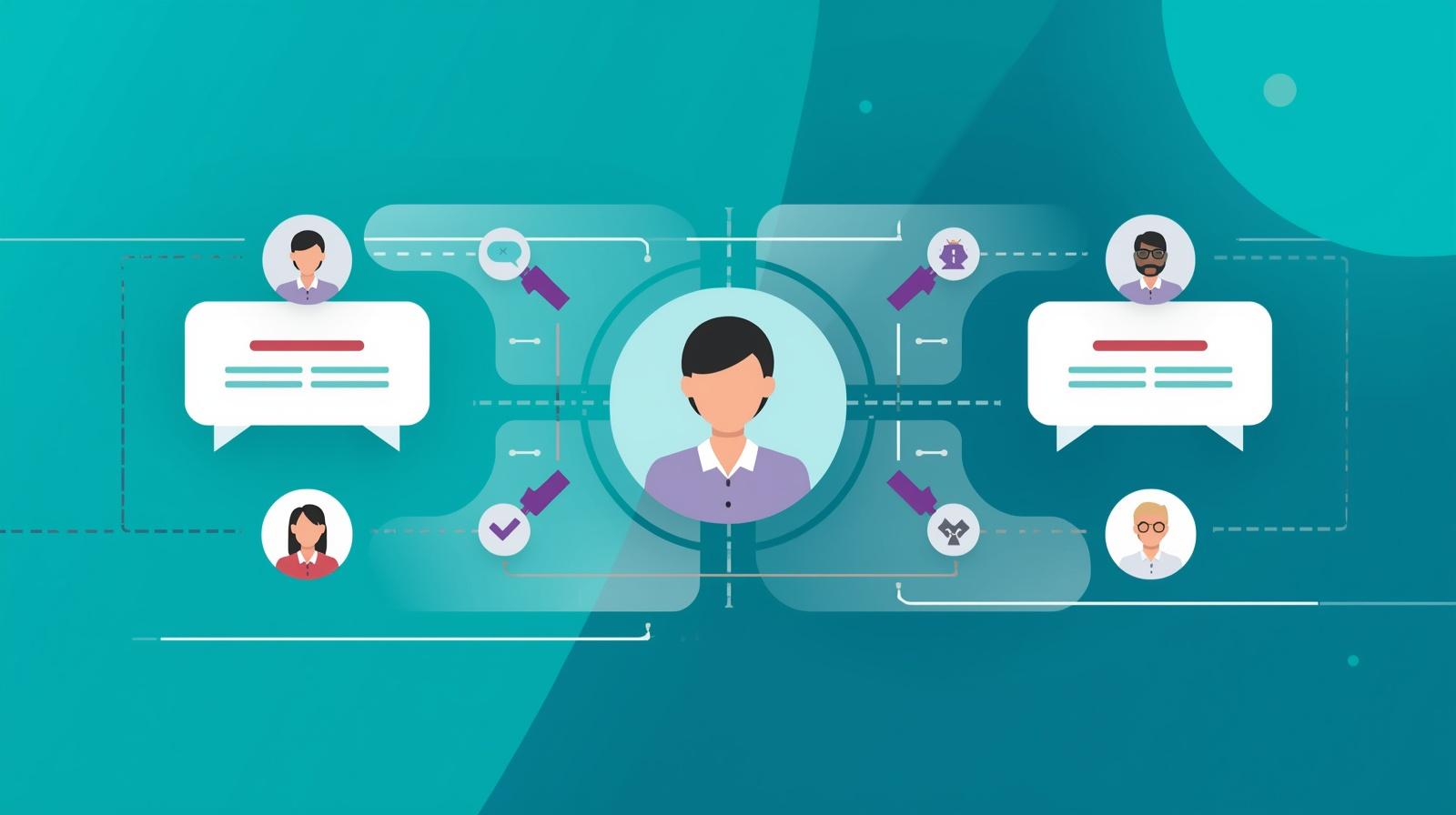
The American Medical Association's April 2026 push for federal safeguards on AI mental health chatbots arrived after a year of mounting evidence that generic large language models were being used as substitutes for human mental health care, often with serious consequences. The lawsuits filed against major AI providers in late 2025 and early 2026 made the legal stakes obvious. The AMA's letters made the clinical stakes equally clear, framing the issue as one where the medical profession could no longer leave the question of safeguards to platforms and regulators acting alone.
For nonprofit counselors, helpline operators, peer support networks, and community behavioral health organizations, the AMA's recommendations are not abstract. They establish the de facto floor that funders, accreditors, insurers, and state regulators will increasingly use to judge any AI tool deployed in a mental health context. Nonprofits that anticipated the shift and built human-in-the-loop oversight into their AI work from the start are well positioned. Nonprofits that bolted a chatbot onto an existing service without rethinking supervision are now exposed.
This article walks through what the AMA actually called for, why human-in-the-loop oversight is the operational center of the new standards, what supervision looks like in a nonprofit setting that does not have a staff psychiatrist on call, and what concrete changes nonprofit leaders should make in 2026 to align with the emerging expectations. The work is harder than turning off the chatbot, but it is also more useful than ignoring AI altogether. Many constituents will use AI tools for mental health support whether the nonprofit offers them or not, and an organization that takes ownership of the safeguards is in a far better position than one that does not.
A note on scope. The AMA's recommendations focus on chatbots that interact with patients in clinical or quasi-clinical contexts. The principles apply broadly to any nonprofit AI deployment that touches mental health, including peer chat platforms, AI-augmented warmlines, intake triage bots, content moderation in support communities, and educational chat assistants on behavioral health topics. Each of these settings benefits from the same human-in-the-loop discipline, even where formal medical regulation does not yet apply.
What the AMA Actually Called For
The AMA's April 2026 letters to the House Energy and Commerce, Senate HELP, and House Ways and Means committees laid out a coherent set of safeguards. The recommendations are most usefully grouped into five categories. Each category names a problem the AMA observed in current AI mental health tools and the protection it believes Congress should require.
1. Disclosure
No impersonation of human clinicians
Users should always know when they are interacting with an AI rather than a human. Chatbots should be prohibited from presenting themselves as licensed clinicians, therapists, counselors, or social workers. Disclosure must be clear and meaningful, not buried in a terms-of-service document.
2. Scope of practice
No diagnosis or treatment without oversight
AI should not be permitted to diagnose or treat mental health conditions absent appropriate regulatory oversight. The AMA emphasized that diagnosis is a clinical act, and any system performing it should be regulated like the clinical tool it is, including the credentialing and oversight that comes with that designation.
3. Data protection
Strict consent and retention limits
The AMA called for limits on data collection and retention, clear user consent for any data use, and safeguards against unauthorized access or sharing of sensitive information. Mental health conversations are among the most sensitive categories of personal data, and the recommendation is for treatment that exceeds general privacy norms.
4. Human-in-the-loop oversight
AI complements clinical care, never replaces it
The AMA emphasized that meaningful safeguards are essential to ensure AI tools complement, not replace, clinical care. The framework calls for ongoing human supervision of AI used in mental health contexts, with clinical staff in a position to review, intervene, and override AI behavior at any point in the user journey.
5. Standards for LLM-counselors
Ethical, educational, and legal frameworks
The AMA called for future work to create ethical, educational, and legal standards for LLM-counselors that reflect the rigor required for human-facilitated psychotherapy. This is the most ambitious recommendation, signaling that AI counselors should not be evaluated against a lower bar simply because they are software.
Why these now
A response to documented harm
The AMA's letters explicitly cited incidents in which AI chatbots provided clinically inappropriate responses to suicidal users, reinforced harmful behavior, and presented themselves in ways users interpreted as clinical authority. The safeguards are designed to prevent the recurrence of those specific failure modes.
For background on the lawsuit that catalyzed much of the regulatory attention, see our piece on what the Gavalas v. Google lawsuit means for nonprofits deploying AI mental health chatbots. For the broader state-by-state regulatory picture, see the patchwork of state AI mental health laws nonprofits must track.
Why Human-in-the-Loop Is the Operational Center
Of the five categories the AMA outlined, four are essentially about boundaries. Disclosure tells users what the system is. Scope of practice tells the system what it cannot do. Data protection limits what the system can keep. Standards for LLM-counselors set a quality bar. These boundaries matter, but they are static. They do not respond to what is actually happening in a given conversation.
Human-in-the-loop oversight is the operational mechanism that makes the other four categories enforceable. Without a person watching, listening, sampling, or being summoned, even a well-designed chatbot will eventually drift outside its boundaries. Generative models are probabilistic, and the same prompt that produces a safe answer 999 times will occasionally produce an unsafe one. The presence of a human reviewer is what catches those moments before they cause harm.
For nonprofits, this is the recommendation that demands the most operational change. Disclosure language can be added in a sprint. Data retention can be reconfigured by an administrator. But human-in-the-loop oversight requires staffing models, supervision rhythms, escalation paths, training programs, and incident review processes. It changes how the AI tool is operated, not just how it is configured.
The four roles a human plays in the loop
- Reviewer. Someone reads a sample of AI conversations, evaluates them against quality and safety criteria, and feeds findings back into prompt design, training, and policy. This role can be retrospective and asynchronous.
- Supervisor. Someone is on-call to receive escalations from the AI system or from users, with authority to intervene immediately. Supervisor coverage must match the hours the AI tool operates, which often means 24/7 if the chatbot is publicly accessible.
- Co-pilot. Someone uses the AI as an assistant to their own work, treating outputs as drafts to be verified rather than as final responses to constituents. This role is common in case management, intake notes, and resource recommendations.
- Auditor. Someone outside the day-to-day operation periodically reviews the AI's behavior at a system level, looks for patterns in outputs, examines safety incidents, and reports to leadership and the board. This role enforces the fact that AI behavior changes over time and requires ongoing scrutiny.
The most common mistake nonprofits make is assuming that one person, often an overstretched program director, can fill all four roles. That assumption breaks down quickly under any volume of AI activity. A more realistic model is to assign each role explicitly, even if the same person ends up holding two of them, and to make sure the workload is sustainable. The role of auditor in particular should be formally assigned and not absorbed into general management duties.
What Supervision Looks Like in a Nonprofit Setting
Nonprofits rarely have the staffing patterns of academic medical centers. A community mental health nonprofit might have one clinical director overseeing peer counselors, volunteer warmline operators, and licensed clinicians, often spread across geography and shift schedules. AI supervision must be designed for that reality, not for an idealized clinic.
A workable supervision model for small and mid-size nonprofits
The model below assumes a nonprofit of 5 to 50 staff with at least one credentialed clinical supervisor and a defined service that uses AI in some capacity. Smaller organizations can adapt by combining roles. Larger organizations should split roles further.
Tiered supervision structure
- Tier 1: Front-line monitor. A trained staff member or volunteer who handles real-time escalations from the AI, can take over a conversation, and follows a documented script for crisis triage. Tier 1 does not need to be clinical, but they need to know exactly when to escalate.
- Tier 2: Clinical on-call. A licensed clinician available within an agreed response window, typically 15 minutes for active crises and 4 hours for non-urgent clinical questions. Tier 2 has authority to override AI behavior, instruct the system to handle a category of cases differently, and document the clinical reasoning.
- Tier 3: Quality and audit. A weekly or biweekly review of a sample of AI conversations by clinical leadership, looking for safety issues, compliance gaps, and patterns of drift. Tier 3 is also responsible for signing off on prompt changes that affect clinical behavior.
- Tier 4: Governance. Quarterly reporting to the executive director and board on AI safety incidents, escalation volumes, and policy updates. Tier 4 turns AI oversight into a board-visible commitment rather than an operational footnote.
When the chatbot must hand off to a human, immediately
The single most important supervision policy is the list of triggers that force an immediate human handoff. The AMA's emphasis on safeguarding patients from harm makes these handoffs non-negotiable. A defensible nonprofit policy includes at minimum the following triggers, and most organizations will add to the list as they gain experience.
- Any expression of suicidal ideation, intent, or plan, including indirect language.
- Disclosure of self-harm, abuse, domestic violence, or harm to others.
- Indication of a minor in distress or a mandated reporting situation.
- Requests for clinical advice that exceed the AI's defined scope, such as medication questions or diagnosis requests.
- User explicitly asks to speak with a person.
- The system detects emotional escalation, repeated frustration, or distress patterns the AI is not equipped to address.
The handoff itself is a design problem. A handoff that requires the user to wait 20 minutes or to repeat their entire situation defeats the purpose. A well-designed handoff is fast, warm, and carries enough context for the human to pick up where the AI left off. For more on the broader question of when chatbots are inappropriate at all, see why your crisis hotline should never use a generic chatbot and how to detect self-harm signals in AI conversations.
Disclosure Done Right
The AMA's call for clear disclosure that users are interacting with AI rather than a human is technically straightforward but often poorly executed. Most nonprofit AI tools today either over-disclose, burying the user in legal language they will not read, or under-disclose, putting an "AI assistant" label in small text and assuming users will notice. Neither meets the spirit of the standard.
What meaningful disclosure looks like
- Stated up front, in plain language. The first message in any conversation should clearly identify the AI: "I'm an AI assistant, not a human counselor. I can help with [scope] and I'm not able to provide [out-of-scope]."
- Reinforced periodically. In long sessions, the AI should remind the user it is not a human, especially when topics shift toward emotional or clinical territory.
- Visible in the interface. The chat window itself should make AI status visually obvious, not require the user to remember the disclosure from earlier.
- Refused impersonation. If a user asks "are you a real person?" the AI must answer honestly. Hardcoded refusal logic for impersonation requests is essential and should be tested as part of pre-launch red teaming.
- Path to a human always offered. Disclosure should always come paired with the option to talk to a person, including the contact details and hours of human support.
The legal stakes for getting disclosure wrong continue to rise. Several states already require explicit AI disclosure in mental health contexts, and the AMA's recommendations will likely accelerate federal action. Nonprofits should treat disclosure design as a clinical safety issue, not a marketing or compliance afterthought.
Data Protection That Matches the Sensitivity
Mental health conversations are among the most sensitive categories of personal data. The AMA's call for limits on collection, retention, consent, and access protection means nonprofits cannot simply rely on generic privacy policies or vendor defaults. The data protection program for an AI mental health tool needs to be designed for the specific failure modes of generative AI.
Five data protection commitments worth making
- Minimum collection. The AI should not collect more information than it needs to serve the user. Avoid prompts that elicit identifying details, locations, or sensitive history unless they are necessary for the service.
- Defined retention. Set a retention period that fits the service, document it, and enforce it technically. A peer support chatbot probably does not need to retain conversations beyond 30 days. A clinical intake tool might have different requirements.
- No training on user data without explicit consent. Many AI vendors retain user data to improve their models. Nonprofits handling mental health conversations should require contractual prohibitions on training use and verify them.
- Consent that is genuine. Users should know what data is collected, who can see it, how long it is kept, and what their rights are to access or delete it. Consent screens should be readable in 30 seconds, not 30 minutes.
- Tight access controls. Only the staff and supervisors who need to see conversations for safety, supervision, or quality purposes should have access. Access should be logged and reviewed.
Vendor due diligence is part of this work. Many AI platforms have BAA-eligible deployments for healthcare contexts, but the default consumer tier of the same product almost never qualifies. Nonprofits should know which deployment they are using, what the data flows are, and whether the safeguards match the sensitivity of the conversations.
Building a Human-in-the-Loop Program in Six Steps
For nonprofits operating an AI mental health tool today, or planning to launch one, the path to alignment with the AMA's standards is concrete. The six steps below have been used successfully by behavioral health and crisis support nonprofits to bring their AI deployments into a defensible posture.
Step 1: Inventory current AI use
Identify every AI tool currently used in any mental health adjacent context, including chatbots, intake assistants, content moderation, peer matching, and even back-office tools that touch sensitive data. The inventory is the foundation. You cannot oversee what you cannot see.
Step 2: Define scope for each tool
Write down what each AI is allowed to do, what it must refuse, and what triggers escalation. The scope statement is the contract between the nonprofit and the AI, and it informs prompt design, system instructions, and supervision protocols.
Step 3: Assign supervision roles
Name the people who fill the four roles, reviewer, supervisor, co-pilot, and auditor. Document their hours of coverage, their authorities, and their reporting lines. Build the supervision schedule into the staffing model rather than treating it as overflow.
Step 4: Implement disclosure and handoff design
Update interfaces, opening messages, and conversation flows to meet the disclosure standard. Build the technical mechanisms for handoff to humans on every trigger in the policy. Test handoffs end to end before launch.
Step 5: Run pre-launch red team
Before any new mental health AI tool goes live, run a structured red team exercise that probes the system with the categories of input most likely to expose safety failures. See our piece on AI red teaming for nonprofits for a starting playbook.
Step 6: Establish ongoing oversight and reporting
Build the weekly quality reviews, the monthly incident reports, and the quarterly board updates. Treat AI oversight as a permanent operational responsibility, not a one-time launch task. The evidence trail you create is what protects the organization legally and operationally.
Common Mistakes to Avoid
The same patterns of failure recur across nonprofit AI deployments in mental health. Watching for them in advance is much cheaper than learning them through incidents.
Treating supervision as a vendor responsibility
Many nonprofits assume the AI vendor's safeguards are sufficient. They are not. The vendor cannot know your specific population, escalation paths, or clinical context. Supervision must be built and owned by the nonprofit itself.
Using AI to expand service hours without expanding clinical support
A common failure mode is launching a 24/7 AI chatbot without 24/7 human supervision. The result is that escalations during off hours go unanswered, and the chatbot ends up handling exactly the situations it was supposed to escalate.
Designing disclosure as a one-time legal screen
A user clicking "I understand" once does not satisfy the AMA's expectation of meaningful disclosure. Disclosure should be present in the conversation itself, reinforced as needed, and never abandoned mid-session.
Skipping the audit role
Many nonprofits do reasonable supervision in real time but never look at the AI's behavior in aggregate. AI models drift, prompts get edited, and patterns emerge that no individual conversation reveals. The audit role catches what supervision misses.
Conclusion
The AMA's April 2026 letters did not invent the conversation about AI safeguards in mental health, but they shifted the center of gravity. Nonprofits operating in or near behavioral health can no longer treat AI oversight as an aspirational goal. The sector now has a coherent set of expectations from one of the most respected medical authorities in the country, and those expectations will rapidly become the baseline that funders, accreditors, and regulators apply.
The good news is that the recommendations are achievable. Disclosure can be designed thoughtfully. Scope of practice can be defined and enforced. Data protection programs can be built to match sensitivity. And human-in-the-loop oversight, while operationally demanding, is exactly the kind of work nonprofits have always done well when given clear standards. The organizations that move first will spend less, learn faster, and build the credibility that protects them when an incident eventually occurs.
The harder truth is that some AI deployments should not exist in their current form. A peer support chatbot operating 24/7 without 24/7 human supervision, a generic LLM presented as a counselor, a crisis line that hands users to a chatbot during overnight hours: these designs are increasingly indefensible. Nonprofits with such deployments should plan for honest restructuring, not incremental polish. The AMA standards are a useful prompt for that work, and the alternative is to be the next case study in why the standards were necessary.
Human-in-the-loop oversight is not a constraint on AI in mental health. It is what makes AI in mental health possible. Done well, the loop captures what AI does best, the patience and consistency and 24/7 availability, while protecting users from what AI does worst, the confident errors that nobody catches. That is the bargain the AMA is asking the field to make, and it is a bargain nonprofits should accept.
Build a Defensible Human-in-the-Loop Program
We help behavioral health, crisis support, and community service nonprofits design AI oversight programs that meet the new AMA standards while preserving the value AI delivers. Let's map your supervision model together.