
Animal Welfare AI: From Shelter Management to Wildlife Conservation
Artificial intelligence is transforming how animal welfare organizations operate, from optimizing shelter management and improving adoption rates to monitoring endangered species and protecting wildlife habitats. This comprehensive guide explores how AI technology is creating better outcomes for animals in need, enabling more efficient operations for resource-constrained organizations, and opening new possibilities for conservation efforts worldwide.
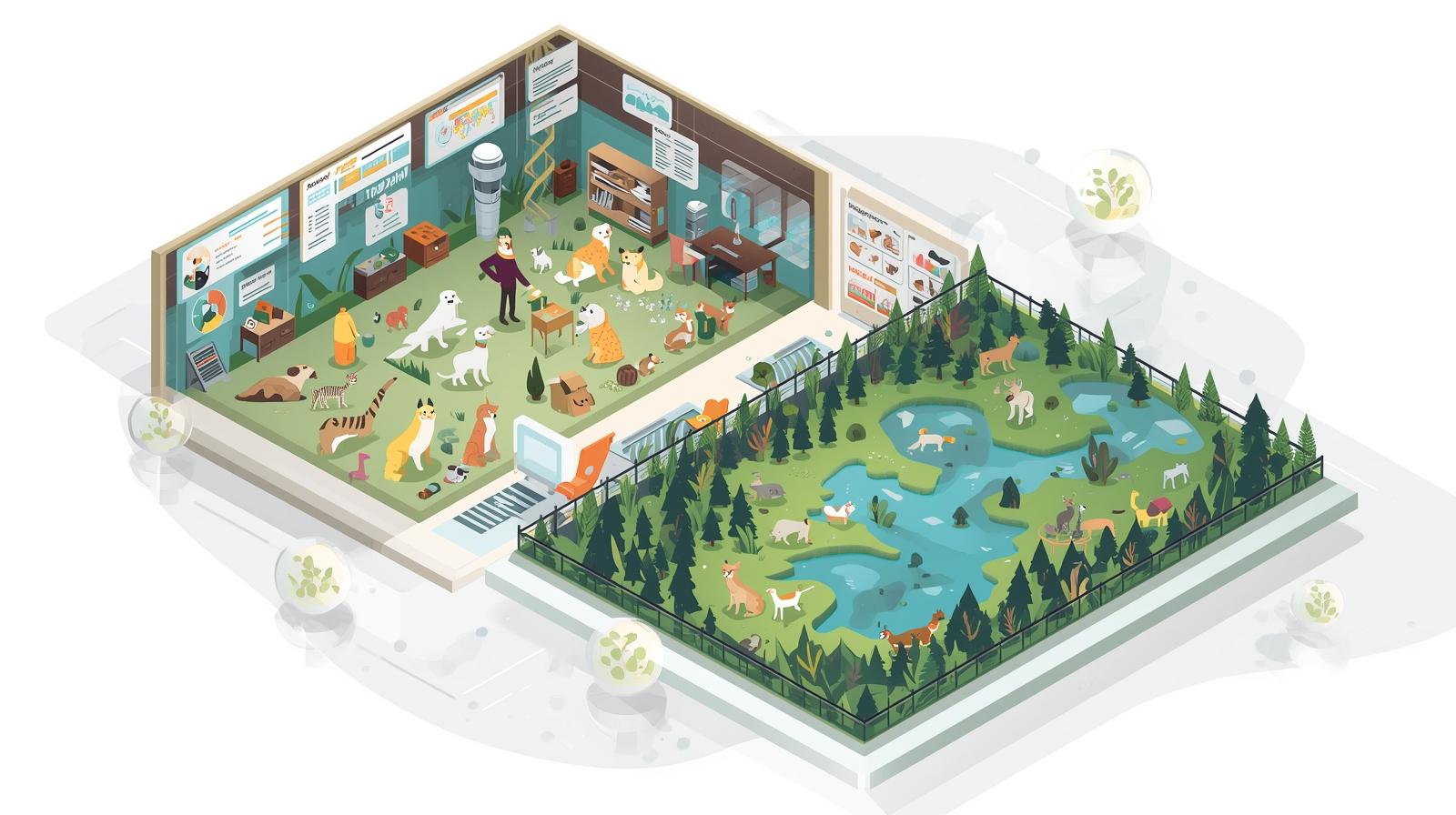
Animal welfare organizations face a unique set of challenges that make their missions particularly demanding. Shelters manage limited resources while caring for hundreds or thousands of animals annually, wildlife conservation groups monitor vast territories with small teams, and rescue organizations coordinate complex operations across multiple locations. Each day brings difficult decisions about resource allocation, animal placement, medical care priorities, and conservation strategies.
Artificial intelligence is emerging as a powerful tool to address these challenges, offering capabilities that were previously impossible or prohibitively expensive. AI systems can analyze animal behavior patterns to predict adoption success, identify individual animals in camera trap images to track wildlife populations, optimize shelter operations to reduce costs and improve care quality, and detect early signs of illness or distress that human observers might miss. These technologies don't replace the compassion and expertise of animal welfare professionals—they amplify it, enabling organizations to serve more animals more effectively with the resources they have.
The applications of AI in animal welfare span an impressive range. In shelters, machine learning algorithms improve intake processes, match animals with ideal adopters, and predict length of stay to optimize space management. For wildlife conservation, computer vision systems identify individual animals, track migration patterns, and detect poaching threats in real-time. Across all animal welfare work, AI assists with medical diagnosis, behavioral assessment, population management, and strategic planning.
This article explores how AI is transforming animal welfare work across multiple domains. You'll learn about practical applications currently being used by organizations around the world, understand the specific benefits AI brings to different types of animal welfare operations, discover implementation strategies for organizations at various stages of technological adoption, and gain insights into emerging AI capabilities that will shape the future of animal welfare work. Whether you run a small local shelter or a large international conservation organization, understanding how AI can support your mission is becoming essential to maximizing your impact.
Transforming Animal Shelter Operations with AI
Animal shelters operate in one of the most emotionally and operationally demanding nonprofit environments. They must make life-and-death decisions daily, manage unpredictable intake flows, optimize limited space and resources, and work to find every animal a home while maintaining high standards of care. AI is proving particularly valuable in this context by bringing data-driven insights to complex decisions, automating time-consuming administrative tasks, and identifying patterns that improve outcomes.
The power of AI in shelter management lies in its ability to process vast amounts of historical data to predict outcomes and optimize decisions. When a shelter has years of intake records, medical histories, behavioral assessments, and adoption outcomes, AI systems can identify patterns that would be invisible to human analysis. These patterns then inform better decisions about everything from which animals to feature in marketing campaigns to how to allocate medical resources for maximum impact.
Adoption Matching & Prediction
AI systems analyze animal characteristics, adopter preferences, and historical outcomes to improve matches
Machine learning models can predict which animals are most likely to be adopted quickly, which may need extra marketing support, and how long each animal is likely to stay in the shelter. More importantly, they can match animals with potential adopters based on compatibility factors that go far beyond simple preferences.
- Analyze adopter lifestyle, home environment, and experience level to match with compatible animals
- Predict length of stay for each animal to optimize intake decisions and space management
- Identify animals needing additional marketing or foster care to reduce shelter stay duration
- Reduce return rates by identifying potential compatibility issues before adoption
Behavioral Assessment & Monitoring
Computer vision and pattern recognition help evaluate animal behavior and wellbeing
AI-powered video analysis can monitor animal behavior continuously, identifying stress indicators, social compatibility, and behavioral changes that might signal health issues. This technology supplements staff observations with 24/7 monitoring that catches subtle changes over time.
- Detect early signs of stress, illness, or behavioral problems through continuous monitoring
- Assess social compatibility between animals to optimize group housing and play groups
- Track behavioral progress over time to measure enrichment program effectiveness
- Provide objective behavioral data to support adoption counseling and placement decisions
Medical Triage & Health Monitoring
AI assists with medical decision-making and early disease detection
AI systems can analyze medical images, predict disease risk based on intake characteristics, and help prioritize veterinary care when resources are limited. These tools support veterinary staff in making faster, more informed decisions about animal health.
- Analyze X-rays and medical images to assist with diagnosis and treatment planning
- Predict disease risk at intake to prioritize preventive care and isolation protocols
- Monitor vital signs and activity levels to detect health changes requiring intervention
- Optimize medication schedules and treatment protocols based on individual animal response
Operational Optimization
Predictive analytics improve resource allocation and operational efficiency
AI can forecast intake patterns, predict resource needs, and optimize staffing schedules based on historical data and external factors like weather, holidays, and local events. This enables shelters to operate more efficiently and prepare for demand fluctuations.
- Forecast intake volumes to optimize staffing, supplies, and space management
- Predict supply needs and automate reordering to prevent shortages without overstocking
- Optimize volunteer and staff schedules based on predicted workload and skill requirements
- Identify operational bottlenecks and suggest process improvements through data analysis
Practical Considerations for Shelter AI Implementation
Implementing AI in shelter operations requires careful planning and realistic expectations. The most successful implementations start small, focusing on a single high-impact use case rather than trying to transform all operations simultaneously. Many shelters begin with adoption prediction models because they have readily available historical data and the results directly impact a key metric—time to adoption.
Data quality is critical for AI success. Shelters need consistent, accurate records over a significant time period—typically at least one to two years of data—to train effective AI models. This often means investing in data cleanup and standardization before AI implementation begins. Organizations should audit their existing data collection practices, identify gaps or inconsistencies, and establish protocols for maintaining data quality going forward.
Staff adoption is as important as the technology itself. AI tools work best when they augment human expertise rather than replace it. Successful implementations involve staff from the beginning, clearly communicating how AI will support their work rather than threaten their roles. Training should emphasize that AI provides recommendations and insights, but humans make the final decisions based on their professional judgment and knowledge of individual animals.
Budget considerations vary widely depending on the approach. Some organizations build custom AI solutions with data science partners or academic institutions, while others use commercial platforms designed specifically for animal welfare. Cloud-based AI services can make sophisticated capabilities accessible at lower cost, though they require ongoing subscription fees. Organizations should evaluate build versus buy options based on their technical capacity, budget, and specific needs. For many smaller shelters, partnering with larger shelter networks or national organizations that have already invested in AI development provides the most cost-effective path to implementation.
AI-Powered Wildlife Conservation and Monitoring
Wildlife conservation faces challenges of scale that make traditional monitoring approaches increasingly inadequate. Conservation areas span thousands of square miles, endangered species populations are scattered and mobile, and illegal activities like poaching occur in remote locations. Human observers can only cover a tiny fraction of protected areas, and traditional monitoring methods are labor-intensive, expensive, and often disturb the very wildlife being studied.
AI is revolutionizing wildlife conservation by enabling monitoring at unprecedented scale and precision. Computer vision systems can process millions of camera trap images to identify, count, and track individual animals. Acoustic monitoring combined with AI can detect specific species by their calls across vast areas. Satellite imagery analysis powered by machine learning can identify habitat changes, track deforestation, and even detect large animals from space. These capabilities allow small conservation teams to monitor areas that would require hundreds of human observers using traditional methods.
The impact extends beyond monitoring to active protection. AI systems can detect anomalies that may indicate poaching activity, analyze animal movement patterns to predict human-wildlife conflict zones, and optimize patrol routes for maximum coverage with limited ranger resources. By processing data in real-time, these systems enable rapid response to threats that might otherwise go undetected until it's too late.
Automated Wildlife Identification and Tracking
Computer vision enables large-scale wildlife monitoring through automated image analysis
Camera traps generate millions of images annually in conservation projects, creating an overwhelming data processing challenge. AI-powered computer vision can automatically identify species, recognize individual animals by unique markings, and track population changes over time. What once required months of manual review can now be accomplished in hours or days, transforming the scale of monitoring possible with limited resources.
Modern AI systems can identify hundreds of species with high accuracy, distinguish between adults and juveniles, and even recognize individual animals within a species. This individual recognition is particularly powerful for endangered species, where knowing the exact number and location of individuals is critical for conservation planning. The technology works with various image types, from camera trap photos to drone footage to satellite imagery, providing flexibility in monitoring approaches.
- Process millions of camera trap images to identify species and count individuals automatically
- Recognize individual animals by unique markings or features for precise population tracking
- Track animal movement patterns and habitat use across large conservation areas
- Detect population trends and distribution changes to inform conservation strategies
- Filter out false triggers from camera traps to focus review time on actual wildlife images
Habitat Monitoring and Environmental Analysis
AI analyzes satellite imagery and environmental data to track habitat changes
Conservation success depends on protecting and restoring habitats, but monitoring habitat changes across large areas has traditionally been resource-intensive. AI systems can analyze satellite imagery to detect deforestation, track vegetation changes, identify water source locations, and monitor habitat fragmentation. This capability provides early warning of threats and helps prioritize conservation interventions.
The technology enables continuous monitoring at landscape scale, identifying changes that might not be apparent during periodic field surveys. AI can detect subtle indicators of habitat degradation before they become severe, process historical imagery to understand long-term trends, and predict future habitat changes based on current patterns. This information supports strategic planning for habitat protection and restoration efforts.
- Detect deforestation and illegal land clearing through automated satellite imagery analysis
- Monitor vegetation health and seasonal changes across conservation areas
- Track water source availability critical for wildlife survival during dry seasons
- Identify habitat corridors and connectivity zones essential for wildlife movement
- Predict areas vulnerable to habitat loss to prioritize protection efforts
Anti-Poaching and Threat Detection
AI systems identify potential poaching activity and optimize protection efforts
Poaching remains one of the greatest threats to many endangered species, but protected areas are often too vast for effective patrol with available ranger resources. AI-powered threat detection systems analyze various data sources—camera trap images, acoustic sensors, satellite data, and historical poaching patterns—to identify potential threats and optimize ranger deployment.
These systems can detect unusual patterns that may indicate poaching activity, such as human presence in restricted areas during unusual times, vehicle movements off designated roads, or the sound of gunshots or chainsaws. Predictive models analyze where and when poaching is most likely to occur based on historical patterns, environmental factors, and animal movement data, allowing rangers to be positioned where they're most needed.
- Detect human intrusion in protected areas through automated camera trap and sensor analysis
- Predict high-risk areas and times for poaching activity to optimize patrol routes
- Identify acoustic indicators of illegal activity like gunshots or chainsaw use
- Analyze patterns to understand poaching networks and trafficking routes
- Enable real-time alerts to rangers for rapid response to potential threats
Species Population Modeling and Prediction
Advanced analytics predict population trends and inform conservation strategies
Understanding population dynamics is essential for effective conservation, but wildlife populations are influenced by complex, interacting factors that make prediction challenging. AI systems can process monitoring data along with environmental variables, climate patterns, and human activity data to create sophisticated population models that predict future trends and evaluate conservation intervention scenarios.
These models help conservation organizations make better strategic decisions by simulating the likely outcomes of different approaches. Should resources focus on habitat protection or direct anti-poaching efforts? How will climate change affect species distribution? What population size is sustainable given current habitat conditions? AI-powered modeling provides evidence-based answers to guide decision-making.
- Model population dynamics incorporating environmental, climate, and human activity factors
- Predict future population trends under different conservation and climate scenarios
- Identify key factors driving population changes to target conservation efforts effectively
- Evaluate potential impact of conservation interventions before implementation
- Support evidence-based advocacy with rigorous population trend analysis
Implementation Considerations for Conservation Organizations
Wildlife conservation organizations face unique challenges when implementing AI that differ from those of animal shelters or other nonprofits. Many conservation sites operate in remote locations with limited connectivity, requiring AI solutions that can function with intermittent or no internet access. Edge computing—where AI processing happens on local devices rather than in the cloud—is often essential for real-time monitoring and threat detection in these environments.
The technology infrastructure required varies significantly based on the application. Camera trap image processing can be done in batches after data collection, requiring only periodic connectivity to upload images and download results. Real-time anti-poaching systems, however, need local processing capability and reliable communication networks to alert rangers immediately. Organizations should carefully evaluate their connectivity constraints and operational requirements when selecting AI solutions.
Data collection standardization is particularly important in conservation, where multiple organizations, researchers, and government agencies often work in the same areas or on the same species. Using AI systems that follow common data standards and can integrate with existing monitoring platforms ensures that data contributes to broader conservation knowledge rather than remaining siloed. Many organizations benefit from collaborating with academic institutions or conservation technology initiatives that can provide both technical expertise and connections to broader conservation data networks.
Training and capacity building require special attention in conservation contexts. Staff and rangers need to understand not only how to use AI tools but also how to maintain equipment in challenging field conditions, troubleshoot common problems, and collect data in formats that enable effective AI analysis. Successful implementations include hands-on training in field conditions, clear protocols for equipment maintenance and data management, and ongoing support as teams gain experience with the technology.
Broader AI Applications in Animal Welfare
Beyond shelter management and wildlife conservation, AI is supporting animal welfare work across numerous other domains. These applications demonstrate the versatility of AI technology and its potential to address diverse animal welfare challenges. Understanding this broader landscape helps organizations identify unexpected opportunities to leverage AI for their specific missions.
Volunteer and Foster Matching
AI optimizes volunteer engagement and foster placement
Animal welfare organizations depend heavily on volunteers and foster families, but matching the right people with the right roles or animals can be challenging. AI systems can analyze volunteer skills, availability, interests, and past performance to suggest optimal assignments. For foster programs, AI can match animals with foster families based on the animal's needs and the family's experience, home environment, and capacity.
- Match volunteers with roles aligned to their skills, interests, and availability
- Identify volunteers at risk of burnout and suggest interventions to maintain engagement
- Optimize foster placements based on animal needs and family capabilities
- Predict which potential volunteers are most likely to remain active long-term
Fundraising and Donor Engagement
AI personalizes donor communications and optimizes fundraising strategies
Like other nonprofits, animal welfare organizations can use AI to segment donors, personalize communications, and predict giving patterns. AI can identify which animals' stories are most likely to resonate with specific donor segments, optimize email send times and content, and predict which donors are at risk of lapsing to enable proactive retention efforts.
- Segment donors based on giving patterns, interests, and engagement to personalize appeals
- Predict which animal stories will resonate most with different donor segments
- Identify major donor prospects from existing supporter base using predictive analytics
- Optimize campaign timing and content based on historical response patterns
Educational Content and Outreach
AI enhances educational programs and public engagement
Animal welfare organizations invest significantly in education and outreach. AI can personalize educational content based on audience characteristics, generate social media content optimized for engagement, and analyze which messages are most effective at changing attitudes or behaviors related to animal welfare.
- Generate engaging social media content highlighting adoptable animals and success stories
- Personalize educational content based on audience age, interests, and prior knowledge
- Analyze messaging effectiveness to refine advocacy and education strategies
- Create interactive educational experiences using AI-powered chatbots and virtual assistants
Research and Scientific Analysis
AI accelerates research and enables new scientific insights
Animal welfare research generates vast amounts of data that AI can help analyze more effectively. From processing biometric data to identifying patterns in animal behavior across thousands of observations, AI enables research that would be impractical with traditional analysis methods. This supports evidence-based improvements in animal care and welfare practices.
- Analyze large behavioral datasets to identify welfare indicators and stress signals
- Process genetic data to inform breeding programs and conservation genetics
- Identify patterns in disease transmission and progression across populations
- Enable meta-analysis across multiple research studies to identify broader trends
Getting Started: A Practical Roadmap for Animal Welfare Organizations
Implementing AI in animal welfare organizations requires a thoughtful, staged approach that builds capabilities over time. Organizations that rush into AI without adequate preparation often struggle with poor results, wasted resources, and staff resistance. Those that succeed typically follow a deliberate path that starts with building foundations, experiments with small pilots, and gradually scales successful implementations.
Phase 1: Assess and Prepare
Build the foundation for successful AI implementation
Before implementing any AI technology, organizations need to assess their readiness and prepare their data infrastructure. This phase focuses on understanding your current state, identifying high-value opportunities, and ensuring you have the data quality necessary for AI success.
- Audit existing data: Review what data you currently collect, how consistently it's recorded, and whether you have sufficient historical data for AI applications. Identify gaps in data collection that need to be addressed.
- Identify pain points: Work with staff to understand operational challenges where AI might provide the most value. Focus on problems that are data-driven, repetitive, or require processing large amounts of information.
- Assess technical capacity: Evaluate your organization's current technical capabilities and identify what skills or partnerships you'll need to implement and maintain AI systems.
- Establish data governance: Create policies for data quality, privacy, and ethical use of AI. Ensure your approach complies with relevant regulations and aligns with your organizational values.
- Build stakeholder awareness: Educate board members, staff, and volunteers about AI capabilities and limitations. Address concerns and build support for experimentation.
Phase 2: Pilot and Learn
Start small with focused pilot projects
Initial AI projects should be small, focused, and chosen for their potential to demonstrate value quickly. The goal is to learn what works in your specific context, build staff confidence with AI tools, and generate momentum for broader adoption.
- Choose a high-impact use case: Select a pilot project that addresses a significant pain point, has available data, and can show results relatively quickly. For many organizations, this might be adoption matching, intake forecasting, or camera trap image processing.
- Consider build vs. buy: Evaluate whether to use commercial AI platforms designed for animal welfare, partner with academic institutions or data science volunteers, or build custom solutions. Each approach has different cost, time, and capability tradeoffs.
- Start with existing AI tools: Many general-purpose AI platforms (like those for content creation or data analysis) require no technical expertise and can provide immediate value while you build toward more sophisticated applications.
- Define success metrics: Establish clear measures for evaluating whether the pilot is working. These might include accuracy metrics, time savings, cost reductions, or improvements in animal outcomes.
- Involve users from the start: Engage staff who will use the AI tools in the design and testing process. Their feedback is essential for ensuring the technology actually supports their work rather than creating new burdens.
- Document learnings: Capture what works, what doesn't, and why. This knowledge informs future AI projects and helps other organizations learn from your experience.
Phase 3: Scale and Integrate
Expand successful AI applications across the organization
After demonstrating success with initial pilots, organizations can thoughtfully expand AI capabilities. This phase focuses on integrating AI into regular operations, expanding to additional use cases, and building organizational capacity for ongoing AI adoption.
- Operationalize successful pilots: Transition pilot projects from experimental status to regular operations, ensuring adequate training, support, and maintenance processes are in place.
- Identify next opportunities: Based on lessons from initial projects, select additional use cases for AI implementation. Prioritize based on potential impact and organizational readiness.
- Build internal expertise: Develop staff capabilities through training, certifications, or hiring. Consider creating dedicated roles focused on data and AI if the organization is large enough.
- Integrate AI into strategic planning: Include AI capabilities in strategic planning processes, ensuring technology investments align with organizational goals and mission.
- Share knowledge: Contribute to the broader animal welfare community by sharing your experiences, challenges, and solutions. This helps advance AI adoption across the sector.
- Continuously evaluate and improve: Regularly assess AI system performance, gather user feedback, and make adjustments. AI technology evolves rapidly, so staying current with new capabilities ensures continued value.
Partnering for Success
Few animal welfare organizations have the in-house technical expertise to implement sophisticated AI systems independently. Partnerships are often essential for successful AI adoption. Academic institutions frequently seek real-world projects for their data science students and researchers, providing access to expertise that would otherwise be unaffordable. These partnerships can be structured as research collaborations, student projects, or ongoing consulting arrangements.
Technology companies and AI platforms are increasingly interested in social impact applications. Some offer nonprofit discounts or pro bono services for qualifying organizations. National animal welfare organizations and associations may have technology programs that smaller organizations can access, providing shared platforms or technical support. Exploring these partnership opportunities can dramatically reduce the cost and complexity of AI implementation.
Conservation technology initiatives like Wildbook, Wildlife Insights, and Conservation AI provide platforms specifically designed for wildlife monitoring applications. These platforms handle much of the technical complexity, allowing conservation organizations to focus on deploying cameras and using the insights rather than managing AI infrastructure. For shelter operations, platforms like PetPoint and ShelterBuddy are beginning to incorporate AI capabilities, making advanced features accessible to organizations using these management systems.
Ethical Considerations and Responsible AI Use
As AI becomes more prevalent in animal welfare work, organizations must thoughtfully consider the ethical implications of these technologies. While AI offers tremendous potential to improve animal outcomes, its implementation raises important questions about data privacy, algorithmic bias, transparency, and the proper role of technology in decision-making that affects living beings.
The fundamental ethical principle should be that AI serves animal welfare—it's a tool to enhance, not replace, human judgment and compassion. AI systems can process data and identify patterns that humans miss, but they lack the contextual understanding, ethical reasoning, and empathy that animal welfare professionals bring to their work. The goal is not to automate decision-making but to provide better information to support human decisions.
Addressing Algorithmic Bias
Ensuring AI systems don't perpetuate or amplify existing biases
AI systems learn from historical data, which means they can perpetuate biases present in that data. In animal welfare, this might manifest as adoption prediction models that undervalue certain breeds or species based on historical adoption patterns, even when those patterns reflect human biases rather than actual compatibility factors. Organizations must actively work to identify and mitigate these biases.
This requires examining the data used to train AI models, testing systems across diverse scenarios to identify potential biases, and implementing safeguards to prevent biased recommendations from affecting decisions. It also means regularly auditing AI system outputs to ensure they're not systematically disadvantaging certain animals or leading to inequitable outcomes. When biases are identified, they should be addressed through data corrections, model adjustments, or additional human oversight.
- Audit training data for biases related to breed, species, age, or other characteristics
- Test AI recommendations across diverse scenarios to identify systemic biases
- Implement human review processes for AI decisions that might disadvantage certain animals
- Regularly analyze outcomes to ensure AI isn't creating or perpetuating inequitable results
Privacy and Data Protection
Protecting sensitive information about animals, adopters, and donors
AI systems often require access to sensitive data—adopter personal information, medical records, donor details, and location data for wildlife monitoring. Organizations have an obligation to protect this data through appropriate security measures, limit data collection to what's necessary for legitimate purposes, and ensure transparent communication about how data is used.
For wildlife conservation, additional ethical considerations arise around data that could be exploited by poachers or other bad actors. Location data for endangered species must be carefully protected, and organizations need policies for determining what information can be publicly shared versus what must remain confidential for animal safety.
- Implement robust data security measures to protect sensitive information
- Limit data collection and retention to what's necessary for stated purposes
- Be transparent with adopters and donors about how their data is used in AI systems
- Protect wildlife location data to prevent exploitation by poachers or other threats
Transparency and Explainability
Ensuring AI decision-making processes are understandable
Complex AI systems can operate as "black boxes," producing recommendations without clear explanations of how they reached their conclusions. This lack of transparency is problematic when decisions affect animal welfare. Organizations should prioritize AI systems that can explain their reasoning and ensure staff understand how AI recommendations are generated.
Transparency also extends to stakeholders. Adopters should know if AI played a role in matching them with an animal. Donors should understand if AI is being used to personalize their communications. This openness builds trust and allows stakeholders to provide informed consent for AI-assisted processes.
- Choose AI systems that can explain their recommendations in understandable terms
- Train staff to understand how AI systems work and what factors influence their outputs
- Be transparent with stakeholders about when and how AI is being used
- Document AI decision-making processes for accountability and improvement
Human Oversight and Final Authority
Maintaining human judgment in decisions affecting animals
AI should inform decisions, not make them automatically—especially when those decisions significantly affect animal welfare. Organizations should establish clear protocols for human review of AI recommendations, particularly for high-stakes decisions like medical treatment, behavioral assessments, or euthanasia considerations.
This means training staff to use AI as one input among many in their decision-making process, empowering them to override AI recommendations when their professional judgment or knowledge of individual circumstances warrants it, and creating feedback loops so that human corrections improve AI systems over time.
- Require human review of AI recommendations for all high-stakes decisions
- Empower staff to override AI when their expertise suggests a different course
- Create feedback mechanisms so human decisions improve AI system accuracy
- Maintain clear accountability for decisions—AI recommends, humans decide
Building Ethical AI Practices
Developing ethical AI practices requires intentional effort and ongoing attention. Organizations should establish AI ethics guidelines that articulate their values and principles for technology use, create review processes for evaluating new AI applications against these principles, and build staff capacity to recognize and address ethical concerns. This might include forming an AI ethics committee, conducting regular ethics training, or partnering with organizations that have established expertise in responsible AI use.
The animal welfare sector can learn from other fields that have grappled with AI ethics, including healthcare, criminal justice, and financial services. Many of the challenges—algorithmic bias, privacy protection, transparency requirements—are similar across domains. Engaging with the broader AI ethics community and adapting best practices to the animal welfare context can accelerate the development of responsible AI frameworks.
Ultimately, ethical AI use in animal welfare comes down to keeping the mission central. Every AI implementation should be evaluated not just on its technical performance or cost-effectiveness, but on whether it truly serves the welfare of animals. When technology serves this purpose transparently, fairly, and with appropriate human oversight, it becomes a powerful tool for advancing the mission. When these principles are compromised, no amount of technical sophistication justifies the implementation.
The Future of AI in Animal Welfare
AI technology is advancing rapidly, and capabilities that seem futuristic today may become practical tools within a few years. Understanding emerging trends helps animal welfare organizations prepare for future opportunities and challenges. While specific predictions are uncertain, several clear directions are shaping the future of AI in animal welfare work.
One significant trend is the increasing accessibility of AI capabilities. Tools that once required specialized expertise and substantial budgets are becoming available through user-friendly platforms at much lower cost. This democratization of AI means that even small organizations will be able to leverage sophisticated technologies. Cloud-based AI services, pre-trained models that can be customized with relatively little data, and no-code AI platforms are making implementation feasible for organizations without technical staff.
The sophistication of AI models continues to improve across all domains relevant to animal welfare. Computer vision systems are becoming better at identifying individual animals, even in challenging conditions like poor lighting or partial occlusion. Natural language processing is advancing to the point where AI can help analyze behavioral notes, medical records, and other unstructured text to extract insights that would be invisible in traditional database queries. Predictive models are incorporating more complex variables and longer time horizons, enabling better forecasting of everything from adoption success to wildlife population trends.
Integration between different AI capabilities is creating more powerful combined systems. Imagine a wildlife monitoring platform that combines camera trap image recognition, acoustic monitoring, satellite imagery analysis, and predictive modeling into a unified view of an ecosystem. Or a shelter management system that integrates behavioral monitoring, medical assessment, adoption matching, and operational forecasting to optimize all aspects of shelter operations simultaneously. These integrated approaches will provide insights that isolated AI applications cannot.
Advanced Computer Vision
Next-generation image and video analysis capabilities
Future computer vision systems will recognize not just what animals are present but what they're doing, how they're interacting, and whether their behavior suggests specific states like stress, illness, or social bonding. For shelters, this could mean automated monitoring that alerts staff when animals show concerning behaviors. For wildlife conservation, it could enable population health assessment at scale and early detection of ecological changes.
- Real-time behavior classification to understand animal activities and social interactions
- Automated health assessment through visual indicators of condition and wellness
- 3D reconstruction of environments to analyze habitat quality and animal space use
- Cross-camera tracking to follow individual animals across large areas
Predictive and Prescriptive AI
From predicting outcomes to recommending optimal actions
Current AI systems primarily predict what will happen—which animals will be adopted, where poaching is likely to occur. The next generation will be increasingly prescriptive, recommending specific actions to achieve desired outcomes. These systems will simulate multiple scenarios and suggest interventions most likely to succeed, whether that's marketing strategies for specific animals or patrol routes for conservation rangers.
- Simulation capabilities to test conservation strategies before implementation
- Recommendation engines suggesting optimal interventions for individual animals
- Dynamic resource allocation systems optimizing across competing priorities
- Adaptive systems that learn from outcomes to improve recommendations continuously
Collaborative AI Ecosystems
Shared platforms and data networks amplifying collective impact
The future will see greater collaboration in AI development and deployment across animal welfare organizations. Shared platforms allow organizations to pool data and insights while maintaining privacy, creating AI models that benefit from collective experience. Networks of organizations can share wildlife sightings, disease outbreak information, or best practices learned through AI analysis, amplifying everyone's impact.
- Federated learning systems that improve AI models without centralizing sensitive data
- Cross-organization platforms sharing AI capabilities and reducing individual costs
- Real-time information sharing networks for disease monitoring and outbreak response
- Collaborative research initiatives accelerating AI innovation for animal welfare
Accessible AI for All Organizations
Making sophisticated AI capabilities available to organizations of all sizes
As AI technology matures, the barrier to entry continues to fall. Future platforms will require little to no technical expertise, providing sophisticated capabilities through intuitive interfaces. Small organizations will access the same advanced AI tools that currently require dedicated technical teams, democratizing access to technology that improves animal welfare.
- No-code AI platforms enabling non-technical staff to build custom solutions
- Affordable cloud-based AI services accessible on pay-as-you-go models
- Pre-trained models requiring minimal data and customization for deployment
- Open-source AI tools specifically designed for animal welfare applications
Preparing for the AI-Enhanced Future
Organizations don't need to wait for future capabilities to start preparing. The most important step is building a culture of data-informed decision-making and openness to technology adoption. This means improving data collection practices now, even if sophisticated AI analysis comes later. It means experimenting with current AI tools to build organizational comfort and capacity. It means developing partnerships with technical experts and other organizations that can share knowledge and resources.
Leaders should be watching AI developments in animal welfare and related fields, attending conferences, participating in working groups, and maintaining awareness of emerging capabilities. This doesn't require becoming AI experts—it requires staying informed enough to recognize opportunities when they arise and ask good questions about whether new technologies align with organizational needs and values.
The organizations that will thrive in an AI-enhanced future are those that view technology as a tool to amplify their mission rather than a threat to their work. They invest in their people's capabilities alongside their technology infrastructure. They experiment, learn from both successes and failures, and share knowledge with the broader animal welfare community. They maintain focus on outcomes for animals while embracing new approaches to achieve those outcomes. This balanced, mission-centered approach to AI adoption positions organizations to benefit from emerging capabilities while staying true to their fundamental purpose.
Conclusion: AI as a Tool for Compassion at Scale
Artificial intelligence is not replacing the heart of animal welfare work—the compassion, dedication, and expertise of people who have devoted their lives to helping animals. Instead, AI is becoming a powerful tool that allows these professionals to extend their impact, make better-informed decisions, and help more animals with the resources available. From shelters finding perfect forever homes for thousands of animals annually to conservation organizations protecting endangered species across vast territories, AI is enabling animal welfare work at a scale that was previously impossible.
The transformation happening in animal welfare mirrors changes across the entire nonprofit sector. Organizations that thoughtfully adopt AI are seeing dramatic improvements in efficiency, effectiveness, and outcomes. They're using AI to identify patterns invisible to human analysis, predict challenges before they become crises, optimize resource allocation across competing priorities, and free staff from repetitive tasks to focus on work requiring human judgment and compassion. These benefits are real, measurable, and growing as AI technology continues to advance.
Success with AI doesn't require massive budgets or technical expertise. It requires curiosity about how technology might support your mission, willingness to experiment and learn, commitment to data quality and ethical AI use, and realistic expectations about what AI can and cannot do. Organizations succeeding with AI start small, focus on high-value applications, learn from both successes and setbacks, and gradually build capabilities over time. They view AI as one tool among many in service of their mission, not as a silver bullet or wholesale replacement for existing approaches.
The future of animal welfare will increasingly incorporate AI, not because technology is inherently superior but because the challenges facing animal welfare organizations—limited resources, vast scale, complex decisions—align perfectly with AI's strengths. As these tools become more accessible and powerful, organizations that have built the foundations for AI adoption will be positioned to maximize their impact. Those foundations aren't primarily technical—they're cultural, centered on data-informed decision-making, openness to innovation, and unwavering focus on outcomes for animals.
Whether you're running a small local shelter or a global conservation initiative, now is the time to explore how AI can support your work. Start by understanding your data, identifying pain points where AI might help, and connecting with other organizations already using AI in animal welfare contexts. As you develop your AI strategy and build organizational capacity for technology adoption, remember that the goal is not to be at the cutting edge of technology—it's to serve animals more effectively. When AI advances that mission, it deserves serious consideration and thoughtful implementation. The animals you serve, and the people dedicated to protecting them, deserve every tool that can help them thrive.
Ready to Explore AI for Your Animal Welfare Organization?
Whether you're just starting to explore AI possibilities or ready to implement specific solutions, we can help you navigate the journey. Our expertise in nonprofit technology and AI implementation can guide your organization toward tools and strategies that serve your mission effectively.