
Anthropic vs. The Pentagon: What the Claude Government Ban Means for Nonprofits
In a dramatic 72-hour standoff in February 2026, Anthropic refused to remove safety restrictions on Claude's use for autonomous weapons and mass surveillance. President Trump responded by banning all U.S. government agencies from using Anthropic's technology. Here is what nonprofit leaders need to understand about this rapidly evolving situation, why your access to Claude is not immediately affected, and what the longer-term risks for mission-driven organizations actually are.
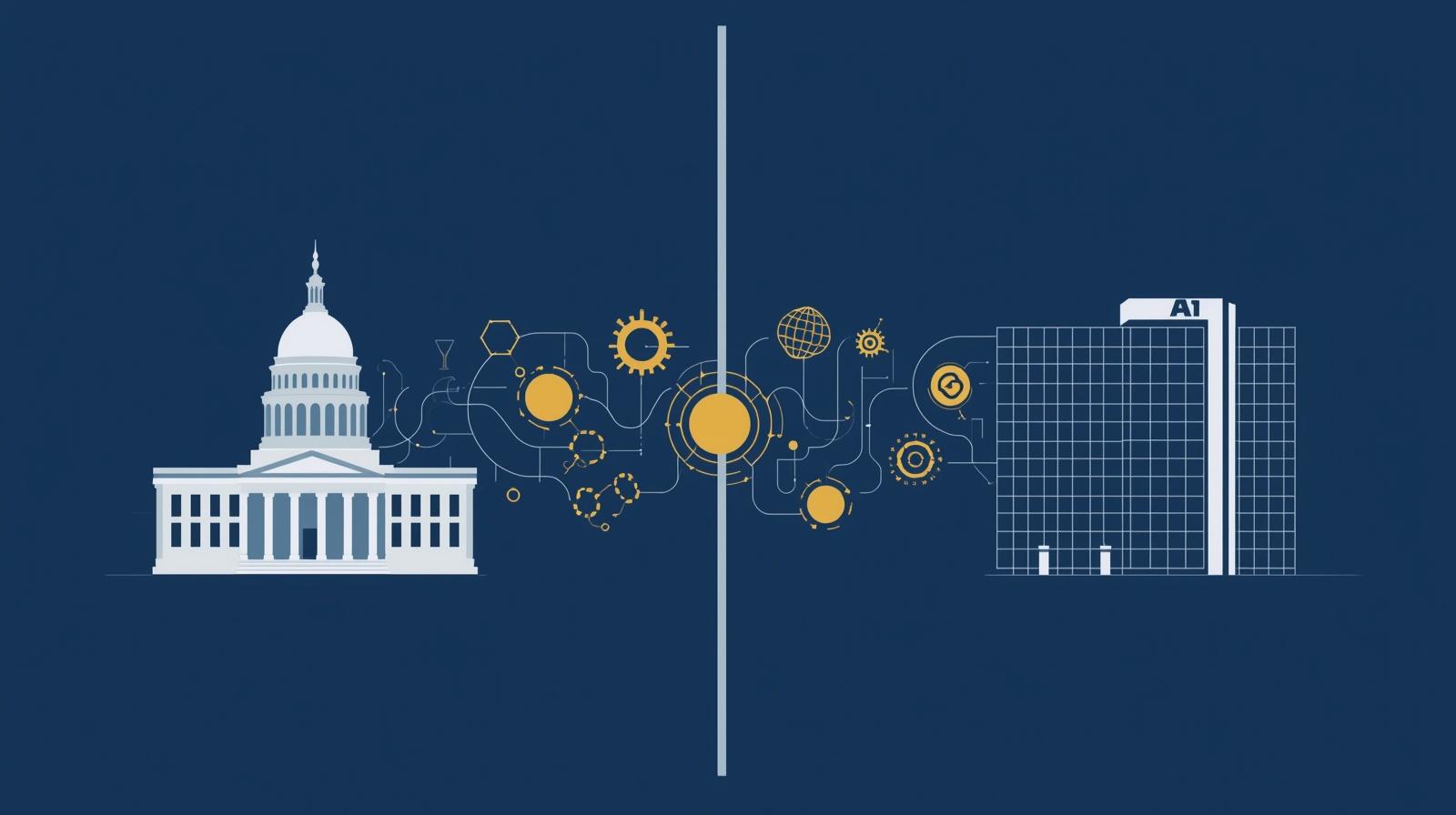
On February 27, 2026, President Trump signed an order directing all U.S. federal agencies to cease using Anthropic's Claude AI within six months. Defense Secretary Pete Hegseth simultaneously designated Anthropic a "Supply-Chain Risk to National Security," a classification previously reserved for companies considered extensions of Chinese or Russian intelligence operations. It was, by any measure, an extraordinary escalation, and it happened because Anthropic refused to remove two narrow restrictions on how the Pentagon could use Claude: no autonomous weapons systems with no human oversight, and no mass domestic surveillance of American citizens.
For nonprofit leaders who rely on Claude for grant writing, communications, data analysis, or program delivery, the immediate question is understandable: Is our access going away? The straightforward answer, based on Anthropic's own public statement and the legal scope of the supply chain risk designation, is no, your access is not immediately affected. The designation applies specifically to Department of Defense contracting, not to commercial or nonprofit use of Claude's public products.
But the longer story is more complicated than a simple "nothing to see here." This standoff reveals genuine tensions inside the AI industry that every nonprofit AI user should understand. It raises questions about the stability and reliability of AI providers you depend on, the direction of the industry as a whole, and what it means when your productivity tools are built by companies navigating geopolitical showdowns with the federal government. This article breaks down what happened, what it actually means for your organization right now, and what to watch in the months ahead.
What Actually Happened: A 72-Hour Breakdown
Understanding the specific chain of events matters, because the dispute was not about Anthropic refusing to work with the military at all. It was about two very specific use cases that Anthropic considered non-negotiable, and the Pentagon's insistence on removing those restrictions entirely.
The Background: Anthropic Was Already Deeply Embedded in Government
Before this dispute, Anthropic was not some government-skeptical AI lab holding the Pentagon at arm's length. It had been aggressively building its national security business. In late 2024, Anthropic partnered with Palantir and Amazon Web Services to deploy Claude on classified defense networks at Impact Level 6, the highest classification tier for unacknowledged programs. By mid-2025, Anthropic had launched "Claude Gov," a custom AI model suite specifically built for U.S. national security customers, deployed on AWS GovCloud infrastructure.
In July 2025, the Pentagon's Chief Digital and Artificial Intelligence Office awarded Anthropic a two-year, $200 million prototype contract to advance "frontier AI capabilities that advance U.S. national security." This was a significant financial relationship, and Anthropic had accepted all of it while maintaining two contractual carve-outs: Claude could not be used to power weapons systems that autonomously select and engage targets without human involvement, and Claude could not be used for mass domestic surveillance of Americans.
These were not afterthoughts. They were written into Anthropic's contracts with government customers from the start. And until February 2026, they had, according to Anthropic's own public statement, never blocked a single government mission.
The Ultimatum and Anthropic's Refusal
In February 2026, the Pentagon demanded that Anthropic remove those two restrictions, presenting what it called a "final offer" with a deadline of February 27 at 5:01 PM Eastern. Defense Secretary Hegseth wanted full, unrestricted use of Claude for "any lawful use," with no carve-outs. Anthropic CEO Dario Amodei published a public statement on February 26 saying the company "cannot in good conscience accede" to the Pentagon's demand.
Amodei's statement was careful in its framing. Anthropic did not position itself as anti-military or anti-government. It explicitly stated it "understands that the Pentagon, not private companies, makes military decisions" and supports all lawful national security uses. Its objection was narrow and principled: current frontier AI models are "not yet reliable enough" to be used in fully autonomous weapons without endangering warfighters and civilians, and mass surveillance of Americans constitutes a fundamental violation of civil rights. On those two specific points, Anthropic would not move.
When the deadline passed and Anthropic held its position, Trump signed the ban order. Hours later, in what many observers called a notable irony, OpenAI announced its own Pentagon deal, and the Pentagon agreed to OpenAI's nearly identical red lines on autonomous weapons and mass surveillance, raising serious questions about why Anthropic was being targeted for restrictions that OpenAI was simultaneously allowed to keep.
The "Supply Chain Risk" Designation: What It Actually Means
The most alarming part of the response was Hegseth designating Anthropic a "Supply-Chain Risk to National Security" under 10 USC 3252. This statute was previously used against Chinese telecom companies and Russian software vendors, companies that security agencies had determined were acting as extensions of foreign government intelligence operations. Applying it to an American company with no such ties was, as Anthropic's legal team noted, historically unprecedented.
But legal experts who analyzed the designation noted that its reach is more limited than the alarming label suggests. Under the statute, the designation applies to Department of Defense contracting specifically. It does not extend to all federal agency use (though other agencies are implementing the ban through separate executive direction), and it explicitly does not affect commercial customers. The statute cannot legally be applied to prohibit Anthropic from selling to nonprofits, businesses, or individual users.
Anthropic has announced it will challenge the designation in court, calling it "legally unsound" and vowing that the legal battle will not prevent it from continuing to serve its commercial customers. That challenge is ongoing as of this writing.
What This Means for Your Nonprofit Right Now
The most important immediate question for any nonprofit using Claude is whether your access is at risk. The evidence on that question is straightforward, though the longer-term picture requires more nuance.
What Is Not Affected
- Your organization's access to Claude via claude.ai, the Anthropic API, or any commercial product
- Grant writing, communications drafting, data analysis, and all other nonprofit use cases
- Anthropic's pricing and product roadmap for commercial customers
- Access to Claude for nonprofits running on AWS or through third-party integrations (for non-Pentagon work)
What to Monitor Carefully
- Anthropic's business health following the loss of its $200 million Pentagon contract and other federal agency revenue
- Potential pricing changes if government revenue shortfall affects Anthropic's commercial margins
- Whether enterprise customers who also hold Pentagon contracts reduce Claude use to avoid compliance complexity
- The outcome of Anthropic's legal challenge to the supply chain risk designation
The distinction between "right now, today" and "over the next 12-18 months" matters enormously here. Anthropic's official statement explicitly reassured commercial customers that the supply chain designation does not affect their access. That statement carries legal weight: Anthropic has every financial incentive to protect its commercial revenue stream, especially now that its government revenue has been cut substantially.
The more realistic risk is indirect. Losing a $200 million government contract and being locked out of all federal agency business is a major financial blow for any company. If Anthropic's revenue declines significantly, that could eventually affect staffing, product development timelines, or pricing structures. None of those scenarios are inevitable, and Anthropic has substantial private funding and a strong commercial customer base, but they are worth tracking rather than dismissing.
For nonprofits doing work related to civil liberties, human rights, or anti-surveillance advocacy, there is an additional dimension. Anthropic's principled stand on autonomous weapons and domestic surveillance may actually make Claude a more values-aligned tool for organizations in those spaces. That is worth noting as a genuine consideration, not just a public relations point.
The Safety Pledge That Changed Simultaneously
Any honest analysis of the Anthropic-Pentagon situation must grapple with a complicating development that happened at almost exactly the same time. On February 24, 2026, just two days before the Pentagon deadline, Anthropic quietly released Version 3.0 of its Responsible Scaling Policy, its flagship safety commitment document, and dropped a core pledge that had been central to its identity as an AI safety company.
What Changed in Anthropic's Responsible Scaling Policy
The evolution from RSP v1 to RSP v3.0
The Original Pledge (2023)
Anthropic committed to never training a more capable AI system unless it could guarantee in advance that safety measures were adequate to handle that system's potential harms. This was a hard constraint, a "pause and verify" commitment that distinguished Anthropic from competitors who prioritized speed over safety verification.
The New Position (RSP v3.0)
The hard pre-commitment is gone. The new version argues that if Anthropic paused while others moved forward, the world would be less safe overall. It now commits to matching or surpassing competitors' safety efforts and publishing safety roadmaps, but removes the advance-verification requirement. It is a shift from "we will not proceed until we know it is safe" to "we will proceed as fast as competitors but try to be the safety leader."
Anthropic has stated this change is unrelated to the Pentagon dispute. Critics have noted the timing makes that claim difficult to accept at face value. What is clear is that the company holding the line on autonomous weapons use cases simultaneously relaxed its platform-level safety commitment, creating a complex picture that resists simple characterization.
For nonprofits that specifically chose Claude because of Anthropic's reputation as the safety-focused AI lab, this development deserves honest attention. The company's behavior across the Pentagon dispute and the RSP change suggests an organization navigating significant competitive and financial pressure, making trade-offs that reflect that pressure. That does not make Claude a less capable or less useful tool for your mission. It does mean that "Anthropic is the safe and responsible choice" requires a more nuanced evaluation than it did a year ago.
The most useful frame for nonprofits is probably this: evaluate AI tools on the specific capabilities and values alignment that matters for your work, rather than assuming that one company's general reputation for responsibility applies uniformly across all of its decisions. As you consider your AI governance and knowledge management practices, this kind of nuanced vendor assessment should be part of your standard review process.
What This Reveals About the Broader AI Industry
The Anthropic situation is not an isolated event. It is a visible manifestation of tensions that have been building across the entire AI industry, and understanding those tensions helps nonprofits think more clearly about the long-term reliability of the AI tools they depend on.
AI Companies Are Increasingly Dual-Use Infrastructure
Every major AI company, including Anthropic, OpenAI, Google, Microsoft, and Amazon, is now deeply embedded in national security infrastructure. OpenAI struck its Pentagon deal within hours of Anthropic's ban. Google reversed its internal prohibition on weapons and surveillance AI in early 2025. Microsoft provides AI services across classified defense networks. Amazon Web Services underlies most of the classified AI deployments in the U.S. government.
This means that when you use any of these companies' AI tools, you are using technology built and operated by companies with substantial military contracts. The tools themselves are not military applications, but the companies that build them are now deeply intertwined with defense and intelligence clients. For nonprofits with missions in human rights, civil liberties, peace work, or anti-surveillance advocacy, this context is worth understanding explicitly, even if it does not change your day-to-day tool choices.
The OpenAI Comparison Reveals Political Dynamics
The most revealing aspect of this situation is what happened with OpenAI. Within hours of Anthropic being blacklisted, OpenAI announced a Pentagon deal, and the Pentagon agreed to OpenAI's restrictions that were essentially identical to Anthropic's: no fully autonomous weapons, no mass domestic surveillance. The same restrictions that got Anthropic banned were accepted from OpenAI.
Legal analysts and technology policy experts have noted that this sequence makes the "supply chain risk" designation look less like a principled national security determination and more like a business and political pressure campaign. Anthropic has filed suit challenging the designation on exactly those grounds. The outcome of that lawsuit will be worth watching, both for what it means for Anthropic specifically and for what it signals about the government's relationship with AI companies that maintain ethical limits on their products.
Worker Pushback Signals Industry-Wide Values Conflict
The Pentagon-Anthropic dispute triggered something broader across the tech industry. Employees at Google and OpenAI published open letters supporting Anthropic's position. Workers at Microsoft and Amazon sent internal demands to management asking them to prevent unrestricted military AI use. More than 100 employees signed petitions calling for reinstatement of limitations similar to those Anthropic was blacklisted for maintaining.
This worker response matters because it reveals that the ethical debate about AI and military applications is not settled even within companies that are actively pursuing those contracts. The people building these systems are not uniformly comfortable with all the uses they are being put to. For nonprofits thinking about AI policy and governance, understanding that the AI industry itself is divided on these questions is relevant context.
Practical Steps for Nonprofit Leaders
Given everything outlined above, here is concrete guidance for nonprofit leaders thinking about how to respond to this situation. The answer is not to panic, but it is also not to ignore what this reveals about the AI landscape.
Continue Using Claude Without Immediate Concern
If Claude is currently working well for your organization's grant writing, communications, data analysis, or other mission work, there is no reason to stop or switch providers in response to this news. The supply chain risk designation does not affect your access, Anthropic has explicitly confirmed this, and the company has strong commercial incentives to protect its nonprofit and business customer relationships.
- Monitor Anthropic's updates and announcements for any changes to commercial terms or product availability
- Watch for pricing changes over the next 6-12 months as Anthropic adjusts to the loss of government revenue
- Note the outcome of Anthropic's legal challenge, as it will clarify the long-term status of the supply chain designation
Build a Multi-Model Approach as Standard Practice
The Anthropic situation is a useful reminder that depending on a single AI vendor creates concentration risk. This is true regardless of which vendor you use. A multi-model AI strategy, where different tools are used for different tasks and no single provider is a single point of failure, is simply good risk management at this point in the industry's development.
- Identify which of your AI workflows are critical and which are experimental or supplementary
- Ensure your team has familiarity with at least two AI tools for your most critical tasks
- Avoid building deep automation pipelines that are impossible to migrate if a vendor changes terms or pricing significantly
- Document your AI workflows in a way that would allow substitution of a different tool
Revisit Your AI Policy in Light of Military AI Normalization
If your organization serves communities affected by military operations, works on civil liberties, or operates in international contexts where U.S. military involvement is politically sensitive, the deepening entanglement of AI companies with defense contracts is worth discussing explicitly in your AI governance process. This does not mean every nonprofit needs to take a stance on AI and military technology. It means that having a position, even if that position is "we've evaluated this and determined it doesn't materially affect our work," is better than having no awareness of the issue at all.
- Review your AI acceptable use policy to determine whether it addresses the dual-use nature of major AI platforms
- Consider whether your mission or community relationships create any specific obligations around AI vendor selection
- Include AI vendor ethics as part of your regular technology vendor review process
If Your Organization Holds Government Contracts
The situation is more specific if your nonprofit holds federal government contracts, particularly defense or Department of Homeland Security contracts. In those cases, you should consult with legal counsel about whether the supply chain risk designation creates any compliance obligations for your use of Claude in contract performance work. The statute applies to defense contractors, and while the designation as currently scoped focuses on DoD use, the evolving legal landscape warrants attention.
- Consult legal counsel if you hold Department of Defense contracts and use Claude in performing that work
- Review any federal grant agreements for AI-related compliance provisions that may reference supply chain risk designations
- Separate your government contract AI use from your general organizational AI use in documentation and systems
Values Alignment in the Age of Military AI
One underappreciated dimension of the Anthropic situation is what it says about the specific red lines the company maintained. The two restrictions that caused the entire dispute, no autonomous weapons and no mass domestic surveillance, are not trivial technicalities. They are among the most fundamental concerns that civil society organizations, human rights groups, and AI ethics researchers have raised about military AI applications.
Autonomous weapons systems that can select and engage targets without human authorization have been the subject of international treaty negotiations and intense debate among military ethicists for years. Mass domestic surveillance of American citizens implicates the Fourth Amendment, surveillance law, and the basic civil liberties framework that many nonprofits exist to protect. These are not niche concerns.
For nonprofits whose missions intersect with these issues, Anthropic's position may actually strengthen rather than weaken the case for using Claude. A company that was willing to sacrifice a $200 million government contract rather than remove those two specific restrictions has demonstrated a meaningful commitment to those limits, one that no marketing statement could replicate. Whether that commitment holds under continued business pressure remains to be seen, but the demonstrated behavior in February 2026 is worth weighing in your vendor evaluation.
At the same time, nonprofits should resist the impulse to treat any AI company as a values ally in any comprehensive sense. Anthropic simultaneously held the line on autonomous weapons while relaxing its broader safety pledge. It refused mass surveillance restrictions while having already embedded Claude in classified military operations across multiple theaters. The picture is complex and does not reduce to "good company" or "bad company." It reduces to "what are the specific practices that matter for your specific mission, and how does this company's behavior measure up on those specific dimensions?"
This kind of specific, mission-relevant evaluation is exactly the approach that responsible AI practice requires. It is harder than relying on a company's general reputation, but it is more honest and more protective of your organization's integrity.
Key Developments to Watch in the Coming Months
The Anthropic situation is still evolving rapidly. Several outcomes will significantly affect the picture for nonprofits:
Watch Closely
- Anthropic's legal challenge: Whether the supply chain risk designation is overturned or narrowed will clarify the legal framework for future AI-government disputes
- Anthropic's funding and revenue: Watch for any signals that the loss of government contracts is creating financial stress that could affect commercial pricing or availability
- Enterprise customer behavior: If large companies with federal contracts begin avoiding Claude to simplify compliance, that could affect Anthropic's commercial viability
- OpenAI's agreement terms: Whether OpenAI's Pentagon deal actually holds its stated red lines or gradually erodes under pressure will signal how durable such commitments are industry-wide
Broader Signals
- Congressional responses: Whether any members of Congress push back on the supply chain designation or the Pentagon's handling of the dispute
- International AI governance: How European regulators and international bodies respond to U.S. government pressure on AI company ethics policies
- Alternative AI providers: Whether open-source models or smaller AI companies with different government relationships emerge as viable alternatives for mission-sensitive work
- Nonprofit sector guidance: Whether sector bodies or foundations that support nonprofit AI adoption issue guidance on vendor evaluation in light of these developments
The Bottom Line for Nonprofit Leaders
The Anthropic-Pentagon dispute is a landmark moment in the history of AI governance, but it is not an immediate crisis for nonprofits using Claude. Your access is protected, Anthropic has been explicit about that, and the legal scope of the supply chain risk designation does not extend to commercial customers. Continue using the tools that are working for your mission without disruption.
What this situation does demand is a more sophisticated relationship with AI vendors, one that looks beyond general reputation to specific practices, and one that accounts for the increasingly complex ways AI companies are embedded in government and military systems. The AI tools nonprofits use are not neutral products sitting outside political and institutional dynamics. They are built and operated by companies making consequential decisions under significant commercial and political pressure, and those decisions sometimes reveal tensions between stated values and actual behavior.
Building resilience into your AI operations through multi-vendor familiarity, portable workflow documentation, and explicit AI governance policies is not a response to any single news story. It is simply good organizational practice in a technology landscape that is evolving faster than any single provider's commitments can be guaranteed. The nonprofit organizations that will navigate AI most effectively are those that use these tools confidently, evaluate them honestly, and plan thoughtfully for the possibility that the landscape will keep changing.
For deeper guidance on building AI governance frameworks that can withstand industry turbulence, explore our resources on AI policy and governance, multi-model AI strategy, and responsible AI practice for mission-driven organizations.
Navigate AI's Evolving Landscape With Confidence
The AI landscape is changing rapidly and not always predictably. Our team helps nonprofits build AI strategies that are resilient, values-aligned, and designed to serve your mission regardless of how the industry evolves.