
Article 50 Disclosure Rules: How Nonprofits Must Label AI-Generated Content After August 2026
On August 2, 2026, the EU AI Act's transparency rules become enforceable. Nonprofits creating donor appeals, advocacy videos, or chatbot interactions that touch European audiences will face new labeling obligations. This guide translates Article 50 from legal text into a practical compliance playbook.
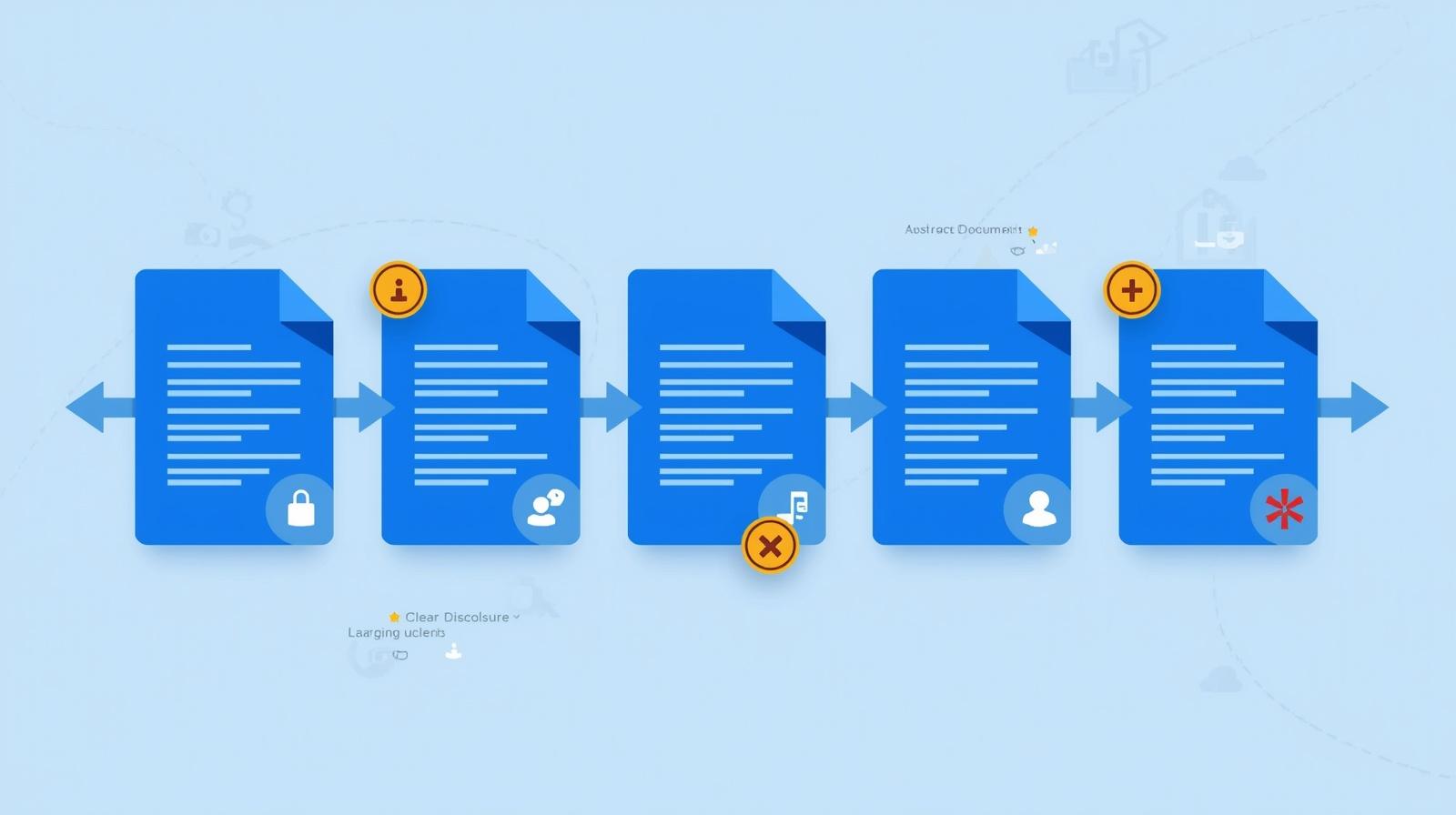
When the EU AI Act passed in 2024, the August 2, 2026 deadline for Article 50 felt comfortably distant. That distance is now gone. In a few months, nonprofits with European supporters, European program offices, or European fundraising audiences will need to disclose when their content was generated or substantially manipulated by AI. The rules apply not just to deepfakes but to a much broader set of artifacts that nonprofits produce every week: synthesized voiceovers, AI-illustrated thumbnails, chatbot responses, machine-translated newsletters, and AI-drafted op-eds published online.
Most nonprofit communications teams have not yet taken stock of how much of their output now passes through generative AI at some stage. The honest answer for many organizations is "more than we want to admit." That makes Article 50 a meaningful compliance challenge, not a paperwork formality. Get the labels right, and donors and beneficiaries gain trust. Get them wrong, and you risk both regulatory penalties and the deeper reputational damage of being seen as deceptive about your communications.
This guide is written for nonprofit communications directors, compliance officers, and executive directors who need to translate the legal text of Article 50 into practical workflows. It covers what counts as AI-generated content under the law, who carries the disclosure obligation, what a compliant label actually looks like, when exemptions apply, and how to build internal review steps that catch problems before they reach the public. The goal is not to make you a lawyer. It is to give you enough operational clarity that your team can adjust its content pipelines before the August deadline.
If you have not yet read the broader compliance picture, our overview of the EU AI Act for U.S. nonprofits sets the broader regulatory context. Article 50 is one piece of that compliance puzzle, but it is the piece most likely to touch your daily operations.
What Article 50 Actually Requires
Article 50 sets transparency obligations for two distinct groups: providers, who build or supply AI systems, and deployers, who use those systems to create or share content. Most nonprofits sit in the deployer category. You are not training a foundation model. You are using ChatGPT, Claude, Midjourney, ElevenLabs, or a similar tool to produce things you publish. The deployer obligations are where your work begins.
The rule has three core components. First, deepfakes (AI-generated or manipulated images, audio, or video that resemble real people, objects, places, or events) must be disclosed as artificially generated or manipulated. Second, AI-generated text published to inform the public on matters of public interest must also be disclosed unless it has been reviewed and editorially controlled by a human who takes responsibility. Third, providers of generative systems must mark their outputs in machine-readable formats that can be detected as artificial. The provider obligation falls on the tool vendor, not on you, but it shapes what your content carries beneath the surface.
What Must Be Disclosed
- AI-generated or manipulated images of real people or events
- Synthesized voiceovers and audio that imitate real voices
- AI-generated video, including animation and avatar-led content
- AI-drafted opinion pieces or news commentary on public interest topics
- Chatbot interactions where users could mistake the bot for a human
- Emotion recognition or biometric categorization where users are present
Where Exemptions May Apply
- Clearly artistic, satirical, or fictional creative work
- AI-assisted text reviewed and signed off by an accountable human editor
- Internal-only AI content not shared with the public
- Content where AI use is obvious from context, like a clearly labeled AI demo
- Limited law enforcement use cases (rarely relevant for nonprofits)
Exemptions sound generous on paper but narrow quickly in practice. The "human editorial responsibility" carve-out for AI-generated text, in particular, has a specific meaning. A staff member who clicks "looks fine" without changing anything is not exercising editorial responsibility in the sense the law intends. An accountable human editor reads, revises, fact-checks, and stands behind the published version. Most nonprofit AI workflows do not yet meet that standard, which means the safer assumption is that disclosure is required unless you have explicitly designed a review process that qualifies for the exemption.
Who the Rules Apply To: Mapping Your Nonprofit's Exposure
The first question every nonprofit asks is whether Article 50 applies to them at all. The Act has extraterritorial reach. If your AI-generated output is placed on the EU market or used in the EU, you are within scope, regardless of where your headquarters sits. For nonprofits, that ambiguous phrase translates into several specific scenarios that are easy to overlook.
1. Your Website Is Accessible from the EU
Almost every nonprofit website is technically accessible from the EU, but accessibility alone does not trigger the Act. What matters is whether you target European audiences. Indicators include having a euro-denominated donation option, a "Donate from Europe" page, content translated into European languages, programs that operate in EU member states, or chapters and partner offices in Europe.
A regional U.S. food bank with a static "About" page in English and no European donor pipeline is not in scope. An international development nonprofit that runs European fundraising appeals, accepts gifts in euros, or has a chapter in Berlin is. The line between the two is rarely as obvious as you might hope, which is why a written scope assessment is one of the first compliance steps.
2. You Run Campaigns or Advertising in Europe
Paid social campaigns, influencer partnerships, programmatic ads, and email sends targeted at European supporters all bring AI-generated creative under the Act. If your year-end appeal includes an AI-generated video that runs in Germany, the disclosure rules apply to that video. If your advocacy organization uses a synthesized voiceover for a campaign clip distributed in France, the same applies.
Many nonprofits use AI tools deeper in the production pipeline than communications staff realize. Stock images may now be AI-generated by default in some libraries, voiceover services have shifted to synthetic voices, and some translation platforms have replaced human translators with large language models. Mapping where AI enters your creative workflow is a prerequisite for figuring out where labels are needed.
3. You Operate Programs or Services Inside the EU
Nonprofits with European program offices, partner organizations, or service delivery in EU member states have the clearest exposure. Any client-facing chatbot, intake automation, or beneficiary-facing AI tool that operates in the EU must comply with the disclosure requirements. The Act applies regardless of organizational tax status, so charitable work does not exempt you.
The good news is that compliance for program AI tends to be more straightforward than for marketing AI, because program teams are already used to documenting workflows for funders, accreditation bodies, and ethics boards. Adding AI disclosure to existing intake scripts and consent forms is usually a matter of language updates rather than process redesign.
4. You Coordinate with European Funders or Partners
Even nonprofits without direct European operations sometimes find themselves in scope through grant relationships. European foundations, EU institutions, and bilateral aid agencies are increasingly building AI compliance language into their grant agreements. A grant from a European funder may require Article 50 alignment as a condition of disbursement, even if your underlying work is delivered outside the EU.
Review your active and prospective European grants with this in mind. Funders often pre-empt compliance risk by extending their own obligations down the chain, which means your contract with them may already commit you to disclosure standards regardless of whether the Act would otherwise apply. The path of least resistance is to standardize disclosure across the organization rather than maintain two different content pipelines.
What a Compliant Label Actually Looks Like
The Act requires disclosures to be "clear and distinguishable" and presented at the latest at the time of first interaction or exposure. It does not prescribe a specific phrase or visual style, which is both freedom and risk. The European Commission's draft Code of Practice on transparency, expected to be finalized in mid-2026, will give clearer guidance, but the early signal is that hidden footnotes and pages of fine print will not satisfy regulators. Visibility and timing matter as much as wording.
In practice, that means designing labels that meet three tests. They must be perceivable to a reasonable user without effort, they must appear before the user has been influenced by the content, and they must be specific enough that the user understands what AI did. "AI involved" is rarely enough. "Voice generated by AI" or "Image created with generative AI based on a real photograph" is closer to the mark.
Visual Content Patterns
Use a persistent watermark or corner badge for AI-generated images and video. Combine it with a caption or alt text that names the tool and the type of generation. For social posts, place the disclosure inside the visual itself rather than relying on the caption alone, because reposts strip captions.
- "AI-generated illustration" badge in the lower-right corner
- Persistent video watermark visible in any timestamp
- Caption noting "Image created using generative AI"
Text and Audio Patterns
For published text where editorial responsibility cannot be claimed, place an inline disclosure at the top of the article and repeat it in the byline area. For synthesized voiceovers, include a spoken disclosure within the first ten seconds and a written disclosure in the description.
- Top-of-article banner: "Drafted with AI assistance"
- Spoken intro: "This message uses an AI-generated voice"
- Chatbot opening line: "You are speaking with an AI assistant"
Consistency is more important than cleverness. Pick a small set of standardized labels for the formats your nonprofit publishes most often. Image badge, video watermark, audio intro line, chatbot greeting, top-of-article banner. Document them in your communications style guide. Train staff to use them by default rather than to decide each time. Decision fatigue is the most reliable predictor of inconsistent compliance.
For reference materials, our guide on communicating AI failures honestly and the broader piece on transparent AI decision-making offer language patterns nonprofits can adapt for their own disclosure standards.
The Provider-Side Markings Your Tools Should Be Doing
Article 50 also obligates AI providers to mark their outputs in a machine-readable format so the artificial origin can be detected automatically. This is the layer most nonprofits will not touch directly, but it is worth understanding because it shapes which tools you can rely on.
The leading approaches are content credentials based on the C2PA standard, invisible watermarks embedded into images and audio, and metadata fields written into video files. As of 2026, OpenAI, Google, Microsoft, Adobe, and Meta have all committed to some form of provenance marking on their consumer-facing generative tools. The implementations differ, and not all of them survive copy-paste, screenshot, or re-encoding workflows.
For nonprofits, the practical question is which generative tools you allow staff to use. A vendor that ships content credentials by default makes your downstream compliance easier. A vendor that strips metadata or has not implemented provenance marking shifts more of the burden onto your manual labeling process. Your AI procurement checklist should include "supports machine-readable provenance markings consistent with Article 50 of the EU AI Act" as a line item alongside the security and privacy questions you already ask. Our guide to evaluating AI vendor security claims covers the broader vendor due diligence pattern.
Vendor Questions to Ask
- Does your tool embed C2PA content credentials by default?
- Are watermarks robust to common edits and re-encoding?
- How are markings applied to text outputs?
- Do you publish a public statement of Article 50 alignment?
Red Flags in Tool Behavior
- Output files with stripped metadata and no visible badge
- "Remove watermark" features marketed to paying users
- No documentation on how artificial origin is signaled
- Vendors that decline to commit to a compliance roadmap
Building the Internal Workflow Before August
The compliance work that matters most is the unglamorous work of changing how your team produces content. Reading the law is easy. Adjusting your weekly publishing rhythm is hard. The nonprofits that arrive at August 2 in good shape will have done four things consistently: an inventory, a policy, a label library, and a review checkpoint.
Step 1: Inventory Where AI Touches Your Content
Walk through every recurring content workflow and mark which steps now use AI. Newsletter drafting, image creation, social post copy, donor appeal letters, video scripting, podcast editing, web chatbot, intake automation, machine translation. The inventory will be longer than expected, because AI has crept into many tools as a default feature. The point is not to remove AI but to know where it lives.
For each workflow, note the tool, the type of output, the audience, and whether the output reaches an EU audience. That table becomes the master document for your Article 50 work, because it tells you which workflows need new disclosure language and which workflows are already low risk.
Step 2: Update Your AI Policy
Most nonprofits already have an AI use policy. Few of them yet include disclosure obligations. Add a section that names Article 50 explicitly, lists the formats and audiences that trigger disclosure, references your standardized labels, and specifies who is accountable for compliance in each department. Our practical walkthrough on creating an AI policy in one day can serve as a starting framework if you do not yet have one.
A policy without an owner is just a document. Name a single accountable person for AI disclosure, typically the communications director or the compliance officer in larger nonprofits. That person owns the label library, runs the periodic audit, and is the escalation point when staff are unsure whether disclosure applies.
Step 3: Build a Standardized Label Library
Create a single internal page that lists every approved disclosure label, the format it applies to, the exact language and styling, and an example of how it appears on a published asset. Image badge in the corner, video watermark in the lower-third, audio intro phrase, chatbot greeting, top-of-article text, alt text template, social caption pattern. Treat the page like brand guidelines for your AI labeling.
Standardization solves the most common compliance failure, which is well-meaning staff inventing slightly different language each time. Inconsistency creates regulatory risk and erodes the user signal. When every AI-generated image carries the same badge in the same corner, audiences learn to recognize the marker quickly and trust your organization's transparency.
Step 4: Insert a Disclosure Review Checkpoint
Add an explicit "AI disclosure review" step into your existing publication workflows. It does not need to be a separate meeting. It can be a checkbox on the content brief, a column in your editorial calendar, or a question in your video QA template. The point is to make the disclosure decision visible rather than implicit, so it gets made consciously rather than skipped accidentally.
For organizations using project management tools like Asana, Monday, or ClickUp, build the disclosure check into the task template. For organizations running on Google Docs and email, add it to the content brief. The mechanism matters less than the act of forcing the question every time.
These four steps will not solve every Article 50 question your team faces. They will, however, get you past the most common failure modes: not knowing where AI is used, having no consistent labels, and skipping the disclosure decision under publishing pressure. Once those foundations are in place, the harder edge cases (AI-edited photographs of real beneficiaries, partially translated documents, AI summaries of human-written articles) become solvable through normal editorial judgment rather than ad-hoc panic.
Edge Cases Nonprofits Will Run Into
Article 50 is clearer in principle than in application. Several gray areas tend to come up frequently in nonprofit communications work, and each one rewards thinking through in advance rather than improvising in the moment.
AI-Edited Photographs of Real Beneficiaries
Light AI editing (color correction, background cleanup, blemish removal) does not turn a photograph into AI-generated content. Heavier edits (replacing the background with a generated scene, generating elements that were not present in the original, making composite images that imply something untrue) push the image into the deepfake category and require disclosure. The dividing line is whether the manipulation could mislead a reasonable viewer about what actually happened. When in doubt, label.
AI-Translated Newsletters and Reports
Machine translation has been mainstream for so long that most readers no longer think of it as AI in the modern sense. Article 50 still applies in principle, but a human-edited translation by a staff member who takes editorial responsibility usually qualifies for the editorial exemption. A raw machine translation pushed straight to the audience without review does not. Many nonprofits split the difference by adding a small translator's note: "Translated with AI assistance and reviewed by [name]."
Chatbot Handoffs Between Bot and Human
Many nonprofit chatbots start an interaction as a bot and escalate to a human staff member when needed. The Act requires the user to know which they are speaking with. Best practice is a clear bot greeting at the start, an explicit handover message when a human takes over, and a return signal if the bot resumes the conversation. The transitions are where users lose track, and the transitions are where regulatory complaints are most likely to land.
Synthesized Voices in Podcasts and Audio Tours
AI voice synthesis is increasingly used by nonprofits for podcast production, audiobook versions of reports, and audio tours at cultural sites. If the voice imitates a real person's voice (a deceased founder, a former director, a celebrity supporter), the deepfake disclosure rules apply with full force. If the voice is a clearly synthetic voice not modeled on a real person, the requirement is lighter but still triggers the audio disclosure pattern. A consistent intro line ("This audio uses an AI-generated voice") satisfies both situations.
AI-Drafted Op-Eds and Blog Posts
The Act treats AI-generated text published to inform the public on matters of public interest with particular seriousness. An advocacy op-ed defending a policy position falls clearly inside that category. A staff member who heavily revises and fact-checks an AI-drafted op-ed and signs the published version is exercising editorial responsibility and may not need to add a disclosure. A staff member who lightly edits and publishes is closer to a deployer of AI-generated text and should disclose.
Penalties, Enforcement, and the Reputational Stakes
The financial penalties for non-compliance with transparency obligations under Article 50 can reach up to 15 million euros or 3% of global annual turnover, whichever is higher. Most nonprofits will not face the maximum penalties because regulators are expected to focus initial enforcement on commercial actors and clear bad-faith deployments. But "we are unlikely to be fined" is not a compliance strategy.
The reputational stakes are arguably higher than the regulatory ones. Nonprofits trade on trust. A donor who discovers that a moving appeal video was AI-generated without disclosure feels deceived in a way that a customer who discovers the same about an ad does not. The implicit promise of authenticity in nonprofit communications is part of what makes giving feel meaningful. Article 50 compliance is partly about respecting that promise, not just about avoiding regulatory risk.
Enforcement is delegated to national market surveillance authorities in each EU member state. Complaints can be filed by individuals, by competing organizations, or by digital rights groups that are likely to be active in monitoring high-profile deployments. The first wave of enforcement actions in late 2026 and early 2027 will set the practical standard, and nonprofits should plan to revise their disclosure practices once that case law begins to develop.
For broader context on how regulation reshapes nonprofit AI practice, our pieces on tracking AI legislation and communicating AI risks to your board describe the broader compliance posture nonprofits should be building.
Conclusion: Disclosure as a Trust Strategy
Article 50 is best understood as a forcing function. The disclosure obligations would be wise practice even without legal weight behind them, because they align nonprofit communications with the values most nonprofits already claim to hold: honesty with supporters, respect for beneficiaries, and transparency about how the work gets done. The August 2026 deadline simply removes the option to delay.
The nonprofits that arrive at the deadline ready will not be the ones with the most lawyers. They will be the ones that started the inventory early, named an owner, built standardized labels, and inserted the disclosure question into their existing publishing workflows. None of those steps require deep technical expertise. They require organizational discipline and a willingness to slow down briefly while the muscle memory builds.
The deeper opportunity is reputational. As AI-generated content saturates donor inboxes, social feeds, and advocacy spaces, the nonprofits that label clearly and consistently will stand out as trustworthy in an environment where many actors will not. Article 50 compliance is a floor, not a ceiling. Treat it as the start of a longer commitment to transparency, and the August deadline becomes less a regulatory burden and more a useful nudge toward better practice.
There are roughly three months left before the rules become enforceable. That is enough time to do the work well, but not enough time to delay another quarter. Whatever your nonprofit's current AI use looks like, the inventory, the policy, the label library, and the review checkpoint can all be in place before August if you start now.
Get Your Article 50 Compliance Plan in Place
We help nonprofits inventory their AI use, design disclosure standards that fit their voice, and build the review workflows that keep teams compliant under publishing pressure. Reach out to start your Article 50 readiness assessment before the August deadline.