
Assistants vs. Agents: Understanding the AI Difference for Nonprofits
AI assistants and AI agents represent fundamentally different approaches to automation. Learn which technology is right for your nonprofit's needs, when to use each, and how to make strategic decisions that align with your mission, budget, and organizational capacity.
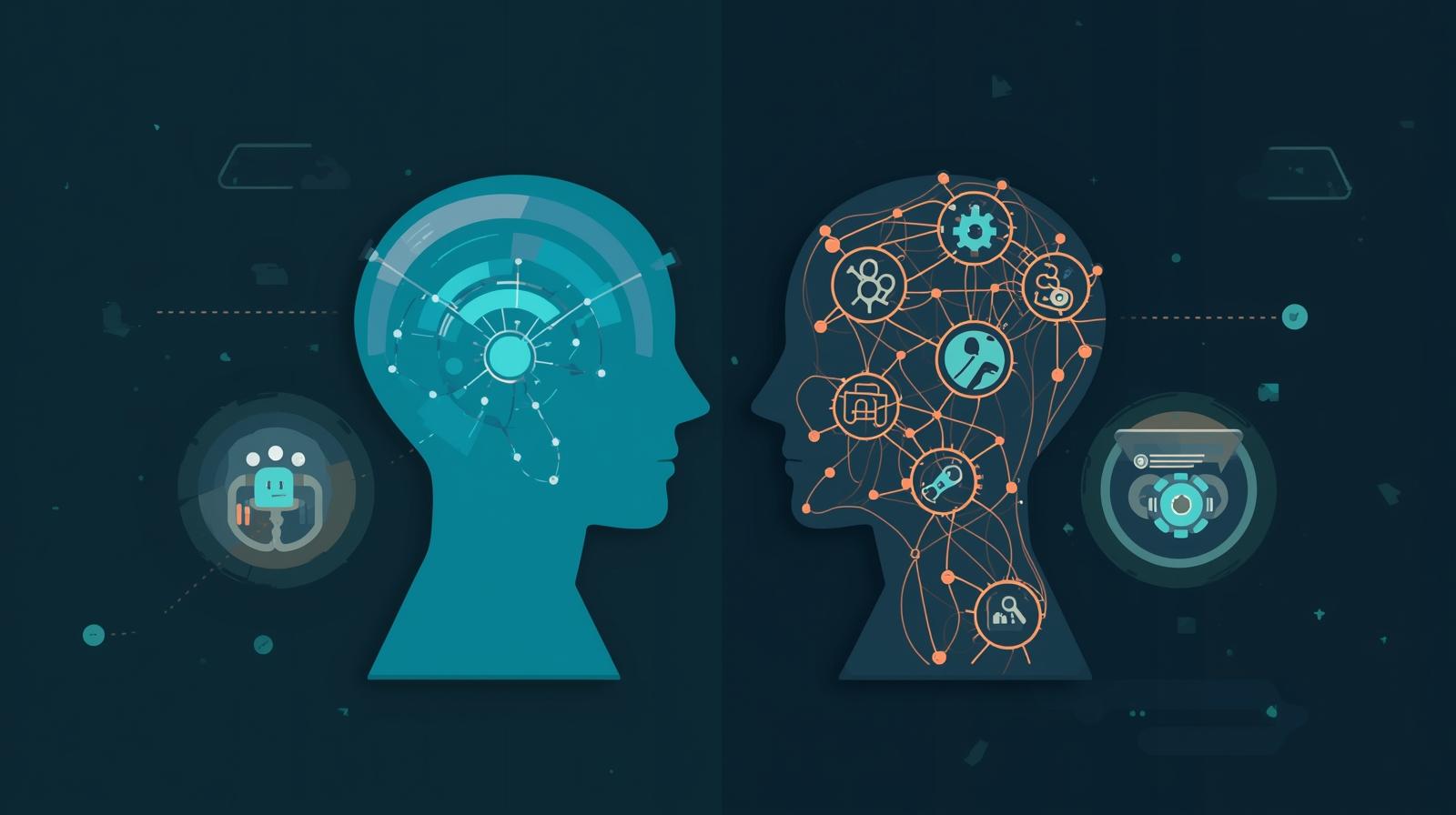
As nonprofits explore AI adoption in 2026, you're likely encountering two terms repeatedly: AI assistants and AI agents. While they sound similar and both leverage artificial intelligence, these technologies represent fundamentally different approaches to automation—and choosing the wrong one can mean wasted resources, frustrated staff, or missed opportunities.
The distinction matters now more than ever. Industry analysts project that 40% of enterprise applications will embed AI agents by the end of 2026, up from less than 5% in 2025. Meanwhile, AI assistants have become ubiquitous across productivity platforms, with over 75% of professional developers relying on AI-powered assistant tools to boost their work. For nonprofit leaders navigating tight budgets and competing priorities, understanding which technology serves your specific needs isn't just a technical question—it's a strategic imperative.
This article will clarify the core differences between AI assistants and AI agents, explain when each technology makes sense for nonprofit use cases, and provide a practical decision framework. You'll learn how these tools differ in autonomy, capability, cost, and risk—and most importantly, how to choose the right approach for your organization's unique circumstances. Whether you're considering your first AI implementation or evaluating whether to expand existing tools, you'll finish with the clarity needed to make informed decisions that serve your mission.
If you're just beginning to explore how AI fits into your nonprofit's work, you might find it helpful to start with our comprehensive Nonprofit Leaders' Guide to AI before diving into the technical distinctions between assistants and agents.
The Core Distinction: Reactive vs. Proactive
At the heart of the difference between AI assistants and AI agents lies a single, crucial concept: autonomy. AI assistants are reactive tools—they perform tasks when you ask them to. AI agents are proactive systems—they work autonomously to achieve a specific goal by whatever means they deem appropriate.
Think of an AI assistant as a highly capable intern who needs direction for every task. You might say, "Draft an acknowledgment letter for this donor," and the assistant will create one for you to review and send. An AI agent, by contrast, is more like a staff member you've trained and given authority to act independently. You tell the agent, "Ensure all donors receive acknowledgment letters within 24 hours," and it figures out how to make that happen—checking your database for new donations, drafting appropriate letters, personalizing them, and potentially even sending them without further input from you.
This fundamental difference in autonomy cascades into differences across capability, risk, cost, oversight requirements, and appropriate use cases. Understanding these distinctions helps you match the right technology to your organizational needs and capacity.
AI Assistants
Reactive tools that enhance human productivity
- Require human prompts for every action
- Provide suggestions and recommendations for humans to execute
- Work within narrowly defined tasks
- Act as "force multipliers" for existing workflows
- Human remains the final arbiter of truth and action
AI Agents
Proactive systems that work autonomously toward goals
- Operate independently after initial goal-setting
- Make decisions and execute actions autonomously
- Handle complex, multi-step workflows
- Use external tools and data sources as needed
- Learn and adapt based on outcomes
How AI Assistants Work in Nonprofit Contexts
AI assistants excel at augmenting human productivity. They're designed to support decision-making rather than replace it, helping teams work smarter by surfacing key insights, automating repetitive sub-tasks, or streamlining workflows that still require human judgment.
In practical terms, AI assistants are the tools you're probably already using or considering for your nonprofit. ChatGPT helping you draft a grant proposal. Microsoft Copilot suggesting edits to your board report. An AI writing assistant helping craft personalized donor thank-you notes that you'll review before sending. These tools are incredibly powerful for accelerating work, but they fundamentally assume a human is driving the process from start to finish.
The capabilities of AI assistants in 2026 have expanded significantly. Modern assistants can plan your day around meetings, draft and refine writing with sophisticated understanding of tone and context, summarize web content with citations, triage email, and even run multi-step automations. Some can operate 24/7 across multiple channels—web, email, Slack, WhatsApp—combining conversational AI with integrations to automate FAQs, ticket triage, lead capture, and database updates.
However, assistants still have meaningful limitations. They're constrained by predefined functions they've been equipped and trained to handle. They require defined prompts to take action. They struggle with genuinely complex conversations that require deep contextual understanding. Perhaps most importantly, they don't inherently retain information from past interactions or continuously learn and evolve based on usage—improvements occur only when developers release updated versions.
For nonprofits, these characteristics make assistants particularly valuable for specific scenarios: when staff need help with tasks they're already performing, when human judgment and oversight are essential, when tasks are relatively predictable and well-defined, and when you want to maintain control over every action taken on behalf of your organization.
Common Nonprofit Use Cases for AI Assistants
- Content drafting: Grant proposals, donor communications, social media posts, job descriptions—anything where a human needs to review and approve before publication
- Research and analysis: Summarizing long documents, extracting insights from donor surveys, researching foundation prospects, analyzing program data
- Decision support: Surfacing relevant information from multiple sources to inform strategic decisions, but not making the decisions themselves
- Template creation: Building frameworks and starting points that staff customize for specific situations
- Knowledge retrieval: Quickly finding information buried in organizational documents, past communications, or knowledge bases
How AI Agents Work in Nonprofit Contexts
AI agents represent a fundamentally different paradigm. Rather than waiting for instructions, agents have the ability and authorization to act autonomously in pursuit of a defined goal. After you set an objective, agents can work independently—perceiving their environment, making decisions, using external tools, and executing actions without direct human intervention at every step.
In nonprofit scenarios, this might look like an AI agent managing your volunteer coordination process end-to-end. You tell the agent your goal: "Match new volunteers with appropriate opportunities based on their skills, availability, and interests, then guide them through onboarding." The agent then autonomously monitors volunteer applications, analyzes their profiles, identifies suitable matches, sends personalized invitations, schedules orientation sessions, tracks completion of required training modules, and flags any volunteers who aren't progressing—all without you manually orchestrating each step.
AI agents possess extensive capabilities that distinguish them from assistants. They can perceive and act upon their environment by monitoring data sources, detecting changes, and responding appropriately. They use external tools and integrations to accomplish tasks, whether that's querying databases, sending communications, updating records, or triggering workflows in other systems. They make complex decisions involving multiple variables and context-based adjustments. Critically, many agents can learn and adapt continuously based on outcomes, refining their approaches over time.
The autonomous nature of agents makes them particularly valuable for complex, multi-step workflows where numerous decision points exist. They thrive in scenarios with unpredictable inputs that require contextual adaptation. They're most useful when you have a clear end goal but the path to achieving it varies based on circumstances—exactly the kind of situation nonprofits face regularly when working with diverse stakeholder populations.
A compelling nonprofit example comes from Pledge 1%, an organization that includes roughly 20,000 companies committed to giving back to their communities. AI agents help them match social needs with volunteers and resources at a scale no human team could perform manually. The agents analyze community needs, volunteer skills and interests, available resources, and organizational requirements—then make intelligent matches and facilitate connections autonomously.
Nonprofit Scenarios Where AI Agents Excel
- Client case management: Triaging intake requests, routing cases to appropriate staff, monitoring progress, flagging urgent situations, coordinating services across multiple providers
- Donor engagement journeys: Moving donors through cultivation sequences based on their behaviors and responses, adapting outreach strategies, identifying optimal ask timing
- Grant compliance monitoring: Tracking deadlines across multiple grants, monitoring expenditures against budgets, alerting staff to upcoming requirements, compiling reporting data
- Event coordination: Managing complex logistics across registration, communications, volunteer scheduling, vendor coordination, and follow-up
- Multi-channel customer service: Resolving constituent questions and issues across email, chat, phone, and social media without human intervention for routine matters
When to Use Each: A Practical Decision Framework
The choice between AI assistants and AI agents isn't about which technology is "better"—it's about which one appropriately matches your specific use case, organizational capacity, and risk tolerance. Both have valuable roles in nonprofit operations, often working side by side to address different needs.
The decision fundamentally comes down to how much autonomy is appropriate for the task at hand, balanced against the complexity of the process, your available resources for oversight, and the consequences of errors. Let's break down the key decision criteria.
Choose AI Assistants When...
- Human judgment is essential: Tasks requiring ethical considerations, donor relationships, messaging on behalf of your organization, or decisions affecting vulnerable populations
- Workflows are relatively simple: Quick tasks, straightforward processes, or single-step actions where automation would provide minimal additional value
- You need maximum control: Every action requires approval, your organization has low risk tolerance, or you're in a heavily regulated environment
- Budget is limited: You need to start small and scale gradually, can't afford complex integrations, or want to minimize ongoing costs
- Technical capacity is low: You have limited IT support, minimal experience with AI, or staff who need simple, intuitive tools
- You're augmenting existing workflows: Staff are already doing the work effectively, and you want to help them work faster without fundamentally changing processes
Choose AI Agents When...
- Processes are complex and multi-step: Workflows involving numerous decision points, context-based variations, or coordination across multiple systems
- Volume overwhelms capacity: You have more work than staff can handle, backlogs are growing, or you're turning away people you could serve
- Inputs are unpredictable: Each case varies significantly, requiring contextual adaptation rather than standardized responses
- You have a clear goal with variable paths: The desired outcome is well-defined, but the steps to get there differ based on circumstances
- Continuous operation is needed: 24/7 coverage, real-time responses, or monitoring that can't wait for business hours
- ROI justifies investment: The efficiency gains are substantial enough to offset higher implementation costs and ongoing oversight needs
It's worth noting that these aren't mutually exclusive choices. Many nonprofits benefit from a hybrid approach—using assistants for tasks requiring human judgment and oversight while deploying agents for complex, high-volume processes where autonomy creates significant value. The key is matching the technology's capabilities and limitations to your specific context.
Cost, Risk, and Governance Considerations
Beyond functionality, nonprofit leaders need to consider the practical realities of cost, risk, and governance when choosing between assistants and agents. These factors often matter as much as technical capabilities when making decisions with limited budgets and risk-averse boards.
Cost Considerations
AI Assistants
Generally lower upfront costs. Many assistants are available through subscription services with transparent pricing. Implementation is often straightforward—sign up, start using. However, assistants may seem more affordable initially but require ongoing manual oversight, which increases operational costs over time through staff hours spent reviewing, approving, and acting on assistant outputs.
AI Agents
Higher initial investment. Agents typically require more complex integration with existing systems, custom configuration for your specific workflows, and potentially dedicated technical expertise for setup. However, their ability to operate independently can lead to significant efficiency gains that offset higher costs. The challenge is justifying the upfront investment before seeing returns—difficult for resource-constrained nonprofits.
Risk and Control
AI Assistants
Lower risk because humans approve every action. Mistakes are caught before they affect donors, clients, or stakeholders. This makes assistants appropriate for sensitive communications, fundraising, and work with vulnerable populations. Control remains firmly in human hands—the assistant suggests, but you decide.
AI Agents
Higher risk due to autonomous action. Agents can make mistakes at scale before anyone notices. This creates serious governance challenges—most Chief Information Security Officers express deep concern about AI agent risks, yet only a handful of organizations have implemented mature safeguards. Organizations are deploying agents faster than they can secure them. This doesn't mean agents are too risky to use, but it does mean you need robust oversight mechanisms.
Critical Governance Questions for AI Agents
- What actions can the agent take without human approval? What requires escalation?
- How will you monitor agent activity? What logging and audit trails exist?
- What happens when the agent makes a mistake? What's your correction process?
- Who is accountable when something goes wrong? How does responsibility flow?
- How does this agent align with your AI policy and ethical guidelines?
- What data can the agent access? What privacy and security measures are in place?
If you haven't yet established an AI policy for your nonprofit, that should precede any implementation of autonomous agents. Our article on AI Policy Templates by Nonprofit Sector can help you create appropriate governance frameworks.
The Hybrid Approach: Agents with Human-in-the-Loop
For many nonprofits, the optimal solution isn't choosing between assistants and agents—it's implementing a hybrid approach that combines the efficiency of automation with the oversight of human judgment. This model, often called "human-in-the-loop" (HITL) design, allows AI agents to handle the bulk of routine work while escalating specific decisions or actions to humans.
In a hybrid system, an AI agent might autonomously handle 90% of constituent inquiries—answering frequently asked questions, providing information about programs, collecting intake information, and routing requests to appropriate staff. However, when the agent detects frustration, encounters a request outside its scope, or faces a situation requiring empathy and judgment, it escalates to a human staff member. The human maintains oversight without being involved in every routine interaction.
This approach strikes a balance between workflow efficiency and human oversight that often makes sense for nonprofit contexts. You get the scalability and 24/7 availability of agents while maintaining appropriate control over sensitive decisions and complex situations. Many enterprise implementations combine reactive assistants for simple processes with proactive agents for complex, evolving needs, with humans intervening at critical decision points.
Implementing a human-in-the-loop system requires thoughtful design. You need to clearly define which decisions agents can make autonomously and which require human approval. You need escalation triggers that reliably identify situations beyond the agent's competence. You need monitoring systems that give staff visibility into agent activity without overwhelming them with alerts. And you need processes for humans to review agent decisions periodically, ensuring quality remains high and the agent continues learning appropriately.
For nonprofits just beginning with AI agents, starting with generous human oversight and gradually increasing autonomy as you build confidence can be a prudent approach. You might begin with agents that propose actions for human approval (similar to assistants) and, once you trust their judgment in specific scenarios, grant them authority to act independently in those bounded situations.
Example: Hybrid Donor Communication System
Consider a donor communication workflow designed with human-in-the-loop principles:
- Autonomous agent actions: Sending automated thank-you messages for donations under $100, scheduling follow-up emails based on engagement, updating donor records with new information, flagging donors who haven't engaged in six months
- Human approval required: Communications to major donors (over $1,000), any message addressing a complaint or concern, personalized asks for increased giving, decisions to move donors to different communication tracks
- Human review: Weekly reports on donor engagement trends, monthly audits of automated messages sent, quarterly assessments of communication effectiveness
This system allows the agent to handle high-volume routine communications efficiently while ensuring humans remain involved in relationship-building and sensitive interactions—exactly where their judgment adds most value.
Looking Ahead: The Future of AI Assistants and Agents
The landscape of AI assistants and agents is evolving rapidly. Industry projections suggest that by the end of 2026, 40% of enterprise applications will include task-specific AI agents—a dramatic increase from less than 5% in 2025. The agentic AI market is expected to surge from $7.8 billion today to over $52 billion by 2030. For nonprofits, this means increasing availability of agent-based solutions, likely with lower costs and easier implementation as the technology matures.
Several trends are worth watching. Multi-agent systems—where multiple specialized agents collaborate to accomplish complex goals—are becoming more sophisticated. Agents are gaining better natural language understanding, making them easier to configure and communicate with. Integration platforms are simplifying the process of connecting agents to nonprofit systems like CRMs, databases, and communication tools. And importantly, governance frameworks and best practices for responsible agent deployment are emerging, addressing some of the oversight challenges that currently make agents daunting for smaller organizations.
At the same time, AI assistants aren't standing still. They're becoming more capable, with better context awareness, improved memory across sessions, and enhanced ability to handle complex, multi-turn conversations. The line between sophisticated assistants and simple agents may blur as assistants gain limited autonomy in bounded contexts.
For nonprofit leaders, this evolution means the choice between assistants and agents isn't a one-time decision. It's an ongoing strategic question as both technologies advance and as your organization's capacity, comfort, and needs evolve. Starting with assistants and moving toward agents as you build experience, confidence, and infrastructure is a common and reasonable path—but it's not the only valid approach. Some nonprofits may find assistants meet their needs indefinitely, while others may leap to agents for specific high-value use cases even as early adopters.
What matters most isn't adopting the newest technology—it's thoughtfully matching your tools to your mission, capacity, and organizational culture. The best AI implementation is the one that genuinely serves your constituents better, supports your staff effectively, and aligns with your values and governance standards.
To explore how these technologies fit into a broader AI strategy for your organization, see our guide on Building Your Nonprofit's AI Strategic Plan.
Conclusion: Making the Right Choice for Your Nonprofit
AI assistants and AI agents represent two distinct approaches to leveraging artificial intelligence, each with particular strengths and appropriate use cases. Assistants excel at augmenting human productivity—helping staff work smarter and faster on tasks that still benefit from human judgment and oversight. Agents excel at autonomous execution—handling complex, multi-step processes independently and operating at scale beyond human capacity.
For nonprofit leaders, the choice isn't about which technology is superior in the abstract. It's about which one appropriately serves your specific needs while fitting your budget, capacity, risk tolerance, and organizational culture. AI assistants make sense when human judgment is essential, when you need maximum control, when budgets are tight, or when technical capacity is limited. AI agents make sense for complex workflows, high-volume processes, unpredictable inputs, or situations where continuous operation creates significant value.
Many nonprofits will ultimately use both—leveraging assistants where human oversight matters most and deploying agents where autonomy creates efficiency. The hybrid approach, with agents handling routine work and humans intervening at critical decision points, often represents the sweet spot between efficiency and control.
As you consider which path is right for your organization, focus on a few key questions: What problem are you trying to solve? How much autonomy is appropriate given the stakes and sensitivity? Do you have the technical capacity and governance infrastructure to support autonomous agents? What does your budget allow, both for implementation and ongoing oversight? And perhaps most importantly, how does this technology serve your mission and the people you exist to help?
The distinction between assistants and agents matters because it helps you make strategic choices aligned with your organizational reality. Whether you start with simple assistants and evolve toward sophisticated agents, or identify specific high-value use cases where agents make sense from the beginning, understanding this difference ensures your AI investments genuinely serve your nonprofit's purpose rather than following trends that may not fit your context.
Ready to Build Your Nonprofit's AI Strategy?
Whether you choose AI assistants, agents, or a hybrid approach, One Hundred Nights can help you develop a thoughtful implementation strategy that aligns with your mission, capacity, and organizational values.