
Automated Onboarding with AI: Getting New Nonprofit Staff Productive Faster
Nonprofits that apply AI to the onboarding process consistently see faster time-to-productivity, fewer administrative errors, and stronger early retention. This guide shows you how to build an onboarding system that works as hard as your mission demands.
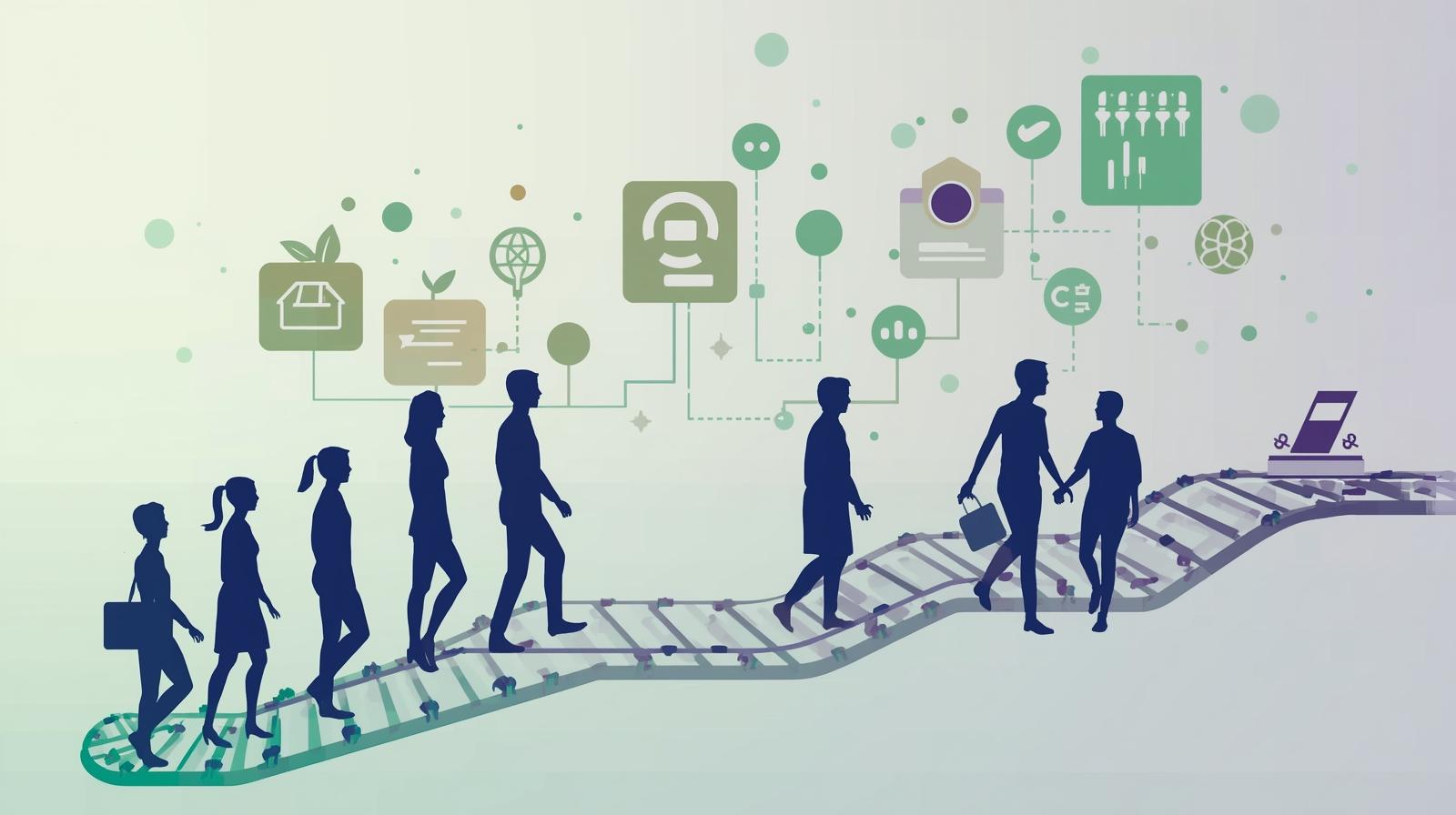
Onboarding a new staff member at a nonprofit has always meant navigating a dense web of compliance requirements, mission orientation, program knowledge, and relationship building, all while the HR team, program director, and executive director each contribute a piece of the puzzle. The result, in many organizations, is an onboarding experience that takes weeks to complete, consumes hours of senior staff time, and still leaves new hires feeling uncertain about their role, their tools, and how their work connects to the mission. When that new hire leaves within the first six months, the cost in recruiting, training, and lost productivity can exceed $10,000 for even a junior position.
AI is changing this. Organizations that have implemented AI-assisted onboarding workflows report, on average, a 15% faster time-to-productivity for new staff and a 75% reduction in administrative workload for HR teams. Those numbers represent real hours recovered for mission-critical work. They also represent new employees who feel better supported, more informed, and more deeply connected to the organization from their very first week.
For nonprofits, the onboarding challenge carries a dimension beyond what corporate HR literature typically addresses. New staff members need to understand not just how to do their job, but why the work matters, who benefits from it, and how the organization's values translate into daily decisions. AI onboarding tools, when configured thoughtfully, can actually accelerate this cultural and mission immersion in ways that a stack of policy documents never could.
This guide covers the core components of an AI-powered onboarding system, the tools available to nonprofits at different budget levels, and a practical implementation approach that respects both the efficiency gains AI offers and the human relationships that make onboarding meaningful.
The Hidden Cost of Broken Onboarding
Most nonprofit leaders understand that poor onboarding contributes to turnover, but the full scope of the problem is often underestimated. The first 90 days of employment represent a critical window in which new hires form their lasting impressions of organizational culture, management quality, and career opportunity. Research consistently shows that employees who experience structured, well-supported onboarding are 58% more likely to remain with their organization after three years. For nonprofits that typically run lean staffing models, retaining talented staff is not just a human resources concern but a direct operational and mission-delivery issue.
Beyond retention, inefficient onboarding creates significant hidden costs that rarely appear in budget discussions. Senior program staff pulled into repetitive orientation conversations cannot focus on the work they were hired to do. New employees who spend their first weeks hunting for policies, seeking IT credentials, or waiting for access to systems are consuming organizational resources without yet contributing value. And HR professionals who manually coordinate multi-department onboarding checklists, chase signatures on compliance documents, and manage competing schedules are performing work that AI can now handle with greater consistency and far less effort.
There is also the question of quality. Manual onboarding processes introduce variability. One new hire gets a thorough orientation from an engaged supervisor; another joins during a busy period and receives minimal attention. These inconsistencies create unequal experiences that can translate directly into unequal performance. AI-powered onboarding solves the consistency problem by ensuring every new employee receives the same complete, well-sequenced information, regardless of when they join or how busy the team is at that moment.
Core Components of AI-Powered Onboarding
An effective AI onboarding system brings together several interconnected capabilities. Understanding each component helps you prioritize where to start and how to build toward a more complete solution over time.
Automated Administrative Processing
Eliminating the paperwork bottleneck from day one
The most immediate and measurable impact of AI in onboarding comes from automating the administrative processes that consume HR staff time and slow down new hire access to tools and information. This includes automated distribution of offer letters, employee handbooks, and compliance documents; digital signature collection with automatic routing to the appropriate personnel file; IT access provisioning triggered by HR system updates; and benefits enrollment workflows with deadline reminders and completion tracking.
- New hire paperwork distributed and collected before the first day
- IT credentials and system access ready when the employee arrives
- Compliance acknowledgments tracked and filed automatically
- Benefits enrollment completed during the first week with automated prompts
Personalized Learning Pathways
Role-specific onboarding that adapts to the individual
AI enables nonprofits to create personalized onboarding experiences that adapt based on an employee's role, department, prior experience, and learning pace. Rather than requiring every new hire to complete the same generic orientation regardless of whether they are a development coordinator or a program manager, AI-driven learning management systems deliver role-specific content in a logical sequence that builds knowledge progressively. They can also adjust pacing based on completion rates, flag areas where additional support might be needed, and surface supplemental resources when a new hire indicates uncertainty.
- Department-specific content tracks built around actual job responsibilities
- Adaptive sequencing that builds knowledge without overwhelming new hires
- Progress monitoring with automated alerts when milestones are missed
- Knowledge checks that help managers understand where to focus coaching attention
AI-Powered Knowledge Access
Giving new hires instant answers without taxing existing staff
One of the most persistent sources of friction in nonprofit onboarding is the volume of questions new hires generate during their first weeks. Where is the expense reimbursement policy? What is the proper process for requesting time off? How do I access the grant tracking system? These questions are entirely reasonable, but when they land in the inboxes of busy managers and colleagues, they create interruptions that compound across the organization. AI chatbots and knowledge bases, built on an organization's actual documentation and policies, give new employees instant access to accurate answers at any hour, without requiring anyone to stop what they are doing.
The tools that enable this are closely related to the knowledge management systems many nonprofits are building for their broader operations. An organizational knowledge base configured for onboarding queries draws on the same policy documents, procedure guides, and program descriptions that inform day-to-day staff decision-making. Organizations that build this infrastructure once can repurpose it across recruitment, onboarding, and ongoing staff support.
Mission and Culture Immersion
Using AI to accelerate the deepest form of connection
Many nonprofit leaders worry that automating onboarding risks stripping away the human, values-driven dimension that makes mission-based work meaningful. This concern is valid but addressable. AI handles the administrative and informational layers of onboarding precisely so that human interactions can be reserved for what they do best: conveying the organization's culture, sharing stories of impact, building relationships, and communicating why this work matters.
Thoughtfully designed AI onboarding can actually enhance mission immersion by delivering curated content that new hires can engage with at their own pace. Video messages from beneficiaries, impact reports with narrative framing, recorded conversations with program staff about their motivations, and interactive timelines of organizational history can all be delivered through AI-managed learning platforms. The result is a richer orientation to mission than a single half-day session could provide, delivered across the employee's first weeks in a way that reinforces and deepens understanding over time.
AI Onboarding Tools at Every Budget Level
The nonprofit technology market now offers AI-assisted onboarding solutions that span a wide range of costs and capabilities. Choosing the right approach depends on your organization's size, existing technology infrastructure, and the specific pain points you most need to address.
Entry-Level Solutions (Under $50/month)
Small nonprofits with five to twenty staff members can achieve meaningful improvements through free or low-cost tools they may already have access to. Google Workspace or Microsoft 365, both of which offer nonprofit pricing, include workflow automation tools that can handle document routing, task assignments, and calendar scheduling for onboarding sequences.
- Google Forms or Microsoft Forms for pre-boarding data collection
- Zapier or Make for automated task and notification workflows
- Notion or Google Sites for a structured new hire knowledge portal
- ChatGPT or Claude for drafting personalized onboarding content
Mid-Range Platforms ($50 to $300/month)
Organizations with larger staff or higher onboarding volumes benefit from dedicated HR platforms that integrate AI capabilities into a structured workflow. BambooHR offers nonprofit pricing and includes onboarding checklists, digital document management, and e-signature collection. Gusto provides similar HR automation with payroll integration, which reduces data entry errors when onboarding connects directly to compensation systems.
- Centralized employee records with automated document routing
- Role-based onboarding task assignments across departments
- Progress dashboards for managers and HR staff
- Integration with payroll and benefits enrollment systems
Learning Management Systems (LMS)
For organizations that hire regularly or need more sophisticated training sequences, a dedicated learning management system adds AI-powered course personalization to the onboarding workflow. TalentLMS and Absorb LMS both offer nonprofit pricing and include features for creating role-specific learning paths, tracking completion, assessing knowledge retention, and delivering content across mobile and desktop devices.
- Custom course building without technical expertise
- Adaptive learning paths that respond to quiz performance
- Completion certificates for compliance training requirements
Enterprise HR Systems (Workday, ADP)
Large nonprofits with complex staffing models, multiple locations, or significant compliance requirements may benefit from enterprise-grade systems that integrate AI across the entire employee lifecycle. Workday and ADP both incorporate machine learning for content recommendations, skills gap identification, and predictive attrition analysis. These tools carry higher costs but deliver integration across recruitment, onboarding, performance management, and succession planning in a unified platform.
- End-to-end employee lifecycle management
- AI-powered skills matching and development planning
- Multi-location, multi-department onboarding coordination
Building Your AI Onboarding System: A Practical Sequence
The most effective AI onboarding implementations follow a phased approach that builds complexity gradually, starting with the highest-impact, lowest-effort improvements and expanding from there.
Phase 1: Pre-boarding Automation (Weeks 1-4 of Implementation)
Start by automating the pre-boarding period between offer acceptance and the first day. This phase typically yields the most immediate time savings for HR staff and creates the strongest first impression for new hires. Map out every action currently taken between offer letter and day one: who sends which documents, who sets up which accounts, who schedules which introductions. Then determine which of those actions can be triggered automatically based on the HR system registering a new hire.
Aim to ensure that by the time a new employee arrives for their first day, all paperwork is complete, all system access is provisioned, their manager has received preparation materials, and their first week schedule is on their calendar. The difference between a new hire who arrives to a fully prepared workspace and one who spends their first day waiting for email access and hunting down policy documents is dramatic, and it sets the tone for everything that follows.
Phase 2: Knowledge Portal Development (Weeks 5-10)
Build a centralized new hire knowledge portal that consolidates everything an employee needs during their first ninety days: organizational history and mission, program overviews, policy documents, team directories, system access guides, and FAQ answers. This portal becomes the primary reference for new hires seeking orientation information, reducing ad-hoc questions to colleagues.
If your organization has already built a broader AI knowledge management system, the onboarding portal can draw from the same content base. Organizations without an existing knowledge system can use this project as the foundation for a broader institutional knowledge effort that will serve staff well beyond onboarding. Tools like Notion AI, Guru, or even a well-structured Google Drive with an AI-powered search interface can serve this function at modest cost.
Phase 3: Personalized Learning Paths (Weeks 8-16)
Once the administrative and knowledge infrastructure is in place, introduce role-specific learning sequences that guide new hires through the information most relevant to their position. For a development coordinator, this might include modules on your donor database system, grant management processes, fundraising calendar, and key funder relationships. For a program manager, it would cover client intake procedures, data collection requirements, community partnerships, and outcome measurement frameworks.
The most important principle in building these pathways is to sequence information in the order a new employee will actually need it. Lead with immediate operational needs, then layer in strategic and historical context as the employee becomes more stable in their role. Use knowledge checks not as gatekeeping mechanisms but as signals to supervisors about where additional support or conversation might be most valuable.
Phase 4: Measurement and Continuous Improvement
Measure what matters. Track time-to-productivity using department-specific milestones rather than generic completion dates. Survey new hires at 30, 60, and 90 days about their onboarding experience, what felt most useful, and what left them feeling uncertain. Monitor early turnover rates and compare them before and after AI onboarding implementation. Review which knowledge base articles receive the most queries and use that data to identify gaps in your formal onboarding content.
The data generated by AI onboarding systems is itself valuable for continuous improvement. When you can see exactly where new hires spend their time, which modules they complete quickly versus where they stall, and what questions they ask the knowledge system most often, you have a precise map of where your onboarding program needs strengthening. This feedback loop allows each cohort of new hires to benefit from improvements made based on the experience of those who came before.
Nonprofit-Specific Onboarding Considerations
Several dimensions of nonprofit onboarding require careful attention that generic HR automation tools do not address out of the box.
Compliance and Funder Requirements
Nonprofit staff often need to complete training requirements tied to specific grants or contracts. Federally funded programs may require training on civil rights protections, client privacy, and financial management. State contracts may have their own requirements. AI onboarding systems can be configured to route different employees to different compliance modules based on their funding sources or program assignments, and to automatically generate completion records for audit purposes.
This is particularly valuable for organizations with diverse funding portfolios, where the compliance training required for a Head Start program manager differs significantly from what a workforce development coordinator needs. Role-based automation eliminates both the risk of employees missing required training and the inefficiency of requiring irrelevant compliance content.
Volunteer and Seasonal Staff Onboarding
Many nonprofits manage significant volunteer workforces alongside paid staff, and the volunteer onboarding challenge is distinct from staff onboarding in important ways. Volunteers may come and go seasonally, may have varying time availability for orientation, and typically do not have work email addresses or system access. AI tools designed for staff onboarding can be adapted for volunteers, but it requires intentional configuration that accounts for these differences.
Seasonal staff, such as camp counselors, tax preparation assistants, or summer youth program employees, represent a high-volume, high-frequency onboarding challenge that AI can address particularly effectively. When the same role is hired repeatedly, the onboarding content is already developed and simply needs to be deployed efficiently to each new cohort, with AI managing scheduling, reminders, and completion tracking.
Remote and Hybrid Staff Integration
Nonprofit staff increasingly work in remote or hybrid arrangements, and onboarding remote employees presents particular challenges around relationship building, cultural transmission, and practical system training. AI tools are actually well-suited to remote onboarding because they deliver consistent, on-demand content that employees can access from anywhere and at any time. But the human connection dimension requires deliberate design, particularly when a new employee cannot simply walk down the hall to ask a question or observe how colleagues work.
Effective remote onboarding systems schedule structured video introductions with key colleagues and stakeholders during the first two weeks, pair new hires with a buddy who proactively checks in during the first month, and create virtual spaces (like dedicated Slack channels or Teams groups) where new hires can ask questions without feeling exposed or burdensome. AI manages the logistics and reminders; people provide the warmth.
Connecting Onboarding to the AI Strategy
As AI becomes more embedded in nonprofit operations, onboarding has become the ideal moment to build staff AI literacy from the ground up. New employees who learn from their first week that the organization uses AI tools intentionally, responsibly, and in service of the mission arrive at their roles with the right mindset for working alongside AI rather than being surprised or threatened by it.
Consider building an AI orientation module into your standard onboarding sequence. This module would cover the organization's AI policy, the specific tools staff are expected to use, the ethical principles that guide AI use, and where to find help when AI tools behave unexpectedly. Organizations building AI champions networks can use onboarding as the first touchpoint for identifying staff who may be interested in deeper involvement in AI governance and adoption efforts.
Common Pitfalls and How to Avoid Them
Organizations that struggle with AI onboarding implementations typically encounter predictable challenges that thoughtful planning can prevent.
Automating a Broken Process
AI makes existing processes faster, not better. If your current onboarding sequence is disorganized, redundant, or missing key elements, automating it will just produce a faster version of the same poor experience. Before implementing AI tools, audit your current onboarding process end-to-end. Map every step, identify where delays occur, note what information new hires consistently lack, and talk to recently hired staff about what would have helped them most. Redesign the process first, then automate the improved version.
Removing Human Connection Entirely
The efficiency gains from AI onboarding can be tempting enough that some organizations try to automate everything, replacing manager conversations, team lunches, and mentoring relationships with digital modules. This is a mistake, particularly in mission-driven environments where organizational culture and human connection are core to staff satisfaction and retention. Use AI to eliminate the administrative burden on managers so they have more time and energy for genuine relationship building, not as a substitute for that connection.
Setting and Forgetting
Onboarding content becomes outdated as programs evolve, policies change, and technology systems are updated. An AI onboarding system built in 2025 that is not reviewed in 2026 will be directing new hires toward outdated procedures, deprecated tools, and superseded policies. Build a content review schedule into your onboarding maintenance plan, and assign clear ownership for keeping each module current. The person responsible for updating onboarding content should be the same person most affected by new hires arriving poorly prepared.
Underestimating Content Development Time
The software setup for AI onboarding is typically the easier part. The harder work is developing the content that makes the system valuable: writing clear policy summaries, recording orientation videos, building knowledge base articles, and designing role-specific learning modules. Organizations that budget for the technology but not for the content development effort find themselves with powerful onboarding infrastructure and nothing meaningful to put in it. Allocate at least as much time and resource to content development as to platform selection and configuration.
Building Onboarding That Serves the Mission
AI-powered onboarding represents one of the highest-leverage investments a nonprofit HR team can make. The time saved on administrative processing, the consistency delivered across every new hire cohort, and the data generated for continuous improvement all compound over time into significantly better talent outcomes. Staff who onboard well stay longer, contribute more quickly, and represent your mission more effectively from their very first interactions with donors, beneficiaries, and community partners.
The organizations seeing the strongest results from AI onboarding are those that approach the implementation with the same intentionality they bring to program design: starting with a clear understanding of what success looks like, building thoughtfully through iterative phases, and measuring outcomes honestly. They use AI to eliminate the friction that was never adding value, while preserving and amplifying the human elements that make working for a mission-driven organization different from any other kind of job.
For many nonprofits, implementing even the most basic AI onboarding infrastructure represents a significant step forward from the current state. Start with pre-boarding automation and a simple knowledge portal. Measure the impact on HR staff time and new hire satisfaction. Build from there. The staff member you onboard well today is the program leader, development director, or executive director of tomorrow, and the investment in their first 90 days will generate returns long after the onboarding process itself is complete. Connect your onboarding work to your broader AI implementation strategy to ensure it serves the organization's long-term goals, not just its immediate operational needs.
Ready to Transform Your Onboarding Process?
One Hundred Nights helps nonprofits design and implement AI-powered HR systems that reduce administrative burden and get new staff contributing to your mission faster.