
Building an AI Ethics Committee for Your Nonprofit Board
As artificial intelligence moves from experimental tools to operational infrastructure, nonprofit boards face new governance responsibilities that existing committee structures weren't designed to address. An AI ethics committee provides dedicated oversight for algorithmic decisions, data bias monitoring, mission alignment verification, and accountability frameworks that ensure AI implementation serves organizational values rather than undermining them. This article offers a practical roadmap for establishing effective AI ethics governance—from initial formation through ongoing operations—tailored to nonprofit contexts where resources are limited but ethical stakes are high.
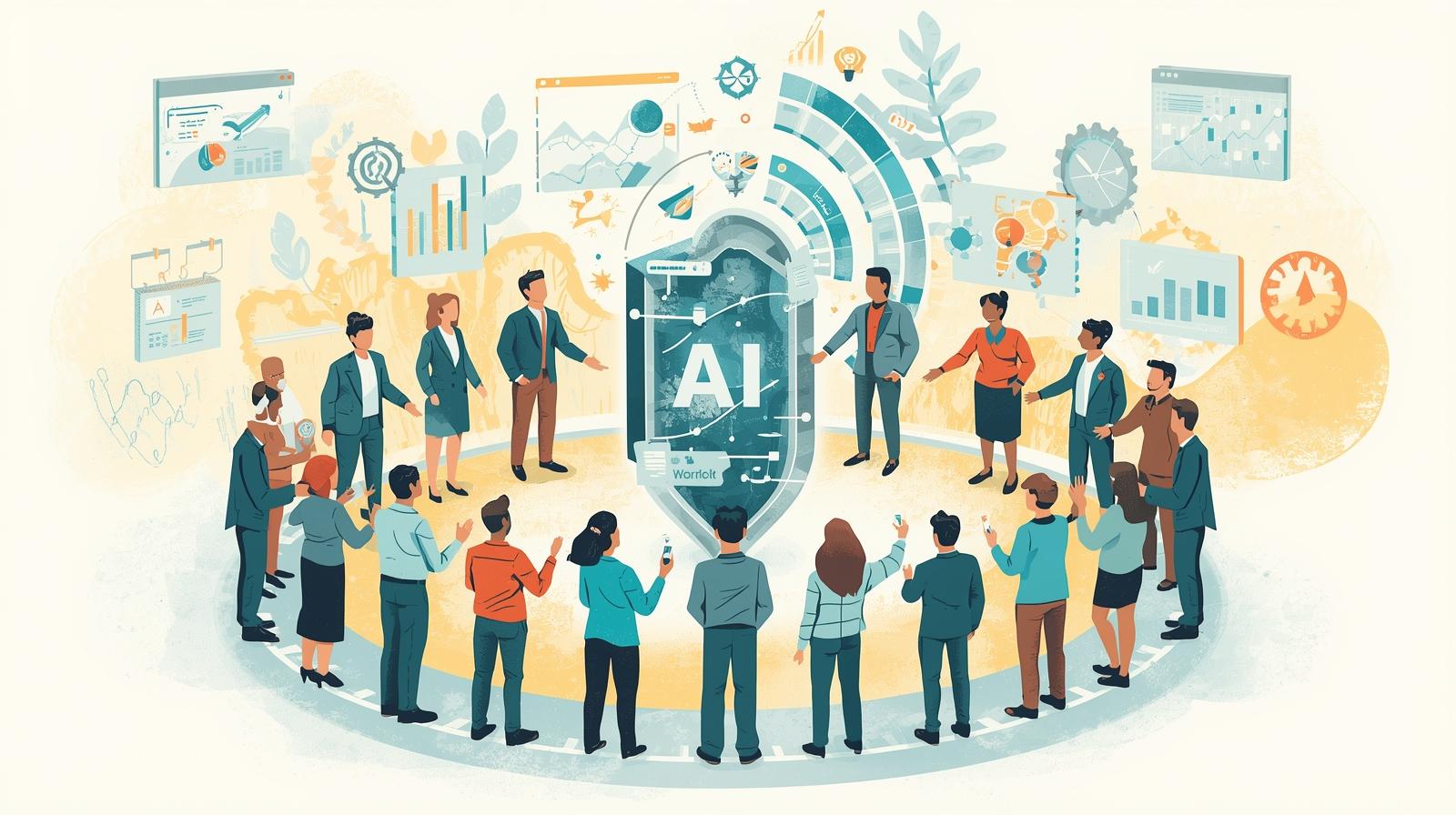
In January 2026, nonprofit boards are navigating a fundamental governance shift: AI adoption has moved from IT departments to boardrooms. Organizations using AI for donor segmentation, program participant matching, grant application evaluation, or resource allocation are making consequential decisions through algorithmic systems—decisions that affect who receives services, how resources are distributed, which communities are prioritized, and whether organizational mission is faithfully executed. These aren't technical questions; they're ethical, strategic, and fiduciary responsibilities requiring board-level oversight.
Yet most nonprofit boards lack structures to provide this oversight. Traditional committees—finance, governance, program, development—weren't designed for algorithmic accountability. Who reviews AI systems for bias? Who verifies that automated decisions align with mission? Who monitors for mission drift when resource allocation follows machine learning recommendations? Who ensures transparency when algorithms make opaque predictions? These questions prompted leading nonprofits to establish dedicated AI ethics committees, and in 2026, this governance innovation is moving from pioneering organizations to mainstream practice.
Creating an AI ethics committee isn't about adding bureaucracy or slowing innovation. It's about ensuring that boards fulfill their fiduciary duty—exercising reasonable care, remaining loyal to mission, and acting in good faith—when organizational operations increasingly depend on AI systems. It's about building accountability structures before problems emerge rather than responding reactively after harm occurs. And it's about establishing governance frameworks that enable nonprofits to leverage AI's efficiency gains while maintaining the ethical standards and community trust that define successful mission-driven organizations.
This article provides a comprehensive guide to establishing an AI ethics committee suitable for nonprofit contexts. We'll explore why dedicated AI oversight matters, how to structure committees for effectiveness, what responsibilities these bodies should hold, who should serve as members, how to establish oversight frameworks, and what ongoing operations look like in practice. Whether your organization is just beginning AI adoption or already relying on algorithmic systems, thoughtful ethics governance strengthens both risk management and mission alignment—turning potential liability into strategic advantage.
Why Dedicated AI Ethics Oversight Matters
Some boards question whether AI ethics requires dedicated committee structure rather than folding these responsibilities into existing governance bodies. Can't the audit committee handle AI risk? Can't the program committee review algorithmic decisions affecting services? Can't the executive committee oversee implementation? While existing committees can certainly engage with AI issues, dedicated ethics oversight provides critical advantages that justify separate structure.
Specialized Expertise and Sustained Attention
AI ethics requires domain knowledge that most board members don't possess through traditional nonprofit experience. Understanding algorithmic bias, data privacy implications, machine learning limitations, and appropriate human oversight mechanisms demands specific expertise. While boards can access external advisors for guidance, having a dedicated committee ensures sustained attention rather than episodic consultation. AI issues arise continuously as systems are updated, data sources change, and new applications are implemented. A standing committee maintains ongoing awareness, builds institutional knowledge over time, and develops judgment about when to escalate issues versus handle them through established protocols.
Mission Alignment Focus
Existing board committees naturally emphasize their primary mandates: financial sustainability, program effectiveness, fundraising success, governance compliance. These perspectives are essential but can create blind spots regarding AI's mission implications. When donor segmentation algorithms systematically exclude certain demographics, is that primarily a fundraising issue (the development committee's domain) or an equity issue requiring ethical review? When program participant matching systems perpetuate historical biases, is that mainly a program outcomes question or a mission drift concern? A dedicated ethics committee brings mission alignment to the center of analysis, explicitly examining whether AI implementation serves organizational values or inadvertently undermines them.
Proactive Risk Management
Most board committees operate reactively, addressing problems that emerge through reporting. Audit committees respond to financial irregularities; program committees address service delivery concerns; governance committees handle compliance failures. AI ethics requires more proactive posture—identifying potential harms before they materialize, establishing safeguards during system design rather than after deployment, and monitoring for subtle issues (like gradually accumulating bias) that don't trigger traditional red flags. A dedicated committee can implement regular AI audits, require ethics impact assessments before major implementations, and maintain surveillance systems that surface problems early.
Governance Gaps Without Dedicated Oversight
Organizations lacking AI ethics committees commonly experience these governance failures:
- Assumption of neutrality: Boards assume AI systems are objective, missing embedded biases in training data or design choices
- Delayed recognition: Ethical problems emerge gradually but aren't noticed until significant harm has occurred
- Fragmented responsibility: No single entity owns AI oversight, creating accountability gaps where issues fall through committee cracks
- Technical deference: Boards defer to IT staff on AI decisions, treating ethical questions as purely technical issues
- Inadequate documentation: AI decisions aren't documented sufficiently to enable accountability or retrospective review
These gaps don't reflect board negligence or incompetence—they reflect governance structures designed for pre-AI operations. Just as organizations created audit committees when financial complexity exceeded general board capacity, and compliance committees when regulatory obligations demanded specialized attention, AI ethics committees address governance needs that existing structures weren't built to handle. The question isn't whether boards should oversee AI—that's clearly within fiduciary duty. The question is whether existing committee structures provide adequate oversight or whether dedicated focus better serves organizational interests and community trust.
Committee Structure and Composition
Effective AI ethics committees balance multiple imperatives: technical competence to understand algorithmic systems, ethical expertise to identify moral implications, sector knowledge to recognize nonprofit-specific concerns, lived experience from communities served, and practical governance experience to translate principles into operational oversight. No single member brings all these capabilities; composition requires deliberate diversity.
Core Member Profiles
AI ethics committees typically include 5-7 members, small enough for efficient operation but large enough for diverse perspectives. Recommended composition includes:
Technical Expertise
At least one member with substantive understanding of AI systems, data science, and algorithmic decision-making—someone who can critically evaluate technical claims and understand implementation implications.
- Data scientist or machine learning practitioner
- Technology executive with AI experience
- Computer science academic with ethics focus
Ethics and Policy Expertise
Members with formal training in ethics, philosophy, policy analysis, or related disciplines who can articulate moral frameworks and identify ethical implications.
- Ethicist or philosopher specializing in applied ethics
- Policy expert with technology governance background
- Legal professional with privacy or civil rights focus
Mission and Program Knowledge
Deep familiarity with the organization's mission, programs, and communities served—essential for evaluating whether AI decisions align with organizational values.
- Long-serving board members with institutional knowledge
- Program staff representatives (ex-officio members)
- Community members from populations served
Lived Experience Representatives
Members from communities directly affected by organizational AI systems, bringing perspectives that technical and ethical expertise alone cannot provide.
- Program participants or service recipients
- Representatives from marginalized groups at risk of algorithmic bias
- Community advocates familiar with equity issues
Internal vs. External Members
AI ethics committees can be structured as internal board committees (composed entirely of board members), hybrid models (combining board members with external advisors), or external advisory bodies (independent experts providing guidance to the board). Each approach offers distinct advantages and challenges.
Internal board committees ensure direct accountability and integration with governance processes but may lack specialized expertise, particularly for smaller nonprofits with limited board composition options. Hybrid models combine board member oversight with technical and ethical expertise from external advisors, offering practical middle ground for most organizations. External advisory bodies provide maximum expertise and independence but require clear communication protocols to ensure advice actually influences board decisions rather than generating reports that gather dust.
Most nonprofit AI ethics committees adopt hybrid structure: 3-4 board members providing governance authority and mission knowledge, supplemented by 2-3 external advisors contributing technical and ethical expertise. This composition ensures accountability while accessing capabilities beyond current board membership. External advisors can be compensated for their time (treating AI ethics oversight as specialized consulting), participate pro bono as community service, or be recruited from partner organizations through reciprocal advisory arrangements.
Committee Leadership and Staff Support
Committee chairs should be board members rather than external advisors, ensuring clear accountability to the full board and executive leadership. Effective chairs combine several attributes: sufficient technical understanding to guide productive discussions without requiring deep AI expertise themselves, commitment to ethical principles beyond narrow compliance thinking, respect among both board members and staff, and time availability for committee preparation and ongoing communication between meetings.
AI ethics committees require staff support to function effectively—they cannot operate purely as volunteer board oversight without organizational resources. Staff support includes: preparing background materials and issue briefings, coordinating with technical teams implementing AI systems, documenting committee decisions and rationales, tracking action items and follow-up, and serving as liaison between committee and full board. Organizations often assign this responsibility to compliance officers, technology directors, or chief operating officers—roles with both technical understanding and governance experience.
Core Committee Responsibilities and Authority
Defining clear committee responsibilities prevents both overreach (committees attempting to micromanage technical implementation) and underreach (committees providing only symbolic oversight without real influence). Effective AI ethics committees balance substantive authority with respect for staff expertise and operational autonomy.
Policy Development and Review
The committee should lead development of organizational AI ethics policies, acceptable use guidelines, and governance frameworks—working with staff to draft policies that are both principled and practical. This includes establishing when AI can be used for different organizational functions, what approval processes govern major AI implementations, how bias audits will be conducted, what transparency standards apply to algorithmic decisions affecting stakeholders, and how human oversight integrates with automated systems. These policies require board approval but emerge from committee recommendation, with the ethics committee serving as primary author and advocate.
Policy development isn't one-time work—it requires regular review as AI capabilities evolve, organizational applications expand, regulatory requirements change, and practical experience reveals gaps or ambiguities in existing frameworks. The committee should schedule annual policy review as standing practice, with interim updates as needed when significant issues emerge. This ongoing refinement prevents policies from becoming stale documentation disconnected from operational reality.
Pre-Implementation Review and Approval
Organizations should require ethics committee review before deploying AI systems with significant mission implications—donor scoring algorithms, program participant matching systems, grant application evaluation tools, resource allocation optimization, or automated decision-making affecting stakeholder outcomes. Pre-implementation review examines: alignment with organizational values and mission, potential for bias or discriminatory outcomes, data sources and training methodologies, transparency and explainability of recommendations, human oversight mechanisms, and plans for ongoing monitoring and evaluation.
This review shouldn't delay all AI implementation through bureaucratic process—not every application of generative AI for content drafting or administrative automation requires committee approval. Organizations need threshold criteria distinguishing routine AI use from applications warranting ethics review. Useful distinctions include whether decisions directly affect external stakeholders (higher scrutiny) versus internal efficiency (lower scrutiny), whether outcomes have equity implications, whether systems will operate with minimal human oversight, and whether consequences of errors would cause significant harm.
Pre-Implementation Review Framework
Effective review processes address these key questions before AI system deployment:
Mission Alignment Assessment
- • Does this AI application advance organizational mission?
- • Could it create unintended consequences conflicting with values?
- • Are there alternative approaches better aligned with mission?
Bias and Equity Analysis
- • What training data was used and does it reflect population diversity?
- • How will the system be tested for disparate impact across demographics?
- • What safeguards prevent perpetuating historical biases?
Transparency and Accountability
- • Can affected stakeholders understand how decisions are made?
- • Is there clear accountability when AI produces problematic outcomes?
- • How will the organization explain AI use to external audiences?
Human Oversight Design
- • What decisions require human review versus automated execution?
- • Do staff have training and authority to override AI recommendations?
- • How frequently will human operators audit AI outputs?
Ongoing Monitoring and Bias Audits
AI systems don't remain static after deployment—they evolve as training data updates, algorithms refine, external conditions change, and usage patterns shift. The ethics committee should oversee regular audits examining whether deployed systems continue operating as intended and within ethical parameters. This includes quarterly or semi-annual reviews of high-stakes AI applications, automated alerts when systems produce anomalous results, periodic testing for bias across demographic categories, and staff surveys about AI tool functionality and concerns.
Organizations should establish monitoring systems that surface potential problems automatically rather than waiting for someone to notice issues. For example, donor recommendation algorithms should trigger review if they consistently underweight certain geographic or demographic segments; program participant matching systems should alert if acceptance rates vary significantly by protected characteristics; grant evaluation tools should flag if funded applications systematically favor certain organization types over others. These monitoring systems don't require committee members to personally review every AI output—they require technical infrastructure that escalates anomalies for committee attention.
Incident Response and Issue Escalation
When AI systems produce problematic outcomes—biased recommendations, erroneous decisions affecting stakeholders, security breaches exposing data, or failures causing operational disruption—the ethics committee should receive prompt notification and oversee response. This includes investigating root causes, determining whether problems reflect individual system failures or broader governance gaps, recommending remediation measures, communicating with affected stakeholders, and updating policies to prevent recurrence.
Clear escalation protocols help staff understand when to involve the committee rather than handling issues through normal operations. Useful criteria include: any incident causing material harm to stakeholders, situations where AI systems produced outcomes conflicting with organizational values, cases where media attention or regulatory inquiry seems likely, and circumstances where staff disagree about appropriate response. Having predefined escalation thresholds reduces decision paralysis during incidents while ensuring committee oversight of significant matters.
Board and Stakeholder Communication
The committee serves as bridge between technical AI implementation and board governance oversight, translating complex technical issues into strategic and ethical terms that full boards can meaningfully evaluate. Regular reporting to the board should include summary of AI systems currently in use, recent ethics reviews and decisions, monitoring results and any concerning trends, policy updates requiring board approval, and emerging AI governance issues warranting board awareness. This reporting builds board AI literacy over time while ensuring comprehensive governance oversight.
Beyond internal governance, the committee should advise on external communication about organizational AI use—helping craft explanations for funders, guidance for staff discussing AI with program participants, content for public transparency reporting, and responses to stakeholder questions or concerns. This communication responsibility reflects the committee's dual accountability: ensuring AI serves organizational mission internally while maintaining community trust externally.
Operational Practices and Meeting Rhythms
Effective committees balance thorough oversight with operational efficiency—meeting frequently enough to stay engaged but not so often that participation becomes burdensome. Most nonprofit AI ethics committees meet quarterly, with additional meetings scheduled as needed for urgent reviews or significant policy development. Organizations with extensive AI deployment or rapid implementation timelines might meet bi-monthly; smaller organizations with limited AI use might meet semi-annually with interim reviews conducted by staff and reported to committee.
Meeting Structure and Preparation
Productive committee meetings require advance preparation—members can't evaluate complex AI systems in real-time discussion without background materials and time for individual review. Staff should distribute meeting packets at least one week before scheduled meetings, including: agenda with clear decision points, background materials on systems under review, relevant policy documents and previous committee decisions, monitoring reports and audit results, and draft recommendations for committee consideration.
Meeting agendas typically include: review of action items from previous meetings, monitoring updates on deployed AI systems, pre-implementation reviews of proposed new applications, policy development or revision discussions, emerging issues requiring committee attention, and board reporting planning. This structure balances ongoing operational oversight with strategic policy development and ensures committees don't become purely reactive bodies addressing only immediate issues.
Documentation and Transparency
Committee decisions should be documented thoroughly—both to enable accountability and to build institutional knowledge about ethical reasoning applied to specific situations. Meeting minutes should capture: decisions made and rationales, dissenting views when present, conditions or limitations attached to approvals, monitoring requirements for deployed systems, and action items assigned to staff or members. This documentation serves multiple purposes: justifying decisions if questioned later, providing guidance for similar future situations, demonstrating due diligence for audits or regulatory review, and enabling committee continuity when membership changes.
Organizations should consider what committee information will be made public versus kept confidential for operational security or privacy reasons. Public transparency about ethics governance—publishing committee membership, charter, high-level decision summaries, and annual reports—builds stakeholder trust and demonstrates organizational commitment to responsible AI. However, detailed technical implementation information, specific vulnerability assessments, and certain audit results may require confidentiality. Establishing clear transparency frameworks prevents ad hoc decisions about disclosure.
Capacity Building and Member Development
AI ethics committee effectiveness improves over time as members develop shared frameworks, build technical literacy, and learn from experience. Organizations should invest in committee development through: initial onboarding covering organizational AI landscape and key ethical concepts, ongoing education about AI advances and emerging governance practices, opportunities to learn from other organizations' ethics committees, and periodic external facilitation helping committees assess their own effectiveness.
Member terms should balance continuity (maintaining institutional knowledge and expertise) with renewal (preventing entrenchment and bringing fresh perspectives). Staggered three-year terms work well for most committees, with one-third of membership rotating annually. This approach provides stability while ensuring regular infusion of new thinking. Term limits (typically two consecutive terms) prevent committees from becoming static bodies disconnected from evolving best practices.
Getting Started: Practical Next Steps
Establishing an AI ethics committee requires board commitment, staff engagement, and several months of deliberate planning. Organizations shouldn't rush formation—better to build thoughtful structures deliberately than create superficial committees that provide appearance of oversight without substance. A realistic implementation timeline spans 4-6 months from initial board discussion through first committee meeting.
Implementation Roadmap
Phased approach to establishing AI ethics governance
Phase 1: Foundation (Month 1-2)
- Board education session on AI ethics governance needs and models
- Inventory of current and planned organizational AI applications
- Draft committee charter defining purpose, responsibilities, and structure
- Board approval of committee formation and charter
Phase 2: Member Recruitment (Month 3-4)
- Identify board members with relevant expertise or interest
- Recruit external advisors addressing expertise gaps
- Engage community representatives and lived experience voices
- Assign staff support and clarify operational responsibilities
Phase 3: Launch and Initial Operations (Month 5-6)
- First committee meeting with orientation and goal-setting
- Review existing AI applications through ethics lens
- Establish monitoring protocols and reporting templates
- Begin policy development addressing highest-priority issues
Organizations unsure whether they need dedicated AI ethics committees should consider starting with time-limited task forces—establishing 6-12 month exploratory groups that assess organizational AI use, develop policy recommendations, and propose ongoing governance structures. This approach allows boards to experiment with ethics oversight before committing to permanent committee structure, building internal case for dedicated governance while addressing immediate needs.
For organizations with very limited AI use—perhaps only using generative AI for content drafting and basic administrative automation—dedicated ethics committees might be premature. These organizations can incorporate AI oversight into existing committee structures (perhaps audit or governance committees) while monitoring whether AI adoption reaches levels warranting specialized attention. The key is ensuring someone is responsible for ethics consideration rather than treating AI as pure IT matter requiring only technical evaluation.
Learning from other nonprofits saves time and prevents common pitfalls. Organizations establishing ethics committees should consult peers in their sector who have implemented similar governance, review publicly available committee charters and frameworks, attend nonprofit governance conferences addressing AI oversight, and consider engaging consultants with specific expertise in nonprofit AI ethics governance (not just general technology consulting). Many pioneering organizations are generous with guidance, recognizing that strong ethics governance across the sector benefits everyone by building public trust in nonprofit AI use.
Conclusion: Ethics as Strategic Advantage
AI ethics committees represent more than risk mitigation or compliance theater—they're strategic governance innovations that enable nonprofits to leverage AI confidently while maintaining mission integrity. Organizations with robust ethics oversight can move faster on beneficial AI applications, knowing they have systems to catch problems before they cause harm. They can communicate AI use transparently to stakeholders, backed by credible governance rather than vague assurances. They can attract ethically-minded donors, partners, and talent who value organizations taking technology ethics seriously. And they can demonstrate to regulators, funders, and communities that they're responsible stewards of both data and mission.
The nonprofits establishing ethics committees in 2026 aren't necessarily those with the most extensive AI deployment—they're organizations recognizing that governance infrastructure should precede problems rather than respond to them. They're boards understanding that fiduciary duty in the AI era includes oversight of algorithmic decisions affecting stakeholders. They're leaders who see ethics not as constraint limiting innovation but as foundation enabling responsible innovation at pace organizations need and communities deserve.
As you consider whether and how to establish AI ethics governance for your organization, remember that perfect shouldn't be enemy of good. Start with structures matching your current capacity and AI maturity—perhaps a small task force before a standing committee, perhaps integration with existing governance before dedicated body. Build capability deliberately, learn from experience, and expand oversight as organizational AI use grows. The goal isn't creating elaborate governance bureaucracy but ensuring someone with appropriate expertise and authority is actively asking whether AI implementation serves mission, treats people fairly, and maintains organizational values.
For related guidance on creating the broader policy frameworks that ethics committees oversee, see our article on AI policy templates for nonprofits. Organizations also working on building general AI literacy should explore our guide on building AI literacy from scratch for nonprofit teams. And for board members seeking deeper understanding of AI governance responsibilities, our overview of navigating board concerns about AI adoption provides complementary perspective.
Need Help Establishing AI Ethics Governance?
We help nonprofit boards design ethics committees, develop oversight frameworks, and implement responsible AI governance aligned with organizational mission and values.