
Building AI Literacy from Scratch: Training for Teams with Zero Tech Background
When 40% of nonprofits report that no one in their organization is educated about AI, yet 82% are already using AI tools, the skills gap becomes urgent. This comprehensive guide provides a practical framework for developing AI literacy in teams with no technical background—transforming anxiety into confidence and confusion into competence through structured learning, hands-on practice, and mission-aligned application.
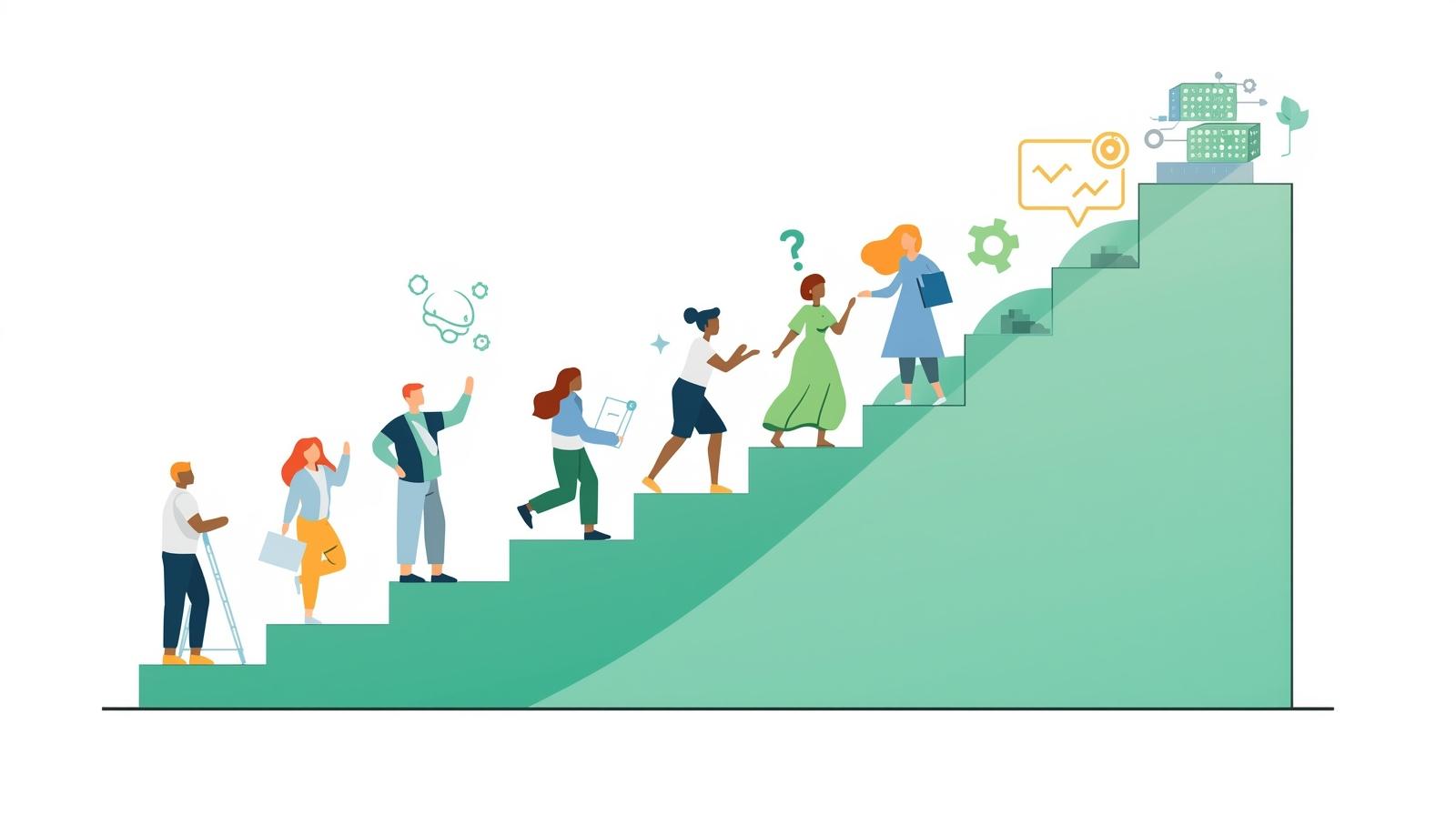
Your development director, who has successfully cultivated donors through personal relationships for two decades, stares at her computer screen with visible frustration. She's heard that AI can help personalize donor communications at scale, but she doesn't know where to begin. Your program coordinator, brilliant at connecting with clients face-to-face, feels paralyzed when colleagues suggest using AI to analyze program outcomes. Across your organization, staff members are encountering the same challenge: they recognize AI's potential relevance to their work, but lack the foundational knowledge to engage with it confidently.
This scenario is playing out in nonprofits across the sector. Research shows that 77% of nonprofits cite lack of knowledge and skills as their primary barrier to AI adoption. More than half of nonprofit leaders report that staff lack the expertise to even learn about AI effectively. Yet simultaneously, 82% of nonprofits are already using AI tools in some capacity—often through individual staff initiative rather than organizational strategy. This creates a dangerous dynamic: adoption without understanding, tools without training, and experimentation without the foundational literacy needed to make informed decisions.
The good news is that AI literacy doesn't require technical expertise, coding skills, or mathematical sophistication. Unlike learning to build AI systems—which does require specialized technical knowledge—learning to use AI effectively is more analogous to media literacy or digital citizenship. It's about understanding how AI works at a conceptual level, recognizing its capabilities and limitations, developing critical thinking about AI outputs, and applying AI tools thoughtfully within your specific context.
This article provides a comprehensive framework for building AI literacy in nonprofit teams starting from zero technical background. Whether you're a leader planning organization-wide training, a manager supporting your team's development, or an individual practitioner seeking to develop your own skills, this guide offers structured pathways from complete novice to confident practitioner. We'll explore what AI literacy actually means for nonprofit work, outline a phased learning approach that builds competence progressively, identify free and low-cost training resources specifically designed for nonprofits, and provide practical strategies for sustaining learning and building a culture of continuous AI skill development.
Building AI literacy isn't a luxury—it's becoming essential infrastructure for nonprofit effectiveness in an AI-enabled world. Organizations that invest in developing their teams' AI skills position themselves to use these technologies thoughtfully and strategically rather than reactively and haphazardly. The investment required is modest compared to the returns: more confident staff, better technology decisions, reduced risk, and enhanced capacity to advance your mission. Let's explore how to transform AI anxiety into AI competence across your entire organization.
What AI Literacy Actually Means for Nonprofit Work
Before outlining how to build AI literacy, we need to define what we're actually building toward. AI literacy means different things in different contexts. For a software engineer, it might involve understanding neural network architectures and training algorithms. For nonprofit practitioners, it means something quite different—and far more accessible.
The Four Dimensions of Nonprofit AI Literacy
Core competencies for effective AI use
1. Conceptual Understanding: Knowing What AI Is and Isn't
AI literacy begins with basic conceptual knowledge. You don't need to understand the mathematics of machine learning, but you do need to grasp fundamental concepts like how AI systems learn from data, the difference between narrow and general AI, what we mean by training and inference, and how generative AI differs from analytical AI.
Equally important is understanding what AI cannot do. Many misunderstandings about AI stem from overestimating its capabilities or attributing human-like understanding to systems that operate through pattern recognition rather than comprehension. Conceptual literacy helps you set realistic expectations and identify appropriate use cases.
2. Practical Skills: Using AI Tools Effectively
The second dimension is hands-on capability with AI tools relevant to your work. For most nonprofit roles, this means developing skills in areas like prompt engineering (crafting effective instructions for generative AI), critical evaluation of AI outputs, integrating AI into existing workflows, and troubleshooting when AI tools don't perform as expected.
These practical skills develop through guided experimentation and regular use. The goal isn't mastery of every AI tool, but rather developing transferable capabilities that allow you to learn new AI tools quickly as they emerge. Think of it like general computer literacy: once you understand how applications generally work, you can figure out new ones relatively easily.
3. Critical Thinking: Evaluating AI Appropriately
Perhaps the most important dimension of AI literacy is developing critical thinking skills specific to AI use. This includes recognizing potential biases in AI outputs, identifying situations where AI is inappropriate or risky, evaluating vendor claims about AI capabilities, understanding privacy and security implications of different AI tools, and questioning whether AI actually adds value to a particular task or process.
Critical AI literacy prevents both over-adoption (using AI when simpler solutions would work better) and mis-adoption (using AI in ways that create unacceptable risks). It's the difference between blindly accepting AI recommendations and thoughtfully integrating AI as one tool among many.
4. Strategic Application: Connecting AI to Mission
The final dimension involves understanding how AI capabilities connect to organizational strategy and mission advancement. This means identifying opportunities where AI could enhance your work, articulating the potential value of AI projects to stakeholders, considering ethical implications of AI use in your specific context, and aligning AI adoption with organizational values and community needs.
Strategic literacy is what transforms AI from a technology curiosity into a mission tool. It ensures that AI adoption serves organizational goals rather than becoming technology for technology's sake.
These four dimensions—conceptual understanding, practical skills, critical thinking, and strategic application—develop progressively. You don't need to master all four immediately. In fact, trying to learn everything at once often leads to overwhelm and abandonment. The framework presented in the next section sequences learning to build these dimensions systematically, allowing team members to develop confidence at each stage before advancing to the next.
A Phased Approach to Building AI Literacy
Building AI literacy across a team with no technical background requires a structured, progressive approach. The framework below breaks the journey into four phases, each building on the previous one. Most teams can complete Phase 1 in 2-4 weeks, with subsequent phases unfolding over 3-6 months depending on pace and intensity of engagement.
Phase 1: Foundation Building (Weeks 1-4)
Establishing basic understanding and reducing anxiety
The first phase focuses on demystifying AI and building conceptual foundations. The goal isn't technical mastery but rather developing a shared vocabulary and baseline understanding that makes subsequent learning possible.
Week 1: What Is AI? (Conceptual Introduction)
Start with a 60-90 minute group session introducing AI concepts using accessible analogies and nonprofit-specific examples. Cover what AI is and isn't, the difference between traditional software and AI, how AI learns from data, and why AI is relevant to nonprofit work. Use the Microsoft Learn course "Introduction to AI Skills for Nonprofits" or NTEN's introductory modules as structured content, supplemented with facilitated discussion about your organization's specific context.
Week 2: AI in Action (Use Case Exploration)
Conduct a second group session exploring real-world examples of AI use in nonprofits similar to yours. Have team members review case studies from organizations like NetHope's "Unlocking AI for Nonprofits" course or examples from NTEN's resource hub. Discuss which applications seem most relevant and which raise concerns. This helps staff connect abstract concepts to concrete possibilities.
Week 3: First Hands-On Experimentation
Introduce a safe, simple AI tool for initial experimentation. ChatGPT (free version) or Claude work well because they're accessible, low-risk, and versatile. Provide specific prompts related to actual work tasks—for example, "Help me draft an email to volunteers thanking them for their service" or "Summarize the key points from this program report." Have staff try these prompts and share their experiences in pairs or small groups. Focus on building comfort through low-stakes practice.
Week 4: Reflection and Q&A
Hold a group session where team members share their initial experiences, ask questions that arose during experimentation, and discuss concerns. This is crucial for addressing anxiety and misconceptions early. It's also an opportunity to begin introducing critical thinking: What did the AI do well? Where did it fall short? What surprised you? This reflective practice becomes a habit that continues throughout the learning journey.
- Use cohort-based learning where possible—people learn better together than in isolation
- Normalize questions and concerns rather than expecting enthusiasm from everyone immediately
- Connect learning explicitly to organizational mission and values
- Allocate dedicated time for learning—don't expect staff to do this on top of regular workloads
Phase 2: Skill Development (Weeks 5-12)
Building practical capabilities through guided application
With foundational understanding established, Phase 2 focuses on developing practical skills through increasingly complex applications. Learning becomes more individualized based on staff roles while maintaining shared accountability and support structures.
Role-Based Learning Paths
Different roles need different AI skills. Development staff might focus on donor research and communication personalization. Program staff might explore client intake analysis and outcome tracking. Operations staff might work with scheduling optimization and document processing. Create role-specific learning tracks using resources like the NTEN certificate program modules, which offer specialized courses for different functions.
Assign 2-3 hours per week for self-paced learning, alternating between structured courses (Microsoft Learn, Anthropic's AI Fluency for Nonprofits, or NTEN modules) and hands-on experimentation applying new skills to real work tasks. The combination of structured instruction and immediate application reinforces learning and demonstrates relevance.
Weekly "AI Office Hours"
Establish a weekly 30-minute drop-in session where team members can ask questions, share discoveries, troubleshoot problems, or demonstrate interesting applications they've found. This creates ongoing peer learning and helps less confident team members see that others are also learning through trial and error. If you have a staff member or volunteer who's more comfortable with AI, they can facilitate these sessions—but emphasize that the facilitator is a learning guide, not an expert with all the answers.
Prompt Engineering Practice
Dedicate specific attention to prompt engineering—the skill of crafting effective instructions for AI systems. This is one of the most immediately practical AI skills. Use Anthropic's 4D Framework (Delegation, Description, Discernment, Diligence) as a structure for improving prompts. Have staff work in pairs to refine prompts for common tasks, sharing their best prompts in a shared repository that becomes an organizational resource. For guidance on developing effective AI interactions, see our article on training AI systems with your voice.
Critical Evaluation Exercises
Build critical thinking through structured exercises. Present AI outputs that contain errors, biases, or inappropriate recommendations and have staff practice identifying problems. Use real examples from nonprofit contexts—an AI-generated fundraising appeal that's tone-deaf, an AI analysis of program data that misses important context, or an AI-suggested budget allocation that doesn't account for restricted funds. These exercises develop the skepticism needed to use AI responsibly.
Mid-Phase Check-in
Around week 8-9, conduct a structured check-in assessing progress and adjusting approach. What's working well? What's frustrating? What skills are developing and where are people still struggling? Use this feedback to modify the remaining weeks of Phase 2, potentially slowing down if people need more foundation or accelerating if they're ready for more advanced applications.
Phase 3: Integration and Application (Weeks 13-20)
Moving from learning to implementation
By Phase 3, team members have developed foundational skills and are ready to integrate AI more systematically into their work. The focus shifts from learning about AI to using AI to achieve organizational objectives.
Personal AI Projects
Have each team member identify one aspect of their work where they want to experiment with AI application over the next 6-8 weeks. These should be meaningful but low-risk projects—not mission-critical processes, but also not trivial tasks. Examples might include using AI to analyze survey responses, automate a recurring report, generate first drafts of program descriptions, or organize research for a grant proposal. Provide guidance on project scoping and check in regularly on progress.
Peer Learning Showcases
Every two weeks, have 1-2 team members present their AI project experiments to the group. These shouldn't be polished presentations but rather candid shares of what they tried, what worked, what didn't, and what they learned. This builds collective knowledge, prevents duplicate efforts, and helps less confident team members see that experimentation involves plenty of failure—that's normal and valuable.
Building Internal Resources
Start developing organizational AI resources based on your team's learning. This might include a prompt library for common tasks, a guide to AI tools approved for different types of data, workflows that integrate AI into existing processes, or case studies of successful applications. These resources make AI literacy sustainable beyond the initial training period.
Addressing Challenges Proactively
As AI use increases, challenges will emerge. Someone will generate content that requires significant editing. An AI tool will produce a biased output. Questions will arise about data privacy or vendor security. Rather than viewing these as failures, treat them as learning opportunities. Use them to develop organizational knowledge about AI's limitations and appropriate use cases. These real-world challenges are where deep learning happens.
Phase 4: Maturity and Leadership (Months 6+)
Sustaining learning and building AI champions
After 5-6 months, your team should have developed solid AI literacy. Phase 4 is about sustaining that literacy as AI technology evolves and identifying team members who can take on deeper expertise or leadership roles.
Developing AI Champions
By this point, certain staff members will have emerged as particularly interested or capable with AI. Invest in deeper development for these individuals through more advanced training, specialized certifications, or opportunities to attend conferences. These AI champions become internal resources who can support colleagues, evaluate new tools, and lead AI initiatives. However, be careful not to allow AI knowledge to concentrate with only 1-2 people—maintain baseline literacy across the whole team. Learn more about developing AI champions in nonprofits.
Continuous Learning Structure
Establish ongoing structures for AI learning rather than treating it as a one-time training initiative. This might include monthly team discussions of new AI developments relevant to nonprofit work, quarterly "AI skill share" sessions where staff teach each other, an internal newsletter highlighting useful AI applications, or dedicated time for experimentation with new tools. The key is normalizing continuous learning as AI capabilities evolve.
Onboarding New Staff
As AI literacy becomes embedded in your organizational culture, ensure new staff members receive AI onboarding. This might be a condensed version of your original training program, pairing new hires with AI-comfortable colleagues, or providing access to the internal resources your team has developed. Don't assume new staff—even younger or more tech-comfortable ones—have the nonprofit-specific AI literacy your team has built.
Strategic AI Planning
With organizational AI literacy established, you're positioned for more strategic AI planning. This might involve evaluating enterprise AI tools, developing comprehensive AI policies, or initiating larger AI projects that require cross-team collaboration. The literacy you've built becomes the foundation for these more ambitious initiatives. For guidance on strategic planning, explore our article on creating an AI strategic plan for nonprofits.
Free and Low-Cost Training Resources for Nonprofits
One significant advantage of building AI literacy now is the abundance of free, nonprofit-specific training resources that didn't exist even two years ago. Major technology companies, foundations, and nonprofit support organizations have invested heavily in accessible AI education.
Comprehensive Free Courses
- NetHope & Microsoft - "Unlocking AI for Nonprofits": Free CPD-certified course series specifically designed for nonprofit teams with little AI experience. Covers AI fundamentals, practical applications, responsible use, and includes real nonprofit case studies. Self-paced with approximately 6-8 hours of content across multiple modules.
- Microsoft Learn - "Introduction to AI Skills for Nonprofits": Comprehensive learning path covering AI fundamentals, responsible AI principles, and practical applications. Customizable based on role and includes interactive exercises. Entirely free and self-paced with downloadable resources.
- Anthropic - "AI Fluency for Nonprofits": Focuses on developing practical AI collaboration skills through the 4D Framework (Delegation, Description, Discernment, and Diligence). Particularly strong on prompt engineering and critical evaluation of AI outputs. Free and designed for non-technical audiences.
- OpenAI Academy: Expanding in 2026 to offer certifications at different AI fluency levels, from prompt engineering basics to AI-enabled work practices. Pilot certifications began in late 2025 with broader availability in 2026.
Certificate Programs (Some Scholarship-Supported)
- NTEN - "AI for Nonprofits Professional Certificate": 13-course program covering AI for fundraising, communications, grant writing, bias mitigation, and responsible AI policies. Mission-aligned and community-centered approach. Typically $400-600 but scholarships frequently available. Can be completed in 3-6 months.
- Nonprofit Tech for Good - "Certificate in AI for Marketing & Fundraising": Specialized certificate for development and communications staff. Covers AI tools for social media, email campaigns, donor research, and content creation. Approximately $200-400 with periodic discounts for nonprofit staff.
Sector-Wide Initiatives
- AI for Nonprofits Sprint (Fund for the City of New York): Ambitious initiative aiming to bring 100,000 nonprofit staff from 1,000 organizations to baseline AI literacy in 2026. Provides cohort-based learning experiences at no cost to participating organizations. Check eligibility and application deadlines on their website.
- Connected Nation - AI Literacy Resource Hub: Centralized collection of curated training materials from multiple providers. Helps organizations navigate the landscape of available resources and find content appropriate for their needs and context.
Supplementary Learning Resources
- LinkedIn Learning - AI for Nonprofits Courses: Multiple short courses (1-2 hours each) on specific AI applications. Many nonprofit staff can access these free through their organization's LinkedIn account or public library partnerships.
- Data.org - AI Skills for Nonprofits: Collection of resources, case studies, and learning materials with particular focus on international development contexts. Free access to toolkits and implementation guides.
- AIandYou: Focused on accessible AI education particularly for women and underrepresented groups. Offers easy-to-understand content and community events to reduce AI anxiety and build confidence.
When selecting resources for your team, prioritize those specifically designed for nonprofits over general AI literacy programs. Nonprofit-specific resources use relevant examples, address sector-specific concerns about equity and ethics, and connect learning to mission rather than profit. They also tend to be more accessible to non-technical audiences because they're designed for practitioners rather than technologists.
From Literacy to Fluency: The Ongoing Journey
Building AI literacy from scratch is entirely achievable for nonprofit teams with zero technical background. The key is approaching it systematically rather than expecting overnight transformation, providing structured learning that builds progressively rather than overwhelming people with everything at once, creating space for both success and failure as part of the learning process, and maintaining focus on mission-aligned application rather than technology for its own sake.
The investment required—primarily staff time rather than financial resources given the abundance of free training—is modest compared to the returns. Organizations that develop AI literacy across their teams position themselves to make better technology decisions, use AI tools more effectively and safely, identify opportunities for AI application that advance their missions, and adapt more readily as AI capabilities continue to evolve. Perhaps most importantly, they empower staff members who might otherwise feel anxious or left behind by technological change.
It's worth acknowledging that not every team member will develop the same level of AI literacy, and that's okay. Some staff will embrace AI enthusiastically and develop advanced skills. Others will develop competent baseline literacy without becoming power users. A few may remain skeptical or minimally engaged. All of these responses are valid. The goal isn't universal enthusiasm but rather organization-wide baseline competence supplemented by deeper expertise in interested individuals.
Remember that AI literacy isn't a fixed destination but an evolving capability. AI technology will continue to change—new tools will emerge, capabilities will expand, and best practices will evolve. The literacy you build today creates the foundation for continuous learning rather than being the final word on AI in your organization. Teams that develop strong learning habits and maintain curiosity will adapt more easily than those who view AI literacy as a one-time checkbox to complete.
Finally, recognize that building AI literacy is fundamentally about building organizational capacity and resilience. It's not just about AI—it's about developing your team's confidence in learning new technologies generally, strengthening critical thinking skills, fostering collaborative problem-solving, and maintaining mission focus amid technological change. These capabilities will serve your organization well regardless of how AI specifically evolves.
The gap between where your team is now and where they need to be is entirely bridgeable. With structured approach, quality resources, dedicated time, and supportive culture, nonprofit teams with no technical background can develop the AI literacy needed to thrive in an AI-enabled world. The question isn't whether your team can learn—it's whether your organization will make the investment to ensure they do. For organizations committed to sustaining relevance and effectiveness, building AI literacy has become essential infrastructure rather than optional enhancement.
Ready to Build Your Team's AI Literacy?
We help nonprofits design and implement customized AI literacy programs, from curriculum development to facilitation to ongoing support. Whether you need a complete training program or guidance on getting started, we can help your team build confidence and capability.