
Building Inclusive AI: Ensuring Technology Serves All Communities Equally
Artificial intelligence holds immense potential to advance nonprofit missions and serve communities more effectively. But that potential comes with serious risks. AI systems trained on biased data can perpetuate historical injustices, marginalize vulnerable populations, and widen existing inequalities. For nonprofits committed to equity and social justice, implementing AI isn't just about efficiency—it's about ensuring technology serves all communities fairly, amplifies marginalized voices, and advances inclusion rather than undermining it. This guide provides a framework for building AI systems and choosing AI tools that genuinely serve diverse communities equitably.
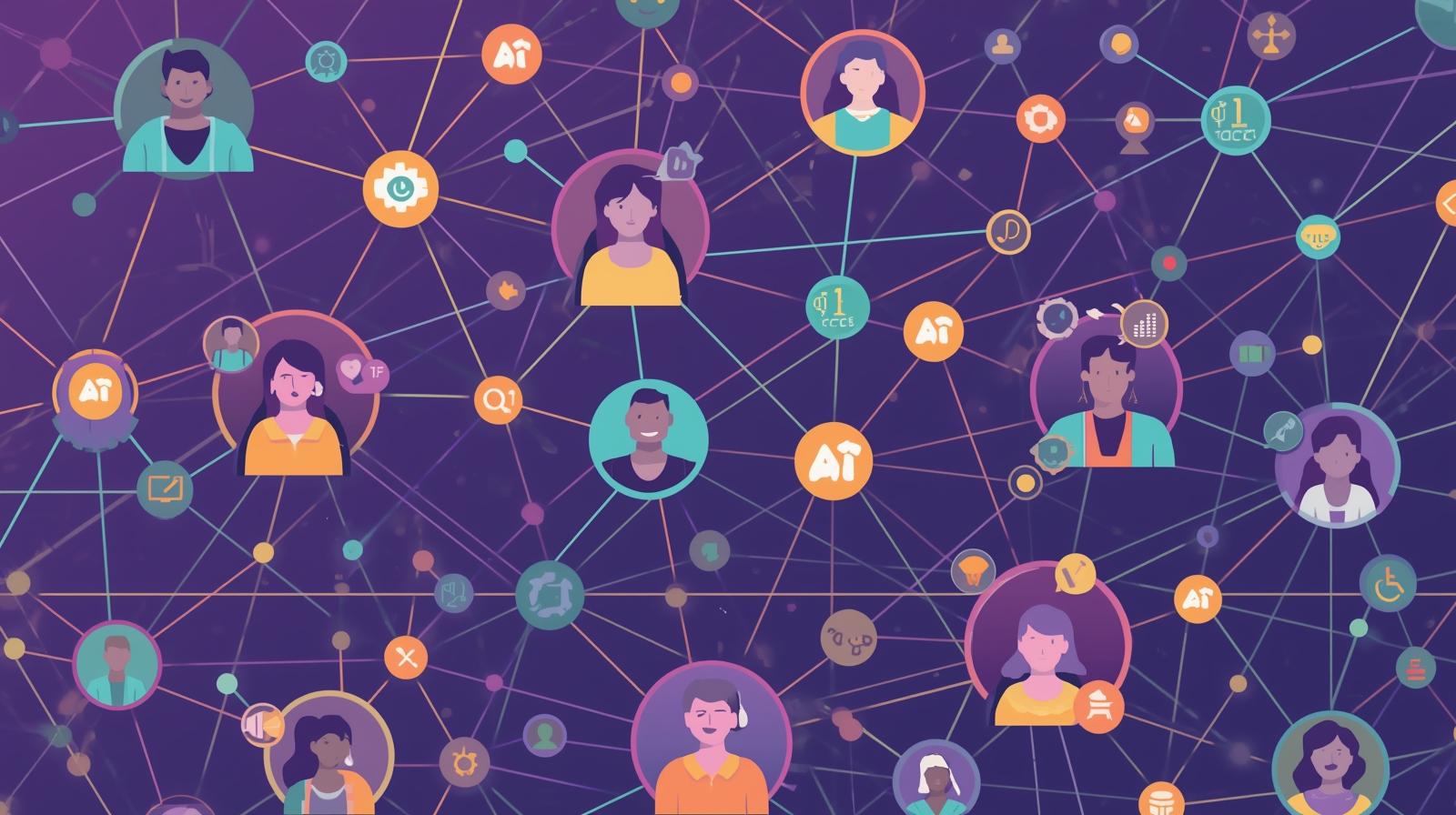
The statistics paint a troubling picture: while 64% of nonprofits are familiar with AI bias, only 36% are implementing equity practices in their AI adoption. More than half of nonprofit leaders fear AI could harm the marginalized communities they serve, yet the pressure to adopt AI—from funders, boards, and operational necessity—continues to intensify. This tension between innovation and equity isn't abstract. It plays out in real decisions about which tools to adopt, how to deploy them, and who benefits or suffers from their implementation.
AI systems can perpetuate and amplify existing societal biases because they're trained on data that reflects historical inequalities. Facial recognition systems that work better on light-skinned faces than dark-skinned faces. Natural language processing tools that associate certain names or dialects with negative characteristics. Algorithmic decision-making systems that recommend lower levels of service for communities already experiencing systemic disadvantage. These aren't hypothetical concerns—they're documented failures that have harmed real people in contexts ranging from criminal justice to healthcare to employment.
For nonprofits serving vulnerable or marginalized communities—refugee and immigrant services, organizations focused on racial justice, disability services, rural development, LGBTQ+ advocacy—the stakes are particularly high. An AI tool that works well for affluent, English-speaking, digitally connected populations might fail completely for the communities you serve. Worse, it might actively harm them by providing inaccurate information, making discriminatory recommendations, or excluding them from services and opportunities. The challenge is compounded by the fact that most AI systems are developed by teams that don't reflect the diversity of the communities nonprofits serve.
Building inclusive AI doesn't mean avoiding AI altogether. It means approaching AI adoption with intentionality, asking hard questions about who benefits and who might be harmed, implementing safeguards to detect and address bias, and centering the voices and experiences of the communities you serve in every decision. This article provides a framework for doing exactly that. We'll explore how to evaluate AI tools for equity implications, implement participatory design processes, establish monitoring systems for bias detection, and build organizational capacity for inclusive AI implementation. The goal is clear: ensuring that AI serves all communities equitably and advances your mission of justice and inclusion rather than undermining it.
Understanding AI Bias and Its Impact on Marginalized Communities
AI bias isn't a technical glitch that can be easily fixed—it's a systemic issue rooted in how AI systems are developed, trained, and deployed. Understanding the mechanisms through which bias enters AI systems is essential to building inclusive alternatives. Bias manifests at multiple stages of the AI development lifecycle, and each stage presents opportunities for intervention.
Training data bias represents the most common source of AI inequality. AI systems learn patterns from the data they're trained on. If that data reflects historical discrimination—biased hiring practices, unequal access to services, discriminatory lending patterns—the AI system learns to replicate those biases. A hiring algorithm trained on historical data from an organization with poor diversity will learn that "good candidates" match the profile of people who were hired in the past, perpetuating homogeneity. For nonprofits, this matters when using AI for beneficiary assessment, service allocation, or program evaluation.
Representation bias occurs when training data doesn't adequately represent the diversity of communities the AI will serve. Facial recognition systems trained primarily on light-skinned faces perform poorly on darker skin tones. Natural language processing systems trained on formal English struggle with regional dialects, non-standard grammar, or multilingual speakers. For nonprofits serving immigrant communities, rural populations, or groups speaking minority languages, representation bias can render AI tools essentially useless or actively harmful.
Design bias emerges from the assumptions, priorities, and blind spots of AI development teams. When AI systems are designed by teams lacking diversity—in race, socioeconomic background, disability status, geography, or language—they often fail to anticipate how the system might harm marginalized groups. Features that seem neutral to privileged designers can have discriminatory effects. An AI chatbot designed to provide social services information might assume internet access, smartphone ownership, or digital literacy that many vulnerable populations lack.
Real-World Examples of AI Harm
- Healthcare algorithms: Systematically recommended lower levels of care for Black patients than white patients with identical health conditions, perpetuating racial health disparities
- Child welfare systems: AI risk assessment tools flagged families in low-income neighborhoods as high-risk based on zip code rather than actual safety concerns
- Translation tools: Reinforced gender stereotypes by defaulting to masculine pronouns for professional roles and feminine pronouns for caregiving roles
- Voice recognition: Failed to accurately understand non-native speakers, regional accents, and speech patterns associated with certain disabilities
- Benefit allocation: Automated systems denied services to eligible recipients due to data errors that disproportionately affected populations with complex housing or employment histories
Equity Questions for Every AI Tool
- Who benefits? Which communities or populations will gain the most from this AI implementation? Are they already privileged or marginalized?
- Who might be harmed? Which populations could experience negative impacts, exclusion, or discrimination from this tool?
- Whose voice is missing? Which communities affected by this tool weren't consulted during development or selection?
- What assumptions are embedded? What does this tool assume about language, literacy, internet access, technology familiarity, or living situations?
- How will we know if it's causing harm? What monitoring systems will detect if the tool produces discriminatory outcomes?
Core Principles for Building Inclusive AI in Nonprofit Contexts
Inclusive AI doesn't happen by accident. It requires intentional design, ongoing vigilance, and commitment to centering the voices and experiences of marginalized communities throughout the AI lifecycle. The following principles provide a foundation for nonprofit organizations committed to equity in AI adoption and implementation. These aren't optional enhancements—they're essential requirements for AI systems that genuinely serve all communities fairly.
Participatory Design and Community Involvement
Center the voices of those most affected by AI systems in every decision
Communities are ultimately the producers of the data and knowledge that allow AI systems to run. It makes sense to include their voices in the design phases, and diverse voices are required for more inclusive innovation. Yet product teams often struggle to move from theory to practice when engaging socially marginalized communities. Effective participatory design requires going beyond token consultation to genuine partnership and shared decision-making power.
For nonprofits, this means involving program participants, service recipients, and community members in AI tool selection and implementation from the beginning. Don't just ask for feedback on solutions you've already chosen—invite communities to help define the problems you're trying to solve and evaluate whether AI is even the right approach. Create advisory groups that include people with lived experience in the issues your organization addresses. Compensate community members for their time and expertise. Make meetings accessible in terms of timing, location, language, and format.
Participatory design surfaces concerns and use cases that homogeneous teams miss entirely. A refugee services organization planning to implement AI translation tools might learn from community members that certain dialects aren't supported, that elder community members prefer human interpreters for sensitive topics, or that the assumed literacy levels don't match reality. This input prevents harm and ensures solutions actually serve community needs. Organizations like the Inclusive AI Foundation and Inclusive AI Lab have developed frameworks specifically for engaging marginalized communities in AI development and evaluation.
Participatory design practices:
- Form community advisory groups that meet regularly to review AI tool decisions and provide ongoing input
- Conduct focus groups and interviews with diverse community members before selecting AI tools
- Pilot AI tools with small, diverse groups and iterate based on feedback before full implementation
- Provide multiple ways for community members to give feedback: in-person, phone, written, and anonymous options
- Share power genuinely—give community advisors real decision-making authority, not just the opportunity to comment
Continuous Bias Auditing and Monitoring
Implement systems to detect and address discriminatory outcomes in real-time
Bias audits involve regularly reviewing AI systems to detect discriminatory patterns in outputs or outcomes. This isn't a one-time check during implementation—it's an ongoing practice of monitoring how AI tools perform across different demographic groups and contexts. Research consistently shows that AI bias often emerges over time as systems encounter new data or edge cases, so initial fairness doesn't guarantee sustained equity.
For nonprofits, bias auditing means disaggregating outcomes by relevant demographic categories: race, ethnicity, language, disability status, geography, income level, or other factors relevant to your mission. If you're using AI for donor prospecting, are people of color being systematically undervalued in wealth assessments? If you're using AI for program participant matching, are certain groups consistently receiving lower-quality matches? If you're using AI for content creation, does the language reinforce stereotypes or exclude certain communities?
Establish clear protocols for what happens when bias is detected. Who has authority to pause or modify AI tool use? How quickly must issues be addressed? What transparency do you owe to affected communities? The AI Equity Project found that while most nonprofits recognize bias risks, few have concrete processes for detection and remediation. Building these systems before problems emerge prevents harm and demonstrates genuine commitment to equity rather than performative concern. For more on establishing oversight systems, see our article on building an AI ethics committee for your nonprofit board.
Bias monitoring framework:
- Establish baseline metrics before implementing AI tools to enable comparison across demographic groups
- Review AI outputs quarterly at minimum, disaggregated by race, language, disability, income, and other relevant categories
- Create feedback channels for staff and community members to report potential bias or discriminatory outcomes
- Assign specific staff members or committees with authority and responsibility for addressing detected bias
- Document all bias incidents and remediation efforts to track patterns and improve future tool selection
Cultural Humility and Context Awareness
Recognize that technology serves culture, not the other way around
Cultural humility means approaching AI implementation with awareness that your organization's norms, assumptions, and ways of working may not align with the communities you serve. It requires ongoing self-reflection about power dynamics, openness to feedback that challenges existing practices, and willingness to adapt AI implementations to honor cultural contexts rather than forcing communities to adapt to technology.
For faith-based organizations, this might mean recognizing that some communities have theological concerns about AI that deserve serious engagement, not dismissal as technophobia. For organizations serving indigenous communities, it might mean understanding protocols around data sovereignty and traditional knowledge that commercial AI systems don't respect. For disability services organizations, it means recognizing that the medical model embedded in many AI tools conflicts with community-driven understanding of disability as diversity rather than deficit.
Cultural humility also requires recognizing when AI is the wrong solution entirely. Some communities prefer human connection for certain services, value approaches that AI can't replicate, or have experienced enough algorithmic discrimination that trust must be rebuilt before any AI implementation. Respecting these contexts means sometimes choosing less "efficient" approaches that better honor community values and needs. Efficiency in service of equity is worthwhile; efficiency that undermines relationships and cultural integrity is not. For guidance on culturally responsive AI implementation, see our article on cultural humility in AI implementation for nonprofits.
Cultural humility in practice:
- Seek community input on whether AI is appropriate for specific contexts, not just how to implement it
- Provide options: never make AI the only way to access services, information, or support
- Learn about the historical context of algorithmic discrimination affecting communities you serve
- Adapt AI tools to cultural contexts rather than expecting communities to adapt to technology
- Be willing to discontinue AI tools if they conflict with community values or undermine trust
Diverse Representation in Decision-Making
Ensure AI decisions are made by teams reflecting community diversity
Diverse development teams bring varied perspectives and problem-solving approaches that create more innovative and effective AI solutions. Perhaps more importantly for equity, diverse teams are more likely to identify potential harms before they occur. People with lived experience of marginalization can spot discriminatory patterns that privileged team members miss entirely. This isn't about tokenism—it's about genuine power-sharing and recognizing that those closest to problems are often best positioned to design solutions.
For nonprofits, this means ensuring that staff making AI decisions reflect the diversity of communities you serve in terms of race, ethnicity, language, disability status, socioeconomic background, geography, and other relevant dimensions. It means involving frontline staff who work directly with communities in tool selection, not just leadership or IT staff. It means compensating community members to serve on AI advisory committees with real decision-making power. And it means creating organizational cultures where dissenting voices and concerns about equity are heard and taken seriously, not dismissed or sidelined.
Research shows that diversity and inclusion considerations are significantly neglected in AI systems design, development, and deployment. Ignoring diversity and inclusion in AI can cause digital redlining, discrimination, and algorithmic oppression. Nonprofits committed to equity must model a different approach—one where diverse representation isn't an afterthought but a fundamental requirement for any AI initiative. This requires examining who has power in your organization and intentionally redistributing it to ensure marginalized voices shape decisions.
Building diverse decision-making teams:
- Audit current AI decision-making processes: who has voice and vote? Who is excluded?
- Include frontline staff with direct community contact in AI tool selection committees
- Create pathways for community members to participate in governance of AI systems affecting them
- Provide training and support so diverse team members can participate effectively
- Establish decision-making norms that prevent majority voices from always prevailing over minority concerns
Equity-Centered Framework for AI Tool Selection
Choosing AI tools through an equity lens requires asking different questions than traditional technology evaluation processes. Cost, features, and ease of use still matter, but they're not sufficient. You need to assess how tools handle diverse populations, what assumptions they make about users, and whether they've been tested with communities similar to those you serve. The following framework provides specific evaluation criteria for inclusive AI tool selection.
Data and Training Transparency
Understand what data shaped the AI and whether it represents your communities
Before adopting any AI tool, ask vendors about training data: What datasets were used? What demographic groups are represented? Were marginalized communities included? How was data collected, and did communities consent? Many vendors can't or won't answer these questions, which should raise serious concerns about equity. Tools trained exclusively on data from affluent, English-speaking, Western populations likely won't serve diverse communities well.
Essential questions for vendors:
- What datasets were used to train this AI system? Are they publicly documented?
- What demographic groups are represented in training data? What groups are underrepresented or missing?
- Has the tool been tested for bias? What fairness metrics were used? Can you share audit results?
- How does performance vary across different demographic groups? What disparities exist?
- What languages, dialects, and communication styles does the tool support beyond standard English?
Accessibility and Digital Inclusion
Evaluate whether tools work for people with varying abilities and technology access
Many AI tools assume users have reliable internet, modern devices, high digital literacy, and no disabilities affecting technology use. These assumptions exclude significant portions of many nonprofit service populations. Evaluate whether tools offer offline functionality, work on older devices, provide alternatives for people with disabilities, and accommodate varying literacy levels. The 2.6 billion people globally without internet access—and millions more with limited or unreliable access—can't be served by tools requiring constant connectivity.
Accessibility evaluation checklist:
- Does the tool work offline or with intermittent connectivity? What features require constant internet?
- Can the tool be used on older smartphones or basic devices, or does it require latest-generation hardware?
- Is the tool compatible with screen readers and other assistive technologies for people with disabilities?
- Are multiple interaction modes available: text, voice, visual, phone-based options?
- What literacy level does the tool assume? Can it accommodate varying reading levels?
Privacy and Data Protection for Vulnerable Populations
Ensure tools protect sensitive information for communities at risk
AI tools that collect and analyze personal data pose particular risks for vulnerable populations: undocumented immigrants, survivors of domestic violence, people with stigmatized health conditions, LGBTQ+ individuals in hostile environments, political dissidents, and others who face danger if their information is exposed. Evaluate data collection practices, storage security, and whether vendors share data with third parties or government entities. For some populations, privacy isn't just a preference—it's a safety requirement.
Privacy and security questions:
- What personal data does the tool collect? Can you limit data collection to essential information only?
- Where is data stored? What security protections prevent unauthorized access or breaches?
- Does the vendor share data with third parties, law enforcement, or government agencies?
- Can individuals access, correct, or delete their data? What's the process?
- For sensitive use cases, are on-premise or local AI options available that don't send data to cloud servers?
Community Testing and Validation
Pilot tools with diverse users before full implementation
No amount of vendor assurance replaces testing tools with the actual communities you serve. Implement pilot programs with diverse participants representing different languages, disabilities, ages, technology familiarity levels, and other relevant dimensions. Observe how people actually use the tools, where they struggle, what they misunderstand, and what unintended consequences emerge. Community testing surfaces equity issues that desk research and vendor demos never reveal.
Effective pilot program design:
- Recruit diverse pilot participants intentionally—don't just accept whoever volunteers
- Observe actual tool use, not just collect surveys—watch where people get confused or frustrated
- Create safe channels for honest feedback, including concerns about bias or discrimination
- Test under real-world conditions: varied internet connectivity, different devices, actual time pressures
- Be willing to abandon tools that don't serve all communities equitably—don't force problematic tools into use
Building Organizational Capacity for Inclusive AI
Inclusive AI requires more than good intentions and careful tool selection. It requires building organizational systems, staff competencies, and governance structures that center equity throughout the AI lifecycle. The following strategies help nonprofits develop the capacity to implement AI inclusively and maintain that commitment over time as tools evolve and new applications emerge.
Develop AI Equity Competencies Across Your Team
Ensure all staff understand AI bias risks and equity responsibilities
Inclusive AI implementation can't be the responsibility of one staff member or department—it requires organization-wide understanding of bias risks and commitment to equity. Provide training that helps all staff recognize potential bias in AI outputs, understand the specific equity concerns relevant to your mission and communities, and know how to escalate concerns when they notice discriminatory patterns. This training should be accessible to staff with varying technical backgrounds, focusing on practical recognition and response rather than abstract theory.
Include real examples relevant to your context: how bias might show up in donor communications, program participant assessment, resource allocation, or community engagement. Help staff understand that identifying bias isn't about finding fault—it's about protecting communities and strengthening your mission. Create psychological safety where raising equity concerns is valued and rewarded rather than dismissed as obstacles to progress. The AI Equity Project's research shows that education and training staff to recognize and address bias is one of the most important immediate actions nonprofits can take.
Training components for equity-focused AI literacy:
- How AI bias occurs: training data, representation gaps, and design assumptions
- Historical context of algorithmic discrimination affecting communities you serve
- How to recognize bias in AI outputs specific to your work: fundraising, programs, communications
- Organizational protocols for reporting and addressing bias concerns
- Practical strategies for reviewing AI outputs through an equity lens
Establish AI Ethics Governance Structures
Create accountability systems for equitable AI use
Governance structures provide accountability for equity commitments beyond individual good intentions. Organizations like United Way, Oxfam, and Save the Children have developed AI policies that explicitly address equity, bias, and community protection. These policies establish clear expectations, decision-making processes, and accountability mechanisms. For smaller nonprofits, formal ethics committees may not be feasible, but you can still establish clear policies, designated responsible parties, and regular review processes.
Your AI governance should answer key questions: Who has authority to approve new AI tools? What equity criteria must tools meet? How are bias concerns investigated and addressed? What transparency do you owe to communities about AI use? When must AI tools be discontinued? Document these decisions in organizational policy so they outlast individual staff members and leadership transitions. The Patrick J. McGovern Foundation's $75.8 million commitment to organizations advancing AI for public purpose emphasizes that public institutions must build the architecture that guides AI use—nonprofits are part of that essential infrastructure.
Key components of AI ethics governance:
- Written AI policy addressing equity, bias monitoring, and community protection
- Designated individual or committee with authority for AI equity oversight
- Regular review cycles for AI tools and their equity impacts
- Clear processes for investigating and addressing bias reports
- Community representation in AI governance and decision-making
Cultivate Partnerships for Shared Learning
Join collaborative efforts advancing inclusive AI in the nonprofit sector
No single nonprofit can solve AI equity challenges alone. The AI Alliance brings together Meta, IBM, and 140+ organizations to shape open AI development with equity considerations. OpenAI's People-First AI Fund provides $50 million to nonprofits advancing inclusive AI applications. The Algorithmic Justice League and Distributed AI Research Institute conduct research on AI fairness and develop frameworks centering community voices. Engaging with these broader efforts provides access to resources, frameworks, and peer learning that accelerate your organization's capacity for inclusive AI implementation.
Look for opportunities to participate in AI equity consortiums, research studies, and pilot programs. Share your experiences—both successes and failures—with other nonprofits working on similar challenges. Contribute to the development of sector-wide standards for inclusive AI in nonprofit contexts. The nonprofit sector has a crucial role in ensuring AI development serves public purpose and advances equity. By participating in collaborative efforts, your organization contributes to systemic change while building internal capacity and accessing resources that might otherwise be unavailable.
Partnership and learning opportunities:
- Explore funding opportunities like OpenAI's People-First AI Fund for equity-focused AI projects
- Join peer learning networks focused on responsible AI adoption in nonprofits
- Participate in research studies examining AI equity in social sector organizations
- Collaborate with academic institutions working on inclusive AI development and evaluation
- Contribute to open-source frameworks and tools for bias detection and inclusive design
Moving Forward: Centering Equity in Every AI Decision
Building inclusive AI isn't a one-time project with a clear endpoint—it's an ongoing commitment to centering equity in every decision about technology adoption and use. The tension between AI's potential and its risks is real, and it won't be resolved through simple solutions or checklists. It requires sustained attention, genuine community partnership, continuous monitoring, and willingness to make difficult choices when tools don't serve all communities equitably.
The current state of AI equity in the nonprofit sector reveals a troubling gap between awareness and action. Most organizations recognize bias risks and fear potential harm to communities, but few have implemented concrete practices to address these concerns. This gap represents both a challenge and an opportunity. Nonprofits that develop genuine capacity for inclusive AI implementation don't just protect communities from harm—they position themselves to leverage AI in ways that advance equity and strengthen mission impact in ways their peers cannot.
The principles and practices outlined in this article—participatory design, continuous bias monitoring, cultural humility, diverse decision-making, equity-centered tool selection, organizational capacity building—aren't optional enhancements to AI adoption. They're fundamental requirements for nonprofits committed to justice and inclusion. They require investment of time and resources, sometimes slowing implementation timelines or limiting tool choices. That's the point. Speed and efficiency matter, but not more than equity and community protection.
Start where you are. You don't need perfect policies, comprehensive training programs, or sophisticated bias detection systems before taking any action. Start by embedding equity questions into your next AI tool evaluation. Form a small advisory group with diverse community representation. Implement basic monitoring to disaggregate outcomes by relevant demographic categories. Document bias incidents and your responses. Each step builds capacity and demonstrates commitment.
The future of AI in the nonprofit sector will be shaped by decisions being made right now about who benefits, whose voices matter, and what values guide technology adoption. By choosing inclusive approaches—even when they're more difficult, slower, or more expensive—your organization contributes to a future where AI genuinely serves all communities equitably rather than amplifying existing inequalities. That future isn't inevitable. It requires intentional work, sustained commitment, and willingness to prioritize equity over expediency. The communities you serve deserve nothing less.
Need Help Building Inclusive AI Systems?
Ensure your AI adoption advances equity rather than perpetuating bias. Get expert guidance on participatory design, bias monitoring, and building organizational capacity for inclusive AI implementation that genuinely serves all communities equitably.