
Building Predictive Models for Donor Retention Without Data Scientists
Donor retention is the lifeblood of sustainable fundraising, yet predicting which donors will lapse has traditionally required expensive analytics teams and technical expertise. Today, accessible AI-powered tools make it possible for nonprofits of any size to build sophisticated retention models using no-code platforms, clean data practices, and strategic insight—no data scientists required.
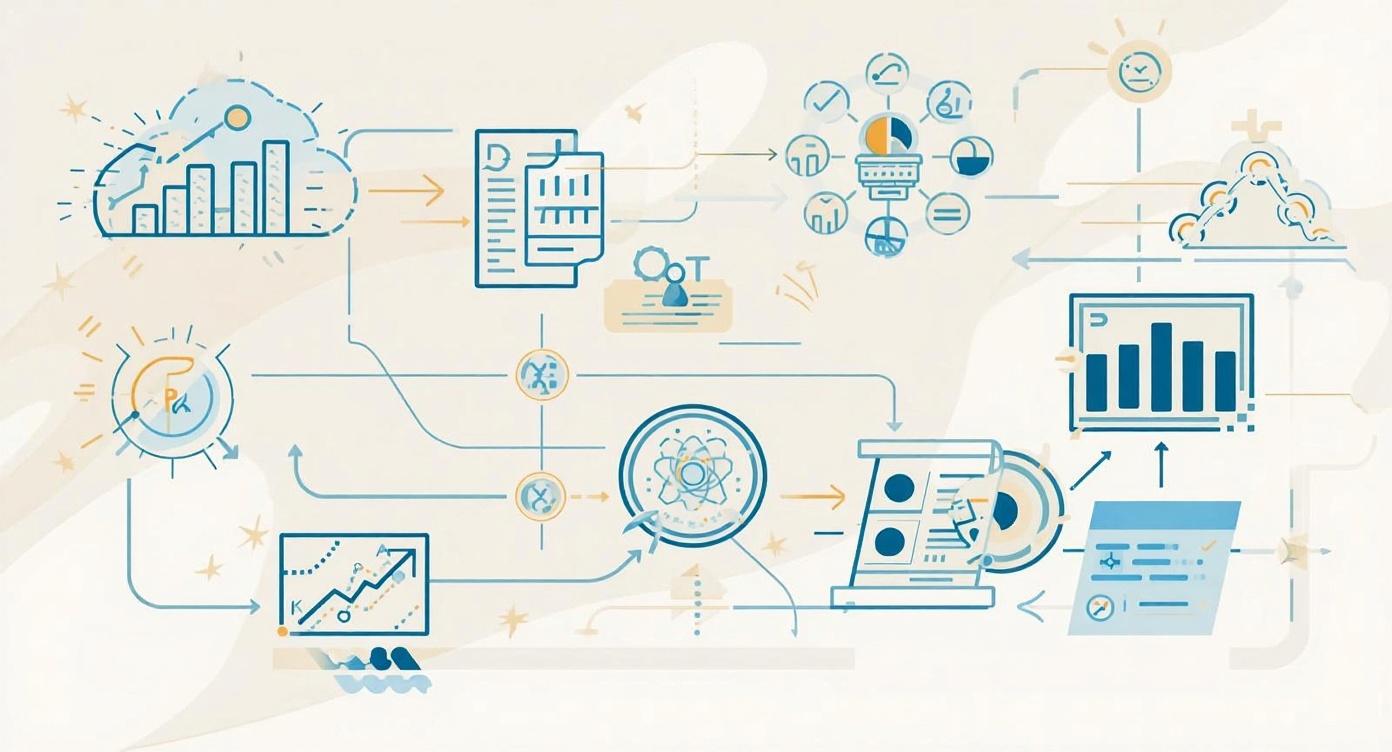
The cost of acquiring a new donor is five to seven times higher than retaining an existing one. Yet most nonprofits still approach donor retention reactively—responding to lapsed donors after they've already stopped giving rather than identifying at-risk supporters early enough to make a difference. The ability to predict which donors are likely to lapse used to be the exclusive domain of large organizations with dedicated data science teams and six-figure analytics budgets.
That landscape has fundamentally changed. The democratization of AI and machine learning tools means that small and mid-sized nonprofits can now build predictive retention models using accessible, no-code platforms designed specifically for the nonprofit sector. These tools analyze donor behavior patterns, giving history, engagement signals, and demographic data to identify supporters at risk of disengagement—often months before they would have lapsed under traditional approaches.
Building these models doesn't require statistical expertise or programming skills. What it does require is clean data, strategic thinking about which donors matter most to your mission, and a commitment to acting on the insights these models provide. In this guide, you'll learn how to select the right predictive analytics platform for your organization, prepare your donor data for modeling, interpret retention scores, and build proactive re-engagement strategies that turn predictions into retained relationships.
The shift from reactive to predictive retention isn't just about technology—it's about fundamentally changing how your organization thinks about donor relationships. When you can see attrition coming, you gain the time and insight needed to intervene with personalized outreach, address concerns before they become barriers, and demonstrate to supporters that they're valued members of your community rather than just entries in a database.
Understanding Donor Retention Predictive Analytics
Predictive analytics for donor retention uses machine learning algorithms to analyze patterns in your historical donor data and identify which supporters are most likely to stop giving. Unlike traditional retention metrics that simply measure what happened in the past, predictive models forecast future behavior based on signals invisible to human analysis—subtle combinations of giving frequency, recency, engagement patterns, and demographic factors that collectively indicate retention risk.
These models work by examining thousands or millions of data points across your donor database to identify patterns associated with donor lapse. For example, a model might discover that first-time donors who don't open any emails in their first 90 days have an 87% probability of never giving again, while those who attended an event within six months of their first gift have a 73% likelihood of becoming recurring donors. The model surfaces these insights automatically, scoring each donor based on their individual risk profile.
What makes modern predictive analytics accessible to nonprofits without data scientists is the shift toward pre-built models and point-and-click interfaces. Platforms designed for the nonprofit sector come with retention models already trained on data from thousands of organizations, meaning you don't need to build algorithms from scratch or understand the underlying mathematics. You simply connect your donor management system, map your data fields, and the platform begins generating retention risk scores within hours or days.
What Predictive Models Actually Predict
Retention predictive models don't just tell you whether a donor will lapse. Modern platforms provide multiple types of predictions that inform different fundraising strategies:
- Lapse Probability: The likelihood that a donor won't give again within the next 12 months, typically expressed as a percentage or risk tier (high, medium, low)
- Next Gift Timing: When a donor is most likely to make their next contribution, allowing you to time solicitations strategically
- Gift Amount Predictions: The probable range for a donor's next contribution based on giving trajectory and engagement
- Channel Preferences: Which communication methods (email, direct mail, phone, events) are most likely to drive engagement for each donor
- Upgrade Potential: The likelihood that a donor will increase their giving level or convert to recurring giving
The Data Foundation: Clean Data Before Predictions
The single most important factor determining whether your predictive models will succeed has nothing to do with the sophistication of your analytics platform. It's the quality of your donor data. Even the most advanced machine learning algorithms produce misleading results when trained on incomplete, inconsistent, or inaccurate information. As one industry expert puts it: "Predictive AI for nonprofit fundraising starts with clean data."
Data quality issues are surprisingly common in nonprofit databases. Duplicate records make the same donor appear as multiple people with scattered giving histories. Missing email addresses prevent engagement tracking. Inconsistent data entry creates donors with multiple spellings of their names or addresses. Event attendance tracked in separate systems never links to donor records. Each of these problems degrades model accuracy because the algorithm can't see the complete picture of donor behavior.
The good news is that you don't need perfect data to start building predictive models—but you do need to address systematic data quality issues before your predictions will be reliable. Most organizations find that a focused data cleanup initiative taking 2-4 weeks produces dramatically better model performance than months of additional data collection with persistent quality problems.
Essential Data Hygiene for Predictive Modeling
Focus your cleanup efforts on these high-impact areas that most directly affect retention model accuracy
Deduplicate Your Database
Run your donor management system's deduplication tools to merge records for the same person. Pay special attention to households where multiple family members give, ensuring they're properly linked while maintaining individual giving credit. Most platforms can automate this process quarterly.
Standardize Contact Information
Use address validation tools to correct formatting inconsistencies and identify undeliverable addresses. Verify that email addresses follow valid formats and flag obviously incorrect entries (like "[email protected]"). Phone numbers should use consistent formatting.
Complete Gift Attribution
Ensure every donation in your system has a clear attribution to a specific donor record, campaign, and fund designation. Gifts without proper attribution create gaps in giving history that models interpret as donor inactivity.
Track Engagement Consistently
Link email opens, clicks, event attendance, volunteer hours, and other engagement data to donor records. Engagement signals are often the earliest indicators of retention risk, but only if they're actually captured in your database.
Document Communication Preferences
Record how donors prefer to be contacted and update these preferences when supporters opt out of specific channels. Models use this information to predict which outreach methods will be most effective for retention efforts.
Many nonprofits worry that their databases aren't large enough for predictive modeling. In practice, organizations with as few as 500 active donors can generate useful retention insights, though model accuracy improves significantly with 2,000+ donor records and multiple years of giving history. What matters more than absolute database size is having sufficient examples of both retained and lapsed donors so the model can learn what distinguishes the two groups.
Accessible No-Code Platforms for Retention Modeling
The barrier to entry for predictive donor analytics has dropped dramatically over the past few years as platforms specifically designed for nonprofits have emerged. These tools eliminate the need for data science expertise by providing pre-built retention models, point-and-click interfaces, and nonprofit-specific features that understand concepts like gift designation, tribute gifts, and recurring giving—aspects of nonprofit fundraising that generic analytics platforms often miss.
When evaluating platforms, you'll encounter two primary categories: full-service predictive analytics solutions that offer custom modeling and extensive features, and "lite" or "enhanced" versions that use standard models with simpler interfaces. For organizations new to predictive analytics, starting with a lite version often makes sense—you can learn what insights are valuable for your fundraising strategy before committing to more comprehensive (and expensive) solutions.
DonorSearch Ai
Advanced machine learning solution for custom predictive analytics
Described as "the most advanced machine learning solution for the nonprofit sector," DonorSearch Ai provides fully customized predictive models trained on your organization's specific donor patterns and behavior.
Best For:
- Organizations with 5,000+ donors seeking maximum prediction accuracy
- Nonprofits ready to build custom segments and complex retention strategies
- Teams comfortable with more sophisticated analytics interfaces
Enhanced CORE
Point-and-click predictive analytics perfect for beginners
A "lite version" of DonorSearch Ai designed specifically for nonprofits new to predictive analytics, Enhanced CORE uses standard retention models with visualization tools that require no technical expertise.
Best For:
- Organizations with 500-5,000 donors taking their first steps with AI
- Teams that want immediate value without a steep learning curve
- Nonprofits testing whether predictive analytics fits their fundraising approach
Funraise Fundraising Intelligence
Integrated predictive analytics within a fundraising platform
Built directly into Funraise's donor management and campaign tools, this platform "can predict donor churn and lifetime value and forecast donation revenue" by analyzing past campaign performance.
Best For:
- Organizations already using or considering Funraise for donor management
- Teams wanting seamless integration between predictions and action
- Nonprofits prioritizing campaign-level revenue forecasting alongside retention
Keela
Affordable CRM with built-in retention risk flagging
Keela "uses predictive analytics to flag donors at risk of lapsing and recommends tailored re-engagement strategies" directly within its donor management interface.
Best For:
- Small nonprofits seeking an all-in-one CRM with predictive features
- Teams that want actionable retention recommendations, not just scores
- Organizations with limited budgets looking for cost-effective solutions
Beyond standalone analytics platforms, many comprehensive donor management systems like AI-enabled CRMs are building predictive features directly into their core products. This integrated approach has significant advantages—you don't need to export data to external platforms, predictions appear in the context where you're already working, and recommended actions can be executed immediately without switching systems.
When selecting a platform, prioritize ease of use and integration with your existing systems over feature quantity. The most sophisticated analytics platform won't improve retention if your team finds it too complex to use regularly. Start with tools that solve your most pressing retention challenges, prove value quickly, and can grow with your organization's analytical sophistication over time.
Interpreting Retention Risk Scores and Taking Action
Once your predictive model starts generating retention risk scores, the real work begins: translating those predictions into strategic action. A retention score is simply a number—what matters is how you use that information to prioritize outreach, personalize engagement, and ultimately keep donors connected to your mission. Understanding what these scores mean and what they don't is critical to building effective retention strategies.
Most platforms express retention risk as either a percentage probability (e.g., "68% likely to lapse") or a categorical tier (high risk, medium risk, low risk). These scores represent the model's confidence that a donor will not make another gift within a specific timeframe, typically the next 12 months. A high-risk score doesn't mean a donor will definitely lapse—it means they share characteristics with donors who lapsed in your historical data. Similarly, a low-risk score isn't a guarantee of retention; it simply indicates the donor currently shows strong retention signals.
The actionable insight isn't the score itself but the comparison across your donor base. Scores let you segment your database by risk level and allocate your limited fundraising resources where they'll have the greatest impact. High-risk, high-value donors deserve intensive personal outreach. High-risk, low-value donors might receive automated re-engagement campaigns. Low-risk donors can be nurtured through standard stewardship while you focus attention on supporters who need it most.
Common Misinterpretations of Retention Scores
Avoid these frequent mistakes when working with predictive retention models:
- Treating predictions as certainties: A 75% lapse probability means 3 in 4 similar donors historically lapsed—not that this specific donor definitely will. Some high-risk donors will renew without intervention; some low-risk donors will lapse despite perfect stewardship.
- Ignoring the confidence interval: Models are more accurate for some donor segments than others. Pay attention to confidence scores—a 70% prediction with high confidence is more actionable than an 80% prediction the model is uncertain about.
- Forgetting that predictions change: Retention risk isn't static. A donor flagged as high-risk this month might move to medium-risk after attending an event. Refresh your segments regularly and track how scores evolve.
- Focusing only on lapse prevention: Retention models also identify donors with high upgrade potential or recurring gift readiness. Don't overlook opportunities to deepen relationships, not just preserve them.
- Expecting immediate perfection: Model accuracy improves as the system learns from outcomes. A model that's 65% accurate in month one might reach 80% accuracy after six months of feedback and refinement.
Building retention strategies around predictive scores requires thinking about both the risk level and the donor's overall value to your organization. A framework many nonprofits use divides donors into a grid based on two dimensions: retention risk (high, medium, low) and donor value (typically measured by lifetime giving or recent gift size). This creates nine segments, each requiring different engagement approaches.
Risk-Value Segmentation Strategy
How to prioritize retention efforts across your donor base
High Risk + High Value: Immediate Intervention
These donors represent both the greatest risk and greatest opportunity. They've given significantly but show strong lapse signals.
Action: Personal phone calls or in-person meetings from development officers or leadership. Understand what's driving disengagement and address concerns directly. This is not a segment for automated emails.
High Risk + Medium Value: Strategic Re-Engagement
Solid contributors whose engagement has declined. Worth investing in, but doesn't justify intensive staff time for each donor.
Action: Personalized email series highlighting impact of past gifts, invitation to exclusive events or behind-the-scenes experiences, targeted asks based on giving history. Consider volunteer opportunities to rebuild connection.
High Risk + Low Value: Automated Win-Back
Small donors showing lapse signals. Individual value is low, but collectively they matter—and some may have major gift potential.
Action: Automated re-engagement email series with compelling stories, simplified giving options (recurring gifts, tribute gifts), and surveys to understand interests. Use AI-assisted content to personalize at scale.
Low Risk + High Value: Stewardship & Upgrading
Your most valuable supporters who show strong retention signals. Don't take them for granted.
Action: Continue excellent stewardship while exploring upgrade opportunities. Consider major gift qualification, planned giving conversations, or recurring gift conversion. The goal isn't retention—it's deepening the relationship.
Low Risk + Medium/Low Value: Efficient Cultivation
Engaged supporters at various giving levels who don't currently need intervention.
Action: Standard cultivation and stewardship. Regular communication, impact reporting, community building. Monitor for score changes that might move them into higher-risk segments.
Measuring Success and Refining Your Models Over Time
Implementing predictive retention models is not a set-it-and-forget-it initiative. The true value emerges over time as you measure results, refine your approach, and help the models learn from actual outcomes. Organizations that treat predictive analytics as an iterative process see dramatically better results than those that simply turn on a tool and hope for improvement.
Start by establishing baseline metrics before your models influence any retention activities. What's your current donor retention rate overall? What about retention by donor segment (first-time vs. repeat, gift size, acquisition channel)? How much are you currently spending on retention activities, and what's your average cost to save a lapsing donor? These benchmarks let you measure whether your predictive approach actually improves outcomes or just adds complexity.
Once you begin acting on retention predictions, track both model accuracy and business impact. Model accuracy measures how often the predictions prove correct—what percentage of donors flagged as high-risk actually lapsed, and what percentage of low-risk donors renewed? Business impact measures what matters to your mission: Did retention rates improve? Did you save donors you would have otherwise lost? Did you achieve these results more cost-effectively than previous approaches?
Key Metrics for Predictive Retention Programs
Model Accuracy Rate
Percentage of predictions that prove correct. Expect 60-70% accuracy initially, improving to 75-85% as models learn. Track separately for different donor segments—models may be more accurate for some groups than others.
Intervention Success Rate
Of donors flagged as high-risk who received retention outreach, what percentage renewed? Compare this to a control group of high-risk donors who didn't receive intervention to isolate the impact of your efforts.
Overall Retention Rate Change
Year-over-year or period-over-period change in retention rates. Segment by donor cohort (acquisition year, value tier) to understand where predictive strategies are working best.
Cost per Retained Donor
Total cost of retention activities (staff time, platform fees, campaign expenses) divided by number of donors retained who would have otherwise lapsed. Should decrease as targeting becomes more precise.
Lifetime Value Impact
The incremental revenue from retained donors who were predicted to lapse. This is your true ROI—not just that you saved the donor, but the value of additional gifts they'll make because they stayed engaged.
Most platforms allow you to provide feedback that improves model accuracy over time. When a donor flagged as high-risk renews anyway, that information helps the model adjust its understanding of what truly signals lapse risk versus what's just noise. When a low-risk donor unexpectedly lapses, the model learns to pay attention to factors it previously underweighted. This feedback loop is how models evolve from decent to excellent predictors of your specific donor base.
Some organizations create "test and learn" cohorts where they deliberately vary retention strategies for donors with similar risk profiles. For example, among medium-risk donors, half receive personalized video messages while half get standard email appeals. Comparing renewal rates between these groups reveals which interventions work best for which donor segments, insights you can then apply systematically across your database.
When to Revisit Your Retention Model
Periodically reassess whether your current model still serves your needs:
- Annually: Review overall model performance and business impact. Are retention rates improving? Is the cost justified by results?
- After major changes: New programs, significant shifts in fundraising strategy, or database migrations may require model retraining
- When accuracy drops: If predictions become noticeably less reliable, investigate whether donor behavior patterns have shifted or data quality has degraded
- As you grow: Organizations that start with standard models often benefit from upgrading to custom modeling as their database and analytical needs expand
Building Organizational Capacity for Data-Driven Retention
Technology alone doesn't improve donor retention—it's how your team uses predictive insights that drives results. The most successful implementations combine accessible tools with organizational changes that embed data-driven decision-making into fundraising culture. This cultural shift often proves more challenging than the technical implementation, but it's also what separates organizations that get ROI from their analytics investments from those whose expensive platforms go underutilized.
Start by identifying who on your team will "own" the predictive retention program. This doesn't need to be a data scientist—in fact, the best owners are often experienced fundraisers who understand donor psychology and relationship-building. Their role is to regularly review retention scores, recommend action plans for different risk segments, coordinate across teams to ensure interventions happen, and track whether strategies are working. In small organizations, this might be 4-6 hours per week; larger teams might dedicate a full position.
Training your broader fundraising team on how to interpret and act on retention insights is equally critical. Development officers need to understand what a high-risk score means and doesn't mean. They should know how to access donor retention data in your CRM, whom to contact about concerning trends, and what resources are available for different intervention strategies. Many organizations create simple decision trees: "If you see a donor with this risk level and this value tier, here's what to do."
Building Cross-Functional Retention Teams
Effective retention programs require coordination across multiple organizational functions:
Development/Fundraising
Responsible for acting on retention insights through solicitations, stewardship, and relationship-building. They provide feedback on which interventions work and which donors need special attention beyond what models predict.
Communications/Marketing
Creates the content for retention campaigns—email series, impact stories, event invitations. They need retention data to personalize messaging and prioritize production resources for high-impact segments.
Database/Operations
Maintains data quality, manages platform integrations, creates segments and reports, and ensures retention scores stay current. They're the technical backbone that makes everything else possible.
Programs/Mission Delivery
Provides the impact stories and beneficiary connections that often prove most effective for retention. High-risk donors may renew after seeing the direct results of their support through program updates or beneficiary testimonials.
Consider establishing regular "retention review" meetings where cross-functional team members discuss trends, share what's working, and troubleshoot challenges. These don't need to be lengthy—30 minutes monthly often suffices. The goal is creating feedback loops where frontline fundraisers share qualitative insights ("Three high-risk donors told me they feel disconnected from our mission") that complement quantitative predictions, leading to more effective strategies.
Many nonprofits find it helpful to create retention "playbooks"—documented strategies for different donor scenarios. When a major donor moves to high-risk, what's the protocol? When a first-time donor shows strong retention signals, how do you capitalize on that momentum? Playbooks ensure consistent, strategic responses regardless of which team member encounters the situation. They also make it easier to onboard new staff and maintain program quality through personnel changes.
Finally, celebrate wins publicly. When retention rates improve, when a major donor at risk is successfully re-engaged, when your team prevents lapse through proactive outreach—share those stories in staff meetings, newsletters, and board reports. Building data-driven retention culture requires helping the entire organization understand that analytics aren't just numbers—they're tools that strengthen donor relationships and advance your mission.
Conclusion
The democratization of predictive analytics has fundamentally changed what's possible for nonprofit donor retention. What once required data science teams and six-figure budgets is now accessible to organizations of nearly any size through no-code platforms designed specifically for the nonprofit sector. The barrier isn't technology—it's the commitment to clean data, strategic thinking about donor relationships, and building organizational capacity to act on insights.
Building predictive retention models without data scientists isn't about finding shortcuts or settling for inferior analytics. It's about leveraging tools purpose-built for nonprofit fundraising that understand concepts like recurring giving, tribute donations, and fund restrictions. It's about starting with platforms appropriate to your current sophistication level and growing analytical capabilities alongside your organization's evolving needs. Most importantly, it's about shifting from reactive retention—scrambling to win back donors after they've lapsed—to proactive relationship management that identifies and addresses disengagement before supporters are lost.
The organizations seeing the greatest success with predictive retention share common characteristics: they prioritize data quality as a foundational investment, they select platforms that integrate seamlessly with existing workflows, they build cross-functional teams that combine analytical and relationship skills, and they treat retention modeling as an iterative learning process rather than a one-time implementation. These practices matter more than which specific platform you choose or how sophisticated your initial models are.
As you embark on your predictive retention journey, remember that the goal isn't perfect predictions—it's better donor relationships. Retention scores are tools for prioritization and personalization, not replacements for genuine human connection. The donors you save through early intervention, the relationships you strengthen through timely engagement, and the resources you free up by focusing on supporters who truly need attention—that's where the value lives. Technology makes it possible to see retention risks before they become donor losses. Your mission is what makes it worth doing.
Ready to Build Your Donor Retention Strategy?
Let's help you implement predictive analytics that strengthen donor relationships and improve retention across your entire supporter base.