
Chinese AI Labs Stole Claude Using 24,000 Fake Accounts: Security Lessons for Nonprofits
In February 2026, Anthropic publicly accused three Chinese AI laboratories of running an industrial-scale operation to extract Claude's capabilities through millions of unauthorized exchanges. The incident reveals critical vulnerabilities in how organizations access and govern AI tools, and the security implications extend far beyond Big Tech.
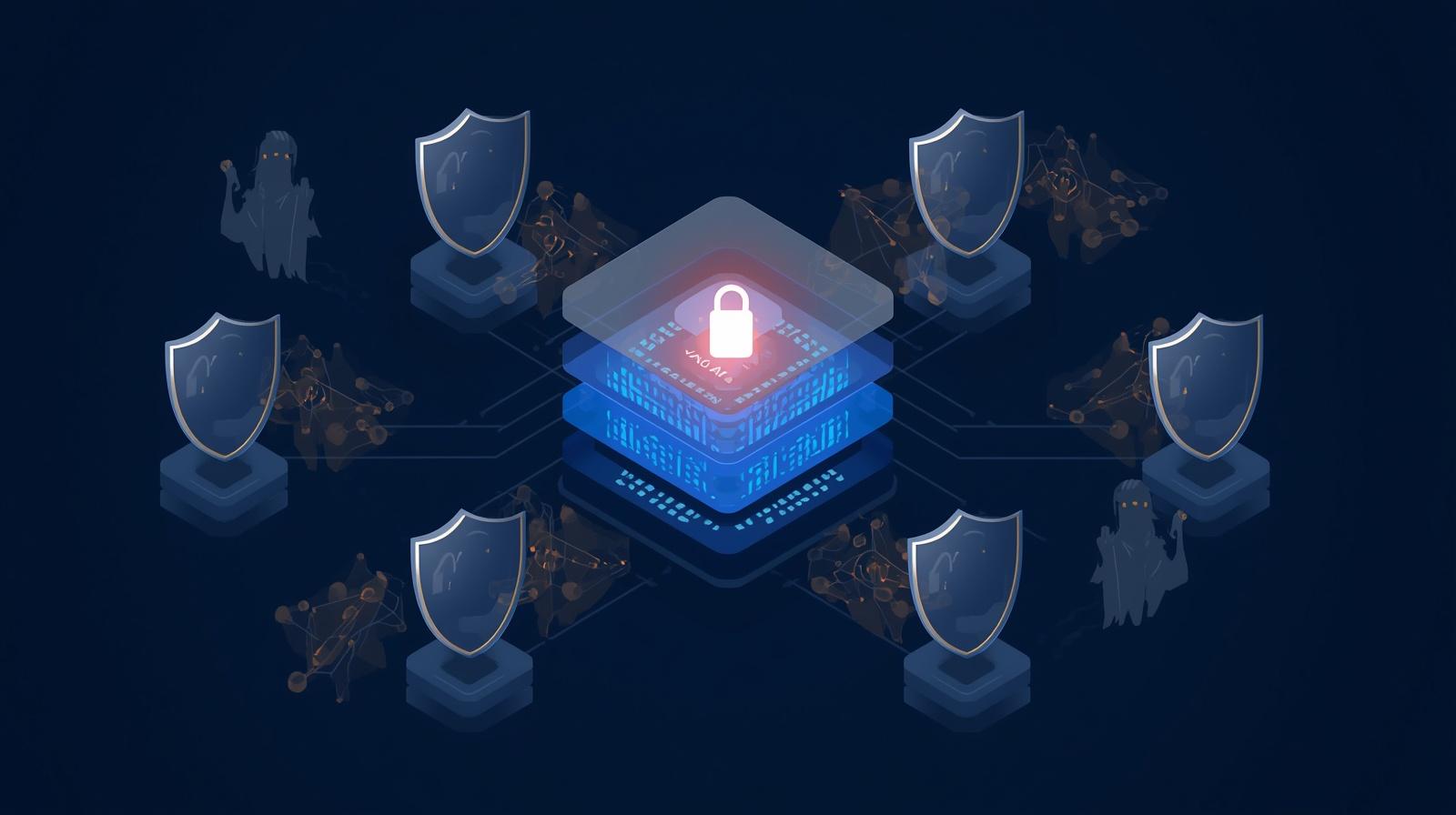
On February 23, 2026, Anthropic published a detailed blog post titled "Detecting and Preventing Distillation Attacks," publicly naming three Chinese AI laboratories for operating what the company described as an industrial-scale attempt to steal Claude's capabilities. DeepSeek, Moonshot AI, and MiniMax collectively created more than 24,000 fraudulent accounts and conducted over 16 million exchanges with Claude, using the outputs to train their own competing models.
The incident, which Anthropic calls a "distillation attack," represents a new category of AI security threat. Rather than hacking into Anthropic's systems directly, the labs disguised their traffic through proxy services that resell API access in China (where Anthropic has no authorized commercial presence), routing millions of carefully crafted prompts through the appearance of ordinary customer traffic. The goal was to harvest enough of Claude's behavior, reasoning patterns, and output quality to build comparable capabilities into their own models.
For nonprofit leaders, this story might seem like a distant dispute between technology corporations and geopolitical rivals. But the security lessons embedded in this incident are directly relevant to how nonprofits access, govern, and trust the AI tools they rely on every day. The attack exploited the exact vulnerabilities that exist across the nonprofit sector: shared access credentials, unofficial tool channels, and the absence of formal AI governance policies.
Understanding what happened, why it matters, and what practical steps nonprofits should take is the focus of this article. This is not an abstract technology story. It is a governance story with real implications for how your organization should think about AI security in 2026.
What Actually Happened: The Distillation Attack Explained
Model distillation is a legitimate machine learning technique. In its authorized form, it involves training a smaller, more efficient model to replicate the behavior of a larger model, using the larger model's outputs as training data. AI developers use it internally all the time to create faster, cheaper versions of their flagship models for specific use cases.
What DeepSeek, Moonshot AI, and MiniMax are accused of is a weaponized version of this technique: using another company's model without authorization, at massive scale, specifically to copy its capabilities for competitive advantage. Anthropic's terms of service explicitly prohibit using Claude's outputs to train competing models. The three labs didn't just bend this rule. They built sophisticated infrastructure to evade detection while violating it systematically.
MiniMax
13 million+ exchanges
Focused on agentic coding and tool use, probing how Claude handles complex multi-step tasks and developer-facing capabilities.
Moonshot AI
3.4 million exchanges
Targeted reasoning, coding, and computer-use agent behavior, areas where Claude has demonstrated measurable performance advantages.
DeepSeek
150,000+ exchanges
Described by Anthropic as the most technically sophisticated operation, probing foundational logic, alignment behavior, and responses to censorship-sensitive topics.
The operational structure was designed for plausible deniability. Rather than connecting directly from known Chinese lab infrastructure, the attacks were routed through third-party API reseller services that sell access to Claude in regions where Anthropic does not operate commercially. These resellers serve legitimate customers, making the fraudulent traffic difficult to isolate by geography or IP address alone. Anthropic detected the pattern through subtle infrastructure signals: IP correlations, request metadata patterns, and behavioral signatures that distinguished this traffic from genuine customer behavior.
The legal and policy response is still developing. The activity violates Anthropic's terms of service, but no criminal charges have been filed. The incident has significantly accelerated discussions in Washington about extending U.S. export controls to cover AI model API access itself, potentially requiring international entities to obtain licenses before accessing frontier American AI models. Those regulations, if implemented, would have direct implications for nonprofits with international operations or global program delivery.
Why This Matters Beyond Big Tech
The narrative of this incident has largely focused on geopolitics: Chinese labs versus American AI companies, export controls, and the frontier model race. But the mechanics of the attack reveal vulnerabilities that are universal, not exclusive to Anthropic's enterprise customers. The same structural weaknesses that allowed this attack to scale are present in how many nonprofits currently access and govern their AI tools.
The Proxy Reseller Risk
The distillation attack was routed through third-party API reseller services. Nonprofits sometimes access AI tools through unofficial channels: resellers, aggregators, or browser extensions that bundle API access. These intermediaries may offer lower prices, but they operate outside the vendor's direct oversight.
If a reseller is compromised, if their access is revoked, or if they are operating in violation of the vendor's terms, your organization's work and data may be caught in the fallout. When you access AI through an unofficial intermediary, you lose the accountability chain that official vendor relationships provide.
Shared Credentials and Access Governance
The fake accounts in this incident were designed to blend in with legitimate customer traffic. One reason they could operate at scale is that AI vendor monitoring systems are calibrated against normal usage patterns, not anomalous organizational behavior that looks like individual use.
Many nonprofits share a single API key across multiple staff members, or use personal accounts for organizational AI work. Shared credentials make it impossible to audit who used what, when, and for what purpose, which is the foundation of any security response when something goes wrong.
Vendor Trust and Provenance
If the export control discussions in Washington result in licensing requirements for AI API access, nonprofits that work internationally or use AI tools across borders may face new compliance obligations. An organization delivering programs in multiple countries through AI-assisted communications or case management could suddenly find itself navigating export control law.
More immediately, the provenance question cuts the other way: if a low-cost AI tool your organization uses was trained on stolen model outputs, there are ethical and reputational considerations that go beyond price. Understanding where your AI's capabilities come from is a legitimate governance question in 2026.
Tighter API Controls Are Coming
Anthropic's response to this attack will likely include tighter identity verification, stricter usage monitoring, and more aggressive account review. Other major AI vendors facing similar pressures will likely do the same. Organizations that have relied on informal or minimally documented access arrangements may find that future onboarding requires more rigorous verification.
This is not a threat to legitimate nonprofit users, but it does underscore why formalizing your organization's AI access now, before those controls tighten, is better than scrambling to comply with new requirements later.
AI Access Governance: What Nonprofits Should Do Now
The Anthropic incident is a useful prompt for nonprofits to audit how they currently access and manage AI tools, and to implement basic governance structures that reduce risk. This does not require a dedicated security team or a large technology budget. It requires intentional decision-making about a few key areas.
1. Audit Your Current AI Tool Access
Understand what you're using and how you're accessing it before taking any other steps.
The first step is knowing what AI tools your organization currently uses, who has access, and through what channels. This is harder than it sounds. Shadow AI, staff members using personal accounts or consumer tools for work purposes without formal approval, is widespread across the nonprofit sector. An audit that only captures officially sanctioned tools will miss a significant portion of actual AI usage.
Consider surveying staff directly with a simple questionnaire about which AI tools they use for work, how often, and what for. Frame it as helpful information gathering, not a compliance exercise, and you'll get more honest answers. The goal is a complete picture of your AI tool landscape, including tools your IT team or leadership didn't formally adopt.
- List all AI tools in use, including unofficial and personal-account tools
- Identify who holds credentials and whether they are shared or individual
- Note which tools are accessed via official vendor channels versus resellers or aggregators
- Document what types of data are being entered into each tool
2. Establish Individual Access Credentials
Shared API keys and team accounts create accountability gaps that become problems after an incident.
One of the most straightforward governance improvements any nonprofit can make is moving from shared credentials to individual access. When a single API key or team account is used by multiple staff members, you lose the ability to audit usage, revoke access selectively, or investigate problems after the fact. This matters both for security and for organizational accountability.
Most enterprise-tier AI tools support individual user accounts with centralized administrative oversight. This structure allows your IT or operations staff to see aggregate usage, manage permissions, add and remove individual users, and investigate unusual activity, without needing to monitor every interaction. If your current AI subscriptions don't offer this, it's worth evaluating whether upgrading to a tier that does is worth the cost.
- Move to individual accounts with centralized admin oversight where possible
- Rotate any shared API keys and move to per-person or per-application keys
- Establish an offboarding procedure that revokes AI tool access when staff leave
- Enable usage logging where available so unusual patterns can be reviewed
3. Use Official Channels Only
Resellers and aggregators introduce risk that official vendor relationships don't.
The attack chain in the Anthropic incident ran through third-party API resellers operating in markets where Anthropic has no commercial presence. This is directly relevant to nonprofit AI governance: some organizations access AI tools through browser extensions, aggregator apps, or reseller services that bundle API access at a discount or in a more convenient package.
Accessing AI through an unofficial intermediary creates several risks. The reseller may operate in violation of the vendor's terms of service, putting your access at risk of sudden termination. Data you submit through a reseller may be processed or stored in ways the original vendor's privacy policy doesn't cover. And if the reseller's access is revoked or their infrastructure is compromised, your organization has no direct relationship with the vendor to resolve the problem.
Official vendor channels are almost always the right choice, even when they cost more. Nonprofit discounts are widely available from major AI providers, and the security and accountability benefits of direct relationships outweigh the short-term cost savings of unofficial access. If a reseller is offering significantly cheaper AI access, it's worth asking exactly what the arrangement entails and whether it complies with the original vendor's terms.
4. Write a Basic AI Access Policy
A short, clear policy document prevents the governance gaps that incidents like this expose.
Formal AI governance doesn't need to be complex to be effective. A one-to-two-page AI access policy that covers which tools are approved, what data can be entered, who manages credentials, and how staff should handle unusual situations provides the organizational clarity that prevents many of the vulnerabilities this incident exposed.
- List approved AI tools and explicitly prohibit using unapproved alternatives for organizational work
- Specify what categories of data must not be entered into AI tools (beneficiary PII, donor financial data, confidential board communications)
- Designate who is responsible for managing AI tool access and reviewing vendor terms
- Establish a process for requesting new AI tools (so staff aren't driven to use unauthorized alternatives)
Evaluating AI Tools in a World of Provenance Questions
The Anthropic incident raises a question that nonprofit technology evaluators haven't had to consider seriously until now: where did this AI's capabilities come from, and was the training process ethically and legally sound?
If allegations of distillation attacks against Claude are substantiated, it means some competing AI tools may have been partially trained on Anthropic's intellectual property without authorization. For nonprofits, this creates a reputational and ethical consideration beyond price and performance. Using an AI tool whose capabilities were built through IP theft raises questions about the organization's values alignment, particularly for nonprofits whose missions involve integrity, fairness, or social justice.
This doesn't mean every low-cost AI alternative is compromised or suspect. Model distillation is legitimate when authorized, and many competitive AI tools have developed their capabilities through entirely appropriate means. But it does mean that vendor evaluation in 2026 should include some consideration of training data provenance and whether the company has a credible, transparent account of how their model was developed.
Vendor Evaluation Questions for AI Security
Add these to your standard vendor assessment process
- Does the vendor publish a model card or training data disclosure that explains how their AI was developed?
- Does the vendor's terms of service clearly prohibit using their model's outputs to train competing models?
- Is this vendor accessible through official, direct channels, or only through resellers or aggregators?
- Does the vendor offer enterprise-grade access controls (individual accounts, usage logging, admin oversight)?
- Has the vendor been involved in any credible controversies related to data practices or model provenance?
- What is the vendor's data retention and privacy policy for prompts and outputs submitted by your organization?
International Operations and the Export Control Risk
The policy response to the distillation attack incident includes serious legislative discussions in Washington about extending U.S. export controls to cover access to frontier AI model APIs. If those controls are implemented in a form that requires international entities to obtain licenses before accessing American AI models, nonprofits with global operations could face real compliance complexity.
Consider a nonprofit delivering humanitarian programs in multiple countries, using Claude or GPT-4 to assist with communications, translation, case management summaries, or donor reporting. If the staff member accessing that tool is in a country subject to export controls, or if the beneficiary data being processed is subject to geographic restrictions, that organization could find itself navigating compliance requirements it didn't anticipate.
This is not a reason to panic or to preemptively restrict your international AI use. The regulatory landscape is still forming, and any rules would almost certainly include carve-outs for humanitarian and nonprofit activities. But it is a reason to document your current AI tool usage across geographies now, so you have a clear baseline when and if compliance questions arise.
Nonprofits with international programs should also monitor advocacy from NTEN, TechSoup, and sector-specific umbrella organizations, which are tracking these developments and will be positioned to weigh in on regulatory design in ways that protect legitimate nonprofit use cases. Being connected to those conversations now is better than discovering the compliance implications after the fact.
What This Tells Us About AI Security Maturity
The Chinese AI lab distillation attack is a milestone in a broader story about AI security maturing as an organizational discipline. For most of the past few years, AI security conversations have focused primarily on prompt injection, data leakage from AI outputs, and bias in automated decision-making. This incident adds a new category: the security and integrity of the AI infrastructure your organization depends on.
AI vendors are now dealing with adversarial actors who specifically target the models they operate, not just the organizations that use them. As frontier models become more valuable, the incentive to steal or replicate their capabilities increases. That dynamic will push major AI vendors toward more aggressive security postures: tighter identity verification, more sophisticated usage monitoring, stricter enforcement of terms of service, and potentially new access requirements for high-volume or sensitive use cases.
Nonprofits that have formalized their AI governance, established direct vendor relationships, and documented their usage will navigate these changes more easily than organizations that have relied on informal access arrangements. The organizations most likely to be caught off guard are those that have treated AI tool access as purely an individual staff matter, with no organizational oversight or documentation.
If you are working on AI governance more broadly, consider connecting the security dimensions covered in this article with the AI governance framework your organization may already be developing. Governance and security are not separate topics. They are different aspects of the same organizational discipline: being intentional, accountable, and resilient in how you use AI.
Conclusion
The accusation that DeepSeek, Moonshot AI, and MiniMax used 24,000 fraudulent accounts to conduct 16 million unauthorized exchanges with Claude is a significant AI security story. But its relevance to nonprofits is not in the geopolitical rivalry it reflects. It is in the governance gaps it exposes: shared credentials, unofficial tool channels, absent access policies, and no documentation of who uses AI for what.
None of these gaps require sophisticated technical expertise to address. They require intentional leadership decisions: move to individual accounts, use official channels, write a simple access policy, and document your AI tool landscape. These are governance steps, not engineering projects. Most nonprofits can take meaningful action within weeks, without significant budget.
As AI becomes more deeply integrated into nonprofit operations, including case management, donor communications, program delivery, and strategic planning, the governance of that AI becomes organizational infrastructure. The Anthropic distillation attack incident is a useful prompt to treat it that way.
For nonprofits already working on surfacing and governing shadow AI, the security framing from this article connects directly to that work. The same staff behaviors that create shadow AI risks create the access governance gaps this incident highlights. Addressing both together is more effective than treating them as separate problems.
Ready to Strengthen Your AI Governance?
Our team helps nonprofits build practical AI governance frameworks that address security, accountability, and responsible use without requiring a dedicated technology team.