
How to Communicate AI Failures Honestly to Stakeholders
In 2025, 42% of businesses scrapped most of their AI initiatives, yet few organizations openly discussed these failures with stakeholders. For nonprofits, where trust forms the foundation of donor relationships and community impact, honest communication about AI mistakes is not just ethical but strategic. This article provides practical frameworks for communicating about AI failures, system errors, and implementation challenges with different stakeholder groups while maintaining credibility, demonstrating accountability, and ultimately strengthening rather than undermining organizational trust.
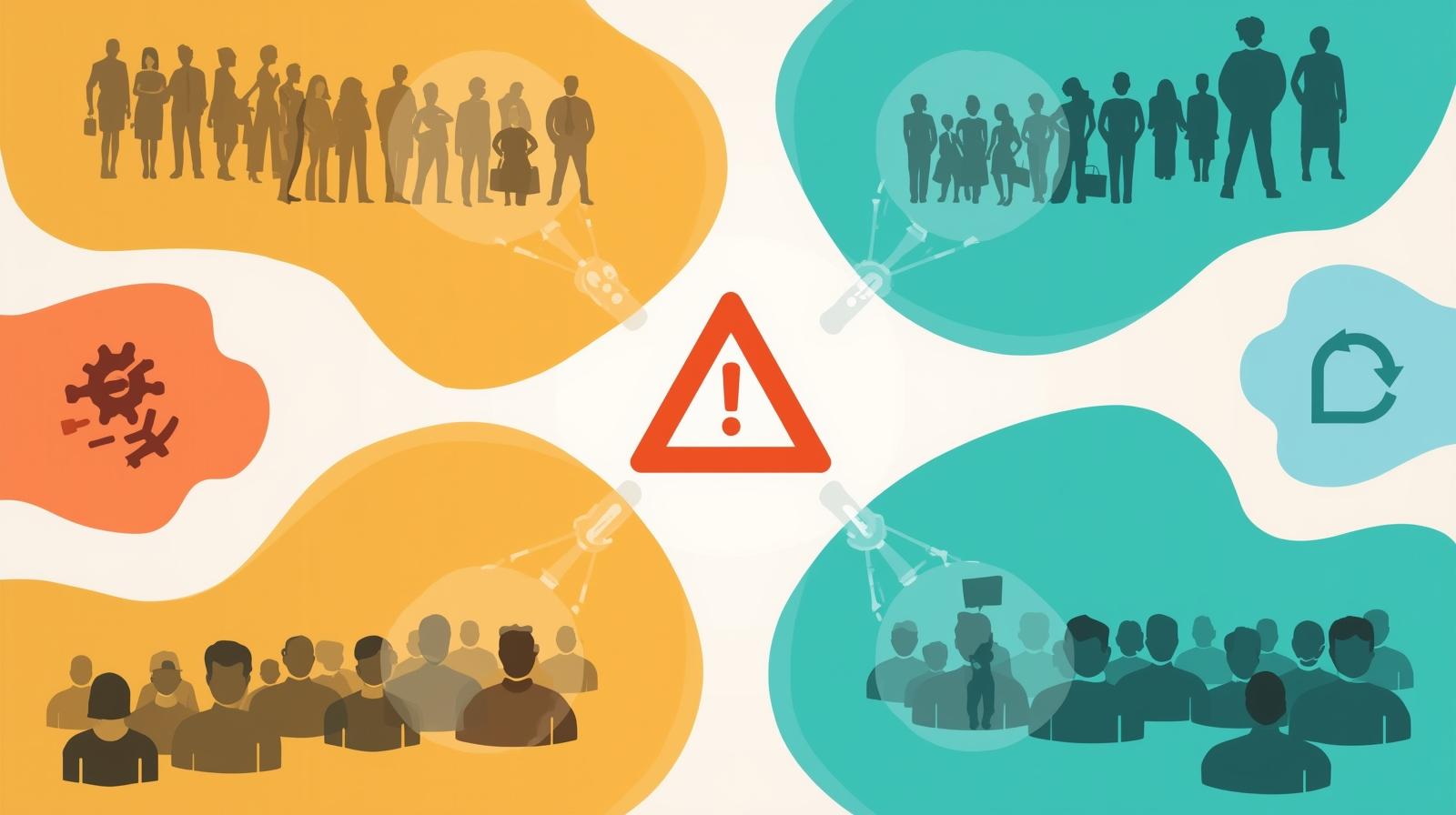
When AI systems fail, nonprofit leaders face a difficult choice: communicate openly about problems and risk undermining stakeholder confidence, or minimize failures and potentially damage trust through perceived deception. This dilemma becomes particularly acute given research showing that donor attitudes toward AI are already mixed, with significant segments expressing concern about how technology might affect the human connection central to philanthropy.
Yet the evidence consistently shows that honest communication about failures, when handled skillfully, actually strengthens stakeholder relationships rather than damaging them. Research on nonprofit transparency demonstrates that organizations practicing openness about both successes and challenges receive significantly more support than those appearing to hide problems. When nonprofits openly acknowledge mistakes and explain how they will improve, they signal trustworthiness, demonstrate accountability, and show the kind of organizational learning that smart funders and engaged donors value.
The challenge most nonprofit leaders face is not whether to communicate about AI failures but how to do so effectively. Poor failure communication can indeed damage relationships, creating the very outcome leaders fear. Simply announcing "our AI system failed" without context, explanation, or remediation plan leaves stakeholders confused and concerned. Conversely, defensive communication that minimizes problems or deflects responsibility undermines credibility even when technical issues are resolved.
This article provides comprehensive guidance for communicating honestly and effectively about AI failures. We'll explore how to assess the severity and stakeholder impact of different types of failures, create appropriate communication strategies for various situations, craft messages that build rather than erode trust, navigate the specific concerns of different stakeholder groups, and turn failure communication into opportunities for demonstrating organizational learning and resilience. Whether you're addressing a minor system glitch or a significant AI implementation setback, these frameworks will help you maintain stakeholder confidence while upholding the transparency your mission demands.
Understanding the Spectrum of AI Failures and Their Communication Requirements
Not all AI failures require the same communication approach. Understanding different failure types and their stakeholder implications helps organizations calibrate responses appropriately, avoiding both unnecessary alarm and inadequate transparency. Research from ISACA on avoiding AI pitfalls identifies several distinct categories of AI failures, each with different stakeholder implications.
Technical Failures: When Systems Don't Work as Designed
Technical failures represent perhaps the most straightforward category. These occur when AI systems malfunction, produce errors, or fail to deliver expected functionality. In the nonprofit context, this might include a donor recommendation system that crashed during year-end giving season, an AI-powered chatbot providing incorrect information to beneficiaries, or an automated email system sending duplicate or mistargeted messages.
The communication imperative for technical failures depends primarily on stakeholder impact. Minor technical glitches that affect internal operations but don't reach external stakeholders may require only internal documentation and remediation. However, when technical failures affect donor experience, service delivery, or data security, transparent communication becomes essential regardless of how quickly problems are resolved.
Strategic Failures: When AI Doesn't Deliver Expected Value
Strategic failures occur when AI systems function technically but fail to deliver anticipated organizational benefits. According to research from analysis of AI project failures, these failures often stem from misalignment between business problems and technical solutions, unrealistic expectations about AI capabilities, or inadequate change management during implementation.
For nonprofits, strategic failures might look like implementing an AI donor prospecting system that costs more than the additional revenue it generates, adopting AI writing tools that actually increase staff workload rather than reducing it, or deploying case management automation that frontline staff circumvent because it doesn't fit actual workflows. These failures are particularly challenging to communicate because they represent organizational judgment errors rather than simple technical malfunctions.
Ethical Failures: When AI Creates Harm or Perpetuates Bias
Ethical failures represent the most serious category and demand the most careful communication. These occur when AI systems produce discriminatory outcomes, violate stakeholder privacy, or operate in ways that contradict organizational values. Research from BDO on AI risks in nonprofits highlights that ethical failures can emerge even from well-intentioned implementations when organizations fail to adequately assess bias in training data or understand how algorithmic decision-making might affect vulnerable populations.
Ethical failures in nonprofit contexts might include an AI system prioritizing program applications in ways that disadvantage certain demographic groups, donor segmentation algorithms that inadvertently use protected characteristics, or automated decision-making that lacks appropriate human oversight for sensitive situations. These failures require immediate acknowledgment, clear remediation plans, and often external accountability mechanisms to rebuild trust.
Implementation Failures: When Rollout Goes Wrong
Implementation failures occur during the deployment phase when organizations discover that AI systems don't integrate with existing workflows, staff lack adequate training, or organizational culture resists change more than anticipated. These failures are extremely common, with industry research showing that many AI initiatives stall not because of technology limitations but due to organizational readiness gaps.
Communication about implementation failures requires acknowledging both technical and human dimensions. It's rarely sufficient to blame "user error" or "resistance to change." Effective communication recognizes that implementation challenges often reflect organizational learning about what actually works in practice versus what seemed reasonable in theory. This framing positions failure as valuable insight rather than simply a problem to be fixed.
AI Failure Categories and Communication Urgency
Different failure types require different communication strategies and timelines
Technical Failures
Urgency: VariableSystem malfunctions, errors, or performance issues
- Communicate when: External stakeholders affected or data security compromised
- Timeline: Immediate for security issues; within 24-48 hours for service disruptions
- Key message: What happened, who was affected, what we're doing to fix it
Strategic Failures
Urgency: ModerateAI doesn't deliver expected organizational value
- Communicate when: Decisions affect resource allocation or strategic direction
- Timeline: Before major pivots; include in quarterly or annual updates
- Key message: What we learned, how we're adjusting approach, better path forward
Ethical Failures
Urgency: HighAI creates harm, perpetuates bias, or violates values
- Communicate when: Always, regardless of whether discovered internally or externally
- Timeline: Immediate acknowledgment; full plan within 72 hours
- Key message: Take full responsibility, explain impact, detail remediation and prevention
Implementation Failures
Urgency: Low-ModerateRollout challenges, adoption issues, or integration problems
- Communicate when: Affects stakeholder expectations or requires strategy change
- Timeline: Include in regular updates; proactive if major pivot needed
- Key message: Learning from practice, adjusting approach, organizational growth
A Crisis Communication Framework for AI Failures
When AI failures demand immediate stakeholder communication, nonprofits need structured approaches that ensure timely, accurate, and trust-building responses. Research on crisis communication strategies emphasizes that effective approaches balance speed with accuracy, honesty with appropriate framing, and transparency with protection of organizational reputation.
Step 1: Rapid Assessment and Internal Alignment (First 2-4 Hours)
Before communicating externally, organizations need clear internal understanding of what happened, who was affected, and what immediate actions are being taken. This rapid assessment phase should involve gathering technical details about the failure from system administrators or vendors, identifying all stakeholder groups potentially affected, assessing whether data security or privacy was compromised, determining whether legal or regulatory notification is required, and establishing who will serve as the primary communicator.
Speed matters, but accuracy matters more. According to HubSpot's crisis communication guidance, stakeholders prefer organizations that take time to verify information over those that issue hasty statements requiring later correction. However, "gathering facts" should not become an excuse for indefinite silence. If full details aren't available within a few hours, communicate what you do know and commit to specific timelines for additional updates.
Step 2: Initial Stakeholder Notification (Within 24 Hours)
Once basic facts are established, issue initial notification to affected stakeholders. This communication should acknowledge the problem clearly and directly, explain what happened in accessible language (avoiding technical jargon), identify who was affected and how, describe immediate actions being taken, provide specific timeline for detailed follow-up, and offer clear contact information for questions or concerns.
The tone of initial notification matters enormously. Research on stakeholder communication during crises shows that taking full responsibility (when appropriate) builds more trust than defensive or minimizing language. Avoid phrases like "mistakes were made" (passive voice that obscures responsibility) or "we apologize for any inconvenience" (minimizes impact). Instead, use direct language like "we made an error" or "this failure affected X people in Y ways."
Step 3: Detailed Explanation and Remediation Plan (Within 72 Hours)
Following initial notification, provide more comprehensive communication explaining what happened and why, what specific impacts occurred, how the organization is addressing immediate problems, what changes are being implemented to prevent recurrence, who is responsible for monitoring implementation, and how stakeholders can follow progress or provide input.
This detailed communication should balance transparency with appropriate technical translation. Most stakeholders don't need exhaustive technical explanations, but they do need sufficient detail to understand root causes and assess whether remediation plans are adequate. Consider providing layered information: a clear summary for general audiences, with links to more technical details for those seeking deeper understanding.
Step 4: Ongoing Updates and Learning Demonstration (Weeks 2-8)
Effective failure communication doesn't end with initial explanation. Organizations should provide regular updates on remediation progress, share what the organization is learning from the failure, demonstrate how the experience is improving broader practices, acknowledge stakeholders whose feedback contributed to solutions, and eventually confirm when issues are fully resolved with validation evidence.
These ongoing updates serve multiple purposes beyond information sharing. They demonstrate that the organization takes accountability seriously enough to follow through beyond initial crisis response. They provide opportunities to highlight organizational learning and improvement, turning failure into a demonstration of resilience and growth. And they allow stakeholders who remain concerned to see concrete progress rather than simply being asked to trust that problems are being addressed.
Crisis Communication Timeline for AI Failures
Structured approach to timely, trust-building failure communication
- • Gather technical details and understand scope
- • Identify all affected stakeholder groups
- • Assess security, privacy, and legal implications
- • Establish communication lead and approval process
- • Prepare holding statement if media inquiry comes
- • Issue clear acknowledgment of problem
- • Explain what happened in accessible language
- • Identify who was affected and how
- • Describe immediate containment actions
- • Commit to timeline for detailed follow-up
- • Provide contact information for questions
- • Provide comprehensive what/why explanation
- • Detail specific impacts and their resolution
- • Present remediation plan with clear milestones
- • Explain prevention measures being implemented
- • Assign clear responsibility for monitoring
- • Invite stakeholder questions and feedback
- • Regular updates on remediation progress
- • Share organizational learning from experience
- • Demonstrate broader practice improvements
- • Acknowledge stakeholder contributions to solutions
- • Confirm full resolution with validation evidence
- • Include reflection in annual reporting
Crafting Messages That Build Trust Rather Than Erode It
The difference between failure communication that strengthens stakeholder relationships and communication that damages trust often comes down to specific word choices, framing decisions, and tone. Research on nonprofit accountability emphasizes that stakeholders respond positively to honesty about challenges when organizations demonstrate genuine commitment to learning and improvement.
Use Active Voice and Take Clear Responsibility
Passive voice construction like "mistakes were made" or "the system experienced issues" obscures responsibility and signals evasiveness. Active voice creates accountability: "we made an error," "our system failed," or "the leadership team chose an approach that didn't work." This direct ownership demonstrates confidence and integrity that stakeholders respect, even when discussing difficult failures.
Taking responsibility doesn't mean accepting unlimited liability or blame for circumstances beyond your control. If vendor systems failed, acknowledge "we selected a vendor whose systems failed to perform as promised, and we take responsibility for that vendor selection decision." If staff lacked training, say "we implemented systems before ensuring staff had adequate preparation." The key is owning your organization's role in outcomes while accurately describing circumstances.
Balance Honesty with Appropriate Context
Honest communication doesn't require dwelling on worst-case scenarios or catastrophizing failures. It means accurately representing what happened, its impacts, and your response. Provide context that helps stakeholders understand the situation without minimizing or exaggerating. For example, "this system error affected 500 donors who received duplicate thank-you emails" provides specific, actionable information. Saying merely "some donors were affected" is vague and concerning, while "we experienced a catastrophic system failure" unnecessarily alarms if impacts were actually limited.
Context should include both what went wrong and what's working. If a strategic AI initiative didn't deliver expected value but you learned valuable lessons that are improving other operations, that's relevant context. This isn't about deflecting from problems but providing stakeholders with complete pictures that enable informed assessment rather than uninformed concern.
Focus on Forward Action, Not Just Backward Explanation
While stakeholders deserve explanation of what happened, they care even more about what you're doing about it. Effective failure communication devotes at least as much attention to remediation plans and prevention measures as to problem description. According to research on nonprofit transparency, donors particularly value seeing organizations that learn from mistakes and implement improvements rather than simply apologizing and moving on.
This forward focus should be concrete and specific. Rather than promising to "do better next time" or "implement better procedures," specify exactly what's changing. For instance, "we're implementing a three-tier testing protocol for all AI systems before deployment, requiring sign-off from technical staff, program leadership, and an external advisor" shows specific, accountable change.
Demonstrate Learning and Growth, Not Just Damage Control
Perhaps the most powerful reframing available is positioning failure communication as an opportunity to demonstrate organizational learning capacity. Smart funders and engaged donors understand that innovation involves risk and that failures provide valuable learning opportunities. The question isn't whether your organization ever makes mistakes, but how you learn from them and become stronger as a result.
Frame failure communication to highlight what you're learning: "This experience taught us that we need better cross-departmental communication during AI implementation. We've now established monthly check-ins between technical and program teams that have already improved our other technology projects." This demonstrates that failures are creating systemic improvements, not just one-off corrections. Organizations that communicate this way transform potential damage to reputation into evidence of organizational resilience and maturity.
Trust-Building vs. Trust-Damaging Language Patterns
Specific phrases and framing that shape stakeholder response to failure communication
❌ Trust-Damaging Patterns
- • "Mistakes were made" (passive, evasive)
- • "We apologize for any inconvenience" (minimizes impact)
- • "Some users may have experienced..." (vague, uncertain)
- • "This is an industry-wide challenge" (deflecting)
- • "We're investigating what happened" (with no follow-up commitment)
- • "The system had technical difficulties" (obscures responsibility)
✓ Trust-Building Patterns
- • "We made an error that affected..." (active, clear)
- • "This failure impacted 500 donors by..." (specific, honest)
- • "We take full responsibility for..." (accountable)
- • "Here's what we're doing to prevent this..." (forward-focused)
- • "This taught us that we need to..." (learning-oriented)
- • "We'll update you on progress by [specific date]" (commitment)
Example Message Comparison
Poor Example:
"We experienced some technical difficulties with our new donor system last week. We apologize for any inconvenience this may have caused and are working to ensure it doesn't happen again."
Strong Example:
"Last Tuesday, our AI-powered donor acknowledgment system sent duplicate thank-you emails to 347 donors. We take full responsibility for this error, which stemmed from inadequate testing of our email integration. We've immediately implemented a validation checkpoint that prevents this type of duplication, and we're personally reaching out to affected donors to apologize. This experience has taught us to add an additional testing phase for all systems that touch donor communications, which we're implementing across all our technology projects. We'll share a full review of what we learned and how we're improving in next month's newsletter."
Tailoring Failure Communication to Different Stakeholder Groups
Different stakeholders have different relationships with your organization, varying levels of technical sophistication, and distinct concerns about AI failures. Effective communication recognizes these differences while maintaining consistent core messages about accountability and remediation. Research from Frontiers in Communication on internal crisis communication emphasizes that different stakeholder groups require different messaging strategies and communication channels.
Board Members: Governance Implications and Risk Assessment
Board communication about AI failures should focus on governance implications, risk assessment, and oversight responsibilities. Board members need to understand not just what went wrong technically, but what it means for organizational risk management and fiduciary oversight. Provide board members with comprehensive background including technical details (without requiring technical expertise), governance process failures or gaps that enabled the problem, financial implications and insurance considerations, reputational risks and stakeholder impact, and specific board actions or oversight changes being recommended.
According to Forvis Mazars' guidance on AI governance, nonprofit boards should receive immediate notification of significant AI failures, with detailed briefings at the next board meeting and ongoing updates until issues are resolved. This regular reporting demonstrates that management takes board oversight seriously and helps boards fulfill their fiduciary responsibilities.
Donors: Trust, Values Alignment, and Fund Stewardship
Donor communication should emphasize organizational values, accountability, and responsible stewardship of contributed funds. Most donors don't need or want exhaustive technical explanations, but they do care about whether failures reflect values misalignment or poor judgment. Focus communication on how the failure happened and what you're learning, whether donor data or privacy was compromised, how organizational values guided your response, what this means for future donor interactions, and how you're ensuring responsible use of contributed funds.
Research from Fidelity Charitable on donor perceptions of AI shows that donors express particular concern about AI use in fundraising and personalization. When failures occur in these sensitive areas, donors need extra reassurance about human oversight and values alignment. Frame failure communication to demonstrate that technology serves relationships rather than replacing them.
Beneficiaries and Service Recipients: Impact and Remedy
Communication with beneficiaries and service recipients requires the most careful attention to accessibility, impact clarity, and remediation specifics. These stakeholders are often most directly affected by AI failures and may have less organizational power to demand accountability. Ensure communication is in plain language and culturally appropriate, explains exactly how they were affected, describes specific actions to remedy individual impacts, provides clear paths for questions or additional support, acknowledges any power dynamics and ensures accessible recourse, and demonstrates organizational commitment to preventing future harm.
For beneficiaries, process details matter less than impact and remedy. Rather than explaining technical failures in depth, focus on "this is how it affected you, this is what we're doing to help, and this is how we're making sure it doesn't happen again." Provide multiple communication channels recognizing that different individuals have different access to email, phone, or in-person communication.
Staff: Operational Impact and Internal Learning
Internal communication with staff serves different purposes than external stakeholder communication. Staff need operational clarity about what to tell external stakeholders, how their work is affected during remediation, what they should watch for to identify related problems, and how the organization is learning and improving processes. Staff communication should be more detailed and honest about organizational dynamics, acknowledging when implementation failures stemmed from inadequate resources, training gaps, or communication breakdowns.
Additionally, staff often serve as frontline ambassadors responding to stakeholder questions about failures. Provide talking points and FAQs that help staff communicate consistently and confidently, empowering them to address concerns rather than deflecting to leadership for all inquiries. For strategies on building staff capacity around AI, see our article on developing AI champions in your organization.
Funders and Institutional Partners: Accountability and Capability
Communication with institutional funders and partner organizations should emphasize organizational learning capacity and systemic improvements. These stakeholders evaluate not just whether failures occurred but how your organization handles adversity and builds from challenges. Provide funders with comprehensive incident analysis including root cause assessment, explanation of how the failure relates to funded programs, detailed remediation and prevention plans, demonstration of organizational learning and capacity building, and clear accountability measures and ongoing monitoring.
Many funders appreciate proactive disclosure of significant challenges even when not strictly required by grant agreements. This transparency demonstrates organizational integrity and mature leadership. Frame communication to highlight how you're using the experience to become a stronger, more capable organization, positioning failure as part of responsible innovation rather than evidence of inadequate management.
Turning Failure Communication Into Demonstrations of Organizational Learning
The most sophisticated approach to failure communication goes beyond damage control to position challenges as opportunities for demonstrating organizational learning and resilience. Research from analysis of transparency in fundraising shows that organizations openly sharing both successes and failures while demonstrating commitment to improvement often receive more stakeholder support than those appearing to hide challenges.
Creating Learning Narratives, Not Just Problem Reports
Transform failure communication from defensive explanation into educational narrative. Share what you've learned about AI implementation in nonprofit contexts, what you discovered about your organizational capacity or culture, how the experience improved your decision-making processes, what guidance you can offer other organizations facing similar challenges, and how the failure ultimately strengthened your organization. This narrative shift positions your organization as thoughtful and mature rather than simply recovering from mistakes.
Consider publishing longer-form reflections on significant failures once immediate remediation is complete. Some nonprofits share detailed post-mortems explaining what happened, what they learned, and how they've improved. These communications demonstrate confidence, contribute to sector-wide learning, and position the organization as transparent and accountable. They also provide valuable content for demonstrating organizational culture to potential partners, funders, and employees.
Building Failure Communication Into Organizational Culture
Organizations that communicate most effectively about AI failures are often those with broader cultures that normalize learning from mistakes. These organizations regularly share challenges in newsletters, annual reports, and board meetings, not just when forced by crisis. They create psychological safety for staff to surface concerns before they become failures. And they treat failure communication as part of accountability rather than a special response to problems.
Building this culture requires leadership modeling. When executive directors and board chairs acknowledge their own mistakes and learning publicly, it creates permission for similar transparency throughout the organization. This doesn't mean dwelling on failures or undermining confidence, but rather demonstrating that growth comes through experience, including difficult experiences. Organizations with these cultures find that stakeholders respond much more positively to failure communication because it fits within established patterns of openness rather than appearing as unusual crisis response.
Using Failure Analysis to Improve Broader Governance
Every AI failure provides opportunity to examine and improve broader organizational governance and decision-making processes. When communicating about failures, explain not just how you're fixing the specific problem but how you're using the experience to strengthen overall organizational capacity. This might include implementing new oversight mechanisms, creating better cross-departmental communication, establishing clearer decision authority, or building additional technical capacity.
Share these systemic improvements in failure communication to demonstrate that challenges are creating lasting organizational value. Stakeholders respond positively when they see that their organization becomes stronger and more capable through adversity. This positions failure communication as evidence of organizational resilience and growth capacity rather than simply explanation of problems. For comprehensive guidance on building strong AI governance, see our article on transparent AI decision-making systems.
Components of Learning-Focused Failure Communication
Transform crisis communication into organizational development narrative
Acknowledgment
Clear, direct statement of what happened and who was affected, taking full responsibility
Analysis
Root cause explanation that provides understanding without overwhelming with technical details
Impact Assessment
Honest accounting of who was affected, how, and what has been done to address individual impacts
Immediate Remediation
Specific actions taken to fix the problem and prevent immediate recurrence
Systemic Learning
What the experience taught about organizational processes, capacity, and decision-making
Structural Improvements
Broader governance, oversight, or capacity changes being implemented based on insights
Ongoing Accountability
Clear timelines, responsible parties, and mechanisms for stakeholders to track progress
Contribution to Sector Knowledge
Share lessons that help other organizations avoid similar challenges, positioning as sector leadership
Building Trust Through Honest Failure Communication
The fear that honest communication about AI failures will damage stakeholder relationships is understandable but often misplaced. When organizations communicate skillfully about challenges, taking clear responsibility while demonstrating learning and improvement, they typically strengthen rather than weaken stakeholder confidence. The evidence is consistent: transparency builds trust, while opacity erodes it even when problems are successfully hidden.
What matters most is not whether AI implementations ever fail (they will), but how organizations respond when challenges occur. Do they acknowledge problems quickly and honestly? Do they take responsibility rather than deflecting blame? Do they provide stakeholders with appropriate understanding of what happened and why? Do they implement meaningful changes to prevent recurrence? And do they demonstrate genuine commitment to learning and improvement rather than simply managing crises?
Organizations that build cultures of honest failure communication position themselves for long-term stakeholder trust. These organizations recognize that stakeholders, donors and board members included, are sophisticated enough to understand that innovation involves risk and that challenges provide learning opportunities. What stakeholders cannot tolerate is opacity, defensiveness, or repeated failures without demonstrated learning. Honest communication signals the kind of organizational integrity and maturity that builds lasting confidence.
The frameworks provided in this article offer structured approaches for communicating about AI failures of all types and severities. From rapid crisis response to longer-term learning narratives, from board briefings to donor communications, these strategies help organizations maintain transparency and accountability while protecting and even strengthening stakeholder relationships. The key is approaching failure communication not as damage control but as an opportunity to demonstrate your organization's values, learning capacity, and commitment to those you serve.
As nonprofits continue adopting AI and other advanced technologies, the question is not whether failures will occur but how organizations will respond. Those that build honest failure communication into their organizational culture, prepare stakeholder-specific response frameworks, and treat challenges as learning opportunities will navigate difficulties with stakeholder confidence intact and often strengthened. In an era where trust in institutions faces significant challenges, transparent accountability about both successes and failures becomes not just ethical practice but competitive advantage.
Need Support Navigating AI Implementation Challenges?
One Hundred Nights helps nonprofit organizations build transparent, accountable AI practices that maintain stakeholder trust even when challenges arise. From crisis communication strategy to stakeholder engagement frameworks to building cultures of organizational learning, we provide the expertise you need to navigate AI implementation with confidence and integrity.