
How to Consolidate Donor Management, Casework, and Volunteer Systems
Most nonprofits operate between five and fifteen separate software systems that don't communicate with each other. One platform tracks donors, another manages casework, a third coordinates volunteers, and a fourth handles finances--with spreadsheets filling the gaps between all of them. This fragmentation creates hidden costs, data quality problems, and missed opportunities that compound over time. Here's how to bring it all together into a single, AI-enhanced system of record.
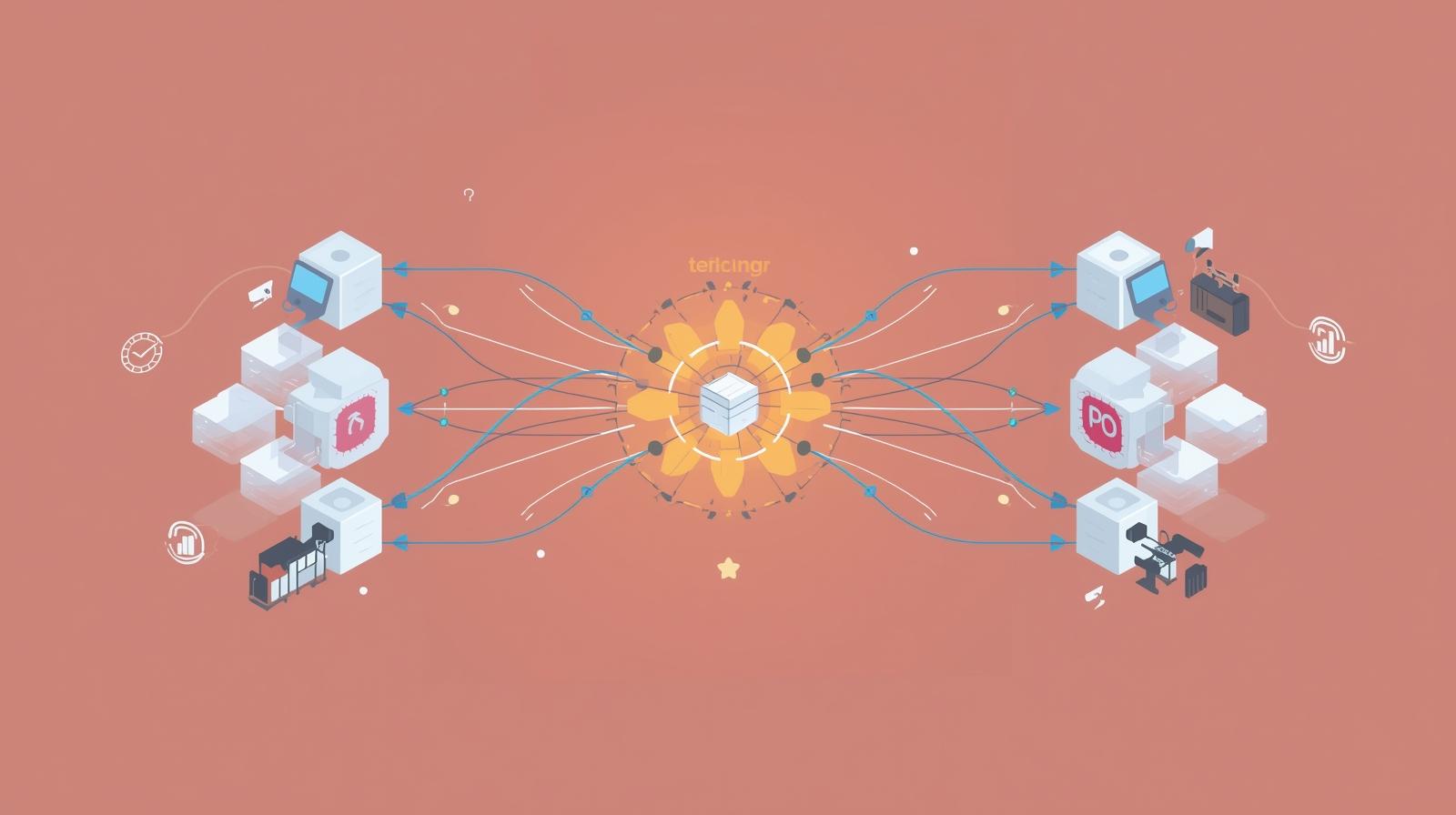
The nonprofit technology landscape has evolved in a distinctly piecemeal fashion. Organizations adopted donor management software when they needed to track contributions, added a case management system when program delivery demanded it, brought on volunteer coordination tools as their volunteer base grew, and layered in email marketing platforms, accounting packages, and event management solutions along the way. Each tool solved a real problem at the time of adoption, but the cumulative result is a tangled web of disconnected systems that no one originally planned.
This fragmentation isn't just an inconvenience--it's a strategic liability. With the donor CRM market alone valued at $1.23 billion in 2024 and projected to reach $2.91 billion by 2031, the nonprofit technology space is maturing rapidly. Vendors are responding by building unified platforms that combine donor management, casework tracking, volunteer coordination, and embedded AI capabilities into a single system of record. Between 2022 and 2023, roughly 65% of nonprofits upgraded their donor management software, signaling widespread recognition that legacy approaches are no longer sufficient.
The emergence of AI as a core platform capability has accelerated this consolidation trend. AI features like donor segmentation, retention-risk scoring, and personalized outreach work best when they have access to comprehensive, unified data--not fragments scattered across a dozen disconnected tools. Industry analysts like IDC's Ruthbea Yesner expect nonprofits to simplify integration and retire redundant tools as they move toward platforms that embed intelligence directly into workflows. For a broader look at why fragmented systems are so costly for nonprofits, see our article on moving from fragmented systems to a single source of truth.
This article provides a comprehensive, practical guide to consolidating your nonprofit's donor management, casework, and volunteer systems. We'll examine the true costs of disconnected systems, outline what a unified platform actually looks like, walk through how to audit your current landscape, compare different consolidation approaches, explore how AI enhances unified platforms, and address the human side of managing such a significant organizational change. Whether you're just beginning to explore consolidation or are deep into vendor evaluation, this guide will help you make more informed decisions.
The True Cost of Running Disconnected Systems
The price of fragmented technology extends far beyond subscription fees. When donor data lives in one system, casework records in another, and volunteer schedules in a third, costs multiply in ways that are often invisible until you start measuring them. Understanding these hidden costs is the first step toward building the organizational will to consolidate.
Time Waste and Manual Reconciliation
Staff at nonprofits with fragmented systems spend a disproportionate amount of time on manual data entry and reconciliation. When a donor who also volunteers makes a contribution, that information may need to be entered into the donor CRM, noted in the volunteer management tool, and possibly referenced in the casework system if that person is also a client. Each manual handoff introduces the risk of errors and consumes staff hours that could be spent on mission-critical work.
Reporting compounds this problem. Generating a board report that combines fundraising metrics, program outcomes, and volunteer engagement requires exporting data from multiple systems, cleaning and formatting it in spreadsheets, and manually stitching the pieces together. By the time the report is complete, the underlying data may already be out of date. Many organizations simply stop asking the questions that require cross-system analysis, which means they're making strategic decisions without complete information.
Data Quality Degradation
Every time the same person exists in multiple systems, you create opportunities for inconsistency. A donor's address might be updated in the CRM but not in the volunteer management system. A caseworker might record new contact information that never reaches the fundraising team. Over time, these discrepancies multiply, and no single system contains a reliable, complete picture of any constituent. Data privacy and cybersecurity--a top concern for nonprofits heading into 2026--become harder to manage when sensitive information is spread across multiple platforms with different security postures and access controls.
Duplicate records are another persistent challenge. When systems don't share a common identifier, the same person can exist as three or four separate records across your technology stack. Deduplication efforts are time-consuming and error-prone, and even after a cleanup, duplicates tend to re-emerge as staff continue entering data into isolated systems. The result is unreliable reporting, embarrassing communication errors like sending duplicate solicitations, and an inability to understand the true depth of any constituent's relationship with your organization.
Missed Opportunities
Perhaps the most significant cost of fragmentation is the opportunities you never see. When donor history is siloed from volunteer engagement and program participation, you can't identify that your most active volunteers are also your most likely major gift prospects. You can't see that clients who've completed your program are prime candidates for becoming advocates and donors. You can't recognize that a corporate partner's employees are volunteering at twice the rate of other groups, suggesting an opportunity to deepen the institutional relationship.
These cross-functional insights are precisely the kind of intelligence that drives organizational growth, and they're impossible to generate when data lives in separate silos. For more on how predictive analytics can unlock these hidden patterns in your donor data, explore our guide on using predictive AI to increase fundraising success.
What a Unified System Actually Looks Like
The phrase "unified platform" can mean different things depending on who's using it. For nonprofits, a genuinely unified system means a single database where every constituent--whether donor, client, volunteer, or all three--has one record that captures the full breadth of their relationship with your organization. This is what the industry calls a 360-degree view, and it's the foundation on which modern AI capabilities depend.
In practical terms, a unified system means that when a caseworker opens a client record, they can see that this person is also a recurring donor and an occasional volunteer. When a fundraiser reviews a prospect, they can see the person's program participation history and volunteer hours alongside their giving history. When a volunteer coordinator is planning assignments, they can factor in each volunteer's skills, interests, availability, and broader relationship with the organization--all from a single interface.
Modern unified platforms go beyond simple data aggregation. They include workflow automation that spans functional boundaries--for example, automatically enrolling a program graduate into a donor cultivation sequence, or triggering a volunteer recognition workflow when someone reaches a milestone. They embed AI capabilities that operate on the full data set, enabling intelligent matching, predictive scoring, and personalized outreach that would be impossible with fragmented data. And they provide role-based access controls so that each team sees the information relevant to their work while maintaining appropriate privacy boundaries for sensitive casework data.
Platforms like Bloomerang offer a 360-degree donor view starting at $125 per month, while Virtuous provides responsive fundraising with AI-driven personalization starting at $400 per month. Giveffect markets itself as a 10-in-1 nonprofit management solution, and established players like DonorPerfect and Neon CRM continue expanding their platform capabilities. The common thread is the move away from point solutions toward comprehensive platforms that serve as a single system of record. For deeper analysis of this platform evolution, see our article on the rise of AI-embedded CRM systems.
Mapping Your Current System Landscape
Before you can consolidate, you need a clear inventory of what you're consolidating. Most organizations are surprised by the results of a thorough technology audit--they typically discover more systems, more data overlap, and more manual processes than they expected. This mapping exercise is essential for realistic planning and accurate budgeting.
Conducting a System Inventory
Start by listing every piece of software your organization uses, including tools that individual departments may have adopted independently. Don't overlook spreadsheets, shared drives, email lists, and even paper-based processes--these are all "systems" in the sense that they store and manage organizational data. For each system, document what data it holds, who uses it, how often, and what other systems it connects to (if any).
Your inventory should capture:
- System name and vendor: Include version numbers and contract renewal dates
- Primary function: Donor management, casework tracking, volunteer scheduling, accounting, email marketing, etc.
- Data types stored: Contact information, giving history, case notes, volunteer hours, financial records
- Number of records: How many contacts, cases, transactions, or other records exist
- Integrations: What other systems does it connect to, and how (API, manual export, Zapier, etc.)
- Annual cost: Including licenses, support, and any integration middleware fees
Identifying Redundancies and Gaps
With your inventory complete, map out where data overlaps across systems. You'll likely find that contact information is stored in three or more places, that certain reporting requires pulling from multiple sources, and that some integrations are duplicating or conflicting with each other. Document each overlap and estimate the staff time spent maintaining consistency across systems.
Equally important is identifying gaps--data or capabilities that don't exist anywhere in your current stack. Perhaps you have no way to connect volunteer hours to donor records. Maybe casework outcomes aren't linked to the programs that generated them. These gaps represent the insights you'll gain from consolidation and help build the business case for the investment. For guidance on building a strategic technology plan that addresses these gaps, see our article on developing your nonprofit's AI strategic plan.
Consolidation Approaches: Build, Buy, or Integrate
There's no single right way to consolidate your systems. The best approach depends on your organization's size, budget, technical capacity, and how specialized your operational needs are. Most nonprofits will choose one of three strategies--or a hybrid that combines elements of each. Understanding the trade-offs of each approach is essential before making a commitment.
Buy a Unified Platform
Replace multiple tools with a single all-in-one solution
The most straightforward approach is to adopt a unified platform that handles donor management, casework, and volunteer coordination in a single system. Platforms like Giveffect, Virtuous, Bloomerang, and Neon CRM are designed to serve as comprehensive nonprofit operating systems. This approach eliminates integration headaches, provides a single source of truth from day one, and typically offers the strongest embedded AI capabilities since the AI has access to all data natively.
Advantages:
- Single database with 360-degree constituent view from the start
- No integration maintenance--all modules share the same data layer
- Embedded AI and workflow automation work across all functions
- Simplified training--staff learn one interface instead of five
Trade-offs:
- Individual modules may lack depth compared to best-of-breed tools
- Vendor lock-in risk--your entire operation depends on one provider
- Data migration from multiple legacy systems can be complex and costly
Build an Integration Layer
Keep existing tools but connect them through middleware
If your existing tools serve their individual purposes well but lack connectivity, you can build an integration layer using middleware platforms like Zapier, Make (formerly Integromat), or Microsoft Power Automate. This approach preserves your current workflows and avoids the disruption of migrating to a new platform, while creating data flows between systems that approximate a unified view. A central data warehouse or reporting layer can aggregate data from all systems for cross-functional analytics.
Advantages:
- Preserves existing workflows and staff familiarity with current tools
- Can be implemented incrementally, starting with the most critical connections
- Retains best-of-breed capabilities for each specialized function
Trade-offs:
- Ongoing integration maintenance as systems update and APIs change
- AI capabilities remain limited to individual system silos unless a data warehouse feeds a separate AI layer
- Higher cumulative subscription costs across multiple vendors
Hybrid: Core Platform with Specialized Extensions
Choose one primary platform and integrate only where necessary
The hybrid approach selects one platform as the primary system of record--typically a CRM like Salesforce Nonprofit Cloud or DonorPerfect--and retains one or two specialized tools for functions where the primary platform's native capabilities fall short. For example, you might use Salesforce for donor management and casework but keep a specialized volunteer management tool that integrates via API. The key is designating one system as the authoritative source for constituent data, with satellite systems pushing data into it rather than operating independently.
Advantages:
- Balances unified data with specialized functionality where it matters most
- Reduces--but doesn't eliminate--integration complexity
- AI on the core platform benefits from near-complete data access
Trade-offs:
- Still requires maintaining some integrations and managing data synchronization
- Requires clear governance about which system is authoritative for which data
How AI Enhances Unified Platforms
The most compelling argument for consolidation in 2026 isn't operational simplicity--it's what unified data makes possible with AI. When donor giving history, casework outcomes, volunteer engagement, communication preferences, and event attendance all live in a single data layer, AI can generate insights and automate workflows that are simply impossible with fragmented systems.
Intelligent Constituent Matching and Segmentation
AI-powered segmentation on a unified platform can group constituents by dimensions that span functional boundaries. Instead of segmenting donors purely by giving level or volunteers purely by availability, the AI can identify clusters like "frequent volunteers who are also mid-level donors and have participated in two or more programs." These multi-dimensional segments reveal engagement patterns and opportunities that would be invisible in siloed systems. Platforms like Bloomerang and Virtuous already offer AI-driven donor segmentation that considers engagement signals across the entire constituent relationship.
Intelligent matching extends to deduplication as well. When all constituent data flows through a single system, AI can use probabilistic matching to identify records that likely represent the same person--even when names, addresses, or email addresses differ slightly. This automatic deduplication keeps your data clean without requiring constant manual intervention.
Retention-Risk Scoring and Predictive Analytics
One of the most valuable AI capabilities in unified platforms is retention-risk scoring. By analyzing patterns across giving frequency, communication engagement, event attendance, volunteer participation, and program involvement, AI can assign each constituent a risk score that predicts the likelihood of disengagement. A donor whose giving has been consistent but whose email open rates have dropped and who hasn't attended a recent event may be flagged as at risk--allowing staff to intervene with personalized outreach before the relationship fades.
Predictive analytics also power proactive fundraising. AI can identify the optimal time to make an ask, predict which donors are ready for an upgrade conversation, and suggest the messaging approach most likely to resonate with each individual. These predictions draw on the full breadth of constituent data, making them far more accurate than models built on giving history alone. For more on how predictive models can transform your fundraising, explore our guide to using predictive AI for donor engagement.
Automated Workflows and Personalized Outreach
Unified platforms enable workflow automation that crosses traditional departmental boundaries. When a client completes a program, the system can automatically add them to a donor cultivation journey tailored to their experience. When a volunteer reaches 100 hours, the system can trigger a recognition sequence and flag them as a potential board member prospect. When a major donor's retention-risk score crosses a threshold, the system can alert the development director and draft a personalized re-engagement message--all without manual intervention.
AI-driven personalization goes beyond inserting a first name into an email template. With access to comprehensive constituent data, AI can tailor messaging content, communication channel, send timing, and ask amounts to each individual. A volunteer who responds best to impact stories about the program they support will receive different communications than a corporate donor who values metrics and ROI data. This level of personalization at scale requires exactly the kind of unified data that consolidated platforms provide.
Data Migration Strategy: Moving Without Losing History
Migrating data from multiple legacy systems into a unified platform is widely regarded as the most challenging part of consolidation. The complexity isn't just technical--it involves making decisions about what data to bring forward, how to map fields from different schemas, how to resolve conflicts between systems, and how to validate that the migration was successful. A thoughtful migration strategy is the difference between a smooth transition and a months-long data cleanup nightmare.
Start with a Data Audit and Cleanup
Before migrating anything, clean your existing data. There's no point in moving dirty data into a new system. Identify and merge duplicate records within each legacy system. Standardize formats for addresses, phone numbers, names, and other common fields. Remove records that are clearly outdated or irrelevant--for example, contacts who haven't engaged in over a decade and have no giving history. This pre-migration cleanup reduces the volume and complexity of the actual migration and prevents legacy data quality problems from contaminating your new system.
Map Fields Across Systems
Create a comprehensive field mapping document that shows how data from each legacy system maps to the new platform. This is where you'll discover that your donor CRM stores "occupation" in a free-text field while your casework system uses a dropdown with predefined categories, or that one system tracks communication preferences as a single field while another uses separate opt-in flags for each channel. These mapping decisions require input from the teams that actually use the data, not just the IT team managing the migration.
Prioritize and Phase the Migration
Don't try to migrate everything at once. Prioritize the data that's most critical for day-to-day operations--typically active constituent records, recent giving history, and open casework files. Historical data that's important for reporting but not for daily operations can come in a later phase. This phased approach reduces risk and allows you to validate each stage before moving on.
Common Pitfalls to Avoid
Several pitfalls trip up organizations during data migration. Running legacy and new systems in parallel for too long creates confusion about which system is authoritative. Skipping test migrations means problems don't surface until they affect live operations. Failing to involve end users in validation means data mapping errors go unnoticed until staff can't find the information they need. And underestimating the timeline is nearly universal--plan for the migration to take longer than you expect, and build in contingency time for unexpected complications.
Managing the Human Side of System Consolidation
Technology changes are fundamentally people changes. The most technically sound consolidation project will fail if staff resist the new system, feel unprepared to use it, or don't understand why the change is happening. Change management deserves as much attention as technical implementation--arguably more, because technical problems have technical solutions, while people problems require patience, communication, and genuine engagement.
Building Buy-In Across Teams
Consolidation affects every department differently. The development team may worry about losing features they depend on in the current donor CRM. Caseworkers may be concerned about the security of sensitive client data in a shared platform. Volunteer coordinators may fear that their specialized scheduling tools will be replaced by a less capable module. Each concern is legitimate and needs to be addressed directly, not dismissed.
Involve representatives from each team early in the evaluation and planning process. Let them participate in vendor demos, contribute to requirements gathering, and test prototypes. When people feel ownership over the decision, they become advocates rather than resisters. Identify and empower "champions" within each department--staff members who are enthusiastic about the change and can help their colleagues through the transition. For more on volunteer-specific change management, see our article on AI-powered volunteer onboarding.
Training That Actually Works
Generic training sessions that walk through every feature of the new platform are rarely effective. Instead, design role-specific training that focuses on the workflows each team member will actually perform. A fundraiser needs to know how to enter a gift, pull a donor report, and review AI-generated retention scores. A caseworker needs to understand how to open a case, log interactions, and maintain data privacy. A volunteer coordinator needs to master scheduling, hour tracking, and communication tools.
Effective training programs include:
- Hands-on practice: Let staff work in a sandbox environment with realistic data before going live
- Quick-reference guides: One-page documents for common tasks that staff can keep at their desk
- Ongoing support: A designated point of contact for questions during the first 90 days
- Refresher sessions: Brief follow-up training after staff have had time to use the system in real scenarios
- Feedback loops: Regular check-ins to surface pain points and adjust training as needed
Evaluating Unified Platforms for Your Nonprofit
Choosing a unified platform is one of the most consequential technology decisions your organization will make. The right platform will serve as the foundation for your operations for years to come, while the wrong one can create new problems that rival the fragmentation you're trying to escape. A rigorous, structured evaluation process protects against expensive mistakes.
Key Evaluation Criteria
Beyond basic feature checklists, evaluate platforms against these strategic criteria:
- Data architecture: Is the platform truly unified (single database) or an integrated suite (separate products connected by APIs)? This distinction affects long-term AI capability and data quality
- AI roadmap: What AI capabilities exist today, and what's the vendor's investment trajectory? Evaluate both current features and the vendor's commitment to embedded AI development
- Security and compliance: With data privacy and cybersecurity a top concern in 2026, ensure the platform meets your requirements for SOC 2 compliance, role-based access controls, data encryption, and audit logging--especially for sensitive casework data
- Migration support: What tools and services does the vendor provide for migrating data from your legacy systems? Many vendors offer migration assistance, but the quality and scope vary significantly
- Total cost of ownership: Calculate the full cost including licenses, implementation, customization, training, and ongoing support--not just the sticker price on the subscription
- Scalability: Will the platform grow with your organization? Consider both technical scalability (data volume, user count) and functional scalability (adding new capabilities as your needs evolve)
Questions to Ask Every Vendor
During vendor demos and evaluations, go beyond the standard sales pitch. Ask pointed questions that reveal the platform's true capabilities and limitations:
- "Show me a single constituent record that combines donor giving history, casework notes, and volunteer hours. How is access to sensitive casework data controlled?"
- "Walk me through how an automated workflow would span donor, casework, and volunteer functions. What triggers are available?"
- "What AI features are included in the base price versus sold as add-ons? What data does the AI access, and can we control what's included?"
- "How have similar-sized nonprofits handled data migration to your platform? What was the typical timeline and cost?"
- "What happens to our data if we decide to leave the platform? What export formats and tools are available?"
Moving Forward with Consolidation
Consolidating donor management, casework, and volunteer systems is one of the most impactful operational investments a nonprofit can make. The benefits extend far beyond eliminating redundant subscriptions or reducing manual data entry. A unified system of record creates the data foundation that makes modern AI capabilities possible--from retention-risk scoring and predictive donor analytics to cross-functional workflow automation and truly personalized constituent engagement.
The path forward isn't identical for every organization. Small nonprofits with straightforward operations may find that an all-in-one platform like Giveffect or Bloomerang provides everything they need at an accessible price point. Larger organizations with complex casework requirements may opt for a hybrid approach centered on Salesforce Nonprofit Cloud or Microsoft Dynamics, retaining one or two specialized tools where depth of functionality matters most. And some organizations may determine that building a robust integration layer is the most practical near-term step while they plan a longer-term platform transition.
What matters most is making a deliberate decision rather than allowing fragmentation to persist by default. The costs of disconnected systems--wasted time, degraded data quality, missed opportunities, and limited AI capability--compound every year. Meanwhile, unified platforms are becoming more capable, more affordable, and more accessible to organizations of all sizes. The organizations that consolidate strategically in 2026 will be positioned to leverage the next generation of AI capabilities as they emerge, while those that remain fragmented will find themselves increasingly unable to keep pace.
Start with a thorough system audit, build your business case with concrete cost and opportunity data, engage your teams in the evaluation process, and plan your migration carefully. The consolidation journey takes time and effort, but the result--a single, intelligent system that gives you a complete picture of every person your organization serves and supports--is transformative.
Ready to Consolidate Your Nonprofit's Systems?
System consolidation is a significant undertaking, but you don't have to navigate it alone. We help nonprofits audit their technology landscape, evaluate unified platforms, plan data migrations, and manage the organizational change that makes consolidation successful. Let's build your roadmap.