
Creating an AI Training Program When You're Not Technical Yourself
You don't need to be a data scientist or software engineer to lead AI training at your nonprofit. This comprehensive guide shows how to assess your organization's learning needs, leverage world-class free resources, design role-specific learning pathways, and build a culture of continuous AI literacy—all without technical expertise. Whether you're starting from zero or enhancing existing efforts, you'll discover practical frameworks for empowering your team to use AI effectively and ethically in service of your mission.
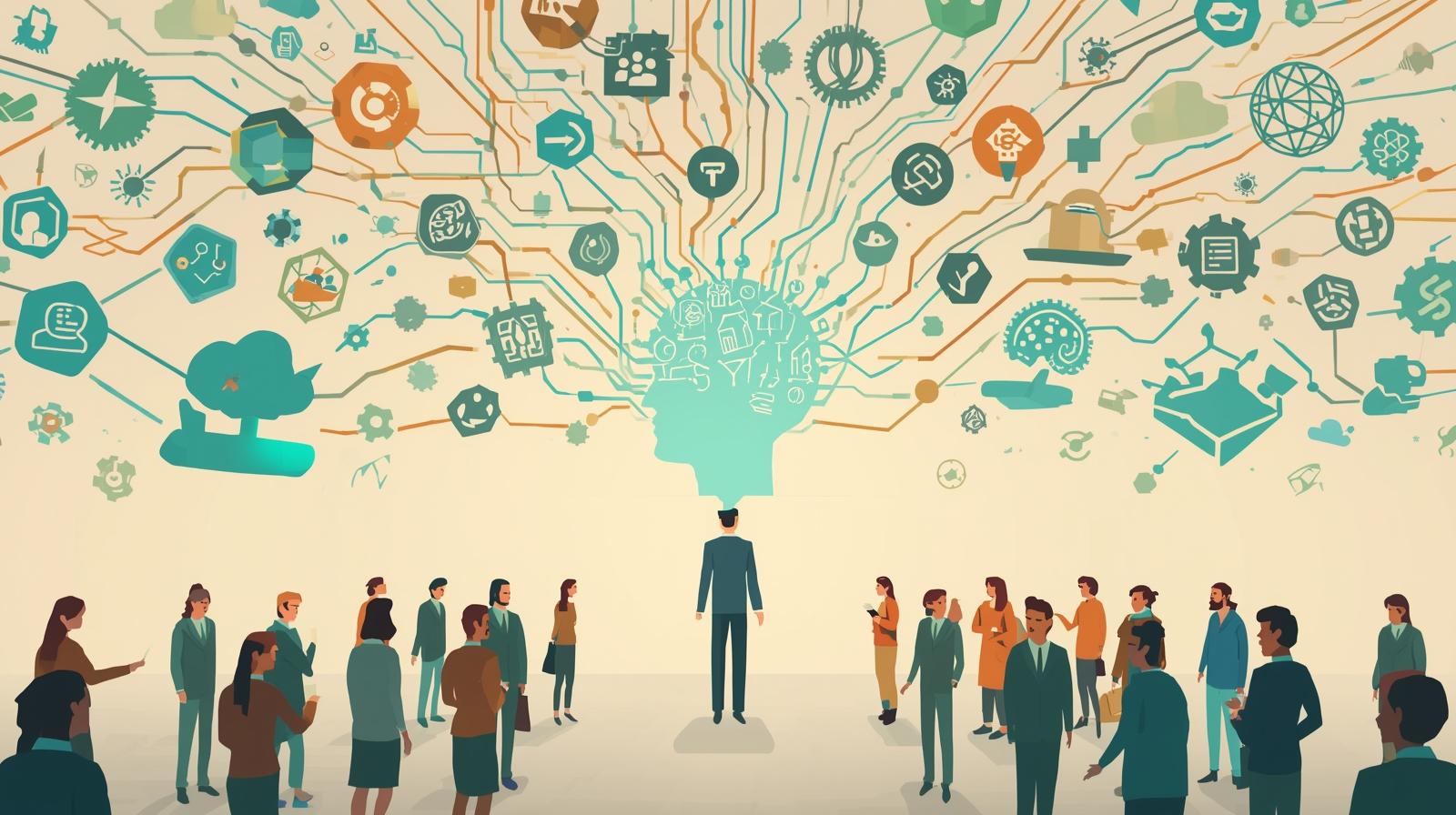
One of the most common concerns we hear from nonprofit leaders is: "I want to help my team learn about AI, but I'm not technical myself. How can I create a training program when I don't fully understand the technology?" This question reflects a fundamental misunderstanding about what makes effective AI training work. The best AI training programs aren't built by technical experts lecturing about algorithms and neural networks—they're created by leaders who understand their organization's mission, challenges, and culture, and who can translate AI capabilities into mission-driven opportunities.
Your lack of technical background isn't a liability—it's actually an asset. You're better positioned than a technical expert to understand what your team actually needs to know, to identify the barriers that prevent adoption, and to frame AI learning in terms that connect to daily work. You know which questions your staff will ask because you've asked them yourself. You understand the time constraints, resource limitations, and competing priorities that shape how learning happens in your organization. These insights are far more valuable than knowing how a transformer model works.
This guide will show you how to design and implement an effective AI training program without technical expertise. We'll cover how to assess your organization's specific learning needs, leverage the wealth of free, high-quality training resources available to nonprofits, create role-specific learning pathways that respect different starting points, provide hands-on practice opportunities, and build sustainable learning into your organizational culture. You'll learn to address common challenges like varying skill levels, time constraints, and resistance to change—not through technical solutions, but through thoughtful program design and change management.
The goal isn't to turn your team into AI experts or developers. It's to build practical AI literacy: the ability to recognize where AI might help, evaluate AI tools critically, use them effectively and ethically, and understand enough about their capabilities and limitations to make informed decisions. This is entirely achievable without deep technical knowledge, and the approaches that work best are grounded in adult learning principles, organizational development, and change management—skills you likely already have.
Understanding What AI Literacy Really Means
Before designing a training program, it's essential to clarify what you're actually trying to teach. Many nonprofit leaders assume AI training means learning to code or understand complex algorithms. In reality, practical AI literacy for nonprofit staff is much more accessible and directly applicable to mission work.
The Four Pillars of Practical AI Literacy
What nonprofit staff actually need to know about AI
Conceptual Understanding
Staff need to understand what AI is and isn't at a conceptual level. This doesn't mean knowing how neural networks work—it means understanding that AI tools recognize patterns in data, that they can make mistakes, that they work better for some tasks than others, and that their outputs should always be reviewed by humans. They should understand the difference between different types of AI tools (generative AI like ChatGPT versus predictive tools versus automation) in terms of what those tools can do, not how they work technically.
This conceptual foundation helps staff develop intuition about where AI might be useful. If someone understands that AI is good at finding patterns in large amounts of text, they might realize it could help analyze survey responses. If they know AI can generate content but needs human review, they'll approach it appropriately. These conceptual insights come from using AI and reflecting on the experience, not from technical instruction.
Practical Skills
The hands-on ability to use AI tools effectively is at the heart of AI literacy. This includes skills like writing effective prompts, iterating to improve results, evaluating output quality, combining AI assistance with human expertise, and integrating AI tools into existing workflows. These are not technical skills—they're communication and critical thinking skills applied to a new type of tool.
Practical skills develop through guided practice with real work tasks. The best training doesn't use artificial examples—it helps staff apply AI to actual work they need to do anyway. When someone learns to use AI by drafting a real grant proposal, analyzing actual program data, or creating content for an upcoming campaign, they're simultaneously learning the tool and getting work done, which reinforces both the skill and the value.
Critical Evaluation
Staff need to evaluate AI tools and outputs critically. This means assessing whether an AI tool is appropriate for a given task, recognizing when outputs contain errors or biases, understanding privacy and ethical implications, and knowing when to rely on AI versus when to use traditional approaches. Critical evaluation isn't about technical analysis—it's about thoughtful judgment informed by your organization's values and mission.
Developing critical evaluation skills requires discussing real scenarios and trade-offs. When staff collectively examine questions like "Should we use AI to screen program applications?" or "How do we ensure AI-generated content maintains our organizational voice?", they're building the judgment needed to navigate AI adoption thoughtfully. These discussions are more valuable than technical specifications because they address the actual decisions your organization will face.
Ethical Awareness
Understanding the ethical dimensions of AI use is crucial for nonprofits, whose work often involves vulnerable populations and sensitive data. Staff need awareness of issues like data privacy, algorithmic bias, transparency with stakeholders, appropriate use of AI in sensitive contexts, and alignment with organizational values. This isn't about understanding the technical causes of bias—it's about recognizing when bias might occur and what questions to ask.
Ethical awareness develops through explicit discussion of your organization's values and principles as they relate to AI. When your team establishes that certain types of data shouldn't be shared with AI tools, or that AI outputs need disclosure in certain contexts, or that human judgment is essential for specific decisions, they're building the ethical framework that will guide responsible AI use. This is fundamentally about applying your existing organizational ethics to new tools.
Notice that none of these pillars require technical expertise. They're about understanding capabilities and limitations, developing practical skills through use, exercising judgment, and applying ethical principles. These are areas where nonprofit staff already have strong foundations—your training program helps them extend those existing skills to work with AI tools. This reframing is liberating: you're not teaching a completely foreign domain, you're helping staff apply their existing expertise in a new context.
This understanding of AI literacy also clarifies what training should focus on. Instead of trying to explain how AI works technically, you can focus on hands-on experience, guided reflection, discussion of use cases relevant to different roles, and exploration of ethical considerations. These are all activities you can facilitate effectively regardless of technical background, especially when you leverage the excellent resources created by organizations that do have deep technical expertise.
Assessing Your Organization's Training Needs
Effective training starts with understanding where your organization currently stands and where different team members need to go. A thoughtful needs assessment helps you design training that's appropriately scoped, relevant to different roles, and builds on what people already know rather than starting from zero.
Conducting a Learning Needs Assessment
Key questions to understand your starting point
Current AI Awareness and Experience
Start by understanding what your team already knows and has tried. Some staff may already be using ChatGPT or other AI tools in their personal lives. Others may have heard about AI but never used it. Some may be skeptical or concerned. Understanding this baseline helps you meet people where they are rather than assuming everyone starts from the same place.
You can gather this information through a simple survey, informal conversations, or a brief team discussion. Ask questions like: Have you used any AI tools? Which ones? What did you use them for? What worked well? What was frustrating? What questions or concerns do you have? What would you like to be able to do with AI in your work? The goal is understanding, not testing—frame it as helping you design relevant training.
Role-Specific Opportunities
Different roles will benefit from AI in different ways, so training should reflect these differences. Think about the core activities of each role or department and where AI might help. Communications staff might use AI for content creation and social media. Program staff might use it for data analysis and reporting. Development staff might use it for donor research and grant writing. Operations staff might use it for process documentation and workflow automation.
Identify 2-3 high-value use cases for each major role or department. These become the foundation for role-specific training modules that feel immediately relevant. When program managers learn about AI through examples of analyzing program outcomes data, they're more engaged than if they're learning through generic examples. This relevance dramatically increases both engagement and application of what's learned.
Learning Preferences and Constraints
Understand how learning actually happens in your organization. Do people prefer self-paced online learning or group sessions? Do they learn better from watching demonstrations or hands-on practice? How much time can they realistically dedicate to training? What time of day or week works best? Do they need to learn during work hours or would some prefer evenings or weekends?
These practical considerations shape what training format will actually work. A comprehensive two-day workshop might be ideal in theory, but if your staff can't be away from their regular duties for that long, it won't happen. A self-paced online course might seem flexible, but if people struggle with self-directed learning, completion rates will be low. Design around reality, not ideal conditions.
Organizational Readiness and Barriers
Assess factors that might support or hinder AI adoption beyond individual knowledge. Do you have organizational policies about AI use? Is leadership supportive? Are there concerns about job security? Are there cultural factors that might create resistance? Understanding these contextual factors helps you address them proactively in your training design.
For example, if staff are worried that AI will replace their jobs, training needs to explicitly address this concern and frame AI as augmentation rather than replacement. If there are legitimate privacy concerns about your data, training needs to include clear guidance about what can and can't be shared with AI tools. If leadership support is uncertain, you might need to include leadership briefings alongside staff training. Addressing these organizational factors is as important as the training content itself.
This assessment process doesn't require technical expertise—it requires good listening, thoughtful questions, and understanding of your organization. You're essentially conducting the same kind of needs assessment you might do for any organizational initiative, just focused on AI learning. The insights you gather will make your training dramatically more effective because it will be tailored to your organization's actual needs rather than generic content.
One valuable outcome of this assessment is identifying potential AI champions—staff members who are already curious, willing to experiment, or have relevant experience. These individuals can become peer trainers, early adopters who demonstrate value to their colleagues, or members of a working group that helps guide training design. Identifying and empowering champions multiplies your capacity without requiring you to be the sole source of expertise.
Leveraging Free, High-Quality Training Resources
One of the most empowering realizations for nonprofit leaders is that you don't have to create training content from scratch. Multiple organizations have developed world-class, free AI training resources specifically for nonprofits or easily adaptable to nonprofit contexts. Your role is curating, contextualizing, and facilitating—not content creation.
Key Free Resources for Nonprofit AI Training
World-class training available at no cost
NetHope AI for Impact Program
NetHope, a consortium of leading international NGOs, offers comprehensive AI training specifically designed for humanitarian and development organizations. Their AI for Impact program includes self-paced courses, webinars, case studies from nonprofit AI implementations, and practical guides for getting started. The content is explicitly framed around nonprofit use cases and challenges, making it immediately relevant.
What makes NetHope's resources particularly valuable is their focus on responsible AI use in vulnerable contexts. They address ethical considerations, data privacy in humanitarian settings, and practical implementation challenges that commercial training often overlooks. You can use their materials as your core curriculum, supplemented with organization-specific content and practice opportunities.
Anthropic's Prompt Engineering Interactive Tutorial
Anthropic offers a free interactive tutorial on prompt engineering—the skill of communicating effectively with AI tools like Claude. While not nonprofit-specific, it provides excellent hands-on training in getting better results from AI tools. The tutorial uses real examples, provides immediate feedback, and progressively builds skills from basic to advanced prompting techniques.
You can assign this tutorial as foundational training for all staff, then supplement it with practice using your organization's actual work. After completing the tutorial, staff have a strong foundation in how to interact with AI tools effectively—you just need to provide opportunities to apply those skills to relevant tasks like drafting program descriptions, analyzing feedback, or brainstorming campaign ideas.
Microsoft AI Skills Initiative
Microsoft provides free AI training through their AI Skills Initiative, including courses on AI fundamentals, responsible AI, and practical applications of AI tools. They offer learning paths for different skill levels and roles, making it easy to direct different team members to appropriate content. The courses include video instruction, interactive elements, and knowledge checks.
For nonprofits using Microsoft 365 (which many do through the TechSoup program), Microsoft also offers specific training on AI features in their tools like Copilot. This creates a direct path from conceptual learning to practical application in tools your team already uses. The combination of general AI literacy and specific tool training provides a comprehensive foundation.
NTEN's AI Resources
NTEN (Nonprofit Technology Network) offers webinars, articles, and community discussions about AI in nonprofit technology. While not a structured curriculum, NTEN provides valuable peer learning opportunities, practical use case examples from other nonprofits, and honest discussions of what works and what doesn't. Their resources are grounded in the reality of nonprofit technology capacity and constraints.
NTEN's community forums are particularly valuable for ongoing learning and troubleshooting. As your team starts using AI, they'll have questions, encounter challenges, and want to share successes. NTEN provides a space to connect with peers facing similar challenges, often more valuable than formal training for building sustained capability.
AI Tool Provider Resources
Organizations like OpenAI, Google, and Anthropic all offer free training resources, tutorials, and documentation for their AI tools. These resources are excellent for learning specific tools in depth. OpenAI's prompt engineering guide, Google's AI Essentials course, and Anthropic's documentation all provide high-quality instruction on using their respective tools effectively.
These provider-specific resources work well as supplemental material after foundational training. Once staff understand AI concepts generally, they can dive deeper into the specific tools your organization is using. The provider resources tend to be technically accurate and up-to-date, though they require contextualizing for nonprofit applications.
The abundance of free, high-quality resources means you can assemble a comprehensive training program without creating content yourself. Your role shifts from content creation to curation: selecting the most relevant resources for your context, sequencing them into a logical learning path, providing nonprofit-specific context and examples, facilitating discussion and reflection, and creating hands-on practice opportunities using real work.
This curation role actually leverages your strengths as a nonprofit leader. You understand your organization's work, culture, and needs better than any external resource creator. When you frame a generic AI tutorial in terms of your organization's programs, connect it to your mission, and create practice activities using real projects, you're adding value that only someone with organizational context can provide. The external resources provide technical accuracy and instructional design expertise; you provide relevance and application.
Consider creating a simple resource library where you organize these materials by topic, role, or learning path. This might be as simple as a shared document with links and brief descriptions, or as structured as a learning management system if you have one. The key is making it easy for staff to find relevant resources when they need them, rather than requiring everyone to complete everything at once.
Creating Role-Specific Learning Pathways
While everyone in your organization benefits from baseline AI literacy, the most effective training is differentiated by role. A communications director needs different AI skills than a program evaluator or an operations manager. Role-specific learning pathways ensure training feels relevant and immediately applicable, which dramatically increases engagement and adoption.
Designing Effective Learning Pathways
Structure that respects different needs and starting points
Universal Foundation Module
Start with a core module that everyone completes, covering fundamental concepts, organizational AI policy and ethics, basic prompting skills, and critical evaluation of AI outputs. This creates a common vocabulary and shared understanding across the organization, making it easier for staff to collaborate on AI-assisted work and discuss AI applications.
The foundation module should be concise—perhaps 2-3 hours of learning time—and use examples from across the organization so everyone sees relevance regardless of role. You might combine a short external course (like Anthropic's prompt engineering tutorial) with a facilitated discussion about your organization's AI principles and policies. The goal is establishing a baseline, not comprehensive training.
Role-Specific Application Modules
After the foundation, staff branch into role-specific modules that focus on use cases relevant to their work. These modules should include concrete examples of AI applications in their domain, hands-on practice with tasks they actually need to do, discussion of role-specific ethical considerations, and templates or frameworks they can use in their daily work.
For example, a communications pathway might cover content creation and editing, social media management, audience research and segmentation, and brand voice consistency. A program pathway might cover qualitative data analysis, outcome measurement, report writing, and participant communication. A development pathway might cover donor research, grant proposal drafting, gift acknowledgment personalization, and campaign planning.
You don't need to be an expert in these domains to design these pathways—you work with the staff who do that work. Ask your communications director what their most time-consuming tasks are, what they wish they had more capacity for, what they struggle with. Those become the focus of the communications AI pathway. The content comes from external resources and the staff member's own expertise; you just facilitate the connection.
Progressive Skill Building
Within each pathway, structure learning to progress from simple to complex applications. Start with straightforward tasks that build confidence—using AI to brainstorm ideas, draft outlines, or summarize information. Progress to more sophisticated applications like data analysis, complex content creation, or workflow automation. This progressive structure lets staff build confidence and competence gradually.
Progressive structure also respects different starting points. Someone completely new to AI can work through the full pathway, while someone with existing AI experience can skip ahead to more advanced applications. Make the pathway modular enough that people can move at their own pace and focus on the skills most relevant to their current work.
Ongoing Learning and Peer Exchange
AI capabilities evolve rapidly, so initial training is just the beginning. Build in mechanisms for ongoing learning like monthly lunch-and-learns where staff share AI use cases, a Slack channel or Teams group for AI tips and questions, regular updates about new tools or capabilities, and periodic refreshers on ethical use and organizational policies.
Peer learning becomes increasingly important over time. As staff develop expertise, they become resources for each other. The development director who figures out how to use AI for donor prospect research can share that with the team. The program manager who develops an effective approach to analyzing survey responses becomes the go-to person for that application. Your role shifts from primary trainer to facilitator of peer learning, which is much more sustainable.
Sample Learning Pathway: Communications
Example structure for communications staff
- Foundation (2 hours): Universal AI literacy module covering basics, ethics, and organizational policy
- Content Creation (3 hours): Using AI for blog posts, social media, newsletters. Practice drafting real content with AI assistance
- Brand Voice & Editing (2 hours): Maintaining organizational voice, editing AI outputs, brand consistency guidelines
- Audience Insights (2 hours): Using AI for audience research, message testing, content optimization
- Practical Project (3 hours): Complete a real communications project using AI tools, document workflow, share learnings
Sample Learning Pathway: Program Staff
Example structure for program management
- Foundation (2 hours): Universal AI literacy module covering basics, ethics, and organizational policy
- Data Analysis (3 hours): Analyzing qualitative feedback, identifying themes in survey responses, outcome data interpretation
- Reporting & Documentation (2 hours): Writing program reports, documenting processes, creating participant materials
- Participant Privacy (1 hour): Specific guidance on what participant data can/cannot be shared with AI tools, anonymization practices
- Practical Project (4 hours): Use AI to analyze recent program data and create a report, following all privacy protocols
Creating Hands-On Practice Opportunities
The most powerful learning happens through doing. Reading about AI or watching demonstrations builds conceptual understanding, but practical skill only develops through hands-on practice. The good news is that creating effective practice opportunities doesn't require technical expertise—it requires thoughtful design of learning activities that connect to real work.
The most effective practice activities use real organizational work rather than artificial exercises. When someone learns to use AI by actually drafting a grant proposal they need to write anyway, analyzing survey data from a recent program evaluation, or creating social media content for an upcoming campaign, they're simultaneously learning and contributing to organizational work. This approach respects their time, demonstrates immediate value, and creates muscle memory with workflows they'll actually use.
To create effective practice activities, identify tasks that are well-suited for learning because they're relatively low-risk (if the AI output isn't perfect, it's not a disaster), have clear success criteria (staff can recognize good vs. poor outputs), happen regularly (skills will be reinforced through repeated use), and are time-consuming enough that AI assistance provides noticeable value. These become your practice activities.
Effective Practice Activity Design
Elements that make hands-on learning stick
Scaffolded Guidance
Especially for early practice, provide structure that guides staff through the process. This might be a template that shows an example prompt, space for their prompt, guidance on what to look for in evaluating the output, and reflection questions about what worked and what to try differently. As staff gain confidence, gradually reduce scaffolding until they're working independently.
For example, a grant writing practice activity might provide: (1) a description of the grant opportunity, (2) an example prompt that asks AI to draft a project summary, (3) space to write their own prompt incorporating specific organizational details, (4) a checklist for evaluating whether the AI output includes all required elements, and (5) questions about how they'd revise the draft. This structure helps them practice systematically while building judgment about what makes a good prompt and good output.
Peer Review and Discussion
Learning accelerates when people can compare approaches and outputs. After completing practice activities individually, create opportunities to share results and discuss what worked. This might be pairs comparing how they prompted AI for the same task, small groups discussing how they evaluated and revised outputs, or whole team showcases where staff demonstrate particularly effective approaches.
Peer discussion surfaces insights that might not emerge from individual practice. When someone shares a prompt that worked particularly well, others learn from that example. When someone describes a challenge they encountered, the group can problem-solve together. These exchanges build collective capability faster than individual learning in isolation, and they normalize the experimental process of learning to work with AI.
Real Stakes, Safe Environment
Practice activities should use real work, but with guardrails that make experimentation safe. This might mean practicing on draft documents that will be thoroughly reviewed before use, analyzing data where the results inform but don't determine decisions, or creating content for internal purposes before moving to external communications. The work is real enough to matter, but the stakes are low enough that mistakes are learning opportunities, not crises.
Creating this safe practice environment requires explicit permission to experiment and occasionally fail. When leaders communicate that early AI outputs don't need to be perfect, that trying something and learning it doesn't work is valuable, and that everyone is learning together, staff feel more comfortable practicing. Conversely, if the first time someone tries using AI the stakes are high and they're on their own, they're less likely to experiment and more likely to revert to familiar approaches.
Progressive Complexity
Sequence practice activities from simple to complex. Early activities might be single-step tasks like asking AI to summarize a document or generate a list of ideas. Intermediate activities might involve iteration—using AI to draft content, then refining the prompt based on the output. Advanced activities might involve complex workflows like analyzing data, synthesizing insights, and drafting recommendations.
This progression builds confidence and competence systematically. Someone who successfully completes simpler tasks feels capable of attempting more complex ones. Someone who struggles with a complex task can step back to practice component skills. The progression also helps you identify where individual staff members need more support—if someone excels at basic prompting but struggles with evaluating outputs, you know where to focus additional coaching.
Documentation and Reflection
Build in time for staff to document what they learned and reflect on their experience. This might be simple prompts like: What approach worked well for this task? What would you do differently next time? What surprised you about the AI output? What questions do you still have? Documentation serves multiple purposes: it reinforces learning, creates a knowledge base others can learn from, and helps you identify common challenges to address in future training.
Consider creating a shared repository where staff can document effective prompts, approaches to common tasks, and lessons learned. This becomes a resource for the whole team and makes individual learning collective. When someone figures out an effective way to use AI for analyzing survey responses, documenting and sharing that approach means others don't have to start from scratch.
One powerful approach is creating "learning projects"—small, real projects explicitly designed for practicing AI skills. For example, you might have staff use AI to help analyze the most recent round of program feedback, draft an internal newsletter, create a process document, or research potential partnerships. These projects serve organizational purposes while providing structured practice opportunities. You're not creating make-work—you're identifying work that needs doing anyway and using it intentionally for learning.
As you design practice activities, remember that you don't need to be able to do the tasks yourself or demonstrate perfect AI use. Your role is creating the conditions for practice: identifying appropriate tasks, providing structure and guidance, facilitating reflection and discussion, and offering encouragement. Staff bring the domain expertise; you bring the learning design. This division of labor means you can effectively facilitate practice even in domains where you're not an expert.
Addressing Common Training Challenges
Even well-designed training programs encounter predictable challenges. Understanding these challenges and having strategies to address them helps you navigate implementation more smoothly and ensures training leads to actual capability building and adoption.
Varying Skill Levels and Learning Paces
In any organization, people start with different levels of AI experience and comfort with technology generally. Some staff may already be experimenting with AI tools, while others may have never used anything beyond basic office software. This variation is normal, but it creates challenges for group training—content that's right for beginners bores experienced users, while content for intermediate users leaves beginners behind.
The most effective solution is a blended approach that combines self-paced foundational content with role-specific group sessions. People work through baseline AI literacy content at their own pace—those with more experience can move quickly or skip what they already know, while those needing more time can take it. Then bring people together for group sessions focused on role-specific applications where everyone is applying AI to similar tasks, regardless of their general technical skill level.
Another approach is explicitly embracing peer teaching. Pair staff who are more comfortable with AI with those who are less experienced for certain practice activities. The experienced user gets deeper learning through teaching (explaining requires understanding at a deeper level), while the less experienced user gets personalized support. This also builds relationships and normalizes asking for help, which supports ongoing learning beyond formal training.
Time Constraints and Competing Priorities
Nonprofit staff are chronically busy, and adding training to already full schedules is challenging. People have the best intentions about completing self-paced courses or attending sessions, but urgent work inevitably takes priority. If training feels like something extra added on top of regular work, completion rates will be low no matter how valuable the content is.
The most effective strategy is integrating learning into regular work rather than treating it as separate. Instead of asking staff to complete a general AI course and then separately do their regular work, create learning activities that accomplish both. Practice using AI to draft content that needs drafting anyway. Learn data analysis skills by analyzing actual program data. This integration doesn't eliminate time investment, but it means the time spent on learning also produces work products, making it feel less like competing priorities.
Also consider micro-learning approaches: short, focused learning bursts rather than long courses. A 15-minute tutorial on a specific skill followed by immediate practice is often more effective and more realistic than a two-hour comprehensive course. You can build substantial capability through accumulated micro-learning over time, and shorter commitments are easier to fit into busy schedules.
Finally, leadership needs to explicitly prioritize learning time. When leaders communicate that AI learning is important enough to protect time for it, give people permission to deprioritize other tasks to participate in training, and model their own learning, staff feel more comfortable investing time. Conversely, if training is nominally encouraged but never makes it onto meeting agendas, calendars, or priorities, people accurately read that it's not actually important.
Resistance and Skepticism
Some staff will be excited about AI, but others may be skeptical, anxious, or resistant. Common concerns include fear that AI will replace their jobs, worry about the ethics of AI use with vulnerable populations, skepticism that AI can actually help with their work, and discomfort with technology change generally. These concerns are legitimate and need to be addressed directly, not dismissed.
Start by acknowledging concerns openly. Create space in early training sessions to discuss worries, questions, and objections. When you validate these concerns rather than trying to convince people they're wrong, you build trust and create space for productive dialogue. Many concerns decrease once people understand AI better—the fear of job replacement often comes from not understanding that current AI augments rather than replaces human judgment.
Frame AI explicitly as augmentation, not replacement. Training should emphasize how AI handles time-consuming tasks (drafting, summarizing, organizing) so humans can focus on work requiring judgment, relationships, and expertise. When program staff understand that AI can help with the time-consuming process of analyzing survey responses so they have more time for one-on-one work with participants, it shifts from threatening to enabling.
For ethical concerns, develop and share clear organizational policies about AI use that reflect your values. If certain types of data shouldn't be shared with AI tools, make that explicit. If AI outputs need human review before use in certain contexts, establish that as policy. When staff see that organizational values guide AI adoption rather than AI driving organizational change regardless of values, ethical concerns often transform into thoughtful guidelines rather than blanket resistance.
Finally, make participation in learning genuinely voluntary to the extent possible. Some resistance decreases when people don't feel forced. When skeptics see their colleagues successfully using AI and hear authentic testimonials about value rather than top-down mandates, many become more open. Early adopters who demonstrate value are more persuasive than leadership declaring that AI is important.
Moving from Learning to Application
One of the most common training failures is the gap between learning and application. People complete courses, feel like they learned something, but then don't actually use AI in their regular work. Knowledge doesn't automatically translate to behavior change, especially with new tools that require changing established workflows.
Bridge this gap by making application explicit and supported rather than assuming it will happen organically. Give people specific first tasks to try with AI in their regular work—not someday when they get around to it, but this week with a specific deliverable. For example: "This week, use AI to help draft your section of the quarterly report. Document what you tried and how it went." Making application specific and near-term dramatically increases follow-through.
Create accountability structures that are supportive rather than punitive. This might be checking in at team meetings about who tried using AI and what they learned, having people share one AI application in a monthly all-staff meeting, or creating a practice where people document and share AI workflows. When application is visible and celebrated, people are more motivated to try.
Provide ongoing support for application challenges. The real learning often happens when someone tries to use AI for their work and runs into problems—the prompt doesn't work well, the output isn't quite right, they're not sure how to integrate it into their workflow. If they can easily get help (from you, from designated AI champions, from peer forums), they persist and develop skill. If they're on their own when challenges arise, they often revert to familiar approaches.
Consider building AI use into workflows and processes explicitly. If your process for creating monthly donor reports now includes a step of using AI to help analyze giving patterns, application is built into regular work. If your standard operating procedure for program evaluation includes using AI to identify themes in qualitative feedback, it becomes part of how things are done rather than an optional add-on. Embedding AI into processes makes application the default rather than requiring extra effort.
Building a Sustainable Learning Culture
Initial training launches AI capability at your organization, but sustained value comes from building ongoing learning into your culture. AI tools evolve rapidly, new applications emerge constantly, and expertise develops through continued practice and experimentation. Creating structures that support continuous learning ensures your organization's AI capability grows rather than stagnating after initial training.
A learning culture around AI doesn't happen automatically—it requires intentional cultivation. This means creating mechanisms for sharing discoveries (someone figures out a great use case and can easily tell others about it), space for experimentation (it's okay to try something with AI and have it not work), regular exposure to new ideas (staying current with AI developments relevant to your work), and recognition that builds motivation (celebrating effective AI use and the learning it represents).
Building this culture is fundamentally about organizational development and change management, not technical expertise. You're creating the conditions where learning happens organically and continuously. This plays to strengths nonprofit leaders typically have—understanding organizational culture, facilitating groups, recognizing and celebrating contributions, and creating structures that support desired behaviors.
Mechanisms for Sustained Learning
Structures that keep AI learning alive
- Regular Knowledge Sharing Sessions: Monthly or quarterly sessions where staff demonstrate AI applications they've developed, share lessons learned, and discuss challenges. These can be informal lunch-and-learns or more structured showcases. The key is regularity and psychological safety—celebrating both successes and instructive failures.
- Digital Knowledge Repository: A shared space (could be as simple as a shared document or folder) where staff document effective prompts, workflows, and use cases. This makes individual learning available to everyone and creates a growing library of organizational AI knowledge. Include both successes and things that didn't work to help others avoid dead ends.
- Community of Practice: A group of staff interested in AI who meet regularly to share experiences, learn together, and explore new tools or approaches. This might be a Slack channel, Teams group, or regular meeting. The community provides peer support, accountability, and collective problem-solving that makes ongoing learning easier and more enjoyable.
- AI Champions Network: Designate staff members with particular interest or aptitude as AI champions for their departments or roles. These champions get additional learning opportunities, serve as first-line support for colleagues, and help identify new use cases. This distributes expertise across the organization rather than centralizing it. Learn more about building AI champions in your organization.
- Integration into Onboarding: As AI becomes part of how your organization works, build AI literacy into new staff onboarding. This ensures new team members develop AI skills from the start and signals that AI use is a normal part of organizational practice, not an optional extra.
- Staying Current with Developments: Designate someone (could be you, could be a rotating responsibility among AI champions) to monitor AI developments relevant to nonprofit work and share relevant updates. This doesn't mean following every AI news story—it means tracking resources like NetHope updates, NTEN webinars, and major new capabilities in tools you use.
- Periodic Policy Review: As your organization's AI use evolves, revisit policies and guidelines regularly. What seemed like the right approach six months ago might need adjustment based on what you've learned. Regular review keeps policies relevant and demonstrates that your organization is learning and adapting, not rigidly following outdated rules.
- Recognition and Celebration: Acknowledge staff who develop innovative AI applications, share their learning with colleagues, or help others develop AI skills. This might be informal recognition in meetings, inclusion in organizational communications, or more formal acknowledgment in performance reviews. Recognition motivates continued learning and signals organizational values.
These mechanisms work together to create an environment where learning is continuous, collaborative, and valued. No single mechanism is sufficient, but collectively they make ongoing learning the path of least resistance. When someone has a question about AI, there's a channel where they can ask. When someone discovers a useful application, there's a way to share it. When new capabilities emerge, someone brings them to the team's attention. Learning becomes embedded in organizational practice rather than requiring special initiatives.
Building this culture is a gradual process, not an immediate transformation. Start with one or two mechanisms that fit naturally into your organization's existing culture and communication patterns. As those become established, add others. The goal is sustainable integration, not comprehensive systems that feel burdensome to maintain. Simple mechanisms that actually get used are far more valuable than sophisticated approaches that languish.
Your role in sustaining learning culture is facilitation and championing, not being the sole source of expertise. You create the spaces where learning happens, recognize and celebrate it when it does, remove barriers that impede it, and model your own ongoing learning. As staff develop expertise, increasingly they teach and support each other. Your consistent attention signals that AI learning matters, while the community carries forward the actual learning.
Measuring Training Effectiveness and Impact
Understanding whether your training program is working helps you improve it over time and demonstrates value to stakeholders who might question the investment. Measuring training effectiveness doesn't require sophisticated analytics—it requires thoughtful attention to the right indicators and willingness to adjust based on what you learn.
Participation and Engagement Metrics
Track basic participation: how many staff have completed foundation training, how many have completed role-specific modules, attendance at learning sessions, and engagement with knowledge sharing activities. These metrics show whether training is reaching your team and whether people are staying engaged over time.
Look for patterns in the data. If completion rates are low, time constraints or content relevance might be issues. If initial participation is high but drops off, sustaining engagement is the challenge. If certain departments participate much less than others, there might be cultural or leadership factors to address. Participation metrics guide where to focus improvement efforts.
Adoption and Application Indicators
The most important measure is whether people actually use AI in their work. Track indicators like: how many staff report using AI regularly, what tasks they're applying AI to, which tools they're using, and whether AI use is growing or plateauing. This shows whether training translates to changed practice.
You can gather this through simple surveys, regular check-ins at team meetings, or reviewing your knowledge repository to see what use cases people are documenting. The goal isn't precise measurement but understanding whether AI is becoming part of how work gets done or remaining theoretical knowledge that doesn't get applied.
Capability Development
Assess whether staff capabilities are actually growing. This might be through self-assessment surveys where staff rate their confidence and competence with AI, review of work products that show increasing sophistication in AI use, or qualitative feedback about how AI understanding has evolved.
Look for progression from basic use (asking simple questions, getting basic outputs) to more sophisticated applications (complex prompts, iteration to refine outputs, integration into workflows, teaching others). This progression indicates that capability is deepening, not just that people completed training modules.
Impact on Work Quality and Efficiency
Ultimately, training should improve organizational capacity. Look for evidence of time saved on specific tasks, quality improvements in outputs, ability to take on work that wasn't feasible before, or staff reporting less stress from overwhelming workloads. These impacts demonstrate real value from training investment.
This evidence often comes from stories rather than metrics. When staff report that AI helped them analyze six months of survey data in hours rather than weeks, that's impact. When communications quality improves because AI helps with editing and refinement, that's impact. Collect and share these stories—they're often more compelling than quantitative metrics for demonstrating value.
Use what you learn from measurement to continuously improve training. If certain modules have low completion rates, make them shorter or more relevant. If people complete training but don't apply it, strengthen the connection between learning and work. If sophisticated use isn't developing, add more advanced learning opportunities. Measurement is only valuable if it informs improvement.
Regular check-ins with staff about their AI learning experience provide qualitative insights that complement metrics. Ask what's working, what's not, what they wish they'd learned, what barriers they're encountering, and what support would help. This feedback often surfaces specific, actionable improvements that metrics alone wouldn't reveal. Create safe spaces for honest feedback—you want to hear about problems so you can fix them, not have people tell you everything is fine when it isn't.
Conclusion: Your Path Forward as a Non-Technical Training Leader
Creating an effective AI training program without technical expertise is not only possible—it's arguably preferable in many ways. Your understanding of your organization's mission, culture, and needs positions you better than external technical experts to design training that actually works in your context. The skills required are ones you likely already have: needs assessment, program design, facilitation, change management, and continuous improvement. You're applying these familiar skills to a new domain, not learning an entirely foreign discipline.
The abundance of high-quality, free training resources means you don't need to create content—you need to curate, contextualize, and facilitate. Organizations like NetHope, Anthropic, Microsoft, and NTEN have already created excellent AI training materials. Your value-add is selecting what's relevant for your organization, framing it in terms of your mission and work, creating practice opportunities with real organizational tasks, and building the culture where learning continues beyond initial training.
Start where you are, with what you have. You don't need a comprehensive training program perfectly designed before you begin. You can start with a single learning session focused on one use case, or by asking staff to experiment with AI for one specific task and then share what they learned. As you and your team learn together, your training program will evolve to fit your organization better than any pre-designed curriculum could.
Remember that the goal isn't technical expertise—it's practical AI literacy that empowers your team to work more effectively toward your mission. When staff can recognize opportunities where AI might help, use AI tools thoughtfully and critically, evaluate outputs through the lens of your organizational values, and continue learning as capabilities evolve, you've succeeded. This is entirely achievable without deep technical knowledge, and the journey of building this capability together often strengthens your team in ways that extend beyond AI.
Your willingness to lead AI training despite not being technical yourself models exactly the mindset you want to cultivate in your team: confidence to engage with new tools, willingness to learn alongside others, focus on practical application over theoretical perfection, and commitment to ensuring technology serves mission rather than driving it. These are the qualities that make AI adoption successful in nonprofits, and your leadership embodies them.
Ready to Launch Your AI Training Program?
Whether you're starting from zero or enhancing existing training efforts, we can help you design an AI training program that fits your organization's culture, capacity, and mission. Our approach centers on empowering nonprofit leaders to build sustainable AI capability, not creating dependency on external experts.