
Data Cleaning for AI: A Practical Guide to Preparing Nonprofit Data for Machine Learning
No AI model is smarter than the data it learns from. For nonprofits, the gap between data collected and data that is actually ready for AI is often the hidden obstacle between wanting AI's benefits and experiencing them. This guide walks through what data cleaning means in practice, why it matters, and how to do it with the tools you already have.
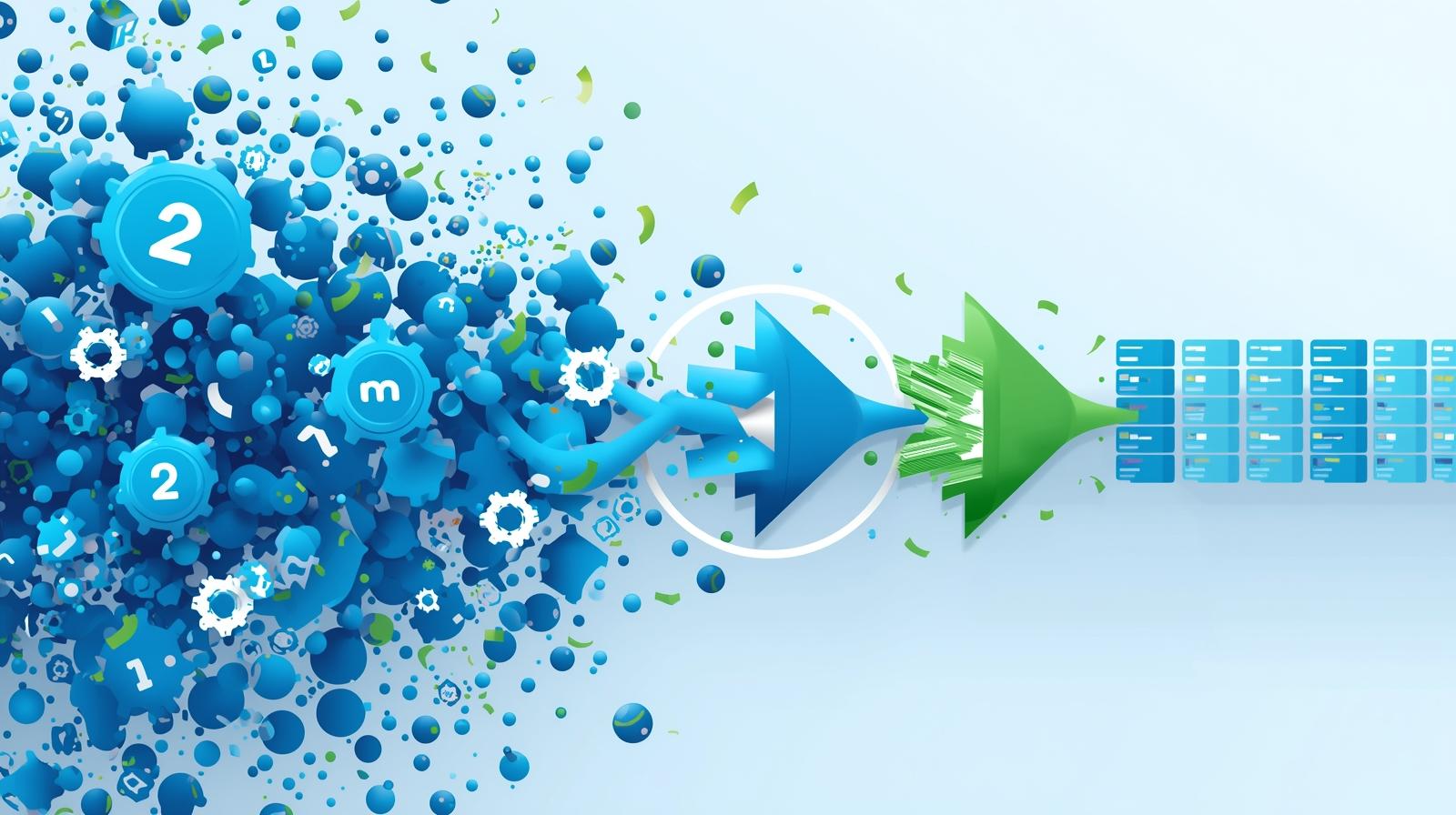
The phrase "garbage in, garbage out" has been a fixture of data science for decades, but its implications have sharpened considerably as AI tools become central to nonprofit operations. When a predictive model recommends the wrong donors for major gift cultivation, when a demand forecasting system produces inaccurate estimates for program planning, or when an AI communication tool generates personalized messages with outdated or incorrect information, the underlying cause is almost always the same: data quality problems that were never addressed before the AI was deployed.
Nonprofits accumulate data in ways that create particularly challenging quality issues. Donor records get entered by rotating volunteers with inconsistent formatting conventions. Client data moves through multiple systems that don't share field definitions. Program outcomes get tracked differently by different staff members, creating records that appear similar but measure different things. CRM systems contain years of legacy records that were accurate when entered but have since become stale. Grant data lives in spreadsheets that were never designed to integrate with anything else.
Data cleaning, which is the process of identifying and correcting these quality problems, is one of the least glamorous but most consequential steps in any AI project. Research across industries consistently finds that data scientists and analysts spend a substantial majority of their time on data preparation rather than model building or analysis. For nonprofits without dedicated data staff, this work falls on whoever is closest to the data, usually program managers, development associates, or the executive director themselves.
The good news is that data cleaning does not require technical expertise or expensive software for most nonprofit use cases. It requires understanding what clean data looks like, knowing where to find quality problems in your own data, and following a methodical process to address them. This guide provides that framework, with specific attention to the data types nonprofits work with most frequently: donor records, client and beneficiary data, program outcomes, and grant information. It also addresses the privacy considerations that make data cleaning in the nonprofit context different from purely commercial applications.
Why Data Quality Directly Determines AI Outcomes
AI and machine learning systems learn patterns from historical data. When that data contains errors, inconsistencies, or gaps, the models learn the wrong patterns. The problems this creates range from mildly annoying to genuinely harmful, depending on what decisions are being informed by the AI.
Consider donor retention prediction, one of the most common AI applications in nonprofit fundraising. If your donor database contains duplicate records, missing giving history, and inconsistent coding of donation channels, a predictive model trained on that data will produce unreliable predictions. It might identify long-term major donors as lapsed because their records were split across duplicates, or fail to recognize retention patterns because giving channel data is missing for a large segment of donors. The model will run and produce outputs, but those outputs will mislead rather than inform your development strategy.
Program outcome AI presents even higher stakes. If your outcome tracking data conflates different measurement approaches across program sites, or if success criteria changed mid-program but weren't flagged in the data, an AI system trying to identify what predicts client success will learn false patterns. This can lead to resource allocation decisions that harm the very people your programs are designed to serve.
For a deeper discussion of how data strategy connects to AI success, our article on data as your AI strategy covers the foundational principles. This article focuses specifically on the hands-on process of getting data ready for AI applications once you've decided to pursue them.
Common Data Quality Problems
Issues found in nearly every nonprofit database
- Duplicate records: The same donor, client, or organization entered multiple times with slight variations in name or contact information
- Inconsistent formatting: Phone numbers, dates, addresses, and names entered in different formats by different staff members
- Missing values: Required fields left blank, especially common in records entered under time pressure
- Stale data: Contact information, addresses, and relationship statuses that were accurate when entered but have since changed
- Categorical inconsistency: The same category coded differently over time or by different staff (e.g., "Board Member," "board member," "BM")
Nonprofit-Specific Data Challenges
Problems unique to mission-driven organizations
- System fragmentation: Donor data in one CRM, volunteer data in another, program data in spreadsheets, with no unified view
- High staff turnover: Each new staff member brings different data entry habits, creating inconsistencies within the same database over time
- Outcome measurement drift: How program success is defined and measured changes as programs evolve, creating records that aren't directly comparable
- Privacy constraints: Client and beneficiary data is subject to strict privacy requirements that limit how it can be processed, stored, and shared
- Volunteer-entered data: Records entered by rotating volunteers who received minimal training and may have interpreted fields differently
Step 1: Conducting a Data Quality Audit
Before you can clean data, you need to understand what you have and where the problems are. A data quality audit is a systematic assessment of your data's completeness, accuracy, consistency, and relevance to your intended AI application. For most nonprofits, this audit is itself a revealing exercise that surfaces problems they didn't know existed.
The audit should focus on the specific data that will be used for your intended AI application. If you're building a donor retention model, audit your giving history, contact, and engagement records. If you're developing a program outcome prediction system, audit your intake assessments, service records, and outcome measurement data. Trying to audit everything at once is overwhelming; scoping your audit to a specific application makes it manageable and actionable.
Data Quality Audit Checklist
Assess these dimensions before starting any AI project
Completeness
- What percentage of records have complete values for each field?
- Which fields are most frequently empty, and why?
- Are missing values random or systematic (e.g., missing for a specific time period or entered by a specific person)?
- Do you have enough records with complete data to train a model?
Accuracy
- Can you verify a sample of records against source documents or external databases?
- Are there implausible values (e.g., donation amounts far outside normal range, birth years that would make someone 150 years old)?
- Do related fields agree with each other (e.g., does "first donation date" fall within the stated "active since" year)?
Consistency
- How many unique values exist for categorical fields, and do they represent the same set of categories coded differently?
- Are date formats consistent across all records?
- Do the same names, addresses, or organizations appear in multiple formats that should be standardized?
Relevance
- Does the data span a sufficient time period to be meaningful for your application?
- Have there been significant changes to your programs, audience, or operations that make older records less relevant?
- Are the outcomes or behaviors you're trying to predict actually represented in the data?
The fastest way to conduct a data audit for most nonprofit datasets is with a spreadsheet export and basic descriptive analysis. Export your data to Excel or Google Sheets, then look at each column: How many unique values are there? What are the most and least common values? What percentage of cells are empty? Are there obvious formatting inconsistencies visible in the cells? These questions don't require any technical skill, just methodical attention to what the data actually contains.
For organizations with larger datasets or more complex databases, free tools like OpenRefine provide more powerful audit capabilities. OpenRefine can cluster similar values (like different spellings of the same organization name), identify outliers, and help visualize data quality patterns across thousands of records. It runs locally on your computer and doesn't send your data to external servers, making it appropriate even for sensitive data.
Step 2: Cleaning Specific Nonprofit Data Types
Different types of nonprofit data have different quality patterns and require different cleaning approaches. Rather than generic advice about removing null values and fixing formatting, here is specific guidance for the data types nonprofits work with most frequently.
Donor and Contribution Records
The foundation of fundraising AI applications
Donor data quality directly determines the quality of any fundraising AI application, from retention prediction to major gift identification. The most common problems in donor databases are duplicate records, which artificially inflate donor counts and split giving history, and inconsistent contact information, which prevents effective communication and skews engagement metrics.
Deduplication is typically the highest-value cleaning task for donor data. Most CRM systems have built-in duplicate detection features. For data outside your CRM, OpenRefine's clustering feature can identify records that likely represent the same person based on name and address similarity. The key judgment call in deduplication is deciding which record to keep when duplicates have different information: generally, keep the most recently updated record but verify against giving history to ensure you don't lose donation records in the merge.
- Identify and merge duplicate donor records using your CRM's deduplication tools or OpenRefine
- Standardize donation channel codes (online, mail, event, major gift) to a consistent controlled vocabulary
- Verify that giving history is attached to the correct donor records after any merges
- Flag and handle "do not contact" records appropriately so they don't bias retention or engagement models
- Address incomplete or outdated contact information using address verification services or email hygiene tools
Client and Beneficiary Data
The highest-stakes data in your organization
Client data presents the most significant privacy considerations and the highest stakes for data quality errors. If a retention model trained on biased or incomplete client data leads to service cuts that harm vulnerable people, the consequences extend far beyond AI performance. Cleaning this data requires not only technical attention but also careful thought about what the data represents and what it doesn't.
Before cleaning client data for AI use, verify that your privacy policy and any consent agreements you have with clients permit this use. If clients consented to their data being used to improve services, training an AI model to predict outcomes or improve program matching generally falls within that consent. Using client data for purposes beyond what was disclosed requires revisiting your consent processes. Our article on nonprofit AI knowledge management discusses data governance frameworks in more detail.
- Document when and how outcome measurement methods changed so that pre- and post-change records are appropriately distinguished
- Standardize demographic fields to consistent controlled vocabularies, being careful to preserve the granularity that matters for equity analysis
- Remove or anonymize directly identifying fields (names, SSNs, exact addresses) before using data for AI training where possible
- Check for selection bias: are certain client populations underrepresented in your outcome data in ways that might cause an AI to perform worse for them?
- Create a data lineage document that explains what each field means, how it was measured, and when measurement methods changed
Program Outcome Data
The evidence base for demonstrating and improving impact
Program outcome data is often the messiest category in a nonprofit's data ecosystem, because it is collected under operational conditions, by frontline staff with varying capacity for data entry, using measurement tools that evolve as programs mature. For AI applications that use outcome data, like predictive models that identify clients most at risk of not completing a program or models that predict which program elements drive the best outcomes, data quality in this category is particularly critical.
- Create a clear taxonomy of outcome measurement tools and which records used which version of each tool
- Distinguish between "negative outcome" and "missing outcome data" so an AI doesn't treat unreported outcomes as failures
- Flag records from periods of program disruption (staffing changes, COVID years, funding gaps) that may not reflect normal program operations
- Verify that timestamps are accurate and that entry date reflects when the service occurred, not just when it was recorded
Grant and Financial Data
Critical for AI-powered financial planning and grant management
Grant data quality matters for AI applications in financial forecasting, grant pipeline management, and funder relationship tracking. The most common problems are inconsistent categorization of grant types, missing deadline and reporting date information, and fragmented records when grant information is split between a CRM and separate spreadsheets.
- Standardize grant type classifications (multi-year operating, project, capacity building, etc.) to a consistent controlled vocabulary
- Ensure all grants have accurate start dates, end dates, and amount fields so forecasting models have complete information
- Link funder records to grant records so relationship analysis can connect giving history to relationship management activities
- Tag declined or unsuccessful grant applications explicitly so models can learn from the full picture of grant pursuit, not just successes
Step 3: Tools and Techniques for Data Cleaning
Most nonprofit data cleaning does not require specialized software. The tools available in standard nonprofit technology stacks are sufficient for the majority of cleaning tasks, and several powerful free tools are available for more complex work. The key is matching the right tool to the specific cleaning task.
Free and Low-Cost Cleaning Tools
Accessible options for organizations without data staff
- OpenRefine: Free, open-source tool specifically designed for data cleaning. Powerful clustering for finding and merging similar values, faceting for exploring categorical data, and transformation functions for standardizing formats. Runs locally, so data never leaves your computer.
- Excel and Google Sheets: COUNTIF, VLOOKUP, conditional formatting, and data validation tools handle most basic cleaning tasks. Pivot tables are valuable for auditing categorical fields. Power Query in Excel provides more sophisticated transformation capabilities.
- AI assistants for cleaning scripts: Claude, ChatGPT, and Gemini can write Python or R scripts for specific cleaning tasks when given clear descriptions of what needs to be done. You don't need to know programming to use these tools for data cleaning support.
- CRM built-in tools: Salesforce Nonprofit Success Pack, Bloomerang, and most major CRMs include deduplication, data quality scoring, and bulk update features that should be used before exporting data for AI preparation.
AI-Assisted Data Cleaning
Using AI tools to accelerate the cleaning process itself
One of the most practical recent developments is using AI tools to help with the data cleaning process itself. General AI assistants can:
- Write regex patterns to identify and extract consistently formatted data from messy free-text fields
- Generate cleaning scripts in Python or SQL when you describe what needs to be done in plain language
- Help design controlled vocabularies for categorical fields by suggesting standardized options based on your current messy categories
- Review sample records and flag likely errors or inconsistencies based on context
- Create data quality documentation templates that explain field definitions and cleaning decisions for future staff
One important caution about using AI tools for data cleaning: never paste sensitive client or donor information directly into general AI tools like ChatGPT or Claude unless you have reviewed those tools' privacy policies and confirmed that data shared with them is not used for training. For sensitive data, describe the structure and nature of the problem without sharing actual records, ask for cleaning logic or code, and then apply that logic yourself locally. For non-sensitive data like grant types or organization names, AI tools can review actual samples to help identify patterns and suggest standardizations.
Privacy Considerations in Nonprofit Data Cleaning
Nonprofits work with some of the most sensitive data in any sector: health records, immigration status, domestic violence disclosures, substance use history, and financial hardship information. Preparing this data for AI applications requires careful attention to privacy not just as a compliance matter but as a reflection of the trust relationship between organizations and the communities they serve.
The core principle for privacy-protective data cleaning is data minimization: use only what is necessary for your intended AI application, and transform data to the least sensitive form that still supports that application. If you need to predict which program participants are at risk of dropping out, you may need demographic and engagement data but not specific details of their presenting needs. Identifying what data you actually need for the model, rather than including everything available, reduces privacy risk and often improves model performance by reducing noise.
Privacy-Protective Cleaning Practices
Protecting sensitive data throughout the preparation process
Before Cleaning
- Review what consent agreements permit in terms of AI use of client data
- Identify which fields contain directly identifying information versus useful analytical data
- Determine the minimum dataset needed for your AI application
- Check applicable regulations (HIPAA, FERPA, state privacy laws) for your data types
During and After Cleaning
- Remove or pseudonymize direct identifiers (names, SSNs, exact addresses) in the training dataset
- Store cleaned training data in secure, access-controlled locations separate from your operational database
- Document what data is included and excluded, and why, in your data preparation notes
- Establish retention and deletion schedules for cleaned training datasets
Anonymization and pseudonymization are different processes with different privacy implications. True anonymization removes all identifying information to the point where individuals cannot be re-identified, even with external data. Pseudonymization replaces identifying information with tokens while maintaining a link back to the original records. For AI training purposes, pseudonymized data is usually sufficient and preserves the ability to trace model outputs back to specific records if quality issues arise. True anonymization is more appropriate when data will be shared externally.
Aggregation is another powerful privacy-protective technique. If your AI application needs to understand demographic patterns rather than individual characteristics, working with aggregated data (counts and rates by demographic group rather than individual records) can preserve analytical value while eliminating privacy risk. This approach is particularly appropriate for community-level needs assessment and program planning applications.
Building Data Quality Habits: Prevention Is Better Than Cleaning
Data cleaning is a necessary step before deploying AI, but the real goal is building data practices that reduce the need for intensive cleaning by preventing quality problems from accumulating in the first place. Organizations that invest in data quality habits spend less time cleaning and get better AI results because their data is consistently more reliable.
The most effective preventive measure is implementing data validation at the point of entry. Modern CRM and database systems allow administrators to set required fields, controlled vocabularies for dropdown fields, format validation for phone numbers and dates, and range limits for numeric fields. These controls catch quality problems when they're easiest to fix, before they accumulate into a dataset that requires weeks of remediation. For more on building a culture where data quality becomes a shared organizational value, our article on building a data culture provides a practical framework.
Process Improvements
Reduce future cleaning through better data entry practices
- Implement required fields and controlled vocabularies in your CRM for the fields most important to AI applications
- Create a data entry style guide that documents field definitions and entry conventions for all staff and volunteers
- Designate a data steward responsible for periodic quality audits and for fielding questions about data entry conventions
- Schedule quarterly or annual data quality reviews as part of regular organizational operations, not just before AI projects
Ongoing Monitoring
Maintain quality once you've achieved it
- Set up automated alerts in your CRM for new records that violate key quality rules (e.g., missing email address for donors who gave online)
- Create a simple data quality dashboard that tracks key metrics (completeness rates, duplicate counts) over time
- Include data quality metrics in staff performance conversations where data entry is part of someone's role
- Document when and why data definitions or collection methods change, so future analysts can account for these breaks in the data series
Staff training is inseparable from data quality. Even the best database design can be undermined by staff who don't understand why data quality matters or how their entry habits affect the organization's ability to use data effectively. Connecting data quality to specific organizational outcomes, like "better donor data lets us identify who to call during the year-end campaign" or "accurate outcome data helps us write stronger grant reports," makes the case for careful data entry in terms that resonate with frontline staff.
The relationship between AI readiness and data quality is circular: good data enables better AI, and implementing AI creates organizational incentives to improve data quality. Many nonprofits find that the prospect of using AI for high-value applications, like donor prediction or outcome forecasting, is exactly the motivation needed to finally address years of accumulated data quality problems. This is a healthy dynamic to lean into.
Data Cleaning as Mission Work
Data cleaning rarely appears on anyone's job description, and it doesn't generate the excitement of a new AI tool or a machine learning model producing interesting predictions. But it is some of the most important work a nonprofit can do to ensure that AI investments actually pay off. Every hour spent on data quality before an AI project launches prevents many hours of troubleshooting, misinterpretation, and correcting decisions made on the basis of flawed model outputs.
More fundamentally, data quality is an expression of how seriously an organization takes the people represented in its data. When donor records are carefully maintained, it reflects respect for the relationship with supporters. When client data is accurate and complete, it enables more effective service delivery. When program outcome data is reliable, it makes it possible to honestly evaluate what is working and what needs to change. These aren't just technical considerations; they're reflections of organizational values.
The practical path forward for most nonprofits is a staged approach: conduct a focused audit of the data most relevant to your intended AI application, address the highest-priority quality issues using the tools you already have, implement preventive measures to maintain quality going forward, and use the resulting cleaner data as the foundation for AI projects that can actually deliver on their promise. This approach is less glamorous than jumping straight to model building, but it's far more likely to produce results that genuinely serve your mission.
For organizations that find data cleaning work revealing more fundamental problems, like data silos across multiple disconnected systems or outcome measurement approaches that don't actually capture what matters, those discoveries are valuable even if they point toward larger structural changes. Understanding the real state of your data is the necessary first step toward building the data infrastructure that modern AI applications require.
Ready to Prepare Your Data for AI?
Our team helps nonprofits assess data quality, design cleaning processes, and build the data infrastructure that makes AI investments successful.