
Employment Law in the AI Era: Updating Your Handbook and Policies
As artificial intelligence transforms the modern workplace, nonprofit organizations face new legal challenges and compliance requirements. This comprehensive guide helps you understand the employment law implications of AI adoption and provides practical frameworks for updating your employee handbook, data privacy policies, and organizational guidelines to protect both your team and your mission. Whether you're just beginning to explore AI tools or already integrating them into daily operations, understanding these legal considerations is essential for responsible, compliant AI adoption in the nonprofit sector.
Legal Disclaimer
This article provides general information and educational content about employment law considerations related to AI adoption in nonprofit organizations. It is not legal advice and should not be relied upon as such. Employment law varies significantly by jurisdiction and evolves rapidly, particularly regarding emerging technologies. Before implementing any policies or making employment decisions related to AI, consult with a qualified employment attorney licensed in your jurisdiction who can provide advice specific to your organization's circumstances.
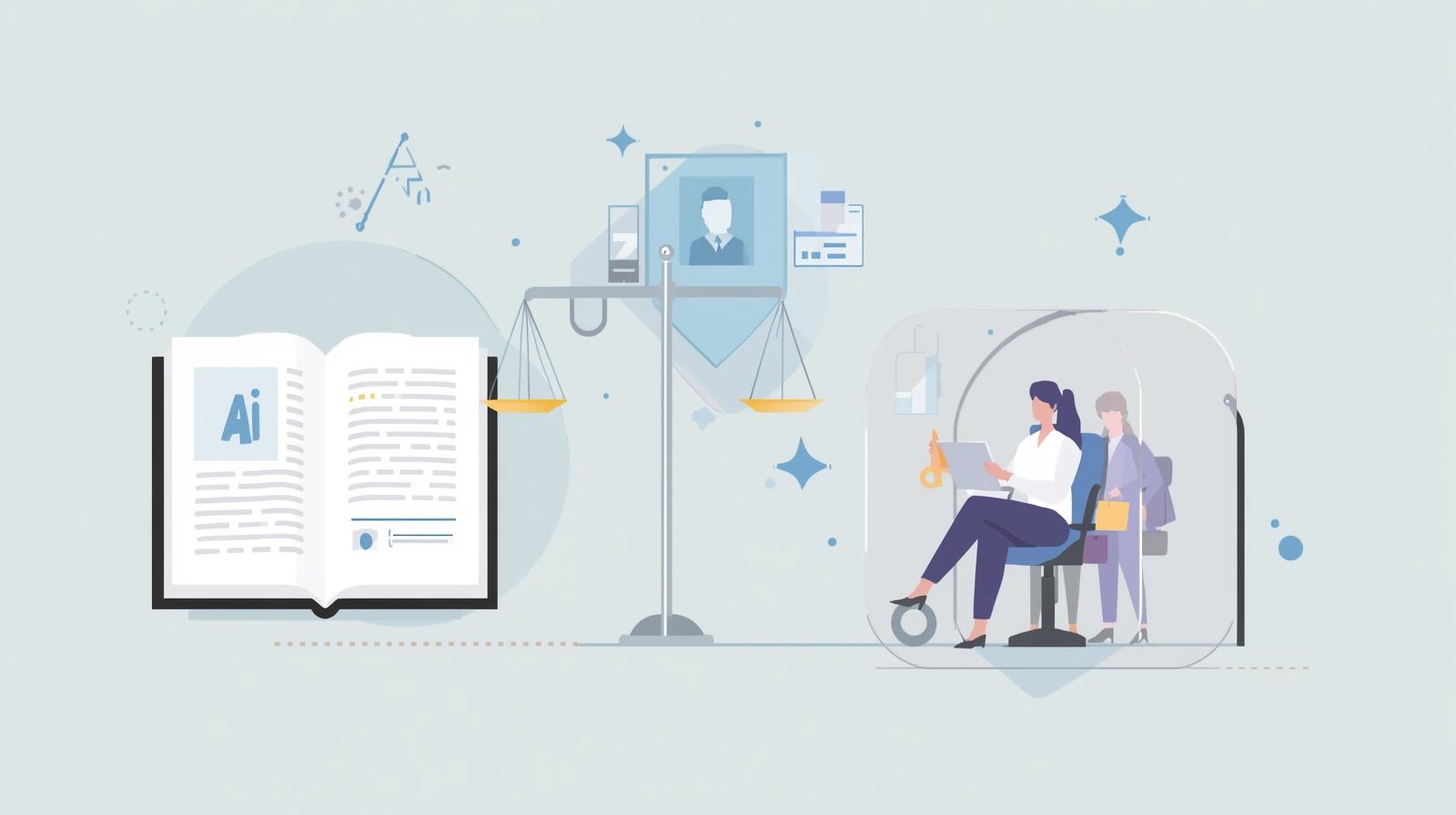
The rapid adoption of artificial intelligence in the workplace has created a significant gap in most organizations' employment policies. While AI tools promise increased efficiency and enhanced capabilities, they also introduce complex legal questions that traditional employee handbooks weren't designed to address. For nonprofit organizations—often operating with limited legal resources and heightened public scrutiny—this gap represents both a compliance risk and an opportunity to lead with responsible AI practices.
Consider the everyday scenarios that are becoming increasingly common: An employee uses ChatGPT to draft donor communications, potentially exposing confidential information. A manager relies on an AI tool to screen job applications, unknowingly introducing bias into the hiring process. Staff members use AI-powered transcription services during meetings that include sensitive beneficiary information. Each of these situations raises legal questions about data privacy, liability, discrimination, and intellectual property that most employee handbooks don't address.
The challenge is particularly acute for nonprofits because the stakes are high. Unlike private sector companies, nonprofits are entrusted with sensitive information about vulnerable populations, donor data, and mission-critical work that serves the public interest. A data breach or compliance violation doesn't just risk legal penalties—it can undermine public trust, jeopardize funding relationships, and compromise the very communities you serve. At the same time, completely prohibiting AI use isn't realistic or advisable, as these tools can significantly enhance your organization's capacity and impact.
This article provides a comprehensive framework for updating your employment policies to address AI adoption responsibly. You'll learn how to identify the specific legal risks AI introduces to your organization, understand the evolving regulatory landscape, and develop clear policies that protect your organization while empowering employees to use AI tools effectively and ethically. We'll explore practical approaches to data privacy, intellectual property, anti-discrimination compliance, and liability management—all tailored to the nonprofit context.
Whether you're revising an existing handbook or creating AI policies from scratch, this guide will help you build a foundation for responsible AI adoption that aligns with your values, protects your team and stakeholders, and supports your mission. The goal isn't to create barriers to innovation but to establish guardrails that enable your organization to harness AI's potential while managing the associated legal and ethical risks.
Why Traditional Employment Policies Fall Short in the AI Era
Most employee handbooks were written for a pre-AI workplace and contain significant gaps when it comes to artificial intelligence. Understanding these gaps is the first step toward creating comprehensive policies that actually protect your organization. Traditional policies typically address computer use, confidentiality, and data security, but these provisions weren't designed with AI's unique characteristics in mind.
The fundamental issue is that AI tools operate differently from traditional software. When an employee uses Microsoft Word, the data stays local or within your organization's controlled environment. When they use ChatGPT or similar AI tools, they're sending data to third-party servers where it may be used for training, stored indefinitely, or processed in ways that aren't transparent. Your existing "confidential information" policy likely prohibits sharing proprietary data externally, but it probably doesn't address the nuanced question of whether inputting that data into an AI tool constitutes "sharing."
Similarly, traditional acceptable use policies cover inappropriate internet use or personal email, but they don't address whether employees can use AI to draft grant proposals, analyze beneficiary data, or create marketing materials. Questions about who owns AI-generated content, whether AI-assisted work counts as the employee's own work product, and how to attribute AI contributions aren't covered by typical intellectual property clauses designed for human-created work.
Common Policy Gaps in Traditional Handbooks
Areas where existing policies typically fail to address AI-related concerns
- Data Handling: Existing confidentiality policies don't specify whether inputting organizational data into AI tools constitutes prohibited disclosure or how to handle AI-processed sensitive information
- Intellectual Property: Traditional IP clauses don't address ownership of AI-generated content, whether AI-assisted work qualifies as original work product, or how to handle derivative works created with AI tools
- Decision-Making Authority: Policies don't clarify which decisions can be informed by AI, which require human judgment, or who is accountable when AI tools influence outcomes
- Quality and Accuracy: Handbooks lack standards for verifying AI-generated content, fact-checking requirements, or guidelines for when AI outputs need human review before use
- Third-Party Tools: Existing technology policies don't address employee use of external AI services, evaluation criteria for new AI tools, or approval processes for adopting AI platforms
- Bias and Discrimination: Equal opportunity policies don't account for algorithmic bias, AI-assisted hiring or performance evaluations, or the potential for AI tools to introduce discriminatory outcomes
Another critical gap involves accountability and liability. When an employee makes a mistake, your existing policies likely address disciplinary procedures and quality control. But what happens when an AI tool generates inaccurate information that an employee relies on, leading to harm? Is the employee liable for not fact-checking? Is the organization liable for allowing AI use? What about the AI vendor? Traditional employment policies don't provide frameworks for answering these questions.
The pace of AI development also creates challenges that static policies can't address. A handbook written this year might be outdated within months as new AI capabilities emerge and regulations evolve. This requires a different approach to policy development—one that establishes principles and frameworks rather than trying to enumerate every specific AI tool or use case. Your policies need to be both comprehensive enough to provide real guidance and flexible enough to remain relevant as the technology landscape changes.
Key Legal Considerations for Nonprofit AI Adoption
Understanding the legal landscape is essential before drafting or updating policies. Employment law related to AI is evolving rapidly, with new regulations, court decisions, and enforcement actions emerging regularly. While comprehensive coverage of all applicable laws is beyond the scope of this article—and would quickly become outdated—several key legal frameworks consistently affect how nonprofits can use AI in the workplace.
Data Privacy and Confidentiality Laws
Regulations governing how organizations collect, use, and protect personal information
Data privacy regulations create some of the most significant constraints on AI use in nonprofit workplaces. Laws like the General Data Protection Regulation (GDPR) in Europe, the California Consumer Privacy Act (CCPA), and sector-specific regulations like HIPAA for health information impose strict requirements on how organizations handle personal data. When employees input data into AI tools, they're potentially transferring that data to third parties, triggering various compliance obligations.
For nonprofits, the challenge is particularly acute because you often handle sensitive information about vulnerable populations—beneficiaries, donors, volunteers, and community members who've entrusted you with their data. Using AI tools to process this information may require consent, data processing agreements, privacy impact assessments, or other compliance measures. Your employment policies need to make clear when and how employees can use AI with different categories of data.
Additionally, many AI tools' terms of service allow the provider to use input data for training or improvement purposes. This means data employees input today could potentially be exposed in future AI outputs to other users. Your policies must address this risk and establish clear rules about what types of information can never be input into AI systems, regardless of the tool's security assurances.
Anti-Discrimination and Employment Laws
Legal frameworks preventing bias in hiring, promotion, and workplace decisions
Anti-discrimination laws like Title VII of the Civil Rights Act, the Americans with Disabilities Act (ADA), and the Age Discrimination in Employment Act (ADEA) prohibit employment decisions based on protected characteristics. When AI tools are used in hiring, performance evaluation, promotion decisions, or other employment actions, organizations remain liable for discriminatory outcomes—even if the bias originated in the AI system rather than human intent.
Recent regulatory guidance has made clear that using AI doesn't shield organizations from discrimination liability. The Equal Employment Opportunity Commission (EEOC) has issued guidance stating that employers are responsible for ensuring their AI tools don't discriminate, and several jurisdictions have passed laws requiring transparency about AI use in employment decisions. Some regulations even mandate that organizations conduct bias audits before deploying AI in hiring or employment contexts.
For employment policies, this means establishing clear guidelines about when AI can be used in employment decisions, what safeguards must be in place, and who has accountability for ensuring non-discriminatory outcomes. It's not enough to simply prohibit discrimination—your policies need to address how the organization will monitor AI tools for bias and what processes ensure human oversight of AI-influenced decisions.
Intellectual Property and Copyright
Legal questions about ownership and originality of AI-generated content
The legal status of AI-generated content remains unsettled, with courts and copyright offices grappling with fundamental questions about authorship and originality. Current U.S. Copyright Office guidance suggests that purely AI-generated content may not be copyrightable, while human-authored content that incorporates AI assistance may be protectable if the human contribution is sufficiently creative and original.
This creates practical challenges for nonprofits producing content with AI assistance. If an employee uses AI to draft a grant proposal, create educational materials, or develop marketing content, who owns the resulting work? Can your organization claim copyright? What if the AI tool's training data included copyrighted materials—could using the AI-generated output expose you to infringement claims? These questions don't have clear answers yet, and the legal landscape continues to evolve.
Employment policies need to address intellectual property in the AI context by clarifying expectations for disclosure when AI tools are used, requirements for human review and modification of AI outputs, and standards for determining when content is sufficiently original to claim as organizational work product. Your policies should also address attribution—how to acknowledge AI assistance in created works—and establish processes for evaluating IP risks before publishing or distributing AI-assisted content.
Liability and Accountability Frameworks
Legal responsibility when AI tools make errors or cause harm
When AI tools produce inaccurate, harmful, or problematic outputs that employees rely on, questions of liability become complex. Traditional frameworks for employee errors—negligence, professional malpractice, vicarious liability—may not neatly apply when an AI system is involved in the chain of causation. Courts are still developing approaches to these questions, but organizations clearly bear some responsibility for the tools they allow employees to use and the safeguards they put in place.
For nonprofits, liability risks are particularly concerning because you often serve vulnerable populations and operate under heightened public scrutiny. If an AI tool generates advice that harms a beneficiary, produces discriminatory outcomes, or leaks confidential information, your organization faces potential legal claims, regulatory penalties, and reputational damage. Insurance coverage for AI-related incidents is also evolving, and your existing policies may not cover certain AI-related risks.
Employment policies play a crucial role in managing liability by establishing clear expectations for responsible AI use, mandatory safeguards for high-risk applications, and accountability structures that ensure appropriate oversight. Your policies should specify when AI outputs must be reviewed by humans, what verification steps are required before relying on AI-generated information for consequential decisions, and who is ultimately responsible for outcomes when AI tools are involved. Clear policies also provide evidence of good-faith efforts to prevent harm—a factor that can influence liability determinations if disputes arise.
Beyond these core areas, other legal considerations may apply depending on your organization's location, sector, and activities. Nonprofits working internationally must consider multiple jurisdictions' laws. Those in regulated sectors like healthcare, education, or financial services face additional compliance requirements. And as AI regulation evolves—with new laws proposed and passed regularly—your organization needs processes for staying informed and updating policies accordingly.
This is why consulting with legal counsel familiar with both employment law and technology regulation is essential. An attorney can help you identify the specific legal frameworks that apply to your organization, assess your current compliance gaps, and develop policies tailored to your risk profile and operational needs. The investment in legal guidance at the policy development stage is far less costly than addressing compliance violations or liability claims after the fact.
Essential Components of an AI Employment Policy
Creating effective AI employment policies requires more than adding a brief clause to your existing handbook. A comprehensive approach addresses multiple dimensions of AI use and integrates with your organization's broader values, risk management framework, and operational practices. The following components provide a foundation for responsible AI adoption while protecting your organization legally and ethically.
Acceptable Use and Scope
Defining when, where, and how AI tools can be used in the workplace
Your policy should clearly define what constitutes acceptable AI use within your organization. This includes specifying which types of AI tools are permitted, what approval processes are required for adopting new tools, and which use cases are prohibited entirely. Rather than trying to list every AI tool by name—an impossible task given the pace of development—establish criteria for evaluation and categories of permitted use.
Consider distinguishing between different tiers of AI use based on risk. Low-risk applications might include using AI for proofreading, generating creative ideas, or summarizing public information—activities that don't expose sensitive data or influence critical decisions. Medium-risk uses might involve research assistance, draft creation, or internal analysis, requiring more stringent data handling practices. High-risk applications—such as those affecting employment decisions, beneficiary services, or involving sensitive personal data—should have the strictest controls and oversight requirements.
Your acceptable use policy should also address personal AI use on organizational devices or networks. Some organizations permit limited personal AI use during breaks, similar to personal email or browsing, while others restrict all AI access to business purposes. Whatever approach you choose, make expectations clear to avoid misunderstandings. Also clarify whether employees can use personal AI accounts for work purposes—a practice that often creates data security and compliance risks.
- Define criteria for evaluating whether an AI tool is acceptable for organizational use
- Establish risk-based categories with different requirements for different use cases
- Specify which activities are prohibited regardless of the tool (e.g., inputting certain data types)
- Clarify approval processes for adopting new AI tools or expanding use cases
- Address personal AI use on organizational resources and vice versa
Data Protection and Privacy Requirements
Standards for handling organizational and personal data in AI contexts
Data protection provisions are among the most critical components of AI employment policies. Your policy must clearly specify what types of data can and cannot be input into AI systems, how employees should handle AI-processed data, and what safeguards are required for different data categories. This should align with both legal requirements and your organization's ethical commitments to the people you serve.
Establish clear data classification categories. For example, "public information" might be freely usable with AI tools, while "internal information" requires approved tools with data processing agreements. "Confidential information"—including beneficiary data, donor information, personnel records, or proprietary organizational information—might be prohibited from AI input entirely, or permitted only with specific tools that meet stringent security requirements and are approved by leadership.
Your policy should also address data minimization—the principle of using only the data necessary for a given purpose. When employees use AI, they should be trained to remove unnecessary personal identifiers, aggregate data where possible, and avoid inputting complete datasets when sample data would suffice. This both reduces privacy risks and often improves AI performance by focusing on relevant information.
- Create clear data classification categories with specific handling requirements for each
- Prohibit inputting certain data types (personal identifiers, protected health information, etc.) into AI tools
- Require data processing agreements and security assessments for AI tools handling sensitive data
- Establish data minimization practices—using only necessary data, removing identifiers, aggregating where appropriate
- Define procedures for data breaches or suspected privacy violations involving AI tools
Quality Control and Verification Standards
Requirements for reviewing, validating, and taking responsibility for AI outputs
AI tools can generate inaccurate, biased, or inappropriate outputs—a phenomenon often called "hallucination" when AI presents false information with confidence. Your policy must establish clear expectations for human review and verification of AI-generated content. Employees need to understand that they remain accountable for work products even when AI assists in their creation, and they must apply appropriate scrutiny before relying on or sharing AI outputs.
The level of verification required should correspond to the stakes of the use case. Content that will be published externally, shared with donors or beneficiaries, or used for important decisions requires rigorous fact-checking and review. Internal brainstorming or early-stage drafts might require less intensive verification. Your policy should provide guidance on appropriate verification standards for different contexts.
Consider requiring employees to disclose AI assistance in certain contexts. For example, content published under the organization's name might need to acknowledge when AI tools were used in creation. Grant applications or official reports might have transparency requirements. While you don't want to create unnecessary administrative burdens, appropriate disclosure demonstrates integrity and allows readers to properly evaluate the content's authority and limitations.
- Establish that employees remain accountable for all work products regardless of AI assistance
- Define verification requirements based on use case risk (external publication vs. internal drafts)
- Require fact-checking AI-generated claims before using them in organizational communications
- Specify when AI assistance must be disclosed or acknowledged in final work products
- Prohibit blind reliance on AI for critical decisions affecting people or organizational interests
Employment Decision Safeguards
Special protections when AI is used in hiring, performance management, or personnel actions
Using AI in employment decisions creates heightened legal risk due to anti-discrimination laws and emerging AI-specific regulations. Your policy should establish strict requirements for any AI use in recruiting, hiring, performance evaluation, promotion, discipline, or termination decisions. These safeguards protect both your organization and the employees or candidates affected by these consequential decisions.
At minimum, your policy should require that AI never be the sole decision-maker in employment contexts—a human with appropriate authority must review and take responsibility for all employment decisions, even when informed by AI analysis. Additionally, any AI tools used for employment purposes should be evaluated for bias, ideally through third-party audits or bias testing. Some jurisdictions legally require such evaluations, and best practice recommends them even where not mandated.
Transparency is also important. Candidates and employees may have legal rights to know when AI is used in decisions affecting them and to understand how the AI system works. Your policy should specify who is responsible for ensuring these transparency requirements are met and how the organization will respond to requests for information about AI use in employment decisions. Consider designating a specific role—such as HR director or legal counsel—to oversee AI use in employment contexts and ensure ongoing compliance.
- Require human decision-making authority—AI can inform but not determine employment outcomes
- Mandate bias testing and evaluation before deploying AI in hiring or personnel decisions
- Establish transparency requirements—disclosing AI use to affected candidates and employees
- Designate specific roles with oversight responsibility for AI in employment contexts
- Create procedures for responding to complaints or concerns about AI-influenced employment decisions
Intellectual Property and Ownership
Clarifying rights and responsibilities for AI-assisted creative work
Your policy should address intellectual property questions that arise when employees create content with AI assistance. While the law in this area is still developing, you can establish organizational expectations that provide clarity for employees and protect your organization's interests. Start by affirming that all work created by employees in the course of their employment belongs to the organization—this general principle applies regardless of AI involvement.
However, AI involvement creates nuances that your policy should address. Specify that employees must disclose when AI tools were used to create work products, particularly for content that will be copyrighted, published, or otherwise legally protected. Require sufficient human authorship and creativity—employees shouldn't simply copy-paste AI outputs without meaningful review and enhancement. This both strengthens potential copyright claims and ensures quality control.
Your policy should also address the risk that AI tools might generate outputs that infringe others' intellectual property rights. Since many AI systems are trained on copyrighted materials, outputs could potentially incorporate protected elements. Require employees to evaluate AI-generated content for potential infringement issues before publication, particularly for commercial or widely distributed materials. Consider consulting with legal counsel before publishing significant AI-assisted works, especially if your organization relies heavily on intellectual property protection.
- Affirm organizational ownership of all employee work products, including AI-assisted creations
- Require disclosure of AI assistance in creating work products intended for copyright protection
- Establish standards for sufficient human authorship—meaningful review and enhancement beyond AI outputs
- Require evaluation of potential copyright infringement risks in AI-generated content before publication
- Define attribution standards—how to acknowledge AI assistance in public-facing work
Implementing and Maintaining Your AI Employment Policies
Creating well-crafted policies is only the first step. The real challenge lies in implementation—ensuring employees understand the policies, have the resources to comply, and actually follow the guidelines in their daily work. Many organizations have comprehensive policies that exist only on paper while employees continue using AI without regard to the rules. Effective implementation requires thoughtful rollout, ongoing training, and systems for monitoring and enforcement.
Training and Education
Don't just distribute your AI policy—actively train employees on what it means and how to comply. Training should cover the rationale behind policies (why these rules exist), practical application (how to apply policies to common scenarios), and resources for questions (who to contact when situations are ambiguous).
Consider role-specific training. Program staff need guidance on AI use with beneficiary data. Fundraisers need to understand donor privacy requirements. HR personnel need specialized training on AI in employment decisions. Tailor your training to the AI use cases most relevant to each role.
Make training ongoing rather than one-time. As AI capabilities evolve and your organization gains experience, revisit policies and provide updated guidance. Create easily accessible resources—quick reference guides, decision trees, example scenarios—that employees can consult when they encounter AI-related questions in their work. Consider building AI champions within departments who can provide peer support and help colleagues navigate policy requirements.
Monitoring and Enforcement
Establish mechanisms for monitoring compliance with AI policies without creating an oppressive surveillance environment. This might include periodic audits of AI tool usage, reviewing significant work products for appropriate AI disclosure, or having managers periodically discuss AI use with their teams to surface issues and questions.
Create clear procedures for reporting violations or concerns about AI use. Employees should know how to raise issues if they observe policy violations, encounter problematic AI outputs, or have questions about whether a particular use case complies with policy. Ensure the reporting process is accessible and that concerns are addressed promptly.
For enforcement, distinguish between good-faith mistakes and willful violations. When employees are genuinely trying to follow policies but make errors in judgment, respond with additional training and guidance. Reserve disciplinary measures for situations involving disregard for policies, especially when violations create significant risk or harm. Make sure your enforcement approach is consistent and clearly communicated so employees understand the consequences of non-compliance.
Incident Response Planning
Despite best efforts at prevention, AI-related incidents will occur—data breaches, discriminatory outputs, misinformation, or other problems. Having a clear incident response plan helps you address issues quickly, minimize harm, and demonstrate responsible organizational practices. Your plan should specify who is responsible for responding to different types of incidents and what steps to take.
For data privacy incidents, your plan should align with applicable breach notification laws and organizational data protection policies. Identify when incidents require reporting to regulators, notification to affected individuals, or disclosure to the public. Designate specific roles—such as legal counsel, IT leadership, or executive director—with authority to make these determinations and manage the response process.
Document incidents and responses carefully. This documentation serves multiple purposes: it helps you learn from incidents to prevent recurrence, demonstrates due diligence if legal questions arise, and provides accountability. Consider conducting post-incident reviews to identify policy gaps, training needs, or system improvements that could prevent similar issues in the future. View incidents as opportunities to strengthen your AI governance framework rather than merely problems to be managed.
Policy Review and Evolution
AI employment policies cannot be "set and forget." The technology evolves rapidly, regulations change, your organization's AI use expands, and you gain practical experience that reveals policy gaps or impractical requirements. Build regular policy review into your governance processes—for example, reviewing policies quarterly or semi-annually to assess whether updates are needed.
Gather feedback from employees about how policies work in practice. Are there common situations where the policies don't provide clear guidance? Do certain requirements create unnecessary friction without meaningful risk reduction? Are there emerging AI use cases your policies don't address? This feedback helps you refine policies to be both more effective and more practical.
Stay informed about legal developments affecting AI in the workplace. This might involve subscribing to employment law updates, consulting with legal counsel periodically, or participating in nonprofit networks where AI governance is discussed. When new regulations emerge or significant court decisions provide guidance on AI-related legal questions, evaluate whether your policies need corresponding updates. The goal is policies that remain current and effective rather than becoming outdated as the landscape changes. For strategic guidance on building adaptive AI practices, see our article on integrating AI into strategic planning.
Remember that policy implementation is an ongoing process, not a discrete project. Just as your organization continuously works on fundraising, program delivery, and mission fulfillment, AI governance requires sustained attention and adaptation. The organizations that manage AI risks most effectively are those that build governance into their regular operational rhythms rather than treating it as a compliance checkbox to complete once and move on.
Practical Considerations for Nonprofits
While the legal frameworks and policy components discussed above apply broadly, nonprofits face unique practical challenges in implementing AI employment policies. Limited resources, diverse stakeholders, mission-driven values, and public accountability all shape how you approach AI governance. Understanding these nonprofit-specific considerations helps you develop policies that are both legally sound and organizationally sustainable.
Balancing Risk and Innovation
Nonprofits often operate in a risk-averse environment, and for good reason—the stakes of mistakes are high when you're serving vulnerable populations or stewarding donor resources. However, excessive caution around AI can prevent your organization from realizing significant benefits that could enhance your mission impact. The challenge is finding the right balance between enabling productive AI use and maintaining appropriate safeguards.
One effective approach is the "safe sandbox" model. Identify low-risk AI applications where employees can experiment and build skills without exposing sensitive data or creating compliance issues. For example, using AI for internal brainstorming, summarizing public information, or drafting internal meeting notes generally poses minimal risk. Encourage employees to develop AI literacy through these low-stakes applications while maintaining strict controls on high-risk uses like processing beneficiary data or making employment decisions.
Another consideration is resource allocation. Comprehensive AI governance requires investment in legal counsel, training, monitoring systems, and potentially new technology. For resource-constrained nonprofits, this investment must compete with direct mission activities. Prioritize your governance investments based on your actual AI use and risk profile. If your organization currently uses only basic AI tools for simple tasks, you don't need the same governance infrastructure as an organization deploying AI extensively across operations. Scale your governance approach to your reality while building capacity to expand as AI adoption grows.
Stakeholder Communication and Trust
Nonprofits depend on stakeholder trust—from donors, beneficiaries, volunteers, partners, and the communities you serve. How you communicate about AI use affects this trust relationship. Some stakeholders may view AI adoption positively as innovation and efficiency. Others may have concerns about privacy, job displacement, or whether AI aligns with your organizational values. Proactive, transparent communication about your AI policies helps manage these diverse perspectives.
Consider making relevant portions of your AI policies public. While employment policies are typically internal documents, creating a public-facing summary of your AI principles and safeguards demonstrates accountability. This might include explaining how you protect beneficiary privacy, ensure human oversight of important decisions, or evaluate AI tools for bias. Such transparency can differentiate your organization and build confidence that you're approaching AI responsibly.
For beneficiaries specifically, think carefully about when and how to disclose AI use. If AI tools process their personal information, analyze their data, or influence services they receive, they may have both legal rights and ethical claims to know about this. Your policies should specify when beneficiary notification is required and what information must be provided. Even where not legally mandated, transparency about AI use demonstrates respect for the people you serve and aligns with nonprofit values of dignity and empowerment.
Board Engagement and Oversight
Your board of directors has ultimate governance responsibility for the organization, which includes oversight of AI adoption and related policies. However, many board members may have limited understanding of AI technology, its risks, and appropriate governance frameworks. Building board capacity around AI governance is an important component of effective policy implementation.
Consider providing board education on AI in the nonprofit context—not deep technical training, but sufficient understanding to fulfill governance responsibilities. Board members should understand what AI tools the organization uses, what risks these tools create, what policies govern their use, and what metrics indicate whether governance is effective. This enables the board to ask informed questions, provide meaningful oversight, and support necessary investments in AI governance infrastructure.
Board approval of AI employment policies also serves an important function. While day-to-day policy implementation may be delegated to staff, board-level approval demonstrates organizational commitment and creates accountability. It also ensures that AI governance receives appropriate attention at the highest organizational level rather than being treated as merely an operational detail. Some organizations establish board committees or working groups focused on technology governance, providing dedicated capacity for AI oversight.
Building Sustainable Governance Capacity
Perhaps the most significant practical challenge for nonprofits is building sustainable AI governance capacity with limited resources. Comprehensive AI governance requires ongoing investment, yet many nonprofits struggle to fund even basic operational needs. How can you build governance practices that are both effective and sustainable for your organizational context?
Start by leveraging existing structures rather than creating entirely new systems. If you have compliance processes for data privacy, integrate AI-related requirements into those existing workflows. If you conduct regular policy training, add AI modules to scheduled sessions. If you have technology decision-making processes, enhance them to include AI-specific considerations. Building on existing infrastructure is more sustainable than creating parallel AI-specific systems from scratch.
Also consider collaborative approaches to AI governance. Nonprofit networks, associations, and coalitions can share resources, develop common policy templates, and provide mutual support around AI challenges. Some funders are beginning to support capacity-building around responsible AI use. Look for opportunities to participate in collaborative learning communities where you can benefit from others' experience and contribute your own insights. For guidance on building internal AI capacity, explore our article on developing AI champions within your organization.
Finally, remember that AI governance is ultimately about values, not just compliance. The same mission-driven principles that guide your programmatic work—respect for human dignity, commitment to equity, transparency with stakeholders, responsible stewardship of resources—should inform your approach to AI. When you ground AI governance in your organizational values rather than treating it as merely a legal requirement, it becomes more authentic, more sustainable, and more aligned with who you are as an organization.
Common Scenarios and Policy Guidance
To make AI employment policies practical and useful, employees need to understand how general principles apply to the specific situations they encounter. The following scenarios illustrate common AI use cases in nonprofit workplaces and how comprehensive policies would guide decision-making. Use these as models for developing your own scenario-based guidance that reflects your organization's specific context and risk tolerance.
Scenario: Using AI for Grant Proposal Writing
Situation: Your development director wants to use ChatGPT to help draft a grant proposal, including researching the funder's priorities, outlining the proposal, and drafting narrative sections. The proposal will include some program statistics and general information about beneficiaries served.
Policy Considerations: This scenario involves multiple policy areas—data protection (what information can be input), quality control (ensuring accuracy), intellectual property (ownership of the final proposal), and appropriate use (whether AI is acceptable for this purpose).
Recommended Approach: AI assistance for grant writing is generally acceptable with appropriate safeguards. The development director should: (1) Use only general, non-confidential program information—no individual beneficiary data, donor names, or proprietary organizational information should be input into AI tools. (2) Draft and refine the proposal extensively beyond AI outputs—the final proposal should reflect significant human authorship, not just edited AI text. (3) Fact-check all AI-generated claims, statistics, and assertions before including them in the proposal. (4) Review the funder's policies on AI use in applications—some funders are developing specific requirements. (5) Ensure the final proposal is the organization's own intellectual property by sufficient human contribution and review.
Policy Provisions Needed: Data classification guidelines specifying what information can be input to AI; quality control standards for external communications; intellectual property requirements for organizational publications; and disclosure guidance if the funder requires transparency about AI use.
Scenario: AI-Assisted Resume Screening
Situation: Your HR coordinator receives 100+ applications for a program coordinator position and wants to use an AI tool to screen resumes and identify the most qualified candidates for interview, saving significant time in the initial review process.
Policy Considerations: Using AI in employment decisions creates heightened legal risk under anti-discrimination laws. This scenario requires strict compliance with employment law safeguards, bias evaluation requirements, and transparency obligations.
Recommended Approach: AI-assisted resume screening is high-risk and requires extensive safeguards. Before using any AI tool for this purpose: (1) Evaluate the specific tool for bias through third-party audit or testing—ensure it doesn't discriminate based on protected characteristics. (2) Verify compliance with applicable laws, which may include New York City's AI bias audit requirements or similar state laws. (3) Determine transparency obligations—many jurisdictions require disclosure to candidates when AI is used in hiring. (4) Ensure human review—AI should identify potentially qualified candidates, but humans must make actual decisions about who to interview. (5) Monitor outcomes for disparate impact on protected groups. (6) Document the process thoroughly to demonstrate compliance if challenged.
Policy Provisions Needed: Employment decision safeguards requiring bias evaluation and human oversight; transparency requirements for AI use in hiring; approval processes for new AI tools in employment contexts; and monitoring/documentation standards to ensure ongoing compliance.
Scenario: AI Analysis of Beneficiary Feedback
Situation: Your program evaluation team has collected hundreds of survey responses from program participants and wants to use AI to identify themes, sentiment, and key insights from this qualitative data. The surveys include participants' demographic information and detailed feedback about their experiences.
Policy Considerations: This involves sensitive beneficiary data that likely requires protection under privacy laws and organizational confidentiality commitments. The analysis could reveal information about vulnerable populations that demands careful handling.
Recommended Approach: Beneficiary data analysis requires the highest level of data protection. Before proceeding: (1) Remove all personally identifiable information from survey data—names, contact information, detailed demographic combinations that could identify individuals. (2) Use only AI tools specifically approved for processing sensitive data, with appropriate data processing agreements and security measures. (3) Avoid using free public AI services like ChatGPT—these typically don't provide adequate data protection for sensitive information. (4) Aggregate data where possible—analyze themes across all responses rather than individual submissions. (5) Store AI-processed data securely and delete it after analysis is complete. (6) Review AI-generated insights carefully before using them, as AI may misinterpret context or nuance in human feedback.
Policy Provisions Needed: Data classification systems identifying beneficiary information as highly protected; requirements for data processing agreements and security assessments for AI tools handling sensitive data; data minimization standards; and secure deletion procedures after analysis is complete.
Scenario: Creating Marketing Content with AI Images
Situation: Your communications manager wants to use AI image generation tools (like DALL-E or Midjourney) to create graphics for social media, your website, and printed materials, avoiding stock photo costs and creating custom imagery aligned with your brand.
Policy Considerations: AI-generated images raise intellectual property questions about ownership and potential copyright infringement, as well as ethical considerations about authentic representation of your work and communities served.
Recommended Approach: AI-generated imagery is acceptable with appropriate consideration of IP and authenticity issues: (1) Review the AI tool's terms of service regarding commercial use and intellectual property rights—ensure you can legally use generated images for organizational purposes. (2) Avoid using AI to generate images depicting your actual beneficiaries or communities—this raises authenticity and dignity concerns. AI images work better for abstract concepts, backgrounds, or generic illustrations. (3) Evaluate generated images for potential stereotypes or problematic representations, particularly when depicting people. (4) Consider disclosing AI generation for significant publications, especially if organizational values emphasize transparency and authenticity. (5) Don't claim copyright over purely AI-generated images; ensure human creative contribution if copyright protection is important. (6) Monitor for potential infringement—if generated images closely resemble copyrighted works, avoid using them.
Policy Provisions Needed: Intellectual property standards for AI-generated content; quality and ethical review requirements for public-facing materials; disclosure guidance for AI-generated imagery; and standards for authentic representation of beneficiaries and communities served.
These scenarios demonstrate how comprehensive policies provide practical guidance for real workplace situations. As you develop your own AI employment policies, create similar scenario-based guidance reflecting the specific AI use cases common in your organization. This helps employees understand how to apply abstract policy principles to their daily work and makes compliance more achievable. For broader context on AI implementation strategy, see our comprehensive guide on getting started with AI in nonprofits.
Getting Started: A Roadmap for Policy Development
If you're beginning the process of developing or updating AI employment policies, a structured approach will help you create comprehensive, practical policies while managing the project efficiently. The following roadmap provides a step-by-step framework for policy development, from initial assessment through implementation and ongoing refinement.
Phase 1: Assessment and Foundation (Weeks 1-3)
- Inventory current AI use: Survey staff to understand what AI tools are currently being used, for what purposes, and what data is being processed. This baseline assessment reveals your actual risk exposure and priority policy needs.
- Review existing policies: Examine your current employee handbook, data privacy policies, technology use policies, and intellectual property provisions to identify gaps and provisions that need updating for AI.
- Consult legal counsel: Engage an attorney familiar with employment law and technology regulation to identify applicable legal requirements, assess your compliance gaps, and provide guidance on policy development.
- Form a working group: Assemble a cross-functional team including HR, IT, legal, program leadership, and executive staff to guide policy development, ensuring diverse perspectives and organizational buy-in.
Phase 2: Policy Drafting (Weeks 4-8)
- Develop core policy framework: Using the essential components outlined in this article, draft policy language covering acceptable use, data protection, quality control, employment decision safeguards, and intellectual property.
- Create practical guidance: Develop scenario-based examples, decision trees, and quick-reference guides that help employees apply policies to common situations they'll encounter.
- Gather feedback: Share draft policies with your working group, selected staff members, and potentially board leadership to identify gaps, impractical requirements, or unclear provisions.
- Legal review: Have your attorney review draft policies for legal compliance, clarity, and enforceability before finalizing.
Phase 3: Approval and Preparation (Weeks 9-10)
- Board approval: Present policies to your board of directors for review and formal approval, providing context about the need for AI governance and how policies protect the organization.
- Develop training materials: Create training presentations, handouts, and resources that will help employees understand and comply with new policies.
- Plan communication strategy: Determine how you'll roll out policies to staff, what messaging you'll use, and whether you'll communicate with external stakeholders about your AI governance framework.
- Update handbook and systems: Incorporate new policies into your employee handbook, update acknowledgment forms, and make policies easily accessible to all staff.
Phase 4: Rollout and Training (Weeks 11-13)
- All-staff introduction: Conduct organization-wide training introducing new AI policies, explaining the rationale, and providing overview of key requirements.
- Role-specific training: Provide targeted training for departments or roles with specific AI policy requirements (HR for employment decisions, program staff for beneficiary data, etc.).
- Establish support resources: Designate contacts for AI policy questions, create accessible reference materials, and establish channels for reporting concerns or seeking clarification.
- Policy acknowledgment: Have employees formally acknowledge receipt and understanding of new AI policies, creating documentation of training completion.
Phase 5: Monitoring and Refinement (Ongoing)
- 30-day check-in: After initial rollout, gather feedback about how policies are working in practice, what questions have arisen, and whether any immediate clarifications are needed.
- Quarterly reviews: Assess compliance, review any incidents or concerns, and identify emerging AI use cases that may require policy updates.
- Annual policy update: Conduct comprehensive review of AI policies annually to incorporate legal developments, technological changes, and organizational learning.
- Continuous improvement: Use feedback, incidents, and experience to refine policies over time, making them more effective and more practical for your organizational context.
This roadmap provides a realistic timeline for organizations developing AI policies from scratch. If you're updating existing policies rather than starting new, the process may be faster. Conversely, larger organizations with more complex operations might need more time for each phase. Adapt this framework to your organizational capacity and needs, but maintain the fundamental sequence: assess before drafting, draft before implementing, and implement before expecting compliance.
Conclusion: Building a Foundation for Responsible AI Adoption
The integration of artificial intelligence into nonprofit workplaces is not a future possibility—it's a present reality that demands thoughtful governance and clear employment policies. While the legal landscape continues to evolve and uncertainty remains about many AI-related questions, waiting for perfect clarity before addressing AI in your employment policies is not a viable strategy. Your employees are already using AI tools, AI vendors are rapidly developing new capabilities, and courts and regulators are establishing precedents that will shape organizational liability for years to come.
The good news is that you don't need to have all the answers to begin building effective AI governance. Start with fundamental principles aligned with your organizational values: protect the privacy and dignity of the people you serve, ensure human accountability for consequential decisions, maintain transparency with stakeholders about AI use, and commit to continuous learning and improvement as the technology evolves. These principles provide a solid foundation even as specific tools, regulations, and best practices continue to develop.
Remember that AI employment policies serve multiple purposes beyond legal compliance. They educate employees about responsible AI use, establish accountability structures that protect both individuals and the organization, build stakeholder trust through transparent governance, and enable productive AI adoption by providing clear guardrails within which staff can innovate. Well-crafted policies don't prevent AI use—they enable it by managing risks and establishing expectations that allow employees to harness AI's potential confidently.
The work of AI governance is ongoing, not a one-time project. As your organization gains experience with AI, as new tools and capabilities emerge, and as legal frameworks evolve, your policies will need corresponding refinement. Build this continuous improvement into your organizational rhythms through regular policy reviews, ongoing training, monitoring of AI use and outcomes, and openness to feedback about what's working and what needs adjustment. Organizations that view AI governance as a journey rather than a destination will be best positioned to adapt as the landscape changes.
Finally, remember that you're not alone in navigating these challenges. Nonprofit peers, professional associations, legal resources, and consultants focused on responsible AI can provide support, share lessons learned, and help you avoid common pitfalls. Engaging with these resources—and contributing your own experiences to the broader nonprofit community—strengthens the entire sector's capacity for responsible AI adoption. Together, nonprofits can demonstrate that it's possible to harness AI's potential while maintaining the values, accountability, and human-centered approach that define our work.
Need Help Developing Your AI Employment Policies?
Creating comprehensive, legally sound AI employment policies requires expertise in both nonprofit operations and emerging technology governance. One Hundred Nights specializes in helping nonprofit organizations develop customized AI policies that protect your mission, your team, and the communities you serve while enabling productive innovation.