
The End of the Annual Appeal? How AI Is Shifting Fundraising from Campaigns to Continuous Engagement
The year-end fundraising sprint is not disappearing, but its primacy is eroding. AI is enabling a fundamentally different approach to donor relationships, one where engagement is triggered by donor behavior rather than the organization's fiscal calendar, where personalization at scale replaces mass appeals, and where the best ask arrives at the right moment for each donor rather than the same moment for everyone.
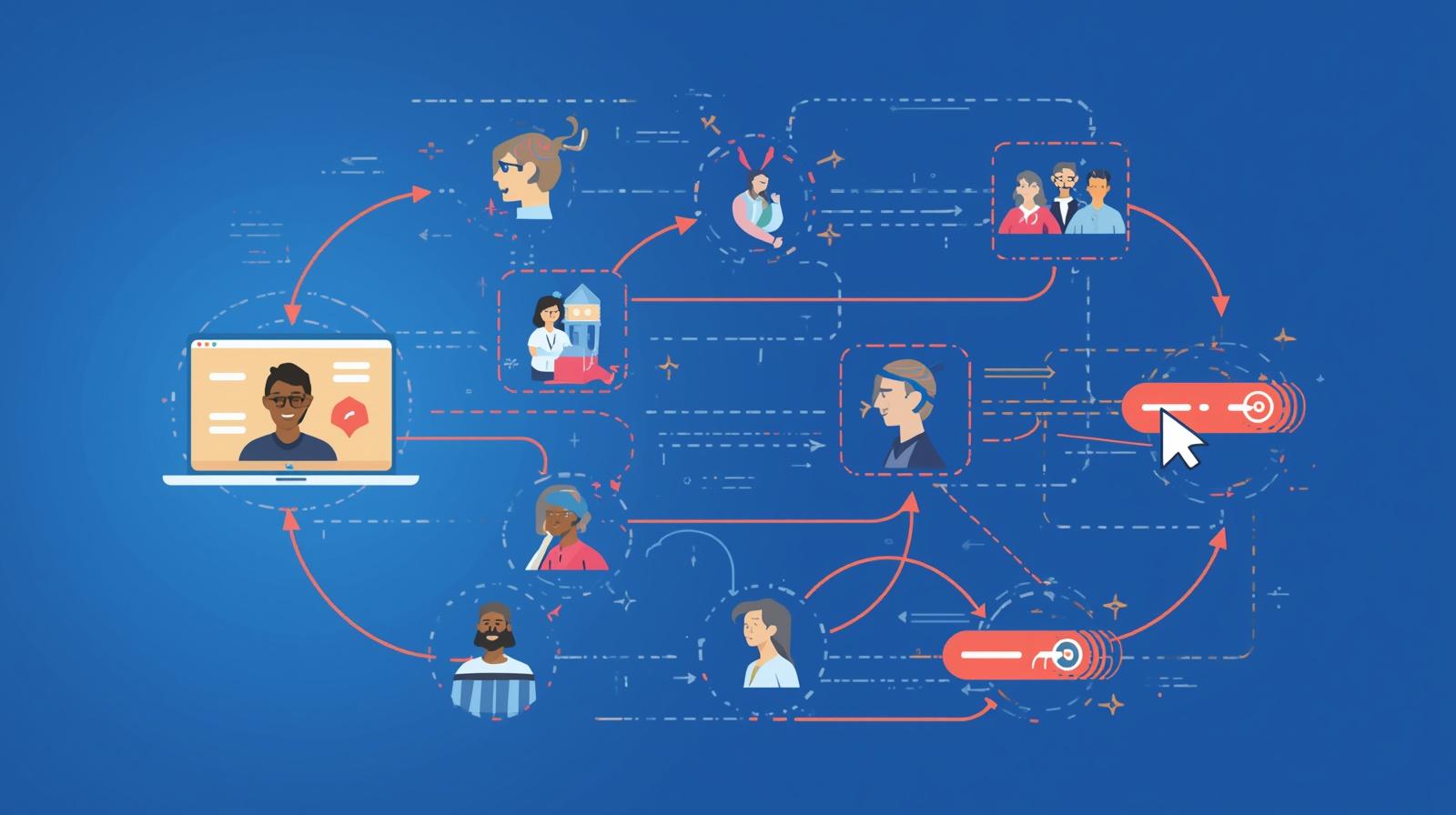
Every December, the fundraising operations of thousands of nonprofits shift into a mode that feels both urgent and fragile. Campaigns are launched, emails cascade, matching gifts are announced, and year-end totals are tracked with the kind of intensity usually reserved for election nights. For many organizations, this six-week window determines whether the next year will feel financially stable or perpetually anxious. That concentration of effort and revenue into a single seasonal push is not a strategy so much as an inheritance from an era when nonprofits had few alternatives.
The Fundraising Effectiveness Project has documented the structural strain in this model with increasing clarity. Through the third quarter of 2025, total donors declined year-over-year, continuing a multi-year contraction in donor participation even as total giving grew. First-time donor retention rates, a measure of whether organizations can convert one-time gifts into lasting relationships, remain around 14%. The economics of annual campaign fundraising, where organizations acquire new donors at five times the cost of retaining existing ones only to lose most of them within a year, are genuinely unsustainable.
AI is enabling a different model. Not a model that abandons campaigns entirely, they retain value for building momentum and community, but one where campaigns exist within a year-round relationship architecture rather than as the relationship itself. The shift is from calendar-driven to behavior-driven fundraising: from the organization's fiscal year setting the tempo to each donor's own signals, actions, and patterns determining when and how they're engaged. This article examines what that shift looks like in practice, which tools are enabling it, and how organizations can begin the transition without abandoning what currently works.
The Structural Failure of the Annual Campaign Model
The annual campaign model has three fundamental problems that AI-powered continuous engagement directly addresses. The first is the timing mismatch: traditional appeals are timed to the nonprofit's budget calendar, not the donor's life circumstances, financial situation, or emotional engagement with the cause. A donor who receives a passionate November appeal might not be in a position to give that month due to personal financial circumstances, but might have given enthusiastically in March following a meaningful interaction with the organization's work. The annual model misses this window entirely.
The second problem is the first-gift cliff. Only 14% of first-time donors give again, according to 2025 FEP data. Yet research from Neon One shows that 59% of donors who make a second gift continue giving beyond that point. The 90-day period after a first gift is the highest-leverage moment in the entire donor lifecycle, and annual campaigns, which by definition operate on 12-month cycles, are structurally unable to deploy intensive relationship-building in that window for most donors. The result is that organizations are, in effect, running expensive donor acquisition machines that fail to retain most of what they acquire.
The third problem is mid-tier neglect. Most development teams can maintain meaningful personal relationships with 50 to 100 major donors. Everyone else gets mass communications. But the donors who give $500 to $5,000 annually, those in the mid-tier of most portfolios, collectively represent enormous lifetime value that is left largely uncultivated because there is simply no staff capacity to steward them individually. This is the segment where AI's ability to deliver personalized communication at scale has the most direct financial impact.
14%
First-time donor retention rate
The vast majority of new donors never give again, making acquisition-focused campaign models financially unsustainable over time.
59%
Second-gift continuation rate
Donors who make a second gift are far more likely to continue giving. The 90-day window after the first gift is the most critical intervention point.
31%
Average nonprofit donor retention rate
The sector average is deeply problematic. Organizations using AI-powered engagement monitoring consistently outperform this benchmark.
How AI Makes Continuous Engagement Operationally Possible
The core barrier to continuous, personalized donor engagement has never been a lack of understanding about what it takes to retain donors. Development professionals have known for decades that personalized acknowledgment, timely impact reporting, and appropriately timed asks improve retention. The barrier has been capacity: with limited staff managing thousands of donor records, the level of individualization required was simply impossible to deliver at scale.
AI removes this barrier by doing the monitoring, pattern recognition, segmentation, and drafting that previously required human time. An AI system can simultaneously analyze thousands of donor profiles, identify behavioral signals across the portfolio, and trigger appropriate personalized responses without requiring a staff member to initiate each one. The staff member's role shifts from initiating every contact to reviewing what the system has prepared, approving outreach, and handling the relationship moments that genuinely require human judgment.
The emerging framework for this approach is what some fundraising strategists call Responsive Fundraising, where engagement is triggered by donor intent and behavior rather than fixed campaign timelines. A donor who opens three consecutive emails about a specific program area receives a follow-up that deepens the conversation about that program. A lapsing donor who re-engages by clicking on a newsletter link triggers a reactivation sequence calibrated to their giving history and interests. A major gift prospect who attends an organization's event is flagged for personal outreach within 48 hours. None of these triggers require a December campaign to fire.
Predictive Analytics: Knowing When Each Donor Is Ready
Using behavioral data to identify optimal giving moments for each individual
Predictive analytics is the technical engine of continuous engagement. Modern platforms analyze historical giving patterns, engagement behaviors, wealth screening data, and interaction signals to forecast not just who will give, but when and through which channel. This is fundamentally different from traditional RFMV scoring, which looks backward. Predictive models look forward, identifying the window within which each donor is most likely to respond positively to an ask.
Lapse prediction is one of the most valuable capabilities. AI models identify donors showing early warning signs of disengagement, declining open rates, longer gaps between interactions, reduced engagement with the organization's content, before they actually stop giving. This allows proactive outreach while the relationship is still warm. Organizations using these tools consistently achieve lapsed donor recapture rates significantly higher than the sector benchmark.
- Individual giving timing prediction based on past pattern analysis
- Early lapse detection before donors actually disengage
- Channel preference modeling for email, direct mail, phone, or SMS
- Major gift upgrade identification using wealth and affinity signals
Personalization at Scale: Moving Beyond Segments
Delivering individualized donor experiences across thousands of relationships simultaneously
Traditional donor segmentation divides donors into broad categories, then sends the same message to everyone in each category. AI-powered personalization treats every donor as an individual. Communication content, ask amounts, impact stories, and outreach timing are all adapted based on each donor's unique history, stated interests, and engagement patterns.
Dynamic ask amounts on donation forms are one of the most immediately demonstrable applications. Rather than showing the same suggested gift amounts to every visitor, platforms can display ask amounts based on the individual donor's giving history and capacity signals. Organizations that have implemented this approach report meaningful increases in average gift size because donors are being asked for amounts appropriate to their relationship with the organization rather than generic suggestions calibrated to an average donor who doesn't actually exist.
Platforms like Virtuous Momentum, which was developed specifically for major gift programs and acquired by Virtuous in 2025, can learn a gift officer's communication style and draft personalized outreach in that person's voice, making AI-generated cultivation feel authentic and maintaining the relationship quality that major gift fundraising requires. The gift officer reviews and approves; the AI handles the drafting and scheduling.
- Dynamic donation forms with personalized ask amounts by giving history
- Communication content adapted to individual program area interests
- Impact reports personalized to each donor's giving history and stated priorities
- AI drafting in gift officer voice for major donor cultivation
Always-On Stewardship: Maintaining Relationships Year-Round
Automated workflows that sustain donor relationships between asks
Continuous engagement does not mean continuous asking. The ratio of relationship-building to solicitation is one of the most important variables in donor retention, and organizations that only contact donors when they want money create the exact transactional dynamic that leads to lapse. AI-powered stewardship automation enables organizations to maintain regular, meaningful contact year-round without the staff time that would previously have made this impossible.
A well-designed stewardship sequence includes immediate acknowledgment within minutes of a gift, a 30-day impact report that connects the gift to specific outcomes, a check-in or update at 90 days, and additional touchpoints throughout the year that share mission progress, invite feedback, or offer engagement opportunities that are not financial asks. Blackbaud's Development Agent, which was positioned as "the first of our Agents for Good" when it launched in late 2025, specifically targets the mid-tier donor segment, enabling development teams to maintain personalized, ongoing outreach with donors who would otherwise receive only mass communications.
Tools Enabling the Shift to Continuous Engagement
The platform landscape for continuous engagement fundraising has matured significantly since 2024. Organizations ranging from small nonprofits to large national organizations now have access to tools that, even a few years ago, would have required custom development to build. The key categories include CRM platforms with embedded AI, purpose-built predictive analytics tools, and donation optimization platforms.
CRM Platforms with AI Capabilities
- Virtuous + Momentum: Acquisition of Momentum in 2025 added AI-powered major gift portfolio management, prioritized prospect views, and personalized outreach drafting in the gift officer's voice
- Blackbaud Development Agent: AI-powered portfolio management enabling personalized outreach to mid-tier donors at scale, extending development team capacity significantly
- Salesforce Agentforce: Supports continuous donor engagement, personalized marketing, and automated moves management through NPSP Engagement Plans
Predictive Analytics and Optimization
- Dataro: Integrates directly with existing CRMs, generates predictive scores across campaign types, and enables always-on targeting in partner platforms like Engaging Networks
- DonorSearch AI (EverTrue): MLR scoring combining organizational giving data with sector-wide patterns to predict giving likelihood within a 12-month window
- Fundraise Up: Donation optimization with AI-driven recurring donor conversion prompts and dynamic ask amount personalization on donation forms
Monthly Giving: The Structural Anchor of Continuous Engagement
No discussion of continuous donor engagement is complete without addressing monthly giving, because a thriving recurring giving program is the most powerful structural expression of the shift from campaign-based to relationship-based fundraising. Monthly donors are, by definition, engaged year-round. They have made a commitment to the organization that transcends any single campaign. And the economics of recurring giving are extraordinary.
Research consistently shows that monthly donors have dramatically higher retention rates than one-time donors, with average retention rates around 77% compared to the sector's overall 31.9%. Monthly donors are far more likely to give over periods of three years or more. And the compounding lifetime value of a donor who gives consistently for five years is dramatically higher than the total giving of a donor who makes a large one-time gift and lapses. Neon One's 2025 Generosity Report found that consistent five-year donors contributed over 1,500% more than one-time donors when measured over the full relationship.
AI supports monthly giving programs in several practical ways. Recurring donor conversion, identifying which one-time donors are most likely to respond to a recurring gift upgrade invitation, is one application that Fundraise Up has made particularly accessible through their donation optimization platform. Pre-lapse warnings, when a payment method is about to expire or a payment fails, trigger automated outreach before the donor is lost rather than after. Annual value recaps, which summarize what a monthly donor's cumulative giving has accomplished over the year, are a stewardship communication that AI can personalize and schedule automatically without requiring staff time.
For organizations looking to rebalance their revenue mix away from high-risk seasonal concentration, building a named, positioned monthly giving program with its own identity and dedicated stewardship track is often the highest-leverage single investment. The shift from a checkbox on the donation form to a proper program with onboarding sequences, regular impact reporting, and explicit community framing has been demonstrated to significantly improve monthly donor retention and lifetime value.
Building a High-Retention Monthly Giving Program
Program Design Elements
- Named program with distinct identity and community framing
- Dedicated welcome and onboarding sequence for new monthly donors
- Exclusive program updates and insider impact reporting
AI-Enabled Retention Tactics
- Automated payment failure recovery and card update prompts
- Annual personalized impact recap of cumulative contributions
- Predictive upgrade identification for monthly-to-major gift conversion
Transitioning from Campaign-Based to Continuous Engagement
The transition from a campaign-centric model to continuous engagement is rarely a one-time switch. Most organizations make it in phases, layering year-round engagement infrastructure on top of existing campaigns and gradually shifting the balance as they build confidence in the approach. This is the right way to do it, both because it manages risk and because it allows staff to develop competency incrementally.
Phase 1: Foundation (Months 1-3)
Before deploying AI, the prerequisite is data quality. Predictive models are only as good as the data they run on, and most nonprofits have CRM data quality problems, duplicate records, inconsistent entry, incomplete profiles, and siloed systems that don't share data cleanly. An honest assessment of data quality and a plan to address the worst gaps is the actual first step.
Alongside data cleanup, organizations can build a year-round donor stewardship calendar that distributes touchpoints across all 12 months rather than clustering them around campaigns. The goal is at least one non-ask communication per quarter for every donor segment, providing value (mission updates, impact stories, program news) before soliciting. This is the cultural foundation that makes continuous engagement credible rather than feeling like continuous asking.
- Audit CRM data quality and prioritize gaps to address first
- Build a 12-month stewardship calendar with distributed touchpoints
- Implement automated 48-hour acknowledgment and 30-day impact sequences
Phase 2: Intelligence (Months 4-9)
Once data foundations are solid, organizations can deploy predictive scoring through existing CRM AI features or dedicated tools like Dataro. The initial focus should be on three high-value applications: identifying high-probability lapse risks before they disengage, flagging first-time donors who are strong candidates for second-gift conversion sequences, and identifying mid-tier donors with major gift potential for upgraded cultivation.
Behavior-triggered workflows can be built in this phase. A donor who clicks through to a specific program story receives a follow-up about that program. A donor who attends an event triggers a personal stewardship sequence. A lapsing mid-major donor triggers a gift officer task rather than a mass email. These triggers operate continuously, not on a campaign schedule.
Phase 3: Optimization (Ongoing)
With predictive infrastructure in place, organizations can continuously refine channel selection, send timing, and ask amounts based on what the data reveals about each donor segment. This is where the compounding advantages of continuous engagement become visible: organizations that have been operating this model for 18 to 24 months typically see meaningful improvements in retention rates, average gift size, and recurring donor numbers relative to their campaign-only baseline.
The goal is not to eliminate campaigns, a well-executed year-end campaign within a year-round relationship architecture remains more effective than the same campaign without that architecture. The goal is to stop treating the campaign as the relationship and start treating it as one touchpoint within a continuous relationship that AI helps maintain.
Risks to Manage: Where Continuous Engagement Goes Wrong
Continuous engagement done poorly becomes continuous harassment. The most common failure mode is deploying AI to increase communication volume without calibrating frequency to what each donor finds valuable. If the shift from annual campaigns to continuous engagement simply means more emails rather than more relevant emails, organizations will accelerate donor fatigue rather than prevent it. AI must be used to identify optimal contact cadence per donor, not to blast everyone more often.
Authenticity is a persistent concern with AI-generated donor communications. Research consistently finds that donors value the sense that a human being is paying attention to them and appreciating their support. AI-generated communications that feel formulaic or impersonal can undermine exactly the relationship quality that continuous engagement is supposed to build. Platforms that learn gift officer voices, review workflows that ensure every automated communication is reviewed before sending, and explicit staff training on what AI can and cannot capture in donor relationships all help manage this risk.
Data quality and organizational readiness are practical barriers that organizations frequently underestimate. The 2026 Nonprofit AI Adoption Report found that 92% of nonprofits are using AI in some capacity, but only 7% report seeing major impact. Most organizations are still using AI for individual task automation, drafting an email here, summarizing a document there, rather than deploying behavior-triggered, adaptive engagement systems. The gap between tool adoption and realized results is substantial, and organizations that skip the data infrastructure work will find that their AI tools produce mediocre outputs.
Common Pitfalls in AI-Powered Continuous Engagement
- Volume without relevance: Using AI to contact more donors more often, rather than the right donors at the right moment with the right message
- Skipping data foundations: Deploying predictive AI on top of poor CRM data quality, producing unreliable scores and wasted outreach
- No governance or privacy policy: 76% of nonprofits still lack formal AI policies; operating without one creates donor trust and legal exposure
- Automating without human review: Gift officers who stop reviewing AI-drafted outreach lose the quality control that keeps personalization authentic
Conclusion: Campaigns Within Relationships, Not Relationships Within Campaigns
The annual appeal is not going away. Year-end giving remains a powerful cultural moment in American philanthropy, and well-executed campaigns within a year-round relationship architecture outperform standalone campaigns significantly. The shift that AI enables is not the elimination of campaigns but the subordination of them: campaigns become one touchpoint within a continuous donor relationship rather than the relationship itself.
The organizations that will gain the most from this shift are those that start with the fundamentals: clean data, a year-round stewardship calendar, and strong first-gift conversion sequences. With those foundations in place, predictive analytics and behavior-triggered engagement amplify what good relationship-building already does, allowing development teams to maintain the kind of individualized attention that retains donors across a portfolio that no human team could manage manually.
The lifetime value math makes the investment compelling. Consistent five-year donors contribute dramatically more than one-time donors. Monthly donors carry average retention rates more than twice the sector benchmark. The path to financial resilience for most nonprofits runs through fewer, more loyal donors who give year-round rather than more donors who give once in December and disappear. AI does not create that loyalty. But it can help organizations systematically build and maintain the relationships that do.
For development professionals wondering where to start, the answer is usually not a new technology platform. It is an honest review of what your first-gift conversion rate looks like, what your mid-tier donors are receiving from you between asks, and whether your data is actually good enough to support the AI tools you are considering. That review is free. The insights it produces will shape every technology decision that follows.
Related Articles
AI-Powered Donor Discovery at Scale
Managing 1,000 prospects without adding staff
Virtual Engagement Officers
How AI is autonomously managing donor portfolios
Early Warning Systems for Donor Disengagement
Identifying lapse risk before it becomes a lapse
Automated Stewardship Sequences
Building year-round donor cultivation workflows
Ready to Build Year-Round Donor Engagement?
We help nonprofit development teams implement AI-powered engagement systems that improve retention, increase recurring giving, and reduce dependence on seasonal campaigns.