
Federated Learning for Multi-Site Nonprofits: Sharing Insights Without Sharing Data
Multi-site nonprofits generate valuable data across dozens or even thousands of locations, but privacy regulations, ethical obligations, and practical constraints make centralizing that data risky or impossible. Federated learning offers a breakthrough alternative: collaborative AI model training that keeps data where it belongs while unlocking insights that no single site could achieve alone. This guide explores how federated nonprofits can leverage this emerging technology, which frameworks are accessible today, and what practical steps to take for implementation.
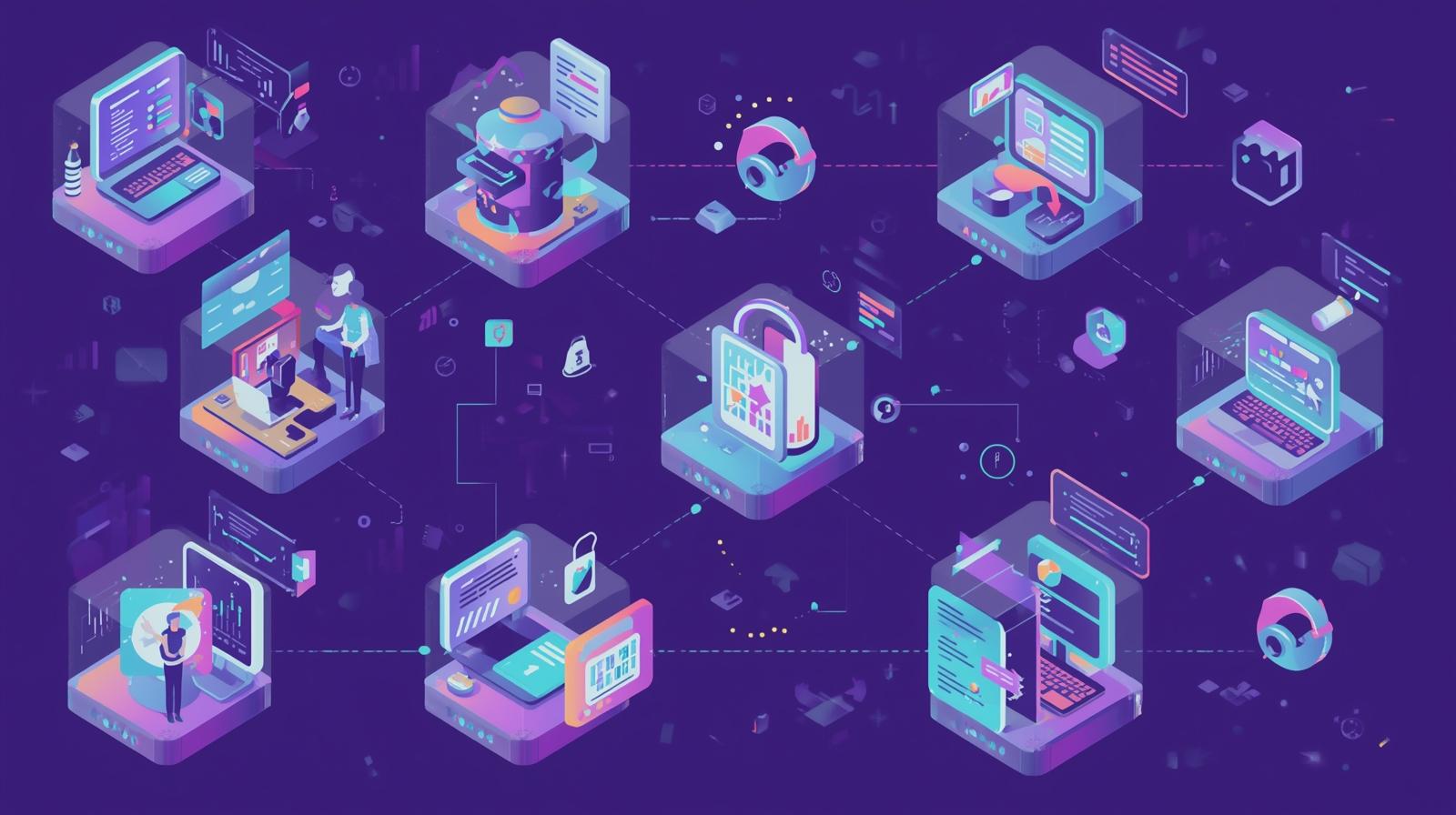
Consider this scenario: a national youth development organization operates 3,900 local chapters across the country, each collecting data on program attendance, academic outcomes, mentorship engagement, and family support services. Individually, each chapter has enough data to understand its own community. But collectively, the network holds one of the largest privately held datasets on youth outcomes in America. If the organization could analyze that data together, it could build predictive models for youth success, identify early warning signs for disengagement, and optimize program design across vastly different communities.
The problem is straightforward but significant: centralizing this data into a single database creates massive privacy risks, violates the trust families place in their local chapter, and may breach compliance requirements under FERPA, state privacy laws, and organizational data governance policies. Each chapter serves a distinct community with its own expectations about how personal information is handled. Shipping that data to a central server, no matter how well-secured, is often neither practical nor ethical.
Federated learning offers a fundamentally different approach. Instead of moving data to the model, federated learning moves the model to the data. Each chapter trains a copy of the AI model on its own local data, and only the resulting model improvements (mathematical parameters, not raw data) are shared back to a central coordinator. The coordinator combines improvements from all sites to create a better global model, which is then redistributed to each chapter. Over multiple rounds, every site benefits from the collective intelligence of the entire network without any single site ever exposing its raw data.
This approach is no longer theoretical. Healthcare systems have used federated learning across 71 hospital sites on six continents to improve brain tumor detection. Google and Apple use it to improve keyboard predictions without accessing user data. And the federated learning market is projected to grow from $100 million in 2025 to nearly $5 billion by 2030, reflecting rapid mainstream adoption. For multi-site nonprofits, the timing is right to understand what federated learning is, when it applies, and how to begin exploring it as a privacy-preserving AI strategy.
How Federated Learning Works
The core principle of federated learning is simple: rather than collecting all data in one place to train a model, you distribute the training process across multiple locations. Each location trains the model using its own data, and only the learned patterns (expressed as mathematical weights and gradients) are shared. The raw data, the individual records of clients, donors, students, or beneficiaries, never leaves its home location.
Step 1: Model Distribution
A central coordination server initializes a global AI model and distributes identical copies to each participating site. For a federated nonprofit, this might mean sending the model to each chapter's local server or designated computer. The model arrives as a set of mathematical parameters, essentially a blank slate ready to learn from local data.
Step 2: Local Training
Each site trains the model on its own data. A youth services chapter in Atlanta might train on local attendance patterns, while a chapter in Minneapolis trains on outcomes data from its own community. The training happens entirely on each site's infrastructure. No data is uploaded, transmitted, or shared with any other party during this phase.
Step 3: Update Aggregation
Each site sends only its model updates (the changes to the mathematical parameters) back to the central coordinator. The coordinator combines updates from all sites using an aggregation algorithm, most commonly "federated averaging," which computes a weighted average of all updates. This produces an improved global model that reflects patterns learned across the entire network.
Step 4: Iterate and Improve
The improved global model is redistributed to all sites, and the process repeats. With each round, the model gets better at recognizing patterns that span the entire network. After enough rounds, every site has access to a model informed by the collective experience of all chapters, without any chapter having seen another chapter's data.
The key insight is that model parameters, unlike raw data, do not contain directly identifiable information about individuals. A model weight that encodes "students who attend three or more sessions per week are 40% more likely to improve academically" doesn't reveal which students were tracked or where they live. When combined with additional privacy techniques like differential privacy, the risk of extracting individual information from model updates becomes negligibly small.
Why Federated Learning Fits Multi-Site Nonprofits
Federated learning is not just a technical solution. It is an organizational model that mirrors how federated nonprofits already operate. National organizations like Habitat for Humanity, United Way, Junior League, the Red Cross, and Boys & Girls Clubs of America all share a common structure: a national office provides strategy, branding, and shared resources while local chapters operate independently, serving their own communities with significant autonomy. Data flows naturally in this same pattern, staying local while insights benefit the whole network.
Respects Local Autonomy
In federated nonprofit structures, the national office's power to enforce decisions on local chapters is often limited. Chapters maintain independence over their operations, budgets, and community relationships. Federated learning respects this by allowing each chapter to retain complete ownership and control of its data. No central mandate forces data centralization, and each site can choose to participate or withdraw at any time.
Enables Cross-Chapter Learning
Federated nonprofits already foster pipelines of knowledge and innovation, sharing best practices and emerging strategies through conferences, newsletters, and peer learning networks. Federated learning extends this model to data-driven insights. A model trained across hundreds of chapters can identify patterns invisible to any single location, such as which program modifications work best for different demographic groups or which volunteer engagement strategies reduce turnover.
Simplifies Compliance
When data stays local, each site manages its own compliance obligations under HIPAA, FERPA, state privacy laws, and organizational policies. There is no need to navigate the complexities of cross-jurisdictional data transfer, negotiate data sharing agreements between chapters, or build a central repository that becomes a high-value target for data breaches. Each site's existing data governance practices remain intact.
Distributes Costs
Building and maintaining a centralized data warehouse for hundreds of chapters is expensive. Federated learning distributes compute costs across the network, with each site contributing its own processing power. The national office coordinates the model aggregation, which requires far less infrastructure than storing and processing all raw data centrally. Cloud-based federated learning infrastructure can cost as little as $6 per hour for global deployments.
The alignment between federated learning's technical architecture and federated nonprofits' organizational architecture is not a coincidence. Both are built on the same principle: local entities contribute to a shared outcome while maintaining independence. This makes federated learning a natural fit for organizations that have struggled to build centralized data infrastructure because of the governance, privacy, and logistical challenges that centralization entails.
Practical Applications for Nonprofits
While federated learning has been most widely deployed in healthcare, its applications extend to virtually any domain where multiple organizations or locations collect similar data. For nonprofits, several high-value use cases stand out, each addressing a real organizational need while preserving privacy across the network.
Program Outcome Prediction
Build models that predict which interventions lead to the best outcomes
A network of after-school programs could collaboratively train a model that predicts which program elements (mentoring frequency, academic support type, family engagement level) correlate with improved student outcomes. Each site contributes its local outcome data to improve the model, but no site shares individual student records. The resulting model helps every chapter make better program design decisions informed by the entire network's experience.
- Identify early warning signs for program disengagement across diverse populations
- Compare intervention effectiveness across urban, suburban, and rural contexts
- Build robust models that perform well for underrepresented communities
Donor Retention Analysis
Predict and prevent donor attrition across the network
Federated nonprofits often have both local and national donor bases. A federated learning approach could train a donor retention model across all chapters without any chapter revealing its donor lists, giving amounts, or engagement histories. The model learns patterns like "donors who attend one event per quarter and receive monthly updates are 60% less likely to lapse," benefiting every chapter's fundraising strategy.
- Train retention-risk scoring models on network-wide patterns
- Identify re-engagement strategies that work across different chapter sizes
- Protect donor privacy while enabling collaborative fundraising intelligence
Service Demand Forecasting
Anticipate community needs before they become crises
Food banks, housing services, and crisis intervention organizations serve communities with fluctuating needs. A federated model trained across multiple sites could forecast demand patterns by correlating factors like seasonal trends, economic indicators, and community demographics. This helps individual sites prepare for surges without sharing sensitive information about who is seeking services.
- Forecast seasonal demand patterns using cross-site data
- Optimize resource allocation and staffing across locations
- Detect emerging community needs earlier by analyzing network-wide signals
Healthcare and Social Service AI
Build clinical and service models across health-focused nonprofits
Healthcare nonprofits, community health centers, and social service organizations face some of the strictest data privacy requirements. Federated learning has already proven itself in hospital settings, with deployments across 71 sites for brain tumor segmentation and multiple NHS trusts for stroke diagnosis. Nonprofit health networks can follow this model to build AI tools for patient intake optimization, care coordination, and outcome prediction without centralizing protected health information.
- Maintain HIPAA compliance while enabling cross-site learning
- Improve diagnostic and triage models with diverse patient populations
- Enable smaller clinics to benefit from models trained on larger network data
Privacy Protections: Layered Defense for Sensitive Data
Federated learning's primary privacy benefit is straightforward: raw data never leaves its source. But researchers have shown that model updates themselves can sometimes leak information about the training data through sophisticated attacks called model inversion or gradient inference. For nonprofits handling highly sensitive information, federated learning should be combined with additional privacy-preserving techniques to create layered protection.
Differential Privacy
Differential privacy adds carefully calibrated mathematical noise to model updates before they leave each site. This noise makes it mathematically provable that no individual record can be identified from the shared updates. The privacy-utility tradeoff means more noise provides stronger privacy but slightly reduces model accuracy. For most nonprofit applications, the accuracy reduction is negligible while the privacy guarantee is substantial.
Best for: Organizations with regulatory obligations (HIPAA, FERPA) that need formal, provable privacy guarantees.
Secure Aggregation
Secure aggregation uses cryptographic techniques to ensure that the central coordinator can only see the combined result of all updates, not individual site contributions. Even if the central server is compromised, an attacker cannot isolate any single chapter's model updates. This protects against both external breaches and internal misuse by the coordinating organization.
Best for: Networks where chapters want protection from the national office seeing their individual contributions.
Homomorphic Encryption
Homomorphic encryption allows the central server to perform mathematical operations on encrypted model updates without ever decrypting them. The aggregation happens entirely on encrypted data, and only the final result is decrypted. This provides the strongest possible protection but comes with significant computational overhead, making it better suited for smaller networks or less frequent training rounds.
Best for: Healthcare nonprofits or organizations handling the most sensitive data classifications.
Anomaly Detection
Newer federated learning algorithms include server-side validation that identifies and down-weights anomalous model updates before aggregation. The FEDMWAD algorithm, introduced in 2025, uses the Mahalanobis distance to detect updates that deviate significantly from expected patterns. This protects against both malicious participants (poisoning attacks) and sites with corrupted or poorly formatted data that could degrade the global model.
Best for: Large networks where not all participants can be fully vetted or trusted.
The emerging best practice is to combine federated learning with differential privacy as a baseline, adding secure aggregation or encryption as the sensitivity of the data warrants. This layered approach provides defense in depth, ensuring that even if one protection is compromised, others remain in place. For nonprofits already implementing data privacy risk assessments, federated learning with layered protections represents a significant upgrade in privacy posture.
Open-Source Frameworks: Getting Started Without Enterprise Budgets
One of the most encouraging developments in federated learning is the availability of mature, well-documented open-source frameworks. Nonprofits do not need to build federated learning systems from scratch or purchase expensive enterprise platforms. Several free tools provide everything needed to run pilot projects and, for some organizations, production deployments. Here are the most relevant options for nonprofit organizations.
Flower (Recommended Starting Point)
Framework-agnostic, beginner-friendly, Python-first
Flower scored 84.75% in comprehensive framework evaluations, outperforming all other open-source federated learning tools. It works with PyTorch, TensorFlow, scikit-learn, Hugging Face Transformers, and many other popular machine learning libraries. Flower's tutorials start from absolute zero, assuming no prior federated learning experience, and its Python-first approach makes it accessible to anyone with basic programming skills. For nonprofits with even a single developer or data-literate staff member, Flower is the recommended entry point.
- Works with virtually any existing machine learning workflow
- Extensive documentation with step-by-step beginner tutorials
- Built-in support for differential privacy and secure aggregation
- Active community with example projects and research baselines
NVIDIA FLARE
Enterprise-grade, healthcare-focused, production-ready
NVIDIA FLARE powers some of the most significant real-world federated learning deployments, including the FLIP project across NHS trusts in the UK, brain aneurysm diagnosis at Massachusetts General Hospital, and pancreatic cancer detection at the National Cancer Institute. For healthcare nonprofits or organizations with access to NVIDIA GPUs, FLARE provides battle-tested production infrastructure. Its strong healthcare track record makes it particularly relevant for health-focused federated nonprofits.
- Proven deployments across major hospital systems and research institutions
- Deep integration with NVIDIA GPU ecosystem for high-performance computing
- Enterprise security features suitable for regulated environments
PySyft (OpenMined)
Privacy-first design with encryption and anonymization
Developed by OpenMined, a nonprofit organization dedicated to making privacy-preserving AI accessible, PySyft prioritizes data privacy using anonymization, encryption, and differential privacy techniques. While currently best suited for research and pilot projects rather than production deployments, PySyft's mission alignment with nonprofit values and its focus on making privacy technology accessible to non-experts make it worth watching as the platform matures.
- Built by a nonprofit, for privacy-preserving applications
- Strong focus on making advanced privacy techniques accessible
- Good for exploratory projects and privacy research collaborations
OpenFL (The Linux Foundation)
Healthcare-specific, powering the world's largest federated tumor study
Originally developed by Intel, OpenFL now lives under The Linux Foundation and powers the Federated Tumor Segmentation (FeTS) initiative, which trained brain tumor models across 71 sites on six continents. For health-focused nonprofits considering federated learning for medical imaging or clinical data analysis, OpenFL offers a specialized platform with a proven track record in exactly these applications.
- Proven at scale: 71 sites across 6 continents for medical imaging
- Backed by The Linux Foundation for long-term sustainability
- Designed specifically for healthcare collaboration workflows
Challenges and Honest Limitations
Federated learning is a powerful tool, but it is not a simple plug-and-play solution, especially for organizations without deep technical expertise. Understanding the real challenges helps nonprofits set realistic expectations and plan appropriately. Being transparent about limitations is essential to avoiding the AI hype cycle and making informed decisions about whether federated learning fits your organization's current capacity.
Technical Expertise Requirements
Federated learning requires machine learning knowledge beyond what most nonprofit staff possess. Setting up a federated learning pipeline, even with beginner-friendly frameworks like Flower, requires someone who can write Python code, understand data preprocessing, configure network connections between sites, and troubleshoot model training issues. This is a significant barrier for organizations that already struggle with technical capacity.
Mitigation: Partner with universities, pro bono tech volunteers, or academic research institutions that are actively looking for real-world federated learning projects. Many computer science departments welcome nonprofit partners.
Data Heterogeneity Across Sites
Different chapters may collect data in different formats, use different field names, or have vastly different data volumes. An urban chapter serving 5,000 clients per year will have very different data distributions than a rural chapter serving 200. This "non-IID" (non-independently and identically distributed) data is one of federated learning's core technical challenges, as models can struggle to converge when training data varies dramatically across sites.
Mitigation: Invest in data standardization before starting federated learning. Agreeing on common data schemas, field definitions, and collection practices across chapters is a prerequisite that also benefits many other organizational goals.
Infrastructure Disparities
Not all chapters have the same computing hardware, internet connectivity, or IT support. A well-funded urban chapter might have modern servers and reliable broadband, while a rural chapter might rely on consumer-grade laptops and intermittent connectivity. Federated learning requires each site to perform local model training, which demands adequate computing power, and to communicate updates back to the coordinator, which requires reliable network access.
Mitigation: Start with sites that have adequate infrastructure, and consider cloud-based training where sites upload data to a secure, isolated cloud environment for local training rather than using on-premise hardware. This adds cost but reduces infrastructure barriers.
Governance and Participation
Getting all chapters to participate voluntarily requires cultural and organizational groundwork. Each chapter needs to understand the benefits, trust the privacy protections, and commit staff time to supporting the technical setup. In federated nonprofit structures where the national office cannot mandate participation, building buy-in is a significant effort that should not be underestimated.
Mitigation: Frame federated learning as an extension of existing knowledge-sharing practices. Demonstrate value with a small pilot before expanding, and ensure chapters see direct benefits (improved local models) from their participation.
It is also worth noting that only about 5% of federated learning research has translated to real-world deployment so far. The technology is still maturing, and nonprofits adopting it now are early movers. This brings both opportunity (thought leadership, first-mover advantages in building collaborative models) and risk (encountering bugs, limited vendor support, and evolving best practices). A measured, pilot-based approach is strongly recommended.
How Federated Learning Compares to Other Privacy Approaches
Federated learning is one of several privacy-preserving technologies available to nonprofits. Understanding how it compares to alternatives helps organizations choose the right approach for their specific situation. In practice, the best results often come from combining multiple techniques.
Federated Learning vs. Centralized Data with Encryption
Traditional approaches collect all data in a central, encrypted database. While encryption protects data at rest and in transit, the data must be decrypted for processing, creating a window of vulnerability. A single breach of the central system exposes everything. Federated learning eliminates the central data store entirely, so there is no single point of failure to breach. However, centralized approaches are simpler to implement and may be sufficient for organizations that already have strong security practices and legal frameworks for data sharing.
Federated Learning vs. Synthetic Data
Synthetic data generation creates artificial datasets that mimic the statistical properties of real data, which can then be freely shared. This is excellent for testing, development, and certain analytics tasks. However, synthetic data may not capture all the nuances of real-world data, and the generation process itself requires access to the original sensitive data. Federated learning works with real data at each site, producing more accurate models, while still preventing data centralization.
Federated Learning vs. Local AI Only
Running AI models locally at each site provides excellent privacy but limits each site to learning only from its own data. A chapter with 200 clients trains on 200 records, period. Federated learning enables that same chapter to benefit from a model trained on the collective data of hundreds of chapters, potentially millions of records, while maintaining the same privacy guarantees as running locally. The result is dramatically more accurate and generalizable models.
The Combined Approach
The most effective privacy strategy combines multiple techniques. Federated learning keeps data local. Differential privacy adds noise to model updates for provable guarantees. Secure aggregation prevents the coordinator from seeing individual site contributions. Synthetic data can supplement training at sites with limited data. This layered approach, sometimes called "defense in depth," provides the strongest protection while maximizing model quality. Research shows that combining differential privacy with federated learning may even outperform either approach alone in certain settings.
Practical Steps to Get Started
Implementing federated learning at a multi-site nonprofit is a phased process. Rushing to deploy across the entire network without proper groundwork is a recipe for failure. The following roadmap reflects best practices from healthcare deployments and organizational change management principles, adapted for the nonprofit context.
Phase 1: Identify a High-Value Use Case (Months 1-2)
Start by identifying one specific question that your network cannot answer well with individual site data but could answer with collaborative learning. Good starting use cases have clear success metrics, use data that multiple sites already collect, and would provide direct value back to participating chapters.
- Choose a use case where the benefit of cross-site learning is obvious (e.g., outcome prediction)
- Ensure the relevant data already exists at multiple sites in reasonably similar formats
- Define clear success criteria before starting (e.g., "model accuracy improves by 15% compared to single-site training")
Phase 2: Recruit Pilot Partners (Months 2-3)
Select 3 to 5 chapters that are willing to participate in a pilot. Choose sites with adequate technical infrastructure, staff capacity, and leadership buy-in. Include diversity in your pilot, with sites that vary in size, geography, and demographics served, to ensure the model works across different contexts.
- Prioritize chapters with engaged leadership and existing data literacy
- Include at least one smaller site and one larger site to test heterogeneity
- Establish a governance agreement covering data ownership, model ownership, and participation terms
Phase 3: Standardize and Prepare Data (Months 3-5)
Harmonize data formats across pilot sites. This means agreeing on common field definitions, data types, and quality standards. This phase often takes longer than expected and is the most important step for success. A model trained on inconsistent data will produce unreliable results regardless of how sophisticated the federated learning infrastructure is.
- Create a shared data dictionary with standardized field names and value ranges
- Implement data quality checks that run at each site before training begins
- Document data governance processes so each site knows its responsibilities
Phase 4: Run the Pilot (Months 5-8)
Deploy the Flower framework (or your chosen tool) across pilot sites. Start with a simple model and limited feature set. Run multiple training rounds, monitoring model performance, communication overhead, and participant experience. Compare the federated model's performance against each site's local-only model to quantify the benefit of collaboration.
- Track both global model metrics and per-site performance to ensure fairness
- Document technical issues, governance questions, and participant feedback
- Plan for at least 3-6 months of pilot operation before evaluating results
Phase 5: Evaluate and Scale (Months 8-12+)
Assess pilot results against your predefined success criteria. If the federated model outperforms single-site models and participants report a positive experience, develop a plan for expanding to additional chapters. Scaling should be gradual, onboarding new sites in waves rather than all at once, to manage data standardization, technical support, and governance complexity.
- Share pilot results with the broader network to build momentum for expansion
- Create onboarding materials and technical guides based on pilot lessons learned
- Consider partnering with a university or research group for ongoing technical support
Cost Considerations for Nonprofits
Cost is always a critical factor for nonprofit technology decisions. Federated learning has a mixed cost profile: the software is free, but the human expertise and coordination effort represent real expenses. Understanding the full cost picture helps organizations justify the investment and plan budgets realistically.
Cost Advantages
- Free software: All major frameworks (Flower, OpenFL, PySyft) are open-source with no licensing fees
- Distributed compute: Each site uses its own hardware, spreading infrastructure costs across the network
- No central data warehouse: Eliminates the cost of building and maintaining centralized storage
- Reduced compliance costs: Keeping data local simplifies regulatory obligations
- Affordable cloud coordination: Research shows global FL infrastructure can be deployed for approximately $6 per hour
Cost Challenges
- Technical expertise: The biggest cost, hiring or contracting data scientists who understand both ML and federated learning
- Data standardization: Harmonizing data across sites requires staff time at both the national and chapter level
- Infrastructure upgrades: Some sites may need hardware improvements to participate in local training
- Governance development: Creating participation agreements and model ownership policies requires legal and administrative resources
- Ongoing coordination: Managing model updates, monitoring performance, and supporting sites requires sustained effort
For organizations considering the investment, cost-aware scheduling algorithms developed in 2025 can reduce cloud computing costs for federated learning by up to 70%. And as the technology matures and more cloud providers offer federated-learning-as-a-service options, costs will continue to decrease. The most practical approach for most nonprofits is to start with a small pilot that leverages existing hardware and free software, proving value before committing to larger infrastructure investments.
Conclusion
Federated learning represents a genuine breakthrough for multi-site nonprofits that have long faced an impossible choice: centralize sensitive data to unlock network-wide insights, or keep data local and sacrifice the analytical power of collective learning. By moving the model to the data rather than the data to the model, federated learning dissolves this tradeoff, enabling collaborative AI that respects local autonomy, simplifies compliance, and protects the communities nonprofits serve.
The technology is no longer theoretical. With the Flower framework scoring over 84% in comprehensive evaluations, healthcare systems deploying federated learning across dozens of hospital sites, and the market projected to grow to nearly $5 billion by 2030, the infrastructure for privacy-preserving collaborative AI is maturing rapidly. For federated nonprofits, the organizational structure is already in place. What remains is building the technical capacity and governance frameworks to put these tools to work.
Start with a clear, high-value use case where cross-site learning would provide obvious benefits. Recruit 3 to 5 pilot chapters with adequate infrastructure and willing leadership. Invest in data standardization as the foundational step. Use Flower as the entry point for its beginner-friendly design and extensive documentation. Layer in differential privacy from the beginning to establish strong privacy guarantees. And approach the entire effort as a learning process, documenting challenges and successes to build the organizational knowledge needed for eventual network-wide deployment.
The organizations that begin exploring federated learning now will be best positioned to leverage it as the technology matures. In a sector where protecting client privacy is not just a compliance requirement but a fundamental ethical commitment, federated learning offers something rare: a way to do more with data while actually strengthening privacy protections. For multi-site nonprofits ready to take the next step in their AI journey, it is an approach worth serious consideration.
Ready to Explore Federated Learning for Your Network?
Our team helps multi-site nonprofits evaluate federated learning opportunities, design pilot programs, and build the governance frameworks needed for privacy-preserving AI collaboration. Whether you are a national office exploring options or a chapter network looking to unlock collective insights, we can help you take the first step.