
Moving from Fragmented Systems to a Single Source of Truth with AI
Most nonprofits operate with data scattered across multiple disconnected systems, requiring manual workarounds that drain time and create errors. The shift to a unified single source of truth, powered by AI-enabled platforms, represents one of the most impactful technology transformations organizations can make—consolidating fragmented data into coherent intelligence that drives better decisions and operational efficiency.
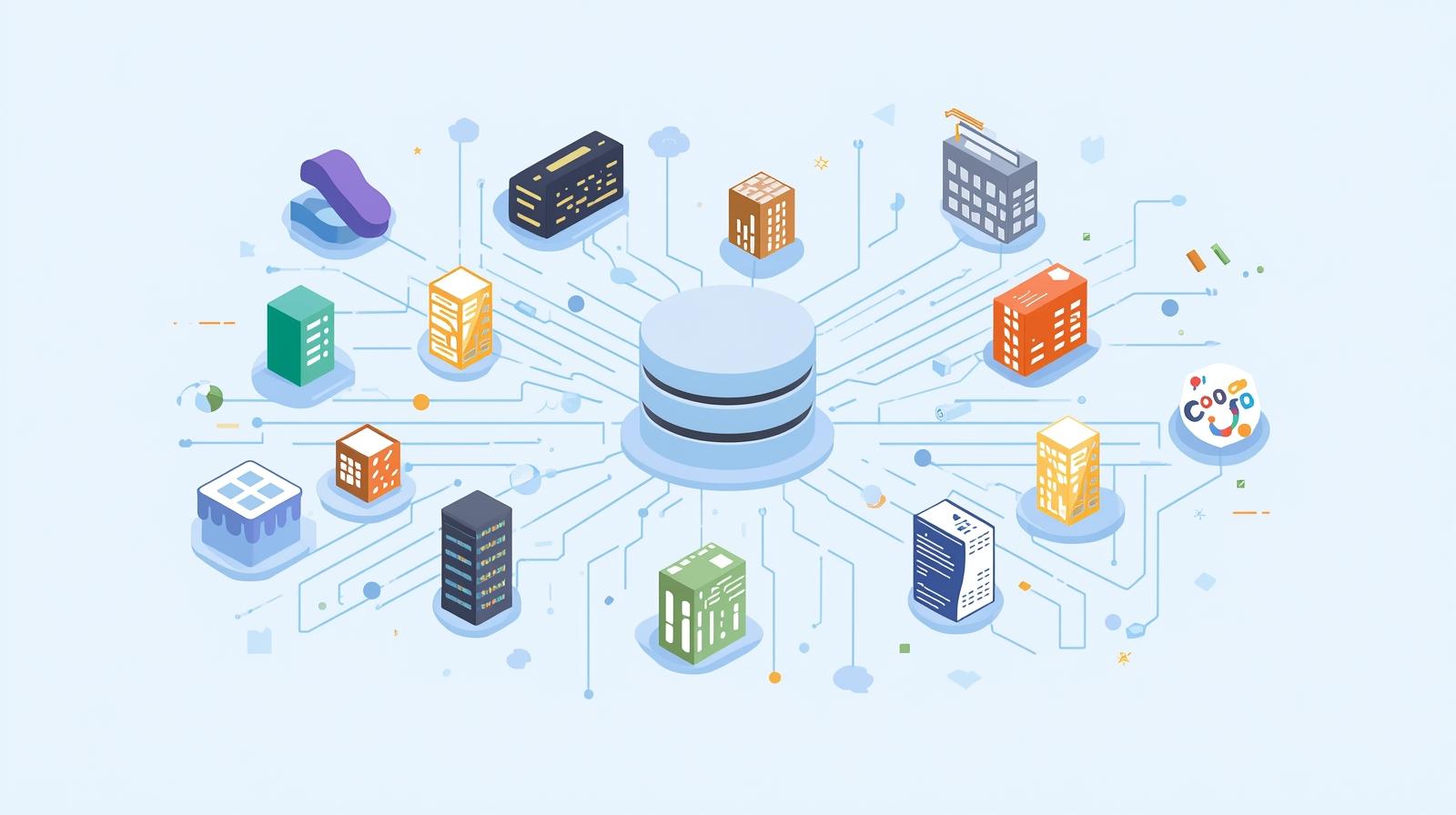
Your development director opens three different systems to understand one donor's complete history: the CRM for contact information and giving records, the email platform for communication history, and the event management tool for attendance data. Meanwhile, your program manager manually copies participant information from intake forms into the case management system, then again into reporting spreadsheets because the systems don't communicate. Your finance team reconciles data across accounting software, the donation platform, and grant management tools, discovering discrepancies that require hours of investigation.
This fragmentation isn't unusual—it's the norm for most nonprofits. Research shows that nonprofit teams spend too much time moving data between 3 to 10 disconnected platforms, repeating tasks and struggling to piece together complete pictures of the people and programs they serve. The inefficiency is obvious, but the hidden costs run deeper: incomplete information leads to poor decisions, data quality degrades with each manual transfer, and staff burnout accelerates when technology creates work instead of reducing it.
The solution—a single source of truth (SSOT) where all organizational data lives in one unified system—has long been aspirational for resource-constrained nonprofits. Traditional integration projects were expensive, technically complex, and often failed to deliver on their promises. However, the emergence of AI-enabled platforms and modern integration technologies is fundamentally changing this calculus. The 2026 Membership Performance Benchmark Report reveals that fragmented data creates inefficiencies and poor experiences, and organizations are increasingly prioritizing consolidation as achievable rather than aspirational.
This article explores how nonprofits can move from fragmented systems to a unified single source of truth using modern AI-powered approaches. We'll examine why fragmentation persists despite its obvious costs, what a single source of truth actually means in practice, which consolidation strategies fit different organizational contexts, how AI changes the integration equation, and what practical steps organizations can take to begin this transformation. The goal isn't theoretical perfection but rather actionable guidance for organizations ready to stop accepting fragmentation as inevitable.
Understanding the Real Cost of Data Fragmentation
Data fragmentation imposes both visible and hidden costs on nonprofit operations. The visible costs are obvious: staff time spent manually moving information between systems, duplicate data entry across platforms, and the direct inefficiency of checking multiple sources to answer simple questions. Research indicates that 97% of nonprofit professionals express interest in learning how to use data more effectively, yet only 5% report using data in every decision they make—a gap largely attributable to the friction fragmentation creates.
Decision Quality Degradation
The hidden costs often matter more than the visible ones. When data lives in separate systems, decision-makers rarely have complete information. A fundraising strategy meeting discusses donor retention without full visibility into program participation patterns that predict disengagement. Program planning occurs without complete understanding of which funding sources support which activities. Board presentations rely on data aggregated manually from multiple sources, raising questions about accuracy that undermine confidence. Data silos cause decreased mission impact when organizational time and energy is spent decoding incomplete, dirty data rather than using information to drive strategy.
This information incompleteness creates a systematic bias toward decisions based on whatever data is most accessible rather than most relevant. Teams default to analyzing what their primary system contains, missing insights from other sources because gathering that information requires too much effort. Over time, this shapes organizational strategy around data availability rather than strategic priorities—a subtle but profound distortion of how resources get allocated and programs evolve.
Data Quality Erosion
Each manual data transfer introduces error risk. Staff members transcribe information incorrectly, interpret fields differently, or skip data that doesn't obviously matter in the moment. Duplicate records proliferate because different systems lack unique identifiers that would prevent them. Inconsistent formatting—names, addresses, phone numbers entered differently across platforms—makes it impossible to reliably match records even when attempting consolidation later. These quality problems compound over time, creating datasets that become progressively less trustworthy.
The erosion extends beyond simple errors. When the same information exists in multiple places, updates to one system often don't propagate to others. A donor changes their address in the CRM but the event system still has the old one. A participant's contact information updates in the case management tool but the email platform uses outdated data. This version control problem means no single system contains definitively correct information, forcing staff to verify across multiple sources or accept that some percentage of their data is wrong without knowing which portions.
Opportunity Costs and Staff Burnout
Perhaps the most significant cost is opportunity: what staff could accomplish if not consumed by manual data management. Development staff could spend time cultivating relationships instead of generating reports. Program managers could focus on participant outcomes rather than paperwork. Analysts could conduct sophisticated analyses instead of cleaning and reconciling data. The fragmentation tax on staff time is substantial, with surveys suggesting administrative burden consumes 40-60% of time that could otherwise support mission-critical activities.
This burden contributes directly to burnout. Staff members didn't enter nonprofit work to manage database reconciliation and manual data transfers—they came to advance the mission. When technology creates work instead of enabling it, frustration builds. The psychological toll of repeatedly doing tasks that feel unnecessary because "the systems should just talk to each other" erodes morale over time. Organizations lose talented staff who leave seeking environments where technology functions as a tool rather than an obstacle. For insights on addressing technology-related burnout, see our article on using AI to address the nonprofit burnout crisis.
Defining Single Source of Truth for Nonprofits
A single source of truth doesn't necessarily mean one monolithic system containing all data. Rather, it describes an architecture where each piece of information has one authoritative source, and all systems reference that source rather than maintaining their own copies. This approach ensures that all teams utilize consistent data in real-time, eliminating the version control problems that plague fragmented environments.
The Spectrum of Consolidation Approaches
Organizations can move toward SSOT through different approaches depending on their context, resources, and existing technology investments. At one end of the spectrum sits complete platform consolidation: replacing multiple specialized systems with a single comprehensive platform that handles constituent relationship management, program delivery, communications, fundraising, and reporting. At the other end lies federated integration: maintaining separate specialized systems but connecting them through integration layers that synchronize data and enable cross-system workflows.
Between these extremes exist hybrid approaches: consolidating some functions into unified platforms while integrating specialized tools that serve unique needs. For instance, an organization might adopt a comprehensive CRM that handles donors, volunteers, and basic program tracking, while maintaining specialized case management software for complex client services and integrating the two through APIs. The appropriate approach depends on factors including existing system investments, specialized functional requirements, budget constraints, and organizational change capacity.
Core Principles Regardless of Approach
Regardless of specific architecture, effective SSOT implementations share common principles. First, clear data ownership: for each data type, one system serves as the authoritative source. Contact information might live primarily in the CRM, financial data in the accounting system, and program outcomes in case management software, but each system clearly owns its domain and other systems pull from these authorities rather than maintaining independent copies.
Second, automated synchronization: when authoritative data changes, those changes propagate automatically to systems that need them. A donor address update in the CRM flows immediately to the email platform and event management tool without manual intervention. This automation eliminates the lag that creates version inconsistencies and removes the data transfer burden from staff.
Third, unified analytics and reporting: even if operational data lives in multiple systems, analytical platforms consolidate information for comprehensive reporting. Staff shouldn't need to query three systems and manually merge results to answer questions like "What's the retention rate for donors who also volunteer?" Analytics tools pull from authoritative sources and present unified views, making insights accessible without technical expertise. Modern AI capabilities dramatically enhance this analytical layer, as we'll explore in detail later.
What SSOT Is Not
Clarifying what SSOT doesn't require helps organizations avoid perfectionism that prevents progress. SSOT doesn't mean instantaneous real-time synchronization for every data point—near-real-time (updates within minutes or hours) suffices for most nonprofit needs. It doesn't mean every system contains all data—specialized tools can maintain function-specific information while sharing core data elements. It doesn't require eliminating all manual processes—some data collection and entry will always involve human judgment that can't be fully automated.
Most importantly, SSOT doesn't demand implementing everything simultaneously. Organizations can move incrementally toward unified data, starting with the most fragmented or high-value domains and progressively consolidating additional areas. The goal is directional progress toward coherence, not immediate perfection across all systems.
Strategic Consolidation Pathways
Comprehensive Platform Consolidation
Replacing Multiple Systems with Unified Platforms
This approach involves migrating from multiple specialized systems to comprehensive platforms that handle diverse functions. Platforms like Salesforce Data Cloud for Nonprofits bring together structured and unstructured data from different sources into a common model, providing complete views of stakeholders. Organizations pursuing this path typically consolidate donor management, volunteer coordination, basic program tracking, communications, and reporting into a single ecosystem.
Best suited for:
- Organizations with relatively straightforward functional needs that comprehensive platforms can meet
- Situations where existing systems are outdated, unsupported, or significantly underutilized
- Organizations with budget for platform migration and staff training on new systems
- Situations where tool sprawl has become unmanageable and staff struggle with multiple logins
Key considerations:
- Significant migration effort and temporary productivity disruption during transition
- Risk that comprehensive platforms may not match specialized tool capabilities for specific functions
- Vendor consolidation can create single-vendor dependence and reduce flexibility
Federated Integration Architecture
Connecting Specialized Systems Through Integration Layers
Federated approaches maintain specialized best-of-breed systems while connecting them through integration platforms that synchronize data and enable cross-system workflows. Integration plays a crucial role in achieving single source of truth by ensuring data flows consistently between systems while each tool continues serving its specialized function. Organizations using this approach might maintain separate CRM, case management, email marketing, and accounting systems but connect them through iPaaS (Integration Platform as a Service) tools or custom APIs.
Best suited for:
- Organizations with specialized functional requirements that comprehensive platforms can't meet
- Recent investments in quality systems that are working well in their specific domains
- Organizations with technical capacity to design, implement, and maintain integrations
- Situations where platform migration risks are unacceptably high due to complex configurations
Key considerations:
- Ongoing integration maintenance as systems update and APIs change
- Complexity in managing multiple vendor relationships and system updates
- Potential for integration failures creating temporary data inconsistencies
Data Warehouse Analytical Layer
Consolidating for Analytics While Maintaining Operational Systems
This approach acknowledges that operational systems may remain separate but creates a unified analytical layer that consolidates data for reporting and insights. Organizations extract data from multiple operational systems into a central data warehouse or modern data platform, where it's cleaned, matched, and made available for analysis. AI capabilities enhance this approach dramatically, enabling sophisticated analysis across previously siloed datasets. This provides many SSOT benefits for decision-making without requiring operational system consolidation.
Best suited for:
- Organizations where fragmentation primarily impacts analysis and reporting rather than operations
- Situations with entrenched operational systems that staff know well and replacing would be disruptive
- Organizations prioritizing data-driven decision-making and advanced analytics capabilities
- Resource constraints that make full consolidation infeasible but analytical improvements valuable
Key considerations:
- Doesn't eliminate operational inefficiencies from fragmented systems
- Data warehouse becomes another system requiring maintenance and updates
- Requires data governance processes to maintain quality in the consolidated analytical layer
Most organizations find that hybrid approaches combining elements of these pathways work best for their specific circumstances. They might consolidate core constituent relationship management while maintaining specialized case management tools and creating an analytical layer that spans both. The key is matching strategy to organizational needs, constraints, and priorities rather than pursuing theoretical purity. For strategic guidance on making these technology decisions, see our article on developing nonprofit strategic plans that incorporate AI.
How AI Transforms the Integration Equation
AI capabilities fundamentally change what's possible with data consolidation, making previously complex or impossible integrations straightforward and enabling new use cases that justify consolidation investments. Understanding how AI enhances each stage of the consolidation journey helps organizations realize value beyond simple efficiency gains.
Intelligent Data Matching and Deduplication
One of the most challenging aspects of consolidating fragmented systems involves matching records across databases that used different identifiers and formatting. The same person might appear as "Robert Smith" in one system, "Bob Smith" in another, and "R. Smith" in a third, with slightly different addresses and phone numbers in each. Traditional matching algorithms struggle with these variations, requiring extensive manual review to verify matches and merge records.
AI-powered matching uses probabilistic models that consider multiple factors simultaneously: name similarity, address proximity, phone number variations, email patterns, and behavioral indicators like donation timing or program participation. These models can confidently match records that traditional rules-based approaches would miss while flagging uncertain matches for human review. The result is dramatically faster and more accurate consolidation with fewer duplicate records surviving in the unified system. New AI capabilities enable nonprofits to quickly generate complete views of stakeholders by intelligently matching and merging data from multiple sources.
Automated Data Categorization and Enrichment
When consolidating systems with different categorization schemes, manual recategorization of thousands of records becomes prohibitively time-consuming. AI can analyze historical data patterns, understand implicit categorization rules, and automatically apply appropriate categories in the unified system. An AI model might learn that grants from certain foundations historically fell into specific program categories and automatically categorize similar grants going forward, while flagging uncertain cases for human review.
Beyond recategorization, AI can enrich consolidated data by inferring missing information based on patterns in complete records. If demographic information is missing for some program participants but present for others with similar characteristics, AI models can suggest likely values for missing fields with associated confidence levels. This doesn't replace primary data collection but fills gaps that would otherwise limit analytical capabilities. The enrichment extends to extracting structured information from unstructured sources: parsing grant requirements from proposal documents, extracting action items from meeting notes, or identifying key themes in program feedback.
Natural Language Access to Unified Data
Perhaps the most transformative AI capability is natural language querying of consolidated data. Rather than learning complex reporting tools or writing database queries, staff can ask questions in plain English: "Show me donors who gave last year but not this year and also attended events," or "What's the average time between first volunteer shift and second shift for volunteers who stay more than six months?" AI translates these questions into appropriate queries, retrieves relevant data, and presents results in understandable formats.
This democratizes data access beyond technical analysts, allowing program staff, fundraisers, and leadership to explore information directly without waiting for IT or data team support. The barrier to data-driven decision-making shifts from technical capability to asking good questions—a much more tractable challenge for organizations to address through training and cultural change. Natural language interfaces also make unified data systems more accessible during the transition period, reducing resistance from staff accustomed to simpler (if more fragmented) legacy tools.
Predictive Analytics Across Integrated Datasets
The real power of unified data emerges when AI analyzes patterns across previously siloed information. Predicting donor retention becomes dramatically more accurate when models consider not just giving history but also volunteer participation, event attendance, email engagement, and program connections. Identifying program participants at risk of dropping out improves when models incorporate attendance patterns, communication responsiveness, and service utilization across multiple programs rather than analyzing each program in isolation.
These cross-domain predictions were essentially impossible with fragmented systems because bringing the necessary data together for analysis required prohibitive manual effort. With consolidated data and AI analytical capabilities, organizations gain insights that were previously inaccessible, justifying consolidation investments through improved program outcomes and fundraising effectiveness rather than just operational efficiency. For deeper exploration of how predictive analytics enhance nonprofit decision-making, see our article on using predictive AI for donor intelligence.
Practical Implementation Roadmap
Moving from fragmented systems to unified data requires thoughtful sequencing and realistic timeframes. Organizations that succeed approach consolidation as a multi-phase journey rather than a single project, building momentum through early wins while managing risk through incremental implementation.
Phase 1: Assessment and Prioritization
Begin by mapping your current system landscape and data flows. Document which systems contain what data, how information moves between them (manually or automatically), and where the most significant pain points exist. This assessment reveals consolidation opportunities and helps prioritize which integrations or migrations would deliver the greatest value. Involve staff who actually use the systems daily—their perspective on where fragmentation hurts most often differs from leadership assumptions.
Evaluate data quality across systems before planning consolidation. Use automated tools to assess completeness, consistency, and accuracy in each database. This prevents migrating garbage into your new unified system and identifies cleanup work that should precede technical migration. Organizations often discover that 20-40% of their data requires significant cleaning, a reality that affects timeline and resource planning.
Prioritize consolidation efforts based on three factors: business value (how much efficiency or capability improvement will this deliver), technical feasibility (how difficult is this particular integration or migration), and risk (what happens if something goes wrong). Start with high-value, moderate-feasibility, lower-risk opportunities that build confidence and demonstrate results without betting the organization on a massive transformation.
Phase 2: Foundation Building
Establish data governance processes before consolidating systems. Define data ownership, standardize definitions for key fields, create processes for maintaining data quality, and establish change management procedures for system updates. These governance foundations prevent recreating fragmentation within your new unified environment. Without clear ownership and standards, even a single consolidated platform can develop internal silos as different departments use it differently.
Implement your chosen integration approach for the highest-priority use case. This might mean connecting your CRM and email platform so donor communication history is visible in one place, or integrating your case management system with your reporting database so program outcomes flow automatically into board reports. Start with one integration that will demonstrably improve daily work, proving the value of consolidation while teaching your team about the implementation process.
Build the analytical foundation even if operational systems remain fragmented initially. Set up a basic data warehouse or analytics platform that pulls from your most important systems. Create initial reports and dashboards that demonstrate the value of unified views. This quick win shows stakeholders what becomes possible with consolidated data while you work on more complex operational integrations. Many organizations find that analytical consolidation builds support for the more disruptive operational consolidation that follows.
Phase 3: Iterative Expansion
Based on lessons from initial implementations, expand consolidation incrementally. Add additional systems to your integration architecture, migrate another function to your consolidated platform, or enhance your analytical capabilities with AI features. Each iteration should deliver clear value while building organizational capability to manage increasingly complex consolidation efforts. Monitor adoption and gather feedback continuously, adjusting your approach based on what works and what doesn't in your specific organizational context.
Invest in training and change management throughout the expansion phase. Staff need ongoing support to adapt workflows around unified data systems. Create champions within each department who understand the consolidated environment deeply and can support colleagues. Document new processes and update them as systems evolve. The technical work of consolidation often proves easier than the organizational change work of helping people adopt new ways of working, so allocate time and resources accordingly.
Phase 4: Optimization and Advanced Capabilities
Once basic consolidation is complete and stable, focus on optimization and advanced capabilities that unified data enables. Implement AI-powered features like predictive analytics, automated insights, or natural language querying. Refine integrations to improve performance and reliability. Expand analytical capabilities based on questions that stakeholders want answered but couldn't address with fragmented data. This phase transforms consolidation from a technical achievement into a strategic capability that continuously generates value.
Establish continuous improvement processes that prevent regression into fragmentation. As new tools emerge and organizational needs evolve, evaluate additions through the lens of how they fit into your consolidated architecture. Resist the temptation to add point solutions that create new silos unless they offer truly unique capabilities that justify integration complexity. Maintain discipline around data governance even as the organization grows and changes. The goal is making consolidation a permanent state rather than a temporary project outcome.
Overcoming Common Implementation Barriers
Organizations pursuing consolidation encounter predictable obstacles. Understanding these barriers in advance helps you plan around them or address them proactively rather than treating them as surprises that derail implementation.
Resistance from Staff Comfortable with Current Systems
People who have mastered current tools, however fragmented, often resist changes that require learning new systems and processes. This resistance is rational—consolidation disrupts established workflows and temporarily reduces productivity during the learning curve. Address resistance through early involvement: include staff in planning and decision-making so they feel ownership of the change rather than having it imposed upon them. Demonstrate quick wins that make their work easier rather than just promising future benefits. Provide adequate training and support so people feel competent with new tools before completely removing familiar systems.
Acknowledge that some disruption is unavoidable and plan for temporary productivity decreases during transition periods. Organizations that pretend consolidation won't disrupt anything lose credibility when disruption inevitably occurs. Honest communication about challenges, combined with clear plans for addressing them, builds trust that carries through difficult transition moments.
Budget Constraints and Competing Priorities
Consolidation requires investment in new platforms, integration tools, data migration, training, and often consulting support. These costs compete with direct program funding and other pressing needs. Build the business case by quantifying current fragmentation costs: staff time spent on manual data management, errors from data quality problems, missed opportunities from incomplete information. Frame consolidation not as optional improvement but as addressing a persistent drag on organizational effectiveness that compounds over time.
Consider phased funding approaches that spread costs across multiple budget cycles rather than requiring one large upfront investment. Many integration platforms and consolidated solutions offer subscription pricing that avoids large capital expenditures. Look for nonprofit-specific pricing, donated software, or discounted implementation support that reduces total cost. The 2026 fundraising trends indicate that integrated systems matter more than adding new tools, suggesting that consolidation may be one of the highest-ROI technology investments organizations can make.
Technical Complexity and Vendor Dependencies
Organizations with limited technical capacity worry about whether they can successfully implement and maintain consolidated systems. This concern is valid—poorly executed consolidation can create worse problems than fragmentation. Address this by right-sizing ambition to your technical capacity: choose platforms appropriate for your support capabilities, prioritize solutions with strong vendor support and active user communities, and consider managed service providers for complex integrations if in-house expertise is limited.
Vendor dependency also concerns organizations that have experienced poor vendor relationships or fear lock-in. Mitigate this through thoughtful contracting that includes service level agreements, clearly defined support expectations, and reasonable exit clauses. Prioritize platforms with healthy ecosystems of implementation partners so you're not dependent on a single vendor for support. Choose solutions with standard data export capabilities so migration to alternatives remains feasible if relationships sour or better options emerge.
Data Security and Privacy Considerations
Consolidating data into fewer systems potentially reduces security surface area but also creates single targets containing all organizational information. This especially concerns nonprofits handling sensitive client data, health information, or other confidential details. Address security concerns through rigorous vendor vetting that examines security certifications, data encryption practices, access controls, and breach response procedures. Implement role-based access within consolidated systems so staff only see data relevant to their functions rather than exposing everything to everyone.
Consider data residency requirements if serving international populations or operating under specific regulatory frameworks. Some consolidated platforms offer regional data hosting or private cloud deployments that address these concerns. Work with legal and compliance advisors to ensure consolidation approaches meet relevant requirements including GDPR, HIPAA, FERPA, or other applicable regulations. Security shouldn't block consolidation, but it should inform implementation decisions and governance structures.
Measuring Success and Iterating
Consolidation success requires clear metrics that track both technical implementation and organizational impact. Establish baseline measurements before beginning consolidation so you can demonstrate improvements objectively rather than relying on subjective assessments of whether things feel better.
Technical Success Metrics
Technical metrics measure whether consolidation is working from a systems perspective. Track the number of manual data transfers eliminated through automation. Monitor data quality metrics including duplicate rate, missing data percentage, and data inconsistency frequency. Measure integration reliability through uptime statistics and error rates. Document the number of logins staff need to accomplish common tasks. These objective measures demonstrate whether technical implementation is achieving intended goals.
System performance metrics also matter: how long do reports take to generate? How quickly can staff find information they need? What percentage of queries can people answer without technical support? These performance indicators affect adoption and determine whether consolidation delivers practical benefits beyond theoretical architectural improvements.
Organizational Impact Metrics
The ultimate success measures involve organizational outcomes rather than technical achievements. Quantify time savings by comparing how long common tasks took before and after consolidation. Measure staff satisfaction through surveys that assess whether people find the consolidated environment easier to work with. Track decision quality by examining whether leadership uses data more frequently in strategic discussions. Monitor error rates in external communications or reports that result from data problems.
Consider program outcomes and fundraising metrics that might improve with better data: has donor retention improved? Are programs identifying at-risk participants earlier? Is cross-functional collaboration smoother? These higher-level impacts take longer to manifest but ultimately justify consolidation investments by demonstrating mission advancement rather than just operational efficiency.
Continuous Improvement Processes
Treat consolidation as an ongoing journey rather than a completed project. Establish regular reviews where stakeholders assess what's working well and what needs improvement. Gather feedback systematically from staff at all levels about pain points that remain. Track new feature requests and prioritize enhancements based on organizational value. Monitor the external technology landscape for new capabilities that could further improve your consolidated environment.
Create mechanisms for rapid response when problems emerge. Consolidated systems that break can impact more functions than fragmented ones, so reliable support becomes critical. Establish clear escalation paths for technical issues, maintain documentation that helps troubleshoot common problems, and ensure backup processes exist for critical functions if primary systems experience outages. This operational discipline keeps consolidation sustainable over time rather than gradually degrading back toward fragmentation.
Conclusion
Data fragmentation represents one of the most persistent challenges in nonprofit technology, imposing costs that compound over time while limiting what organizations can accomplish with the information they collect. The shift to unified single source of truth architectures, enabled by modern AI-powered platforms and integration technologies, offers a path forward that was previously accessible only to large, well-resourced organizations. Today, nonprofits of all sizes can pursue consolidation strategies appropriate to their contexts and constraints.
Success requires matching consolidation approaches to organizational needs rather than pursuing theoretical perfection. Whether through comprehensive platform consolidation, federated integration, analytical data warehousing, or hybrid combinations of these approaches, the goal is directional progress toward coherent data architecture. AI capabilities transform what's possible at each stage, making previously complex consolidation efforts more feasible while enabling new analytical capabilities that justify investment through improved decision-making and operational effectiveness.
The path forward begins with honest assessment of current fragmentation costs, clear prioritization of highest-value consolidation opportunities, and incremental implementation that builds capability while managing risk. Organizations that succeed treat consolidation as an ongoing journey rather than a single project, establishing governance structures and continuous improvement processes that prevent regression into fragmentation as needs evolve and new tools emerge.
For nonprofits willing to invest in this transformation, the return extends beyond operational efficiency to fundamentally enhanced organizational capacity for data-driven decision-making and mission advancement. The technology barriers that once made consolidation prohibitively complex have fallen. The remaining barriers—organizational change, resource allocation, and strategic commitment—are surmountable for organizations that recognize unified data as strategic infrastructure rather than optional improvement. The question is whether your nonprofit will continue accepting fragmentation as inevitable or commit to the consolidation journey that unlocks your data's full potential. For guidance on developing comprehensive technology strategies that incorporate data consolidation, explore our article on building strategic plans for AI implementation.
Ready to Consolidate Your Fragmented Systems?
One Hundred Nights helps nonprofits develop data consolidation strategies that match organizational needs and constraints. We'll assess your current landscape, recommend appropriate approaches, and support implementation that delivers measurable results.