
The Future of Civic Connection: How AI Is Changing Public Engagement
As communities become more diverse and digitally connected, traditional methods of public engagement are struggling to keep pace. AI is emerging as a powerful tool to bridge gaps, amplify voices, and create more inclusive, responsive civic participation.
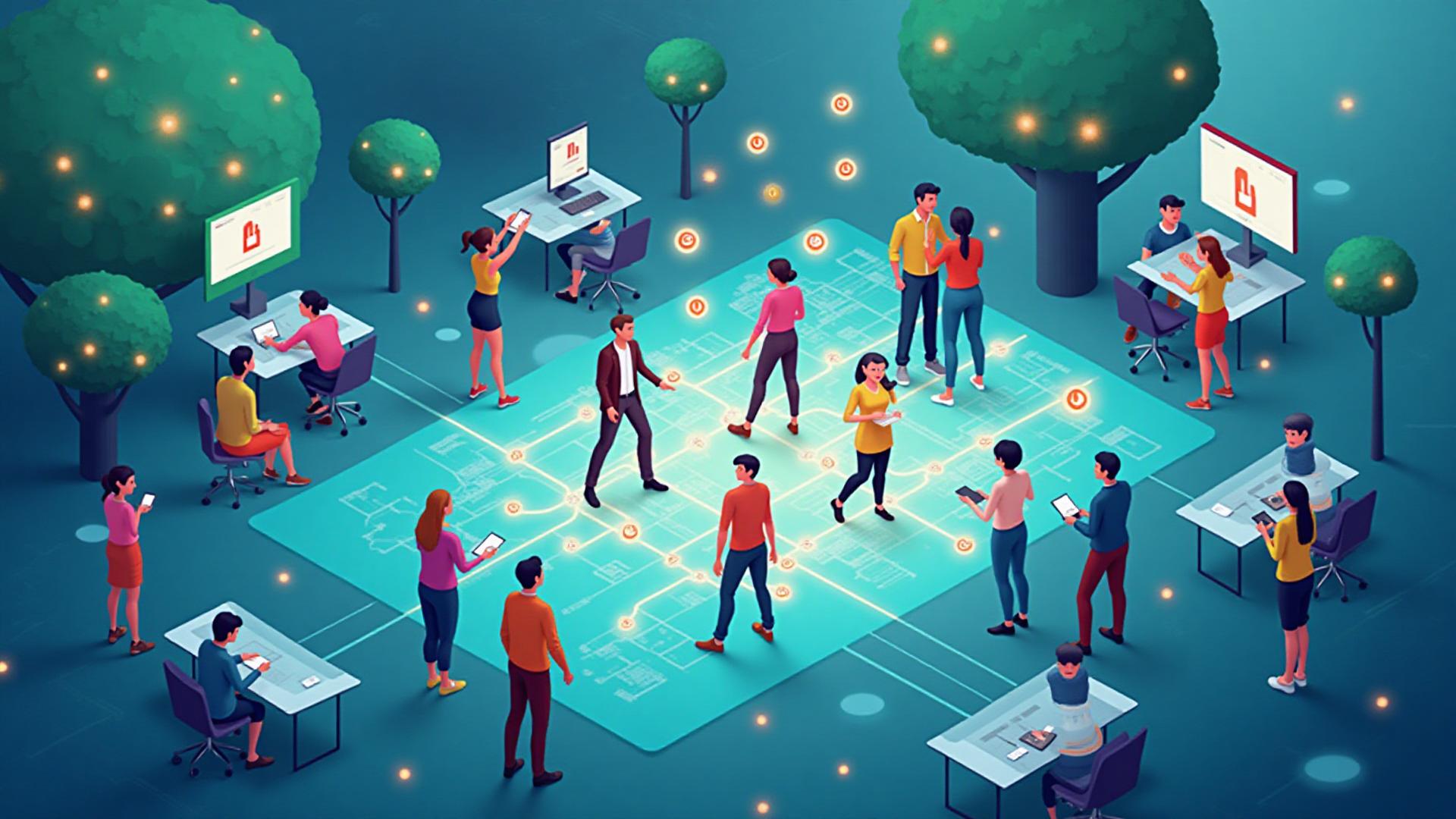
The relationship between organizations and the communities they serve is fundamentally changing. Nonprofits, government agencies, and civic organizations are discovering that AI can help them listen better, respond faster, and engage more meaningfully with diverse populations. This isn't about replacing human connection—it's about amplifying it.
From town halls that struggle to attract diverse participation to nonprofits that want to understand community needs at scale, the challenge is clear: how do we create genuine civic connection in an era of information overload and competing priorities? AI offers new pathways forward.
The Engagement Gap
Traditional public engagement methods face significant limitations. Town halls often attract the same voices—typically older, more affluent, and more comfortable with formal public speaking. Online surveys reach only those who are already engaged. Social media discussions can become echo chambers. The result? Organizations make decisions based on incomplete information, missing the perspectives of those most affected by their work.
For nonprofits, this gap is particularly problematic. Understanding community needs is essential for effective program design, but traditional methods of community input are time-consuming and often fail to reach marginalized populations. When engagement is limited, programs may miss their mark, resources are misallocated, and trust erodes.
Government agencies face similar challenges. Public comment periods, community meetings, and citizen advisory boards are valuable but limited in reach. They often fail to capture the full diversity of community perspectives, leading to policies and programs that don't fully address community needs.
AI-Powered Listening and Analysis
One of AI's most powerful applications in civic engagement is its ability to analyze vast amounts of unstructured feedback. Natural language processing can:
- Analyze public comments at scale: Process thousands of comments from public forums, social media, and surveys to identify common themes, concerns, and priorities
- Detect sentiment and urgency: Understand not just what people are saying, but how they feel about it—identifying issues that require immediate attention
- Identify underrepresented voices: Flag when certain demographics or perspectives are missing from the conversation, helping organizations proactively reach out
- Translate and analyze multilingual feedback: Process input in multiple languages, ensuring language barriers don't silence community voices
- Track evolving concerns over time: Monitor how community priorities shift, helping organizations stay responsive to changing needs
For example, a city planning department could use AI to analyze thousands of public comments about a proposed development project, identifying not just the most common concerns, but also nuanced perspectives that might be overlooked in manual review. The system could flag when certain neighborhoods or demographic groups are underrepresented in the feedback, prompting targeted outreach efforts.
Nonprofits can apply similar approaches to understand community needs. By analyzing feedback from program participants, social media discussions, and community forums, organizations can identify emerging needs, understand barriers to participation, and design more responsive programs. For more on using AI for data analysis, see our article on program data insights.
Intelligent Community Outreach
AI is also transforming how organizations reach out to communities. Traditional outreach methods—flyers, email blasts, social media posts—often reach the same engaged audiences repeatedly while missing others entirely. AI can help:
- Personalize outreach messages: Tailor communications to resonate with different demographic groups, using language and channels that match their preferences
- Optimize timing and channels: Determine when and where to reach different community segments for maximum engagement
- Identify community influencers: Find trusted voices within communities who can help spread information and encourage participation
- Create accessible content: Automatically generate content in multiple formats (text, audio, video) and languages to reach diverse audiences
- Track engagement patterns: Understand which outreach methods work best for different groups, continuously improving engagement strategies
Consider a nonprofit organizing a community health fair. Instead of sending the same email to everyone, AI could help craft personalized messages: emphasizing family-friendly activities for parents, highlighting health screenings for older adults, and promoting volunteer opportunities for students. The system could identify the best times to send messages and the most effective channels for each group.
This personalized approach doesn't just increase participation—it builds trust by showing that organizations understand and value different community members' needs and preferences. For more on AI communication tools, see our guide to AI tools for nonprofit communications.
Virtual and Hybrid Engagement Platforms
AI-powered virtual engagement platforms are making it easier for people to participate in civic processes from anywhere, at any time. These platforms can:
- Provide real-time translation: Enable multilingual participation in virtual town halls and meetings
- Facilitate asynchronous engagement: Allow people to contribute ideas and feedback on their own schedule, not just during scheduled meetings
- Summarize and synthesize input: Help participants understand what others are saying, even in large-scale discussions
- Moderate discussions fairly: Identify and address toxic behavior while preserving diverse viewpoints
- Create visualizations of input: Help participants see how their ideas connect to broader community priorities
Virtual engagement platforms powered by AI can make civic participation more accessible to people who face barriers to in-person participation: parents with young children, people with disabilities, those working multiple jobs, or individuals who simply feel more comfortable expressing themselves in writing than speaking publicly.
These platforms can also help organizations manage large-scale engagement efforts. When hundreds or thousands of people want to provide input, AI can help organize, categorize, and synthesize that input in ways that are meaningful and actionable.
Predictive Engagement and Proactive Outreach
AI can help organizations anticipate community needs and engage proactively rather than reactively. By analyzing patterns in community feedback, service requests, and participation data, AI can:
- Identify emerging issues before they become crises: Detect patterns in community concerns that suggest developing problems
- Predict participation barriers: Understand what might prevent people from engaging and address those barriers proactively
- Optimize resource allocation: Predict where community needs will be greatest and allocate resources accordingly
- Personalize service delivery: Anticipate what services or information different community members might need
For example, a nonprofit serving immigrant communities might use AI to analyze patterns in service requests and community feedback. The system might identify that certain neighborhoods are experiencing increased need for language services, prompting the organization to proactively reach out with information about available resources before people face crises.
This predictive approach transforms engagement from reactive to proactive, helping organizations address needs before they become urgent problems.
Ensuring Equity and Inclusion
Perhaps the most important application of AI in civic engagement is ensuring that all voices are heard. AI can help organizations:
- Identify participation gaps: Detect when certain demographics are underrepresented in engagement efforts
- Remove language barriers: Provide real-time translation and multilingual content generation
- Address accessibility needs: Automatically generate content in multiple formats (text, audio, video) and ensure digital accessibility
- Counter bias in analysis: Use AI tools designed to identify and mitigate bias in how feedback is analyzed and prioritized
- Amplify marginalized voices: Ensure that input from underrepresented groups receives appropriate weight in decision-making processes
However, it's crucial to recognize that AI systems can perpetuate bias if not carefully designed and monitored. Organizations must actively work to ensure their AI tools are trained on diverse data, tested for bias, and regularly audited to ensure they're amplifying rather than silencing marginalized voices. For detailed guidance on evaluating AI tools for bias and fairness, see our articles on ethical AI for nonprofits and evaluating AI tools for bias and fairness.
The goal isn't just to use AI to engage more people—it's to use AI to engage more equitably, ensuring that the voices shaping public decisions reflect the full diversity of communities.
Real-World Applications
Organizations are already using AI to transform civic engagement in meaningful ways:
City Planning and Development
Municipal governments are using AI to analyze public input on development projects, zoning changes, and infrastructure improvements. These systems can process thousands of comments, identify common themes, and flag underrepresented perspectives, helping planners make more informed decisions that reflect community priorities.
Nonprofit Community Needs Assessment
Nonprofits are using AI to analyze community feedback from multiple sources—surveys, social media, program evaluations—to identify emerging needs and gaps in services. This helps organizations design programs that truly address community priorities rather than assumptions about what communities need.
Public Health Outreach
Health departments and health-focused nonprofits are using AI to personalize public health messaging, identify communities that need targeted outreach, and analyze feedback to improve health communication strategies. This is particularly valuable for reaching diverse populations with culturally appropriate messaging.
Environmental Advocacy
Environmental organizations are using AI to engage communities around climate action, analyzing public input on environmental policies and helping communities understand complex environmental data. AI can translate technical information into accessible language and help communities participate meaningfully in environmental decision-making.
The Human Element
It's important to emphasize that AI doesn't replace human connection in civic engagement—it amplifies it. The most effective AI-powered engagement strategies combine technology with human insight:
- AI handles scale and analysis: Processing large volumes of input, identifying patterns, and synthesizing information
- Humans provide context and judgment: Understanding nuance, building relationships, and making final decisions
- AI enables personalization: Tailoring communications to reach diverse audiences effectively
- Humans ensure authenticity: Maintaining genuine connection and trust with communities
The goal is to use AI to free up human capacity for the relationship-building, strategic thinking, and nuanced decision-making that technology can't replace. When AI handles routine analysis and communication tasks, staff can focus on deeper engagement, building trust, and creating meaningful connections.
This human-AI partnership is essential. Communities can tell when engagement is purely automated and impersonal. But when AI supports human engagement efforts—helping staff understand community needs, personalize outreach, and respond more effectively—it strengthens rather than weakens civic connection.
Getting Started: Practical Steps
If you're interested in using AI to enhance civic engagement, here are practical steps to get started:
- Start with listening: Use AI tools to analyze existing community feedback—surveys, social media, public comments—to understand current engagement patterns and identify gaps.
- Identify your biggest engagement challenge: Is it reaching diverse audiences? Processing large volumes of input? Understanding community needs? Focus AI efforts where they'll have the most impact.
- Choose tools that fit your capacity: Start with accessible AI tools that don't require extensive technical expertise. Many platforms offer AI features that can be used with minimal training. For guidance on selecting the right tools, see our articles on vendor selection and top AI tools for nonprofits.
- Ensure equity from the start: Build bias detection and equity monitoring into your AI engagement strategies from the beginning, not as an afterthought.
- Combine AI with human insight: Use AI to enhance, not replace, human engagement efforts. Keep staff involved in interpreting AI analysis and making final decisions.
- Measure and iterate: Track whether AI-powered engagement is reaching more diverse audiences and generating more meaningful participation. Adjust your approach based on what you learn.
The Future of Civic Connection
As AI technology continues to evolve, the possibilities for civic engagement are expanding. We're moving toward a future where:
- Organizations can engage meaningfully with entire communities, not just the most vocal or accessible members
- Language, disability, and other barriers to participation are systematically removed
- Community input is analyzed and synthesized in ways that make it truly actionable
- Organizations can anticipate community needs and respond proactively
- Civic participation becomes more accessible, inclusive, and meaningful for everyone
This future isn't automatic—it requires intentional design, careful implementation, and ongoing attention to equity and inclusion. But for organizations willing to invest in AI-powered engagement strategies, the potential to strengthen civic connection and create more responsive, inclusive public services is significant.
The future of civic connection isn't about technology replacing human relationships—it's about technology amplifying human connection, making it possible to build stronger, more inclusive relationships with entire communities. For nonprofits and government organizations committed to meaningful public engagement, AI offers powerful tools to bridge gaps, amplify voices, and create more responsive, equitable civic participation.
Ready to Transform Your Community Engagement?
AI can help your organization build stronger connections with communities, reach diverse audiences, and create more responsive public services. Let's explore how AI can enhance your civic engagement efforts.