
The Hybrid Workforce: How Staff and AI Agents Can Collaborate Seamlessly
The future of nonprofit work isn't about replacing humans with AI—it's about creating a hybrid workforce where staff and AI agents collaborate to amplify impact. Here's how to make it work seamlessly.
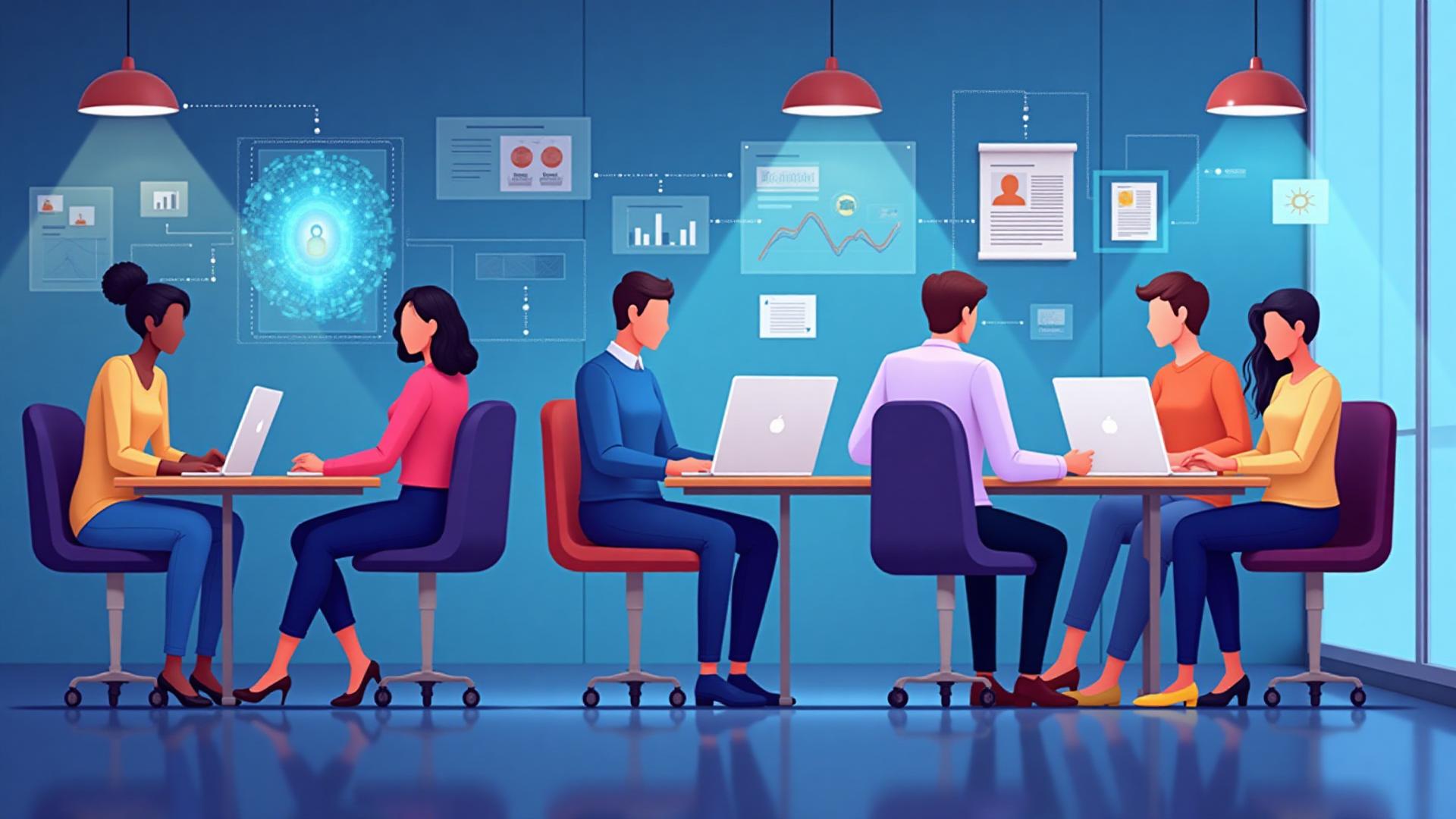
The Rise of the Hybrid Workforce
Nonprofits are entering a new era where artificial intelligence isn't just a tool—it's becoming a collaborative partner. The most successful organizations aren't asking whether to adopt AI, but rather how to integrate AI agents as productive members of their team.
This shift represents a fundamental reimagining of nonprofit operations. Instead of staff spending hours on repetitive administrative tasks, AI agents handle the routine work while humans focus on strategy, relationships, and the creative problem-solving that drives mission impact.
The hybrid workforce model represents a departure from traditional automation thinking, where technology simply replaced human labor. Instead, it's about creating synergistic partnerships where AI and humans each contribute their unique strengths. AI excels at processing large volumes of data, recognizing patterns, and executing routine tasks with consistency. Humans excel at strategic thinking, emotional intelligence, relationship building, and contextual decision-making. When these capabilities are combined thoughtfully, the result is greater than the sum of its parts.
This evolution is happening across all sectors, but nonprofits have unique opportunities and challenges. The mission-driven nature of nonprofit work means that relationship building and authentic human connection remain central to success. However, the resource constraints that characterize the sector make efficiency gains from AI collaboration particularly valuable. The hybrid workforce model allows nonprofits to maintain their human-centered approach while dramatically increasing their operational capacity.
Understanding the Hybrid Model
A hybrid workforce combines human expertise with AI capabilities in a complementary way. Think of it as assembling a team where each member—human or AI—contributes their unique strengths:
- Humans excel at: Strategic thinking, emotional intelligence, relationship building, creative problem-solving, ethical judgment, and mission alignment
- AI agents excel at: Data processing, pattern recognition, 24/7 availability, consistent execution, rapid scaling, and handling repetitive tasks
The hybrid model requires a shift in thinking from "either/or" to "both/and." Instead of asking whether a task should be done by humans or AI, the question becomes: "How can humans and AI work together to accomplish this more effectively than either could alone?" This collaborative mindset opens up new possibilities for organizational efficiency and impact.
Effective hybrid workflows are designed with clear handoff points where work transitions between humans and AI. For example, AI might analyze donor data to identify high-potential prospects, but humans make the final decision about cultivation strategies based on personal knowledge and relationship context. Or AI might draft initial grant proposal sections, but humans add the compelling narratives and strategic alignment that make proposals successful.
The magic happens when you design workflows that leverage both strengths simultaneously rather than forcing them to compete. When AI handles routine data processing and pattern recognition, humans have more time and mental capacity for the strategic thinking, relationship building, and creative problem-solving that truly drive nonprofit impact. This division of labor creates a multiplier effect where the whole becomes greater than the sum of its parts.
Real-World Collaboration Scenarios
Fundraising Operations
Human Role: Development Director builds relationships with major donors, crafts compelling narratives, and makes strategic decisions about cultivation strategies.
AI Agent Role: Analyzes donation patterns to identify prospects showing increased engagement, drafts personalized thank-you email templates, schedules follow-up reminders, and generates donor engagement scores.
The Collaboration: The AI agent flags a donor whose giving frequency has increased and provides background research. The Development Director reviews the AI's insights, adds personal knowledge about the donor's interests, and crafts a targeted cultivation plan. The AI then helps execute by scheduling touchpoints and tracking engagement.
Grant Management
Human Role: Grants Manager identifies appropriate funding opportunities, understands funder priorities, and ensures proposals align with organizational strategy.
AI Agent Role: Monitors grant databases for relevant opportunities, extracts requirements from RFPs, tracks submission deadlines, drafts initial proposal sections using existing program data, and compiles required attachments.
The Collaboration: The AI agent delivers a weekly digest of new grant opportunities with compatibility scores. The Grants Manager selects priorities and provides strategic direction. The AI generates first drafts of boilerplate sections, which the manager refines with compelling narratives and specific program details.
Program Evaluation
Human Role: Program Director interprets findings, understands contextual factors affecting outcomes, and makes program adjustments based on holistic understanding.
AI Agent Role: Aggregates data from multiple sources, identifies trends and patterns, generates preliminary reports, and creates data visualizations.
The Collaboration: The AI processes participant survey data and attendance records, generating initial analysis and flagging unusual patterns. The Program Director reviews the data, applies contextual knowledge about external factors, and determines whether trends indicate needed program changes or simply reflect seasonal variations.
Building Effective Human-AI Workflows
1. Map Your Processes First
Before introducing AI agents, document your current workflows. Identify which steps are:
- Repetitive and rule-based (ideal for AI)
- Require human judgment (keep with staff)
- Could benefit from AI assistance (hybrid approach)
2. Design Clear Handoff Points
Successful collaboration requires clarity about when work transitions between humans and AI. Create explicit triggers:
- "AI agent gathers donor research → human reviews and prioritizes → AI schedules outreach"
- "Human defines evaluation questions → AI collects and analyzes data → human interprets findings"
- "AI drafts initial content → human adds narrative and context → AI formats and distributes"
3. Establish Quality Control Checkpoints
Always include human review before AI-generated work goes to external audiences:
- Donor communications require approval before sending
- Grant proposals need final human review
- Public content must be fact-checked and aligned with organizational voice
- Data analysis should be validated against program knowledge
4. Create Feedback Loops
AI agents improve when staff provides feedback on their outputs:
- Mark AI suggestions as "helpful" or "needs improvement"
- Note when AI analysis misses important context
- Identify patterns in AI errors to adjust training data
- Share examples of ideal outputs to refine AI performance
Overcoming Common Collaboration Challenges
Challenge: Staff Resistance
Solution: Frame AI agents as assistants that eliminate tedious work, not replacements. Start by automating the tasks staff complain about most. Show how AI frees up time for the meaningful work that attracted them to nonprofit work in the first place.
Challenge: Unclear Responsibilities
Solution: Create role clarity documents that specify what AI agents handle versus what requires human attention. Update job descriptions to reflect new hybrid workflows. Make it clear that humans remain accountable for all outputs, even when AI assists in creation.
Challenge: Over-Reliance on AI
Solution: Establish rules about when human review is mandatory. Never allow AI to make final decisions on mission-critical matters like funding allocations, program changes, or donor relationships. Use AI to inform decisions, not make them.
Challenge: Inconsistent AI Quality
Solution: Implement confidence scoring where AI agents indicate certainty levels in their outputs. Train staff to recognize when AI is speculating versus reporting analyzed data. Create escalation protocols for edge cases.
Training Staff for Hybrid Work
Success in a hybrid workforce requires new skills:
Prompt Engineering
Staff need to learn how to communicate effectively with AI agents. This includes:
- Providing clear, specific instructions
- Including relevant context
- Structuring requests for optimal AI response
- Iterating on prompts when initial results miss the mark
Output Evaluation
Staff must develop judgment about AI quality:
- Recognizing when AI analysis is accurate versus when it's hallucinating
- Identifying bias in AI recommendations
- Knowing when to trust AI suggestions versus seeking additional input
- Catching errors or inconsistencies in AI outputs
Process Redesign Thinking
Empower staff to reimagine workflows:
- Encourage questions like "Could AI help with this?"
- Create space for experimentation with new AI applications
- Celebrate examples of creative AI integration
- Share lessons learned across the organization
Measuring Hybrid Workforce Success
Track both efficiency gains and quality improvements:
Efficiency Metrics
- Time saved on specific tasks
- Volume of work completed
- Speed of response times
- Reduction in manual data entry
Quality Metrics
- Accuracy of AI-assisted outputs
- Stakeholder satisfaction with communications
- Success rates for AI-supported initiatives
- Staff satisfaction with hybrid workflows
Impact Metrics
- Staff time reallocated to high-value activities
- Increased program reach or service delivery
- Improved donor retention or acquisition
- Enhanced program outcomes from better data insights
The Future of Hybrid Work in Nonprofits
As AI capabilities advance, the hybrid workforce model will become increasingly sophisticated. We'll see:
- More Proactive AI: Agents that anticipate needs and surface opportunities without prompting
- Deeper Integration: AI embedded naturally into daily workflows rather than separate tools
- Enhanced Personalization: AI agents that learn individual staff preferences and adapt accordingly
- Collaborative Intelligence: AI that facilitates human teamwork rather than just automating individual tasks
Getting Started with Your Hybrid Workforce
Ready to build seamless human-AI collaboration? Start here:
- Identify One Pilot Workflow: Choose a process that's time-consuming but well-defined. Grant tracking, donor acknowledgments, or data reporting are great starting points.
- Map the Hybrid Process: Document which steps AI will handle, where human judgment is essential, and how work flows between human and AI.
- Set Clear Success Criteria: Define what successful collaboration looks like. How much time should be saved? What quality standards must be maintained?
- Train and Test: Ensure staff understand how to work with the AI agent. Run parallel processes initially to validate AI outputs.
- Iterate and Expand: Refine based on feedback. Once successful, identify the next workflow for hybrid integration.
Conclusion: Embracing Collaborative Intelligence
The hybrid workforce isn't about choosing between humans and AI—it's about orchestrating both to achieve what neither could accomplish alone. When staff members focus on relationship building, strategic thinking, and creative problem-solving while AI agents handle data processing, routine communications, and administrative tasks, nonprofits multiply their capacity for impact.
The organizations that will thrive in the coming years aren't those with the most advanced AI or the largest teams—they're the ones that master the art of human-AI collaboration. By designing workflows that leverage the unique strengths of both, you create a workforce that's more effective, more fulfilled, and more focused on mission than ever before.
The future of nonprofit work is hybrid. The question isn't whether to adopt this model, but how quickly you can implement it to amplify your impact.
Ready to Build Your Hybrid Workforce?
One Hundred Nights helps nonprofits design and implement seamless human-AI collaboration workflows. From use case identification to staff training and workflow optimization, we ensure your team maximizes the benefits of AI while maintaining your mission focus.