
AI for International Development Organizations: Field Operations, Remote Monitoring, and Global Coordination
International development organizations face unique challenges: coordinating across multiple countries, managing field teams with limited connectivity, monitoring programs remotely, and responding rapidly to crises. This comprehensive guide explores how AI tools can transform field operations, enable effective remote monitoring, and improve global coordination—even in resource-constrained environments with unreliable internet access.
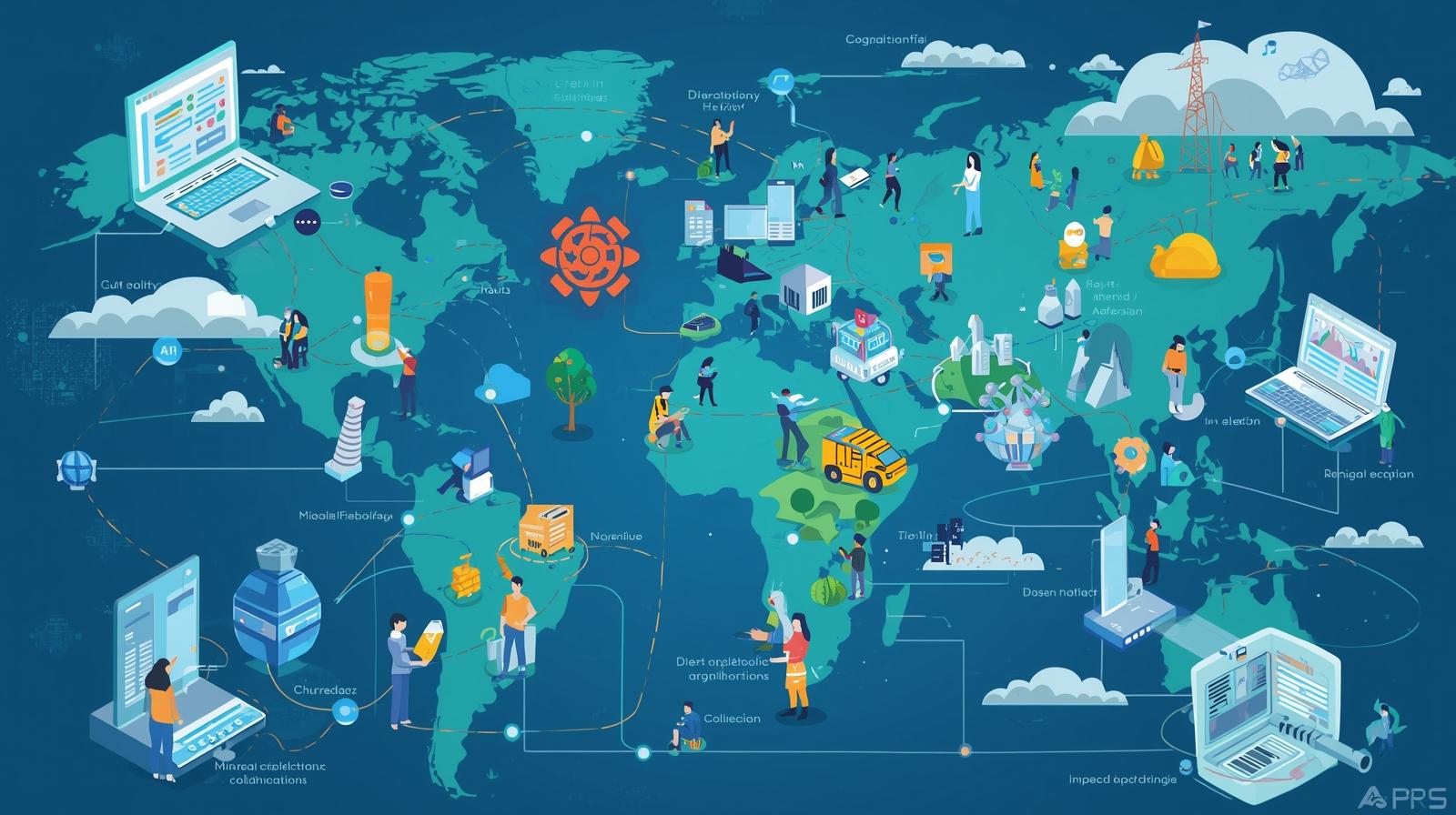
International development organizations operate in some of the world's most challenging environments. From refugee camps with intermittent connectivity to rural health clinics hundreds of miles from headquarters, these organizations must deliver life-changing services while managing complex logistics, coordinating across time zones, and making data-driven decisions with limited real-time information.
The landscape is changing rapidly. Organizations like the International Rescue Committee are using AI for optimizing service delivery to refugees and predictive modeling of conflicts and crises. The Danish Refugee Council's Foresight tool uses AI to forecast forced displacement in Afghanistan, Myanmar, and West Africa. The World Food Programme's SKAI system combines satellite imagery and AI to assess building damage at scale, enabling rapid disaster response. These aren't experimental pilots—they're operational systems making measurable impact.
Yet many organizations remain in the exploration phase. Data challenges, sustainability concerns, funding gaps, and low awareness across program staff create significant barriers to AI adoption. The infrastructure requirements that work for US-based nonprofits don't translate to field operations in developing countries where connectivity is unreliable and technical expertise is scarce.
This article provides a practical roadmap for international development organizations to implement AI tools effectively. You'll learn which applications deliver the highest value for field operations, how to overcome connectivity and infrastructure challenges, strategies for remote monitoring and global coordination, and how to address the ethical considerations unique to working with vulnerable populations across cultures. Whether you're coordinating health programs across multiple countries, managing humanitarian relief operations, or supporting economic development initiatives in rural areas, you'll find actionable guidance for leveraging AI to extend your impact.
Why International Development Organizations Face Different AI Challenges
Before diving into specific applications, it's essential to understand why AI implementation for international development differs fundamentally from domestic nonprofit work. The challenges extend far beyond language barriers or time zones—they involve infrastructure, culture, ethics, and the very nature of the work itself.
International development organizations operate at the intersection of multiple complex systems. A single program might involve coordination between headquarters staff, regional offices, local implementing partners, government agencies, and beneficiary communities—each with different levels of technical capacity, connectivity, and cultural context. Data flows across borders, raising privacy and sovereignty concerns. Programs must adapt to local contexts while maintaining consistent quality standards globally.
The digital divide is real and consequential. While AI tools increasingly assume reliable high-speed internet, many field sites operate with intermittent 2G connections or no connectivity at all. Power outages are common. Devices may be older smartphones or shared tablets rather than the latest hardware. These constraints shape what's actually feasible versus what vendors promise.
Infrastructure Limitations
- Unreliable or absent internet connectivity in field locations
- Limited access to modern devices and computing power
- Frequent power outages requiring offline-capable solutions
- High data costs making cloud-based tools prohibitively expensive
Capacity and Expertise Gaps
- Limited technical expertise among field staff and local partners
- Difficulty competing for AI talent with commercial sector
- Low awareness of AI capabilities across program teams
- Cultural differences between tech volunteers and nonprofit staff
Data Challenges
- Lack of representative data for vulnerable populations
- Manual data collection and preparation processes
- Data wrangling costs that make scaling prohibitive
- Privacy and sovereignty concerns with cross-border data
Ethical and Cultural Considerations
- Algorithmic bias concerns when serving marginalized communities
- Need for culturally appropriate AI implementations
- Governance and oversight requirements across jurisdictions
- Technological inequality and digital divide concerns
Understanding these constraints isn't about limiting ambition—it's about making realistic implementation choices. The most successful AI deployments in international development work within these realities rather than ignoring them. They prioritize lightweight models over compute-intensive systems, offline-first design over cloud-dependent tools, and gradual capability building over one-time technical interventions. For organizations looking to build sustainable AI capacity, consider developing AI champions within your team who understand both the technology and your operational context.
High-Value AI Applications for Field Operations
International development organizations are successfully using AI across 18 different application areas, from health and education to agriculture and humanitarian relief. Rather than attempting to implement all of these at once, successful organizations start with high-value applications that address their most pressing operational challenges while building capacity for more advanced implementations over time.
The applications below represent proven use cases where AI delivers measurable impact in field operations. These aren't theoretical possibilities—they're based on real implementations by organizations like the International Rescue Committee, Danish Refugee Council, World Food Programme, and dozens of others working in challenging environments globally.
Satellite Imagery and Damage Assessment
Rapid disaster response and infrastructure monitoring at scale
Satellite imagery combined with AI enables rapid assessment of disaster-affected areas, infrastructure damage, and population displacement—critical capabilities for humanitarian response. The World Food Programme's SKAI system uses AI and satellite imagery to automatically assess building damage at large scale, providing near real-time monitoring of disaster-affected areas. After Hurricane Ian, SKAI helped prioritize aid delivery and assess impact on affected populations, enabling organizations like GiveDirectly to respond swiftly and effectively.
UN Global Pulse's PulseSatellite reduces the time needed to acquire, process, and load satellite imagery into machine learning models, extending capabilities to include damage detection. The xView2 project uses machine learning algorithms to identify building and infrastructure damage and categorize its severity much faster than current methods, directly helping first responders coordinate reconstruction efforts.
Beyond disaster response, satellite imagery supports settlement mapping, monitoring population displacement, fire detection, and identifying impacts of earthquakes, volcanoes, cyclones, and landslides. UNDP's Accelerator Labs use AI to analyze earth observation data to identify crop diseases in Cameroon and Cabo Verde, detect areas with accumulated waste in Guatemala, the Philippines, Serbia, and Vietnam, and create land use maps in Ecuador and India.
Implementation Considerations
- Use open-source tools like SKAI to avoid vendor lock-in and reduce costs
- Leverage existing satellite data sources through international disaster charters
- Partner with organizations like NetHope that facilitate AI collaboration among NGOs
- Start with specific use cases like damage assessment before expanding to broader applications
Predictive Modeling and Forecasting
Anticipating crises, displacement, and resource needs before they escalate
Predictive analytics enable organizations to anticipate crises and allocate resources proactively rather than reactively. The Danish Refugee Council's Foresight tool uses open data from UNHCR, the World Bank, and NGO agencies to forecast forced displacement in Afghanistan, Myanmar, and West Africa. This forward-looking approach allows for preemptive resource allocation, staffing adjustments, and partnership development in areas where displacement is likely to increase.
The International Rescue Committee uses AI for predictive modeling of conflicts and crises, helping position resources and staff before situations deteriorate. This isn't about perfect predictions—it's about improving decision-making under uncertainty. Even modest improvements in forecasting accuracy can mean the difference between having emergency supplies pre-positioned versus scrambling to mobilize resources after a crisis unfolds.
Forecasting applications extend beyond crisis prediction to program planning. Organizations use AI to predict seasonal demand fluctuations for services, forecast volunteer and staff attrition, anticipate supply chain disruptions, and model long-term trends in beneficiary needs. These insights inform strategic planning, budget allocation, and program design decisions.
Getting Started with Predictive Modeling
- Start with historical data analysis to identify patterns and trends
- Use publicly available datasets (UNHCR, World Bank, etc.) to augment internal data
- Begin with simple forecasting models before advancing to complex ML approaches
- Validate predictions against ground truth to build confidence in the models
Offline-First Data Collection and Analysis
Enabling field teams to work effectively without reliable internet
One of the most significant barriers to AI adoption in international development is the assumption of reliable connectivity. Field teams often work in areas with intermittent 2G connections or no internet at all. The solution isn't to avoid AI—it's to prioritize offline-first tools and workflows that sync when connectivity becomes available.
Organizations are successfully using customized data collection services like the COCO (Connect Online and Connect Offline) method, which eliminates connectivity hurdles in rural areas. Field workers collect data on mobile devices while offline, with AI-powered features like automated data validation, local language processing, and intelligent form completion working without internet access. When connectivity is available, data syncs to central systems for analysis and aggregation.
Lightweight AI models and mobile-first tools make this possible. Developers are creating low-resource AI applications that function on older devices with limited computing power. Examples include offline translation apps for multilingual field work, voice-to-text transcription for documenting beneficiary stories without typing, and computer vision models that run locally on smartphones for visual damage assessment or agricultural monitoring.
Offline-First Implementation Strategy
- Prioritize mobile-first tools designed for low-bandwidth environments
- Use progressive web apps (PWAs) that work offline and sync when connected
- Implement edge computing where AI models run locally on devices
- Establish periodic sync protocols when teams return to connectivity zones
Beneficiary Matching and Service Optimization
Connecting people to appropriate services and resources efficiently
International development organizations serve diverse populations with varying needs, skills, and circumstances. AI-powered matching systems help connect beneficiaries to appropriate services, employment opportunities, educational programs, and support resources based on their specific situations and potential outcomes.
The International Rescue Committee uses AI for jobs-matching for refugees, analyzing skills, experience, language capabilities, and local labor market conditions to identify suitable employment opportunities. This goes beyond simple keyword matching to understand transferable skills, cultural fit, and realistic pathways to economic self-sufficiency. Similarly, organizations use AI to match students to appropriate educational interventions, pair mentors with mentees based on compatibility factors, and connect families to housing options that fit their needs and budget.
Service optimization extends to resource allocation. GiveDirectly used AI to target cash transfers during COVID-19 and natural disasters, addressing the time-consuming nature of targeting and screening to deliver aid faster during large-scale crises. During Hurricane Maria in Puerto Rico, manual damage estimation across the island's million homes resulted in slow and incomplete assessments—AI-powered targeting dramatically accelerated the process.
Building Fair Matching Systems
- Regularly audit matching algorithms for bias and fairness across demographic groups
- Include human review for high-stakes matching decisions (housing, employment)
- Collect feedback from beneficiaries to continuously improve matching quality
- Ensure matching criteria align with stated program values and equity goals
These applications represent starting points rather than comprehensive solutions. The most successful organizations begin with one high-value use case, learn from implementation, build internal capacity, and gradually expand to additional applications. This incremental approach allows for course correction, builds organizational confidence, and creates sustainable AI practices rather than one-time technical interventions. For guidance on building long-term AI capability, explore strategies for knowledge management that supports AI implementation.
Transforming Remote Monitoring and Evaluation
Monitoring and evaluation roles have been at the forefront of AI adoption in international development, evolving from early ChatGPT experiments to sophisticated automated systems. For organizations managing programs across multiple countries and time zones, AI-powered M&E tools offer unprecedented visibility into program performance, beneficiary outcomes, and operational challenges—without requiring constant travel or burdensome manual reporting from field teams.
The transformation goes beyond efficiency gains. AI enables entirely new approaches to understanding program impact, from real-time anomaly detection that flags potential issues before they escalate, to cohort analysis that tracks beneficiary groups over time, to predictive models that forecast which participants are most likely to achieve successful outcomes. These capabilities shift M&E from retrospective reporting to proactive program management.
Automated Survey Analysis at Scale
International development programs generate massive volumes of survey data—beneficiary intake forms, satisfaction surveys, outcome assessments, and feedback questionnaires across multiple languages and countries. AI tools can now analyze this data at scale, identifying patterns, themes, and insights that would take human analysts months to uncover.
Natural language processing extracts themes from open-ended responses across languages, sentiment analysis identifies satisfaction trends and concerns, and automated categorization groups responses by topic, geography, or demographic segment. This doesn't replace human judgment—it accelerates the process and surfaces insights that inform deeper investigation.
- Multilingual analysis: Process surveys in local languages without manual translation
- Theme extraction: Identify recurring topics and concerns across thousands of responses
- Comparative analysis: Benchmark results across regions, cohorts, or time periods
- Anomaly detection: Flag unusual patterns that warrant investigation
Real-Time Impact Reporting
Traditional impact reporting involves manual data aggregation, analysis, and narrative writing—a process that can take weeks or months, rendering insights outdated by the time they reach decision-makers. AI tools can now automate much of this process, generating draft impact reports, synthesizing program data, and creating data visualizations in hours rather than weeks.
This doesn't mean AI writes final reports without human oversight. Instead, AI handles the time-consuming work of data aggregation, initial analysis, and draft creation, freeing M&E staff to focus on interpretation, strategic recommendations, and contextual analysis that requires human judgment. The result is faster reporting cycles, more frequent updates to stakeholders, and the capacity to produce customized reports for different audiences (funders, board members, field staff) without multiplying workload.
- Automated data aggregation: Pull data from multiple systems and field sites
- Draft report generation: Create initial narrative and data summaries
- Custom visualizations: Generate charts, graphs, and maps automatically
- Audience adaptation: Reformat reports for different stakeholder needs
Predictive Analytics for Program Management
The most advanced M&E applications move beyond describing what happened to predicting what's likely to happen next. Predictive models can forecast which program participants are at risk of dropping out, which interventions are most likely to succeed with specific beneficiary profiles, and where resource allocation will have the greatest impact.
These capabilities enable proactive program management. Instead of discovering six months later that a cohort had poor retention, predictive models flag at-risk participants early when interventions can still make a difference. Instead of waiting for end-of-program evaluations to reveal which approaches worked best, ongoing analysis identifies successful strategies that can be scaled while they're still in progress.
- Attrition prediction: Identify participants likely to leave programs early
- Outcome forecasting: Predict which interventions will yield best results
- Resource optimization: Model impact of different allocation strategies
- Early warning systems: Alert staff to emerging issues requiring attention
Critical Consideration: Data Quality and Bias
AI-powered M&E is only as good as the underlying data. Organizations working with marginalized populations must be especially vigilant about data representation, collection bias, and algorithmic fairness. If field teams primarily survey beneficiaries who are easier to reach, or if data collection happens only in areas with better infrastructure, AI models will perpetuate and amplify these biases.
Establish regular bias audits, ensure diverse representation in training data, validate model outputs against ground truth from different demographic groups, and maintain human oversight of AI-generated insights. The goal isn't perfect data—it's being honest about limitations and making thoughtful decisions about when AI insights are reliable versus when they require additional validation.
Enabling Effective Global Coordination
International development organizations coordinate across multiple time zones, languages, and organizational cultures. Headquarters staff in Washington or Geneva work with regional offices in Nairobi or Bangkok, local implementing partners in rural communities, and government agencies with varying levels of technical capacity. AI tools can reduce friction in these complex coordination challenges while preserving the human relationships that make partnerships effective.
Since 2017, NetHope has been bringing together global NGOs and technology experts through an AI Working Group, facilitating collaboration among organizations like the Danish Refugee Council, International Rescue Committee, Mercy Corps, Norwegian Refugee Council, Catholic Relief Services, and dozens of others. This collaborative approach recognizes that most international development organizations face similar challenges and benefit from sharing learnings, resources, and technical solutions rather than each organization solving the same problems independently.
Multi-Language Communication and Translation
Language barriers create significant coordination challenges. Headquarters staff work in English or French while field teams operate in Swahili, Arabic, Spanish, or dozens of other languages. Beneficiary communications happen in local dialects. Traditional approaches required professional translation services for formal documents and relied on bilingual staff for informal communication—both bottlenecks that slow decision-making and create information asymmetries.
AI translation tools have matured to the point where they're genuinely useful for international coordination. While they don't replace professional translation for external communications or legal documents, they enable real-time collaboration across language barriers for internal coordination, rapid understanding of beneficiary feedback, and accessible documentation that field teams can read in their preferred language.
- Real-time meeting translation: Enable multilingual teams to collaborate effectively
- Document translation: Make policies, procedures, and guidance accessible across languages
- Beneficiary feedback processing: Analyze responses in local languages without manual translation
- Cultural context preservation: Better models capture nuance beyond literal word-for-word translation
Knowledge Management Across Distributed Teams
International organizations accumulate vast institutional knowledge across field sites, but this knowledge often remains siloed in individual email inboxes, local file servers, or the memories of staff who eventually move on. When a new country director starts, they spend months rediscovering lessons that previous leadership learned through trial and error. When headquarters designs a new program, they may be unaware of similar initiatives that field teams already piloted.
AI-powered knowledge management systems make organizational learning accessible across time and distance. Instead of searching through email archives or hoping the right person is still with the organization, staff can query centralized knowledge bases that surface relevant past experiences, lessons learned, program designs, and operational solutions. This doesn't replace the value of mentorship and relationships—it makes institutional knowledge discoverable when you need it.
- Intelligent search: Find relevant documents and past decisions using natural language queries
- Automated documentation: Capture meeting notes, decisions, and action items without manual notetaking
- Context-aware recommendations: Surface relevant past experiences based on current challenges
- Onboarding acceleration: New staff quickly access institutional knowledge and context
Coordinated Resource Sharing and Learning Networks
Most international development organizations can't afford dedicated AI teams or custom development for every need. The solution isn't for each organization to build everything from scratch—it's collaborative infrastructure and shared resources. Organizations are increasingly participating in AI consortiums for shared nonprofit resources and learning, partnering with universities on nonprofit AI research, and accessing pro bono AI support from corporate partners.
NetHope's AI Working Group exemplifies this approach, bringing together humanitarian organizations to share learnings, pilot technologies collaboratively, and develop open-source solutions that multiple organizations can use. The World Food Programme's SKAI system is open-source specifically so other organizations can benefit without duplicating development effort. These collaborative approaches recognize that AI capacity building requires community, not just technology.
- Join existing networks: Participate in NetHope, AI4Good, or sector-specific collaboratives
- Share learnings openly: Document successes and failures to benefit the broader community
- Leverage open-source tools: Use proven solutions rather than custom development
- Seek technical partnerships: Access corporate pro bono support and academic collaborations
Effective global coordination through AI isn't about replacing human connection with automated systems—it's about removing friction so people can focus on relationship-building, strategic thinking, and culturally appropriate adaptation rather than administrative coordination and information hunting. For organizations building coordination capacity, consider how distributed AI champions in each region can facilitate adoption while maintaining local context and autonomy.
Navigating Ethical Considerations and Responsible AI
International development organizations work with some of the world's most vulnerable populations—refugees, displaced persons, people living in poverty, communities affected by conflict and disaster. The stakes for AI implementation are higher than in most nonprofit contexts. Algorithmic bias doesn't just mean poor user experience—it can mean families denied housing, refugees excluded from employment opportunities, or communities overlooked for disaster assistance.
The humanitarian sector has been wrestling with these ethical questions seriously. The International Committee of the Red Cross emphasizes that existing risks including algorithmic bias and data privacy concerns must be addressed as a priority if AI is to be put at the service of humanitarian action. UN OCHA's briefing on AI and the humanitarian sector highlights concerns around ethics, governance, and technological inequality that must be addressed thoughtfully.
Responsible AI implementation isn't about avoiding all risk—it's about making informed decisions, establishing appropriate oversight, and maintaining accountability when things go wrong. The following framework can guide ethical AI adoption for international development work.
Algorithmic Fairness and Bias Mitigation
AI models trained on biased data produce biased outcomes. When those models inform decisions about who receives services, employment opportunities, or disaster assistance, bias has real consequences. Organizations must proactively audit their AI systems for fairness across demographic groups, geographic regions, and cultural contexts.
This means disaggregating outcomes by relevant categories (gender, age, location, language, etc.) to identify disparities, validating model performance across underrepresented groups, involving affected communities in system design and evaluation, and maintaining human oversight for high-stakes decisions. When bias is discovered—and it will be—organizations need clear processes for addressing it, not just acknowledging it.
- Conduct regular fairness audits across demographic segments
- Ensure training data represents all populations served, not just those easiest to reach
- Establish clear escalation paths when AI systems produce questionable outcomes
- Document known limitations and communicate them to staff using AI tools
Data Privacy and Sovereignty
International development organizations collect sensitive data about vulnerable populations—health information, financial circumstances, legal status, family composition, trauma histories. When this data crosses borders for analysis or storage, it raises complex questions about data sovereignty, privacy protection, and compliance with varying regulatory frameworks.
Different countries have different data protection requirements. GDPR governs European data, but many developing countries have their own frameworks that may be more or less restrictive. Organizations must understand where data is stored, how it flows across systems, who has access, and what regulatory requirements apply. This isn't just legal compliance—it's about maintaining trust with beneficiaries and local partners who entrust organizations with sensitive information.
- Map data flows to understand where sensitive information is stored and processed
- Implement data minimization—collect only what's necessary for program delivery
- Consider local data storage options to address sovereignty concerns
- Provide clear information to beneficiaries about how their data is used
Meaningful Human Oversight
AI should augment human decision-making, not replace it—especially for high-stakes decisions affecting people's lives. This means maintaining human oversight at critical decision points, ensuring staff understand how AI tools work and their limitations, creating clear accountability structures for AI-informed decisions, and preserving the ability to override or question AI recommendations when human judgment suggests they're inappropriate.
Meaningful oversight requires that staff understand enough about how AI systems work to evaluate their outputs critically. This doesn't mean everyone needs to be a data scientist, but it does mean investing in AI literacy so staff can recognize when AI recommendations seem questionable, understand what factors influence AI outputs, and know when to seek additional validation or expert review.
- Never fully automate high-stakes decisions without human review
- Train staff on AI tool capabilities and limitations
- Create clear escalation procedures for questionable AI outputs
- Document decisions to override AI recommendations and learn from patterns
Cultural Appropriateness and Community Engagement
AI systems designed in Silicon Valley or Western headquarters may not translate appropriately to different cultural contexts. What constitutes appropriate personalization in donor communications may feel invasive in beneficiary interactions. Efficiency optimizations that make sense from a headquarters perspective might conflict with community relationship norms in field sites.
Responsible AI implementation involves affected communities in design and evaluation, not just as data sources but as partners in determining what's appropriate, useful, and respectful. This means soliciting feedback from beneficiaries on AI-informed services, involving local staff and partners in tool selection and configuration, and being willing to adapt or abandon AI approaches that communities find problematic—even if they're technically impressive.
- Involve local staff and partners in AI tool selection and implementation planning
- Pilot AI applications in small contexts before scaling broadly
- Collect feedback from beneficiaries on AI-informed services
- Be willing to adapt or discontinue AI tools that communities find inappropriate
These ethical considerations aren't obstacles to AI adoption—they're essential guardrails that ensure technology serves people rather than the other way around. Organizations serious about responsible AI should consider establishing AI ethics committees and developing AI policies that codify these principles and create accountability mechanisms.
Getting Started: A Practical Implementation Roadmap
The breadth of AI applications in international development can feel overwhelming. Where do you start? How do you build capacity without overwhelming already-stretched teams? How do you select tools that will work in your specific context rather than chasing the latest technology trends?
The most successful implementations start small, focus on high-value use cases, build internal capacity gradually, and expand based on demonstrated success rather than ambitious plans. This roadmap provides a structured approach for organizations at any stage of AI maturity.
Phase 1: Assessment and Foundation (Months 1-3)
- Assess current state: Inventory existing data, infrastructure, and technical capacity across field sites and headquarters
- Identify pain points: Talk to field teams, program staff, and M&E staff about time-consuming manual processes that AI might address
- Join learning networks: Connect with NetHope AI Working Group or similar collaboratives to learn from others' experiences
- Build awareness: Provide basic AI literacy training to leadership and key staff to create shared understanding
- Develop governance framework: Establish ethical guidelines and oversight structures before implementation begins
Phase 2: Pilot Implementation (Months 4-9)
- Select initial use case: Choose one high-value application that addresses a real pain point and is technically feasible with current infrastructure
- Start small: Pilot in one or two field sites rather than attempting organization-wide rollout
- Prioritize offline-capable tools: Ensure solutions work with limited connectivity from the start
- Involve local staff: Engage field teams in tool selection, configuration, and testing to ensure cultural appropriateness
- Measure and learn: Track both quantitative metrics (time saved, accuracy) and qualitative feedback (staff satisfaction, usability)
Phase 3: Scaling and Expansion (Months 10-18)
- Refine based on learnings: Adjust implementation based on pilot feedback before scaling broadly
- Expand gradually: Roll out to additional field sites in waves, learning from each expansion
- Build internal expertise: Develop AI champions in each region who can support local adoption and troubleshooting
- Consider second use case: If initial pilot succeeded, identify next high-value application to pilot
- Share learnings: Contribute insights back to learning networks to benefit broader community
Phase 4: Maturity and Integration (18+ months)
- Integrate into workflows: Move from pilot projects to embedded tools that are part of standard operations
- Develop organizational AI strategy: Create coherent roadmap for AI adoption across programs and functions
- Build sustainable capacity: Invest in training, technical partnerships, and infrastructure for long-term AI use
- Explore advanced applications: Consider more sophisticated uses like predictive analytics, automated M&E, or integrated systems
- Contribute to sector innovation: Share open-source tools, case studies, and lessons learned with broader community
Key Success Factors
- Leadership support: Executive commitment to AI adoption and willingness to invest in capacity building
- Field team involvement: Engage local staff as partners in design and implementation, not just end users
- Realistic expectations: Start with achievable goals and build from success rather than over-promising
- Collaborative approach: Join learning networks and partnerships rather than solving everything independently
- Ethical foundation: Establish governance and oversight before implementation, not as afterthought
Moving Forward with Confidence
International development organizations operate in some of the world's most challenging environments, serving vulnerable populations with limited resources and complex coordination requirements. AI isn't a magic solution to these challenges, but it is a powerful set of tools that can extend impact, improve decision-making, and free up human capacity for the relationship-building and cultural adaptation that technology can't replicate.
The organizations making the most progress aren't those with the largest budgets or the most sophisticated technical teams—they're the ones that start small, learn from each implementation, build capacity gradually, and maintain focus on mission impact rather than technological sophistication. They join collaborative networks rather than working in isolation. They prioritize offline-capable tools that work in their actual operational context. They involve affected communities and field teams as partners in design and evaluation. And they maintain rigorous ethical oversight to ensure AI serves people rather than the other way around.
The landscape of AI in international development will continue evolving rapidly. New tools, capabilities, and approaches emerge constantly. But the fundamental principles remain constant: start with real problems, involve the people closest to the work, build sustainable capacity rather than one-time interventions, and maintain ethical guardrails that protect the vulnerable populations you serve.
Whether you're coordinating refugee services across multiple countries, managing health programs in rural communities, responding to humanitarian crises, or supporting economic development initiatives, AI tools can help you work more effectively. The question isn't whether to adopt AI—it's how to do so thoughtfully, responsibly, and in ways that genuinely extend your mission impact. This guide provides a starting point. The rest is up to you, your team, and the communities you serve.
Ready to Implement AI for International Development?
One Hundred Nights helps international development organizations implement AI tools thoughtfully and effectively, with deep understanding of field operations, cross-cultural considerations, and the unique challenges of working in resource-constrained environments.