
Knowledge Capture During Executive Transitions: AI for Institutional Memory
When up to 75% of nonprofit leaders plan to leave within the next decade, preserving institutional knowledge isn't just important—it's essential for organizational survival. Learn how AI-powered tools and strategic planning can transform leadership transitions from potential crises into opportunities for organizational strengthening.
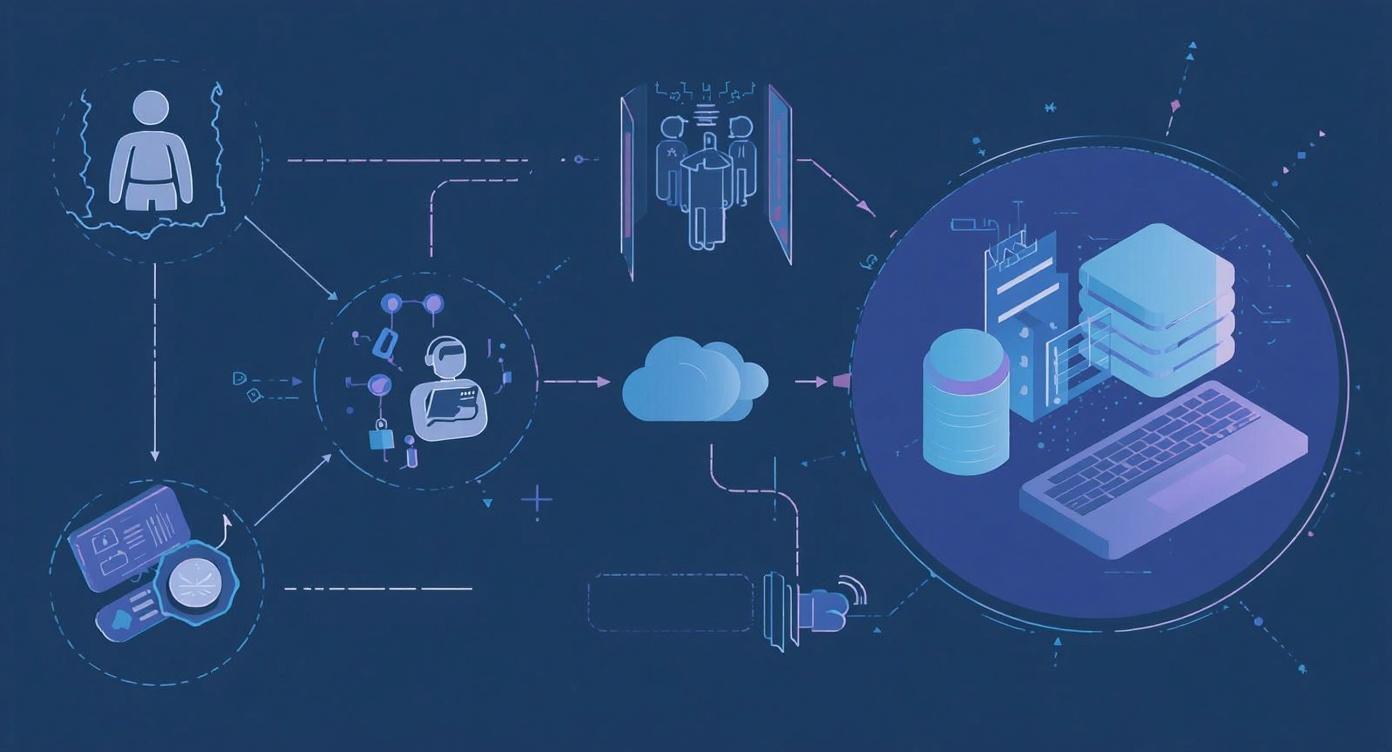
The conference room falls silent as your executive director announces their departure. In that moment, board members don't just worry about finding a replacement—they worry about everything else that's about to walk out the door. The relationships cultivated over years. The informal processes that keep operations running smoothly. The historical context behind every strategic decision. The hard-won lessons from past challenges.
This scenario is becoming increasingly common. Research shows that up to 75% of nonprofit leaders plan to leave their positions within the next five to ten years, creating what many call a "leadership tsunami" in the sector. Each departure threatens organizational stability, program continuity, and—perhaps most critically—institutional knowledge preservation.
Traditional succession planning often focuses on finding the right replacement while overlooking the equally important challenge of knowledge transfer. When only 29% of nonprofits have written succession plans, and even fewer have systematic knowledge capture processes, organizations risk losing decades of institutional wisdom with each leadership change.
The good news? AI-powered tools and strategic frameworks now make it possible to capture, organize, and preserve institutional knowledge in ways that were previously impossible or prohibitively expensive. This article explores how nonprofits can leverage technology to transform executive transitions from knowledge loss events into opportunities for organizational strengthening.
Whether you're planning for an anticipated leadership change or building resilience against unexpected departures, understanding how to systematically capture and preserve institutional knowledge is no longer optional—it's essential for nonprofit sustainability.
Understanding What You Stand to Lose
Before implementing knowledge capture systems, it's crucial to understand what institutional memory actually encompasses. It's far more than just documented procedures or board meeting minutes. Institutional memory represents the cumulative knowledge, experiences, relationships, and cultural understanding that enables an organization to function effectively and make informed decisions.
When executive leaders leave without proper knowledge transfer, organizations often don't realize what they've lost until months later. A major donor relationship quietly lapses because no one knew about the personal connection. A grant application misses a critical detail that previous submissions always included. A partnership opportunity is missed because the historical context for why certain collaborations work better than others walked out the door.
Recognizing the different types of knowledge at risk is the first step toward protecting them. Each category requires different capture strategies and AI tools to preserve effectively.
Relational Knowledge
The human connections that drive organizational success
This includes deep understanding of donor motivations, funder preferences, partner organization dynamics, and community relationships. It's knowing that a particular foundation officer prefers phone calls over emails, or that a corporate sponsor values specific types of impact reporting.
- Donor and funder relationship histories, preferences, and communication patterns
- Partnership dynamics and collaboration strategies with other organizations
- Community stakeholder relationships and engagement approaches
- Board member individual strengths, interests, and working styles
Contextual Knowledge
The "why" behind organizational decisions and strategies
Understanding why certain strategies work in your specific context, what's been tried before and why it succeeded or failed, and the historical events that shaped current organizational culture and priorities.
- Historical context for strategic decisions and current priorities
- Lessons learned from past initiatives, including what didn't work and why
- Understanding of community context and how it shapes program delivery
- Organizational culture evolution and values interpretation
Procedural Knowledge
The operational know-how that keeps the organization running
This encompasses both documented and undocumented processes—how things actually get done versus how they're supposed to get done. It includes the informal workarounds, the unwritten rules, and the tribal knowledge that makes operations run smoothly.
- Standard operating procedures and workflow processes
- System access, passwords, and technical infrastructure knowledge
- Grant application and reporting requirements specific to each funder
- Crisis response protocols and decision-making frameworks
Strategic Knowledge
Long-term vision and organizational positioning insights
Understanding the organization's strategic position in the broader ecosystem, competitive landscape insights, funding trends and funder relationship dynamics, and the long-term vision that guides current activities.
- Market positioning and competitive differentiation strategies
- Long-term strategic vision and planned initiatives
- Funding landscape trends and diversification strategies
- Risk assessment and scenario planning insights
AI-Powered Knowledge Capture Strategies
Traditional knowledge transfer relied on extensive documentation efforts, lengthy overlap periods, and hoping that critical information somehow made it from the departing leader to their successor. AI fundamentally changes this equation by making knowledge capture automated, continuous, and significantly more comprehensive.
The key is implementing these systems before they're urgently needed. When knowledge capture becomes part of regular operations rather than a last-minute scramble during transition announcements, organizations preserve far more institutional memory with far less effort.
Here are the most effective AI-powered approaches for capturing different types of organizational knowledge during executive transitions.
AI Meeting Transcription and Analysis
Automatically capture decisions, discussions, and organizational knowledge from every conversation
One of the most powerful applications of AI for knowledge preservation is automated meeting transcription and analysis. Tools like Fireflies.ai, Read.ai, Sembly AI, and others can join virtual meetings, transcribe conversations in real-time, identify key decisions and action items, and create searchable archives of organizational discussions.
For executive directors, this means that every board meeting, strategic planning session, donor conversation, and partnership discussion is automatically documented and preserved. When they eventually transition, their successor gains access to a searchable archive of organizational decision-making context that would otherwise be lost.
Implementation Approach:
- Start with strategic meetings: Begin by using AI transcription for board meetings, executive team meetings, and strategic planning sessions where the most critical decisions are made
- Establish privacy protocols: Create clear policies about which meetings are transcribed, how transcripts are stored, and who has access—especially important for sensitive donor or personnel discussions
- Review and tag key insights: Have the executive director or their assistant spend 10 minutes after important meetings to review AI-generated summaries and tag particularly important insights for easy future retrieval
- Create topic-based archives: Use AI tools' categorization features to organize transcripts by topic (e.g., "major donor strategy," "program evaluation," "partnership discussions") so successors can quickly find relevant historical context
The beauty of this approach is that it requires minimal additional effort once implemented. The AI tools automatically join meetings, transcribe conversations, identify action items, and create searchable archives—turning every conversation into preserved institutional knowledge.
AI Knowledge Base Systems
Centralize organizational knowledge with AI-powered search and intelligent organization
AI-powered knowledge bases like Slite, Bloomfire, Nuclino, Guru, and Document360 transform how organizations store and retrieve institutional knowledge. Unlike traditional document repositories where information goes to die, these systems use artificial intelligence to make knowledge genuinely accessible and useful.
These platforms can automatically organize scattered notes and documents into structured, searchable knowledge bases. They suggest categorization, identify content gaps, and even flag outdated information that needs updating. Most importantly, they allow anyone in the organization to ask questions in natural language and receive relevant answers pulled from across all documented knowledge.
Critical Content to Capture:
- Standard operating procedures: Document how key processes actually work, including informal workarounds and tribal knowledge that makes things run smoothly
- Decision rationale: Capture the "why" behind major strategic decisions, including what alternatives were considered and why certain approaches were chosen
- Relationship context: Document key stakeholder relationships, including preferences, history, and effective engagement strategies (while respecting privacy)
- Lessons learned: Create a running repository of what's been tried before, what worked, what didn't, and why—preventing successors from repeating past mistakes
- Crisis protocols: Document how to handle emergencies, sensitive situations, or organizational crises based on past experiences
The advantage of AI-powered knowledge bases over traditional file systems is that they actively work to keep information organized, accessible, and current. They can identify when documentation contradicts itself, suggest when content needs updating, and make it genuinely easy for new leaders to find answers to their questions.
AI-Assisted Knowledge Elicitation
Use AI to systematically extract and document tacit knowledge from departing leaders
One of the biggest challenges in knowledge transfer is that departing executives don't know what they know. Years of experience create tacit knowledge—things they understand intuitively but haven't consciously articulated. AI can help systematically surface and document this hidden expertise.
Using AI conversation tools, organizations can conduct structured knowledge elicitation interviews with departing leaders. AI can suggest questions to ask based on role responsibilities, analyze responses to identify knowledge gaps, and help convert conversational knowledge into structured documentation.
Structured Interview Approach:
- Use AI to generate interview questions: Ask AI tools to create comprehensive question lists based on the executive's role, covering relationships, processes, strategic context, and lessons learned
- Conduct video-recorded knowledge sessions: Schedule regular 30-60 minute sessions where the departing executive discusses different aspects of their knowledge, recorded for future reference
- AI transcription and synthesis: Use AI to transcribe recordings, identify key themes, and create organized documentation from conversational responses
- Iterative refinement: Have AI analyze initial sessions to identify gaps, then generate follow-up questions for subsequent sessions to fill those gaps
This approach is particularly valuable during the 3-6 month transition period after a departure is announced but before the leader actually leaves. Regular knowledge elicitation sessions during this window can capture decades of experience in a format that remains accessible to future leadership.
For organizations without the luxury of long transition periods, even a few hours of structured AI-assisted knowledge elicitation can preserve critical institutional memory that would otherwise be lost. The key is starting the process as early as possible—ideally, as part of ongoing succession planning rather than waiting for transition announcements.
Building a Comprehensive Transition Knowledge Framework
Effective knowledge capture isn't just about choosing the right tools—it's about creating a systematic framework that ensures critical information is preserved regardless of when or how leadership transitions occur. Organizations that excel at knowledge preservation treat it as an ongoing process rather than a crisis response.
The following framework provides a structured approach to building institutional memory resilience. By implementing these components proactively, organizations can dramatically reduce the knowledge loss that typically accompanies executive transitions.
This framework integrates AI tools with strategic planning, ensuring that knowledge capture becomes embedded in organizational culture rather than remaining a one-time project that fades after initial enthusiasm.
The Pre-Transition Phase: Building Knowledge Systems Before They're Needed
The most effective knowledge preservation happens before anyone announces their departure. Organizations that treat knowledge capture as an ongoing operational practice rather than a transition crisis response preserve far more institutional memory with far less effort.
Proactive Knowledge Capture Practices:
- Implement meeting transcription systems now: Start using AI meeting tools for all strategic meetings, creating a growing archive of organizational decision-making context
- Create a knowledge base infrastructure: Set up AI-powered knowledge management systems and establish processes for regularly documenting key processes, decisions, and lessons learned
- Document relationship context continuously: Use CRM systems to capture notes about stakeholder relationships, preferences, and engagement history after every significant interaction
- Quarterly knowledge audits: Every quarter, review what critical knowledge exists only in people's heads and prioritize documenting the most important gaps
- Cross-training and shadowing: Regularly have senior leaders work alongside potential successors, with AI tools documenting the transfer of tacit knowledge
Organizations that invest in these practices before transitions are announced find that when leadership changes do occur, 70-80% of critical knowledge is already preserved in accessible systems. This transforms transitions from knowledge crises into manageable handoffs.
The Announcement Phase: Intensifying Knowledge Capture
When an executive announces their departure, organizations typically have a 3-6 month window before the actual transition. This period represents a critical opportunity for intensive knowledge capture while the departing leader is still available and motivated to ensure organizational continuity.
Transition Period Knowledge Activities:
- Schedule structured knowledge sessions: Dedicate 2-3 hours weekly to AI-assisted knowledge elicitation interviews covering different aspects of the role (relationships, strategic context, lessons learned, crisis management, etc.)
- Create a comprehensive transition document: Work with the departing leader to build an AI-enhanced knowledge repository covering all critical aspects of their role, using AI to identify gaps and suggest additional content
- Document key relationships: Have the departing leader record video introductions for their successor regarding each major donor, funder, partner, and stakeholder, explaining the relationship history and engagement strategies
- Process mapping sessions: Use AI tools to help the departing leader document how they actually handle various responsibilities, including informal processes and decision-making frameworks
- Q&A repository creation: Have staff and board members submit questions about the leader's knowledge and experience, using AI to organize responses into a searchable Q&A knowledge base
The transition period is when departing leaders often feel most motivated to ensure organizational continuity. Taking advantage of this motivation with structured, AI-powered knowledge capture processes can preserve decades of institutional wisdom in just a few months.
The Handoff Phase: Facilitating Knowledge Transfer to New Leadership
Even with comprehensive knowledge capture, ensuring new leaders can actually access and use that knowledge requires intentional design. AI tools can help make vast amounts of institutional knowledge digestible and actionable for incoming executives.
Onboarding New Leaders with AI-Enhanced Knowledge Systems:
- AI-curated onboarding pathways: Use AI to create personalized learning paths through the knowledge base, prioritizing the most critical information for the new leader's first 30, 60, and 90 days
- Just-in-time knowledge delivery: Set up AI systems to proactively surface relevant historical context when new leaders encounter specific situations (e.g., before meeting with a major donor, show relationship history and previous engagement strategies)
- Video knowledge libraries: Organize recorded knowledge sessions from the departing leader into topic-based video libraries that new leaders can access on-demand
- AI conversation support: Enable new leaders to ask questions in natural language to AI systems trained on the organization's knowledge base, getting immediate answers drawn from documented institutional knowledge
- Relationship transition support: Use AI to create briefing documents for new leaders before each stakeholder meeting, summarizing relationship history, previous conversations, and effective engagement approaches
The goal is not to overwhelm new leaders with information, but to make institutional knowledge accessible exactly when they need it. AI excels at this type of contextual knowledge delivery, helping new leaders ramp up far more quickly than traditional handoff approaches allow. As noted in our guide for nonprofit leaders new to AI, the key is making technology serve leadership effectiveness rather than adding complexity.
Overcoming Common Obstacles to Knowledge Capture
Even with the best intentions and powerful AI tools, organizations often encounter obstacles when implementing knowledge capture systems. Understanding these challenges and having strategies to address them can mean the difference between successful implementation and abandoned initiatives.
Here are the most common barriers to effective knowledge preservation during executive transitions, along with practical solutions that leverage AI to overcome them.
Challenge: "We don't have time for documentation"
This is the most common objection to knowledge capture initiatives. Executive leaders are already overwhelmed, and asking them to spend hours documenting their knowledge feels like an impossible additional burden.
AI-Powered Solutions:
- Automate passive capture: Use meeting transcription tools that require zero additional effort—they automatically capture knowledge from conversations that are already happening
- Convert talk to text: Instead of writing documentation, have leaders speak their knowledge in 15-minute voice recording sessions, then use AI transcription and summarization to convert those recordings into structured documentation
- Start with high-value knowledge: Focus on capturing the 20% of knowledge that provides 80% of the value—major donor relationships, critical processes, and strategic context—rather than trying to document everything
Challenge: Privacy and confidentiality concerns
Executive leaders often hesitate to document sensitive information about donors, board members, or organizational challenges. They worry about who will have access to this knowledge and how it might be misused.
AI-Powered Solutions:
- Implement tiered access controls: Use AI knowledge systems with granular permissions, allowing sensitive information to be documented but accessible only to appropriate individuals (e.g., executive-level relationship notes only viewable by executive successors and select board members)
- Create sanitized versions: Use AI to help create multiple versions of sensitive documentation—detailed versions for successors and sanitized versions for broader organizational access
- Establish clear governance: Develop written policies about knowledge access, retention, and disposal that give departing leaders confidence their documented knowledge will be used appropriately
Challenge: Tacit knowledge is hard to articulate
Much of what experienced leaders know is tacit—they've internalized it so deeply that they struggle to articulate it explicitly. When asked what their successor needs to know, they often draw a blank or provide surface-level answers.
AI-Powered Solutions:
- Use AI-generated prompts: Have AI tools generate specific, scenario-based questions that help surface tacit knowledge (e.g., "What do you do when a major donor becomes unresponsive?" rather than "What should I know about donor relationships?")
- Analyze meeting transcripts: Use AI to analyze patterns in how the departing leader discusses situations, makes decisions, and solves problems, then generate documentation of their implicit decision-making frameworks
- Record shadowing sessions: Have potential successors shadow the departing leader while AI tools transcribe their explanations of why they're approaching situations in certain ways
Challenge: Knowledge becomes outdated quickly
Organizations worry that investing time in documentation will create knowledge bases that become obsolete quickly, especially in rapidly changing nonprofit environments.
AI-Powered Solutions:
- Automated freshness tracking: Use AI knowledge systems that automatically identify outdated content and prompt for updates (e.g., Bloomfire's "self-healing" features)
- Focus on evergreen knowledge: Prioritize capturing knowledge that remains valuable regardless of operational changes—relationship history, strategic context, lessons learned, organizational values interpretation
- Version control and timestamps: AI systems can automatically timestamp knowledge capture and maintain version history, making it clear when information was current and how it's evolved
Challenge: New leaders don't use captured knowledge
Perhaps the most frustrating scenario: organizations invest significant effort in knowledge capture, only to discover that new leaders rarely access the documented information. The knowledge exists but remains unused.
AI-Powered Solutions:
- Contextual knowledge delivery: Instead of expecting new leaders to search through repositories, use AI to proactively surface relevant knowledge at the right moments (e.g., before meetings with specific donors, automatically show relationship history and previous engagement notes)
- Natural language interfaces: Enable new leaders to ask questions conversationally rather than navigating complex knowledge systems—AI can understand questions and retrieve relevant answers from across all documented knowledge
- Integrate with existing workflows: Embed knowledge directly in the tools new leaders already use (CRM systems, calendars, email) rather than requiring them to visit separate knowledge repositories
Creating an Organizational Culture of Knowledge Sharing
Technology alone won't preserve institutional knowledge. The most effective knowledge capture happens in organizations that cultivate cultures where documenting and sharing knowledge is valued, expected, and embedded in regular operations.
This cultural shift is particularly important for executive transitions. When knowledge sharing becomes normalized across the organization, leadership changes become less disruptive because knowledge preservation is already happening continuously rather than scrambling to capture it after a transition is announced.
Building this culture requires intentional practices, leadership modeling, and structural supports that make knowledge sharing the path of least resistance rather than an extra burden. Here's how to create an environment where institutional knowledge naturally flows into preserved, accessible formats.
Leadership Modeling and Expectations
Executive leaders set the tone for organizational culture. When current leadership visibly prioritizes knowledge sharing and uses knowledge management systems themselves, it signals to the entire organization that this work matters. This is particularly important for succession planning—leaders who actively document their own knowledge demonstrate to potential successors that knowledge transfer is valued and expected.
- Build knowledge sharing into executive routines—spend 15 minutes after important meetings reviewing AI-generated summaries and adding context to knowledge bases
- Reference the knowledge base publicly in meetings ("As we documented in our lessons learned from the 2024 campaign...") to demonstrate its value and encourage use
- Include knowledge sharing in performance expectations for all senior staff, making it a valued contribution rather than optional extra work
- Celebrate and recognize staff who contribute valuable knowledge to organizational systems, highlighting specific examples of how their documentation helped others
Making Knowledge Capture Effortless
Even with cultural buy-in, knowledge sharing won't happen if it requires significant extra effort. The key is leveraging AI to make knowledge capture a natural byproduct of work that's already happening rather than an additional task competing for limited time and attention.
- Automate wherever possible—meeting transcriptions, CRM note capture, email summaries—so that knowledge is preserved without manual documentation effort
- Integrate knowledge capture into existing workflows rather than creating separate processes (e.g., AI that automatically suggests knowledge base entries based on email conversations or meeting discussions)
- Use AI to reduce friction in documentation—voice-to-text tools that let people speak knowledge instead of typing, AI writing assistants that help structure thoughts, automatic formatting and categorization
- Start small with high-value knowledge categories rather than trying to document everything, building momentum and demonstrating value before expanding scope
Board Involvement and Governance
Board members play a critical role in knowledge preservation during executive transitions. As stewards of organizational continuity, they should actively support and oversee knowledge capture efforts, particularly during succession planning processes. For organizations looking to enhance their board's capacity to support these initiatives, understanding how to build AI champions at the governance level can be transformative.
- Include knowledge preservation as a key component of succession planning policies, with specific expectations for knowledge transfer activities during transition periods
- Allocate budget for knowledge management tools and AI systems as part of organizational infrastructure investment, recognizing it as risk management rather than discretionary spending
- Request regular reports on knowledge capture efforts and institutional memory preservation as part of executive director performance evaluation
- Participate in knowledge capture themselves by documenting board-level institutional knowledge, historical context for governance decisions, and relationship insights they bring to the organization
Continuous Improvement and Feedback Loops
Knowledge management systems should evolve based on how people actually use them. Organizations that treat knowledge capture as a continuous improvement process rather than a one-time implementation create systems that genuinely serve organizational needs.
- Regularly survey staff about knowledge gaps—what information do they wish was documented that currently isn't? What knowledge exists but is hard to find?
- Use AI analytics to identify which knowledge gets accessed frequently (indicating high value) and which never gets used (suggesting either poor discoverability or low relevance)
- Create feedback mechanisms where users can flag outdated information, request additional detail, or suggest related knowledge that should be linked
- Quarterly reviews of knowledge management effectiveness, adjusting processes and tools based on actual usage patterns and user feedback
Measuring Knowledge Capture Success
How do you know if your knowledge capture efforts are actually working? Unlike many organizational initiatives, the true test of knowledge preservation often doesn't come until months or years after implementation—when a key person leaves and you discover whether critical information was successfully preserved.
Fortunately, there are leading indicators you can track to assess whether your knowledge management systems will perform when they're truly needed. Here are the most important metrics and qualitative indicators to monitor.
Key Performance Indicators for Knowledge Capture
Quantitative Metrics:
- Knowledge base usage rates: Track how often staff access the knowledge management system. Low usage suggests either lack of valuable content or discoverability problems.
- Coverage of critical roles: What percentage of key leadership roles have comprehensive knowledge documentation? Aim for 80%+ coverage of executive and senior management positions.
- Meeting transcription capture rate: Track percentage of strategic meetings that are transcribed and preserved (target: 100% of board and executive team meetings).
- Time to competency for new hires: Measure how long it takes new leaders to become effective. Organizations with strong knowledge systems see 30-40% faster onboarding.
- Knowledge freshness: What percentage of documentation has been reviewed or updated in the past year? Stale knowledge bases lose credibility and usefulness.
Qualitative Indicators:
- Can new board members quickly understand organizational context? Test this by reviewing onboarding experiences and asking new board members how well they understood organizational history and strategy.
- Do staff reference the knowledge base to resolve questions? Listen for phrases like "I found in the knowledge base that..." versus "I don't know, that information left with [former employee]."
- Can you maintain key relationships through leadership transitions? When executives leave, do donor and partner relationships continue smoothly, or do they lapse due to lost relationship knowledge?
- Are past lessons informing current decisions? Do planning discussions reference historical context and lessons learned, or does the organization repeatedly revisit the same debates without institutional memory?
The Ultimate Test:
The most revealing assessment of knowledge capture effectiveness comes during actual transitions. When key staff leave, ask their successors:
- How well did documented knowledge help you understand the role and context?
- What critical information was missing that you wish had been documented?
- How much time did knowledge systems save you versus having to figure everything out from scratch?
- What types of documented knowledge were most valuable? What was least useful?
Use this feedback to continuously improve knowledge capture processes for future transitions, creating better preservation systems with each iteration.
Conclusion: From Crisis Response to Organizational Resilience
Executive transitions are inevitable. With up to 75% of nonprofit leaders planning to leave their positions within the next decade, the question isn't whether your organization will face leadership changes—it's whether you'll lose decades of institutional wisdom when those changes occur.
The traditional approach to leadership transitions treats knowledge transfer as a crisis response: scrambling to document what the departing leader knows during the brief window between their announcement and departure. This reactive approach inevitably results in significant knowledge loss, leaving successor leaders to rediscover insights, rebuild relationships, and repeat mistakes that organizational experience should have prevented.
AI-powered knowledge capture fundamentally changes this dynamic. By making knowledge preservation a continuous, automated process rather than a one-time crisis intervention, organizations can transform executive transitions from knowledge loss events into opportunities for organizational strengthening. When AI tools automatically capture meeting discussions, preserve relationship context, document processes, and organize institutional wisdom, leadership changes become manageable handoffs rather than organizational disruptions.
The key is starting before the crisis hits. Organizations that implement knowledge management systems proactively—before transitions are announced—preserve far more institutional memory with far less effort than those that wait until departure becomes imminent. Every strategic meeting transcribed, every process documented, every relationship insight preserved is an investment in organizational resilience that will pay dividends across multiple future transitions.
This isn't just about technology. The most successful knowledge preservation happens in organizations that combine AI tools with intentional culture building, making knowledge sharing valued, expected, and embedded in regular operations. When board members prioritize knowledge management, when executives model documentation practices, and when systems make knowledge capture effortless, institutional memory naturally flows into preserved, accessible formats.
The organizations that will thrive through the coming wave of leadership transitions aren't those with the most elaborate succession plans or the most extensive search processes—they're the ones that have systematically preserved the institutional knowledge that makes their missions possible. By leveraging AI to capture, organize, and transfer knowledge, nonprofits can ensure that their hard-won wisdom survives leadership changes, enabling each new generation of leaders to build on the foundation of those who came before rather than starting from scratch.
Ready to Preserve Your Institutional Knowledge?
Don't wait for a transition crisis to think about knowledge preservation. Get expert guidance on implementing AI-powered knowledge management systems that protect your organization's institutional wisdom.