
LinkedIn Future of Work Fund 2026: AI Workforce Grants for Youth-Serving Nonprofits
As AI reshapes the labor market, LinkedIn is investing in nonprofit organizations that prepare young people for an AI-influenced workforce. The LinkedIn Future of Work Fund provides grants, resources, and platform access to youth-serving organizations building programs that bridge the growing AI skills gap. Here is what nonprofits need to know about accessing this funding in 2026.
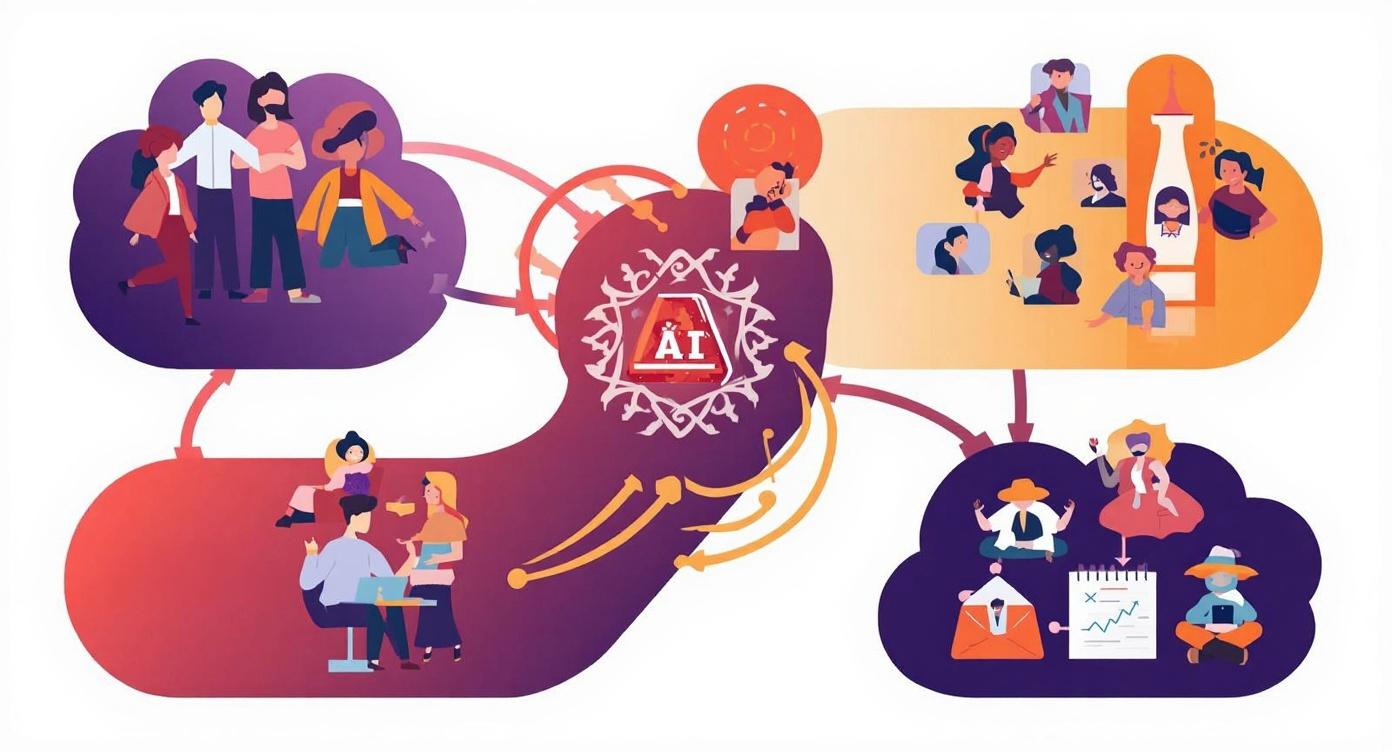
The rapid adoption of AI across industries has created a widening skills gap, and the consequences fall hardest on young people entering the workforce without access to training or education in AI-adjacent skills. LinkedIn, which sits at the intersection of professional development and workforce analytics, has responded through its philanthropic initiatives, including the Future of Work Fund, a grant program designed to support nonprofits that help underrepresented communities prepare for the AI economy.
For youth-serving nonprofits, this represents a significant funding opportunity. The fund supports organizations working at the intersection of workforce development and technology access, with a particular emphasis on programs that serve young adults from communities historically excluded from the tech sector. Whether your nonprofit runs job training programs, mentorship initiatives, or community education courses, the LinkedIn Future of Work Fund may be relevant to your work.
This article breaks down what the fund offers, who is eligible, how to apply, and how to position your organization's AI workforce development programs for success. We also explore the broader landscape of AI workforce grants available to nonprofits in 2026, because the LinkedIn fund is one piece of a larger ecosystem of technology-focused philanthropic investment.
What the LinkedIn Future of Work Fund Offers
LinkedIn's philanthropic arm has committed substantial resources to preparing communities for the future of work, with AI skills at the center of that vision. The Future of Work Fund operates through LinkedIn's broader social impact strategy, which combines direct grants with in-kind resources that leverage LinkedIn's core platform capabilities. This multi-layered approach means that funded organizations receive more than just financial support.
LinkedIn has committed at least $3 million to the initiative, with individual grants typically ranging from $200,000 to $300,000 per organization. But the fund's value extends well beyond the monetary component. Funded organizations also receive free access to LinkedIn Learning for program participants and staff, including over 150 AI Skills Pathways, along with labor market insights data to help organizations align their training programs with actual employer needs, and visibility through LinkedIn's network to help graduates connect with employment opportunities. The combination of cash grants and platform resources makes this funding particularly valuable for organizations that want to build sustainable workforce programs rather than one-off training events.
LinkedIn has focused these investments on organizations that serve communities facing the greatest barriers to economic opportunity, including young adults without college degrees, people of color, individuals in rural areas, and first-generation professionals. The fund has a particular geographic focus on projects in the United States, United Kingdom, France, Germany, and India. LinkedIn cites research suggesting that by 2030, 70% of the skills required for jobs will have changed, accelerated by AI, which underscores the urgency of preparing young workers now for a rapidly shifting labor market.
Financial Support
- Direct grants for AI workforce development programs
- Multi-year funding for program sustainability
- Capacity-building support for organizational AI readiness
In-Kind Resources
- LinkedIn Learning licenses for participants and staff
- Labor market insights and talent analytics data
- Platform visibility and networking opportunities for graduates
Who Is Eligible and How to Position Your Application
LinkedIn's workforce development grants target legally registered nonprofits and charities (501(c)(3) status required for U.S. organizations) that focus on workforce readiness, skills training, and economic mobility for underserved populations. Eligible organizations must demonstrate a clear use of AI innovation to expand economic opportunity and must support young adults and career starters who are overcoming barriers to economic opportunity. The fund prioritizes organizations that can receive philanthropic grant funding directly and have the organizational capacity to implement AI-related programming effectively.
Youth-serving organizations are particularly well-positioned for this fund. Programs that combine technical skills training with soft skill development, mentorship, and direct pathways to employment align closely with LinkedIn's theory of change. The fund has supported organizations ranging from large national workforce development nonprofits to smaller community-based organizations operating in specific metropolitan areas, suggesting that organizational size is less important than program quality and community impact.
Strengthening Your Application
Based on publicly available information about past funding recipients and LinkedIn's stated priorities, several factors appear to strengthen applications. First, organizations that can demonstrate clear employment outcomes, not just training completion but actual job placement and retention data, tend to perform well. Second, programs that incorporate AI skills alongside other professional competencies (communication, problem-solving, project management) reflect LinkedIn's holistic view of workforce readiness. Third, organizations with diverse leadership that reflects the communities they serve align with LinkedIn's equity commitments.
If your organization has not previously offered AI-focused programming, that does not necessarily disqualify you. LinkedIn recognizes that many effective workforce development organizations are still building their AI capacity. An application that presents a thoughtful plan for integrating AI skills into existing programs, with clear milestones and learning objectives, can be compelling even without a track record of AI-specific programming. Having a solid AI strategic plan that demonstrates organizational readiness and vision will strengthen your application significantly.
Designing AI Workforce Programs That Funders Want to Support
The most fundable AI workforce development programs are those that connect training directly to labor market demand. LinkedIn's own data shows which AI-related skills employers are actively hiring for, and aligning your program curriculum with this data creates a compelling case for investment. Here are the areas where demand is strongest and where nonprofits can make the biggest impact.
AI Literacy for Every Career Path
The baseline competency every worker needs
Not everyone needs to become an AI engineer, but nearly every professional role now benefits from basic AI literacy. Programs that teach young adults how to use AI tools effectively in administrative, creative, analytical, and customer service roles address the broadest segment of employer demand. This includes understanding how to prompt AI tools, evaluate AI outputs for accuracy, and integrate AI into daily workflows across industries like healthcare, finance, education, and social services.
Data Skills and AI-Powered Analytics
High-demand skills for the data economy
Data literacy combined with AI tool proficiency is one of the most in-demand skill combinations in 2026. Programs that teach participants how to use AI-powered spreadsheet tools, create dashboards with natural language queries, and interpret AI-generated insights are preparing young adults for roles across virtually every industry. These skills are particularly accessible because they build on tools like Excel and Google Sheets that participants may already have some familiarity with.
AI-Augmented Creative and Content Skills
Preparing the next generation of content creators
Content creation, marketing, and communications roles have been transformed by AI. Programs that teach young adults how to use AI for writing, design, video production, and social media management prepare them for roles in marketing agencies, corporate communications departments, and nonprofit organizations. The emphasis should be on using AI as a tool that enhances human creativity rather than replacing it, with strong attention to ethical considerations and brand authenticity.
AI for Business Operations
The operational backbone of modern organizations
Every organization needs people who can manage AI-enhanced operational workflows. Programs that cover project management with AI tools, CRM administration, workflow automation, and process optimization prepare participants for operations and administrative roles that have been significantly enhanced by AI. These positions often serve as entry points into organizations, with clear advancement pathways into management and strategic roles.
Beyond LinkedIn: The 2026 AI Workforce Grant Landscape
The LinkedIn Future of Work Fund is part of a broader wave of philanthropic investment in AI workforce development. Understanding the full landscape helps nonprofits identify the best funding match for their programs and build diversified funding strategies that do not depend on any single source. As we detailed in our comprehensive guide to AI grants for nonprofits in 2026, the available funding exceeds $50 million across multiple programs.
Tech Company Philanthropic Programs
Google.org has committed $75 million to its AI Opportunity Fund, aimed at reaching over one million Americans with AI skills training through workforce development organizations. The GitLab Foundation and OpenAI have partnered on $4 million in grants (16 awards) through their AI Solutions for Economic Opportunity program, targeting U.S. nonprofits using AI for economic mobility among low-income populations. Google.org has also launched $60 million in AI Impact Challenges focused on public services and scientific discovery. Each of these programs has slightly different priorities and eligibility criteria, but all share a focus on preparing communities for an AI-influenced labor market. Organizations that can articulate how their workforce programs address both the technical skills gap and the equity dimensions of AI adoption are well-positioned across multiple funding sources.
Government and Foundation Funding
Federal workforce development programs under the Workforce Innovation and Opportunity Act (WIOA) increasingly recognize AI skills as a priority area. State-level workforce boards have started earmarking funds for AI and digital literacy training, particularly for dislocated workers and young adults. On the foundation side, organizations like the Lumina Foundation, the Annie E. Casey Foundation, and the Markle Foundation have all invested in AI workforce readiness programs. The growing trend of AI readiness as a grantmaking criterion means that even organizations not applying specifically for AI grants can benefit from demonstrating AI capabilities in their standard grant applications.
Applying to Multiple Funds Strategically
Nonprofits should approach AI workforce funding strategically by identifying the unique angle each funder cares about and tailoring applications accordingly. LinkedIn emphasizes employment outcomes and economic mobility. Google.org focuses on scale and innovation. Government programs prioritize specific populations and geographic areas. By understanding these distinctions, organizations can apply to multiple funds without creating program conflicts, building a diversified funding base that supports comprehensive AI workforce development.
Measuring and Demonstrating Impact in AI Workforce Programs
Funders like LinkedIn are increasingly sophisticated about impact measurement, and organizations that can demonstrate clear outcomes have a significant advantage in competitive grant processes. For AI workforce development programs, the metrics that matter most extend beyond simple training completion rates to encompass employment outcomes, wage progression, and long-term career trajectory.
Effective measurement starts with establishing clear baselines before program participation begins. Track participants' starting employment status, income levels, and self-assessed AI confidence. Then measure changes at program completion and at intervals afterward (90 days, 6 months, 12 months) to demonstrate sustained impact. LinkedIn's emphasis on employment outcomes means that job placement rates, starting salaries, and employer satisfaction scores are particularly relevant metrics for applications to the Future of Work Fund.
Organizations should also track leading indicators that predict long-term success, such as LinkedIn profile creation and engagement (relevant for LinkedIn-funded programs specifically), professional network growth, and participants' ability to articulate AI skills in job interviews. Using AI-powered data visualization tools to present this impact data can itself demonstrate your organization's comfort with the technology you are teaching.
Getting Started: Practical Steps for Nonprofits
If your organization is interested in pursuing LinkedIn Future of Work Fund grants or similar AI workforce development funding, start by assessing your current position. Do you already offer workforce development programs? Do you have experience integrating technology skills into your curriculum? Do you serve populations that are underrepresented in the tech workforce? If you can answer yes to at least two of these questions, you likely have a foundation to build on.
Action Steps for Applying in 2026
A practical roadmap for positioning your organization for AI workforce funding
- Audit your current programming to identify where AI skills training could enhance existing workforce development offerings without requiring a complete program redesign
- Build staff AI competency first by ensuring your trainers and program staff are comfortable with AI tools before they teach them to participants
- Gather baseline data on your current participants' employment outcomes, AI skill levels, and career trajectories to establish benchmarks for measuring program impact
- Connect with local employers to understand which AI skills they need in their workforce, creating demand-driven curriculum that funders find compelling
- Document your equity approach by articulating how your programs specifically address barriers that underrepresented communities face in accessing AI skills and AI-adjacent jobs
- Start a pilot with even a small AI skills component in your current programming. Having early results, even modest ones, strengthens your application compared to a purely conceptual proposal
- Monitor LinkedIn Social Impact announcements for the latest funding cycle information, application deadlines, and any shifts in program priorities
Preparing Young People for an AI-Shaped Future
The LinkedIn Future of Work Fund represents more than a funding opportunity. It reflects a growing recognition across the technology sector that the transition to an AI-powered economy must be intentional and inclusive, or it will deepen the inequalities that already exist. Youth-serving nonprofits are uniquely positioned to bridge this gap because they combine community trust, cultural competency, and deep relationships with the populations most likely to be left behind by technological change.
Whether you secure LinkedIn funding or not, the underlying imperative is clear. Young people entering the workforce in 2026 and beyond will need AI literacy alongside their other professional skills. Nonprofits that invest in building this capacity, both in their staff and in their programs, will be better positioned to serve their communities and to attract the philanthropic support that is increasingly flowing toward organizations at the intersection of technology and equity.
The window for action is open. Funders are actively looking for organizations that can help prepare underserved communities for the AI economy. Your organization's relationships, credibility, and mission focus are exactly what this moment demands. The question is not whether to add AI workforce skills to your programming, but how quickly you can build a program that changes lives.
Ready to Build AI Workforce Programs?
We help nonprofits design AI workforce development programs, build grant applications, and develop the organizational AI capacity that funders want to see.