
Managing AI Across Time Zones: Global Operations and Coordination
As nonprofits expand globally and adopt distributed teams, managing AI tools across time zones presents unique challenges and opportunities. This comprehensive guide explores practical strategies for coordinating AI workflows, enabling asynchronous collaboration, implementing follow-the-sun models, ensuring meeting fairness, and building governance structures that work around the clock—helping your organization deliver 24/7 impact without burning out your team.
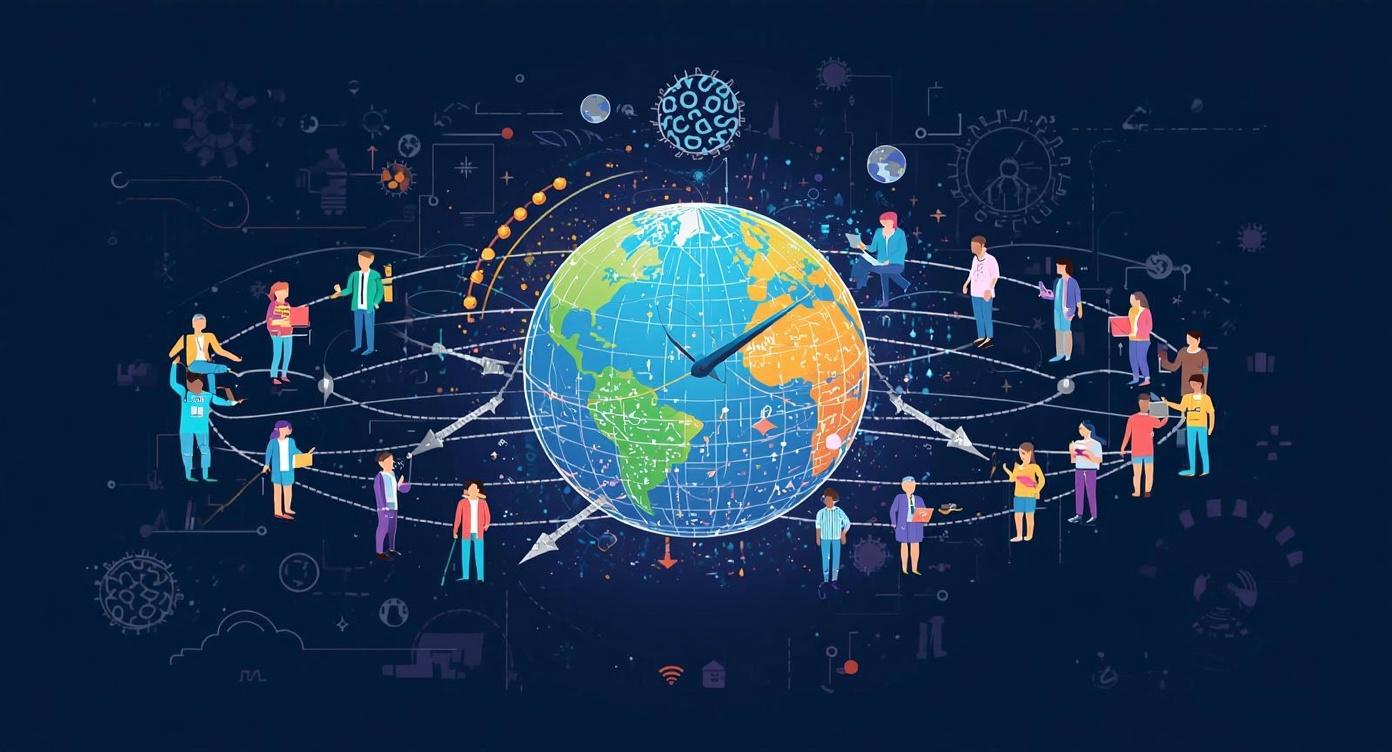
When Spring ACT launched Sophia—a chatbot assisting domestic violence survivors in 172 countries—they faced a challenge that's becoming increasingly common for nonprofits: how do you manage AI tools that serve people around the world, 24/7, while your team sleeps? As 82% of nonprofits now use AI in some capacity, and global collaboration becomes the norm rather than the exception, managing these tools across time zones has evolved from a technical problem into a strategic imperative.
The promise is powerful: AI enables what's called the "follow-the-sun" model, where critical work progresses continuously as team members in different regions seamlessly hand off tasks. Organizations using this approach can see up to 40% reduction in response times and 25% increase in stakeholder satisfaction. But the reality is more complex. When your New York office signs off at 5 PM and expects Manila to pick up the thread at their 6 AM, miscommunication, duplicated work, and frustration can quickly erode any efficiency gains.
The challenge extends beyond logistics. How do you ensure meeting times don't consistently burden certain regions? How do you make asynchronous decisions when AI recommendations need human oversight? How do you train staff on AI tools when they're never online simultaneously? And critically, how do you build governance structures that protect vulnerable populations across jurisdictions with wildly different regulations?
This isn't just about using collaboration software or scheduling tools—though those matter. It's about fundamentally rethinking how your organization coordinates, decides, and deploys AI in a world where "normal business hours" is a meaningless concept. It's about building systems that respect both the power of continuous operations and the human need for boundaries, rest, and fairness.
Whether you're coordinating field operations across continents, managing multilingual AI systems, or simply trying to get your distributed team aligned on which AI tools to use, this guide will help you navigate the complexities of global AI management. You'll learn practical strategies for asynchronous workflows, discover how to implement fair rotation policies, understand when real-time synchronization matters, and build governance frameworks that work across borders. Most importantly, you'll learn how to harness AI's 24/7 potential without requiring 24/7 availability from your team.
The Reality of Global AI Operations
Before diving into solutions, it's essential to understand what actually changes when you add time zones to your AI implementation. The shift isn't merely logistical—it fundamentally alters how your organization makes decisions, coordinates work, and maintains accountability.
The Hidden Costs of Poor Time Zone Management
When a caseworker in Kenya flags an AI-generated client recommendation that seems culturally inappropriate, but the US-based AI governance team won't review it for 12 hours, what happens? The work stops. When your London team implements new AI prompt templates but doesn't document them properly for Singapore to continue the next day, you get duplicate effort or, worse, conflicting approaches that confuse beneficiaries.
These aren't hypothetical scenarios. Nonprofits report that poor time zone coordination creates specific, measurable problems: response delays of 3-16 hours for simple questions, decisions that require multiple 24-hour cycles to resolve, team members feeling excluded from critical discussions, and burnout from expecting people to work outside their hours. One international development organization found that 35% of their staff time was spent on manual coordination and clarification—work that added no direct value to beneficiaries.
What Makes AI Different
Managing distributed teams across time zones isn't new, but AI introduces unique complications. AI tools often require real-time human oversight for quality assurance, ethical review, or handling edge cases. Unlike traditional software that runs predictably, AI can produce outputs that need immediate human judgment—but "immediate" means something different when your reviewer is asleep.
AI systems also generate vast amounts of data that teams need to monitor, analyze, and act upon. When your fundraising AI in New York identifies major donor prospects overnight, but your relationship managers in Asia see the alerts 12 hours later, you've lost the window for timely engagement. When your program evaluation AI flags concerning patterns in client outcomes, but the program team can't review them until the next business day, interventions get delayed.
Additionally, AI governance requires coordinated decision-making. Questions like "Should we approve this AI tool for processing refugee data?" or "How should we respond to this algorithmic bias incident?" can't wait for the next all-hands meeting. Yet 92% of nonprofits feel unprepared for AI implementation, and only 10% have formal AI policies—making coordinated, timely decisions across time zones even more challenging.
Building Asynchronous-First AI Workflows
The foundational principle for managing AI across time zones is simple: assume people won't be available at the same time. This "asynchronous-first" approach means defaulting to communication and workflows that don't require real-time presence, while reserving synchronous interaction for genuinely collaborative needs that can't be handled any other way.
Research shows that successful distributed teams use asynchronous methods for 75% of their communication, leaving only 25% for real-time interaction. But implementing this isn't just about choosing Slack over Zoom—it requires fundamentally rethinking how your organization uses AI.
Documentation as Default
Create comprehensive records that anyone can access anytime
Every AI-related decision, prompt template, workflow change, or governance decision should be documented in a shared, searchable repository. This isn't bureaucracy—it's essential infrastructure for asynchronous work.
- Use tools like Notion, Confluence, or your CRM's knowledge base to maintain living documentation of AI prompts, workflows, and decisions
- Create templates that guide staff in documenting their AI work, including context, reasoning, and next steps
- Implement AI-powered meeting recording and transcription tools like Fireflies or Otter.ai so team members in other time zones can catch up on synchronous discussions
- Require that all AI governance decisions include written rationale accessible to all stakeholders, regardless of time zone
Clear Response Expectations
Define when different types of issues need resolution
Not all AI issues are equally urgent. Establishing clear response time expectations prevents both unnecessary stress and dangerous delays.
- Critical AI failures (system down, severe bias detected, data breach): Immediate response required, escalate across time zones
- Urgent reviews (unusual AI output affecting vulnerable populations): 4-hour response window, use follow-the-sun coverage
- Standard questions (how to use a feature, prompt optimization): 24-hour response during business days
- Strategic decisions (new tool evaluation, policy updates): Allow multi-day asynchronous discussion before decision
The Art of Asynchronous Communication
Asynchronous communication requires different skills than real-time conversation. When unclear messages create 3-16 hour delays before recipients can ask clarifying questions, quality communication becomes critical. Here's what works:
Front-load context and decisions
Instead of "Can we discuss the new AI donor screening tool?", write: "I've reviewed three AI donor screening tools (comparison doc here). I recommend Tool X because it handles our data privacy requirements and integrates with our CRM. Main trade-off: costs $200/month more than Tool Y but saves an estimated 10 hours/week. Concerns or alternative perspectives? Aiming to decide by Friday."
Make requests actionable
Specify what you need, by when, and what happens if you don't hear back. "Please review this AI-generated grant report by Thursday 5 PM your time. If I don't hear concerns, I'll submit Friday morning."
Use video for complex explanations
Tools like Loom allow you to record your screen and narration, providing richer context than text alone. This works well for demonstrating new AI features or walking through complex workflows.
Close loops explicitly
When a decision is made or issue resolved, confirm clearly: "Decision finalized: we're implementing Tool X starting March 1. Implementation plan here. No further input needed unless concerns arise."
Implementing Follow-the-Sun AI Operations
The follow-the-sun model takes asynchronous work to the next level: organizing teams so that work progresses continuously as team members in different regions hand off tasks at the end of their day to colleagues just starting theirs. When implemented well, this can reduce response times by 40% and increase satisfaction by 25%—but it requires careful orchestration.
What Follow-the-Sun Looks Like for Nonprofits
Consider a global health nonprofit using AI to analyze field reports from clinics worldwide. As health workers in East Africa submit their reports at the end of the day, AI systems process the data overnight. When the Africa regional team signs off, analysts in Geneva review flagged issues during their morning hours. As Geneva wraps up, the Americas team picks up any escalations, refines AI models based on the day's learnings, and prepares briefs for East Africa to review when they start their next day.
This isn't about requiring 24/7 coverage from any individual—it's about designing workflows so that AI and distributed humans together create continuous progress. The AI handles automation and initial processing; humans in each region handle oversight, judgment, and refinement during their normal working hours.
Core Components of Follow-the-Sun Workflows
Successful follow-the-sun operations require three things: standardized processes that work the same way everywhere, excellent handoff mechanisms, and AI-powered coordination tools. Let's examine each:
Standardized AI Workflows Across Regions
Every region must follow the same workflows, escalation paths, and documentation standards. Variations create confusion and broken handoffs. This means:
- Identical AI prompt libraries accessible to all regions, with version control to ensure everyone uses current prompts
- Shared quality criteria for AI outputs—what constitutes acceptable vs. needs-review vs. unacceptable output
- Common escalation protocols defining when to flag issues, who reviews them, and within what timeframe
- Universal training materials ensuring every team member has the same foundational AI knowledge
Handoff Protocols That Actually Work
The handoff is where follow-the-sun either thrives or falls apart. Every task transition must include sufficient context for the receiving team to continue effectively. Best practices include:
- Handoff templates: Require structured information including current status, actions taken, issues encountered, next steps needed, and priority level
- AI-generated summaries: Use AI to automatically summarize the day's work, flagged items, and outstanding decisions—giving the next team a quick orientation
- Overlap hours: Create 1-2 hours of overlap between regions for complex handoffs—not for routine work, but for clarifying ambiguous situations
- Ownership tracking: Use project management tools like Asana, Trello, or Basecamp with clear ownership indicators showing who's responsible during which hours
AI Tools That Enable 24/7 Coordination
By 2026, AI-powered project management and coordination tools have become sophisticated enough to actively facilitate follow-the-sun workflows. Key capabilities include:
- Automatic task routing: AI assigns work to the appropriate region based on time zones, expertise, and workload
- Predictive analytics: Tools that forecast bottlenecks, identify tasks likely to miss deadlines, and recommend adjustments
- Real-time translation: AI that translates documentation, slack messages, and handoff notes into each team member's preferred language
- Dashboard visibility: Shared dashboards showing real-time status across all regions, making global coordination transparent
When Not to Use Follow-the-Sun
Follow-the-sun workflows aren't appropriate for everything. They work best for high-volume, process-driven work where continuous progress matters—like monitoring AI systems, processing applications, or analyzing data. They work poorly for creative collaboration, strategic planning, or relationship-building where the same people need to think together.
A realistic approach uses follow-the-sun for operational AI work (monitoring, processing, initial review) while reserving synchronous time for decisions requiring nuanced judgment, cultural context, or building shared understanding. Don't force everything into a 24/7 model just because you can—use it where it genuinely adds value.
Meeting Fairness and Time Zone Equity
Even with excellent asynchronous workflows, some conversations require real-time interaction. The question is: who bears the burden of inconvenient meeting times? When consistently expecting certain team members to join calls at 6 AM or 10 PM, you create resentment, burnout, and an unspoken hierarchy where some regions matter more than others.
Progressive organizations now implement "time zone equity" policies, ensuring no single team member consistently takes the burden of inconvenient meeting times. This isn't just about fairness—it's about building a culture where every region feels equally valued and where chronic sleep disruption doesn't lead to turnover.
Rotation Strategies That Work
The core principle is simple: rotate meeting times so everyone shares the inconvenience. If London stays late this week, let New York take the early slot next time. Implement a systematic rotation schedule for recurring meetings, making the distribution of off-hours meetings equitable across regions.
Some organizations use fairness algorithms that track which team members have attended how many inconvenient meetings, automatically suggesting rotation schedules that balance the burden. Others implement maximum limits—for instance, no more than two early-morning or late-night meetings per month per person—preventing chronic sleep disruption.
AI-Powered Meeting Scheduling for Time Zone Equity
By 2026, AI scheduling tools have become sophisticated enough to optimize not just for availability, but for fairness. Key features to look for include:
- Time zone visualization: Displays all participants' local times simultaneously, making it obvious who's sacrificing sleep
- Fairness scoring: Ranks meeting options by how equitably they distribute inconvenient times across participants
- Working hours integration: Respects each person's designated working hours and flags when meetings would fall outside them
- Rotation rules: Automatically applies your rotation policy, suggesting different time slots for recurring meetings
- Burden tracking: Monitors which team members have attended the most off-hours meetings and adjusts future scheduling accordingly
- DST awareness: Accounts for daylight saving time variations across regions, preventing scheduling errors
When Overlap Hours Make Sense
Rather than forcing everyone into inconvenient meeting times, many organizations establish limited "core collaboration hours"—typically 3-4 hours where all team members commit to being available. This might be 8 AM Pacific / 11 AM Eastern / 4 PM London / midnight in parts of Asia—imperfect for everyone, but predictable and limited in duration.
The key is defining what actually requires synchronous time. Reserve overlap hours for decisions requiring real-time dialogue, complex problem-solving where immediate back-and-forth clarifies thinking, and relationship-building that benefits from spontaneous conversation. Everything else defaults to asynchronous methods.
One international education nonprofit implements "synchronous sprints"—two hours per week where the whole team is online together. They batch all real-time discussions, brainstorming, and collaborative decisions into this window. The rest of the week operates asynchronously. Team members report this predictability lets them plan their lives while still maintaining strong collaboration.
Making Meetings Work for Everyone
When you do hold synchronous meetings across time zones, small practices make a big difference. Record every meeting with AI transcription so those who couldn't attend (or had to wake up at 5 AM) can catch up asynchronously. Start meetings with a clear agenda distributed in advance, allowing asynchronous input before the call. End with documented decisions and action items, preventing confusion about what was actually agreed.
Consider splitting some discussions across multiple smaller regional meetings rather than one large global call. For example, rather than a single all-hands meeting at a universally inconvenient time, hold three regional meetings with leadership attending each, then synthesize insights asynchronously. This respects time zones while maintaining organizational coherence.
Building AI Governance Across Time Zones and Jurisdictions
Managing AI operations across time zones isn't just a logistics challenge—it's a governance challenge. When your organization operates globally, you're navigating multiple regulatory frameworks, cultural contexts, and ethical expectations. Your AI governance structure must account for these differences while maintaining organizational coherence.
Currently, only 10% of nonprofits have formal AI policies, and most AI governance frameworks emerge from corporate or academic institutions with limited nonprofit involvement. If nonprofits don't actively shape AI governance, inequities will be automated and normalized. For global nonprofits, this challenge is even more acute: governance decisions can't wait for the next scheduled meeting when time zones separate decision-makers.
Distributed Authority with Clear Boundaries
The traditional model of centralized AI governance—where all decisions flow through a headquarters committee—breaks down across time zones. Waiting 24 hours for approval from another continent creates bottlenecks that stall operations. The solution is distributed authority: empowering regional teams to make certain decisions locally while maintaining clear boundaries for what requires global coordination.
For example, a global health nonprofit might allow regional offices to adapt AI prompt templates for local languages and cultural contexts without approval, while requiring global review for any AI tools that process health data, changes to AI ethics policies, or deployments affecting vulnerable populations. The key is defining these boundaries explicitly in your AI acceptable use policy, so regional teams know when they can act independently and when they need coordination.
Regional AI Champions
Rather than centralizing all AI expertise in one location, develop AI champions in each region. These individuals understand both global standards and local context, can make time-sensitive decisions during their working hours, and serve as the interface between regional operations and global governance.
Regional champions should meet regularly (using rotation schedules for fairness) to share learnings, coordinate policies, and escalate issues that require global input. This creates a governance network rather than a governance bottleneck.
Asynchronous Governance Processes
Many governance decisions don't require real-time discussion—they require thoughtful input from diverse perspectives. Use asynchronous processes for policy development, tool evaluation, and ethical review when immediate action isn't required.
For instance, when evaluating a new AI tool, circulate evaluation criteria and a proposal document, allow 3-5 business days for regional champions to review and comment asynchronously, synthesize feedback, and finalize the decision. This gives everyone time to contribute thoughtfully during their working hours.
Navigating Different Regulatory Environments
Global AI governance gets complicated when different regions face different regulations. GDPR in Europe, CCPA in California, sector-specific regulations for healthcare or education, and emerging AI-specific laws all create a patchwork of compliance requirements. Your governance structure needs to account for this without creating impossible operational complexity.
The most practical approach is designing to the highest standard—if GDPR is the strictest regulation you face, build your AI data practices to meet GDPR globally, even in regions where it doesn't legally apply. This simplifies operations, reduces risk, and demonstrates consistent ethical standards regardless of jurisdiction. Document these standards clearly and ensure all regional teams understand both the requirements and the reasoning.
However, some regulatory differences require regional variation. For example, data residency requirements may prevent storing certain data outside specific countries, or cultural norms around privacy may differ significantly. In these cases, your governance structure should explicitly acknowledge regional variations while maintaining core principles. Document these exceptions transparently and review them regularly to ensure they don't drift from organizational values.
Crisis Response Across Time Zones
What happens when an AI system fails at 2 AM headquarters time? When a bias incident affects vulnerable populations, but the governance committee won't meet for 12 hours? Crisis response requires specific protocols that work around the clock.
Establish clear escalation paths with designated contacts in each major time zone who have authority to make time-sensitive decisions. Create a tiered response framework that defines what constitutes a crisis requiring immediate action versus an issue that can wait for normal governance processes. Ensure multiple people in each region have access to shut down AI systems if necessary—don't create a situation where only one person can act in an emergency.
Document all crisis responses immediately, even if they happen outside normal processes, and review them during the next governance meeting. This creates accountability while allowing necessary flexibility for genuine emergencies. Your AI ethics committee should include members across multiple time zones specifically to enable rapid response.
Training and Supporting Distributed Teams
Training staff on AI tools when they're never online simultaneously presents unique challenges. You can't simply schedule a workshop when your team spans Tokyo to Toronto. Yet given that 69% of nonprofit AI users have no formal training, ensuring competent, consistent AI use across regions is critical.
Asynchronous Training Infrastructure
Effective global AI training relies heavily on self-paced, asynchronous resources that anyone can access during their working hours. This means creating comprehensive training libraries including recorded video tutorials with transcripts, written documentation with screenshots and examples, interactive practice environments where staff can experiment with AI tools safely, and assessment mechanisms to verify competency.
However, asynchronous training alone isn't sufficient. People learn AI by doing, asking questions, and getting feedback—activities that benefit from human interaction. The solution is a hybrid approach: asynchronous foundational learning combined with regional practice sessions where staff can ask questions and work through real scenarios with an experienced facilitator during their normal working hours.
Building Global AI Literacy
Creating a globally AI-literate organization requires more than training individual users—it requires building shared understanding of how AI fits your mission, culture, and ways of working. This is harder when teams rarely interact in real-time. Intentional practices help:
- Regional AI communities of practice: Create forums where staff in similar time zones can share tips, challenges, and successes with AI tools
- Global prompt library: Maintain a shared repository where anyone can contribute successful AI prompts, with examples from different regions and use cases
- Multilingual support: Translate training materials into languages spoken by your team, and use AI translation tools to make async discussions accessible across language barriers
- Cross-regional mentorship: Pair experienced AI users with newcomers from different regions, using async communication and occasional overlap-hour video calls for knowledge transfer
For organizations struggling to build technical capacity globally, consider how creating an AI training program when you're not technical yourself can help you develop accessible learning experiences regardless of where your team is located.
Technical Support Across Time Zones
When someone encounters an AI tool issue at 10 PM headquarters time, who helps them? Expecting users to wait 12 hours for support creates frustration and work stoppages. Yet providing 24/7 live support is unrealistic for most nonprofits.
The practical middle ground combines excellent self-service resources (searchable knowledge bases, AI-powered chatbots that can troubleshoot common issues, video tutorials for complex problems) with regional support coverage during business hours. Designate AI champions in each major time zone who can provide peer support, with clear escalation paths for issues they can't resolve.
For critical systems, consider hybrid models: core support during headquarters hours, complemented by outsourced or volunteer support for other time zones, or AI-powered initial triage that routes issues to the appropriate human when regional support resumes. The goal isn't perfect 24/7 support—it's ensuring no one is completely stuck for extended periods because of their time zone.
Technology Stack for Global AI Coordination
The right tools don't solve time zone challenges by themselves, but the wrong tools make them worse. When building your technology stack for global AI operations, prioritize tools that support asynchronous work, provide visibility across regions, and integrate well with each other. By 2026, organizations are moving toward consolidated platforms rather than fragmented systems—a single system of record with workflow automation and embedded AI beats separate systems for donor management, casework, and volunteer scheduling.
Essential Tool Categories
Project Management & Task Coordination
Tools like Asana, Trello, or Basecamp track work as it moves through the pipeline across time zones. Essential features include clear ownership indicators, status visibility, automated task routing based on time zones, and handoff tracking.
Documentation & Knowledge Sharing
Platforms like Notion, Confluence, or SharePoint create living documentation of AI prompts, workflows, and decisions. Look for version control, search functionality, integration with other tools, and collaborative editing.
Communication Platforms
Tools like Slack or Microsoft Teams support both async and sync communication. Configure threading for organized discussions, searchable history, integration with calendaring, and status indicators showing who's currently working.
Meeting Recording & Transcription
AI tools like Fireflies, Otter.ai, or built-in Zoom transcription ensure meetings are accessible to those who couldn't attend. Features should include accurate transcription, action item extraction, searchable archives, and multiple language support.
Asynchronous Video
Platforms like Loom allow screen recording with narration for explaining complex processes. Use for training, handoffs, or any situation where showing is clearer than telling.
AI Scheduling Assistants
Tools that automatically find optimal meeting times across time zones, accounting for working hours, rotation schedules, and fairness. Look for time zone visualization, DST awareness, and fairness scoring.
Shared Dashboards & Analytics
Real-time visibility tools showing project status, AI system performance, and team activity across all regions. Critical for maintaining coherence when teams don't overlap.
Integration Over Accumulation
Tool sprawl—accumulating dozens of disconnected applications—is especially problematic across time zones because it fragments information and creates coordination overhead. When your New York team documents decisions in one tool, Manila expects them in another, and London uses a third, nothing gets done efficiently.
Prioritize platforms that integrate well or, better yet, consolidate functionality. A unified CRM with embedded AI, documentation, and task management beats three separate tools that require manual coordination. This is particularly important for distributed teams working with unified AI systems—integration reduces friction that's magnified by time zone differences.
Starting Small: A Practical Implementation Path
Building global AI coordination might sound overwhelming, especially if you're currently struggling with basic time zone logistics. The key is starting small, proving value, and expanding systematically. Here's a realistic implementation path:
Phase 1: Document Current Reality (Week 1-2)
Before optimizing anything, understand your current state. Map which team members are in which time zones, identify your current AI tools and who uses them, document existing coordination pain points (delayed decisions, duplicated work, frustration), and note any existing workarounds people have created.
This assessment often reveals that some things already work well—maybe one team has developed effective handoff practices, or a particular tool facilitates good async communication. Identify what's working and why, so you can replicate it rather than starting from zero.
Phase 2: Establish Foundations (Week 3-6)
Focus on foundational practices that enable everything else. Start by creating a single source of truth for AI documentation—choose one platform (Notion, Confluence, your CRM's knowledge base) and consolidate all AI-related information there. Establish response time expectations for different types of issues, so people know when to expect replies.
Implement basic handoff protocols for any work that crosses time zones. Use simple templates requiring status, actions taken, and next steps. Designate one AI champion per major time zone as a contact point for questions and escalations. These foundations enable the more sophisticated practices you'll build later.
Phase 3: Pilot Asynchronous Workflows (Week 7-12)
Choose one specific workflow that currently requires real-time coordination and redesign it asynchronously. For example, if approving AI-generated grant reports currently requires back-and-forth meetings, create an async approval process with clear criteria, structured feedback templates, and defined timelines.
Run this as a pilot, gather feedback, refine, and document what works. Success here builds confidence for tackling larger coordination challenges. It also helps your team develop the skills needed for async work—clear communication, comprehensive documentation, and trust that work will continue even when they're offline.
Phase 4: Implement Meeting Equity (Week 13-16)
Review your current meeting schedule and identify who bears the most burden for inconvenient times. Implement rotation for recurring meetings and establish maximum limits on off-hours meetings per person. Use AI scheduling tools that visualize time zones and suggest fair alternatives.
This won't eliminate inconvenient meetings entirely, but it distributes them equitably and demonstrates your commitment to time zone fairness. Staff notice when leadership takes equity seriously, and it affects morale, retention, and willingness to collaborate across regions.
Phase 5: Develop Global Governance (Month 5-6)
Once basic coordination is working, tackle governance. Define clear boundaries for regional vs. global decisions regarding AI. Establish your network of regional AI champions and create protocols for escalation and crisis response. Document these governance structures in your AI acceptable use policy and communicate them widely.
Test your governance structure with real scenarios—if an AI bias incident occurred at 3 AM, would your protocols work? Who would make decisions? How would information flow? Revise based on these tests before you actually face a crisis.
Phase 6: Scale and Optimize (Month 7+)
With foundations in place, you can tackle more sophisticated approaches like full follow-the-sun workflows for high-volume processes, integrated training programs supporting global staff development, advanced AI tools that automate handoffs and task routing, and continuous improvement processes that capture learnings and refine practices.
Remember that global coordination is never "finished"—as your organization grows, as AI capabilities evolve, and as team composition changes, you'll continuously adapt. Build feedback loops that help you identify what's working and what needs adjustment.
Common Pitfalls and How to Avoid Them
Even well-intentioned efforts at managing AI across time zones can stumble. Here are patterns to watch for and avoid:
Headquarters-Centric Thinking
The most common mistake is designing everything around headquarters time zones and treating other regions as accommodating participants rather than equal partners. This manifests as consistently scheduling meetings convenient for HQ, centralizing all decision-making authority in one time zone, and designing workflows that assume headquarters staff are the primary AI users.
The fix requires conscious effort: actively rotate meeting times even when it's inconvenient for leadership, distribute decision-making authority to regional teams, and design workflows that work equally well regardless of which time zone initiates them. If your leadership team is primarily in one time zone, ensure regional voices have real power in AI governance, not just consultative roles.
Over-Reliance on Synchronous Communication
Some teams default to meetings for everything, forcing constant compromise on timing and creating bottlenecks when key people aren't available. This happens when organizations lack strong documentation practices, don't trust that async communication will work, or haven't developed skills for clear written communication.
The solution starts with leadership modeling async-first behavior. When leaders consistently communicate important information in written form, document decisions comprehensively, and demonstrate that async input is valued equally to synchronous participation, the rest of the organization follows. Provide training on effective async communication and celebrate examples of excellent documentation or clear written proposals.
Ignoring Cultural Context
AI tools and practices developed in one cultural context don't always translate directly to another. What seems like an obvious AI application in one region might raise ethical concerns in another. Communication norms differ—some cultures value directness, others prioritize relationship-building before getting to business. Decision-making processes vary in how much consultation is expected versus how quickly individuals should act.
Address this by involving regional teams in AI planning from the beginning, not just implementation. When evaluating AI tools, explicitly ask: "How does this align with cultural values in each region we serve?" Create space for regional teams to adapt global standards to local context, within clear boundaries. Build your global AI governance team with genuine regional diversity, ensuring decision-makers understand different cultural perspectives.
Inadequate Training Support
Rolling out AI tools globally without adequate training support for each time zone creates a situation where some regions have well-trained, confident users while others struggle in isolation. This happens when training is scheduled only during headquarters hours, materials are available only in certain languages, or support is concentrated in one time zone.
Ensure every region has access to training during their working hours, whether through regional facilitators, recorded sessions, or self-paced materials. Translate documentation into languages your team actually speaks. Designate support contacts across time zones so no one waits 24 hours for help with basic questions.
Tool Proliferation Without Integration
Adding new tools to solve coordination problems without retiring old ones or ensuring integration creates a fragmented ecosystem where information lives in multiple places and no one knows the single source of truth. This is especially problematic across time zones because it multiplies coordination overhead.
Before adding any new tool, ask: What will we stop using? How does this integrate with existing systems? Will it create a new silo or break down existing ones? Prioritize platforms that consolidate functionality or integrate deeply with your core systems. Regularly audit your tool stack and ruthlessly eliminate redundancy.
Conclusion: Building Truly Global AI Capacity
Managing AI across time zones isn't primarily a technical challenge—it's an organizational design challenge that requires rethinking how your nonprofit coordinates, decides, and operates. The most sophisticated scheduling tool won't help if your culture expects instant responses, centralizes all authority in one time zone, or treats async communication as second-class.
The organizations succeeding at global AI coordination share common characteristics: they design asynchronous-first, building workflows that assume people won't be available simultaneously. They distribute authority, empowering regional teams to make decisions during their working hours rather than creating bottlenecks. They take time zone equity seriously, ensuring no one consistently bears the burden of inconvenient meetings. They invest in documentation, treating written knowledge as infrastructure rather than overhead. And they build governance structures that work across borders, accounting for regulatory differences and cultural contexts while maintaining organizational coherence.
These practices don't eliminate the challenges of coordinating across time zones—they accept those challenges as inherent to global work and design systems that function despite them. The result is organizations that can genuinely operate 24/7 without requiring 24/7 availability from any individual, that deliver consistent AI-powered services regardless of where beneficiaries are located, and that treat all regions as equal partners rather than headquarters with satellites.
As more nonprofits expand globally and as AI becomes central to operations, the ability to coordinate across time zones evolves from a nice-to-have to a core organizational competency. The organizations building this capacity now—starting small, learning systematically, and improving continuously—will be positioned to deliver impact at a scale impossible for those treating time zones as an afterthought.
Your path forward starts with honest assessment: Where does time zone coordination currently break down in your organization? Which practices from this guide would address your biggest pain points? What could you pilot in the next month to begin building better global coordination? Start there, build on what works, and remember that sustainable global operations are built incrementally, not overnight.
Need Help Building Global AI Capacity?
Managing AI across time zones requires thoughtful planning, the right tools, and organizational practices that respect both efficiency and humanity. Whether you're coordinating distributed teams, implementing follow-the-sun workflows, or building governance structures that work globally, expert guidance can accelerate your progress and help you avoid common pitfalls.