
Managing Gen Z, Millennials, Gen X, and Boomers in AI Adoption
For the first time in history, five generations work side by side in modern organizations. Gen Z brings digital fluency, Millennials offer established AI expertise, Gen X provides strategic selectivity, and Boomers contribute decades of institutional wisdom. Successfully implementing AI in this environment requires understanding not just the technology, but the diverse ways different age groups approach learning, change, and innovation—and designing strategies that leverage these differences as strengths rather than treating them as obstacles.
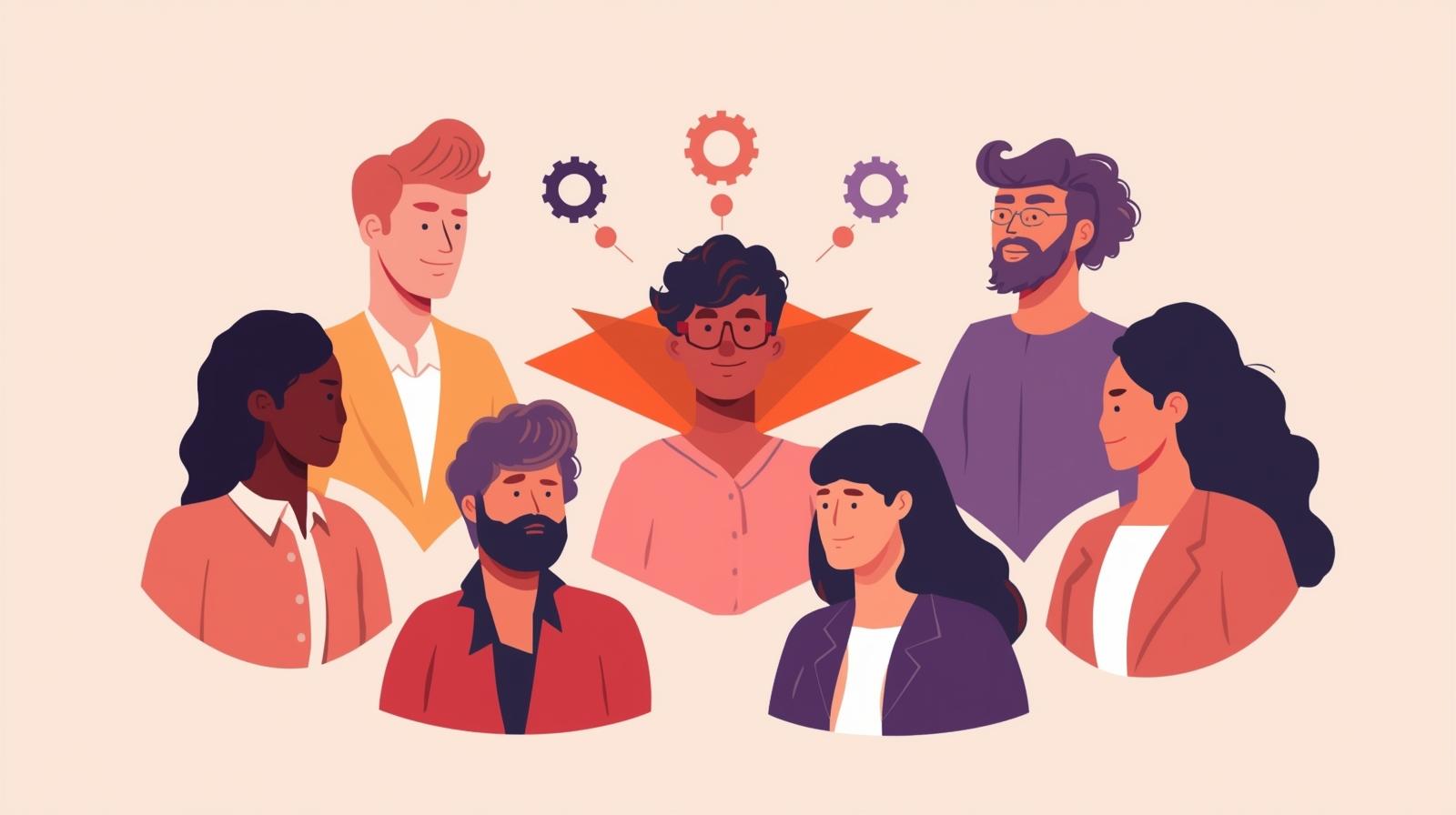
The community foundation's executive director sent a simple email: "We're piloting ChatGPT for grant review summaries." The responses revealed the generational spectrum in vivid detail. The 26-year-old program officer replied within minutes: "Already using it. Can show the team my workflow." The 45-year-old development director responded thoughtfully: "Interested, but want to understand data privacy implications first." The 62-year-old finance director wrote: "Need training before I'm comfortable with this. Can we schedule a session?"
None of these responses are wrong. Each reflects a legitimate approach to technological change, shaped by different experiences with digital tools, different career stages, and different relationships with risk and innovation. Yet many nonprofit leaders treat AI adoption as if everyone should respond identically—and then feel frustrated when implementation stalls because "people aren't getting it."
The data reveals significant generational variation in AI adoption. Gen Z leads with 76% reporting generative AI use, followed by Millennials at 58%, Gen X at 36%, and Boomers at 20%. But here's what matters more: when provided with appropriate training and support, these gaps narrow dramatically. Employees who receive AI training are far more likely to use AI (93% vs. 57%) and achieve double the productivity gains (28% time saved vs. 14%). The issue isn't generational capability—it's how organizations design implementation strategies.
The most successful nonprofit AI implementations don't force everyone onto the same learning path. They recognize that Gen Z's preference for independent exploration, Millennials' focus on productivity applications, Gen X's demand for practical utility, and Boomers' need for structured guidance are all valid approaches. Smart organizations design multi-modal strategies that meet different generations where they are, while creating opportunities for reciprocal learning that leverages each group's unique strengths.
This article explores how to manage AI adoption across generational lines in ways that accelerate implementation rather than slowing it down. We'll examine what research reveals about different generations' relationships with AI, how to design inclusive training programs, strategies for building cross-generational AI champions, and practical approaches for addressing resistance that may stem from age-related concerns. Whether you're just beginning your nonprofit's AI journey or struggling with uneven adoption across age groups, this guide provides frameworks for turning generational diversity from a challenge into a strategic advantage.
Understanding Generational Differences in AI Adoption
Before designing strategies, it's essential to understand what actually differs across generations—and what doesn't. Stereotypes about "digital natives" and "technophobic Boomers" obscure more than they reveal. The reality is more nuanced and more useful.
Gen Z (Born ~1997-2012): Experimental and Frequency-Focused
Gen Z uses AI the most frequently in 2026, with around 70% reporting weekly AI use. This generation leads in generational AI adoption, with 76% using tools like ChatGPT compared to just 20% of Boomers. But frequency doesn't necessarily equal expertise—it often reflects lower barriers to experimentation rather than deeper implementation sophistication.
Characteristic approaches: Gen Z treats AI tools like any other app: download, experiment, abandon if it doesn't immediately work. This generation has the highest AI use for education (61% using it for school or learning), reflecting comfort with AI as a learning companion. They prefer independent exploration over structured training and are comfortable with trial-and-error learning.
Organizational implications: Gen Z staff may already be using AI tools informally—with or without organizational approval. Rather than restricting this, organizations can channel it productively through clear acceptable use policies and opportunities to share discoveries with the team. Gen Z employees can serve as early adopters and peer teachers, but they may need coaching on systematic implementation, change management, and addressing concerns of less tech-comfortable colleagues.
- Learning preference: Self-directed exploration with access to resources and peer learning
- Motivation: Efficiency, career development, staying current with emerging tech
- Potential barriers: May lack patience for organizational change processes or resistance from older colleagues
- Unique contribution: Rapid testing of new tools, comfort with emerging platforms, peer-to-peer teaching
Millennials (Born ~1981-1996): Productivity-Driven Early Adopters
Contrary to expectations, Millennials (not Gen Z) often demonstrate the highest AI expertise, with 62% of employees aged 35-44 reporting high AI competence—higher than Gen Z's 50% or Boomers' 22%. Fifty-two percent of Millennials use generative AI for work, the highest adoption rate among all generations. This generation approaches AI primarily as a productivity tool, seeking concrete efficiency gains and professional advancement.
Characteristic approaches: Millennials typically have 10-20 years of professional experience and remember life before smartphones, giving them perspective on technological adoption cycles. They're comfortable with technology but selective about which tools warrant investment. They seek practical applications with clear ROI, favoring proven tools over bleeding-edge experiments. Millennials are often in mid-career positions where AI skills directly impact advancement opportunities.
Organizational implications: Millennials often occupy the "bridge" position in nonprofit hierarchies—senior enough to influence decisions, junior enough to implement new approaches. They're ideal candidates for AI champion roles because they combine technical comfort with organizational understanding and communication skills. This generation typically seeks collaborative learning environments where they can both learn from experts and share discoveries with peers.
- Learning preference: Blended approach—structured training combined with independent experimentation
- Motivation: Professional development, efficiency gains, competitive advantage in career progression
- Potential barriers: Time constraints from family and career pressures; may feel caught between Gen Z's pace and Gen X/Boomer caution
- Unique contribution: Bridge between generations, systematic implementation approach, translating tech concepts for non-technical colleagues
Gen X (Born ~1965-1980): Selective and Pragmatic Adopters
Gen X exhibits considerable variation in AI adoption, with 42% claiming never to use AI tools. However, this statistic can be misleading. When AI is embedded into familiar tools (like Microsoft Office's Copilot or Google's AI features), Gen X adoption increases substantially. This generation adopts AI selectively, favoring tools that improve efficiency, security, and day-to-day convenience rather than experimentation for its own sake.
Characteristic approaches: Gen X often holds senior leadership positions where decisions carry significant organizational consequences. They remember multiple technology "revolutions" that promised transformation but delivered mixed results (remember Second Life? Google Wave?). This experience creates healthy skepticism about hype while also making them effective at distinguishing genuinely useful tools from flashy distractions. They ask tough questions about security, privacy, cost, and sustainability before committing.
Organizational implications: Gen X leaders often control budget and strategic decisions, making their buy-in essential for institutional adoption. They respond well to business cases that demonstrate concrete value, address risks proactively, and include thoughtful implementation plans. Once convinced, they're effective champions because their endorsement carries weight with both younger and older colleagues. They appreciate clear policies, risk mitigation strategies, and connections to organizational priorities rather than technology for technology's sake.
- Learning preference: Practical, hands-on training with clear applications to current responsibilities
- Motivation: Solving specific problems, maintaining competitive edge, organizational effectiveness
- Potential barriers: Skepticism about hype, concerns about security/privacy, competing organizational priorities
- Unique contribution: Strategic perspective, risk assessment, connecting AI to organizational mission, influencing board and senior leadership
Baby Boomers (Born ~1946-1964): Methodical and Mission-Focused
Boomers have the lowest AI adoption rates, with 56% exhibiting considerable resistance or claiming never to use AI, and 71% having never used tools like ChatGPT. However, the data also reveals something crucial: Boomers regularly use AI-powered tools when the technology is simple, practical, and embedded into familiar experiences. They may not recognize they're using AI when it's integrated seamlessly into their workflow.
Characteristic approaches: Boomers often bring decades of nonprofit experience and deep institutional knowledge. They've seen countless "transformative" technologies come and go, giving them perspective on what actually creates lasting value versus temporary disruption. Many prefer structured learning in safe environments where they can ask questions without feeling judged. They're often concerned about losing the human elements that drew them to nonprofit work—relationships, intuition, personal connection.
Organizational implications: Dismissing Boomer concerns as "resistance to change" misses their valuable perspective. Their questions about mission alignment, unintended consequences, and maintaining organizational values during technological change are exactly the questions nonprofits should be asking. When given appropriate training, Boomers can become effective AI users who bring critical judgment to implementation. Their comfort with institutional processes also makes them valuable for integrating AI into established workflows rather than disrupting them unnecessarily.
- Learning preference: Structured, step-by-step training with ample practice time and patient instruction
- Motivation: Maintaining relevance, fulfilling responsibilities effectively, serving mission until retirement
- Potential barriers: Anxiety about looking incompetent, concerns about job security, preference for familiar processes
- Unique contribution: Institutional memory, strategic wisdom, ethical perspective, stakeholder relationships
The Generational Paradox: Differences in Approach, Not Capability
Here's what the research conclusively demonstrates: once employees adopt AI tools and receive adequate training, productivity gains are remarkably similar across generations. The "AI gap" isn't about inherent capability—it's about access to training, organizational support, and how implementation strategies accommodate different learning preferences.
The Training Effect
Employees who receive AI training are far more likely to use AI (93% vs. 57%) and achieve double the productivity gains (28% time saved vs. 14%). Moreover, training closes generational gaps dramatically. When Boomers receive structured training, their adoption rates and effectiveness increase substantially—approaching those of younger generations.
This reveals the real challenge: most nonprofit AI implementations fail to accommodate different learning styles and preferences. When organizations offer only one training modality—say, self-paced online modules—they inadvertently favor certain generations while creating barriers for others. The solution isn't to lower expectations for any group, but to provide multiple pathways to the same destination.
Avoiding Generational Stereotypes
While generational patterns exist, they're tendencies, not destinies. Plenty of Boomers embrace AI enthusiastically while some Gen Z employees resist it. Research from Gallup, Deloitte, and the World Economic Forum shows that people across all generations prioritize similar workplace needs: psychological safety, meaningful work, growth, clarity, and flexibility.
In 2026, successful organizations focus less on generational differences and more on understanding each person's individual needs and strengths. Age may correlate with certain preferences, but treating it as determinative creates self-fulfilling prophecies. The 58-year-old development director might be more tech-savvy than the 28-year-old program coordinator. Assumptions based on age alone miss these variations.
The most effective approach: design systems that accommodate multiple learning styles, provide choices in how people engage with AI tools, and create psychological safety for everyone to learn at their own pace—regardless of age.
Designing Multi-Generational Training Programs
The key to inclusive AI training isn't creating separate tracks for each generation—that would be both impractical and potentially discriminatory. Instead, successful programs offer flexible, multimodal approaches that honor different preferences while leveraging complementary strengths.
Principle 1: Offer Multiple Learning Modalities
When training different generations, organizations should adapt information delivery methods and offer multiple ways for employees to absorb material. This doesn't mean creating age-specific training—it means providing options that naturally appeal to different preferences.
Effective multimodal approach:
- Structured workshops with hands-on exercises (appeals to Gen X and Boomers seeking guided learning)
- Self-paced online modules for independent learning (appeals to Gen Z and Millennials preferring flexible timing)
- Peer learning sessions where staff share discoveries and troubleshoot together (appeals to Millennials and Gen X)
- One-on-one coaching for personalized support (appeals to Boomers and those with high anxiety)
- Written documentation with step-by-step guides (universal appeal, especially Gen X and Boomers)
- Video tutorials for visual learning (appeals to Gen Z and Millennials)
Allow employees to mix and match modalities. Someone might attend the workshop for foundational understanding, then use video tutorials for specific features, while referring to written documentation as an ongoing reference. This flexibility respects individual learning preferences regardless of age.
Principle 2: Create Safe Learning Environments
Psychological safety matters tremendously for AI adoption, especially for older employees who may fear appearing incompetent or being replaced by younger, more tech-savvy colleagues. Organizations should create structured learning sessions that encourage experimentation in safe environments, helping team members overcome "tech anxiety."
Strategies for building safety:
- Normalize learning as an ongoing process: Have senior leaders model learning publicly, sharing their own questions and mistakes
- Establish "no judgment" norms: Make it explicit that no question is too basic and everyone is learning together
- Provide sandbox environments: Let people experiment with AI tools without consequences if they make mistakes
- Separate exploration from performance: Don't tie early AI adoption to performance reviews or job evaluations
- Celebrate effort, not just results: Recognize attempts to learn new approaches, regardless of initial success
For staff members with no AI background, psychological safety can determine whether they engage at all or quietly avoid the tools hoping no one notices.
Principle 3: Build Cross-Generational Mentoring Structures
Reciprocal learning is valuable, with newer employees bringing digital fluency and fresh thinking while experienced employees contribute deep context and strategic judgment. Rather than assuming knowledge flows only from young to old, create bidirectional mentorship where everyone contributes expertise.
Reciprocal mentoring models:
- Tech-for-wisdom exchange: Pair younger employees (who share AI tools and techniques) with senior employees (who provide strategic context and stakeholder knowledge)
- Co-pilot partnerships: Have mixed-age teams work together on AI projects, with everyone contributing their distinctive strengths
- Rotating "expert of the day": Different team members lead sessions on topics where they have expertise, regardless of age
- Reverse mentoring programs: Formalize opportunities for junior staff to mentor senior leaders on emerging technologies
Frame this explicitly as reciprocal rather than "young people teaching old people." Emphasize that the younger person learns institutional knowledge, political dynamics, and strategic thinking while the older person learns new tools—a genuinely mutual exchange.
Principle 4: Connect AI to Real Work Immediately
Abstract AI training fails across all generations but especially with Gen X and Boomers who demand practical application. Training should focus on specific use cases relevant to employees' actual responsibilities, with immediate opportunities to apply new skills.
Application-focused training design:
- Role-specific cohorts: Train fundraisers together on donor management applications, program staff together on beneficiary tracking, etc.
- Bring real work to training: Have participants work on actual projects during training sessions, not hypothetical examples
- Immediate application assignments: After training, give people specific tasks to complete with AI tools within 48 hours while skills are fresh
- Problem-solving focus: Center training around challenges people currently face: "How can AI help you prepare that donor report faster?"
When people see immediate value—finishing a task in half the time, getting unstuck on a difficult project—motivation to learn increases dramatically regardless of age. Abstract potential future value persuades far fewer people than concrete results this week.
Addressing Generation-Specific Concerns
Different generations often harbor different concerns about AI adoption. Addressing these directly and honestly builds trust and accelerates implementation.
Gen Z and Millennials: Career Security and Skill Relevance
Younger employees often worry about whether AI will eliminate their future career prospects or devalue skills they're still developing. They may wonder: "If I become good at tasks AI can do, am I making myself obsolete?"
How to address: Emphasize that AI transforms roles rather than eliminating them. Frame AI literacy as a career advantage, not a threat. Show how professionals who combine domain expertise with AI skills become more valuable, not less. Provide clear career pathways that incorporate AI capabilities as assets.
Younger workers also value continuous learning and development as essential to career trajectory. Present AI training as professional development investment, not organizational mandate. Connect AI skills to advancement opportunities to increase engagement.
Gen X: Risk, Privacy, and Strategic Alignment
Gen X leaders often worry about security vulnerabilities, data privacy implications, vendor lock-in, and whether AI actually aligns with organizational strategy or just represents jumping on a bandwagon.
How to address: Provide thorough documentation of security measures, privacy protections, and risk mitigation strategies. Show how AI initiatives connect to strategic goals rather than being technology for technology's sake. Involve Gen X leaders in developing AI policies and governance structures so they have ownership over risk management.
Gen X appreciates business cases with clear ROI calculations and thoughtful implementation timelines. Provide realistic assessments that acknowledge challenges alongside benefits—this generation responds better to balanced analysis than hype.
Baby Boomers: Maintaining Relevance and Avoiding Embarrassment
Boomers nearing retirement may worry that failing to adapt makes them look incompetent or pushes them toward premature retirement. They may also genuinely prefer familiar workflows and question whether learning new systems makes sense given their remaining tenure.
How to address: Emphasize that AI tools are designed to augment their expertise, not replace it. Frame adoption as leveraging decades of knowledge more effectively rather than starting over. Provide patient, judgment-free training environments where they can learn at their own pace without feeling rushed or embarrassed.
Acknowledge that their deep institutional memory and relationship networks are irreplaceable assets that AI cannot replicate. Position AI as helping them share and preserve that wisdom rather than replacing it. For those planning retirement, frame AI skills as helping them mentor successors and leave strong legacies.
Building Multi-Generational AI Champion Networks
Rather than relying on a single AI champion (who likely comes from one generation and naturally communicates in ways that resonate with their peers), build a network of champions representing different age groups, departments, and perspectives.
Why Multi-Generational Champions Matter
A 28-year-old technical specialist can effectively evangelize AI to other Millennials and Gen Z employees, but they may struggle to address the concerns of a 58-year-old grants manager who's intimidated by new technology. Similarly, a Boomer executive champion can encourage peers but might not resonate with younger staff seeking cutting-edge applications.
Multi-generational champion networks provide peer role models for every age group. When a 55-year-old sees a 60-year-old colleague successfully using AI tools, it normalizes adoption in ways a younger champion cannot. When Gen Z employees see Millennials using AI strategically (not just experimentally), they learn more sophisticated implementation approaches.
How to Build Multi-Generational Champion Networks
- Identify natural enthusiasts from each generation: Look for people already using AI tools informally or expressing curiosity, across all age groups
- Provide champion training: Equip champions with teaching skills, change management knowledge, and resources to support colleagues
- Create champion networks that meet regularly: Let champions share what's working, troubleshoot challenges, and learn from each other
- Give champions visibility: Have them present at all-staff meetings, contribute to newsletters, lead training sessions
- Match champions strategically with those needing support: Pair people with champions from similar generations or roles for peer-to-peer support
A Practical Multi-Generational Implementation Strategy
Here's a concrete framework for rolling out AI across a generationally diverse team, incorporating the principles we've discussed.
Phase 1: Assessment and Preparation (Weeks 1-2)
- Survey staff about current AI use, comfort levels, learning preferences, and concerns—without asking age directly
- Identify multi-generational champions representing different departments and generations
- Develop clear policies around acceptable use, data privacy, and security before rolling out tools
- Secure executive and board buy-in by addressing strategic, risk, and mission alignment concerns
Phase 2: Champion Preparation (Weeks 3-4)
- Provide intensive training to champion network, including both technical skills and peer teaching methods
- Have champions test tools and develop role-specific use cases for their departments
- Create documentation, video tutorials, and quick-start guides in multiple formats
- Set up support structures: office hours, Slack channel, FAQ document
Phase 3: Structured Introduction (Weeks 5-8)
- Launch with all-staff kickoff explaining "why AI" in mission-focused terms, addressing common concerns
- Offer multiple training options: workshops, online modules, one-on-one coaching, peer learning sessions
- Focus initial applications on high-value, low-risk use cases where quick wins build confidence
- Make adoption voluntary initially, allowing early adopters to demonstrate value before requiring broader use
Phase 4: Supported Exploration (Weeks 9-16)
- Establish regular "show and tell" sessions where staff share how they're using AI tools
- Create peer mentoring pairs or small groups for mutual support
- Celebrate diverse adoption approaches—speed for some, thoughtful deliberation for others
- Gather feedback and adjust training offerings based on what's working and what's not
Phase 5: Integration and Sustainability (Months 4-6)
- Incorporate AI skills into onboarding for new staff, normalizing them as standard capabilities
- Expand from pilot use cases to broader organizational integration
- Document lessons learned and update training materials based on actual implementation experience
- Measure adoption rates and productivity impacts across different teams and demographics
- Transition from intensive launch support to ongoing learning infrastructure
Conclusion: Generational Diversity as Strategic Advantage
The most successful nonprofit AI implementations don't treat generational differences as problems to overcome—they recognize them as assets to leverage. Gen Z's experimental energy, Millennials' systematic expertise, Gen X's strategic perspective, and Boomers' institutional wisdom each contribute essential ingredients to sustainable AI adoption.
Organizations that create inclusive learning environments, offer multiple pathways to competency, and foster reciprocal mentoring across generations build AI capacity faster and more sustainably than those that favor any single approach. They recognize that "one size fits all" training fails most people most of the time—regardless of age.
The research is clear: with appropriate training and support, AI effectiveness gaps across generations disappear. Productivity gains become similar. Adoption rates converge. The "digital divide" reveals itself as an implementation design problem, not an inherent generational limitation. When you remove barriers to entry—provide multiple learning modalities, create psychological safety, connect training to real work, and design for diverse preferences—people of all ages engage successfully.
This matters profoundly for nonprofit effectiveness. Organizations that successfully harness their entire workforce's capacity—regardless of age—advance their missions more effectively than those that rely only on the most tech-comfortable segments of their teams. Every generation brings distinctive strengths. Smart nonprofits create environments where all those strengths contribute to AI implementation that serves the mission.
So rather than asking "How do we get Boomers to adopt AI?" or "How do we slow down Gen Z experimentation?", ask instead: "How do we create learning systems that enable everyone—regardless of age—to contribute their best thinking to our AI implementation?" The answer to that question transforms generational diversity from implementation challenge into strategic advantage.
Ready to Build Inclusive AI Training for Your Team?
Whether you need help designing multi-generational training programs, developing champion networks, or addressing adoption challenges across age groups, we can help you build AI capacity that leverages your team's full diversity.