
MCP and Salesforce: What Agentforce Means for Nonprofit Technology Stacks
Salesforce has fundamentally shifted its nonprofit strategy. The Power of Us program now offers Agentforce Nonprofit licenses instead of NPSP, MCP allows external AI tools to connect directly to your CRM data, and AI agents are moving from experiment to expected infrastructure. Here is what every Salesforce-using nonprofit needs to understand right now.
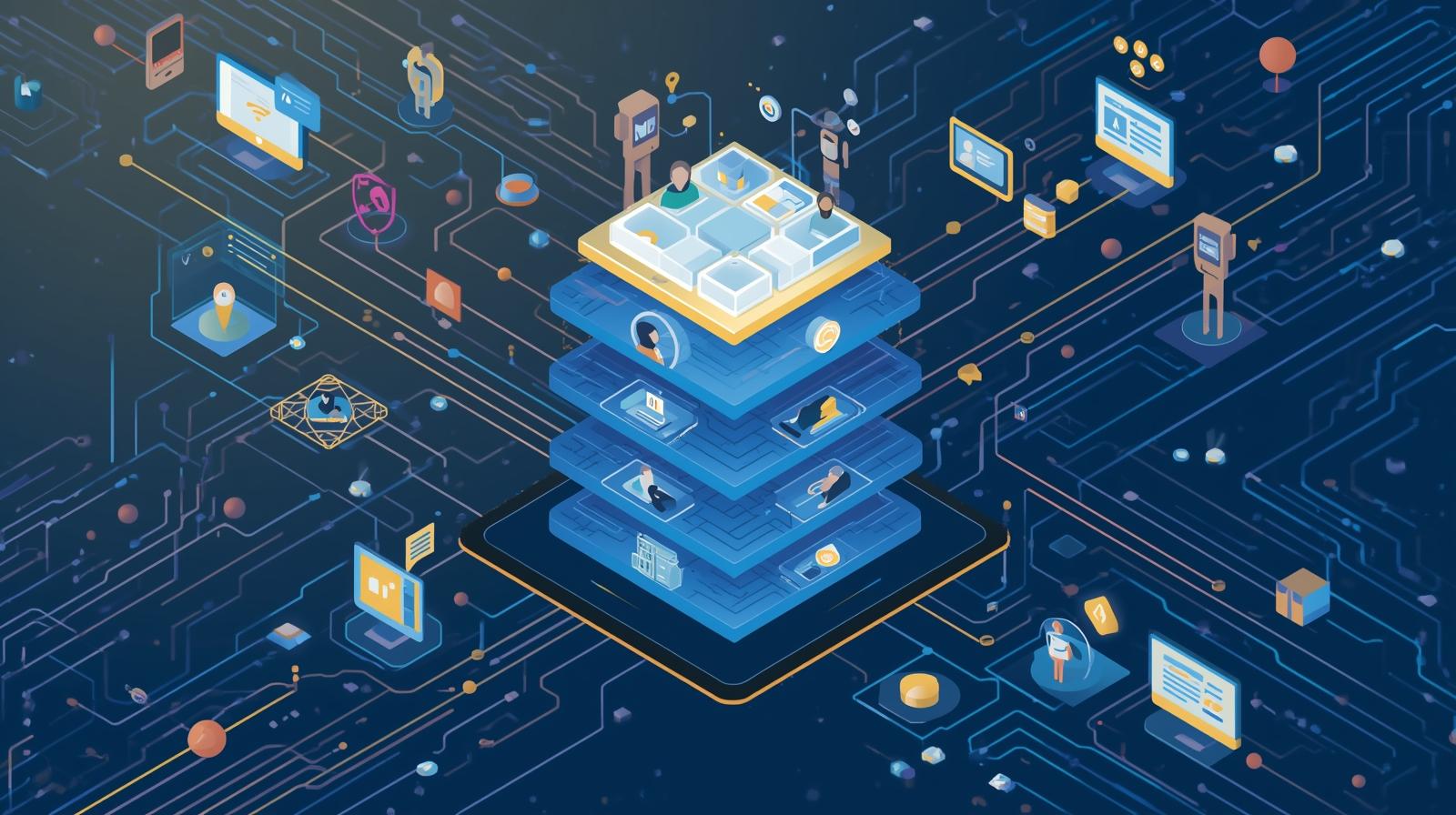
If your nonprofit runs on Salesforce, the platform you use is changing in ways that go well beyond a routine software update. Salesforce has renamed, rebranded, and fundamentally reoriented its nonprofit offerings around AI agents. This shift accelerated through 2025 and is now shaping what nonprofits receive through the Power of Us program in 2026. At the center of this transformation is Agentforce, Salesforce's AI agent platform, and the Model Context Protocol (MCP), which allows external AI tools like Claude to read and act on your Salesforce data.
For nonprofits with staff teams stretched thin, these technologies promise meaningful operational relief. An AI agent that automatically researches donor wealth indicators, drafts grant progress notes, or routes case management records to the right staff member is no longer a futuristic concept. These agents are built into the Salesforce platform today, packaged specifically for nonprofit workflows. But the transition also introduces real complexity, including a product roadmap that has evolved rapidly, pricing models that require careful evaluation, and technical requirements that may challenge organizations without dedicated IT support.
This article unpacks what Agentforce actually is, how it relates to MCP and the broader trend of AI interoperability, what the December 2025 Power of Us changes mean for current NPSP users, and how to think through whether Agentforce is right for your organization's stage of AI adoption. We address limitations candidly, because understanding what Agentforce cannot do is as important as understanding what it can.
For context on the broader MCP landscape, our article on Model Context Protocol for nonprofits provides foundational background on how this standard works and why it matters. The Salesforce story is one of the most significant implementations of MCP at scale in the nonprofit technology sector.
Understanding Agentforce: From Einstein to Autonomous Agents
Salesforce has offered AI capabilities under the "Einstein" brand for years, primarily as predictive analytics and recommendation features embedded in CRM records. Agentforce represents a fundamentally different category. Rather than surfacing insights for human review, Agentforce agents take action on their own, completing multi-step tasks within defined parameters with minimal human oversight.
The platform has evolved quickly through 2025 and into 2026. Agentforce 2.0 launched with a pre-built skills library, Slack deployment capabilities, and improved reasoning. Agentforce 2dx followed, introducing proactive agents that work in the background without waiting for human prompts. Agentforce 3.0 arrived running up to 50% faster, adding web search with inline citations, real-time response streaming, and support for Anthropic's Claude models alongside OpenAI. By early 2026, Salesforce extended Agentforce into ChatGPT as a native app, allowing teams to query and update Salesforce records through conversational AI interfaces.
For nonprofits, Salesforce has created Agentforce Nonprofit, a purpose-built configuration of the platform tailored to fundraising, program management, case management, and grantmaking workflows. This is no longer an add-on to a general CRM. It is positioned as a unified operating environment where AI agents handle routine administrative work so staff can focus on the relationships and decisions that require human judgment.
Agentforce 2.0
Early 2025
- Pre-built skills library
- Slack deployment
- MuleSoft API integration
Agentforce 2dx
April 2025
- Proactive background agents
- Works without human prompt
- Deep data system integration
Agentforce 3.0
June 2025
- 50% faster processing
- Web search with citations
- Claude models supported
How MCP Fits into the Salesforce Ecosystem
Model Context Protocol is an open standard that lets AI assistants like Claude connect securely to external data systems without custom integration work for each connection. Think of it as a universal adapter that allows your AI tools to read records, run queries, and take actions in systems like your CRM, without requiring your IT team to build dedicated API connections for every combination of tools you want to connect.
Salesforce's adoption of MCP changes the equation for nonprofits using third-party AI tools. If you have connected Claude to your organization through an MCP server (covered in detail in our article on connecting Claude to your nonprofit CRM), you can now have that AI assistant query your Salesforce data, retrieve donor records, check grant status, and generate summaries through a secure, standards-based connection that Salesforce officially supports.
From the Salesforce side, Agentforce 3.0 introduced MCP support, allowing Agentforce agents to function as both MCP clients (connecting to external tools) and MCP servers (exposing Salesforce data to external AI). This bidirectional capability matters significantly. It means nonprofits are not locked into a single AI vendor. You can use Agentforce for some workflows while using Claude, GPT-4, or other models for others, with data flowing securely between them through the MCP standard.
In practical terms, this might look like a scenario where your case manager uses Claude through a web browser to draft a client summary. Claude automatically queries your Salesforce records via MCP to pull the relevant case history, previous service interactions, and current status, without the case manager having to copy-paste anything manually. The AI retrieves what it needs, the human reviews and approves the output, and the time spent on administrative documentation drops substantially.
MCP in Practice: How the Connection Works
Salesforce as MCP Server
- External AI tools like Claude can query your Salesforce records
- Donor histories accessible to multiple AI tools
- Secure, permissioned access using Salesforce's existing security model
Agentforce as MCP Client
- Agentforce agents can connect to external data sources
- Research from external databases pulls into agent workflows
- Third-party AI model integrations supported
The Power of Us Program Changes: What NPSP Users Need to Know
In December 2025, Salesforce made a significant change to the Power of Us program, its longstanding nonprofit discount program. The familiar "10 free NPSP licenses" option was removed. New applicants now receive 10 free Agentforce Nonprofit CRM licenses plus 10 free Agentforce Sales and Service CRM licenses. This is not a cosmetic rebrand. NPSP and Agentforce Nonprofit are built on different underlying data models, and the transition involves real work.
For organizations already running on NPSP, Salesforce has been clear: your current licenses remain valid, your system continues to be supported, and your investment is protected. The practical reality, however, is that Salesforce ended new feature development in NPSP in 2024. No new capabilities will be added, and while no end-of-life date has been announced, the direction is clear. NPSP will eventually give way to Agentforce Nonprofit, and organizations that wait to plan for migration may face a more compressed and expensive transition later.
Migration from NPSP to Agentforce Nonprofit involves moving to a unified data model that integrates fundraising, program management, case management, and constituent engagement into a single platform. This consolidation has real value, but it requires time, resources, and ideally a Salesforce implementation partner with nonprofit experience. This is not a self-service upgrade for most organizations.
The financial picture is also worth understanding clearly. Agentforce Nonprofit CRM licenses for Sales or Service start at $325 per user per month when billed annually. The Power of Us free licenses are a starting point, but most organizations will need additional licenses and will encounter agent conversation costs. Salesforce offers agent conversations at $2 per conversation (with the first 1,000 free) or through a Flex Credits model at $500 per 100,000 credits with each agent action costing 20 credits. For organizations running high-volume agent workflows, these costs accumulate and require thoughtful budgeting.
Note: Prices may be outdated or inaccurate.
If You Are on NPSP Now
- Your licenses and system remain valid and supported
- No new NPSP features will be added (innovation ended 2024)
- Begin budgeting for eventual migration to Agentforce Nonprofit
- Identify an implementation partner experienced in NPSP migrations
For New Salesforce Adopters
- Apply through Power of Us for 10 free Agentforce Nonprofit CRM licenses
- Start on the modern Agentforce Nonprofit data model from day one
- Budget for implementation partner support
- Plan agent conversation budgets separately from license costs
What Agentforce Nonprofit Actually Does
Agentforce Nonprofit is built around the core operational areas that most nonprofits organize their work around: fundraising, volunteer management, program management, case management, and grantmaking. Within each area, Salesforce has developed pre-built agent skills that can be deployed without custom coding, though they can be extended and configured for specific organizational needs.
Fundraising and Donor Research
The Prospect Research Agent
The Prospect Research Agent automates the research process that typically requires staff hours per major gift prospect. It tracks wealth indicators, philanthropic history, key milestones, and research assessments directly within Salesforce contact records. The agent queries CRM data and external sources to build comprehensive prospect profiles, freeing development staff from manual research tasks.
- Automatic wealth capacity summaries from CRM data
- Philanthropic assessment creation and milestone tracking
- Frees development staff to focus on cultivation
Program and Case Management
Documentation and routing assistance
For nonprofits delivering direct services, Agentforce agents assist case managers with record-keeping tasks that consume a significant portion of their workday. Rather than manually updating case notes, routing referrals, or searching for past interaction history, agents handle these tasks based on defined rules and organizational workflows.
- Automated case record updates after service interactions
- Intelligent routing based on client needs and staff capacity
- 24/7 stakeholder support through AI-powered interfaces
Grantmaking Support
For community foundations and grantmakers
Organizations that make grants have specific workflow needs around application review, site visits, reporting, and compliance tracking. Agentforce Nonprofit's grantmaking module addresses these with purpose-built functionality that reduces the administrative overhead of managing a grants portfolio.
- Application screening and initial review assistance
- Automated grant reporting reminders and follow-up
- Impact data aggregation across grantee portfolios
Donor Engagement at Scale
Personalized outreach driven by CRM data
Agentforce integrates with Salesforce Marketing Cloud to enable genuinely personalized donor communications based on giving history, interests, engagement patterns, and life events captured in your CRM. This goes beyond mail merge to context-aware, agent-driven outreach that adapts to individual donor profiles.
- Personalized gift ask amounts based on giving history
- Automated lapse detection and re-engagement workflows
- Event-triggered communications aligned with donor milestones
These use cases connect directly to the kinds of workflows our articles on AI for board communications and AI for organizational knowledge management have explored. When your CRM becomes an active participant in these workflows rather than a passive record-keeper, the cumulative time savings across a team can be substantial. Pairing these capabilities with approaches discussed in our article on AI agents for donor research creates a comprehensive fundraising intelligence system.
Real Limitations Nonprofits Should Understand
Agentforce is a genuinely powerful platform, and Salesforce's nonprofit-specific investment makes it more relevant to the sector than most enterprise AI tools. But there are limitations that organizations should understand before making significant implementation commitments or setting expectations with staff and leadership.
Technical Constraints
- Maximum 20 active agents per organization
- 15 topics and 15 actions per agent
- 60-second timeout on agent actions
- Agents must be deactivated to make configuration changes
Data and Adoption Challenges
- Requires clean, structured Salesforce data to function well
- Poor data hygiene leads to unreliable agent outputs
- Chat-based interface requires workflow adjustment for staff
- Cannot bring custom AI models (BYOM not supported)
The data quality requirement deserves particular attention. Agentforce agents work on the data in your Salesforce instance. If your records have duplicate contacts, incomplete giving histories, inconsistent field usage, or outdated information, agents will make decisions and generate outputs based on that flawed foundation. Many nonprofits that have not invested in ongoing CRM data hygiene will find that their first Agentforce project is as much a data cleanup project as an AI implementation.
The ecosystem lock-in question is also worth considering. While Agentforce now supports MCP and allows connection to external AI models, the platform fundamentally requires Salesforce as its operating environment. Organizations that run primarily on other platforms like HubSpot, Blackbaud, or Bloomerang will not find Agentforce directly applicable to their situation. For those organizations, open-source automation tools like n8n (explored in our companion article on n8n for nonprofit workflow automation) provide a platform-agnostic path to AI-powered workflows.
Evaluating Agentforce for Your Organization
The decision to invest in Agentforce should be grounded in an honest assessment of your organization's current Salesforce maturity, data quality, technical capacity, and which specific workflows would benefit most from agent automation. Agentforce is not a universal solution, and the organizations that get the most value from it share common characteristics.
Organizations that benefit most from Agentforce are already operating Salesforce as their primary CRM with reasonably well-maintained data, face high-volume repetitive workflows that follow predictable patterns, lack the technical resources to build custom AI integrations, and have leadership support for a multi-month implementation process. The combination of clean data, high-volume workflows, and Salesforce investment creates the conditions where Agentforce's pre-built nonprofit skills deliver rapid value.
For organizations considering a first Salesforce implementation specifically to access Agentforce capabilities, the calculation changes. The total investment in a new Salesforce implementation plus Agentforce configuration is substantial, and this path makes most sense for organizations with significant scale in their fundraising or program operations where the ROI from agent automation can justify the setup costs. Smaller organizations may find that simpler, less expensive automation tools deliver comparable results for their actual workflow volume.
Decision Framework: Is Agentforce Right for Your Nonprofit?
Good Fit When:
- You are already using Salesforce as your primary CRM
- Your Salesforce data is reasonably clean and current
- You lack dedicated AI development resources
- Your use cases align with fundraising, programs, or case management
Consider Alternatives When:
- Your primary CRM is not Salesforce
- Your Salesforce data has significant quality issues
- Your workflows span multiple non-Salesforce systems heavily
- Per-conversation costs make consumption pricing unworkable at your volume
1Assess and Prepare
- Audit Salesforce data quality
- Identify top 3 workflow candidates
- Review Power of Us eligibility
- Select implementation partner
2Pilot and Validate
- Deploy one agent for a single workflow
- Track conversation costs weekly
- Measure time savings for staff
- Collect staff feedback actively
3Scale Thoughtfully
- Expand to additional workflows gradually
- Build internal agent configuration capacity
- Plan NPSP migration timeline if needed
- Evaluate MCP connections for external tools
Conclusion
Agentforce Nonprofit represents the most significant evolution in Salesforce's offering to the sector since NPSP itself launched. The platform moves AI from an analytical add-on to an operational participant, handling routine tasks so staff can focus on higher-value work. The MCP integration ensures this is not a closed ecosystem, allowing external AI tools to connect to and from Salesforce data as the broader AI interoperability landscape matures.
For nonprofits already on Salesforce, the path forward is clear even if the timeline is flexible. Start assessing your data quality now, identify the workflows where agents would provide the most immediate value, and build the internal case for migration from NPSP to Agentforce Nonprofit before the transition becomes urgent. For new adopters, the Power of Us program's shift to Agentforce Nonprofit licenses means starting on the platform Salesforce is actively investing in, a better foundation for long-term AI capability building.
The nonprofits that will benefit most from Agentforce are not necessarily the largest or most technically sophisticated. They are the ones that approach implementation with clear workflow targets, honest data assessment, realistic budget planning, and a commitment to bringing staff along through the transition. The technology is ready. The question is whether your organization is positioned to use it well, and what foundational work may need to happen first to set that implementation up for success.
Ready to Explore AI Agents for Your Nonprofit?
Whether you are evaluating Agentforce, considering MCP integrations, or exploring open-source automation, we help nonprofits find the right path for their technology stack and capacity.