
MCP vs. A2A: Choosing an Agent Protocol for Your Nonprofit Stack
Two open protocols are quietly reshaping how AI systems connect to the tools and data sources nonprofits rely on. Anthropic's Model Context Protocol (MCP) and Google's Agent2Agent (A2A) protocol serve different purposes in the emerging world of agentic AI, and understanding the distinction helps nonprofit technology leaders make better decisions about how they adopt and connect AI tools in 2026 and beyond.
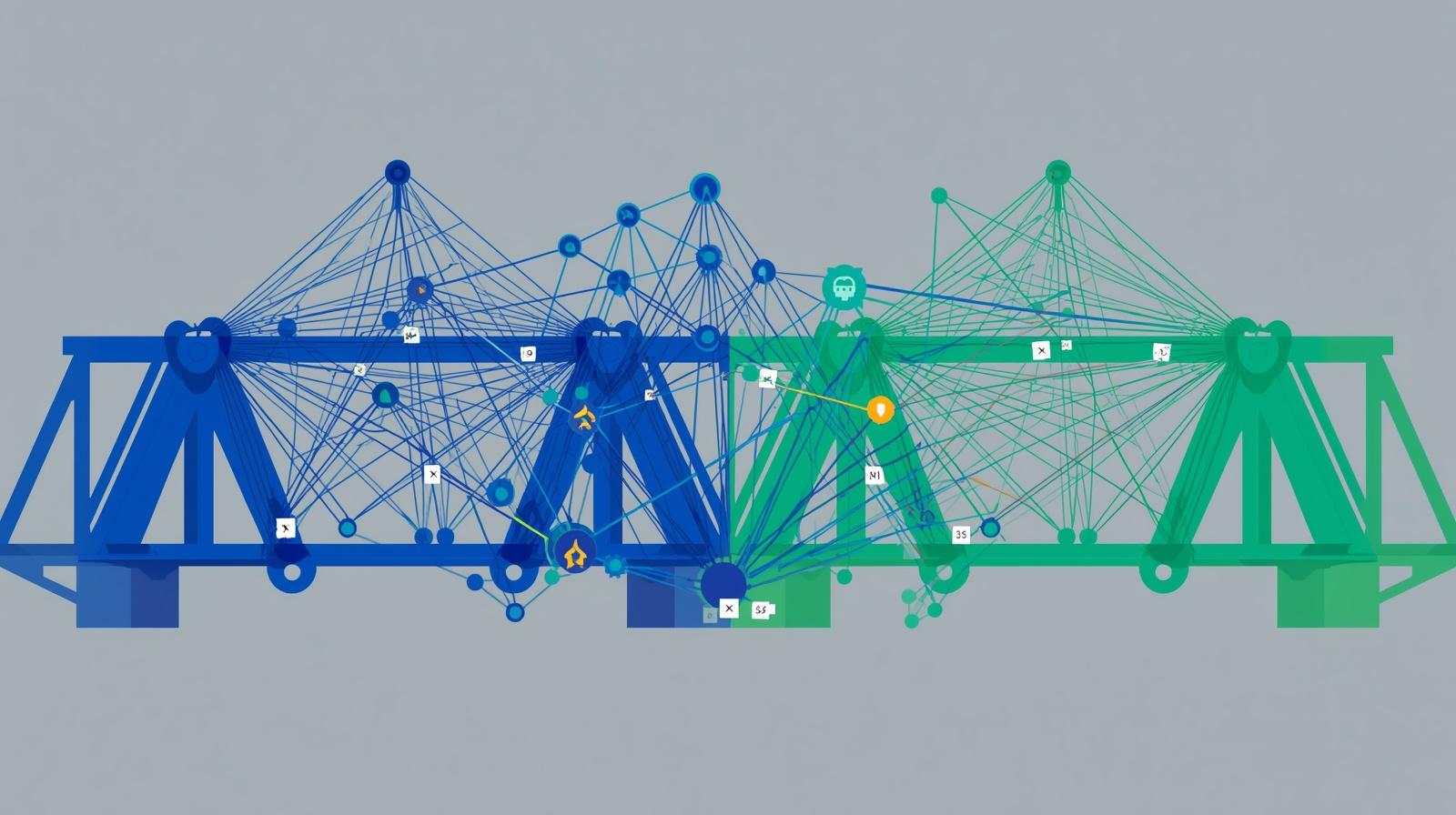
For most of 2024, the conversations happening in nonprofit technology circles about AI focused on specific tools: which chatbot, which writing assistant, which grant research tool. In 2026, a more structural conversation is underway. Nonprofit technology leaders are beginning to ask not just which AI tools to use, but how to connect those tools to each other and to the organizational systems that hold the data they need. That question leads directly to protocols.
A protocol is a set of agreed-upon rules for how systems communicate. The internet runs on protocols; so does email. In the AI world, two protocols have emerged as the dominant standards for how AI systems connect to tools and coordinate with each other. MCP, the Model Context Protocol created by Anthropic and launched in November 2024, has become the standard for connecting AI models to external tools and data sources. A2A, the Agent2Agent protocol created by Google and launched in April 2025, has become the standard for enabling multiple AI agents to coordinate with each other. Both are now governed by the Linux Foundation's Agentic AI Foundation, with every major AI provider participating.
The protocols are complementary rather than competing, but they address different problems. Understanding which problem you are trying to solve is the key to understanding which protocol matters for your organization's current situation, and when the other one will become relevant. This article covers both in practical terms oriented toward nonprofit operations leaders, technology directors, and the staff who are making AI adoption decisions in 2026.
It is also worth noting what happened to IBM's Agent Communication Protocol (ACP), which was often mentioned alongside MCP and A2A as a third contender. In August 2025, the ACP team formally wound down independent development and merged its work into the A2A project under the Linux Foundation. ACP no longer exists as a separate protocol. Any organization evaluating agent protocols can now focus entirely on MCP and A2A.
MCP: The Protocol That Connects AI to Your Tools
The simplest way to understand MCP is through an analogy that has become widely used in the technology industry: it is the USB-C of AI. Before USB-C, connecting devices required knowing which specific cable and adapter each device used. USB-C standardized the connection so that one cable works everywhere. MCP does the same thing for AI-to-tool connections.
Without MCP, connecting an AI model like Claude or ChatGPT to an external tool or data source requires custom integration code written specifically for that pairing. Connecting Claude to Salesforce requires one custom integration; connecting it to Google Drive requires a completely different one. Multiply this across every tool your organization uses and every AI system you might want to connect to them, and the complexity becomes unmanageable without a dedicated technical team.
With MCP, any AI host that supports the protocol can connect to any tool that has an MCP server built for it, using the same standardized connection. The AI provider builds MCP support into their platform once; tool vendors build MCP servers for their products once; and from that point forward, any AI can connect to any tool through a standard interface. The integrations compound rather than multiply.
How MCP Works in Practice
MCP uses a client-server architecture. AI platforms like Claude, ChatGPT, and Microsoft Copilot are MCP hosts that instantiate MCP clients. External tools and data sources run MCP servers. When you ask Claude a question that requires looking up donor information from Salesforce, Claude's MCP client contacts the Salesforce MCP server, retrieves the relevant data, and incorporates it into its response.
The protocol defines three types of resources that servers can expose:
- Tools: Actions the AI can take (send an email, create a record, run a calculation)
- Resources: Data the application can expose to the AI (documents, database records, reports)
- Prompts: User-defined instructions that configure how the AI behaves for specific tasks
MCP Adoption: Where It Stands in 2026
MCP's adoption trajectory has been remarkable. Launched in November 2024, it reached 97 million monthly SDK downloads by early 2026, up from roughly 2 million at launch. Claude processes over a billion tool calls per month through MCP connections. Every major AI platform now supports the protocol: Claude, ChatGPT, Google Gemini, and Microsoft Copilot all implement MCP. Microsoft joined the MCP steering committee at Build 2025, signaling commitment at the enterprise software level.
More than 17,000 public MCP servers exist, covering the tools most relevant to nonprofit operations. Salesforce added native MCP support to Agentforce in mid-2025, enabling secure no-code connections from any MCP-compliant AI to Salesforce NPSP and Nonprofit Cloud. Google announced a Workspace MCP server allowing AI agents to access Drive, Gmail, Calendar, Sheets, and Chat through a single standard connection. Microsoft built MCP support throughout its 365 ecosystem. Slack and HubSpot both have official MCP servers. The ecosystem is mature enough that a nonprofit wanting to connect an AI tool to most major platforms no longer needs custom development.
Nonprofit Use Cases for MCP (Available Now)
- Ask Claude questions about your donor database in plain English, with Claude reading directly from Salesforce NPSP through MCP
- AI drafts a grant report by pulling live data from Google Sheets, writing in Google Docs, and saving to Drive, all in one workflow
- Volunteer coordinator asks an AI agent to check the scheduling system, update availability in Slack, and send confirmation emails, completing the task without manual steps
- Program staff query case management data in plain English without needing SQL or report-building skills
- Financial staff ask AI to reconcile restricted fund data across QuickBooks and the CRM, with both systems connected via MCP
A2A: The Protocol That Enables Agents to Work Together
If MCP is about connecting one AI to many tools (vertical integration), A2A is about connecting many AI agents to each other (horizontal coordination). The distinction sounds technical but has significant practical implications for how organizations can structure their AI deployments.
Consider a grant management process. A complete grant workflow involves researching funding opportunities, drafting the narrative, validating budget compliance, checking regulatory requirements, and routing for approval. Each of these tasks can be done by an AI agent, but no single agent is likely to be best at all of them. With MCP, you could connect a single agent to all the tools it needs. But with A2A, you can have a grant research agent hand off its findings to a grant writing agent, which coordinates with a compliance agent, which routes the final draft through an approval agent, each specialized and each working within its domain.
A2A's architecture uses a concept called Agent Cards: JSON documents that each agent publishes at a standard location, declaring its name, capabilities, supported tasks, endpoints, and authentication requirements. When one agent needs help from another, it looks up the relevant Agent Card to understand what the other agent can do and how to communicate with it. Agents interact without sharing internal memory, proprietary logic, or access credentials, which preserves both security and intellectual property boundaries. The communication uses standard HTTPS with TLS encryption and role-based access control.
A2A Adoption: Where It Stands in 2026
A2A launched in April 2025 with 50 founding partner organizations and grew to more than 150 supporting organizations by mid-2025, including Salesforce, SAP, ServiceNow, Atlassian, PayPal, and major consulting firms. Active production deployments are underway in supply chain management, financial services, insurance, and IT operations.
For nonprofits, the most significant A2A developments are in platforms they already use. Salesforce Agentforce 3 includes A2A support, meaning Salesforce agents can coordinate with external agents from other vendors. ServiceNow, used by larger nonprofits for IT and workflow management, supports both MCP and A2A natively. A joint MCP-A2A interoperability specification is expected in mid-2026.
ACP, IBM's competing protocol, merged into A2A in August 2025. IBM's research team and technology now contribute to A2A development. Any nonprofit that encountered ACP in earlier research should treat A2A as the current and forward path.
Nonprofit Use Cases for A2A (Relevant for Larger Organizations Now; Broader Adoption in 12-18 Months)
- A grant management agent orchestrates: a research agent finds opportunities, a writing agent drafts narrative, a compliance agent checks 2 CFR 200 requirements, and a finance agent validates budget alignment, all coordinated via A2A without human hand-offs at each step
- Multi-program nonprofits with separate Agentforce instances can have development and program agents coordinate eligibility determinations without manual data transfer
- Disaster relief organizations deploy a beneficiary intake agent that coordinates simultaneously with logistics, communications, and donor notification agents
- A development department AI agent delegates prospect research to a specialized research agent, receives findings, and proceeds with donor engagement, all without a human routing the handoff
MCP and A2A: Complementary, Not Competing
Every major AI vendor, the Linux Foundation, and independent technical analysts are consistent on this point: MCP and A2A solve different problems and work together in the same architecture. There is no choice to be made between them in the long run. The question is which one matters more for your organization's current situation.
| Dimension | MCP | A2A |
|---|---|---|
| What it connects | One AI model to many tools and data sources | Many AI agents to each other for coordination |
| Direction | Vertical: one agent, broad capability | Horizontal: multiple agents, coordinated work |
| Creator | Anthropic (November 2024) | Google (April 2025) |
| Current governance | Linux Foundation AAIF | Linux Foundation AAIF |
| Ecosystem maturity | Very mature: 17,000+ servers, universal platform support | Growing: 150+ orgs, active production deployments |
| Nonprofit relevance now | High: connects AI to existing tools today | Medium: relevant for larger orgs with multiple agents |
| Key analogy | USB cable connecting a laptop to peripherals | Phone network coordinating calls between people |
In a mature multi-agent architecture, both protocols are present simultaneously. A grants management workflow might use MCP for each agent's tool connections, such as the research agent connecting to prospect databases and the writing agent connecting to Google Docs, while using A2A for the coordination layer that routes work between those specialized agents. The protocols operate at different layers of the same system.
The Linux Foundation's governance of both protocols through the same Agentic AI Foundation is significant for nonprofits evaluating long-term technology commitments. Both standards will evolve together, with a joint interoperability specification expected to formalize the relationship further. Organizations can adopt MCP now with confidence that it will integrate cleanly with A2A as multi-agent capabilities become relevant to them.
A Decision Framework for Nonprofit Technology Leaders
The question of which protocol to prioritize depends almost entirely on where your organization is in its AI adoption journey and what problems you are currently trying to solve.
Start with MCP if...
- Your primary goal is connecting AI tools to your existing systems (CRM, documents, databases)
- You have one AI platform and want to expand what it can access and do
- You are in the early stages of AI adoption and want to build practical capabilities immediately
- You use Salesforce, Google Workspace, Microsoft 365, HubSpot, or Slack, all of which have mature MCP support
- You want to enable your team to use AI with organizational data without custom development
Add A2A when...
- You have multiple AI systems or agents that need to coordinate tasks with each other
- You are building complex multi-step automated workflows that span multiple systems and decision points
- Your Salesforce Agentforce instance needs to coordinate with other AI deployments across your organization
- You are a larger organization with dedicated technology staff managing AI infrastructure
- You want AI agents from different vendors to work together without sharing proprietary data or credentials
For most nonprofits in 2026, MCP is the immediate priority. It is more mature, more accessible, requires less technical infrastructure, and the ecosystem already covers the tools most organizations use. A2A becomes relevant as an organization scales its AI deployments to include multiple specialized agents that need to work in concert.
The practical guidance for nonprofit technology leaders evaluating vendors and platforms is to ask two questions: Does this tool support MCP? Does this tool support A2A? Both questions belong in your vendor evaluation checklist for any AI-enabled platform, because answers you get today indicate how well a system will integrate into both current and future architectures. Vendors that support both protocols are investing in interoperability rather than lock-in, which is a meaningful signal for long-term technology partnerships.
What "Agentic Infrastructure" Means for Nonprofits
MCP and A2A are the two most important components of what the technology industry is calling "agentic infrastructure": the technical plumbing that allows AI agents to operate autonomously at organizational scale. Understanding this concept helps nonprofit leaders think about where AI is heading, not just where it is today.
The current state for most nonprofits is that AI is a tool that staff interact with directly. A communications officer asks Claude to draft a donor appeal; the AI produces a draft; the officer revises and sends it. This is valuable but it is also limited by the need for a human to initiate and manage each interaction. Agentic AI takes a different approach: agents that monitor conditions, identify triggers, take actions, and coordinate with other agents, all within defined guardrails, without requiring human initiation for every step.
A practical example illustrates the difference. In the current model, a development officer notices that a major donor has not given in 18 months, searches the CRM for context, drafts an outreach message, and sends it. In an agentic model, a donor engagement agent monitors giving patterns, identifies the at-risk relationship, retrieves the full engagement history, drafts a personalized message for a development officer to review, and queues it for approval, without anyone assigning the task. MCP provides the agent's access to Salesforce and the communication platform. A2A, in more advanced deployments, might allow that agent to coordinate with a program reporting agent to include mission impact data relevant to that donor's interests.
This is not science fiction. It is production reality in larger organizations today and will be increasingly accessible to mid-size nonprofits over the next twelve to twenty-four months as platforms build agentic capabilities on top of MCP and A2A foundations. Nonprofits that understand the protocol layer now will be better positioned to adopt agentic workflows intentionally, with appropriate governance, rather than discovering them embedded in platform updates they did not fully evaluate.
For the governance and oversight dimensions of agentic AI, our article on agentic AI for nonprofits covers the organizational and ethical questions that accompany autonomous agent deployments. Our coverage of AI agents in nonprofit operations provides practical use cases across different program and operational areas. The protocol layer covered in this article is the technical foundation; those articles address the organizational readiness questions that must accompany it.
Security and Governance Considerations
Both MCP and A2A include security mechanisms, but adopting them introduces governance questions that nonprofit leaders should address proactively.
- MCP connections require defining what data an AI can access. Review access scopes carefully: an AI connected to your CRM should not automatically access all fields for all donors. Principle of least privilege applies.
- A2A's Agent Card architecture means you are declaring your agents' capabilities publicly at a standard URL. Review what information you are exposing before deployment.
- Any data that passes through an MCP connection to an external AI provider is subject to that provider's data processing terms. Review DPAs before connecting donor PII or confidential beneficiary data.
- For MCP security considerations in depth, see our dedicated article on MCP security for nonprofits.
The Bottom Line for Nonprofit Technology Leaders
The emergence of MCP and A2A as open, interoperable standards is genuinely good news for nonprofits. Proprietary integration lock-in has long been a source of technology fragility and unnecessary cost for the sector. Standards that any vendor can implement mean that nonprofits are not forced to choose an AI platform based on which proprietary integrations it has built; they can choose based on capability and fit, confident that standard connections will work.
For most nonprofits in 2026, the actionable implications are: understand MCP and what it enables, ask your key technology vendors whether they support it, and use that support as a procurement criterion when evaluating AI-enabled platforms. For organizations already running Salesforce Agentforce or thinking about multi-agent workflows, add A2A to that vendor evaluation checklist.
The deeper point is that these protocols represent a shift in how AI integrates with organizational infrastructure. The early adopters of this shift are building AI capabilities that compound over time, connecting more tools, automating more workflows, and freeing more staff capacity for mission-critical work. Nonprofits that understand the infrastructure layer, not just the application layer, are better positioned to make those investments strategically. For organizations looking to take their next steps, our guides to getting started with AI and building internal AI champions provide practical frameworks for the organizational side of this journey.
Ready to Build a Connected AI Stack?
One Hundred Nights helps nonprofit technology leaders understand AI infrastructure and build integration strategies that serve their mission. Let's talk about where your organization is headed.