
Meal Program Optimization: AI for Ordering, Logistics, and Waste Reduction
Nonprofit food programs face complex operational challenges: unpredictable demand, perishable inventory, limited storage capacity, tight budgets, and the imperative to minimize waste while maximizing service to communities in need. Whether you operate a food bank, food pantry, meal delivery program, or community kitchen, the balance between having enough food to serve your community and avoiding waste is delicate and difficult to maintain. AI-powered solutions are transforming how food-focused nonprofits manage these challenges, offering sophisticated tools for demand forecasting, inventory optimization, distribution logistics, and waste reduction—capabilities once accessible only to large commercial food operations now available to mission-driven organizations.
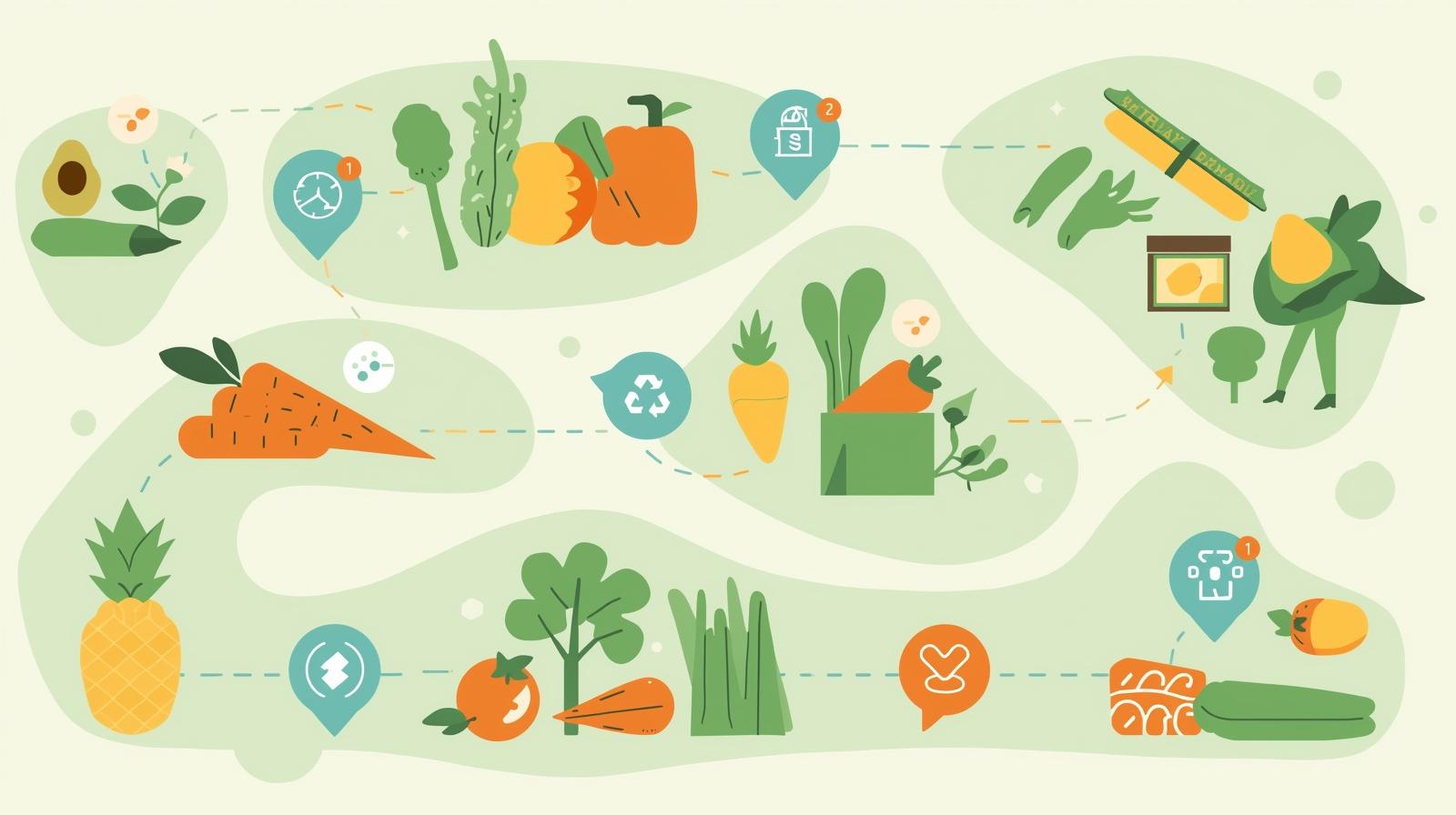
Food insecurity remains a critical challenge across communities, with food banks and pantries serving as essential safety nets for millions of individuals and families. Yet these vital organizations often operate with constrained resources, limited technology infrastructure, and manual processes that make efficiency difficult to achieve. The consequences of inefficiency in food programs extend beyond operational challenges—they represent missed opportunities to serve more people, reduce environmental impact, and maximize the value of donated resources.
AI technologies are addressing these challenges through multiple pathways. Predictive analytics can forecast demand patterns based on historical data, seasonal trends, community demographics, and external factors like economic conditions or weather. Inventory management systems can track food items in real-time, flag approaching expiration dates, and suggest optimal distribution sequences to ensure perishable items reach recipients before spoilage. Route optimization algorithms can streamline food collection and delivery, reducing transportation costs and ensuring timely distribution. Waste tracking systems can identify patterns in discarded food, helping organizations understand what's being wasted and why.
The evidence for AI's impact in food operations is compelling. After introducing AI to restaurant management, 50% of restaurants observed significant decreases in food waste, while overall efficiency increased by 46%. In nonprofit settings, demand planning AI solutions used by large retailers in pilot programs led to a 14.8% average reduction in food waste per store. Organizations using AI-enabled waste tracking solutions like Winnow have helped companies cut food waste in half by identifying waste hotspots and enabling focused reduction efforts.
This article provides a comprehensive framework for implementing AI in nonprofit meal programs and food distribution operations. You'll learn how to use AI for demand forecasting to predict food needs accurately, optimize inventory management to minimize waste and ensure availability, streamline distribution logistics for efficient food delivery, reduce food waste through intelligent tracking and analysis, and implement affordable AI solutions even with limited budgets. Whether you're managing a small community pantry or a regional food bank network, these strategies can help you serve more people more effectively while reducing waste and operational costs.
AI-Powered Demand Forecasting for Food Programs
Accurate demand forecasting is foundational to effective meal program management. When you can predict how many people will need food services, what types of food they'll need, and when demand will peak, you can order appropriately, minimize waste, and ensure adequate supplies during high-demand periods. AI-powered forecasting moves beyond simple averages to analyze complex patterns and predict future needs with remarkable accuracy.
Understanding Demand Patterns and Variables
Key factors AI analyzes to predict food program needs
AI-powered demand forecasting analyzes historical data to identify patterns in food program usage. This includes tracking how many people access services daily, weekly, and seasonally; what types of food are most requested; demographic patterns among recipients; and how external factors influence demand. By examining months or years of historical data, AI can identify trends that would be impossible to spot manually—for instance, that demand increases 23% during school breaks or that certain food items are requested more frequently on particular days.
External variables significantly impact food program demand. AI systems can integrate data about local economic conditions (unemployment rates, job losses), seasonal factors (holidays, school schedules, weather patterns), community events, and even external crises that might drive increased need. By correlating these external factors with historical usage patterns, AI can predict demand surges before they occur, allowing proactive preparation rather than reactive scrambling.
- Seasonal patterns: Identifying how demand fluctuates across months, quarters, and seasons
- Day-of-week trends: Understanding which days see highest traffic and resource needs
- Economic indicators: Correlating demand with unemployment data, benefit program enrollment, housing costs
- Community demographics: Analyzing how population changes affect food program utilization
- Weather impact: Understanding how extreme weather affects both demand and distribution logistics
Implementing Predictive Analytics
Practical approaches to AI-powered demand prediction
Implementing demand forecasting doesn't require sophisticated technical expertise. Several software solutions designed specifically for food banks and pantries include predictive analytics features. PantrySoft, SmartChoice, and similar platforms allow organizations to track historical usage and generate forecasts based on that data. These systems provide live views of inventory levels and use historical patterns to suggest ordering quantities and timing, helping organizations maintain optimal stock levels.
For organizations without dedicated food bank software, general-purpose AI tools can also support demand forecasting. Spreadsheet tools with AI capabilities can analyze historical data and identify trends. AI assistants like ChatGPT can help analyze data patterns if you provide historical usage information—for instance, asking "Based on this usage data from the past 12 months, what patterns do you see and what should I expect for next month?" can yield useful insights for planning purposes.
The key to effective demand forecasting is consistent data collection. The more historical data you have about actual food distribution (how many people served, what food distributed, when services provided), the better AI systems can predict future needs. Start by implementing simple tracking—even basic spreadsheets recording daily service numbers—and build from there. Over time, this data becomes increasingly valuable for AI-powered forecasting as patterns emerge and predictions become more accurate.
Demand forecasting provides the foundation for all other operational improvements in meal programs. When you know what to expect, you can order appropriate quantities, schedule adequate staff, arrange transportation logistics, and communicate realistic service parameters to your community. This predictability transforms reactive "we hope we have enough" operations into proactive "we know what we'll need" planning that serves your community more reliably and efficiently.
Intelligent Inventory Management and Automated Ordering
Inventory management in food programs involves unique challenges: perishable items with varying shelf lives, donated goods arriving unpredictably, limited storage capacity, and the need to maintain variety while minimizing waste. AI-powered inventory systems address these challenges by providing real-time visibility, automated tracking, intelligent ordering suggestions, and waste prevention alerts that help organizations make better decisions about what to stock and distribute.
Real-Time Inventory Tracking and Visibility
Maintaining accurate, current knowledge of available food supplies
AI-powered inventory management systems provide live visibility into what food you have, where it's located, when it will expire, and how quickly it's moving. This real-time awareness is critical for food programs where items have limited shelf lives and storage space is constrained. Organizations using software like PantrySoft can maintain live views of inventory levels to determine allocations and reordering needs, while tools like SmartChoice help analyze inventory turn rates by item to optimize future ordering quantities and timing.
For perishable items, AI systems can automatically flag approaching expiration dates and suggest distribution priorities. Rather than discovering expired food during manual checks, AI alerts you days or weeks in advance, allowing time to prioritize distribution of soon-to-expire items or coordinate with other organizations that might use them before spoilage occurs. This proactive approach significantly reduces waste from expiration.
- Expiration alerts: Automated notifications when items approach expiration, allowing priority distribution
- Storage optimization: AI suggests optimal storage locations based on turnover rate and expiration timeline
- Low-stock warnings: Notifications when inventory of key items falls below minimum thresholds
- Overstock identification: Flagging items accumulating faster than they're distributed, preventing waste
Automated Ordering and Restock Recommendations
Using AI to determine what to order, when, and in what quantities
AI-powered ordering systems analyze current inventory levels, historical usage patterns, and forecasted demand to recommend optimal order quantities and timing. Rather than guessing how much to order or ordering based solely on available budget, AI helps you make data-driven decisions that balance cost efficiency with service needs. These systems can suggest when to place orders to ensure items arrive before you run out, accounting for typical delivery timeframes and current depletion rates.
For organizations that rely on purchased food in addition to donations, AI can optimize ordering to minimize costs while maintaining adequate supply. By analyzing price patterns, bulk purchasing opportunities, and seasonal availability, AI can suggest optimal purchasing strategies. For instance, AI might recommend purchasing shelf-stable items in bulk during lower-price periods, while ordering fresh produce in smaller, more frequent quantities aligned with actual demand patterns.
Integration between inventory systems and suppliers can enable automated ordering where AI generates purchase orders when inventory falls below defined thresholds. While full automation may not be appropriate for all organizations (particularly those balancing donated and purchased food), having AI-generated ordering suggestions saves significant staff time and reduces the cognitive load of constantly monitoring inventory levels and making ordering decisions.
Effective inventory management transforms food program operations from constant uncertainty about what you have and what you need into predictable, data-driven systems that minimize waste, prevent shortages, and optimize resource allocation. By leveraging AI to track inventory in real-time and make intelligent ordering recommendations, even small food programs can achieve operational efficiency previously possible only for large, well-resourced organizations.
Optimizing Food Distribution Logistics with AI
Food distribution logistics—getting food from donors to food banks to pantries to recipients—involves complex coordination challenges. Routes must be optimized to minimize transportation costs and time, perishable items must reach destinations quickly, distribution must be equitable across service areas, and coordination between multiple organizations requires careful planning. AI-powered logistics optimization addresses these challenges through route planning algorithms, distribution network modeling, and coordination systems that improve efficiency while reducing costs.
Route Optimization for Food Collection and Delivery
AI-powered routing to minimize costs and maximize efficiency
AI route optimization algorithms can design efficient collection and delivery routes that minimize travel time, fuel costs, and vehicle miles while ensuring timely food delivery. These algorithms consider multiple variables: locations to visit, time windows for pickups and deliveries, vehicle capacity constraints, road conditions and traffic patterns, and priority items requiring expedited delivery. By analyzing all these factors simultaneously, AI can generate optimized routes that would be extremely difficult to design manually.
Research on collaborative vehicle routing for food banks demonstrates that optimization models can improve effectiveness, equity, and efficiency of food distribution. Vehicle routing problems with synchronization offer particular potential for rural and low-income urban food bank operations by streamlining routes and coordinating vehicle movements. Some food bank networks group partner agencies and visit them in optimized routes to maximize transport efficiency, rather than aiding each agency individually—an approach AI can refine to reduce costs while maintaining service quality.
- Multi-stop optimization: AI designs routes visiting multiple pickup and delivery locations in the most efficient sequence
- Time window compliance: Routes respect required pickup/delivery times while minimizing total travel
- Real-time adjustments: Dynamic routing that adapts to traffic, delays, or last-minute changes
- Capacity planning: Ensuring vehicles aren't overloaded while maximizing each trip's productivity
Distribution Network Design and Equity
Ensuring fair allocation across communities and partner agencies
Beyond route efficiency, AI can help design equitable distribution networks that ensure food reaches communities based on need rather than just logistical convenience. Research on food bank supply chains emphasizes evaluating performance using key measures including effectiveness (reaching those in need), equity (fair distribution across communities), and efficiency (optimal resource use). AI optimization models can help design food collection and delivery strategies that balance these sometimes-competing objectives.
AI can analyze demographic data, food insecurity indicators, and current distribution patterns to identify underserved areas and recommend distribution adjustments. For instance, AI might reveal that certain neighborhoods have high food insecurity but receive disproportionately less food bank support due to distance from distribution points. This insight allows organizations to establish new distribution sites, adjust allocation formulas, or design mobile food pantry routes that reach underserved communities more effectively.
Organizations operating multi-site distribution networks can use AI to optimize allocation decisions—determining how to distribute available food across multiple pantries or distribution points to maximize impact. By considering each location's client volume, storage capacity, and specific community needs, AI can suggest allocation strategies that ensure equitable access while respecting operational constraints at each site.
Logistics optimization represents one of the most immediately valuable AI applications for food programs. McKinsey estimates that food banks can improve throughput by at least 20-30% by streamlining warehousing and distribution operations. These efficiency gains translate directly to serving more people with the same resources, reducing operational costs, and minimizing food waste from delayed distribution of perishable items.
AI-Powered Food Waste Reduction Strategies
Food waste represents both an environmental crisis and a missed opportunity to serve communities in need. For nonprofit food programs, minimizing waste is both a practical necessity (making limited resources go further) and a mission imperative (ensuring food reaches people rather than landfills). AI provides multiple pathways to reduce waste through intelligent tracking, predictive analytics, surplus redistribution, and continuous improvement based on data-driven insights.
Waste Tracking and Pattern Analysis
Understanding what gets wasted and why
AI-enabled waste tracking systems help organizations understand their waste patterns by capturing and analyzing data about discarded food. Solutions like Winnow use cameras and AI to recognize food being thrown away without requiring changes to operational procedures. By tracking what's wasted, when it's wasted, and why (expiration, overproduction, damage), these systems identify waste hotspots that organizations can focus on to implement targeted reduction efforts.
For food programs, common waste sources include items expiring before distribution, over-ordering based on inaccurate demand predictions, damage during transportation or storage, and recipient preferences (certain items consistently declined). AI analysis can identify which of these factors drives the most waste in your specific operation, allowing focused improvement efforts. For instance, if AI reveals that 40% of waste comes from expired produce while only 10% results from over-ordering, you know where to concentrate your reduction strategies.
- Category analysis: Identifying which food types generate the most waste (produce, dairy, prepared meals)
- Reason tracking: Understanding why food is wasted (expiration, quality issues, excess, preferences)
- Temporal patterns: Determining when waste occurs most frequently (certain days, seasons, times)
- Cost quantification: Calculating the financial value of wasted food to justify reduction investments
Surplus Food Redistribution and Rescue
Using AI to connect surplus food with organizations that can use it
AI facilitates the efficient redistribution of surplus food by coordinating pickups and matching donors with recipient organizations. Feeding America's MealConnect platform assists in coordinating pickups of donated food and routing them to food banks and nonprofit partners. Food Rescue Hero uses AI and mobile technology to mobilize volunteers who transport surplus food, combining technology with last-mile logistics and community engagement. Since its 2016 launch, this platform has redirected more than 77 million pounds of food from landfills to people who need it.
AI algorithms can analyze data like population trends, income levels, climate patterns, and past distribution metrics to predict which areas most need food assistance, making redistribution faster, more targeted, and less wasteful. By integrating logistics optimization algorithms that prioritize deliveries based on freshness and need, AI facilitates efficient redistribution of food to areas with high demand, such as shelters and community centers, ensuring perishable items reach recipients while still fresh.
For food programs with excess inventory, AI can help identify partner organizations that might use items you can't distribute. Rather than letting food expire unused, AI-powered coordination platforms can match your surplus with other organizations' needs, creating networks where food moves between organizations to reach people rather than being wasted. This collaborative approach maximizes the impact of donated food across organizational boundaries.
Continuous Improvement Through Data Analysis
Using waste data to refine operations and reduce future waste
The ultimate value of AI-powered waste tracking is enabling continuous improvement. By analyzing waste patterns over time, you can measure whether reduction initiatives are working and identify new opportunities for improvement. If implementing better expiration tracking reduced produce waste by 30% but dairy waste remains high, you know where to focus next. This data-driven improvement cycle helps organizations systematically reduce waste rather than relying on occasional interventions.
AI can also help quantify the impact of waste reduction efforts in terms that resonate with stakeholders. By calculating how many additional people could be served with food that would otherwise be wasted, or how much money could be saved through better inventory management, AI provides compelling evidence for investing in waste reduction initiatives. These metrics help justify technology investments and operational changes to boards, funders, and staff.
- Trend analysis: Tracking whether waste is increasing, decreasing, or stable over time
- Initiative effectiveness: Measuring impact of specific waste reduction efforts with before/after data
- Benchmarking: Comparing your waste rates to similar organizations or industry standards
- ROI calculation: Quantifying financial and mission returns from waste reduction investments
Food waste reduction through AI represents a convergence of environmental stewardship, fiscal responsibility, and mission effectiveness. Every pound of food that reaches people instead of landfills represents a win across all these dimensions. By leveraging AI to track, analyze, and reduce waste systematically, food programs can serve more people with the same donated and purchased resources while reducing their environmental footprint and operational costs.
Implementing AI in Your Food Program: Practical Steps
The prospect of implementing AI in food program operations can feel overwhelming, particularly for smaller organizations with limited technical expertise and tight budgets. However, practical implementation doesn't require massive technology investments or data science teams. By starting with focused applications, leveraging affordable tools, and building capabilities incrementally, even small food programs can benefit from AI-powered optimization.
Starting Small: High-Impact Entry Points
Where to begin your AI implementation journey
Don't try to implement all AI capabilities simultaneously. Instead, identify the single highest-impact opportunity for your organization and start there. For many food programs, this might be basic demand forecasting (helping you order the right quantities), inventory tracking (knowing what you have and when it expires), or waste reduction (understanding and addressing what's being thrown away). By focusing initial efforts on one area, you can learn the technology, demonstrate value, and build organizational confidence before expanding to additional applications.
Consider which problem causes the most pain in your current operations. If you frequently run out of critical items, demand forecasting should be your priority. If food often expires before distribution, inventory management with expiration tracking is most valuable. If transportation costs are consuming your budget, route optimization deserves focus. Let your operational challenges guide your technology priorities rather than trying to implement everything AI can do.
- Identify your biggest operational pain point and prioritize AI solutions that address it directly
- Start with tools that integrate with systems you already use rather than requiring complete replacement
- Choose initial applications where success is measurable—waste reduced, costs saved, people served
- Set realistic timelines: implement over months, not weeks, allowing time for learning and adjustment
Affordable Tools and Solutions
AI capabilities accessible to organizations with limited budgets
Specialized food bank management software like PantrySoft, SmartChoice, and PlanStreet includes AI-powered features like demand forecasting and inventory optimization at price points designed for nonprofits. Many of these platforms offer tiered pricing based on organization size, making them accessible even for smaller food programs. Additionally, some solutions provide nonprofit discounts or have free tiers for organizations serving limited client volumes.
For route optimization, free tools like Google Maps and open-source routing software can provide basic multi-stop route optimization. While not as sophisticated as enterprise logistics software, these tools can still significantly improve upon manual route planning. For organizations ready to invest more, logistics platforms often have nonprofit pricing that makes professional route optimization affordable.
Don't overlook general-purpose AI tools that can support food program operations. Spreadsheet applications with AI features can analyze historical data and identify trends. AI assistants can help interpret data, draft communications, and provide decision support. While these tools won't replace specialized food bank software, they can provide valuable capabilities for organizations not yet ready for dedicated platforms.
- Research nonprofit pricing and discounts for food bank management software
- Consider shared resources: some food bank networks provide software access to member organizations
- Start with free tier tools to build experience before investing in paid solutions
- Explore pro bono technology support from corporate partners or local tech companies
Building Data Infrastructure
Creating the data foundation AI needs to deliver value
AI systems require data to function effectively. The more historical data you have about food distribution, client services, inventory movement, and operational patterns, the better AI can predict future needs and optimize operations. If you're not currently tracking these metrics systematically, start now—even simple spreadsheet records of daily services, inventory receipts, and distributions provide valuable data for future AI analysis.
Consistency matters more than comprehensiveness in data collection. It's better to track a few key metrics reliably (number of people served daily, pounds of food distributed, items discarded due to expiration) than to attempt exhaustive tracking that becomes unsustainable. Focus on data that directly relates to your operational challenges and decision-making needs. Over time, you can expand data collection as the value becomes apparent and processes become routine.
Data quality is critical for AI effectiveness. Encourage staff to enter data accurately and consistently, provide training on why this data matters, and periodically audit data quality to identify and correct issues. Clean, consistent data enables AI to generate reliable insights, while inconsistent or inaccurate data produces unreliable predictions that undermine confidence in AI systems.
Successful AI implementation in food programs is a journey, not a destination. Start with focused applications that address your most pressing operational challenges. Build data collection practices that provide the information AI needs. Invest in affordable tools appropriate to your organization's size and capacity. Measure results and expand gradually as you see value and build confidence. This incremental approach makes AI implementation manageable while delivering meaningful operational improvements.
For organizations looking to build broader technology capacity, exploring strategies for building technical capacity on limited budgets can help you develop the skills and infrastructure needed to maximize AI's potential in your operations.
Transforming Food Programs Through Intelligent Operations
AI-powered optimization represents a transformative opportunity for nonprofit food programs to serve more people more effectively while reducing waste and operational costs. By leveraging AI for demand forecasting, inventory management, distribution logistics, and waste reduction, organizations can achieve levels of operational efficiency previously accessible only to large commercial food operations with substantial technology budgets.
The evidence demonstrates AI's impact: restaurants using AI have reduced food waste by 50% while increasing efficiency by 46%. Retailers using AI demand planning solutions achieved nearly 15% reductions in food waste. Food banks implementing optimization strategies can improve throughput by 20-30%. For mission-driven organizations working to address food insecurity, these efficiency gains translate directly to serving more people, maximizing the value of donated resources, and reducing environmental impact.
Implementation doesn't require massive technology investments or data science expertise. Specialized food bank software provides AI capabilities at nonprofit-friendly price points. Free and low-cost tools can deliver meaningful value for smaller organizations. The key is starting with focused applications that address your most pressing operational challenges, building data practices that enable AI effectiveness, and expanding capabilities incrementally as you demonstrate value and build organizational confidence.
As AI technologies continue to advance and become more accessible, food programs of all sizes have opportunities to leverage these tools for greater impact. Whether you're managing a small community pantry or coordinating a regional food bank network, AI can help you make better decisions about what to order, when to distribute, where to allocate resources, and how to minimize waste. By embracing these technologies thoughtfully and strategically, you can strengthen your organization's ability to fulfill its mission of ensuring that food reaches people who need it rather than being wasted.
Ready to Optimize Your Food Program Operations?
Let's explore how AI-powered solutions can help your organization reduce waste, improve distribution efficiency, and serve more people with your available resources. Our team can help you assess your current operations, identify high-impact opportunities, and implement practical AI solutions tailored to your capacity and budget.