
Member Communications at Scale: How AI Powers Engagement for Membership Nonprofits
Membership organizations face a fundamental paradox: members increasingly expect personalized, relevant communications that demonstrate you understand their specific needs and interests, yet most membership nonprofits serve hundreds or thousands of members with small communications teams. The traditional approaches—generic newsletters sent to everyone or manual segmentation that consumes hours of staff time—satisfy neither members nor organizations. AI is transforming this landscape by enabling truly personalized communications at scale, allowing membership nonprofits to deliver the right message to the right member at the right time without overwhelming staff with unsustainable workloads.
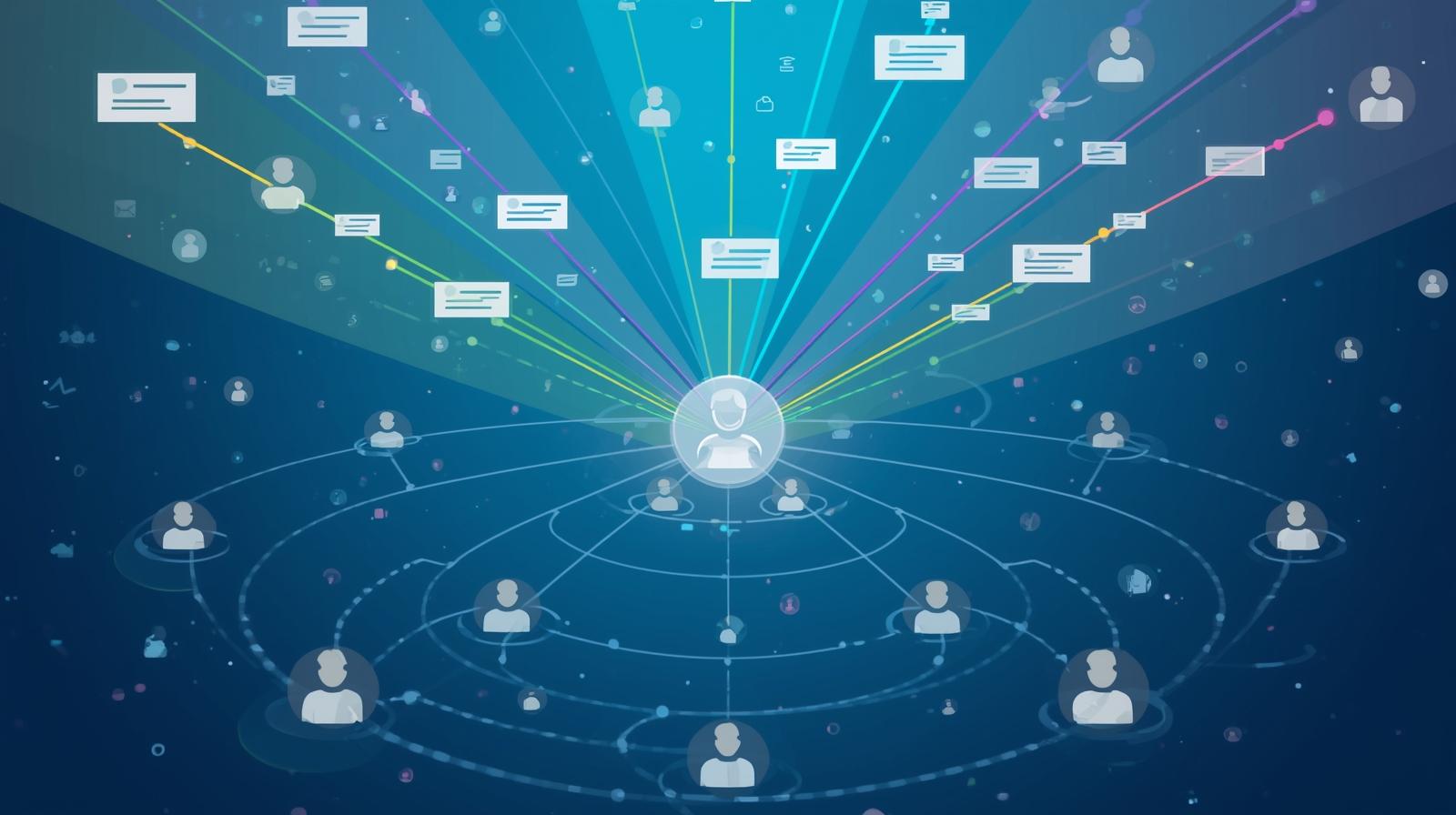
The member experience begins and often thrives through communications. Whether you operate a professional association, advocacy organization, alumni network, cultural institution with membership programs, or community-based membership nonprofit, your ability to engage members through relevant, timely communications directly influences retention, participation, and the value members perceive in their membership. Yet traditional communications approaches struggle to meet modern member expectations.
Consider the challenge facing a typical membership organization. You have members at different career stages with varying interests and needs. Some joined primarily for professional development, others for networking, still others for advocacy or access to specific resources. Some are highly engaged, attending events and consuming content regularly. Others are minimally active, their membership lapsing unless you provide compelling reasons to renew. A one-size-fits-all newsletter or generic event announcement reaches everyone with the same message, regardless of their interests, engagement level, or relationship with your organization. This approach inevitably results in most members finding most communications irrelevant, leading to declining open rates, disengagement, and ultimately, non-renewal.
The alternative—manually segmenting your membership and crafting targeted communications for each segment—quickly becomes unsustainable. Even basic segmentation by member type, geographic region, or engagement level can require creating dozens of communication variations. More sophisticated personalization based on individual interests, content consumption patterns, event attendance history, and career trajectories would require levels of staff time that most membership organizations simply don't have. This is where AI fundamentally changes the equation.
AI-powered communications platforms can analyze individual member behavior, preferences, and engagement patterns at scale, automatically segment members into dynamic groups that update based on real-time behavior, personalize content recommendations and communications for each member, optimize send times based on when individual members are most likely to engage, and continuously learn from engagement data to improve relevance over time. These capabilities enable membership organizations to deliver the personalized experience members expect without requiring proportional increases in communications staff. According to recent research, members who view their organization as an early adopter of technology are 81% more satisfied, 74% are promoters, and 53% feel more connected—demonstrating the tangible impact of sophisticated communications approaches.
This article explores how membership nonprofits can leverage AI to transform member communications from a broadcast channel into a personalized engagement engine. You'll discover practical strategies for implementing AI-powered personalization, automating intelligent communications workflows, analyzing engagement to continuously improve, and maintaining authentic relationships even as you scale. Whether you manage a small association with a few hundred members or a large organization with tens of thousands, these insights will help you deliver communications that members actually value—strengthening engagement, improving retention, and enhancing the overall member experience.
The Evolution from Broadcast to Personalized Engagement
Understanding how AI-powered communications differs from traditional approaches requires recognizing the fundamental shift in how member engagement operates. Traditional membership communications follow a broadcast model: the organization decides what content to share and when to share it, then distributes that content uniformly to all members or to broad segments. The organization controls the message, the timing, and the channel. Members are passive recipients who either engage with what's offered or ignore it.
This broadcast approach worked reasonably well when members had fewer information sources and lower expectations for personalization. But today's members—especially younger generations who have grown up with algorithmic content curation—expect communications to be relevant to their specific needs and interests. They're accustomed to platforms that learn their preferences and surface content they care about. Generic newsletters and mass emails feel increasingly irrelevant and intrusive, like noise they need to filter out rather than value they seek.
AI enables a fundamentally different model: personalized engagement where communications adapt to each member's behavior, preferences, and needs. Rather than broadcasting the same message to everyone, the system delivers different content to different members based on what's most relevant to each individual. Rather than sending communications on a fixed schedule determined by the organization, the system learns optimal timing for each member. Rather than treating all members identically, the system recognizes that a new member needs different information than a long-term member, that an active participant has different needs than someone who hasn't engaged in months, and that members at different career stages or with different interests require tailored approaches.
Key Dimensions of AI-Powered Personalization
How AI creates individualized member experiences at scale
Content Relevance
AI analyzes what content each member engages with—which emails they open, which articles they read, which events they register for, which resources they download—and uses this behavioral data to predict what future content will be most relevant. A member who consistently engages with professional development content receives more recommendations in that area. A member who attends networking events but ignores educational webinars sees different communications than someone with the opposite pattern. The system learns continuously, refining its understanding of each member's interests over time.
Practical example: A professional association implemented AI-powered content recommendations in their weekly newsletter. Rather than featuring the same articles for all members, the newsletter now includes a "Recommended for You" section with content personalized to each member's interests and career stage. Open rates increased by 35%, and click-through rates improved by 50%, with members reporting that the newsletter had become significantly more valuable.
Timing Optimization
When you send a communication matters as much as what you send. AI can analyze when individual members typically engage with emails, identifying patterns in their behavior. Some members check email first thing in the morning, others during lunch breaks, still others in the evening. Some are most responsive on weekdays, others on weekends. By sending communications when each member is most likely to see and engage with them, AI-powered timing optimization can significantly improve engagement rates. Studies show that optimized send times can increase open rates by 20-30% compared to fixed-time sends, simply by reaching members when they're most receptive.
Engagement-Based Adaptation
Perhaps most powerfully, AI systems can adjust communications based on engagement level and trajectory. New members receive onboarding content designed to help them extract value quickly. Highly engaged members get invitations to leadership opportunities and advanced resources. Members showing declining engagement receive re-engagement campaigns with content specifically chosen to reignite their interest. Members at risk of not renewing receive targeted retention communications. This adaptive approach treats members as individuals in different relationships with your organization rather than as an undifferentiated mass.
Dynamic Segmentation
Traditional segmentation is static—you define segments based on fixed criteria, and members remain in those segments until you manually update them. AI enables dynamic segmentation where members automatically move between segments based on changing behavior. A member who starts attending more events automatically shifts into a "highly engaged" segment. A member whose engagement declines automatically triggers a re-engagement workflow. A member who downloads career-transition resources automatically receives communications about mid-career development opportunities. These dynamic segments ensure that communications remain relevant even as member behavior evolves.
Implementing AI-Powered Personalization
The gap between understanding AI-powered personalization conceptually and implementing it practically can feel daunting. However, modern membership management platforms increasingly include AI capabilities, making implementation more accessible than many organizations realize. The key is starting with focused applications that deliver immediate value, then expanding as you gain experience and see results.
Successful implementation begins with data foundation. AI-powered personalization requires good data about member behavior, preferences, and engagement. This doesn't mean you need perfect data or comprehensive systems before starting—but you do need to capture behavioral data consistently. Most membership organizations already collect much of the necessary data through their membership database, email platform, event registration system, and website analytics. The challenge is often connecting these data sources so AI systems can analyze them holistically.
Starting with Email Personalization
Email remains the primary channel for member communications—start there
For most membership organizations, email is the workhorse of member communications. It's where you have the most frequent touchpoints and the richest behavioral data (open rates, click rates, which content members engage with). Starting your AI implementation with email personalization builds on existing processes while delivering measurable improvements relatively quickly. Modern email platforms with AI capabilities can analyze member engagement patterns, identify content preferences, personalize subject lines based on what resonates with each member, optimize send times individually, and recommend content likely to interest specific members.
Quick Win: AI-Powered Subject Lines
One of the simplest AI implementations with measurable impact is AI-generated subject lines. Rather than writing one subject line for all members, AI can generate variations optimized for different member segments or even individual members based on what types of subject lines they've historically responded to. Some members respond better to straightforward, informational subject lines. Others engage more with curiosity-driven or personalized subject lines. AI can test variations automatically and learn which approaches work best for different members, then apply that learning to future communications. Organizations implementing AI-powered subject line optimization typically see 15-25% improvements in open rates.
Content Blocks: Personalized Sections in Standard Emails
You don't need to create entirely different emails for each member to deliver personalization. A more practical approach is using dynamic content blocks within standard email templates. Your newsletter might have a standard structure—news, upcoming events, featured resources—but specific sections adapt to individual members. The "events near you" section shows events in each member's region. The "recommended reading" section features content aligned with each member's interests. The "people like you" section highlights member stories from similar career stages or roles. These personalized blocks make standard communications feel tailored without requiring you to create hundreds of email variations.
Beyond email, AI personalization extends to other communication channels. Your website can display different content recommendations to different members based on their history and interests. Member portals can surface personalized dashboards highlighting resources, events, and opportunities most relevant to each member. Mobile app notifications can be triggered by individual behavior rather than sent uniformly. Even direct mail (for organizations still using it strategically) can be personalized based on AI analysis of member preferences and engagement patterns.
The technical implementation typically involves integrating your membership management system with an AI-powered communications platform or adding AI capabilities to your existing systems through plugins or enhanced tiers. Many major membership platforms now offer AI features as standard or premium capabilities. For organizations using multiple systems (separate CRM, email platform, event management, etc.), integration platforms can connect these systems and enable AI analysis across all your data sources. The investment required varies based on your membership size and existing technology, but options exist at most budget levels—from free tiers for small organizations to enterprise solutions for large associations.
Building Intelligent, Automated Engagement Workflows
Personalization is powerful, but it reaches its full potential when combined with automation. The goal isn't just to send the right message to the right member—it's to trigger the right message at the right time based on member behavior, creating continuous engagement loops that operate largely automatically. These automated workflows, often called "member journeys," use AI to make intelligent decisions about what communications to send and when.
Traditional marketing automation follows rigid if-then logic: if a member takes action X, send message Y. AI-powered workflows are more sophisticated, analyzing multiple signals simultaneously and making nuanced decisions about optimal next steps. The system considers not just a single action but the member's overall engagement pattern, their historical preferences, how they compare to similar members, and what approaches have been most effective for members with similar profiles. This results in workflows that feel more intelligent and responsive than traditional automation.
Essential Automated Workflows for Membership Organizations
Key member journeys that benefit from AI-powered automation
New Member Onboarding
The first 90 days of membership are critical for long-term engagement and retention. AI-powered onboarding workflows can adapt to each new member's behavior. If a member immediately starts attending events, the system emphasizes upcoming event opportunities. If they primarily consume content, it recommends articles and resources. If they don't engage initially, the system adjusts the cadence and messaging to reignite interest. The workflow continuously monitors engagement and adjusts its approach, ensuring each new member receives the support most likely to help them extract value quickly. Organizations implementing intelligent onboarding workflows typically see 20-30% improvements in first-year retention compared to static onboarding sequences.
Engagement Nurturing
Between acquisition and renewal lies the ongoing work of keeping members engaged. AI-powered nurturing workflows identify when engagement is declining and trigger interventions. A member who stops opening emails receives a re-engagement campaign. A member who attended events regularly but hasn't registered for anything recently receives targeted event invitations. A member approaching their renewal date but showing low engagement receives special outreach highlighting value and benefits. These workflows operate continuously in the background, monitoring thousands of members simultaneously and triggering personalized interventions when needed.
Renewal Campaigns
Renewal is the critical moment for membership organizations. AI-powered renewal workflows personalize this experience based on each member's engagement history and predicted renewal likelihood. Members showing strong engagement receive straightforward renewal invitations emphasizing continued value. Members at risk of lapsing receive enhanced communications highlighting benefits they haven't yet utilized, including testimonials from similar members, or offering special renewal incentives. The timing, messaging, and intensity of renewal communications adapt to each member's predicted renewal propensity, maximizing renewal rates while avoiding unnecessary discounts for members likely to renew anyway.
Milestone Recognition
Members appreciate feeling recognized and valued. AI can automatically identify meaningful milestones—membership anniversaries, career transitions, achievement of certification or designation, leadership involvement—and trigger personalized recognition communications. These moments create opportunities to reinforce value, encourage deeper engagement, and strengthen the emotional connection between member and organization. The AI ensures no milestone is missed, even as your membership scales beyond what staff could track manually, creating consistent recognition that makes members feel seen and appreciated.
Implementing automated workflows requires balancing automation with authenticity. While AI can trigger and personalize communications at scale, members still value genuine human connection. The most effective approaches use AI to handle routine communications, identify when personal outreach is needed, and surface opportunities for staff to engage meaningfully with members. For instance, AI might automatically send a renewal reminder but flag members predicted to lapse for personal calls from staff. Or it might nurture low-engagement members automatically but alert staff when a highly valuable member shows concerning disengagement patterns.
Start with one or two workflows—perhaps new member onboarding and renewal campaigns—and refine them before expanding. Build these workflows gradually, testing different approaches and learning what resonates with your members. Monitor performance closely in the early stages, looking for unintended consequences or member feedback indicating the automation feels impersonal. Adjust your approach based on this feedback, finding the right balance between efficiency and authenticity for your membership culture.
Using Predictive Analytics to Stay Ahead of Member Needs
The most sophisticated application of AI in member communications moves beyond reactive personalization (responding to member behavior) to predictive engagement (anticipating member needs before they arise). Predictive analytics use historical data and pattern recognition to forecast future behavior, allowing you to intervene proactively rather than reactively. This capability transforms member engagement from responsive to strategic.
Predictive models can identify which members are at risk of not renewing, often months before renewal date, allowing time for meaningful retention efforts. They can predict which members are likely to increase engagement if given the right opportunities, helping you prioritize outreach and leadership development. They can forecast which types of content, events, or benefits will resonate most with different member segments, informing your content strategy and program development. And they can identify emerging trends in member behavior that signal changing needs or expectations, helping you evolve your offerings proactively.
Churn Prevention Through Early Warning Systems
Identifying at-risk members before they decide to leave
One of the highest-value applications of predictive analytics in membership organizations is churn prediction. By analyzing engagement patterns, AI systems can identify members showing behavioral signals associated with non-renewal: declining email opens, reduced event attendance, longer gaps between website visits, or changes in the types of resources accessed. These signals often appear 3-6 months before renewal decisions, providing a window for retention interventions.
Building a Churn Prevention System
- Identify the engagement signals that historically correlate with renewal or lapse (email engagement, event attendance, content consumption, community participation, etc.)
- Train a predictive model using historical data from members who renewed versus those who lapsed, allowing the AI to learn which patterns indicate risk
- Apply the model to current members to generate risk scores indicating each member's likelihood of renewal
- Create tiered intervention strategies: high-risk members receive intensive personal outreach, medium-risk members get targeted campaigns, low-risk members receive standard renewal communications
- Continuously refine the model based on actual renewal outcomes, improving prediction accuracy over time
Organizations implementing churn prediction systems often see renewal rate improvements of 5-15 percentage points—a substantial impact when applied across thousands of members. Perhaps more importantly, these systems allow limited staff to focus retention efforts where they'll have the greatest impact rather than treating all members identically or relying on intuition about who needs attention.
Beyond churn prevention, predictive analytics can identify high-potential members likely to become more deeply engaged with appropriate encouragement. These members might be excellent candidates for volunteer leadership roles, committee participation, or mentorship opportunities. By identifying them through AI analysis rather than waiting for them to self-select, you can diversify leadership pipelines and engage talented members who might otherwise remain passive participants. One professional association used predictive models to identify members likely to be interested in committee service, then personally invited them. Acceptance rates for these targeted invitations were 60% higher than for broad calls for volunteers, and the resulting committees were more diverse and engaged than previous cohorts.
Implementing predictive analytics requires sufficient historical data—typically at least 2-3 years of member engagement and renewal data covering hundreds or thousands of members. Smaller or newer organizations may not yet have the data foundation for sophisticated predictive models, but they can still benefit from simpler AI applications like personalization and automation. As your data accumulates, predictive capabilities become increasingly valuable. Work with your membership platform provider or a data consultant to assess whether predictive models make sense for your current data and organizational goals. If you're ready, start with a focused application like churn prediction, learn from the results, then expand to other predictive use cases as you build confidence and see value.
Maintaining Authentic Relationships at Scale
The greatest risk in implementing AI-powered communications is losing the authentic, human connection that makes membership meaningful. Members don't join organizations for optimized algorithms—they join for community, belonging, professional growth, and mission alignment. While AI can dramatically improve communication efficiency and relevance, it must serve rather than replace authentic relationship building. The most successful membership organizations use AI to enable more meaningful human connections, not to eliminate them.
Authenticity at scale requires intentionally designing AI systems to support human relationships. This means using AI to handle routine communications that don't require personal touch, freeing staff time for high-value personal interactions. It means building AI systems that identify when personal outreach is needed, rather than automating every touchpoint. It means maintaining transparency about what's automated and what's personal, never trying to trick members into thinking automated messages are individually crafted. And it means continuously gathering member feedback about communication preferences and adjusting your approach accordingly.
Principles for Human-Centered AI Communications
Balancing efficiency with authentic member relationships
- Reserve personal communications for meaningful moments: Use AI to handle routine updates, newsletters, event announcements, and standard information delivery. Reserve personal emails, calls, and conversations for milestone moments, retention risk, leadership recruitment, conflict resolution, and situations requiring empathy or nuanced judgment. This allocation ensures personal touchpoints feel special rather than routine.
- Provide clear attribution and transparency: Don't try to make AI-generated communications appear personally written. Use clear language like "This personalized newsletter is created based on your interests" or "Recommended for you based on your activity." Members appreciate transparency and are comfortable with automation when it's acknowledged honestly. What damages trust is deception—making automated messages appear personal when they're not.
- Enable member control over personalization: Give members preferences and controls over their communication experience. Allow them to indicate topics of interest, adjust communication frequency, opt into or out of specific types of automation, and provide feedback on whether communications are hitting the mark. Member control prevents personalization from feeling intrusive or presumptuous.
- Monitor sentiment and feedback continuously: Use surveys, feedback mechanisms, and engagement analytics to assess whether members feel your communications are relevant and valuable or overwhelming and impersonal. Watch for signals that automation has gone too far—declining engagement, negative feedback, or member comments about feeling "marketed to" rather than supported. Adjust your approach based on this feedback.
- Train staff on AI-augmented relationship management: Help your team understand that AI isn't replacing their role—it's enabling them to focus on higher-value relationship work. Provide training on interpreting AI insights (risk scores, engagement patterns, predicted needs), using AI recommendations to prioritize outreach, and combining data-driven insights with human judgment and empathy. The goal is staff who are more effective relationship builders because they have better information and more time for meaningful interactions.
Consider how a regional professional association balanced automation with authentic relationships. They implemented AI-powered email personalization and automated onboarding workflows, dramatically improving engagement metrics. But they also established clear guidelines: any member showing serious disengagement risk receives a personal call from their chapter leader, not just automated emails. Members celebrating major milestones (certifications, promotions, retirements) receive personal congratulations from leadership. And the monthly newsletter, while personalized through AI, always includes a personal message from the executive director addressing the community as a whole. This hybrid approach delivered the efficiency benefits of AI while maintaining the authentic community feeling that makes membership valuable.
The measure of success isn't just engagement metrics—it's whether members feel more connected, supported, and valued. Regularly survey members about their experience with communications. Ask whether they find communications relevant, whether the frequency feels appropriate, whether they feel recognized as individuals, and whether they experience genuine community. Use this qualitative feedback alongside quantitative metrics to assess whether your AI implementation is truly enhancing the member experience or merely optimizing numbers while eroding relationships. The technology should serve your members and your mission, not the other way around.
Getting Started: A Practical Implementation Path
Moving from understanding AI-powered member communications to actually implementing them requires a structured approach that builds capabilities progressively. Trying to implement everything at once overwhelms staff and makes it difficult to assess what's working. Instead, follow a phased approach that builds on early successes and learns from challenges.
Phase 1: Foundation (Months 1-3)
Building the data and platform foundation for AI communications
- Audit your current member data: What information do you collect? How complete and accurate is it? What engagement data do you capture? Identify gaps that would limit AI effectiveness.
- Evaluate your current technology stack: Can your existing platforms support AI capabilities, or do you need new tools? Look for membership management systems or email platforms with built-in AI features.
- Clean and organize existing member data: Standardize data formats, remove duplicates, fill critical gaps, and ensure data quality sufficient for AI analysis.
- Establish baseline metrics: Document current engagement rates, renewal rates, and member satisfaction before implementing AI, so you can measure impact accurately.
- Select initial AI capabilities: Choose one or two focused applications to start—perhaps personalized email content and optimized send times. Don't try to implement everything simultaneously.
Phase 2: Pilot Implementation (Months 4-6)
Testing and refining AI communications with a subset of members
- Implement AI capabilities with a pilot group: Select a representative sample of members (perhaps 20-30% of your membership) to receive AI-powered communications while others continue with standard approaches.
- Monitor comparative performance: Track engagement metrics for pilot group versus control group. Are open rates improving? Click rates? Event registrations? Member satisfaction?
- Gather qualitative feedback: Survey pilot group members about their experience. Do they find communications more relevant? Is frequency appropriate? Do they appreciate personalization or find it intrusive?
- Refine your approach: Based on data and feedback, adjust personalization parameters, communication frequency, content types, and workflow logic. Fix what's not working before scaling up.
- Train staff on interpreting AI insights: Help your team understand engagement analytics, risk scores, and other AI-generated information so they can act on insights effectively.
Phase 3: Scale and Expand (Months 7-12)
Rolling out successful approaches organization-wide and adding capabilities
- Roll out proven AI capabilities to entire membership: Expand successful pilot implementations across your full member base with confidence they'll deliver value.
- Add new AI applications: With foundation established and initial capabilities proven, expand to additional use cases like automated workflows, predictive analytics, or multi-channel personalization.
- Establish ongoing optimization processes: AI communications should continuously improve. Schedule regular reviews of engagement data, A/B testing of new approaches, and refinement of algorithms based on results.
- Share success metrics with stakeholders: Document and communicate the impact of AI-powered communications—improved engagement, better renewal rates, efficiency gains—to build organizational buy-in for continued investment.
- Plan for advanced capabilities: As you master initial implementations, explore more sophisticated applications like predictive modeling, natural language generation for content creation, or AI-powered member community platforms.
This phased approach typically takes 9-12 months from initial planning to full-scale implementation, though timelines vary based on organizational size, technical complexity, and current technology maturity. The key is building steadily, learning continuously, and expanding based on demonstrated success rather than moving too quickly and risking implementation failures that undermine confidence in AI capabilities. Remember that this is an ongoing journey, not a one-time project—you'll continue refining and improving your AI-powered communications as technology evolves and you learn what resonates most with your specific membership.
Conclusion: The Future of Member Engagement Is Personal
Member expectations have fundamentally shifted. The generic, one-size-fits-all communications that were once standard practice now feel impersonal and irrelevant. Members increasingly expect organizations to understand their individual needs, recognize their specific interests, and deliver value tailored to their circumstances. For membership organizations with limited staff and thousands of members, meeting these expectations without AI feels impossible. But with AI, it's not only possible—it's becoming the standard.
AI-powered member communications enable you to deliver personalized, relevant engagement at scale while freeing your staff to focus on the authentic human relationships that make membership meaningful. The technology handles the routine work—segmentation, personalization, timing optimization, automated workflows—allowing humans to focus on strategy, creativity, and the high-touch interactions that require empathy, judgment, and genuine connection. This isn't about replacing the human element of membership—it's about amplifying it by removing the barriers that prevent authentic engagement at scale.
The membership organizations that will thrive in the coming years are those that embrace this technology thoughtfully, using AI to enhance rather than erode the member experience. They'll deliver communications that members actually value, engagement that feels personal even at scale, and relationships that strengthen rather than fade over time. They'll retain members more effectively, attract new members more successfully, and create more value for everyone involved. And they'll do all of this with staff who are more satisfied, less overwhelmed, and more focused on meaningful work.
The journey begins with a single step: acknowledging that your current approach to member communications likely isn't scaling effectively, exploring what AI-powered alternatives could look like for your organization, and committing to a thoughtful implementation process that prioritizes member value over technological sophistication. The tools are accessible, the benefits are substantial, and the competitive pressure is mounting as early adopters demonstrate what's possible. The question isn't whether AI will transform member communications in your organization—it's whether you'll lead that transformation proactively or adopt it reactively after competitors have already gained the advantages it provides. For more guidance on getting started with AI in your nonprofit, explore our comprehensive resources designed specifically for membership organizations navigating this transformation.
Transform Your Member Communications
Ready to move beyond generic broadcasts to personalized engagement that scales? We help membership nonprofits implement AI-powered communications strategies that strengthen relationships, improve retention, and enhance the member experience—without losing the authentic, human touch that makes membership meaningful.