
What Next-Gen Donors Expect from AI-Powered Nonprofits in 2026
Millennials are now the largest donor demographic by volume. Gen Z is the fastest-growing segment. Both generations have grown up with algorithmic personalization and expect organizations they support to treat them as individuals, not names on a mailing list. Here is what that actually means for nonprofit fundraising in 2026 and how AI makes it achievable.
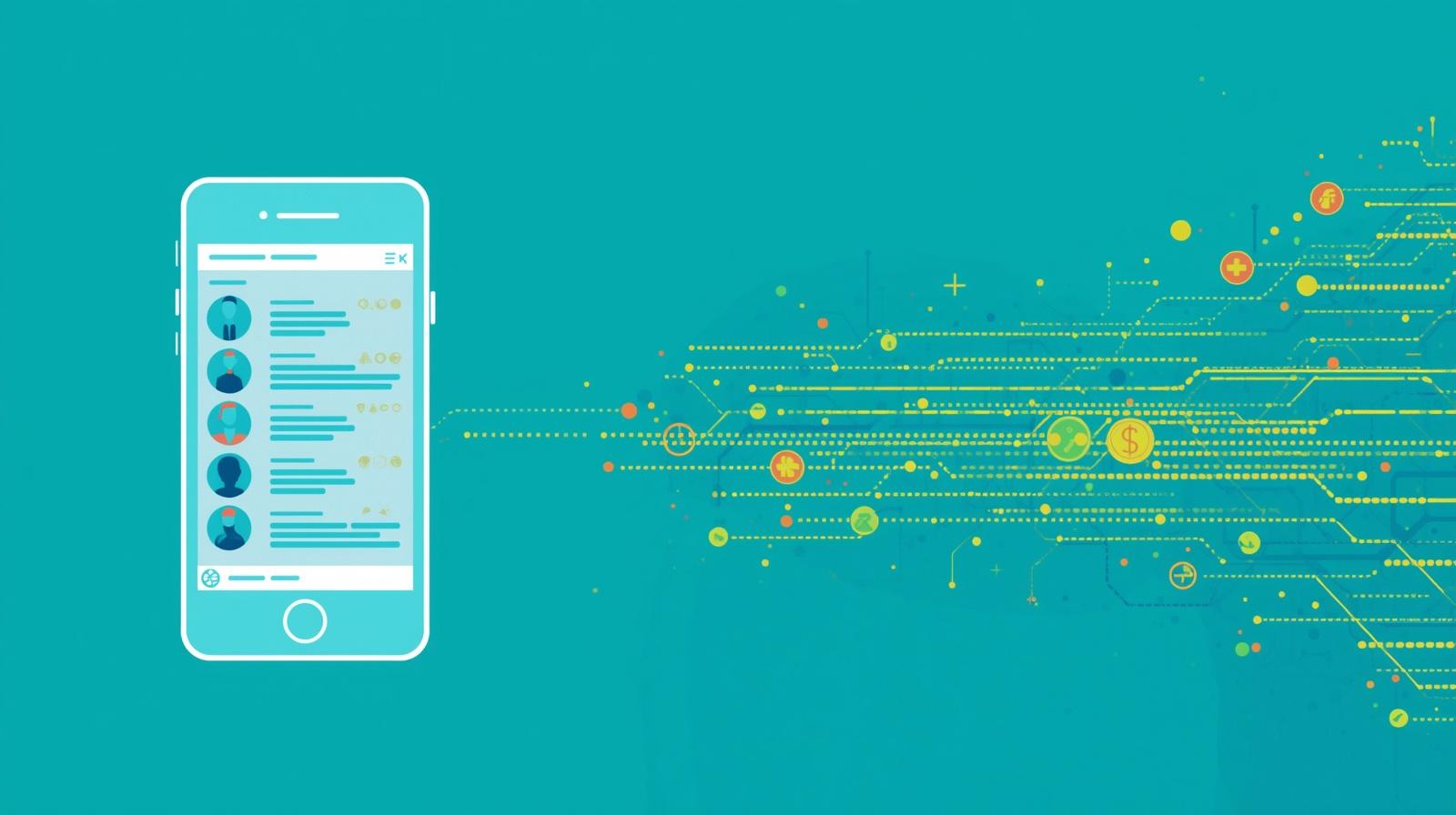
There is a generational shift happening in philanthropy that most nonprofits are not fully prepared for. The donors who will define the sector's funding landscape over the next two decades are not the same people as the donors who built today's organizations. Millennials and Gen Z have different expectations, different communication preferences, and a fundamentally different relationship with technology than the donors nonprofit organizations were built to serve.
The expectations next-gen donors bring to their charitable giving are shaped by years of interaction with platforms like Netflix, Spotify, and Amazon, systems that learn their preferences, remember their history, and make recommendations that feel personally relevant. When a nonprofit sends a generic mass email to someone who gave $500 last year and attended two events, that donor notices the gap between what they experience elsewhere and what they receive from the organizations they support financially.
This is not a minor inconvenience. Research consistently shows that feeling unrecognized and receiving generic communications is among the leading reasons donors stop giving. The organizations that build authentic, personalized relationships with next-gen donors now are positioning themselves to benefit from a wealth transfer of historic proportions over the coming decades. Those that continue with batch-and-blast fundraising face accelerating donor churn and a growing gap between their donor base and the next generation of philanthropists.
AI does not solve the human relationship problem on its own. But it makes personalized engagement achievable at a scale that no development team could achieve manually. This article explains what next-gen donors actually expect, where the current gaps are, and how AI tools can help nonprofits close them. For organizations thinking about AI's broader role in donor engagement, the articles on automated stewardship sequences and donor journey automation provide practical context.
Understanding Who Next-Gen Donors Are
"Next-gen donors" is not just a demographic category; it describes a different relationship with giving. Millennials (born 1981-1996) are now the largest donor demographic by volume, with the vast majority donating to charity annually. They give across multiple organizations and strongly prefer giving online. Gen Z (born 1997-2012) is the fastest-growing segment: younger, giving smaller amounts on average, but deeply values-driven and highly motivated. A significant majority of Gen Z donors report that they want to feel a personal connection to the causes they support, according to Fidelity Charitable research.
What makes these generations strategically important goes beyond their current giving volume. The Great Wealth Transfer, estimated at $84 trillion moving from Baby Boomers and the Silent Generation to Millennials and Gen Z over the next 20 years, means that the relationship quality organizations build with these donors today will determine access to transformational estate gifts and planned giving commitments through the 2040s and 2050s. Organizations that build genuine relationships with next-gen donors now are not just securing modest annual gifts; they are cultivating the foundation for major gifts that will define organizational sustainability for decades.
Millennial Donors (Ages 29-44 in 2026)
- Largest donor segment by volume; majority give annually
- Majority prefer to give online; mobile giving strongly preferred
- Expect personalized, relevant communications from organizations they support
- Increasingly entering prime major gift years as wealth accumulates
Gen Z Donors (Ages 14-28 in 2026)
- Fastest-growing donor segment; highly values-driven
- Access internet primarily via smartphone; mobile-first is non-negotiable
- First AI-native generation; expects algorithmic personalization as baseline
- Give more frequently when they can use platforms they already use daily
Expectation 1: They Expect You to Know Who They Are
The most fundamental expectation next-gen donors bring to their nonprofit relationships is that organizations they support will remember them, recognize their history, and communicate in ways that reflect actual knowledge of who they are and why they give. This expectation sounds simple but is violated constantly. Research by Salesforce found that a large majority of next-gen donors expect nonprofits to understand their giving history and interests, while only about a third say the organizations they support actually demonstrate that understanding.
What does personalization mean concretely? Donors define it as recognition of giving history ("they acknowledged that I've been giving for three years"), relevance of content ("they send me updates about the specific programs I care about"), appropriate ask amounts ("their donation requests make sense given what I've given before"), timing sensitivity ("they don't ask me for money right after I just gave"), and channel preference respect ("they communicate with me the way I asked them to"). Each of these is entirely achievable with modern CRM and AI tools; the gap is organizational, not technological.
The research on the impact of personalization is striking. Studies have found that nonprofits using AI-driven personalization in donor communications see substantially higher retention rates, higher average gift sizes from repeat donors, and significantly improved email open rates compared to organizations using generic mass communications. The difference between a donor who stays for ten years and one who lapses after two often comes down to whether they feel genuinely seen and appreciated by the organization.
What AI-Powered Personalization Actually Looks Like
Moving from generic to genuinely personal communication at scale
- Behavior-triggered emails: A donor who clicked on a video about your housing program receives follow-up content about housing program outcomes, not your general newsletter.
- Appropriate ask sequencing: AI recognizes that a donor gave three weeks ago and automatically suppresses appeal emails that would otherwise go out to the full list.
- Smart upgrade asks: Rather than asking everyone for $500, AI calculates a personalized suggested amount based on this donor's history, peers, and capacity signals.
- Milestone recognition: Automated (but personally worded) recognition when a donor reaches a giving anniversary, cumulative total, or program-specific milestone.
- Re-engagement timing: AI detects when a usually-engaged donor has gone quiet for 60 days and triggers an appropriate, non-ask check-in that feels human.
There is an important caveat to AI personalization: it can go wrong in ways that actually harm the relationship. Donors are quick to detect when communication has been poorly personalized, for example, an email that starts with "Dear Friend" after five years of giving, or a "personalized" message that mentions a program the donor has never engaged with. Well-executed personalization that feels genuinely relevant scores significantly higher in donor satisfaction than even the best human-written generic communications. Poorly executed "personalization" that feels robotic or irrelevant can actively undermine trust. The goal is relevance and authenticity, not just variable insertion.
Expectation 2: The Mobile Experience Cannot Be an Afterthought
Mobile devices now account for the majority of nonprofit website traffic, and a significant portion of all online donations are made on mobile devices, with the trend continuing upward year over year. For Gen Z specifically, the smartphone is their primary computing device; the vast majority access the internet primarily via smartphone rather than desktop or laptop.
This creates a stark problem for organizations whose donation pages were built for desktop experiences. M+R Benchmarks research has found that a large proportion of nonprofit donation pages still do not pass Google's mobile performance thresholds, and average mobile load times for nonprofit sites significantly exceed the thresholds at which abandonment rates begin to climb steeply. For Gen Z donors specifically, a poor mobile experience rarely gets a second chance; research suggests only a small fraction will try again on desktop.
The mobile-first mandate includes more than page load times. Gen Z donors give more frequently when they can give through platforms they already use daily: Instagram, TikTok, Venmo, or Cash App. Digital wallet support (Apple Pay, Google Pay) removes friction at the moment of giving and represents a growing share of completed nonprofit donations. SMS and text giving have grown dramatically as a channel; the open rate for text messages dwarfs email, and the overwhelming majority of messages are read within minutes of receipt.
Speed
Mobile page load time is a primary driver of abandonment. A donation page that takes more than a few seconds to load loses a significant percentage of visitors before they have a chance to give.
Simplicity
Forms designed for desktop frequently require too many fields and too many taps on mobile. One-click giving via digital wallets dramatically improves completion rates for impulsive or time-constrained donors.
Platform Integration
Social giving integrations with Instagram and TikTok create giving moments tied to compelling content. Meeting donors on platforms they already use removes the barrier of navigating to your website.
Expectation 3: Specific, Transparent Impact Reporting
Institutional trust is at historic lows across sectors including nonprofits, and next-gen donors are responding with a demand for radical transparency. Research by Edelman found that the large majority of Millennial donors want to see specific, measurable impact from their gift, not just aggregate organizational statistics. A similar proportion of Gen Z donors say they would stop donating to an organization that could not show them how their specific contribution was used. Most expect to receive impact updates within 90 days of making a gift.
The annual report model is no longer sufficient on its own. Next-gen donors want impact reporting that is real-time or near-real-time, personalized to their specific contribution, visual and video-based rather than primarily text, and honest about challenges and trade-offs, not just successes. A significant majority of next-gen donors prefer impact updates in video format over text-based reports, according to research by Vidyard and Nonprofit Hub.
AI is enabling a new generation of impact reporting that makes personalized impact narratives achievable at scale. Rather than sending every donor the same annual report, organizations can now auto-generate impact statements that connect each donor's specific gifts to specific program outcomes. This technology, which previously required expensive custom development, is increasingly available as a feature within platforms like Bloomerang, Virtuous, and Salesforce NPSP. The result is communication that feels like a genuine accounting to an individual partner rather than a public relations document addressed to everyone.
Gen Z donors are notably more sophisticated about the "overhead myth" than previous generations. Many prioritize organizational effectiveness over low overhead ratios; they want proof of outcomes, not just low administrative costs. This actually works in favor of organizations that have invested in AI-powered program evaluation and impact measurement tools, since those investments produce exactly the kind of outcome evidence that resonates with next-gen donors. For more on connecting AI to impact storytelling, see the article on real-time impact dashboards for nonprofits.
Expectation 4: Communicate on Their Terms
Different generations have meaningfully different communication preferences, and next-gen donors expect organizations to respect those preferences rather than defaulting to the channels that are easiest for the organization to manage. Sending formal direct mail to a 28-year-old donor who has opted for email communication, or sending monthly newsletters to someone who asked for quarterly updates, signals that you are not actually paying attention.
For Millennials, personalized email remains the top-ranked communication channel, but it competes with SMS for urgent updates, social media for ongoing engagement, and video for impact storytelling. Email communications that feel generic or that arrive at inappropriate frequencies are a significant driver of unsubscribes and, eventually, lapse. For Gen Z, Instagram, TikTok, and text messaging rank ahead of email; authentic, behind-the-scenes social content outperforms polished marketing materials in engagement and trust-building.
Millennial Channel Preferences (2026)
- 1.Email, if personalized and well-timed
- 2.SMS/text for urgent updates and impact moments
- 3.Instagram and LinkedIn for ongoing mission content
- 4.Video impact updates and storytelling
- 5.Podcast and long-form audio content
Gen Z Channel Preferences (2026)
- 1.Instagram Reels and TikTok short-form video
- 2.SMS/text messaging with quick response options
- 3.Email, only if brief and clearly relevant
- 4.YouTube for longer impact documentation
- 5.AI chatbots for FAQ and giving guidance (growing rapidly)
AI-powered SMS platforms and CRM-integrated text messaging tools now enable nonprofits to build personalized, conversational text communication at scale. The near-universal open rate for text messages, combined with the immediacy of the channel, makes SMS particularly valuable for time-sensitive campaigns, impact moments, and re-engagement with donors who have stopped opening emails. The key is using text for high-value, low-frequency communication rather than treating it as another broadcast channel.
AI chatbots deserve particular attention as a rising channel for next-gen engagement. Research from NextAfter found that AI chatbots on donation pages can reduce abandonment by providing real-time FAQ responses, and that conversational giving flows, where a chatbot guides a donor through their giving decision, show meaningful conversion advantages for first-time donors. While this channel is still developing, the trajectory is clear, and organizations that begin experimenting now will be better positioned as Gen Z's giving volume grows.
The Stakes: Retention, Trust, and the Wealth Transfer
The Fundraising Effectiveness Project tracks nonprofit donor retention rates, and the data is sobering. Overall donor retention hovers around 43%, meaning that fewer than half of donors in any given year give again the following year. First-time donor retention is dramatically lower, with roughly one in five new donors giving a second time. Among donors who have cited impersonal communications as a concern, lapse rates are significantly higher than the overall average.
The cost of this churn is substantial. Acquiring a new donor costs substantially more than retaining an existing one. Every lapsed donor represents not just lost annual gift revenue but the elimination of lifetime giving potential, which compounds dramatically over time. Research by Bloomerang found that nonprofits implementing personalized donor journeys saw first-year retention rates climb significantly and year-two retention improve even further, along with meaningful increases in average lifetime donor value.
Beyond retention statistics, there are reputational and competitive risks that are harder to quantify but increasingly real. Gen Z donors who feel disrespected or manipulated by a nonprofit's communications are significantly more likely to share that experience on social media than previous generations were. The migration of young donors toward direct giving platforms (GoFundMe, Patreon for activists, community mutual aid funds) reflects a preference for the personal, direct connection those platforms enable over the institutional giving experience most nonprofits provide. Organizations that fail to close the experience gap do not just lose individual donors; they contribute to a broader disintermediation that could reshape the sector.
Warning Signs Your Donor Experience Is Falling Behind
- Your donor retention rate has declined year-over-year for two or more years
- The average age of your donor base is rising and you have few donors under 40
- Your first-time donor retention rate is below 25%
- Your email open rates have declined significantly over the past three years
- More than 30% of your online traffic is mobile but your donation page was not designed for mobile
- You do not have a donor preference center where supporters can control their communication experience
What Nonprofits Should Do: A Practical Roadmap
Meeting next-gen donor expectations does not require becoming a technology company. It requires using AI tools to do what nonprofits have always done, build genuine relationships, but doing it at a scale that manual effort cannot sustain. The organizations seeing the strongest results are those that combine authentic human mission with AI-powered operational intelligence.
1Immediate Priority: Fix the Mobile Experience (0-3 months)
Audit your donation page against Google's Core Web Vitals mobile performance benchmarks. Fix load times, ensure forms are optimized for touch navigation, and implement Apple Pay and Google Pay as payment options. This is infrastructure work that pays back immediately in improved conversion rates and reduced abandonment.
- Test your donation page on multiple mobile devices
- Add digital wallet payment options if not already present
- Reduce form fields to the essential minimum for first-time givers
2Near-Term: Build Segmented Communication (3-6 months)
Move beyond sending the same message to your entire list. At minimum, create separate communication tracks for first-time donors, recurring donors, lapsed donors, and major gift prospects. Build thank-you automation that sends within 24 hours and references the specific gift amount and program area. Implement a donor preference center where supporters can choose their communication channels and frequency.
- Segment by donor stage (new, active, lapsed, major gift)
- Automate 24-hour thank-you with specific gift reference
- Create preference center for channel and frequency choices
3Medium-Term: Invest in AI-Powered CRM and Impact Reporting (6-18 months)
Adopt a CRM platform with native AI capabilities for donor scoring, communication personalization, and journey automation. Platforms like Bloomerang, Salesforce NPSP, and Virtuous include these features at varying price points. Build personalized impact reports that connect each donor's specific contribution to measurable outcomes. Launch SMS as a regular donor communication channel, starting with opt-in-only event updates and expanding from there.
- Evaluate AI-enabled CRM platforms against your size and budget
- Develop personalized impact statement templates for your top programs
- Launch opt-in SMS program with relevant, high-value updates
4Long-Term: Build AI-Driven Donor Journey Orchestration (18-36 months)
Implement trigger-based, multi-channel engagement workflows that respond to donor behavior in real time. Explore AI chatbots for website FAQ, donation guidance, and impact questions. Develop a data ethics framework and publish your policies transparently, something that resonates particularly strongly with next-gen donors. Invest in short-form video production capacity for social engagement and impact storytelling.
- Build trigger-based journeys that respond to specific donor behaviors
- Publish a clear donor data policy as a trust-building signal
- Develop consistent short-form video content for social platforms
Organizations wondering where to prioritize limited resources should focus first on the basics: a mobile-optimized donation experience and personalized thank-you communication. These changes have the most immediate impact on donor retention and are achievable without significant technology investment. The more sophisticated AI personalization and journey orchestration work is valuable but builds on this foundation.
For organizations earlier in their AI journey, the article on a nonprofit leader's guide to getting started with AI provides a helpful foundation. For those specifically focused on donor retention, see the article on building predictive models for donor retention.
Conclusion
The central insight from all the research on next-gen donor expectations is that these donors are not asking nonprofits to become technology companies. They are asking to be treated as individuals, to receive information that is relevant to them personally, to give through channels that fit their lives, and to see evidence that their contributions are making a difference. AI makes it possible to deliver on these expectations at a scale that was not achievable through manual effort alone.
The organizations that will thrive in the next era of nonprofit fundraising are those that combine authentic human mission with AI-powered operational intelligence: using technology to deepen relationships, not replace them. The tools exist. The donor expectations are clear. The question for most organizations is whether they will build the systems and habits to meet those expectations before the donors they need to retain and cultivate choose to go elsewhere.
The wealth transfer is coming. The next generation of major donors is already giving at lower levels and forming opinions about which organizations are worth their long-term loyalty. The investments nonprofits make in donor experience infrastructure today will determine whether they are positioned to benefit from that transfer or not.
Ready to Build a Next-Gen Donor Experience?
One Hundred Nights helps nonprofits design personalized, AI-powered donor engagement systems that meet next-gen expectations while staying true to your mission and values.