
AI for Nonprofit HR: Performance Reviews, Onboarding, and Professional Development
With 59% of nonprofits reporting that filling staff positions became significantly harder in 2024 and nearly 1 in 3 struggling with retention, human resources has become a critical challenge for mission-driven organizations. AI is emerging as a powerful tool to address these challenges—automating up to 40% of repetitive HR tasks while helping organizations create better employee experiences. Here's how nonprofit HR teams can leverage AI to transform performance management, streamline onboarding, and build meaningful professional development programs.
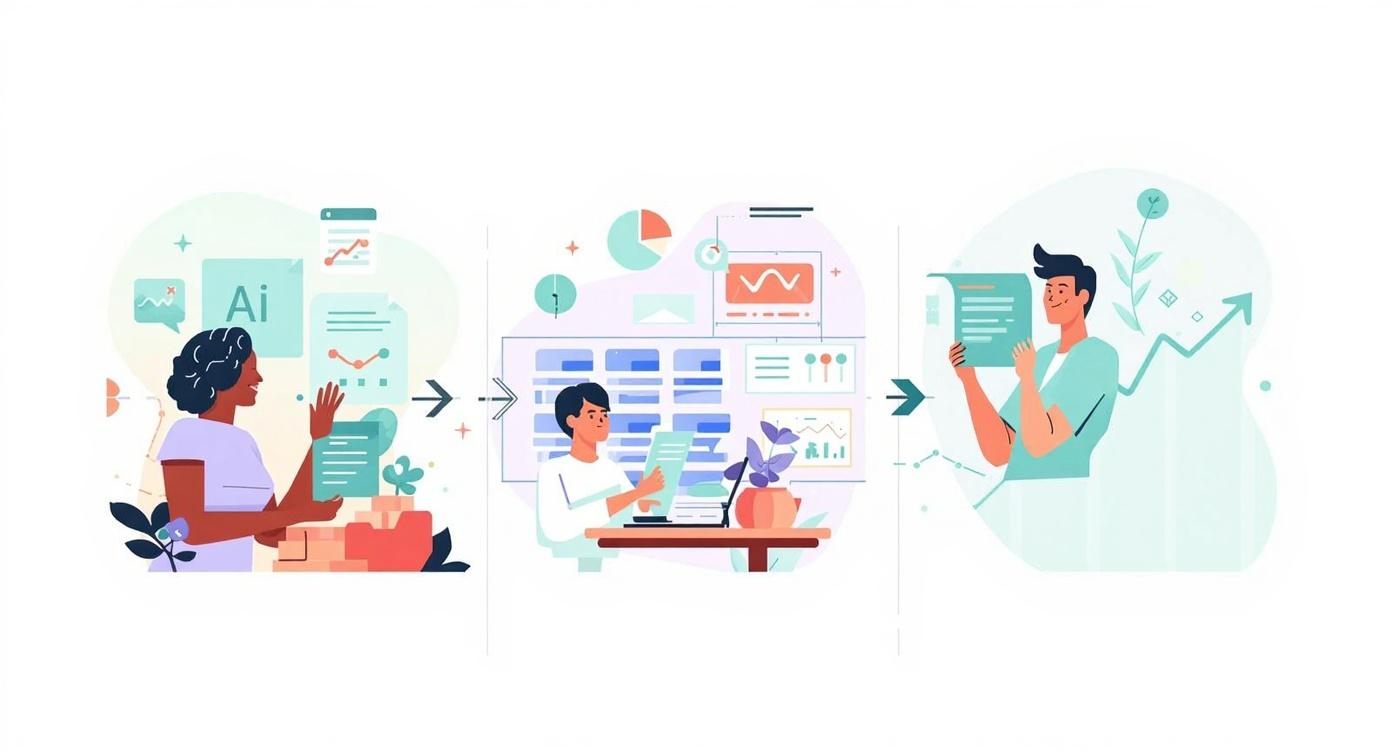
Nonprofit HR departments face a unique paradox. They're responsible for one of the organization's most valuable assets—their people—yet they're often the most under-resourced function. Many small to mid-size nonprofits operate without dedicated HR staff, leaving executive directors or operations managers to handle hiring, performance management, employee relations, and compliance alongside their other responsibilities. Even organizations with HR professionals often have one person managing functions that would occupy entire teams in larger organizations.
The consequences of stretched HR capacity ripple throughout organizations. Performance reviews become annual afterthoughts rather than meaningful development conversations. New employees navigate onboarding without structured support. Professional development becomes whatever free webinars staff can find time to attend. And when talented employees leave for better-supported positions elsewhere, the cycle intensifies—remaining staff take on more work, HR falls further behind, and retention problems compound.
Artificial intelligence offers nonprofit HR departments a way to break this cycle. An SHRM study found that 43% of organizations now leverage AI in their HR tasks, with companies reporting they can automate up to 40% of repetitive HR work including resume screening, scheduling interviews, answering FAQs, and onboarding support. Organizations using AI-powered hiring tools report savings of up to $2,400 per hire. For nonprofits operating on thin margins with small teams, these efficiency gains can be transformative.
This guide explores how nonprofit HR professionals can leverage AI across three critical functions: performance reviews, employee onboarding, and professional development. You'll learn which AI capabilities are most relevant, what tools are available at nonprofit-friendly price points, how to implement AI responsibly while maintaining the human connections that matter in mission-driven work, and how to measure success. Whether you're a solo HR professional or part of a small team, AI can help you create better employee experiences with less administrative burden.
Understanding the Nonprofit HR Challenge
Before diving into AI solutions, it's important to understand the specific challenges nonprofit HR teams face. These challenges shape which AI applications will be most valuable and how implementation should be approached.
Recruitment and Retention Crisis
Nonprofits compete for talent against private sector organizations that can often offer higher salaries. While mission alignment and meaningful work attract candidates, compensation gaps make recruitment challenging. The 2024 data showing 59% of nonprofits struggling to fill positions and nearly 33% facing retention challenges reflects a sector-wide crisis.
AI can help by improving recruitment efficiency (reducing time-to-hire), enhancing the candidate experience through prompt communication, and identifying retention risks before valuable employees leave. Better HR processes help organizations compete on experience when they can't compete on salary.
Administrative Overload
Nonprofit HR professionals spend disproportionate time on administrative tasks: tracking leave balances, processing paperwork, answering routine questions, and maintaining compliance documentation. This administrative burden leaves little time for strategic work like developing talent pipelines, creating growth opportunities, or addressing workplace culture issues.
AI excels at automating these administrative tasks. Chatbots can answer routine employee questions 24/7. Automated workflows can process standard requests without manual intervention. This frees HR professionals to focus on work that requires human judgment and relationship-building.
Limited Development Resources
Professional development budgets in nonprofits are often minimal or nonexistent. Yet employees—especially millennials and Gen Z who make up growing proportions of nonprofit workforces—increasingly expect growth opportunities as part of employment. When development stalls, talented staff leave for organizations that invest in their growth.
AI enables personalized, affordable development through intelligent learning platforms that recommend relevant content, identify skills gaps, and create custom learning paths. Rather than generic training, employees receive development targeted to their specific roles and career goals.
Inconsistent People Processes
Without robust HR infrastructure, many nonprofits handle people processes inconsistently. One manager provides detailed performance feedback quarterly; another hasn't done a formal review in two years. Onboarding quality depends on who happens to be available when a new employee starts. This inconsistency frustrates employees and creates legal exposure.
AI can systematize people processes without requiring extensive HR staff. Automated reminders ensure performance conversations happen. Standardized onboarding workflows deliver consistent experiences. Templates and prompts help managers provide quality feedback even without extensive training.
These challenges are interconnected. Administrative overload prevents strategic work on retention. Inconsistent processes undermine employee experience. Limited development resources drive turnover. AI's ability to address multiple challenges simultaneously makes it particularly valuable for resource-constrained nonprofit HR teams.
AI-Enhanced Performance Reviews: Beyond Annual Evaluations
Traditional performance reviews often fail both managers and employees. Managers dread writing them—spending hours trying to recall a year's worth of performance and craft constructive feedback. Employees dislike receiving them—annual feedback comes too late to be actionable, and ratings can feel arbitrary. Yet meaningful performance conversations are essential for employee development and organizational effectiveness. AI can help transform performance management from a dreaded administrative burden into ongoing, meaningful dialogue.
AI Writing Assistance for Feedback
Help managers provide higher-quality, more consistent feedback
One of the most immediately useful AI applications in performance management is writing assistance. Tools like PerformYard's AI Review Assist give managers intelligent suggestions for improving feedback quality and consistency. Rather than staring at blank forms, managers can draft initial thoughts and have AI help refine language, ensure balance between strengths and growth areas, and suggest more specific, actionable phrasing.
AI can also help identify strengths, accomplishments, and growth opportunities by analyzing data from the review period—project completions, goal progress, peer feedback, and other performance indicators. This ensures reviews capture the full picture rather than defaulting to whatever managers can recall (which is usually recent events, missing earlier accomplishments).
The result is reviews that are more thorough, more balanced, and less dependent on individual manager writing skills. Employees across the organization receive more comparable feedback experiences, reducing perceptions of unfairness.
Continuous Feedback Systems
Move from annual reviews to ongoing performance conversations
AI enables continuous feedback mechanisms that allow employees to receive constructive input and work on professional development in real-time, rather than waiting for annual performance reviews. These systems prompt managers and peers to provide feedback after projects, meetings, or milestones—while context is fresh and feedback can actually be acted upon.
AI-powered performance tools can automatically launch and track review cycles based on timelines or employee milestones. They send personalized reminders to managers and employees to ensure timely submissions. Through task automation, AI reduces administrative burden and creates a smooth, streamlined process that happens regularly rather than in one annual crunch.
For nonprofits where managers often supervise multiple teams while carrying their own programmatic responsibilities, this automation is essential. Reviews happen because the system ensures they happen, not because busy managers remember to initiate them.
Goal Setting and Progress Tracking
Create clear expectations and monitor progress throughout the year
Performance reviews work best when connected to clear goals established at the start of the review period. AI can help managers and employees craft SMART goals (Specific, Measurable, Achievable, Relevant, Time-Bound) by suggesting improvements to vague objectives and ensuring alignment with organizational priorities.
Throughout the year, AI systems can track progress toward goals, flag goals at risk, and prompt check-in conversations. When review time arrives, there's no mystery about how performance compares to expectations—the data is already compiled and summarized.
As Bridgespan notes, "Precious few organizations engage in any thoughtful discussion about what success looks like for staff members, both in terms of outcome and behavior. If you don't set those before or at the start of the year, then a performance review process is meaningless because you have no basis for evaluation." AI makes the goal-setting process easier and the tracking automatic, addressing this fundamental challenge.
Reducing Bias in Evaluations
Use AI to identify and mitigate evaluation inconsistencies
Human evaluators are subject to unconscious biases—recency bias (overweighting recent events), halo effects (letting one positive attribute influence overall perception), and similarity bias (rating employees similar to ourselves more favorably). AI can help identify patterns that might indicate bias in performance evaluations.
AI analysis can flag when ratings cluster suspiciously (all employees rated "meets expectations"), when demographics correlate with ratings in potentially problematic ways, or when certain managers consistently rate higher or lower than peers. This analysis enables HR to address bias patterns rather than perpetuating them.
However, AI itself can embed biases from training data. Organizations should periodically audit AI recommendations for fairness and ensure human oversight remains in final evaluation decisions. The goal is AI as a bias-check tool, not an autonomous evaluator.
Essential Human Elements
What AI should support, not replace
AI is explicitly a support tool—managers remain responsible for final decisions, feedback delivery, and employee development conversations. The most important aspects of performance management are inherently human: building trust, having difficult conversations with empathy, understanding individual circumstances that affect performance, and making judgment calls about potential and development.
The best approach uses AI to handle administrative burden (scheduling, reminders, documentation), provide starting points (draft language, data summaries), and ensure consistency (prompts for comprehensive feedback, flag missing elements), while preserving human judgment for evaluation conclusions, developmental guidance, and relationship-building.
As one Bridgespan article notes, "Really good managers meet with their direct reports in a semi-formal way at least each month, and if that is done, the annual performance review should be more like a 'coaching looking forward discussion' and should have no surprises." AI frees managers for these essential conversations rather than replacing them.
Transforming Employee Onboarding with AI
First impressions matter enormously in employment relationships. Research shows that employees who don't receive proper onboarding within the first two weeks are significantly less likely to stay long-term. Yet many nonprofits—especially smaller ones—offer minimal structured onboarding, leaving new employees to figure things out as they go. AI can help create professional, consistent onboarding experiences without requiring dedicated onboarding staff.
Automated Onboarding Workflows
Ensure every new employee receives consistent, comprehensive onboarding
AI agents can manage the entire onboarding process: collection of paperwork, payroll setup, training scheduling, equipment provisioning, post-onboarding check-ins, and manager notifications. Rather than relying on manual handoffs between HR, IT, and managers—where steps often fall through cracks—automated workflows ensure nothing is missed.
According to a Paychex study, 45% of new hires suggest the need for more transparent communication of job expectations and performance metrics during onboarding. Interestingly, only 35% of those onboarded with AI shared this sentiment—suggesting that AI-powered onboarding may actually provide clearer communication of expectations than traditional approaches.
AI systems can automate onboarding checklists, track progress, and send reminders for incomplete tasks, ensuring a smooth transition for new employees. New hires can see their onboarding progress in real-time, understanding what they've completed and what remains—reducing anxiety and confusion.
Personalized Learning Experiences
Adapt onboarding content to role, experience, and learning style
AI enhances employee training by offering personalized learning experiences tailored to individual roles, experience levels, and even learning preferences. A new development director with 15 years of nonprofit experience needs different onboarding than a recent graduate in their first program coordinator role.
AI-powered learning systems can assess incoming skill levels through brief assessments, then customize the training path accordingly. Experienced professionals skip foundational content; those new to the sector receive more comprehensive orientation. Role-specific training modules ensure employees learn what they need for their actual work, not generic content designed for the lowest common denominator.
Mobile accessibility enables new employees to complete onboarding tasks on their own schedules—completing modules during commutes, over lunch, or whenever fits their lives. This flexibility respects employees' time while ensuring training completion.
AI Chatbots for New Employee Questions
Provide instant answers to common questions without overwhelming HR
New employees have countless questions—about systems, policies, culture, and logistics. "How do I request time off?" "Where do I find the expense report form?" "Who do I contact about IT issues?" Answering these questions repeatedly consumes significant HR time and can leave new employees waiting for responses when they need to be productive.
AI chatbots trained on your employee handbook, policy documents, and organizational information can answer these questions instantly, 24/7. Chatbots handle routine inquiries while flagging complex questions for human response. This ensures new employees get immediate help while preserving HR time for questions requiring judgment.
The chatbot can also proactively check in: "It's your second week—have you been able to set up direct deposit?" "Have you met with your manager for your first check-in?" This gentle guidance keeps onboarding on track without requiring manual follow-up. For more on implementing AI chatbots, see our article on building AI-powered FAQ systems.
Smart Scheduling and Introductions
Automate the logistics of connecting new employees with colleagues
Effective onboarding includes building relationships, not just completing paperwork. New employees need to meet their team, understand who does what across the organization, and start building the connections that enable collaboration. But scheduling these introductions manually is time-consuming for HR and frustrating for busy staff members.
AI scheduling tools can automatically propose introduction meetings based on role relevance and calendar availability. The system identifies who the new employee should meet, finds open times on calendars, sends invitations, and tracks completion—all without HR intervention.
Some systems can even suggest conversation topics or questions for these meetings, helping both parties have productive conversations rather than awkward "So, tell me about yourself" encounters.
Onboarding Analytics and Improvement
Use data to continuously improve the new employee experience
AI-powered onboarding systems generate valuable data: How long does onboarding take on average? Which modules take longest to complete? Where do new employees struggle or abandon tasks? Which onboarding experiences correlate with longer employee tenure?
This data enables continuous improvement. If many employees skip a particular training module, perhaps it needs redesign. If time-to-productivity varies dramatically by department, some teams may have better informal onboarding practices worth standardizing. If employees who complete certain onboarding elements show higher retention, those elements deserve more emphasis.
Without AI-powered tracking, this analysis is nearly impossible—organizations simply don't know what's working. With it, onboarding becomes a measurable, improvable process rather than a black box. For a comprehensive guide to AI-powered volunteer and employee onboarding, see our article on streamlining onboarding with AI.
AI-Powered Professional Development: Personalized Growth at Scale
Professional development is consistently cited as a top factor in employee satisfaction and retention, yet nonprofit budgets for training are often minimal. AI enables personalized, affordable development that scales across organizations—helping employees grow without requiring expensive training programs or dedicated learning and development staff.
Skills Gap Identification
Understand what skills employees need to develop
AI can evaluate job descriptions, performance reviews, and learning histories to identify gaps in employee skills. By analyzing what competencies are required for a role versus what competencies an employee has demonstrated, AI pinpoints specific areas for development. This moves beyond generic training recommendations to targeted skill-building.
The analysis can also look forward: What skills will employees need as their roles evolve? What competencies are required for advancement? AI can suggest reskilling or upskilling programs to close these gaps proactively, rather than waiting until skill deficiencies cause performance problems.
For HR teams, this automated skills analysis provides insights that would otherwise require extensive assessment programs. Understanding organizational skill gaps helps with training budgeting, hiring priorities, and succession planning.
Personalized Learning Paths
Create customized development experiences for each employee
AI-powered learning experience platforms (LXPs) deliver personalized learning paths tailored to individual needs, roles, and career aspirations. Rather than sending everyone to the same training regardless of relevance, AI recommends specific content based on identified skill gaps, stated career goals, and learning preferences.
These platforms often include gamification elements—badges, progress tracking, completion certificates—that motivate continued learning. Compliance tracking ensures required training is completed while making the experience more engaging than traditional mandatory course completion.
For nonprofits that can't afford comprehensive training catalogs, AI can aggregate free and low-cost learning resources from across the web, curating the best content for each employee's development needs. The AI does the work of finding relevant content; employees benefit from personalized curricula without subscription costs to expensive learning platforms.
Career Path Planning
Help employees see and plan their growth trajectory
AI supports career path planning by analyzing organizational structures, skill requirements for different roles, and individual employee profiles to suggest realistic advancement paths. An employee can see: "Based on your current skills and experience, these roles are potential next steps. Here's what development would help you qualify for each."
This visibility is powerful for retention. When employees can see a future at the organization—and understand concretely what development will get them there—they're less likely to assume they need to leave for growth. The career planning conversation shifts from vague promises ("we'll help you grow") to specific roadmaps.
For succession planning, AI can identify employees with high potential for specific roles and track their development progress. This creates visibility into internal talent pipelines and informs decisions about whether to develop existing talent or hire externally when positions open.
Coaching and Feedback Support
Extend access to development guidance beyond manager relationships
Not every manager is an effective coach, and not every employee has access to mentors who can guide their development. AI can help fill these gaps by providing on-demand developmental guidance—answering questions about career growth, suggesting approaches to workplace challenges, and providing feedback on professional situations.
AI coaching tools can help employees prepare for important conversations, practice challenging scenarios, and reflect on feedback they've received. This isn't a replacement for human mentoring, but a supplement that ensures employees have some developmental support even when human resources are limited.
For managers, AI can suggest coaching approaches based on employee profiles and situations. "This employee struggles with X—here are development activities that typically help" gives managers specific guidance they might not otherwise have.
Tracking Development Progress and Impact
Measure whether development investments are working
Traditional training investments are often evaluated only by completion rates—did people attend? AI-powered analytics can go deeper: Did training improve performance? Are employees applying new skills? Does development correlate with engagement scores, retention, or advancement?
This data helps nonprofits make smarter development investments. If certain training consistently correlates with performance improvement, it deserves more investment. If expensive programs show no impact, resources should shift elsewhere. Without data, these decisions are guesswork.
Progress tracking also enables accountability in development plans. When goals include skill development, AI systems can track whether development activities are happening and flag when employees fall behind on their learning commitments—enabling supportive intervention rather than surprised disappointment at review time.
Implementing AI in Nonprofit HR: Practical Considerations
Implementing AI in HR requires thoughtful planning beyond just selecting tools. These considerations help ensure successful adoption and responsible use of AI in managing your organization's most important resource—its people.
Data Privacy and Employee Trust
HR AI systems process sensitive personal data: performance evaluations, compensation information, career aspirations, and potentially health or accommodation information. Employees must trust that this data is protected and used appropriately. Transparency is essential.
Before implementing AI:
- Clearly communicate what AI tools are being used and for what purposes
- Explain what data is collected, how it's used, and how long it's retained
- Ensure employees understand their rights regarding AI-assisted decisions
- Verify vendor security practices and data handling policies
Building trust upfront prevents backlash when employees discover AI is analyzing their performance or career progression. Transparency about AI use should be part of your employee handbook.
Regulatory Compliance
The regulatory landscape for AI in employment is evolving rapidly. States like California, Colorado, and Illinois have enacted or are implementing laws specifically addressing AI in employment contexts. These laws may require notice to employees about AI use, auditing for discrimination, and human oversight of AI-assisted decisions.
Colorado's Artificial Intelligence Act (CAIA), effective February 2026, imposes obligations relating to documentation, disclosures, risk analysis, and mitigation for AI hiring tools. California's updated Fair Employment regulations make employers responsible for the impact of any AI or algorithmic tools used in employment decisions—even if those tools come from third-party vendors.
Before implementing AI HR tools, understand applicable regulations in your state(s) and build compliance requirements into your implementation plan. Consider consulting with employment counsel about specific obligations.
Maintaining Human Connection
In mission-driven organizations, relationships matter deeply. Employees choose nonprofits partly because they want to work with people who share their values in organizations that care about more than profit. Over-automating HR functions can undermine the personal connection that makes nonprofit workplaces special.
Use AI to enhance human interactions, not replace them. AI handles administrative burden so HR professionals can focus on the conversations that matter. AI provides data and suggestions, but humans deliver feedback with empathy and make decisions that account for individual circumstances.
The goal is "high-tech, high-touch": using technology to create space for meaningful human connection rather than to eliminate it. Employees should feel more supported with AI-enhanced HR, not less.
Tool Selection for Nonprofit Budgets
Enterprise AI HR platforms can be expensive, but many options exist at nonprofit-friendly price points. Cloud-based systems eliminate expensive IT infrastructure requirements. Nonprofit-specific discounts ranging from 20-50% make enterprise-grade tools accessible even to small organizations with limited budgets.
When evaluating tools, consider:
- Nonprofit discount availability and pricing models (per-employee vs. flat fee)
- Integration with existing systems (payroll, HRIS, email)
- Implementation support and ongoing training resources
- Scalability as your organization grows
- User-friendliness for HR teams with varying technical comfort
Start with one function—perhaps performance management or onboarding—rather than trying to transform everything at once. Demonstrate value, build confidence, then expand.
Training HR Staff on AI Tools
AI tools are only valuable if people use them effectively. Many HR professionals didn't train for technology-centric roles and may feel uncertain about AI capabilities and limitations. Invest in training that builds both technical skills and strategic understanding.
Training should cover:
- How to use the tools effectively (hands-on practice)
- What AI can and cannot do (setting realistic expectations)
- How to verify AI outputs and maintain human oversight
- How to communicate about AI use with employees and managers
Consider designating an "AI champion" who develops deeper expertise and can support colleagues. This peer support is often more effective than vendor training alone. For more on building AI literacy across your organization, see our article on building AI literacy in nonprofit teams.
Measuring the Impact of AI in HR
Implementing AI requires investment—in tools, training, and change management. Measuring impact helps justify that investment, identify what's working, and guide ongoing refinement. These metrics help assess whether AI is delivering value across HR functions.
Efficiency Metrics
Measuring time and resource savings
- Time spent on performance review administration
- Time-to-hire and cost-per-hire
- Onboarding time-to-productivity
- HR time spent on routine inquiries (before/after chatbot)
- Review cycle completion rates and timeliness
Quality Metrics
Measuring employee experience improvements
- New hire satisfaction with onboarding experience
- Employee satisfaction with performance feedback quality
- Training completion rates and engagement scores
- Consistency of HR processes across managers/departments
- Response time for employee inquiries
Business Impact Metrics
Measuring organizational outcomes
- Employee retention rates (overall and by tenure)
- New hire 90-day and one-year retention
- Internal promotion rates
- Employee engagement scores
- Manager satisfaction with HR support
System Performance Metrics
Measuring AI tool effectiveness
- Chatbot resolution rate (questions answered without escalation)
- AI writing suggestion adoption rate
- System usage rates across staff and managers
- User satisfaction with AI tools
- Error rates requiring human correction
Establish baseline measurements before implementing AI, then track changes over time. Look for trends rather than fixating on single data points. Share results with leadership to demonstrate value and with staff to build confidence in the tools. For more on measuring AI success, see our comprehensive guide on measuring AI success in nonprofits.
Conclusion: Building a Better Employee Experience Through AI
Nonprofit HR teams face a challenging paradox: they're responsible for one of the organization's most critical functions while often being the most under-resourced department. AI offers a way to break this cycle—not by replacing human judgment and connection, but by automating administrative burden so HR professionals can focus on the work that matters most: supporting employees, developing talent, and building culture.
The potential is significant. Organizations using AI in HR report automating up to 40% of repetitive tasks. Hiring costs can decrease by $2,400 per hire. Performance reviews become ongoing conversations rather than annual ordeals. Onboarding delivers consistent, personalized experiences. Professional development becomes accessible and targeted rather than generic and rare.
But technology alone isn't the answer. Successful AI implementation requires thoughtful planning: understanding what AI can and cannot do, maintaining human oversight on decisions that affect people's careers and livelihoods, building trust through transparency, and keeping relationships at the center of people management. The goal is HR that feels more human because AI handles the administrative burden, not less human because machines make all the decisions.
Start where you have the clearest pain points. If performance reviews consume weeks of administrative time with little impact on employee development, that's a strong candidate for AI enhancement. If new employees struggle through unstructured onboarding, automated workflows can help. If professional development is nonexistent, AI-powered learning recommendations can create affordable growth opportunities.
The nonprofit sector faces a talent crisis, but it also attracts people who want meaningful work and value-aligned employment. AI can help organizations deliver on the promise of mission-driven work—creating environments where employees are supported, developed, and empowered to focus on the impact that drew them to nonprofit work in the first place. That's the real opportunity: using AI not just to do HR better, but to create workplaces worthy of the people who choose to work in service of others.
Ready to Transform Your Nonprofit's HR?
Discover how AI can help your organization create better employee experiences, streamline HR processes, and build a workplace that attracts and retains mission-driven talent. Let's build an HR function that serves your team and your mission.