
Fire Detection, Species Monitoring, and Climate Modeling: Practical AI for Environmental Nonprofits
The gap between AI's promise for conservation and what environmental nonprofits can actually implement is closing. Today's tools, from real-time wildfire camera networks to open-source species identification platforms, are increasingly accessible to organizations with constrained budgets. This guide explains what's available, how it works, and where your organization can start.
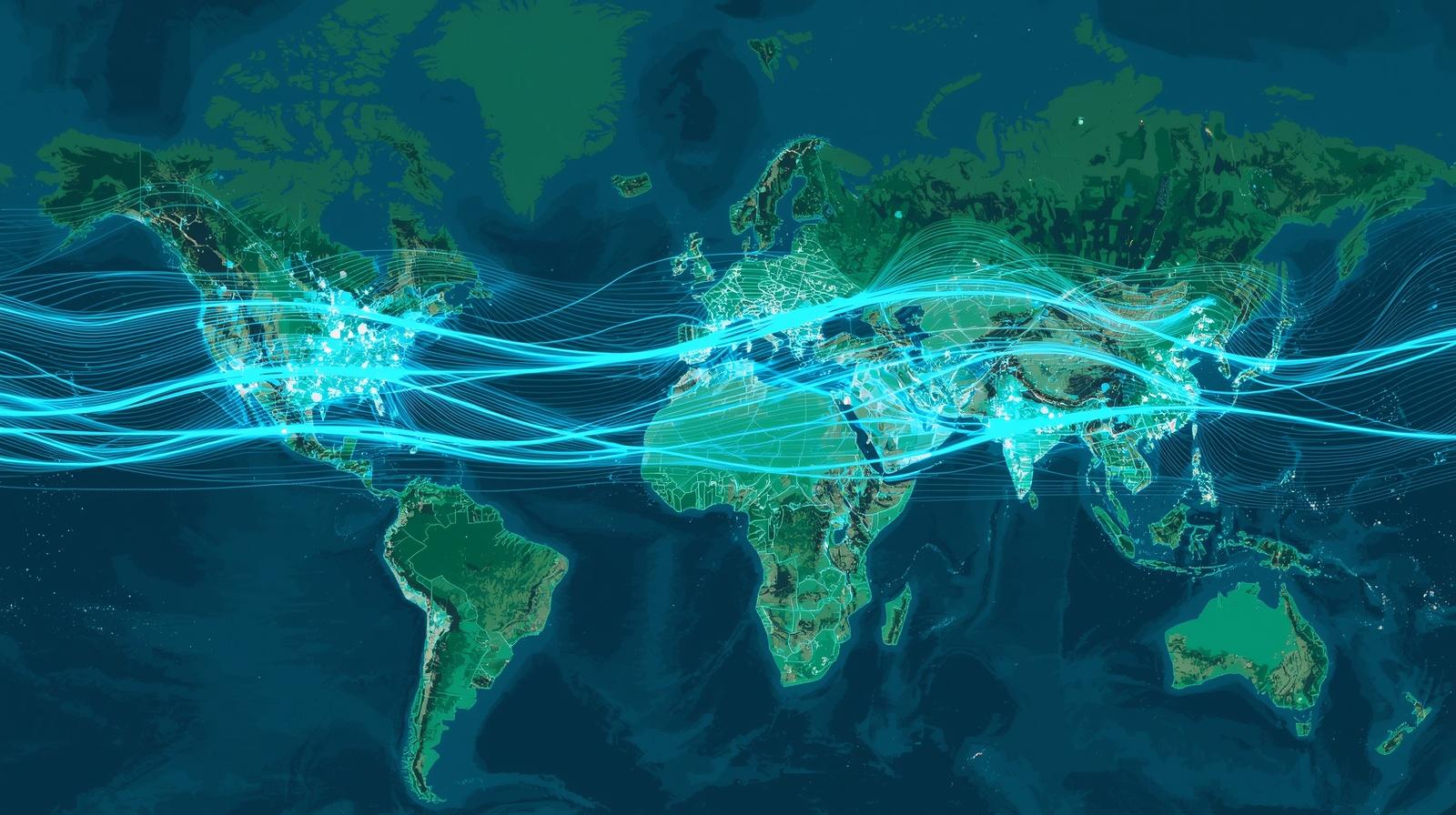
Environmental nonprofits have always faced an impossible arithmetic: vast ecosystems to monitor, shrinking field budgets, and accelerating threats from climate change. A forest fire that might have been caught by a ranger patrol a decade ago can now spread for hours before detection. A population of endangered birds may decline across hundreds of square miles with no one equipped to track it systematically. Traditional conservation methods, however skilled the practitioners, simply cannot cover the scale that modern threats demand.
Artificial intelligence is changing this equation in concrete, practical ways. Not through science fiction automation, but through real tools that have already been deployed by wildlife agencies, conservation labs, and environmental nonprofits around the world. Systems that scan thousands of camera feeds for wisps of smoke. Platforms that identify individual animals from photographs taken by citizen scientists. Models that forecast how shifting temperatures will affect habitat corridors decades from now.
The most important shift in 2026 is accessibility. Several of these systems have moved from proprietary research tools into open-source platforms, grant-funded programs, and affordable subscription services. An environmental nonprofit that works on wildfire prevention, biodiversity conservation, or climate adaptation does not need a data science team to benefit from AI. What it needs is an understanding of which tools exist, what they actually do, and how to match capabilities to organizational needs.
This guide walks through three core application areas where AI is delivering measurable results for environmental nonprofits: wildfire detection, species monitoring, and climate modeling. For each, we examine how the technology works, which platforms are available, what realistic implementation looks like, and where the genuine limitations lie. The goal is to give conservation leaders enough grounded knowledge to evaluate options and take a meaningful first step.
AI Wildfire Detection: From Hours to Minutes
The case for AI-powered wildfire detection comes down to one number: detection time. Traditional fire spotting depends on aerial patrols, lookout towers staffed by rangers, and calls from the public. In remote and underfunded regions, a fire can burn for hours before any alert reaches incident commanders. AI camera systems that continuously scan the landscape for smoke can reduce that window dramatically, sometimes by twenty minutes or more, which in fire behavior terms can mean the difference between a manageable incident and a catastrophic loss.
The technology behind these systems combines high-definition panoramic cameras with machine learning models trained to recognize the visual signature of smoke. A typical deployment involves cameras mounted on high points, ridgelines, communication towers, or ski resort infrastructure, that rotate continuously and capture time-lapse imagery. Computer vision algorithms scan each frame, comparing it against historical baselines and flagging anything that resembles emerging smoke for human review. Importantly, these systems do not make autonomous decisions about fire response. They alert trained dispatchers and fire managers who can verify the observation and initiate appropriate response.
Pano AI
Commercial wildfire detection with proven field deployment
Pano AI's Rapid Detect system aggregates ultra-high-definition cameras with satellite data, field sensors, and emergency alert feeds. Deployed across ten US states, five Australian states, and one Canadian province.
- 360-degree panoramic cameras scanning every 60 seconds
- Alerts sent to fire agency dispatch dashboards in real time
- Commercially licensed; partnerships with utilities and land managers
ALERTCalifornia
Public-private fire camera network operating as a nonprofit
ALERTCalifornia operates more than 1,100 tower-mounted pan-tilt-zoom cameras across California. The program functions as a nonprofit, installing cameras in partnership with ski resorts, internet providers, and open space managers.
- Publicly accessible camera feeds for community monitoring
- Integration with Cal Fire and county emergency operations
- Model for replication in other states and regions
For environmental nonprofits working in fire-prone regions, the most practical entry point is often not deploying your own detection system but rather partnering with existing networks. ALERTCalifornia and similar programs depend on community partnerships to expand their camera footprint. If your organization manages land or has access to high-elevation infrastructure, you may be able to participate in or host a camera node at relatively low cost. Your contribution to the network supports detection coverage for your region, and you gain access to real-time monitoring data for your own land management decisions.
For organizations with more resources or operating in regions without existing networks, platforms like Pano AI, Dryad (which uses IoT sensor networks in forest canopies), and RoboticsCats' LookOut software represent commercial options worth evaluating. These platforms offer subscription models and technical support, which reduces the internal expertise required to operate them effectively. The key questions for evaluation are coverage area, integration with local emergency management systems, and whether the detection approach is validated for the specific ecosystem type your organization works in, since detection models trained on California chaparral may perform differently in Pacific Northwest old growth or Southern pine forests.
There is also an emerging satellite-based layer to wildfire AI. FireSat, developed with support from Google and several research institutions, is building a constellation of satellites capable of detecting fires as small as a basketball court within minutes of ignition. As this and similar systems mature, the combination of ground-based cameras and satellite monitoring will create redundant detection coverage that addresses many of the current blind spots in remote areas. Environmental nonprofits advocating for fire resilience in their regions should track these developments and engage with the policy questions around who has access to this data and how quickly it flows to community-level decision makers.
AI Species Monitoring: Tracking Wildlife at Scale
Wildlife monitoring has long been constrained by the same basic limitation: the number of researchers who can be in the field at any given time. Camera traps generate thousands of images that require manual review. Acoustic monitoring equipment captures hours of audio that must be analyzed species by species. Community science programs collect millions of photographs that languish in databases because no team is large enough to identify every individual in every image. AI is fundamentally changing what is possible in each of these areas, not by replacing field biologists but by doing the classification and pattern recognition work that used to consume most of their time.
The most mature application is computer vision for individual animal identification. Wildbook, developed by Wild Me (which merged with Conservation X Labs in 2025), is an open-source platform that uses machine learning to identify individual animals from photographs based on unique markings, patterns, or body features. The system has been used to track whale sharks, great white sharks, manta rays, Grevy's zebras, African wild dogs, and dozens of other species. It currently monitors nearly 200,000 individual animals from 53 species, and its data has contributed to IUCN Red List assessments for several of those species.
Wildbook: Open-Source Individual Animal Tracking
Free, community-supported platform for species-specific population research
Wildbook blends structured wildlife research with artificial intelligence, citizen science, and computer vision to speed population analysis. Organizations can submit photographs to species-specific Wildbook databases and receive individual identification matches, contributing to broader population data while getting answers that support their own conservation programs.
- Free to use for researchers and nonprofits
- Species-specific instances (WhaleShark.org, Flukebook, etc.)
- Integrates with citizen science photo submissions
- Population count data feeds into IUCN status assessments
- Open-source codebase for organizations with technical capacity
- Demonstrated at scale: Grevy's Zebra full species census
Beyond individual identification, AI is transforming camera trap data management. Traditional camera trap workflows require researchers to review images one by one, identifying species and counting individuals. AI classification models can now process those same images automatically, sorting by species with accuracy rates that approach trained human reviewers for common species in well-represented ecosystems. The Wildlife Insights platform, developed through a partnership involving Google, WWF, Wildlife Conservation Society, and several other major conservation organizations, offers a free cloud-based tool for camera trap data analysis. Organizations can upload images and receive automated species classifications, freeing research staff to focus on interpretation and application rather than data entry.
SpeciesNet, released publicly by Google as an open-source model in 2025, represents another significant resource for environmental nonprofits with technical capacity. Trained on millions of camera trap images from around the world, SpeciesNet can classify animals in photographs across a wide range of species and ecosystems. Organizations that host their own data infrastructure can deploy SpeciesNet locally, which also addresses data sovereignty concerns for groups working with sensitive location data about endangered species.
Acoustic monitoring is another area seeing rapid AI advancement. Tools like BirdNET (developed by Cornell Lab of Ornithology and the Chemnitz University of Technology) can analyze audio recordings and identify bird species from their calls. Environmental organizations that deploy passive acoustic monitors along habitat corridors, at restoration sites, or within protected areas can use BirdNET to generate species presence data without requiring skilled ornithologists to review every recording manually. The tool is free, runs on standard computers, and supports real-time analysis for organizations with continuous monitoring deployments.
The practical constraint for many environmental nonprofits is not tool availability but data preparation and workflow integration. AI species monitoring tools work best when connected to a disciplined data collection protocol, consistent image quality standards, and a system for storing and acting on the insights generated. Organizations starting with AI-assisted monitoring should pilot with a specific species, habitat type, or geographic area, build confidence in the process and outputs, and then expand. Attempting to automate everything at once typically produces messy data and skeptical staff rather than conservation insights.
Wildlife Insights
Free cloud platform for automated camera trap species classification, supported by WWF, WCS, and Google.
BirdNET
Free acoustic AI tool from Cornell Lab for automated bird species identification from audio recordings.
SpeciesNet
Google's open-source camera trap classification model, deployable locally for organizations with data privacy requirements.
AI Climate Modeling: Planning for a Changing Landscape
Climate modeling has traditionally been the domain of government research agencies and university atmospheric science departments, requiring supercomputing resources and specialized expertise that placed it well beyond the reach of most environmental nonprofits. This is changing. A combination of cloud computing, pre-trained AI models, and user-friendly interfaces is making climate projection data increasingly accessible to organizations that want to incorporate long-range environmental forecasting into their conservation planning.
The most immediate application for most environmental nonprofits is not building climate models but using existing model outputs to inform strategic planning. Tools like Climate Engine, a cloud-based platform supported by Google Earth Engine infrastructure, allow organizations to query, visualize, and analyze decades of climate and remote sensing data without writing a single line of code. A land trust evaluating which parcels to prioritize for protection can use Climate Engine to assess projected temperature change, drought frequency, and wildfire risk across a target geography. A watershed conservation group can examine historical precipitation trends and model future water availability under different emissions scenarios.
Microsoft's AI for Earth program, which provides Azure cloud credits and technical support to environmental organizations, has funded numerous projects that use machine learning to model species range shifts under climate change. The underlying insight these projects share is important: as temperatures and precipitation patterns change, suitable habitat for many species will shift geographically, and the corridors that allow animals to move between habitat patches will become critical conservation priorities. AI models that can project where habitat will be viable in 2040 or 2060 give conservation planners a much stronger basis for making land acquisition, restoration, and advocacy decisions today.
Climate Engine
Cloud-based climate data analysis without technical barriers
- Access to decades of climate and remote sensing datasets
- No-code interface for visualization and analysis
- Free tier available for nonprofits and research applications
Microsoft AI for Earth
Cloud credits and support for environmental AI projects
- Azure cloud credits for qualifying environmental organizations
- Technical support from Microsoft data scientists
- Funded projects include wildlife movement and habitat modeling
For land trusts and conservation easement programs, AI-assisted climate risk assessment is becoming an important tool for due diligence and prioritization. An organization considering a significant investment to protect a riparian corridor, for example, should understand whether that corridor will retain its ecological function under projected climate conditions in 2050 and 2070. Climate-informed conservation planning does not eliminate uncertainty, but it helps organizations avoid the trap of protecting habitat that will lose its value as conditions change while missing opportunities to protect land that will become a critical refuge.
Google Earth Engine, while requiring some programming knowledge to use at full power, offers a free tier for research and nonprofit use that provides access to a massive archive of satellite imagery and geospatial datasets. Organizations with a staff member or volunteer comfortable with JavaScript or Python can use Earth Engine to conduct land cover change analysis, track deforestation or wetland loss, and assess the health of ecosystems across their target geographies at a fraction of the cost of traditional GIS analysis. The learning curve is real, but the capability unlocked by even basic proficiency represents a significant force multiplier for a small environmental team.
It is worth acknowledging a genuine tension in this space: AI tools, including the climate modeling and monitoring systems described here, consume significant computational resources and therefore energy. This is not a reason to avoid them, but it is a reason to be thoughtful about which applications justify the resource cost, to choose tools that run efficiently, and to advocate for renewable energy in the data center infrastructure that powers these services. Environmental nonprofits have a credibility interest in understanding and communicating honestly about this tradeoff, as explored in more depth in our article on the AI energy paradox for climate organizations.
Poaching Prevention and Habitat Surveillance
Beyond fire detection and species identification, AI is being applied to one of the most persistent and damaging threats facing wildlife: poaching. The World Wide Fund for Nature and Kenya Wildlife Service have deployed AI-integrated thermal camera systems at Kenya's Solio Game Reserve that can automatically detect and classify humans, wildlife, and vehicles, sending real-time alerts to rangers when unauthorized human activity is detected near at-risk animal populations. This kind of system, which combines computer vision with intelligent alerting, allows a small ranger team to monitor a much larger area than would otherwise be possible.
WILDLABS, a community platform for conservation technologists, is a valuable resource for environmental nonprofits exploring these kinds of applications. It connects practitioners working on AI-powered anti-poaching systems, acoustic monitoring deployments, satellite tracking projects, and other technology-forward conservation efforts. The community shares lessons learned, troubleshoots implementation challenges, and identifies funding and partnership opportunities that would be difficult to find through conventional channels.
Satellite imagery analysis is another active area. Organizations like SkyTruth and Planet Labs provide satellite data and analysis services that allow environmental nonprofits to monitor deforestation, illegal mining, oil spills, and land use change at scales previously available only to government agencies. AI-powered change detection algorithms can automatically flag areas where the land cover has changed significantly between image captures, directing analyst attention to the most important locations rather than requiring manual review of every image tile across a large geographic area.
Key Resources for Environmental AI Implementation
- WILDLABS.net: Conservation technology community and resource hub
- SkyTruth: Satellite analysis tools for environmental monitoring
- Google Earth Engine: Free tier for nonprofits with satellite data archive
- Conservation X Labs: Nonprofit developing open conservation tech
- Esri Nonprofit Program: GIS tools at reduced or no cost
- iNaturalist: Citizen science platform with AI species ID
Getting Started: A Practical Framework
The breadth of available tools can feel overwhelming. The right approach for most environmental nonprofits is to resist the temptation to try everything and instead identify the single monitoring or detection challenge that is most limiting your conservation effectiveness. Is it not knowing when fire ignites on the land you manage? Not having reliable population counts for the species you protect? Not understanding how climate change will affect the habitat you prioritize? Starting with one well-defined problem leads to more successful implementation than attempting a broad transformation of your technical systems all at once.
Step 1: Identify Your Monitoring Gap
Choose one specific conservation challenge where better data would most change your decisions or outcomes.
- Fire detection on managed land
- Species population tracking
- Climate-informed land prioritization
Step 2: Explore Free Tools First
Several high-quality tools are free for nonprofits and research use. Build familiarity before evaluating paid options.
- Wildbook for species ID
- BirdNET for acoustic monitoring
- Wildlife Insights for camera traps
Step 3: Connect with the Community
Implementation knowledge is often more valuable than the tools themselves. Find practitioners who have solved similar problems.
- Join WILDLABS community forums
- Apply for Microsoft AI for Earth grants
- Connect with university conservation tech labs
Funding is an increasingly viable consideration for environmental AI projects. The Google.org AI for Social Good program, Microsoft AI for Earth grants, and the Bezos Earth Fund's technology initiatives have all supported conservation technology deployments. When framing AI projects for environmental funders, the strongest applications connect technology investment to specific conservation outcomes: not "we want to deploy AI monitoring" but "we want to reduce fire detection time on our managed lands to reduce acres burned annually" or "we want to establish a reliable baseline population count for the species we protect so that we can measure recovery progress over the next decade."
Environmental AI is not a replacement for field expertise, community relationships, or the policy and advocacy work that shapes how land and wildlife are managed. It is a set of tools that helps conservation professionals know more, act faster, and make better decisions with the resources they have. The organizations making the most progress are those that treat AI as an amplifier of human expertise rather than a substitute for it, and that remain clear-eyed about what the technology can and cannot do in their specific ecological and organizational context. For more on building AI capacity across your organization, our guide to building AI champions in nonprofits offers a practical framework applicable to environmental organizations as well.
The Conservation Technology Moment
Environmental nonprofits are working in an accelerating crisis. Climate change, habitat loss, and biodiversity decline are moving faster than traditional conservation methods were designed to address. AI tools for fire detection, species monitoring, and climate modeling do not solve these underlying problems, but they meaningfully expand what conservation organizations can accomplish with the staff and funding they have.
The tools described in this article are real, deployed, and in many cases free or grant-funded for nonprofit use. Wildbook has already contributed to changing the conservation status of whale sharks based on population data that would have been impossible to collect without AI-assisted image matching. ALERTCalifornia has detected fires that would have burned longer without the network's early warning. Climate-informed habitat modeling is shifting how land trusts and conservation organizations prioritize their most significant investment decisions.
The question for environmental nonprofits is not whether to engage with these tools, but where to start and how to build capacity responsibly. The answer, consistently, is to begin with a specific problem, use the strong community of conservation technologists as a resource, and measure results honestly. Technology does not save ecosystems. People who use technology well, who know their landscape, who build relationships with communities and policymakers, and who stay focused on long-term outcomes, are the ones who move conservation forward. AI gives those people better tools to work with.
Ready to Apply AI to Your Conservation Work?
One Hundred Nights helps environmental and conservation nonprofits identify, evaluate, and implement AI tools that match their mission and capacity. We can help you move from exploration to action.