
RAG vs. Fine-Tuning: Which AI Approach Is Right for Your Nonprofit's Data?
Two powerful approaches let you unlock the value of your nonprofit's own data with AI. Understanding which one fits your situation, and when to combine them, is one of the most important technology decisions your organization can make.
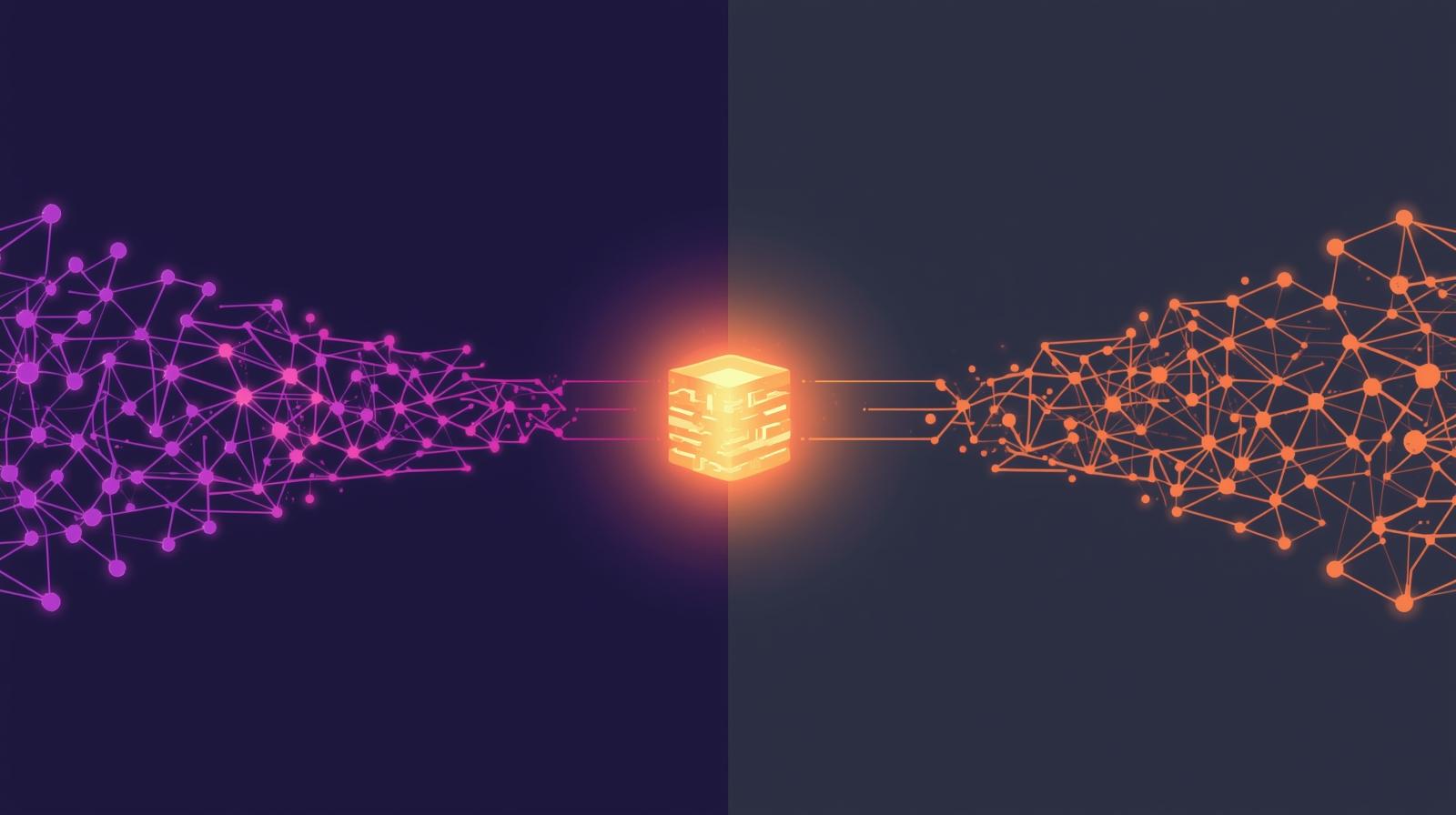
One of the most common questions nonprofit technology leaders face as AI matures is also one of the most important: how do you make AI work with your own data? General-purpose AI tools are increasingly capable, but the most valuable applications for nonprofits often require AI that understands your specific programs, your organization's language, your funder requirements, your donor history, and the particular context of your mission. Getting AI to that level of specificity requires going beyond standard tools and into territory where two fundamentally different technical approaches become relevant: retrieval-augmented generation (RAG) and fine-tuning.
These terms appear frequently in discussions of advanced AI implementation, but they're rarely explained in terms that nonprofit leaders without technical backgrounds can use to make real decisions. This article does exactly that: explains what each approach is, how it works, what it's good for, what it costs, and how to decide which one is right for your organization's situation. The answer, for most nonprofits, is clearer than the terminology suggests.
Understanding these approaches also connects to the broader question of how your nonprofit builds AI capability over time. Both RAG and fine-tuning are ways of grounding AI in organizational knowledge, making AI outputs more accurate, more relevant, and more useful than generic tools can provide. They represent different points on a maturity continuum, and knowing where your organization sits on that continuum, and where you're trying to get to, is the foundation for making good choices about both technology and investment.
This guide will walk through both approaches in plain language, compare them across the dimensions that matter most for nonprofits (cost, privacy, accuracy, technical requirements, and practical use cases), offer a decision framework, and explain how the two approaches can be combined for organizations that have specific needs requiring both. You don't need a computer science background to use this guide; you need to understand your organization's data, your operational priorities, and your available resources.
Understanding RAG: The AI with Access to Your Files
Retrieval-Augmented Generation (RAG) is a way of connecting a general-purpose AI model to an external collection of your own documents and data. Rather than relying solely on what the AI learned during its original training, RAG allows the AI to fetch relevant information from your documents at the moment someone asks a question, and then generate a response grounded in that retrieved content.
The best analogy for understanding RAG is to think of the AI as a consultant you've hired. In standard AI use, that consultant relies entirely on their general expertise, what they learned in school and from previous experience. With RAG, you give that consultant access to all your files before the meeting. When you ask a question, they quickly search through your documents, find the relevant sections, and use those as reference material in their answer. Crucially, they cite their sources so you can verify what they're drawing from.
The process works in three phases. First, during setup, your documents (grant proposals, program reports, policy manuals, donor records, funder guidelines, evaluation data) are processed and stored in a searchable format. Second, when someone asks a question, the system searches those stored documents for the most relevant content. Third, the AI model receives both the question and the retrieved document excerpts, and generates a response grounded in your specific content. The source documents are cited, so users can verify accuracy.
RAG in Nonprofit Practice: Common Use Cases
Where RAG adds the most value for mission-driven organizations
- Grant writing assistance: Upload past proposals, program reports, outcome data, and funder guidelines. Staff can ask "What language did we use for our food security outcomes in last year's Smith Foundation proposal?" and receive cited drafts grounded in actual organizational data.
- Donor research and communications: Surface donor history, preferences, past interactions, and giving patterns without manually searching your CRM, generating more relevant outreach grounded in actual relationship history.
- Volunteer and staff onboarding: Create a searchable knowledge base from handbooks, training materials, and role descriptions so that new staff can ask questions and receive accurate, policy-grounded answers immediately.
- Program knowledge management: Staff across multiple programs can query past evaluations, logic models, curriculum guides, and outcome reports without needing to know where every document is stored.
- Board and leadership reporting: Synthesize reports, financial documents, and program data into summaries, drawing directly from your actual organizational records rather than generating generic content.
- Policy and compliance questions: Staff can ask internal policy questions and receive answers cited to the actual policy document, reducing reliance on institutional memory and informal knowledge.
One of RAG's most important practical advantages for nonprofits is that updating the knowledge base is simple: when you produce a new program report, update a policy, or complete a new grant proposal, you add that document to the system. No retraining required. The AI has access to current information as soon as documents are added, making it well-suited to the constantly evolving document landscape of nonprofit operations. This also connects naturally to broader AI-powered knowledge management strategies that many nonprofits are building.
Understanding Fine-Tuning: Teaching the AI to Think Like Your Organization
Fine-tuning is a different approach to the same core goal: making AI more useful for your specific context. Where RAG gives the AI access to your documents at query time, fine-tuning actually modifies the AI model itself through additional training on examples specific to your domain. The result is a model that has absorbed your organization's patterns, terminology, tone, and way of reasoning, not by looking things up, but by having that knowledge built into how it processes language.
To extend the consultant analogy: fine-tuning is like sending your consultant through an intensive six-month immersion in your sector. After fine-tuning, they don't need to look things up because they've internalized your organization's domain deeply. They understand the terminology, the context, the nuances, and the way your organization frames problems, all without referencing a single document.
In technical terms, fine-tuning takes a pre-trained model (one that has already learned language from vast amounts of text) and continues training it on a smaller, curated dataset of examples specific to your needs. These examples typically take the form of input-output pairs: a question followed by the ideal answer, or a document followed by the ideal summary. The model's internal parameters adjust to prioritize patterns that match your examples. After training, the model behaves differently, reflecting the specific patterns, style, terminology, and reasoning approaches present in your training data.
This sounds like a more powerful version of RAG, and in some respects it is. But it also comes with significant costs, constraints, and risks that make it the wrong choice for most nonprofit use cases, at least as a starting point.
When Fine-Tuning Makes Sense for Nonprofits
Specific scenarios where fine-tuning's advantages justify its complexity
- Consistent brand voice at massive scale: When you need all AI-generated content to sound exactly like your organization, with your specific framing, tone, and mission language, fine-tuning embeds that style into the model itself rather than requiring prompts to enforce it.
- Highly specialized domain classification: Organizations in legal aid, clinical social work, or medical services may need AI that accurately classifies documents, routes cases, or extracts structured data using very specialized terminology that general models don't handle reliably.
- Reliable standardized output formats: When you need AI to always return information in a specific structure (a grant budget template format, a case intake form, a standardized reporting format), fine-tuning produces more consistent formatting than prompt engineering alone.
- Very high-volume, speed-critical applications: Fine-tuned models deliver faster responses without retrieval latency. If you're deploying AI at very high query volumes, a fine-tuned model can be more cost-efficient than RAG's per-query retrieval overhead.
How RAG and Fine-Tuning Compare
Understanding how these approaches differ across the dimensions that matter most for nonprofit decision-making helps clarify when each makes sense.
Cost Comparison
RAG Costs
- Google NotebookLM: free tier available, handles most document-based use cases
- Microsoft 365 Copilot: ~$25.50/user/month for eligible nonprofits (RAG across your entire M365 ecosystem)
- Self-hosted solutions: possible at very low cost with open-source tools like Dify
- Costs scale with query volume and document size, not upfront investment
Fine-Tuning Costs
- Training runs: $100 to $1,000+ depending on dataset size and model
- Fine-tuned model inference: approximately 3x the cost of the base model
- Data curation: significant staff time preparing quality training examples
- Retraining required every time domain knowledge changes significantly
Note: Prices may be outdated or inaccurate.
Privacy and Data Security
RAG Privacy Profile
In most RAG implementations, your documents stay in your own storage. The AI model only sees specific retrieved excerpts for each query, not your entire document collection. You are not training the provider's model on your data, which means your confidential content isn't being used to improve AI systems outside your organization.
The key privacy requirement is access control: your RAG system must be configured so staff only retrieve documents they're authorized to see. Sensitive beneficiary records, donor PII, and confidential assessments should either be excluded from the knowledge base or protected with document-level permissions.
Fine-Tuning Privacy Risks
Fine-tuning presents more acute privacy concerns. Your training documents are transmitted to the AI provider's servers and used to adjust model parameters. If donor records, beneficiary case notes, or personally identifiable information are included in training data, that information becomes embedded in the model itself and can be exposed in unexpected ways.
Research has documented that fine-tuned models can be prompted to "regurgitate" training data, potentially surfacing confidential information to users who shouldn't have access to it. For nonprofits handling sensitive client data, health information, or legally protected records, removing all PII from training datasets before fine-tuning is essential, not optional.
For nonprofits handling sensitive data: RAG with proper access controls is the safer default. Fine-tuning on data that includes beneficiary information, health records, or donor PII requires significant data sanitization work and carries meaningful compliance risk without it.
Accuracy and Reliability
Both approaches improve AI accuracy compared to using a general-purpose model without any organizational grounding. RAG reduces hallucination because responses are grounded in retrieved evidence that can be verified and cited. Fine-tuning also reduces hallucinations for domain-specific facts by embedding that knowledge into the model, but cannot cite sources for verification, making it harder for users to check accuracy.
Research consistently shows that combining both approaches, a hybrid method sometimes called RAFT (Retrieval-Augmented Fine-Tuning), produces the best accuracy results. In documented comparisons, a base model without either approach achieved 75% accuracy on domain-specific tasks; fine-tuning alone reached 81%; and the hybrid approach (fine-tuning plus RAG) reached 86% while cutting hallucinations by up to 11 percentage points compared to fine-tuning alone. For most nonprofits, RAG as a starting point captures most of this improvement at far lower cost and complexity.
Technical Requirements
RAG: Accessible to Most Teams
No-code RAG tools like Google NotebookLM require no technical expertise. Upload documents, ask questions, get cited answers. Microsoft 365 Copilot works the same way within your existing Office environment. For more custom implementations, tools like Dify provide visual workflow builders that non-developers can use to create document Q&A applications. Technical teams can build more sophisticated RAG systems, but meaningful RAG capability is accessible without engineering staff.
Fine-Tuning: Requires Technical Expertise
Even the most accessible managed fine-tuning services (like OpenAI's fine-tuning API) require understanding of training data preparation, JSONL formatting, model evaluation, and API integration. Doing fine-tuning well requires someone with machine learning expertise on your team or as a consultant. Without that expertise, fine-tuning is likely to produce poor results or create privacy and compliance risks through inadequate data handling.
A Decision Framework for Nonprofits
For most nonprofits, the answer to "RAG or fine-tuning?" is straightforward: start with RAG. The vast majority of value available from grounding AI in organizational data is accessible through well-configured RAG tools, with significantly lower cost, lower technical complexity, and lower privacy risk than fine-tuning. The following framework helps clarify when to use each approach and when it's worth considering both.
Choose RAG When...
- Your primary need is to make AI knowledgeable about your specific documents (past proposals, reports, policies, donor history)
- Your data changes frequently and you need AI to reflect current information without retraining
- You need AI outputs to cite sources so staff can verify accuracy (critical for grant writing and funder reporting)
- Your organization handles sensitive data and needs to minimize privacy risk
- You don't have machine learning engineers on staff or budget to hire them
- You want to start quickly and refine your approach based on actual use before making larger investments
Consider Fine-Tuning When...
- You need the AI to behave differently, not just know different things (consistent organizational voice, specialized terminology classification)
- RAG has consistently failed to meet your quality requirements for a specific, validated use case
- Your domain is so specialized that general AI models are consistently wrong (e.g., niche legal, clinical, or scientific contexts)
- You have or can hire ML engineering expertise to handle training data preparation, model evaluation, and ongoing maintenance
- You can rigorously remove all sensitive PII from training data before any fine-tuning begins
Consider the Hybrid Approach When...
When organizations have specific requirements that RAG alone can't meet but also need current document access, the hybrid approach (fine-tuning plus RAG) offers the best of both worlds. A fine-tuned model understands your domain terminology and organizational patterns; RAG layers on top to surface specific, current documents for each query.
- You have validated that pure RAG doesn't meet quality requirements AND need current document access
- Your domain is highly specialized (legal aid, clinical services, scientific research) requiring deep domain knowledge plus access to current records
- You have the technical capacity and budget to implement and maintain both components
The Default Recommendation
For the vast majority of nonprofits, the right progression is: start with well-configured RAG using accessible tools like Google NotebookLM or Microsoft 365 Copilot. Build organizational comfort with AI-assisted document search and generation. Identify specific pain points where RAG consistently falls short. Only then evaluate whether those gaps justify the cost and complexity of fine-tuning. Most organizations that follow this progression find they never need to advance beyond RAG. The "start sophisticated" instinct that draws organizations toward fine-tuning often leads to unnecessary complexity and cost when a well-implemented RAG system would have solved the problem.
Common Mistakes to Avoid
Both RAG and fine-tuning can fail to deliver their promised value when implemented poorly. Practitioners across the field consistently identify the same patterns of failure.
RAG Implementation Pitfalls
- Poor document quality: Adding outdated, contradictory, or poorly formatted documents to your knowledge base. RAG output is only as good as the documents it retrieves. "Garbage in, garbage out" applies directly.
- Ignoring retrieval quality: Focusing on the AI generation step while neglecting whether the right documents are actually being retrieved. Poor document organization produces bad answers even with excellent AI models.
- Missing access controls: Failing to configure permissions so staff only retrieve documents they're authorized to see, creating privacy and compliance risks.
- No maintenance plan: Building a knowledge base but failing to remove outdated documents, add new ones, or review whether the system is returning accurate results over time.
Fine-Tuning Pitfalls
- Premature complexity: Jumping to fine-tuning because it sounds more sophisticated before RAG or even better prompting has been tried. The recommended progression is: good prompting, then RAG, then fine-tuning only if both fall short.
- Using fine-tuning for knowledge problems: If you need the AI to know different things (your documents), RAG solves it. Fine-tuning solves behavior problems (different style, tone, format). Misidentifying which problem you have wastes significant resources.
- Including PII in training data: This is the most serious risk for nonprofits. Beneficiary data, donor records, or health information in training sets creates lasting privacy and compliance exposure that is difficult to remediate after the fact.
- Underestimating retraining costs: Every time your domain knowledge evolves significantly, you must retrain, and re-pay, to update the model. Organizations that don't budget for ongoing retraining find their fine-tuned models becoming outdated quickly.
Where Most Nonprofits Should Start
Given that RAG is the right starting point for most nonprofits, the practical question becomes which RAG tools are most accessible and appropriate for organizations at different resource levels. The good news is that genuinely useful RAG capability is available at low or no cost through tools nonprofits may already have or can access easily.
Google NotebookLM is the most accessible entry point available today. It's free, requires no technical setup, and allows you to upload documents (PDFs, Google Docs, websites, YouTube transcripts) and immediately ask questions with cited answers. For many nonprofits, particularly those exploring AI knowledge management for the first time, NotebookLM provides a working demonstration of what RAG can do within an afternoon. You can explore how organizations are using similar tools in our article on building an organizational brain with NotebookLM.
For nonprofits already using Microsoft 365, Copilot represents RAG at an enterprise scale. At approximately $25.50 per user per month for eligible nonprofits, Copilot integrates RAG across your entire Microsoft 365 ecosystem, searching SharePoint, Teams conversations, Outlook emails, Word documents, and Excel files to surface relevant information for any query. This is a substantial step up from document-by-document tools, and it requires existing Microsoft 365 infrastructure, but for organizations already embedded in that ecosystem, it's one of the most comprehensive AI capabilities available at reasonable cost.
For organizations that want more customization without committing to fine-tuning, open-source tools like Dify provide visual workflow builders for creating RAG applications. Teams with some technical capacity (a data-savvy program manager or IT staff comfortable with web tools) can build custom document Q&A systems without writing code. Self-hosted implementations can run at very low cost while keeping all data within your own infrastructure.
Practical Starting Path for Most Nonprofits
- 1Experiment with Google NotebookLM (free)
Upload a collection of past grant proposals, program reports, and policy documents. Ask questions. Evaluate whether cited answers genuinely save time and improve accuracy for your team's most common document-search tasks.
- 2Define specific use cases where RAG adds clear value
Identify 2-3 workflows where AI-powered document search would save meaningful staff time or improve output quality. Prioritize based on frequency, burden, and measurable impact.
- 3Invest in document quality and organization
RAG is only as good as the documents it searches. Audit your document collection, remove outdated versions, standardize naming conventions, and ensure key organizational knowledge is captured in retrievable formats.
- 4Evaluate enterprise options once you've validated use cases
With validated use cases and clearer requirements, compare enterprise RAG options (Microsoft 365 Copilot, custom implementations) against your specific needs and budget. Let actual use experience drive tool selection rather than feature lists.
- 5Revisit fine-tuning only if RAG consistently fails specific use cases
After operating a RAG system for 3-6 months, identify any consistent failure patterns. If those failures reflect genuine behavior problems (style, format, classification) rather than knowledge problems, then evaluate whether fine-tuning is worth the additional investment.
Choosing the Right Foundation for Your AI Strategy
The RAG versus fine-tuning question is, at its core, a question about what problem you're trying to solve and what resources you have to solve it. RAG solves knowledge problems: it makes AI aware of your specific documents and data without requiring the AI to change fundamentally. Fine-tuning solves behavior problems: it makes AI act differently, with your terminology, your tone, your output formats built in. The two problems are distinct, the solutions are distinct, and conflating them leads to unnecessary cost and complexity.
For most nonprofits, RAG is where the journey begins and where most of the available value lives. It's accessible, it's cost-effective, it protects privacy, and it handles the most common use cases that nonprofit leaders identify as priorities: grant writing assistance, knowledge management, donor communications, volunteer onboarding, and policy compliance. Starting with no-code RAG tools, validating use cases through actual organizational practice, and then making more sophisticated investments based on demonstrated need, is the path most likely to produce genuine impact without unnecessary cost or risk.
What matters most is not which approach you choose in the abstract, but whether you're making a deliberate, informed decision based on your specific organizational context. The organizations that extract the most value from AI, whether through RAG, fine-tuning, or both, are those that started by understanding their own data, their own workflows, and their own resources, and then selected technology to match that understanding rather than the other way around. This connects to the broader principle of building a coherent AI strategy grounded in your nonprofit's unique context rather than chasing technology trends for their own sake.
Build AI That Knows Your Nonprofit
Grounding AI in your organization's actual data, documents, and context is where real value comes from. We help nonprofits design and implement AI knowledge systems that reflect their unique missions, programs, and communities.