
Building a Regional AI Hub: How Local Nonprofits Can Share Models, Data, and Expertise
A regional AI hub brings together nonprofits in the same geographic area to share AI models, pool training data, split compute costs, and develop collective expertise. Instead of each organization figuring out AI alone, a hub creates shared infrastructure that makes advanced AI capabilities accessible to organizations of every size. This practical guide walks through what a regional hub looks like, how to build one, and how to sustain it.
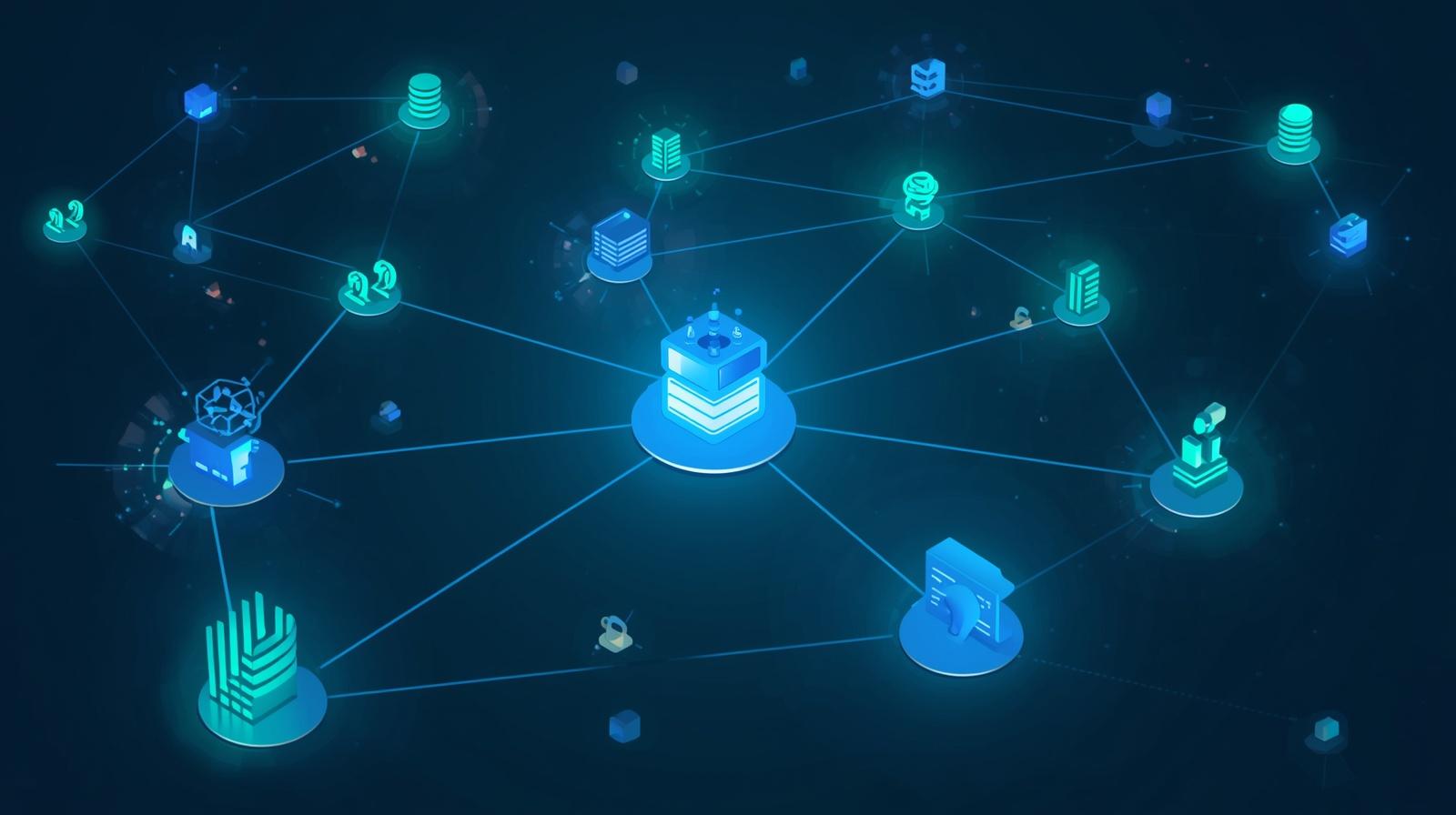
The promise of AI for nonprofits is clear: better donor predictions, smarter program matching, automated reporting, and more efficient operations. The problem is that most of the infrastructure needed to deliver on that promise is expensive to build, difficult to maintain, and requires technical talent that small and mid-sized nonprofits struggle to attract. Each organization negotiating its own vendor contracts, cleaning its own data, training its own staff, and managing its own AI tools independently creates enormous duplication of effort across the sector. The result is that larger organizations with bigger budgets pull further ahead while smaller ones are left behind.
A regional AI hub offers a different path. By bringing together nonprofits in a geographic area, whether a metropolitan region, a state, or a rural corridor, a hub creates shared infrastructure that no single member could afford on its own. The concept draws on a long history of nonprofit cooperation. Shared service organizations, purchasing cooperatives, and technology consortia have existed in the sector for decades. What makes AI different is the scale of the investment required and the degree to which shared data and shared models produce compounding returns. A donor prediction model trained on data from fifteen organizations is substantially more accurate than one trained on data from a single organization. A shared compute cluster serving twenty nonprofits costs each member a fraction of what solo cloud infrastructure would require.
This article is a practical guide to building a regional AI hub. It covers what a hub looks like structurally, the benefits that make the effort worthwhile, governance models that keep things running smoothly, what resources to share (and what to keep separate), how to handle data privacy across organizations, how to fund the hub sustainably, and how to start small with pilot approaches that build toward something more ambitious. Whether you are a nonprofit executive director exploring the idea for the first time or a coalition leader ready to formalize an existing collaboration, the framework here will help you move from concept to reality.
For background on why shared approaches to AI infrastructure are increasingly important for the sector, the companion article on shared AI infrastructure for nonprofits provides a detailed look at the cost dynamics that make going it alone the most expensive option.
What a Regional AI Hub Actually Looks Like
A regional AI hub is not a single physical building (though it might include shared office or meeting space). It is a structured collaboration among nonprofits in the same geographic area, organized to share AI-related resources that are too expensive or complex for any single member to develop alone. Think of it as the technology equivalent of a food co-op: individual members maintain their independence and identity, but they pool purchasing power, share infrastructure, and benefit from collective expertise.
At its core, a regional AI hub typically includes several layers of shared infrastructure. The first layer is shared compute and platform access, meaning collective subscriptions to AI platforms, shared cloud computing resources, and negotiated volume discounts with technology vendors. The second layer is shared data infrastructure, including common data standards, shared anonymized datasets for model training, and collective data governance policies. The third layer is shared human expertise, whether that is a small team of shared technical staff, a rotating schedule of AI office hours, or a structured peer learning program where member organizations teach each other what they have learned.
The size and scope of a hub varies widely depending on the region and its nonprofit ecosystem. A hub in a mid-sized metro area might bring together ten to thirty organizations across multiple subsectors, while a rural hub might connect five to ten organizations spread across several counties. Some hubs focus on a single subsector, such as housing or youth services, where the data and use cases are closely aligned. Others deliberately bring together organizations from different fields, seeking the innovation that comes from cross-pollination of ideas and approaches.
Shared Compute
- Collective AI platform subscriptions
- Shared cloud computing resources
- Volume-discounted vendor contracts
Shared Data
- Common data standards and formats
- Anonymized datasets for model training
- Collective data governance policies
Shared Expertise
- Shared technical staff or consultants
- Peer learning and training programs
- AI office hours and implementation support
Why a Regional Hub Delivers More Than the Sum of Its Parts
The benefits of a regional AI hub extend well beyond simple cost splitting. While the financial argument is compelling on its own, the most significant advantages are the ones that individual organizations simply cannot achieve no matter how much they spend. Understanding these benefits helps make the case to boards, funders, and peer organizations when building support for a hub.
Cost sharing and purchasing power. The most straightforward benefit is that pooled purchasing dramatically reduces per-organization costs. When fifteen organizations negotiate a single enterprise license for an AI platform instead of each paying retail, the savings are typically significant. Cloud compute costs, which represent a major expense for organizations doing any model training or running inference at scale, drop substantially when shared across multiple users. Shared technical staff, whether a data engineer or an AI implementation specialist, cost each member a fraction of a full-time hire while providing expertise that most small nonprofits could never recruit on their own.
Better data, better models. This is arguably the most important benefit and the one that funders find most compelling. AI models improve with more data. A donor retention model trained on the giving patterns of twenty organizations will outperform one trained on a single organization's history, particularly for smaller organizations whose individual datasets may be too sparse for reliable predictions. Similarly, a service matching model that draws on outcome data from multiple providers can identify effective interventions across a broader range of client circumstances. The key insight is that data collaboration does not just reduce costs, it produces capabilities that are qualitatively better than what any single organization can achieve alone.
Talent pooling and knowledge transfer. Finding and retaining AI-skilled staff is one of the sector's biggest challenges. A regional hub addresses this in several ways. First, a hub can employ or contract technical staff at a level of compensation that individual small nonprofits cannot match, because the cost is distributed. Second, the hub creates a community of practice where staff across member organizations learn from each other's experiments, mistakes, and successes. Third, the hub becomes an attractive workplace for technologists who want social impact work but would not join a single small nonprofit. The combination of meaningful work, varied projects across multiple organizations, and a peer community of technical colleagues is a powerful recruitment proposition. For more on building internal capacity, the guide on building AI champions within your nonprofit complements the hub model by helping each member organization develop internal advocates.
Collective bargaining with vendors. AI vendors, from major cloud providers to specialized nonprofit technology companies, offer very different pricing and terms to a coalition representing twenty organizations than they do to any single small nonprofit. A hub creates the kind of market power that enables organizations to negotiate data ownership protections, favorable pricing tiers, exit clauses, and customization commitments that would be impossible for individual members to secure. As explored in the article on nonprofit coalitions pooling AI resources, this collective leverage extends beyond pricing to include influence over product roadmaps and feature priorities.
Reduced risk through shared learning. When one hub member discovers that a particular AI tool produces biased outputs for certain demographic groups, or that a vendor's data handling practices do not meet compliance requirements, every other member benefits from that discovery. The cost of an AI failure, whether financial, reputational, or operational, is high for a single organization. Spreading the burden of evaluation, testing, and quality assurance across a hub dramatically reduces the risk that any individual member faces.
Step-by-Step: Forming a Regional AI Hub
Building a regional AI hub does not require a massive upfront investment or a perfect plan. The most successful hubs start with a small group of committed organizations and expand as they demonstrate value. Here is a practical roadmap for moving from initial conversations to an operational hub.
Step 1: Identify and Convene Founding Partners
Build the core group that will shape the hub
Start by identifying three to seven organizations in your region that share your interest in AI and face similar challenges. The ideal founding group includes organizations at different stages of AI maturity, so that early adopters can share lessons and newcomers bring fresh perspectives on what the sector actually needs. Look for organizations with complementary strengths: one might have strong data practices, another might have technical staff, and a third might have funder relationships that could support the hub financially.
Existing networks are the best starting point. If your organizations already collaborate through a regional council, a United Way partnership, a community foundation cohort, or a subsector association, those relationships provide the trust foundation that a hub needs. Cold-starting a hub among organizations that have never worked together is possible but takes significantly longer.
- Reach out to peer executive directors and technology leads in your region
- Host an informal exploratory meeting to gauge interest and assess shared needs
- Inventory each organization's current AI tools, data assets, and technical capacity
Step 2: Define Your Shared Needs and Quick Wins
Find the overlap that creates immediate value
Once your founding group is assembled, spend time mapping each organization's AI pain points, current spending, and aspirations. The goal is to identify the specific areas where sharing would deliver the most value with the least complexity. Common quick wins include joint vendor negotiations (many organizations are using or evaluating the same tools), shared training events, and collaborative evaluation of new AI products.
Resist the temptation to start with the most ambitious project. The organizations that successfully build lasting hubs almost always begin with something concrete and achievable, then expand. A shared training series on AI fundamentals, a joint negotiation of a single vendor contract, or a monthly peer exchange on AI implementation challenges are all excellent starting points that build momentum without requiring heavy governance or infrastructure.
- Survey members on current AI tools, costs, and unmet needs
- Identify two or three quick wins that demonstrate value within 90 days
- Document cost savings and efficiency gains from early shared activities
Step 3: Establish Governance and Agreements
Create the structure that sustains collaboration
As the hub moves beyond informal collaboration, it needs a governance structure that members trust and that can make decisions efficiently. This does not need to be complex initially, but it does need to address the core questions: who makes decisions, how costs are allocated, how new members join, how data is handled across organizations, and what happens if a member wants to leave. The governance section below covers models in detail, but the key principle at this stage is to keep governance proportional to the hub's actual activities.
- Draft a memorandum of understanding covering member roles, costs, and data handling
- Establish a decision-making process (consensus for major decisions, delegated authority for operations)
- Define clear entry and exit terms for member organizations
Step 4: Build Infrastructure and Expand
Scale from quick wins to sustained capability
With governance in place and early wins under your belt, the hub can begin building more substantial shared infrastructure. This might mean hiring shared technical staff, establishing a shared data repository, investing in shared compute resources, or developing sector-specific AI models that serve multiple members. Each expansion should be driven by demonstrated member demand and supported by a clear funding model.
This is also the stage where the hub should actively recruit new members. Early successes create a compelling pitch: instead of explaining what a hub could theoretically deliver, you can show what it has already achieved and what joining would cost. Growing the membership base is important both for financial sustainability and for the data and expertise benefits that come with a larger network. Organizations developing their AI strategy can use the framework in incorporating AI into your nonprofit strategic plan to assess how hub membership fits into their broader technology roadmap.
- Hire or contract shared technical staff based on member priorities
- Develop shared data standards and begin collaborative model training
- Recruit new members and formalize the hub's organizational structure
Governance Models: Choosing the Right Structure
Governance is where many collaborative initiatives succeed or fail. The right governance model depends on the hub's size, the level of resource sharing, and the degree of autonomy that member organizations need to maintain. Three primary models have emerged in the nonprofit technology sharing space, each with distinct advantages and trade-offs.
Cooperative Model
Member-owned, democratically governed
In this model, member organizations collectively own and govern the hub, with each member holding an equal vote regardless of size. The cooperative model is well-suited for hubs where members are roughly similar in size and where the culture emphasizes equity and shared decision-making. It builds strong buy-in because every member has genuine influence over the hub's direction. The challenge is that decision-making can be slow, particularly as the membership grows, and smaller cooperatives may lack the administrative infrastructure to manage complex operations like shared data governance and vendor contract management.
- Strengths: Strong member buy-in, equitable governance, aligned incentives
- Challenges: Slower decision-making, requires active member participation
- Best for: Hubs of 5-15 similarly sized organizations with strong existing relationships
Fiscal Sponsor Model
Housed within an existing organization
In this arrangement, an existing nonprofit, such as a community foundation, a regional association, or a United Way, serves as the legal and administrative home for the hub. The sponsor organization provides infrastructure such as accounting, HR, and legal support, while the hub operates as a distinct program with its own advisory committee drawn from member organizations. This model gets a hub operational quickly because it avoids the time and expense of creating a new legal entity. It also leverages existing credibility and funder relationships. The risk is that the hub's priorities may be shaped by the sponsor's broader agenda, and members may feel they have less direct control.
- Strengths: Fast launch, leverages existing infrastructure and credibility
- Challenges: Potential misalignment with sponsor priorities, less member autonomy
- Best for: New hubs that need to move quickly, regions with a strong anchor institution
Consortium Model
Structured partnership with tiered membership
A consortium creates a formal partnership structure where members contribute at different levels and receive benefits proportional to their investment. Larger organizations might contribute more financially but also gain access to priority support, deeper data integration, and more influence over the technical roadmap. Smaller organizations pay less but still access core shared resources like training, vendor discounts, and peer learning. This model accommodates the reality that organizations in a region vary enormously in size and capacity, and it allows each to participate at a level that makes sense for their budget and needs. The challenge is designing tiers that feel fair rather than creating a two-class system within the hub.
- Strengths: Flexible participation, sustainable revenue, accommodates diverse organization sizes
- Challenges: Tiered benefits can feel inequitable, complex to administer
- Best for: Diverse regions with organizations of varying sizes, hubs with 15+ members
What to Share, and What to Keep Separate
Not everything should be shared, and one of the most important early decisions for a hub is drawing clear lines between collective and individual resources. Getting this balance right prevents the two most common failure modes: sharing too little (which means the hub does not deliver enough value to justify the effort) and sharing too much (which creates governance headaches and makes organizations feel they are losing control).
Models and algorithms are among the easiest resources to share and often deliver the highest collective return. A hub might develop a shared grant writing assistant fine-tuned on successful proposals from all member organizations, a donor segmentation model trained on pooled giving data, or a program outcome prediction model that draws on cross-organizational service records. These models improve with more data and more diverse training examples, making them a natural fit for collective development. Each organization then applies the shared model to its own data and context, maintaining full control over how the outputs are used.
Training data can be shared, but it requires careful handling. The most common approach is to use anonymized or aggregated data for model training while keeping raw individual-level data within each organization's own systems. Techniques like federated learning, where a model is trained across multiple organizations' data without the data ever leaving each organization's servers, are increasingly practical and address many of the privacy concerns that arise with data pooling. The article on privacy-first AI for nonprofits covers the technical and policy frameworks for sharing data responsibly.
Compute resources are highly shareable. Cloud computing costs scale with usage, and most organizations have uneven demand patterns, heavy usage during reporting periods, lighter usage at other times. A shared compute pool smooths these peaks and valleys, ensuring that capacity is not sitting idle and that no single member faces unexpected cost spikes during intensive processing periods.
Staff expertise is one of the most valuable shared resources. A hub might employ a shared data engineer who helps member organizations clean and structure their data, a shared AI ethics advisor who reviews proposed implementations, or a shared trainer who conducts workshops across member organizations. These roles are typically too specialized and expensive for any single small nonprofit to fill, but they are exactly the kind of capacity that a hub can provide collectively.
Vendor contracts should almost always be negotiated collectively. Even organizations that are happy with their current tools will typically benefit from the pricing, terms, and data protections that a collective agreement can secure.
What to keep separate: Strategic decisions about which AI capabilities to prioritize, how to integrate AI into specific workflows, and which organizational changes to make should remain with each individual organization. The hub provides tools, infrastructure, and expertise. Each member decides how to use them in the context of its own mission, programs, and culture.
Data Governance and Privacy Across Organizations
Data governance is the issue that derails more collaborative technology initiatives than any other. When multiple organizations share data or build models on pooled datasets, the questions multiply quickly. Who owns the data? Who can access it? What happens to an organization's data if it leaves the hub? How do you handle data about shared clients who interact with multiple member organizations? Getting clear, written answers to these questions before you begin sharing data is essential.
A strong data governance framework for a regional AI hub typically includes several components. First, a clear data classification system that distinguishes between data that can be freely shared across the hub, data that can be shared in anonymized or aggregated form, and data that remains strictly within each organization's control. Second, written data sharing agreements that specify the permitted uses of shared data, the security standards that all members must maintain, and the procedures for handling breaches or unauthorized access. Third, a governance body, which can be a subcommittee of the hub's broader governance structure, that reviews and approves proposals to share new types of data or use shared data for new purposes.
Technical approaches to data sharing can significantly reduce the governance burden. Federated learning allows models to be trained across distributed datasets without centralizing the raw data. Differential privacy techniques add mathematical guarantees that individual records cannot be reverse-engineered from model outputs. Secure multi-party computation enables organizations to jointly analyze data without any single party seeing another's raw records. These techniques are no longer purely theoretical, and several platforms now offer them as turnkey features. Hub leaders do not need to become experts in these methods, but they should understand that technical solutions exist to address many of the data sharing concerns that member organizations will raise.
Compliance requirements add another layer of complexity. Organizations serving clients in healthcare, education, or immigrant services may be subject to HIPAA, FERPA, or other regulatory frameworks that restrict data sharing. A hub's data governance framework must accommodate the most restrictive compliance requirements of any member organization. This does not mean every organization must operate under every regulation, but the hub's policies and technical infrastructure must be designed so that organizations subject to strict requirements can participate without violating their obligations.
Data Governance Essentials for a Regional Hub
- Data classification system: Define three tiers of data sensitivity (freely shareable, shareable with anonymization, and organization-only) and apply them consistently across all member datasets.
- Written data sharing agreements: Specify permitted uses, security standards, breach notification procedures, and data retention and deletion policies for every category of shared data.
- Data governance committee: Appoint representatives from member organizations to review proposals for new data sharing activities and resolve disputes about data use.
- Privacy-preserving technology: Invest in federated learning, differential privacy, or secure computation tools that allow collaborative model training without centralizing raw data.
- Regulatory compliance mapping: Document which member organizations are subject to which data regulations and ensure hub policies meet the most restrictive applicable standard.
Funding and Sustainability Models
A regional AI hub needs sustainable funding that does not depend entirely on any single source. The hubs that last are the ones that diversify their revenue streams and demonstrate clear, measurable value to their members. Here are the primary funding models that have emerged in the nonprofit technology sharing space, most successful hubs combine two or more of these approaches.
Member dues. The most straightforward model involves regular membership contributions, typically scaled to organization size. A hub might charge annual dues based on each member's operating budget, with a small organization paying a few hundred dollars per year and a larger one paying several thousand. Dues provide predictable baseline revenue and reinforce member commitment. The challenge is setting dues high enough to be meaningful without pricing out smaller organizations, which are often the ones who benefit most from the hub.
Foundation and government grants. Community foundations, regional funders, and government agencies focused on digital equity are increasingly interested in funding collective technology infrastructure for nonprofits. A hub that can demonstrate measurable cost savings for members and improved service delivery is well-positioned for this funding. The key is to frame the hub not as a technology project but as capacity-building infrastructure that strengthens the region's entire nonprofit ecosystem. Initial grants are particularly important for covering startup costs, including legal fees for establishing governance structures, initial technology investments, and the hiring of founding staff.
Fee-for-service revenue. As a hub develops specialized capabilities, it can generate revenue by offering services to non-member organizations on a fee basis. Data cleaning and preparation services, AI readiness assessments, staff training workshops, and vendor evaluation reports are all services that a mature hub can offer beyond its membership. This revenue stream both supports financial sustainability and serves as a pipeline for recruiting new members, since organizations that purchase hub services often see the value of full membership.
Technology company partnerships. AI vendors, cloud providers, and technology companies with nonprofit programs may provide discounted or donated services to hubs, particularly during the startup phase. Microsoft, Google, Amazon Web Services, and Salesforce all have nonprofit technology programs that a hub can leverage on behalf of its members. The caution here is to avoid becoming dependent on any single vendor's goodwill, which can shift with corporate strategy changes. Diversification across vendors and funding sources is essential.
University partnerships. Colleges and universities with data science, computer science, or social work programs are natural partners for regional AI hubs. Faculty members may contribute research expertise, graduate students can work on hub projects as part of their academic programs, and university compute resources may be available for shared use. These partnerships provide high-value technical capacity at low cost while giving academic partners access to real-world problems and data that enrich their research and teaching.
Common Challenges and How to Overcome Them
Building a regional AI hub is fundamentally a human and organizational challenge, not a technical one. The technology components are increasingly commoditized and accessible. The hard parts are the same ones that make any multi-organizational collaboration difficult: trust, governance, competing priorities, and sustaining engagement over time. Understanding the most common failure points helps hub builders design around them from the start.
Uneven participation and free-rider concerns. In almost every collaborative initiative, some members contribute more than others, whether in time, data, expertise, or funding. This disparity breeds resentment if it is not acknowledged and addressed. The solution is not to demand equal contribution (which is unrealistic given the differences among organizations) but to make contributions visible and to ensure that benefits are roughly proportional to investment. Tiered membership models help here, as do transparent reporting on each member's contributions and usage.
Competing organizational priorities. Every member organization has its own strategic plan, its own board, and its own urgent demands. Hub activities will always be competing for staff time and leadership attention against internal priorities. The most effective hubs address this by ensuring that hub activities directly reduce the burden on member organizations rather than adding to it. If participating in the hub feels like additional work rather than a way to get AI capabilities more efficiently, engagement will decline.
Technology mismatch across members. Organizations at very different stages of technology maturity may struggle to share infrastructure effectively. One organization using Salesforce and another using spreadsheets face different integration challenges when connecting to shared hub resources. The solution is to invest in interoperability: data standards that can accommodate different source systems, APIs that connect to multiple platforms, and technical support that helps less mature organizations bridge the gap.
Leadership transitions. Hubs often lose momentum when a key champion at a member organization leaves. Building institutional commitment rather than relying on individual enthusiasm is critical. This means embedding hub participation into organizational policies and budgets, ensuring multiple staff at each member organization are engaged with hub activities, and having governance structures that do not depend on any single person's continued involvement.
Difficulty demonstrating ROI. Funders, boards, and member executive directors all want to see clear evidence that the hub is delivering value. Hubs that fail to measure and communicate their impact struggle to retain members and funding. From day one, track concrete metrics: total cost savings from shared vendor contracts, number of staff trained, models developed, and member satisfaction. Compare what members are paying through the hub to what comparable individual investments would cost.
Starting Small: Pilot Approaches That Build Toward a Full Hub
The idea of a regional AI hub can feel overwhelming, particularly for organizations that are still early in their own AI journeys. The good news is that you do not need to build a full hub on day one. The most durable hubs grew out of modest, focused collaborations that proved the concept and built the trust needed for deeper partnership. Here are pilot approaches ranked roughly from least to most complex.
AI peer learning circle. The simplest starting point is a regular meeting, monthly or biweekly, where staff from several nonprofits share what they are learning about AI. What tools are you trying? What is working? What failed? What are you worried about? This costs nothing but time and creates the relationship foundation that every other form of collaboration depends on. It also surfaces the shared pain points and opportunities that more structured hub activities can address.
Joint vendor evaluation. Instead of each organization independently researching AI tools, assign different members to evaluate different options and share their findings. This distributed research effort saves every participant time and produces more thorough evaluation because each organization brings its own perspective and requirements to the review.
Shared training program. Pool resources to bring in a trainer, host a workshop series, or develop an AI literacy curriculum that serves all member organizations. Shared training is a high-visibility, low-risk activity that demonstrates the hub's value to staff at every level. It also builds a common vocabulary and shared understanding of AI that makes future technical collaboration easier.
Collective vendor negotiation. Once you have identified tools that multiple organizations want, negotiate as a group. Even a small group of five organizations can often secure meaningful discounts, better contract terms, and improved support commitments. The savings from a single collective negotiation can be enough to fund the next phase of hub development.
Shared data project. The most ambitious pilot, but also the one that most clearly demonstrates the power of a hub, is a collaborative data initiative. This might involve developing shared data standards for a particular type of outcome measurement, building a pooled anonymized dataset for model training, or jointly developing a predictive model that all members can use. This pilot requires the most governance and the most trust, which is why it typically comes later in the progression. But it is also the activity that produces the most compelling evidence of what a hub can achieve.
Each of these pilots builds on the previous ones. A peer learning circle reveals shared needs. Joint vendor evaluation creates a shared knowledge base. Shared training builds common capacity. Collective negotiation demonstrates financial value. And a shared data project shows what becomes possible when organizations truly collaborate on AI. The path from the first informal meeting to a fully operational regional AI hub may take one to three years, but each step along the way delivers its own value.
Building Something Bigger Together
The nonprofit sector has always been at its best when organizations cooperate rather than compete. Food banks share logistics. Housing coalitions share advocacy strategies. Disaster response networks share resources in real time. Extending this collaborative instinct to AI infrastructure is both natural and necessary, because the alternative, a landscape where only the largest and best-funded organizations can access meaningful AI capabilities, is incompatible with the sector's fundamental commitment to equity.
A regional AI hub is not a theoretical concept. It is a practical, achievable model for ensuring that nonprofits of every size can access the AI tools, data, and expertise they need to serve their communities effectively. The technology is available. The governance models are proven. The funding pathways exist. What is needed is leadership: executive directors, board members, and coalition leaders willing to invest the time and trust required to build something together that none of them could build alone.
Start where you are. If you have three peer organizations and a shared interest in AI, you have the foundation for a hub. Convene a meeting. Share what you know. Identify one thing you can do together that you cannot do alone. Build from there. The organizations that will be best positioned for the AI-powered future are not the ones with the biggest technology budgets. They are the ones with the strongest collaborative relationships and the clearest vision of what becomes possible when local nonprofits stop going it alone.
Ready to Build a Regional AI Hub?
Whether you are exploring the idea for the first time or ready to formalize an existing collaboration, we can help you design and launch a regional AI hub that delivers measurable value for every member organization.