
Shared AI Infrastructure for Nonprofits: Why Going It Alone Is the Most Expensive Option
Most nonprofits are building AI capabilities in isolation, each organization negotiating its own vendor contracts, managing its own data infrastructure, and training its own staff from scratch. This approach is expensive, inefficient, and leaves smaller organizations permanently disadvantaged compared to larger ones. There is a better model, and it is already working in several parts of the sector.
When a mid-sized bank decides to invest in AI-powered fraud detection or a retail chain builds a personalization engine, it spreads the cost across a revenue base that can absorb it. When a small nonprofit serving 2,000 people in a rural county wants to use AI to better match clients to services, it faces the same underlying infrastructure costs as the bank, but with a fraction of the budget and almost none of the technical staff. This is the AI infrastructure gap that is quietly widening the divide between larger and smaller nonprofits, and between the sector and the for-profit world it increasingly competes with for talent, partnerships, and funder attention. Research from Social Current found that organizations with revenues over $1 million are adopting AI at nearly double the rate of smaller nonprofits, yet over half of all nonprofits bring in less than $1 million annually. The divide is structural, and it is growing.
The conventional answer to this problem is that smaller nonprofits should use affordable cloud-based AI tools and SaaS platforms. And indeed, tools like Microsoft Copilot, Google's Gemini integrations, and platforms like Salesforce Nonprofit Cloud have democratized access to certain AI capabilities. But these tools address the surface layer of AI adoption. They do not solve the deeper infrastructure problems: the cost of developing and maintaining high-quality data, the expense of model fine-tuning for sector-specific use cases, the burden of vendor management and contract negotiation, and the challenge of building staff capacity to use AI effectively.
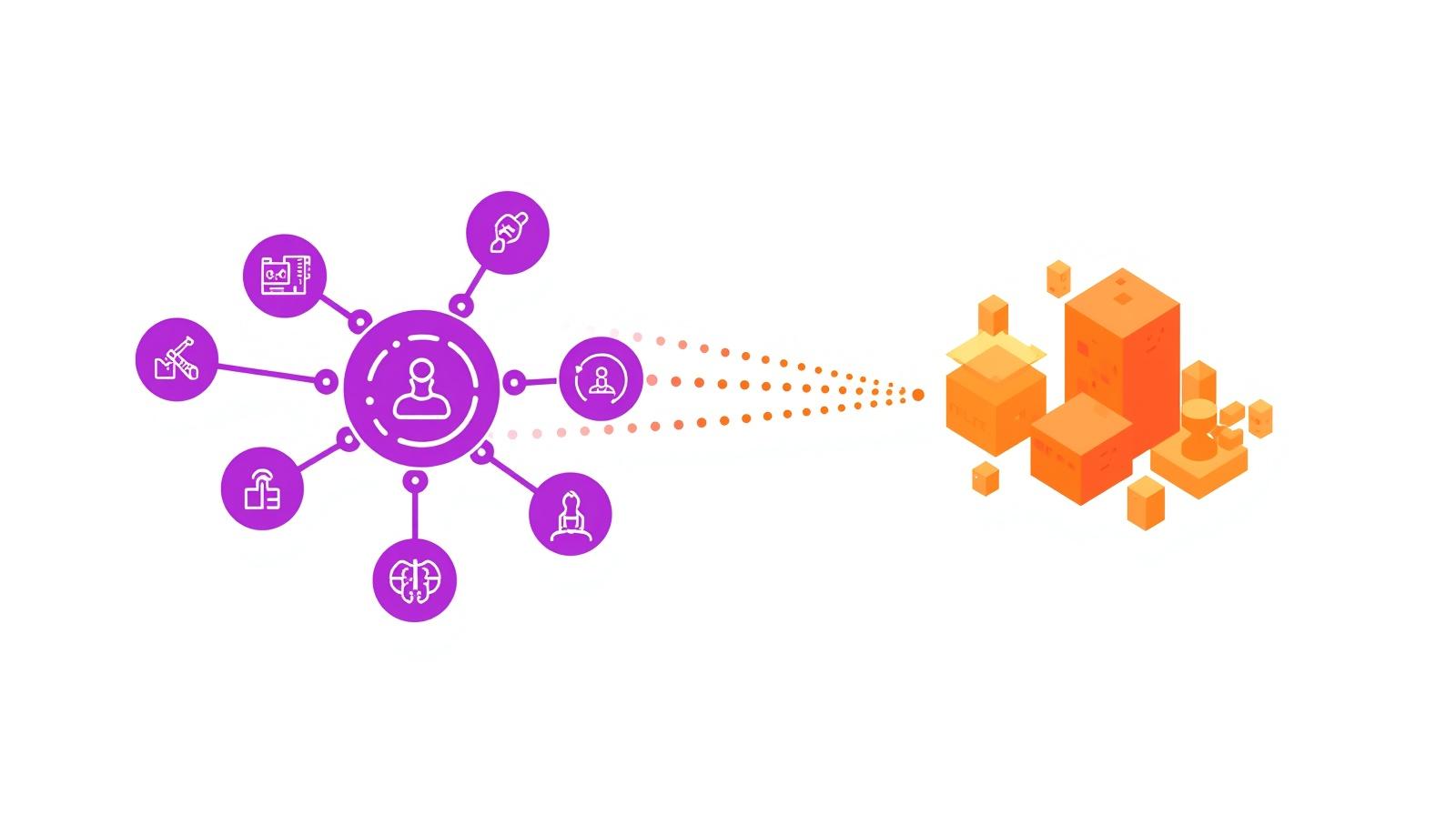
Shared AI infrastructure is a different approach. Instead of each organization building its own capabilities independently, a group of organizations pools resources to build shared data systems, negotiate collective licensing agreements, develop sector-specific AI models, and create training and support infrastructure that all members can draw on. This is not a new concept in the nonprofit sector, technology sharing cooperatives and shared service organizations have existed for decades. But AI changes the economics and the potential scale of what these arrangements can achieve.
This article examines how shared AI infrastructure works, what forms it takes, what evidence exists about its value, and how nonprofit leaders can explore or build these arrangements in their own regions and subsectors. The underlying argument is straightforward: the cost of going it alone in AI is real, and much of that cost can be shared.
The Real Cost of Solo AI Infrastructure
When nonprofit leaders talk about AI costs, they typically focus on subscription fees for specific tools. A grant writing assistant might cost a few hundred dollars per month. A donor analytics platform might be several thousand. These visible costs are real but they represent only a portion of what solo AI infrastructure actually requires.
Data preparation is often the largest hidden cost. AI tools are only as good as the data they work with. Organizations that want to use predictive analytics for donor retention, program outcome prediction, or client service matching need clean, well-structured historical data. Most nonprofits have data spread across multiple systems, full of inconsistencies, missing values, and formatting problems that require significant work to address. The effort of data cleaning, standardization, and ongoing data governance can run into thousands of hours over the course of a meaningful AI implementation. Organizations that skip this step find that their AI tools produce unreliable outputs, which erodes staff trust and ultimately leads to abandonment of the investment.
Model customization for nonprofit contexts is another significant cost that generic SaaS pricing does not account for. A large language model trained on general internet text will produce adequate grant writing drafts but will not understand the specific regulatory language of your funding streams, the particular documentation requirements of your accreditation body, or the terminology that resonates with your specific donor community. Making AI tools genuinely effective for a nonprofit's specific context requires either fine-tuning or extensive prompt engineering, both of which require technical expertise and significant time investment.
Staff training and change management represent a third category of costs that organizations consistently underestimate. The technology itself may be accessible, but getting staff to use it effectively, trust it appropriately, and integrate it into their workflows takes sustained organizational attention. Most nonprofits do not have dedicated technology training staff. This work falls to already-stretched team members who are learning alongside the people they are trying to support.
Visible Costs
- Software subscriptions and licensing fees
- API usage and compute costs
- Vendor contract and management time
- Integration and implementation fees
Hidden Costs (Often Larger)
- Data cleaning and preparation (often hundreds of staff hours)
- Model customization for sector-specific needs
- Staff training and ongoing capacity building
- Security audits, compliance reviews, and risk management
Models for Shared AI Infrastructure
Shared AI infrastructure takes several forms in practice, and the right model depends on the size, geography, and subsector of the organizations involved. Understanding these models helps leaders think concretely about which arrangement fits their situation.
Subsector Coalitions and Consortia
Organizations in the same field pooling AI investments
A group of food banks in a region might collectively fund the development of an AI-powered inventory and distribution optimization system that none of them could afford individually. A coalition of immigrant services organizations might pool data to train a multilingual client matching model that serves their shared population more effectively than any generic tool. A network of community health clinics might negotiate collectively for AI documentation tools and then share training materials and best practices across the network.
This model works best when organizations serve overlapping populations without directly competing, when they share common data challenges or use cases, and when there is an existing relationship or umbrella organization that can serve as a coordination mechanism. Subsector associations and statewide networks are natural homes for these arrangements.
- Best for: Organizations in the same subsector with shared data challenges and non-competing service areas
- Key challenge: Data governance and privacy agreements, establishing decision-making structures
- Example structure: Member contributions fund shared technical staff and shared infrastructure, with usage-based cost allocation
Shared Service Organizations and Technology Intermediaries
Dedicated entities built to serve multiple nonprofits
A different model involves creating or engaging a dedicated organization whose purpose is to provide AI services to nonprofits. TechSoup has played this role for software access for decades, providing nonprofit-discounted technology to organizations that could not otherwise afford commercial licenses. Similar models are emerging specifically for AI, with organizations positioned to negotiate volume discounts, develop sector-specific tools, and provide the implementation support that most nonprofits lack.
The advantage of this model is that the intermediary develops deep expertise that individual member organizations would struggle to maintain. The challenge is that the intermediary itself requires funding and governance, and organizations must trust that the intermediary's priorities align with theirs. When an intermediary is funded primarily by a small number of large members or by technology companies themselves, the interests of smaller members may not be adequately represented.
- Best for: Organizations that need specialized expertise and cannot staff technical capacity internally
- Key challenge: Ensuring intermediary governance represents the full range of member needs
- Example structure: Membership fees or funder grants support a shared staff team that serves multiple client organizations
Regional AI Hubs
Geography-based collaboration across subsectors
Rather than organizing by subsector, regional hubs bring together nonprofits from across service areas in a geographic community to share AI infrastructure and expertise. A regional hub might support organizations ranging from food banks to arts groups to housing providers, providing shared training resources, collective vendor negotiations, and a community of practice where staff from different organizations learn from each other.
Regional foundations are natural funders and conveners for this model, particularly in communities where foundation leadership has concluded that sector-wide AI capacity is necessary for grantee effectiveness. The community foundation's role is often to fund the initial infrastructure, provide neutral convening space, and help establish governance before the hub becomes self-sustaining through membership contributions.
- Best for: Communities with a strong regional foundation willing to fund and convene initial development
- Key challenge: More diverse needs make shared technical tools harder, but shared training and peer learning remain valuable
- Example structure: Foundation-funded staff support peer learning, vendor negotiations, and shared training across member organizations
University and Research Partnerships
Academic partnerships as infrastructure access strategy
Universities offer a different form of shared infrastructure that many nonprofits overlook. Academic institutions have access to substantial compute resources, graduate students and researchers with technical skills, and in many cases existing relationships with nonprofit communities through their research and community engagement programs. For nonprofits, partnerships with university data science programs, social work schools, and public policy programs can provide access to analytical capacity that would cost far more to build or buy commercially.
These partnerships require investment in relationship management and in building mutual understanding between researchers and practitioners. Academic timelines do not always align with operational needs. Graduate student rotations mean organizational knowledge walks out the door regularly. But for organizations that can navigate these challenges, university partnerships can be among the most cost-effective ways to access AI expertise. The article on university partnerships for nonprofits covers how to structure these relationships effectively.
Collective Licensing: The Lowest-Hanging Fruit
For many nonprofit coalitions, the fastest and most straightforward form of AI infrastructure sharing is collective licensing. AI tool vendors, like software vendors before them, typically offer significant volume discounts. A single nonprofit paying for 10 seats of an AI writing tool at a retail price might pay $500 per month. A coalition of 20 nonprofits collectively negotiating for 200 seats might achieve a price of $15-20 per seat, reducing the per-organization cost to $150-200 per month while each organization gets access to ten times the capacity.
Beyond price, collective negotiation enables smaller organizations to achieve contract terms that individual organizations could never secure. Enterprise agreements with AI vendors often include provisions for data privacy and security audits, explicit commitments that organizational data will not be used to train models, customized data retention policies, and dedicated implementation support. These terms protect nonprofits from some of the most significant risks in AI adoption, but they are typically only available to organizations with sufficient purchasing leverage to demand them.
TechSoup has demonstrated this model over decades with conventional software, delivering over $2.6 billion in value to nonprofit organizations in a single fiscal year by pooling purchasing power across hundreds of thousands of member organizations. In 2025, TechSoup launched an "AI for Social Change" initiative specifically targeting AI upskilling for 10,000 organizations across 10 countries, and partnered with Tech Impact to create a Virtual CTO Program for nonprofits with budgets under $1 million. For nonprofits looking for an entry point into shared AI infrastructure, connecting with these intermediaries or identifying coalitions with existing purchasing arrangements is often the most immediate opportunity.
For organizations exploring collective AI investment further, the article on enterprise AI discounts through TechSoup and similar intermediaries provides a more detailed look at what nonprofit pricing arrangements currently exist and how to access them.
What Collective Licensing Can Achieve
- Significant cost reduction: Volume pricing often reduces per-seat costs by 40-70% compared to individual organization purchasing
- Better contract terms: Collective bargaining unlocks data privacy provisions, audit rights, and implementation support that individual organizations cannot negotiate
- Shared vetting burden: Instead of each organization doing its own security and ethics assessment, the coalition does one thorough review that benefits all members
- Coordinated training: Shared training development and delivery is far more efficient than each organization building its own curriculum from scratch
Shared Data Infrastructure: The More Complex Opportunity
Beyond collective licensing, the deeper opportunity in shared AI infrastructure lies in shared data. AI tools become dramatically more powerful when they can draw on large, high-quality datasets. Individual nonprofits rarely have the volume of data needed to train effective predictive models. But a coalition of organizations serving similar populations can aggregate data at a scale that enables genuinely sophisticated AI applications.
A network of housing organizations that collectively tracks thousands of tenants facing eviction risk can build a much more accurate early warning model than any single organization working with its own data. A coalition of workforce development programs can develop a labor market matching tool that reflects the actual outcomes of program graduates across multiple contexts and geographies. A group of health-related nonprofits can use aggregated, de-identified client data to identify service gaps and predict demand more accurately than any single organization's data would allow.
The governance challenge here is significant and should not be underestimated. Sharing client data, even in de-identified or aggregated form, requires careful privacy analysis, clear data governance agreements, and ongoing attention to how data is used and who benefits. Organizations serving vulnerable populations have heightened obligations to ensure that shared data cannot be re-identified or misused. These challenges are solvable, but they require legal expertise, trust-building among partner organizations, and the kind of governance infrastructure that takes time to develop. The article on differential privacy techniques for nonprofits covers technical approaches to sharing data while protecting individual privacy.
Federated learning offers a technically sophisticated alternative that avoids some of the privacy concerns associated with data pooling. In federated learning, models are trained locally on each organization's data, and only the model updates, not the underlying data, are shared. The aggregated model improves based on learning from all the participating organizations' data without any organization's raw data ever leaving its own systems. This approach is being explored in healthcare contexts and has significant potential for nonprofit coalitions working with sensitive population data. The article on federated learning for nonprofits provides a more accessible explanation of how this works in practice.
Data Governance Essentials for Shared AI Infrastructure
Key elements any shared data arrangement must address
- Ownership and attribution: Who owns the shared data and models? What rights do contributing organizations retain over their data and over insights derived from it?
- Use limitations: Explicit agreement on what shared data can be used for and what is off-limits, including commercial use, research publication, and sharing with third parties
- Privacy protections: Technical and procedural safeguards to prevent re-identification, including minimum aggregation thresholds and access controls
- Exit provisions: What happens when an organization leaves the coalition? Can they take their data back? What happens to models trained on their data?
- Benefit sharing: How are the benefits of shared infrastructure distributed? Are larger organizations with more data given more influence over decisions?
How to Get Started: Building or Joining Shared AI Infrastructure
For nonprofit leaders who see the value of shared AI infrastructure but are unsure where to begin, a few practical starting points can help.
The first step is mapping your existing relationships. Which coalitions, networks, or associations does your organization already participate in? Which of your peer organizations are at a similar stage of AI adoption and facing similar challenges? These existing relationships are the foundation of any shared infrastructure arrangement. Building new collaborative structures from scratch requires significant investment in trust and governance. Building on existing relationships moves much faster.
The second step is identifying the specific cost you most want to share. Is it the expense of collective vendor licensing? The burden of data preparation? The challenge of staff training? The need for technical expertise? Different answers point toward different models. An organization whose primary pain point is vendor cost might focus on joining an existing purchasing coalition. An organization struggling to build data capacity might look for a university partnership. An organization facing a training gap might prioritize peer learning networks.
The third step is approaching potential partners with a specific, bounded proposal rather than a broad vision of collaboration. Proposing to "build shared AI infrastructure" is too large and vague to generate commitment. Proposing to "jointly negotiate an AI writing tool contract for our five organizations before our current contracts expire in June" is concrete, time-bound, and easy to say yes to. Early wins on specific shared initiatives build the trust and experience needed for more ambitious collaboration later.
For organizations thinking about their broader AI strategy, the article on incorporating AI into your nonprofit strategic plan provides a framework for thinking about AI infrastructure decisions in the context of long-term organizational direction. That framework explicitly addresses the build vs. buy vs. partner question at the heart of shared infrastructure decisions.
Practical First Steps Toward Shared AI Infrastructure
- Audit your current AI spend: Understand what you are currently paying, individually and what you are getting. This creates the baseline for calculating savings from shared arrangements.
- Connect with NTEN and subsector networks: The Nonprofit Technology Network runs a free AI Readiness Cohort (with Anthropic tool access), a 13-course AI certificate program, and publishes an AI Equity Guide. TechSoup connects over 305,000 civil society organizations with software and hardware at up to 90% discount, and has extended this to AI tools. NetHope serves as a consortium model for 60+ international nonprofits sharing AI resources and vendor negotiations.
- Ask your funders about interest in supporting shared infrastructure: Many foundations are recognizing that sector-wide AI capacity is more valuable per dollar than individual grantee projects. They may already have initiatives underway or be open to funding a collective effort.
- Propose a peer learning group on AI: Even before formal shared infrastructure exists, regular exchanges with peer organizations about AI tools and implementations are a form of shared knowledge infrastructure that costs almost nothing.
- Investigate whether a shared service organization already exists in your subsector: Before building something new, research whether there is already a technology intermediary serving your subsector that you could join.
The Competitive Argument for Shared Infrastructure
Nonprofit culture can be ambivalent about competition, but the reality is that nonprofits compete in important ways: for staff, for funding, for partnerships, for public attention. Organizational leaders who watch larger nonprofits and well-funded for-profit social enterprises deploy sophisticated AI capabilities while their own organizations struggle to maintain basic data hygiene are watching a competitive gap widen in real time.
Shared AI infrastructure does not eliminate that gap, but it narrows it substantially. A coalition of small nonprofits with shared AI infrastructure can access capabilities, data systems, and technical expertise that approach what larger single organizations can build. The playing field is not level, but it is less tilted.
There is also a sustainability argument worth naming directly. The Stanford Social Innovation Review has pointed out that the current era of inexpensive AI is, in significant part, subsidized. In 2025, roughly $202 billion flowed into AI infrastructure investment while consumers spent only around $12 billion directly on AI services, a 17:1 mismatch. SSIR's explicit guidance to nonprofits: build shared capacity now, rather than isolated implementations dependent on pricing that may not remain affordable. Organizations that build shared infrastructure while AI tools are cheap will be positioned to weather price normalization better than those whose workflows depend entirely on individually licensed tools at current rates.
There is also a mission argument that goes beyond competition. If the purpose of the nonprofit sector is to serve communities effectively, and if AI capabilities increasingly determine the effectiveness of service delivery, then unequal access to those capabilities is a mission-critical problem. Shared infrastructure is one of the most practical tools available for ensuring that the nonprofits serving the most vulnerable communities, which are often the smallest and least well-resourced, can access the tools that make them most effective.
The organizations that will benefit most from AI in the coming years are not necessarily the ones with the largest technology budgets. They are the ones with the best collaborative relationships, the clearest sense of their data assets, and the willingness to build something together that no one can afford to build alone. That combination has always been central to nonprofit values. Applied to AI infrastructure, it becomes a strategic competitive advantage.
The Bottom Line
Solo AI infrastructure development is the most expensive way for nonprofits to build AI capability. The full cost of going it alone, including the hidden costs of data preparation, model customization, staff training, and vendor management, adds up to far more than most organizations account for when they evaluate AI adoption. Shared infrastructure divides these costs while multiplying the benefits through better data, stronger vendor agreements, and richer peer learning.
The organizational investment required to build shared infrastructure is real. Governance, trust, and coordination do not happen automatically. But these investments pay off, not just in direct cost savings but in the quality of AI capabilities that shared approaches can unlock. The most ambitious AI applications in the nonprofit sector, predictive service matching at scale, sector-wide outcome analytics, collaborative early warning systems, are only achievable through collective infrastructure.
For most nonprofit leaders, the practical question is not whether to eventually participate in some form of shared AI infrastructure. It is how to start, and where in the landscape of existing initiatives, consortia, and peer networks there is an entry point that does not require building everything from scratch. The starting points are closer than they may appear.
Ready to Explore Shared AI Strategy?
One Hundred Nights helps nonprofits assess their AI infrastructure needs and identify the most cost-effective paths to building real capability, including shared approaches.